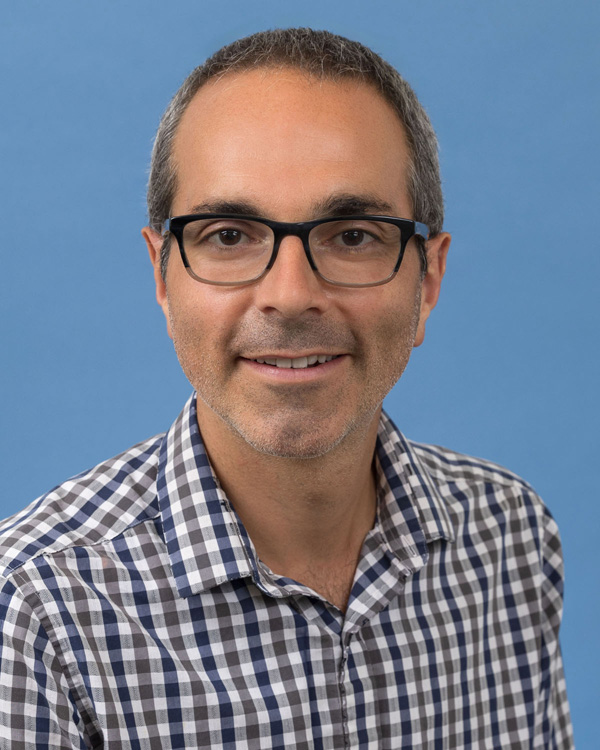
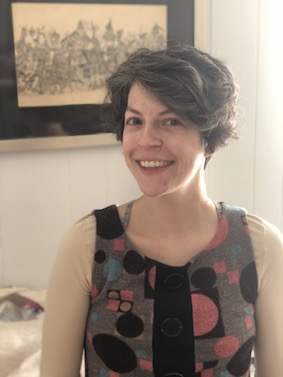
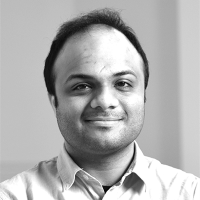
Philip Sayegh is an Adjunct Associate Professor at the University of California, Los Angeles (UCLA) Department of Psychology within the College of Letters and Science, and Associate Director of the UCLA Psychology Clinic. He earned his Ph.D. from the University of Southern California, focusing on clinical psychology with an emphasis on cultural and neuropsychological factors. Research spans cultural influences on dementia diagnosis, HIV-related neurocognitive disorders, and health disparities in aging populations. Teaching centers on clinical/neuropsychological assessment, healthy aging, and integrating cultural perspectives into evidence-based practices. Supervises doctoral trainees in clinical assessment and contributes to the development of culturally competent neuropsychological evaluation methods. His publications examine intersections of culture, neurocognition, and healthcare behaviors in HIV, dementia, and substance use contexts. Current work involves direct supervision of clinical assessments and advancing cross-cultural neuropsychological frameworks.
Dr. Dale Barr is a Senior Lecturer at the University of Glasgow's School of Psychology & Neuroscience. His research focuses on the psychology of communication, conversation, and statistical methodology. He holds a Ph.D. from the University of Chicago and is affiliated with the TalkLab, a research group studying language processing and cognitive science. Education: Ph.D. in Psychology, University of Chicago Research Interests: Dr. Barr investigates how people produce and understand language in real-time, particularly the cognitive processes underlying communication. His work integrates experimental psychology, computational modeling, and statistical methods. Key themes include pragmatic inference, perspective-taking, and the role of context in language comprehension. He also contributes to advancing reproducible research practices and open-source tools for data analysis. Publications: His recent work addresses topics like perspective conflict in language processing, statistical modeling in experimental data, and the illusory truth effect. The articles reflect a focus on cognitive science, psycholinguistics, and methodological rigor in psychological research. Labs/Teams: Lead researcher at the TalkLab , exploring language and cognition through interdisciplinary approaches.
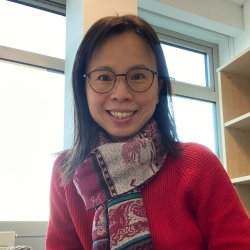
Dr. Yetta Kwailing Wong is a Lecturer in the School of Psychology at the University of Surrey's Faculty of Health and Medical Sciences. She directs the Learning and Perception Lab, which investigates perceptual expertise development and translates cognitive science insights into educational practice. Research examines expert-novice differences in musical notation recognition, absolute pitch acquisition, visual word recognition, and dyslexia interventions. Her work employs behavioral measurements, EEG, fMRI, and eye-tracking to study visual expertise development and its educational applications. Current projects investigate absolute pitch learning in adulthood, neural mechanisms of musical notation recognition, developmental dyslexia, and sight-reading skill acquisition. The lab develops practical tools like the Readers' Adventure mobile application for Chinese children with dyslexia.
Dominic Petrak is a Doctoral Researcher at the UKP Lab, Technical University of Darmstadt. His research focuses on conversational AI, particularly improving dialogue systems through implicit user feedback analysis and error prevention in open-world scenarios. He holds an M.Sc. in Computer Science from RheinMain University of Applied Sciences and has professional experience in software engineering with firms like Sopra Steria and DXC Technology, specializing in NLP, enterprise applications, and Jakarta EE. Research Interests: Natural Language Processing, Machine Learning, Conversational AI, Numeracy in Language Models, Dialogue Systems Design, Software Architecture, and Enterprise Application Development. Publications: His work spans dialogue systems (e.g., FEDI dataset), numeracy enhancement in LMs (Arithmetic-Based Pretraining), and citizen science for NLP. Recent contributions include analyzing social acceptance requirements for service robots and exploring free-text human feedback integration. Advisors & Labs: Supervised by Prof. Nafise Sadat Moosavi (University of Sheffield) and Prof. Iryna Gurevych. Affiliated with the UKP Lab, TU Darmstadt.
Prof. Jelmer Borst is an Associate Professor in Computational Cognitive Neuroscience at the University of Groningen's Faculty of Science and Engineering, affiliated with the Artificial Intelligence department within the Bernoulli Institute. His research focuses on integrating computational models with neuroimaging data to understand cognitive processes like multitasking, working memory, and decision-making. He advises three PhD candidates and collaborates internationally on projects involving EEG/fMRI analysis and cognitive modeling frameworks such as ACT-R and Nengo. Research Interests: Neuroimaging analysis methods, cognitive bottlenecks in multitasking, memory retrieval localization, and adaptive learning systems. Key Projects: Developed the PREDICTOR tool for semi-automated driving response timing, and advanced models linking symbolic process stages to brain activity via MEG/EEG. Recent work includes large-scale evaluations of adaptive learning systems and interventions to mitigate mind-wandering in driving scenarios. He has received the Allen Newell Best Student-led Paper Award (2021) for contributions to cold-start adaptive learning research. His research group maintains active collaborations on datasets involving working memory, decision-making, and cognitive architecture validation through neuroimaging experiments. He also contributes to open-source tools for cognitive modeling and neuroimaging analysis.
Dacheng Xiu is a Professor at the University of Chicago Booth School of Business and affiliated with the National Bureau of Economic Research (NBER). His research spans finance, machine learning, and econometrics, focusing on asset pricing, volatility modeling, and high-frequency data analysis. His work includes developing machine learning frameworks for financial applications, such as return prediction, factor models, and text mining of market data. Recent publications emphasize leveraging large language models (e.g., BERT, GPT) and deep learning architectures (e.g., autoencoders) to address challenges in empirical asset pricing and portfolio optimization. He has collaborated extensively with scholars like Bryan T. Kelly and Stefano Giglio, contributing to high-impact journals and working papers. His research also explores the statistical limits of arbitrage and weak signal detection in financial markets, with applications to risk premium estimation and factor zoo regularization.
Dr. Cristina Izura is an Associate Professor in Psychology at Swansea University, affiliated with the School of Psychology within the Faculty of Medicine, Health and Life Science. She holds the position of Deputy Director of the Language Research Centre since October 2012. Her research focuses on the organization of language in the brain, exploring how this organization evolves through normal learning, aging, second language acquisition, brain injury, and dementia. She also investigates psycholinguistic and psycho-emotional aspects of online grooming. Her teaching responsibilities include advanced research methods in psychology, computing skills for experiments, and higher-level cognitive processes. She supervises PhD students on topics like neurodiverse cognitive processing, online grooming tactics, and adolescent vulnerability in digital contexts. Dr. Izura’s publications span over two decades, with recent work emphasizing linguistic analysis of online grooming and forensic psychology. Her earlier research includes studies on memory consolidation, acronym comprehension, and bilingual language acquisition. She actively contributes to interdisciplinary research, bridging cognitive science, linguistics, and forensic studies.
Nick Danis is a Senior Lecturer in Linguistics at Washington University's Arts & Sciences school, specializing in phonology, computational linguistics, Optimality Theory, and African languages. He directs courses including Introduction to Linguistics, Computational Linguistics, Phonological Analysis, and The Linguistics of Constructed Languages. Research Focus: Danis investigates theoretical phonology with emphasis on place articulation processes, vowel-consonant interactions, and computational modeling. His work analyzes phonological representations using formal mathematical approaches and develops algorithms for linguistic pattern recognition. Teaching Innovation: Received the Washington University Course Innovation Grant (2019) for developing curriculum around constructed languages and computational methods. Teaches 5-6 courses annually spanning introductory to advanced topics. Honors: Recognized with Departmental Teaching Award at Stanford (2017), Stanford Graduate Fellowship (2015), multiple mathematical olympiad medals, and Iranian Mathematical Society Competition gold medals. Lab & Advising: Supervised 4 honors theses on computational phonology and language construction. Developed Python-based linguistic analysis tools for classroom use.
Charles Perfetti is a Distinguished University Professor in the Department of Psychology at the University of Pittsburgh's Dietrich School of Arts & Sciences, where he directs the Reading and Language Laboratories. His research examines cognitive and neural foundations of reading across languages, with emphasis on word identification, comprehension, bilingual processing, and neural accommodation to writing systems. His primary research investigates reading comprehension through integrated lexical quality frameworks, neural mechanisms of language processing (using fMRI and ERP), cross-linguistic comparisons of reading acquisition, and second language learning. Recent work explores Chinese-English bilingual processing, neural correlates of text integration, and universal characteristics of reading systems. Publications over the past 15 years demonstrate consistent themes: cognitive architecture of reading, neural plasticity in literacy development, bilingual lexical representation, and methodological innovations in measuring reading processes. Strong emphasis on writing system variation characterizes his comparative research program. Distinguished Scientific Contribution Award, Society for the Scientific Study of Reading (2004) Chancellor's Distinguished Research Award (2000) Elected to FABBS 'In Honor Of' Program (2017) Distinguished Scholar Award, AERA Research in Reading and Literacy SIG (2017) He currently advises graduate students Geoffrey Lizar and Weiqi Wang, and leads NSF-funded projects on reading across writing systems. As Director of the Learning Research & Development Center, he oversees collaborative projects integrating cognitive science with educational applications.
James L. Morgan is a Professor of Cognitive and Psychological Sciences and Linguistics at Brown University. He holds dual appointments in the Department of Cognitive and Psychological Sciences and the Linguistics Program. His research focuses on early language development, particularly spoken word recognition in infants and young children, and how auditory/visual speech input interacts with infants' perceptual capacities to facilitate language acquisition. Educated at Washington University (AB 1974), UC San Diego (MA Linguistics 1976, MA Psychology 1979), and UIUC (PhD Developmental Psychology 1983), Morgan previously taught at the University of Minnesota and held visiting positions at CNRS-EHESS (Paris) and the University of Potsdam. His work is funded by NIH/NICHD grants and recognized by Fulbright and Fogarty fellowships. Research highlights include discovering infants' sensitivity to prosodic patterns in speech segmentation, demonstrating how lexical categories influence phonetic learning, and analyzing infant-directed speech properties. He directs the Metcalf Infant Research Lab and serves on editorial boards for Infancy and Language Learning and Development . Teaching focuses on language acquisition, psycholinguistics, and cognitive development. Recent studies explore how infants categorize grammatical vs. lexical words using acoustic correlates, the role of visual prosody in speech perception, and developmental trajectories of phonetic detail processing. Collaborators include Sheila Blumstein, Bertram Malle, and David Sobel in interdisciplinary projects linking linguistics, psychology, and neuroscience.
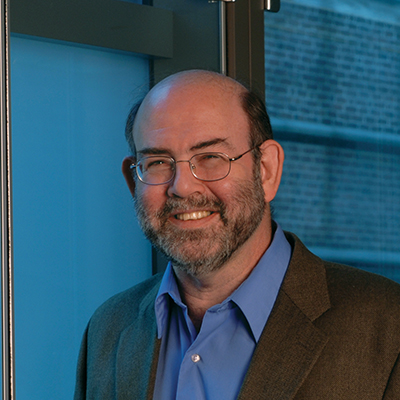
Mitch Marcus is a Professor Emeritus in the Department of Computer and Information Science at the University of Pennsylvania's School of Engineering and Applied Science. He earned his Ph.D. from MIT in 1978 and joined Penn in 1987 after working at AT&T Bell Laboratories. His research focuses on statistical natural language processing and cognitively plausible models for automatic acquisition of linguistic structure. Dr. Marcus created and led the Penn Treebank Project, which revolutionized natural language parsing accuracy. He has served as PI on multiple major projects including DARPA LORELEI and GAILA AIX, focusing on unsupervised morphology acquisition and child language acquisition simulations. Awards: Fellow of American Association for Artificial Intelligence (1992) Founding Fellow of Association for Computational Linguistics (2011) Advising: His former PhD students hold positions at institutions including MIT, Johns Hopkins, Google, and Microsoft Research. Research groups: Directed the Penn Treebank Project and co-led the OntoNotes Project. Currently collaborates on natural language understanding for human-robot interaction.
Mireia Marimon Tarter is a Postdoctoral Researcher at the Center for Brain and Cognition, Pompeu Fabra University (UPF), Spain, where she leads an EU-funded Marie Curie project on statistical learning in bilingual and at-risk infants. She is part of the Speech Acquisition and Perception (SAP) group led by Prof. Núria Sebastián-Gallés. Previously, she was a postdoctoral researcher at the University of Potsdam and held visiting positions at UCLA and Université Paris Descartes. Ph.D. in Linguistics (Early Language Development), University of Potsdam, Germany (2019) M.Sc. in Cognitive Science and Language, University of Barcelona, Spain (2015) Her research focuses on early speech perception, word segmentation, and statistical learning in infants. She investigates how infants extract words from fluent speech, the role of prosody and phonological encoding, and links to later language development. A significant part of her work addresses methodological challenges in infant research, including reliability of behavioral methods, individual differences, and web-based data collection . Her recent publications span topics such as pupillometry, artificial grammar learning, social robots in language acquisition, and innovative infant testing tools. The studies reveal trends in neurocognitive methods in developmental science , with increasing use of physiological measures (pupillometry), digital tools (web-based games), and cross-linguistic designs . She has received multiple scientific awards and competitive grants: Marie Skłodowska-Curie Postdoctoral Fellowship (2023–2025) Postdoc Prize from Brandenburg in Human and Social Sciences (2022) Volkswagen Foundation "Open Up" Research Grant (2026–2027, Co-PI) Labex EFL Mobility Grant (2019) KoUP Cooperation Funding (2021) Paper of the Month, Research Focus Cognitive Sciences (March 2022) Mireia Marimon Tarter has supervised master's theses at Universitat Oberta de Catalunya and taught courses in psychobiology of language, cognitive neuroscience, and language acquisition at UPF, UOC, and the University of Potsdam. She has contributed to major collaborative projects such as ManyBabies (MB3N) and served on academic committees including the Study Commission at the University of Potsdam. She is also involved in science communication as coordinator of the Kinder Schaffen Wissen Social Media Team. Her current research is conducted within the Speech Acquisition and Perception (SAP) Group at UPF, which focuses on the cognitive and neural bases of language acquisition. She previously contributed to the "Crossing The Borders" project (DFG-funded) and the "Toytest" project at the University of Potsdam, aimed at early detection of language disorders.
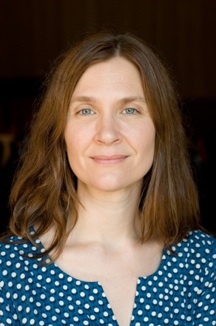
Jesse Snedeker is a Professor in the Department of Psychology at Harvard University, within the Faculty of Arts and Sciences. Their research investigates the cognitive and linguistic mechanisms underlying language acquisition and processing in children, with a particular focus on naturalistic contexts and developmental trajectories. Education: University of Washington, B.A., 1994 University of Pennsylvania, M.A., 1996 University of Pennsylvania, Ph.D., 1999 Dr. Snedeker's research centers on psycholinguistics and cognitive development, especially how children learn language through interaction, context, and prediction. Their work integrates behavioral, electrophysiological (EEG), and eye-tracking methodologies to explore lexical processing, syntactic generalization, and semantic integration in both typical development and autism. A strong emphasis is placed on naturalistic paradigms and real-world language input. The recent publications reflect a cohesive research program examining language acquisition through meta-analytic, experimental, and methodological lenses. Themes include the role of caregiver input, form- and meaning-based prediction, cascaded processing in production, and innovative data collection techniques like webcam eye-tracking. The work spans cognitive psychology, developmental science, and neuroscience, often employing advanced tools to study real-time language use in children. Scientific Awards: No awards listed in the provided text. Dr. Snedeker leads the Snedeker Lab at Harvard, mentoring graduate and undergraduate researchers involved in studies on language and cognition in autism and typical development. Their lab conducts both in-person and online studies, contributing to foundational knowledge in language acquisition. While specific grants are not mentioned, the breadth and technical sophistication of the research suggest sustained funding support. Future work appears to be advancing naturalistic methods and deepening understanding of interactive language learning.
Elika Bergelson is an Associate Professor in the Department of Psychology at Harvard University, where she leads the Bergelson Lab (BLAB) within the Laboratory for Developmental Studies. Her research investigates how infants learn language from their surrounding linguistic, visual, and social environments. She previously held faculty positions at Duke University and the University of Rochester, and her work bridges developmental psychology, cognitive science, and linguistics. PhD in Psychology, University of Pennsylvania (2013) Postdoctoral Researcher, University of Rochester (2013–2014) Research Assistant Professor, University of Rochester (2014–2016) Assistant/Associate Professor, Duke University (2016–2022) Associate Professor, Harvard University (2023–present) Her research focuses on early lexical development, particularly how infants comprehend words before they can speak. She is best known for identifying the “comprehension boost” — a rapid improvement in word understanding around 12–14 months. Using eye-tracking, EEG, corpus analysis, and behavioral methods, her lab explores how sensory input, social interaction, and language exposure shape learning. She also studies language development in blind and deaf/hard-of-hearing infants to understand the role of sensory modalities in acquisition. The recent articles reflect a strong focus on naturalistic language input, cross-linguistic comparisons, and developmental mechanisms. Themes include the impact of parental talk, the relationship between tonal language experience and music processing, and the structure of early vocabularies. Her work increasingly incorporates large-scale data and cross-cultural collaboration, as seen in her PNAS and Science publications. Scientific Awards: NIH Early Investigator Award FABBS Early Career Award Bergelson mentors students and researchers at all levels and is committed to open science, sharing data via HOMEBANK, Databrary, and GitHub. She actively engages in science communication, with media features in the NIH Director’s Blog, BBC, ABC Australia, and Harvard Gazette. Her lab emphasizes diversity, equity, and inclusivity in both research participation and training. The Bergelson Lab is part of Harvard’s Laboratory for Developmental Studies and continues the SEEDLingS project’s legacy while expanding into new domains like atypical development and cross-linguistic studies.
Dr. Pranava Madhyastha is a Senior Lecturer in Artificial Intelligence at the Department of Computer Science, City, University of London, and a Principal Investigator at The Alan Turing Institute. He holds a PhD from Universitat Politècnica de Catalunya, Spain, and has held research positions at Imperial College London and the University of Sheffield. His primary research interests lie in multimodal machine learning, grounded representation learning, natural language understanding and generation, and their applications in machine translation, syntactic parsing, and language interaction. He explores how models can integrate signals from text, vision, and speech to improve language comprehension and production. The most recent publications highlight a strong focus on multimodal AI, visual analytics with large language models, prosody prediction, toxicity detection, and formal analysis of neural network capabilities in language tasks. His work bridges theoretical and applied aspects of AI, with contributions in top venues like ACL, EMNLP, ICML, and IEEE journals. Scientific Awards: No specific awards listed in the provided text. He advises several PhD students, including Maeve Hutchinson, Chenxi Whitehouse, Nadine El Naggar, Hadeel Al-Negheimish, and Chiraag Lala. His research is supported through academic collaborations and institutional affiliations, with no specific grants mentioned. He leads research activities at City and maintains a strong presence through publications and open research.