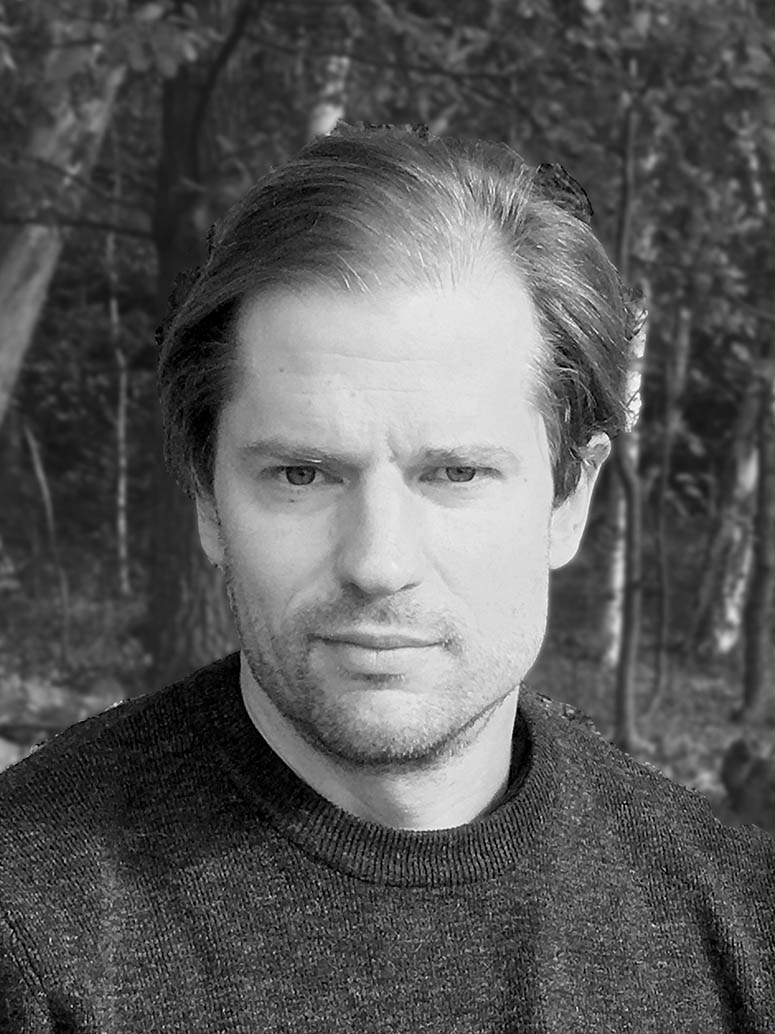
Simo Hostikka is a Professor in the Department of Civil Engineering at Aalto University's School of Engineering. His research focuses on fire safety engineering , utilizing numerical fire simulations to address critical challenges in building and infrastructure safety. Key Expertise: Fire Dynamics Simulator (FDS) development, thermal radiation heat transfer, pyrolysis modeling, fire toxicity calculations, and probabilistic risk analysis. Leadership: Supervises advanced fire safety research and contributes to international fire safety standards. Research Trends: Recent publications emphasize fire toxicity modeling , hydrogen fire safety , radiation heat transfer , and fire retardancy of polymeric materials . His work bridges computational methods with real-world fire safety applications. Scientific Awards: Philip Thomas Medal of Excellence (2008, 2005) Sjölin Award (2012) Interflam Trophy (2007) Harmathy Award (2020, 2019) Dean’s Award for Best MSc Thesis (2020) Best Paper in Rakenteiden Mekaniikka (2009) Advising: Supervised Topi Sikanen, who received the Young Talent Award from the International Water Mist Association.
Jouko Peltonen is a Professor in Chemistry at Åbo Akademi University's Faculty of Natural Sciences and Engineering. He leads the Laboratory of Molecular Science and Technology, focusing on sustainable material development and biomedical applications. His work aligns with UN Sustainable Development Goals through green chemistry innovations. Ph.D. in Chemistry (Åbo Akademi, 1994) Licentiate in Chemistry (Åbo Akademi, 1992) Master's in Chemistry (University of Helsinki, 1988) Peltonen's research spans materials science , polymer chemistry , and sustainable technology , with emphasis on nanocellulose composites , antibacterial materials , and bio-based packaging . Recent projects explore biofilm modeling and lignin valorization. His publications (216 total) demonstrate interdisciplinary impact across biomedical engineering , environmental science , and chemical manufacturing . Key collaborations include NordForsk-funded initiatives and EU projects like PACKER 2020. Research grants include: Printed Intelligence Infrastructure (Academy of Finland, 2024-2028) Nordic POP (NordForsk, 2018-2025) ABC-Health (Jane och Aatos Erkkos Foundation, 2021-2024)
Markku Karjalainen is a Professor in the Department of Architecture at Tampere University's Faculty of Built Environment. With over 80 research publications spanning from 2016 to 2025, he has established himself as a leading expert in timber construction and wooden building systems in Finland. Professor Karjalainen's research primarily focuses on timber construction , particularly multi-story wooden buildings, dovetail wood construction techniques, and sustainable building practices. His work spans architectural design, structural engineering, fire safety, and environmental impact assessment of wooden structures. He has conducted extensive statistical analyses of Finnish timber residential buildings, examining construction practices from 1995 to the present. His research demonstrates a strong commitment to advancing wooden construction technologies while addressing practical challenges in fire safety, structural performance, and building physics. Analysis of his recent publications (2023-2025) reveals a consistent focus on dovetail construction techniques for mass timber elements, with numerous studies examining structural performance, fire properties, and air permeance. His work bridges theoretical research with practical applications in the construction industry, particularly in Finland where wooden multi-story construction has seen significant growth. Karjalainen's research often involves international collaboration, with studies comparing practices across different countries and examining global perspectives on timber construction. His scholarly output demonstrates a methodical progression from basic statistical analysis of building practices to increasingly sophisticated investigations of specific construction techniques and their performance characteristics. This evolution reflects both his growing expertise and the maturation of timber construction as a field of academic inquiry.
Professor Hongbo Zhang is a leading academic at Åbo Akademi University , affiliated with the Faculty of Natural Sciences and Engineering and the InFLAMES (Innovation Ecosystem based on the Immune System) flagship program. With over 227 publications and 21 active/completed projects since 2006, his research spans Functional Materials , Drug Delivery , and Clinical Translation . Research Interests: His work focuses on Engineering nanostructures for blood-brain barrier penetration Microfluidics-enabled biomedical devices Antimicrobial resistance solutions Cellulose-based sustainable materials Mitochondrial delivery systems Theranostic hydrogels Scientific Awards: Fellow of the Royal Society of Chemistry (2024) MDPI Pharmaceutics Young Investigator (2020) Chinese Orthopedic Association 1st Prize (2019) Best Oral Drug Formulation (Control Release Society, 2014) 10 Leading Chinese Talents in Europe (2023) Collaborative Network: Actively hosts international researchers and contributes to EU/Nordic-funded projects like NAP4DIVE and Printed Intelligence Infrastructure . His recent publications demonstrate expertise in nanomedicine, biocomposites, and lignin valorization.
Simon Mahringer serves as a University Lecturer at Aalto University's Department of Architecture, where he actively engages in architectural design research, teaching, and competition participation. His work bridges academic instruction with practical design innovation, focusing on concrete-based experimentation and sensory spatial experiences. Mahringer's research spans Architecture, Architectural Design, Urban Design, Competition Design, and Exhibition Design, with particular emphasis on materiality and user experience. His projects frequently explore concrete architecture through initiatives like the Betonistudio (Concrete Studio), producing experimental pavilions and cultural facilities that integrate tactile and sensory elements into built environments. His publication record (2018-2025) reveals consistent engagement with architectural competitions and design projects, particularly in school centers (Neuried, Neubau Grundschule), museums (Oulu Museo- ja Tiedekeskus, Sara Hildén), and experimental pavilions. Key thematic threads include sustainable material use, urban integration, and the relationship between architecture and sensory perception. Notable recognitions include: Teacher of the year, Department of Architecture, Aalto University (2024) 1st prize in Oulun Museo- ja Tiedekeskus competition (2023) Triple honors (1st prize, honorary mention, purchase prize) in Jyväskylän Kankaan Suvanto competition (2022) Honorary mention in Sara Hildén Art Museum international competition (2021) While his lecturer role implies student supervision responsibilities, specific advising details are unavailable. Mahringer maintains active collaborations with Opus architects and colleagues including Paul Thynell and Matias Kotilainen through competition teams and research initiatives. He is central to Aalto University's Betonistudio, which functions as a research platform for concrete experimentation, and regularly participates in cross-institutional design teams for competition entries and built projects across Finland and Germany.
Liqiu Hu is a Doctoral Researcher at the Laboratory of Natural Materials Technology , affiliated with the Faculty of Science and Engineering at Åbo Akademi University. Their research focuses on bio-based materials , polymerization techniques , and nanocellulose applications , contributing to Sustainable Development Goals like responsible consumption and climate action. Key research areas: Lignin, Nanocellulose, Polymerization, Bio-based films, Green chemistry, Biocomposites Recent work trends: In-situ polymerization, Pickering emulsions, Drug delivery systems, Agricultural waste upcycling, Aqueous dispersion processing Collaborations include researchers from Åbo Akademi University and TAPPI Press. Publications span from 2017 to 2025, highlighting innovations in biopolymer interfaces and sustainable packaging . The laboratory's fingerprint indicates strong alignment with lignin (100%), nanocellulose (75%), and polymerization (66%) research.
Lauri Rautkari is an Associate Professor in the Department of Bioproducts and Biosystems at Aalto University, Finland. His research focuses on water interactions in biomaterials, particularly wood, with an emphasis on developing advanced analytical methods for water vapor sorption, creating novel low-sorption materials, and investigating hygroscopicity and fungal decay resistance in modified wood systems. Research Highlights: Gas-phase ozone treatment for improved wettability, thermal and chemical wood modification, hyperspectral imaging for moisture prediction, bioinspired coatings for fungal protection, and interlaboratory studies on sorption data quality. Recent Publications: Key contributions to understanding lignin's role in moisture interactions, acetylation reversibility, and the impact of fungal degradation on heat-treated wood. The trend in his publications reflects a strong focus on hygroscopicity, chemical modification techniques (acetylation, melamine-formaldehyde impregnation), advanced imaging methods (hyperspectral, neutron scattering), and the development of sustainable wood-based materials for construction and acoustic applications. Collaborative interlaboratory efforts dominate his work, ensuring standardized methodologies for moisture analysis.
Minna Autio is a Professor at the University of Helsinki's Faculty of Educational Sciences, Department of Education. She is affiliated with the Helsinki Institute of Sustainability Science and Teachers' Academy. Her research focuses on sustainability science, consumer behavior, home economics education, and ethical consumption. Key areas include sustainable fashion, wood-based bioeconomy, and youth financial literacy. She leads the BioColour consortium (2019-2025) developing bio-based dyes and pigments. Recent work explores consumer agency in sustainability practices, food systems, and material lifecycle management. Education: Not explicitly listed in provided texts. Research projects include 'Education for Everyday Sustainability' and 'Consumer-inclusive packaging systems'. She actively participates in international conferences and reviews academic journals like Scandinavian Journal of Educational Research and Journal of Cleaner Production . Her publications analyze topics such as clothing sustainability, youth financial independence, and consumer perceptions of natural vs synthetic materials. She collaborates with organizations like the Strategic Research Council and the European Commission-funded CONFIN-SKILLS project. Grants include funding from the Academy of Finland and the STN consortium.
Robin Ras is a Professor and Head of Department at the Department of Applied Physics at Aalto University, where he leads the Soft Matter and Wetting research group. His work focuses on surface science, particularly superhydrophobic and superoleophobic materials, with applications spanning renewable energy, biomedical engineering, and agricultural science. Ras earned his Master's degree in Engineering and Technology from Catholic University of Leuven in 1999, followed by a Doctoral degree from the same institution in 2003. His academic journey has positioned him as a leading researcher in wetting phenomena and nanoscale surface engineering. His research interests center on understanding and manipulating liquid-solid interactions at micro and nanoscales. Ras's work explores how surface topography and chemistry affect wetting behavior, with particular focus on superhydrophobic surfaces, droplet dynamics, and liquid-repellent materials. His group develops innovative approaches for creating surfaces with controlled wettability for applications ranging from self-cleaning materials to advanced biomedical devices. The research trends evident in Ras's recent publications show a strong focus on precision control of liquid-solid interfaces, with increasing attention to underwater applications, molecular-scale surface engineering, and biomimetic approaches. His work bridges fundamental surface science with practical applications in energy, healthcare, and sustainability. Among his notable scientific achievements: Anton Paar Research Award for Instrumental Analytics & Characterization (2018) for Scanning Droplet Adhesion Microscopy invention Academy of Finland Research Fellow (2011-2016) ERC Consolidator Grant (2017) Ras has secured significant research funding including the ERC Consolidator Grant for the SuperRepel project (2017-2022) focused on superslippery liquid-repellent surfaces, and the Academy of Finland project 'Electric Field; an Active Method to Control Phase Change' (2019-2022). His research group actively collaborates with international institutions and industry partners to translate fundamental discoveries into practical applications. The Soft Matter and Wetting research group under Ras's leadership combines experimental and theoretical approaches to investigate surface phenomena. The team utilizes advanced imaging techniques, precision surface fabrication methods, and computational modeling to understand and engineer surfaces with tailored wetting properties. Their work has applications across multiple sectors including renewable energy, biomedical devices, and sustainable agriculture.
Steven Collins is a Professor of Practice in Civil Engineering at Aalto University , specializing in industrial wood construction. His work bridges scientific research and industry applications to enhance timber's role in sustainable structural engineering. Research Interests : Species-specific timber behavior (particularly birch), focusing on modeling, testing, and variance analysis. Non-destructive testing techniques like laser scattering, grain orientation analysis, and digital image correlation. Statistical and Bayesian approaches for probabilistic modeling of material properties and uncertainty quantification. Timber finger joint mechanics and wood processing techniques (e.g., densification, chemical treatment). Scientific Contributions : His recent publications (2022–2025) emphasize mechanical behavior of timber , predictive modeling , and innovative processing methods . Key trends include optimizing birch timber for structural applications, advancing Bayesian statistical models for wood mechanics, and improving non-destructive testing protocols using laser technologies and digital image correlation. Laboratory & Collaborations : Actively involved in experimental testing (destructive and non-destructive) and statistical analysis of wood properties. Collaborates with researchers like Gerhard Fink , Lauri Rautkari , and Farid Vafadar on timber mechanics and reliability studies. Part of the Structures – Structural Engineering, Mechanics and Computation research group at Aalto University.
Andrey Pranovich is a faculty member at the Faculty of Natural Sciences and Engineering, where he leads the Laboratory of Natural Materials Technology focused on "Technologies for a sustainable future." His research spans multiple areas of wood chemistry, biomass utilization, and sustainable materials development. Dr. Pranovich's research interests center around natural materials, particularly focusing on: Lignin chemistry and applications Wood polysaccharides (especially xylan) Biomass fractionation and biorefinery processes Sustainable materials development Wood chemistry and characterization Nanocellulose and nanomaterials from biomass His recent publication record demonstrates significant contributions to the field of sustainable biomaterials, with particular emphasis on lignin-carbohydrate complexes, xylan-based hydrogels, and biobased materials for industrial applications. His work shows a strong trend toward developing environmentally friendly alternatives for industrial products while maximizing the utilization of biomass components. Notable scientific contributions include: Development of lignin-based CO2 capture materials Innovative extraction methods for wood components using green solvents Creation of xylan-based hydrogels for drug delivery applications Sustainable alternatives for road marking paints Advanced characterization of lignin-carbohydrate complexes Dr. Pranovich's research aligns with multiple UN Sustainable Development Goals, particularly those related to sustainable production and consumption, climate action, and responsible resource management. His work bridges fundamental wood chemistry with practical applications in materials science and environmental sustainability.
Sesilja Aranko is an Assistant Professor at Aalto University , affiliated with the Department of Bioproducts and Biosystems. Her research focuses on protein engineering, biomolecular condensates, and sustainable materials derived from biological macromolecules. Research Groups : Cellular Engineering Email : sesilja.aranko@aalto.fi Her work explores protein self-assembly mechanisms, particularly in spider silk and collagen systems, leveraging liquid-liquid phase separation for advanced biomaterial design. Recent studies investigate how polymer length and modular protein architecture control condensate properties, alongside developing bio-inspired adhesives from recombinant proteins and nanocellulose. She has pioneered the use of Catcher/Tag click-reaction tools for protein engineering and developed sustainable methods for spider silk production with inherent functionalization potential. Collaborative projects span marine biology (sea cucumbers) and keratin waste upcycling for textile applications. Key methodologies include intein-mediated protein splicing, segmental isotopic labeling, and structural characterization of protein ligation systems. Her research bridges fundamental biophysics with industrial applications in sustainable chemistry and biomimetic composites.
Mari Lehtonen serves as a University Lecturer in Food Chemistry at the Department of Food and Nutrition, University of Helsinki, a position she has held since April 2021. She also holds the Title of Docent (equivalent to Adjunct Professor) in Food Chemistry from the University of Helsinki, awarded in 2021. University Lecturer, Department of Food and Nutrition, University of Helsinki (2021-present) Post-doctoral researcher, Department of Food and Nutrition (2020-2021) Chemist, Finnish Environment Institute (2017-2020) Dr. Lehtonen earned her Doctor of Science in Food Chemistry from the University of Helsinki in 2012, where she was awarded the best doctoral thesis of the year 2012 in the ABS Graduate School. She also holds a Master of Science in Analytical Chemistry from the University of Helsinki (2004). Her research focuses on food chemistry with particular emphasis on chromatographic and separation techniques, food analysis, and bioactive compounds in food. Her work bridges analytical chemistry with practical food science applications, examining how chemical properties affect food quality, safety, and nutritional value. Recent publications reveal a growing interest in plant-based food components, particularly examining lignin nanoparticles, nanocellulose, and wood-derived compounds for food applications and environmental remediation. Dr. Lehtonen's publication record shows consistent scholarly output with multiple publications annually, demonstrating expertise in both fundamental food chemistry and applied research. Her recent work (2023-2025) increasingly explores sustainable food materials, particularly plant-based polymers and their applications in food systems and environmental contexts. The best doctoral thesis of the year 2012 in the ABS Graduate School (2013) Dr. Lehtonen has supervised 8 MSc theses and 3 BSc theses, in addition to research trainees. She has been involved in multiple research projects including FreshPack (Business Finland), BITE (Novel Biomass-based solutions for Technical Emulsions), WOOD-PRO (Valorization of wood biorefinery products), and WOODLIPS (Novel wood-derived emulsifiers). Her teaching portfolio includes FOOD-305 Chromatographic and Other Separation Techniques, FOOD-302 Research Methods, and ETK-225 Basic Food Analysis, demonstrating her commitment to training the next generation of food scientists. Her laboratory work appears to focus on food chemistry analysis, particularly utilizing chromatographic techniques to examine food components, with recent expansion into plant-based materials research as evidenced by her publications on lignin nanoparticles and wood-derived compounds.
Mikko Paakkanen is a Lecturer at the Department of Architecture, Aalto University. He specializes in wood design and material innovation, leading projects like the Puustudio series focused on sustainable furniture and exhibition architecture. Department of Architecture Aalto University His research explores birch wood utilization, temporary exhibition spaces, and functional design principles. Collaborations with Karola Sahi include curatorial projects and material experimentation. Recent projects include: Puustudio exhibitions (2025-2026) Habitare Materials (2024) Visakoivu birch wood initiatives Scientific contributions include: Publications on wood technology (2012-2024) Supervised student award-winning projects Secured grants from Huonekalusäätiö and KONE Foundation
Antti Lehto is an Assistant Professor at the Department of Architecture, Aalto University. His work focuses on sustainable and circular economy principles in architectural design. Research highlights include: Innovative material reuse strategies Low-carbon building concepts Flexible housing solutions Circular economy in urban planning Climate emergency-responsive design Recent publications explore topics like Design through Availability and The New Aesthetics of Circular Architecture , emphasizing resource efficiency and climate adaptation. Scientific awards: Wuorio award for best Master's Thesis (2024, 2025) Aalto Pioneering Excellence Award Honourable Mention (2024) for Closing Loops Pilot Shortlisted: Finnish Wood Awards (2023) for Postivarikko and Haagan Artturi He leads circular economy projects like the Closing Loops pilot, which involves constructing a warehouse in Helsinki using recycled materials to study their impact on design, cost, and carbon footprint.