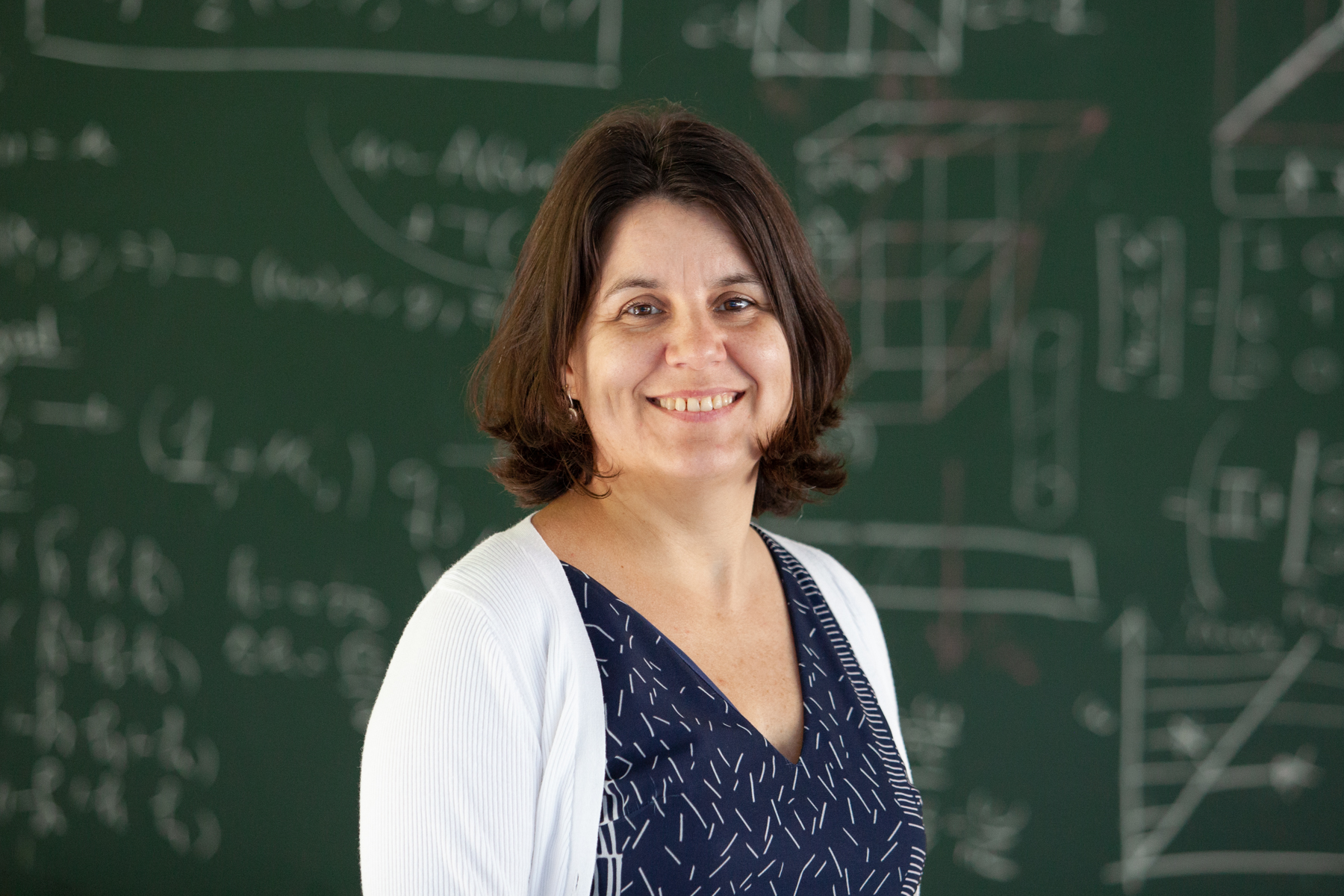
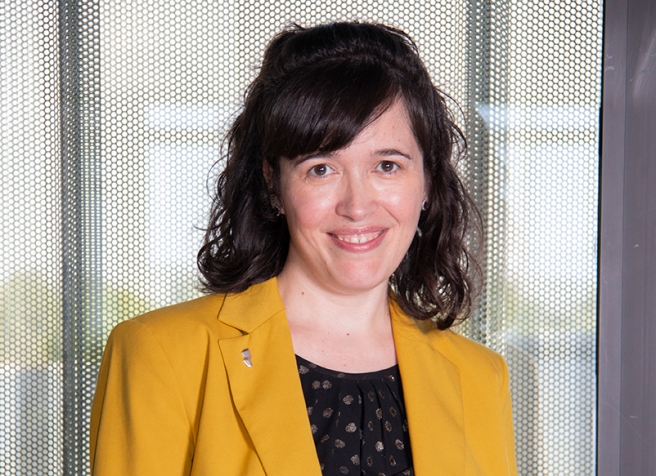
Prof. Fabienne Barroso Bujans is an Ikerbasque Research Professor at the Donostia International Physics Center (DIPC) and the Materials Physics Center (CFM) in San Sebastián, Spain. Her research group focuses on topological polymers, cyclic polymer synthesis, and their applications in nanodevices and graphene-based hybrid materials. She leads a multidisciplinary team exploring polymer confinement, functionalization, and biomedical applications. Her work emphasizes the synthesis of cyclic polymers using novel methodologies like zwitterionic ring-opening polymerization (ZROP) with B(C6F5)3 catalysts. Key areas include understanding polymer dynamics under confinement, developing luminescent polymer-ruthenium complexes, and creating nanomaterials for energy and biomedical uses. She has supervised numerous students, including PhD candidates and visiting researchers supported by grants like 'Woman for Africa.' Recent research highlights include the 2024 study on glycidol polymerization kinetics and the 2022 work on macrocyclic polymer applications. Her group has pioneered methods to isolate and characterize cyclic polymers using UPLC-MS/MS and dielectric spectroscopy. She actively recruits interns and postdocs, emphasizing organic chemistry and polymer science expertise. Founded research group in 2016 Collaborations with international institutions (e.g., Nnamdi Azikiwe University, Beni-Suef University) Key facilities: DIPC labs in Donostia
Natalia Álvarez Méndez serves as Associate Professor in the Department of Hispanic and Classical Philology at the University of León's Faculty of Philosophy and Letters, specializing in contemporary Hispanic literary theory with emphasis on gender studies and fantastic narrative traditions. Education: Ph.D. in Literature, University of León (2001). Dissertation: "La dimensión espacial en la novela. El espacio en la novelística de Severiano Fernández Nicolás" supervised by Dr. José Enrique Martínez Fernández. Research Focus: Her scholarship pioneers the analysis of "monstruosidad insólita" (unusual monstrosity) as a non-mimetic strategy for destabilizing reality and identity constructs in 21st-century Hispanic narrative. She examines spatial representation in authors like Luis Mateo Díez and José María Merino, while advancing feminist critiques of postfeminist subversion in writers including Almudena Grandes and Patricia Esteban Erlés. Her work consistently bridges literary geography with gender theory. Publication Trends: Recent output (2023-2025) reveals concentrated exploration of monstrous figurations as tools for ideological critique, particularly in Spanish women's writing. She has edited seminal volumes mapping monstrosity across Hispanic narrative (1980-2022) while analyzing civil consciousness in Antonio Pereira's literary territories and the structural innovations of contemporary Spanish short fiction. Research Affiliation: Active member of GEIGhd (Estudios Literarios y Comparados. Insólito, Género y Humanidades Digitales), directing collaborative projects on digital humanities applications in literary studies of the uncanny.
Guiomar Susana Topf Monge is a researcher at Universidad Pablo de Olavide in the Department of Filología y Traducción and a faculty member at Universidad de Sevilla in its Instituto de Idiomas . Her work focuses on feminist translation theory, gender studies, and German-Spanish intercultural analysis. Education: PhD from Universidad Pablo de Olavide (2020) with thesis on gender ambiguity in Annemarie Schwarzenbach's works Guiomar Topf Monge's research examines gender representation in translation , particularly through the works of Swiss author Annemarie Schwarzenbach. She analyzes how German pronouns like man translate to Spanish una or uno , addressing linguistic sexism and inclusive language strategies. Her publications span Google Scholar from 2010 to 2025. Her article analysis shows trends in translation methodology , gender-neutral language , and machine translation evaluation , particularly with DeepL. She also explores Swiss exile literature , travel narratives , and cross-cultural reception studies . Guiomar Topf Monge has contributed to feminist translation theory through 17 publications and book reviews, with 309 public views on Academia.edu. She has collaborated with international researchers on topics ranging from Quebec studies to German-Spanish intercultural communication .
Elena Losada Soler is a full-time Professor of Portuguese Literature at the University of Barcelona, affiliated with the Department of Modern Languages and Literatures and English Studies. She is a researcher at ADHUC—Research Center for Theory, Gender, and Sexuality—and served as director of the UNESCO Chair in Women, Development, and Cultures (2015-2018). Her career spans over three decades, focusing on gender, violence, and representation in 19th-century Iberian literature, women's crime fiction, and translation studies. Key roles: Director of Lletra de Dona (online literary criticism site), Coordinator of MUNCE and VANACEM research projects Specializes in Clarice Lispector's works, having translated 13 of the Brazilian author's texts to Spanish Research interests include: Gender dynamics in peninsular women's press (1848-1918) 21st-century Spanish women's crime fiction Historical evolution of gender stereotypes in literature Translation of Portuguese classics like Eça de Queirós and Camões Her recent publications analyze violence in women-authored crime narratives, with projects like GENViPreF (2021-2024) examining 19th-century women's press fiction. Awards include the 2012 Giovanni Pontiero Prize for translation excellence. Teaching innovations: Developed Lletra de Dona virtual platform for gender-focused literary critique Coordinated translation-focused pedagogical projects with international universities She leads international collaborations, including the UNESCO Chair and partnerships with institutions in Brazil, Portugal, and Spain.
Dulce María González Doreste is a Professor of French Philology at the University of La Laguna, where she has been a faculty member since June 1998. She has held significant administrative positions including Dean of the Faculty of Philology (2001-2004), Director of the Department of French and Romance Philology (1998-2001), and Director of the Institute for Medieval and Renaissance Studies (IEMYR) from 2011 to 2019. She also served as Director of the Canary Agency for University Quality and Educational Evaluation (ACCUEE) from 2019 to 2020. Her primary research interests focus on Medieval French Literature, particularly the Roman de la Rose, text-image relations in illuminated manuscripts, and the construction of female archetypes in medieval educational treatises for women. She has also conducted significant work on the translation of texts by French scientific travelers to the Canary Islands, including the translation of Sabino Berthelot's Canarian Miscellanies and Botanical Geography, and the editing and translation of Louis Feuillée's manuscript diary of his 1724 voyage to the Canary Islands. González Doreste has led multiple competitive research projects, including studies on the European reception of the Roman de la Rose through illuminated manuscripts, the iconography of the Roman de la Rose as testimony of a European cultural space, and text-image relations in manuscripts of the Roman de la Rose. She coordinates the consolidated research group FEMITEX (Grupo de Estudios sobre la construcción del ideal femenino. Textos y contextos). Her scholarly contributions demonstrate strong trends in interdisciplinary medieval studies, combining literary analysis with art history, gender studies, and the history of science. Her work reveals particular expertise in manuscript studies, semantic evolution, and the reception of classical mythology in medieval literature. Five research six-year periods recognized Regional complements for R&D activities since 1999 Excellent rating in all Docentia Program evaluations Seven teaching five-year periods Doctoral Thesis Award for directed thesis As an academic advisor, she has directed three doctoral theses: Mª del Pilar Mendoza Ramos (2001) on direct discourse in Arthurian novels of Chrétien de Troyes, Irene Hernández (2024) on teaching intercultural competence in business French with focus on Francophone Africa, and Pearl Michel (2022) on pastry as a literary theme in 19th century French literature. She has received research grants from the Ministry of Science and Innovation, Ministry of Education and Culture, and the Government of the Canary Islands for her work on medieval French literature and scientific texts. González Doreste is actively involved in academic evaluation, serving as an evaluator for the State Research Agency, ACSUG, AQU, and European Projects (HERA), and as a member of the scientific committee and evaluator for several journals. She is also a coordinator of the consolidated research group FEMITEX, which focuses on the construction of the feminine ideal through texts and contexts.
César Fernando Más Sánchez is a Predoctoral Researcher at the Department of English Philology, Faculty of Philosophy and Letters, University of Alicante. His academic work focuses on gender perspectives in fairy-tale retellings, particularly the representation of the 'wicked woman' archetype in literature and media. BA in English Studies (University of Alicante, 2019) MA in Literary Studies (University of Alicante, 2020) His research explores: The moralistic punishment of female villains in traditional fairy tales The vilification of women's power and liberation through narrative Intertextual relationships between L. Frank Baum's Oz universe and Gregory Maguire's modern reinterpretations 21st-century film adaptations of fairy tales Witch archetypes in Western cultural production Disney's influence on fairy-tale discourse He collaborates with the research group Transhistorical Anglophone Literary Studies (THALIS) and works within frameworks that combine literary theory, cultural critique, and feminist analysis.
Sergi Domenech Garcia is an Associate Professor in the Department of History of Art at the Faculty of Geography and History, Universitat de València. His research is centered on religious visual culture, particularly in the Hispanic world and colonial New Spain, with a focus on iconography, sacred images, and devotional practices. His research interests include the history of religious art, Baroque visual rhetoric, the Immaculate Conception, martyrdom, angels, and the cultural implications of apocalyptic imagery. He explores how visual forms convey theological ideas, devotional experiences, and socio-political discourses in early modern Spain and Latin America. The recent publications reveal a sustained engagement with themes such as the Woman of the Apocalypse, sacred image miracles, devotional rituals, and the evolution of Marian iconography. His work combines art historical analysis with cultural studies, examining both European and colonial contexts, particularly in Valencia and New Spain. He also contributes to educational innovation in art history pedagogy. His scientific contributions span art history, religious studies, and visual culture, with notable publications on iconographic types, visual rhetoric, and the reception of Hispanic traditions in the Americas. While no formal awards are listed, his prolific output and editorial collaborations indicate recognition in the field. He has supervised at least one doctoral thesis, La imagen de la Mujer del Apocalipsis en Nueva España y sus implicaciones culturales (2013), and is affiliated with the APES research group on visual culture studies. Although no grants or specific labs are mentioned, his involvement in educational innovation projects suggests active participation in academic development.
María José Chivite de León serves as an Associate Professor in the Department of English and German Philology at the University of La Laguna, Spain. She teaches courses on British literature spanning the 17th through 20th centuries and maintains an active research profile in literary studies. Her academic credentials are as follows: PhD in English Philology, University of La Laguna (2007). Thesis: "Rewriting, Fiction and History: The 18th Century from the 20th Century", supervised by Dr. Juan Fernando Galván Reula. Graduate degree in English Philology, University of La Laguna. Chivite de León's research focuses on British literature with special emphasis on the eighteenth century and contemporary fiction. She examines historiographic metafiction, particularly in the works of John Fowles, and explores gender identity, the female body, and postcolonial themes in modern literature. Her methodology integrates feminist theory and narrative analysis to investigate how historical events are reimagined in contemporary narratives. Analysis of her publications indicates a consistent scholarly trajectory: early work centered on John Fowles and eighteenth-century reconstructions, evolving toward broader theoretical reflections on identity, alterity, and gender. Recent contributions increasingly engage with feminist perspectives, as evidenced by her involvement with the IUEM institute and the journal Clepsydra, where she addresses intersections of gender, body politics, and literary representation. She actively contributes to the academic community through membership in the LIBMYC research group (Modern and Contemporary British Literature) and the University Institute for Women's Studies (IUEM). At IUEM, she serves on the editorial team for Clepsydra, advancing scholarship in gender studies. While specific grant information is unavailable, her collaborative projects and collective publications demonstrate strong interdisciplinary engagement.
Nuria Gisbert Trejo is a Doctor in Business Management and Innovation (UPV/EHU, 2018) with a career spanning academia, research, and leadership in the energy sector. She serves as General Manager of CIC EnergiGUNE , Europe's leading energy storage research center and a member of the Basque Research & Technology Alliance (BRTA) . She also holds board roles at Innobasque (Basque Agency of Innovation) and the Basque Science and Technology Commission , while leading spin-offs BCARE and BASQUEVOLT . Ph.D. in Business Management and Innovation (UPV/EHU, 2018) Executive MBA (IE Business School, 2007) Industrial Engineering (UPV/EHU, 2000) Master in Telematic Services Networks and Internet (UPV/EHU, 2002) Executive Coach (European School of Coaching, 2022) Her research focuses on inter-organizational mentoring as a managerial development tool and energy storage technologies. Google Scholar publications (2018–2025) reveal a dual emphasis on organizational behavior studies and electrochemical energy solutions. Scientific awards include: WITH Female Leadership Award (2024) "Empresarial AED" prize (2020) Extraordinary Doctorate Award (UPV/EHU, 2022) "Woman and Science" prize (AMPEA, 2019) With over 20 years in energy sector R&D and leadership, she has managed hundreds of industrial projects, participated in international standardization committees (CIGRE, T&D Europe), and implemented mentoring programs for doctoral students at CIC EnergiGUNE.
PAU SENDRA PONS is an Assistant Professor at the Universitat de València, affiliated with the Faculty of Economics and the Department of Accountancy. His research focuses on interdisciplinary areas including entrepreneurship, gender studies, crowdfunding, financial economics, accounting, and social entrepreneurship. He is actively involved in multiple research groups: META (Management Reporting, Transparency, Accounting Education, Reliability of Financial Information) ROCK-EU (Research on Opportunities, Competences, and Knowledge at Entrepreneurial Universities) MEYES (Woman Entrepreneur and Social Entrepreneurship) His work bridges academic research with practical applications in entrepreneurial fundraising and financial accountability.
Ana Garrido González is a Professor at the Institute of Iberian and Ibero-American Studies, University of Warsaw. She serves as head of the Centre for Galician Studies, coordinator of the research group (Outra)Iberia: Other representations, cultures and identities in the Iberian Peninsula , and UW coordinator for the BLEARN AUTONOMY international project (2020-1-ES01-KA203-082513). Her research examines literary representations of emigration, exile, and the New Galician Diaspora, with emphasis on memory processes and identity construction. She integrates gender studies and speculative literature frameworks to analyze cultural narratives across the Iberian Peninsula and Latin America. Garrido González leads the GENIA research network focused on gender, identity, and discourse in Hispanic contexts. Her current work at ILG centers on deepening literary analyses of the New Galician Diaspora through comparative frameworks. Scientific Recognition: Xohana Torres Prize 2019 for her essay Xohana Torres: from the living widow to the sailing woman (USC publication) She previously served as president of the International Association of Galician Studies and has published in journals including Madrygal , Itinerarios , Abriu , and Pasavento . As a translator, she rendered Nobel laureate Olga Tokarczuk's Alma Perdida into Galician. The Centre for Galician Studies under her leadership fosters interdisciplinary research connecting Warsaw with Galician academic networks, while the BLEARN AUTONOMY project develops blended learning methodologies to enhance student autonomy in higher education across European institutions.
Maria del Rosario Gomez Lopez serves as Assistant Professor in the Department of Public International, Criminal and Procedural Law at the University of Cádiz, Spain. She maintains active research affiliations with the Andalusian Interuniversity Institute of Criminology (IAIC) and leads the SEJ378 research group focused on Criminal System, Crime and Security within the Social, Economic and Legal Sciences domain. Dr. Gomez Lopez earned her PhD from the University of Cádiz in 2017 with doctoral thesis "The Immigrant Woman Victim of Gender Violence in Spain. A Criminological, Criminal Dogmatic, and Criminal Policy Analysis," supervised by Dr. María Acale Sánchez. Her academic credentials establish foundational expertise in the intersection of immigration, gender, and criminal justice systems. Her research program critically examines gender violence through multiple lenses including criminological analysis, criminal policy formulation, and legal dogmatics. Primary focus areas encompass immigrant women's victimization experiences, ICT impacts on criminal proceedings, prison conditions for vulnerable populations, and religious/cultural dimensions of gender-based violence. This multidisciplinary approach integrates legal theory with empirical social analysis to address systemic gaps in victim protection and criminal justice responses. Analysis of her 15 most recent publications (2012-2021) reveals consistent thematic concentration on gender violence within migration contexts, evolving ICT challenges for Spanish criminal law, and institutional shortcomings in prisoner protections. Key methodological trends include comparative legal analysis, policy critique, and intersectional examination of disability, age, and nationality factors in victimization scenarios. No scientific awards or major honors are documented in the available source materials. Documented information regarding graduate student advisement, research grant funding, or external consulting activities does not appear in the provided academic profile. Dr. Gomez Lopez operates within the Andalusian Interuniversity Institute of Criminology framework while directing the SEJ378 research group "Criminal System, Crime and Security," which conducts institutional analysis of Spanish criminal justice mechanisms with particular attention to vulnerable populations and emerging technological challenges.
Dr. Fatima Gil Gascon serves as an Associate Professor in the Department of History, Geography and Communication at the University of Burgos' Faculty of Humanities and Communication, specializing in Audiovisual Communication and Advertising. Her academic foundation includes a PhD from Universidad Complutense de Madrid (2009) with the dissertation "Constructing the ideal woman: women and film censorship during Francoism (1939-1963)", supervised by Dr. Julio Montero Díaz. Research interests span: Audiovisual Communication Advertising Film History Gender Studies Censorship Cultural Heritage As an active member of the CAYPAT research group (Communication, public diffusion and publicity of cultural and patrimonial heritage), she contributes to cultural heritage communication studies. Dr. Gil Gascon also supervises doctoral candidates in the university's Humanities and Communication PhD program.
Luis Carlos Hernández Herrero is a lecturer at the Faculty of Humanities and Education of the Universidad de Ávila , actively involved in the BIOMUF Research Group (Bioethics, Woman, and Family). His work bridges theological and bioethical frameworks, focusing on pastoral governance and ethical dimensions of family and gender studies. Education: PhD in Theology from Universidad Pontificia de Salamanca (2016), with a dissertation on auxiliary bishops' collaboration in diocesan pastoral governance. His research interests span Bioethics , Religious Studies , and interdisciplinary approaches to Family and Gender Dynamics , reflecting his commitment to integrating theological insights with contemporary ethical challenges.
María del Pilar Bermejo Barrera is a Professor of Analytical Chemistry at the Faculty of Chemistry of the University of Santiago de Compostela (USC), where she currently serves as Dean. She leads the Research Group on Trace Elements, Spectroscopy and Speciation (GETEE) within the Department of Analytical Chemistry, Nutrition and Bromatology, and is affiliated with the Materials Institute (iMATUS) and Strategic Grouping in Materials (AEMAT). Her educational background includes a degree and doctorate in Chemical Sciences from the University of Santiago de Compostela (1978 and 1981 respectively), with additional training at the University of Plymouth. She joined the Royal Galician Academy of Sciences in 2018 as the fifth woman member in its 40-year history. Professor Bermejo Barrera's research focuses on analytical methodology development for trace element studies in environmental, industrial, clinical, and food applications. Her work emphasizes speciation techniques, atomic spectroscopy, and the development of novel analytical methods for heavy metals and essential elements. She has pioneered research in mercury speciation in seafood, selenium bioavailability in dairy products, and trace element analysis using advanced spectroscopic techniques. Her publication record spans over 250 scientific articles and several monographs, with recent work concentrating on molecularly imprinted polymers for mercury detection, selenium supplementation effects, and pressurized liquid extraction techniques. Her research demonstrates consistent evolution from fundamental analytical chemistry to applied environmental and food safety studies. Member of the Royal Galician Academy of Sciences (2018) Director of 29 doctoral theses and over 100 undergraduate theses Coordinator of the ECTS Pilot Program for the Erasmus program in Chemistry (1990-1996) Coordinator of the ECTN (European Chemistry Thematic Network) and TASSEP programs She has supervised numerous research projects and contracts with companies, directed the Department of Analytical Chemistry (1998-2006), and served as Vice Dean of the Faculty of Chemistry (1989-1994). Her laboratory work centers on the GETEE research group, which maintains strong collaborations with international institutions through the European Chemistry Thematic Network and Transatlantic Science Student Exchange Programme.