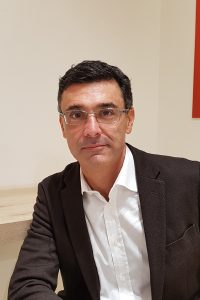
Andrea Detti is a Professor at the Department of Electronic Engineering, University of Rome Tor Vergata. His research focuses on computer networks, particularly Information-Centric Networking (ICN), Cloud Computing, and Software Defined Networks (SDN). He has coordinated major EU projects like Fed4IoT and BONVOYAGE, addressing IoT and Intelligent Transport Systems. He serves as Associate Editor for IEEE Transaction on Network and Service Management and has guest-edited special issues on ICN. His teaching includes courses on Internet Technologies, Mobile Wireless Networks, and Cloud Computing, emphasizing hands-on labs with Linux, Cisco routers, and OpenStack. Key projects include leadership roles in EU initiatives such as ICN2020, GreenICN (energy-efficient ICN), and OFELIA (ICN over SDN). He coordinates industrial projects with Telecom Italia and SSI/Finmeccanica on publish-subscribe paradigms in MANET and DTN. His research spans ICN scalability, adaptive video streaming, and satellite communication optimizations. Publications (80+) cover ICN architecture, SDN integration, and network performance modeling. He actively participates in conferences and standardization efforts, contributing to the evolution of future Internet architectures.
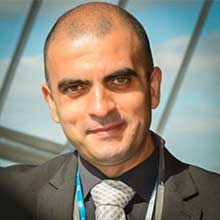
Shafique Chaudhry is an Assistant Professor of Information Systems and Operations at the Reh School of Business, Clarkson University. He holds a Master's in Computer Science from the University of Punjab, Pakistan, and a PhD from Ajou University, Korea. His postdoctoral research at University College Cork, Ireland, preceded his faculty roles in Saudi Arabia and Oman. His research focuses on Data Analytics, IoT, and Machine Learning, with applications in cybersecurity, smart grids, and healthcare. He has authored over 30 peer-reviewed articles and holds two international patents. Notable awards include IITA Korea's research award and Dhofar University's Best Researcher award (2015). Dr. Chaudhry teaches courses such as Applied Data Analytics, Machine Learning, and Database Design. His work spans IoT security frameworks, sensor network optimization, and policy compliance systems. Recent trends in his publications emphasize hybrid ML techniques for IoT security, environmental sensor calibration, and pediatric neurosurgery outcome analysis. Education : MSc Computer Science (Punjab University), PhD (Ajou University) Patents : Two international patents (details not specified) Lab/Teams : Active in IoT, cybersecurity, and smart systems research groups
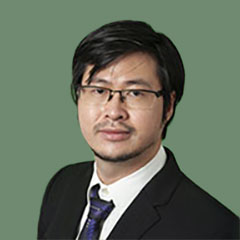
Bo Tan is an Associate Professor in Communications Engineering and Signal Processing at the Department of Electronic and Electrical Engineering, University College London (UCL). He previously held positions as Associate and Assistant Professor at Tampere University, Finland, where he retains a Docent title. His research focuses on radio signal processing, wireless communications, integrated sensing and communication (ISAC), machine learning applications in healthcare, and radar systems. He has coordinated major projects such as ANCHOR (Horizon Europe MSCA Doctoral Networks) and SPHERE-DNA (Finland Research Council), and serves as an Associate Editor for IEEE Wireless Communications Letters. Education: PhD in Engineering, University of Edinburgh (United Kingdom) Postdoctoral Researcher roles at: University College London (Computer Science & Electronic Engineering) University of Bristol (Electrical and Electronic Engineering) Research Interests: Wireless communication systems (5G/6G, THz, mmWave) Radar-communication integration and dual-functional systems Machine learning for signal processing and healthcare Integrated sensing and communication (ISAC) architectures Non-invasive healthcare monitoring via passive sensing Key Projects (2021–2025): ANCHOR (2025–2029): Research Coordination Committee lead SPHERE-DNA (2021–2024): PI focusing on federated learning for eHealth ACCESS (2021–2025): PI on wireless network security DIOR (2022–2027): Coordinator for H2020 MSCA Professional Roles: Vice Chair, IEEE Finland AP/ED/MTT Chapter Reviewer for IEEE/ACM/IET journals Labs/Teams: Leading the SPHERE-DNA initiative on privacy-preserving healthcare systems Active contributor to the IEEE's wireless communication standards
Peppino Fazio is an Associate Professor at the Department of Molecular Sciences and Nanosystems, Ca' Foscari University of Venice. He holds a degree in Computer Engineering (2004) and a PhD from the University of Calabria (2008). His research focuses on telecommunications, wireless networks, and quantum key distribution, with contributions to vehicular networks, cybersecurity, and IoT systems. Key career milestones include post-doctoral research in Spain (2008), involvement in EU projects (e.g., ORACOLO), and leadership in StartCup-winning ventures like SPITCH (2014). He has authored over 130 publications, with recent work addressing quantum networks, deep learning for intrusion detection, and multi-layer robotic swarm management. Received StartCup Calabria 2012 and Lamarck Award 2014. Co-founder of SPITCH and developer of the Intelligent Remote Controller (IRC). His research spans theoretical and applied domains, including network emulation, mobility prediction in 5G/6G systems, and medical neuroscience modeling through network operators.
Dr. Umar Raza serves as a Senior Lecturer in Networking, IoT and Smart Systems at Manchester Metropolitan University's Department of Engineering, where he concurrently manages the Cisco Network Academy. His academic career includes prior lecturing roles in Robotics and Computing at Staffordshire University, with research spanning industrial applications of emerging technologies. His educational credentials include a PhD in Wireless Sensor Networks from the University of Bradford (2014), Postgraduate Certificates in Research Methods and Professional Higher Education from Staffordshire University (2005, 2007), an MSc in Electronics and Computer Systems from Huddersfield University (1995), and a BSc in Engineering Electronics from DeMontfort University Leicester. Dr. Raza's research centers on Internet of Things applications integrated with Machine Learning across industrial, agricultural, and healthcare domains. Current projects address IoT/ML solutions for domicile care monitoring, cognitive impairment assistance, natural disaster early warning systems, and smart farming in Pakistan, with emphasis on practical implementations in real-world environments. His recent publications demonstrate a pronounced interdisciplinary trajectory, particularly at the IoT-Machine Learning nexus for healthcare innovation (cardiac diagnostics, autism support wearables) and agricultural technology. Significant contributions also appear in blockchain scalability, vehicular network security, and 5G propagation modeling, reflecting both theoretical rigor and industry-relevant problem solving. Professional recognition includes: Fellow of the Higher Education Academy (FHEA) Dr. Raza actively supervises two MSc and two PhD candidates while leading multiple funded projects: Principal Investigator for KTP projects with Kindus Solutions (completed) and Trumeter Ltd Project Advisor for KTP with RAIT Ltd Lead researcher on NATO Science for Peace Security grant for natural disaster warning systems Principal Investigator for Ignite National Technology Fund smart farming initiative in Pakistan As Cisco Network Academy Manager, he drives industry-academia collaboration in networking education, developing curricula that integrate cutting-edge IoT and cybersecurity concepts while maintaining strong professional engagement through IEEE, IET, and BCS memberships.
Hung Luyen is an Assistant Professor in the Department of Electrical Engineering at the University of North Texas, affiliated with the College of Engineering. His research focuses on advanced antenna systems, microwave engineering, and biomedical applications of electromagnetic technology. He holds a position in Discovery Park B232 and can be contacted at Hung.Luyen@unt.edu . Research Interests His work emphasizes innovative antenna designs, including reconfigurable phased arrays, 3D-printed components, and microwave ablation technologies for medical treatments. Key areas include: Phased array and reflectarray antenna systems Dielectric resonator antennas and material science applications Microwave ablation for minimally invasive cancer treatment RF system optimization (e.g., Doherty amplifiers) Biomedical engineering integration with antenna technologies Recent Research Trends Recent publications highlight advancements in antenna miniaturization, reconfigurability, and AI-driven design methodologies. His work bridges traditional antenna engineering with emerging fields like additive manufacturing and biomedical electronics. Awards & Grants No scientific awards were explicitly mentioned in the provided information. Funding sources and grant details are not listed here. Labs & Teams Research activities are centered in the University of North Texas labs affiliated with the Electrical Engineering department, though specific lab names or collaborative teams were not detailed in the text.
Richard P. Martin is an Associate Professor and Associate Chair in the Department of Computer Science at Rutgers University's School of Arts and Sciences. His research focuses on wireless networks, sensor systems, and network security applications, with particular emphasis on practical implementations that address real-world challenges in healthcare monitoring, energy efficiency, and network performance. He maintains an active research group working closely with WINLAB (Wireless Information Network Laboratory) and has numerous ongoing collaborations with industry and academic partners. Dr. Martin's research interests span several interconnected domains including wireless communication systems, sensor network design, network security, localization technologies, and energy-efficient computing. His work bridges theoretical computer science with practical engineering applications, often focusing on how wireless technologies can solve problems in healthcare monitoring, particularly medication adherence systems. His research group develops innovative solutions that combine hardware and software approaches to address challenges in wireless sensing, network security, and system optimization. The team's work often involves creating novel protocols and architectures that improve performance while maintaining security and privacy constraints. His recent publication trends show increasing focus on healthcare applications of wireless technology, particularly medication adherence monitoring systems using smart pill bottles and other unobtrusive sensing approaches. He has also maintained a strong research thread in wireless network security, localization systems, and energy-efficient computing. His work often combines machine learning techniques with traditional networking approaches to create more intelligent and adaptive systems. The interdisciplinary nature of his research spans computer science, electrical engineering, and healthcare technology domains. Dr. Martin has advised numerous graduate students who have co-authored publications with him, including Murtadha Aldeer, Mohammadreza Soltaniyeh, and Jorge Ortiz. His research has been supported by various funding sources that enable the development of practical wireless systems and sensor networks. He teaches courses in computer systems and structures, sharing his expertise in networked systems with undergraduate and graduate students. His laboratory work centers around WINLAB, where his team develops and tests wireless and sensor network technologies. The lab focuses on creating practical implementations of theoretical concepts, often building custom hardware and software solutions to address specific challenges in wireless communications and sensing. Current projects emphasize healthcare applications, energy efficiency, and security in wireless systems.
Anis Koubâa is a Professor at the Department of Electrical Engineering and Computers, Instituto Superior de Engenharia do Porto (ISEP), part of the Polytechnic Institute of Porto (IPP). He is a core member of the CISTER Research Centre, focusing on real-time systems, quality of service, wireless sensor networks, and cyber-physical systems. He holds a PhD in Computer Science from the National Polytechnic Institute (INPL, France), a Master’s from University of Nancy I, and a Telecommunications Engineering degree from Sup’Com Tunisia. His postdoctoral research at CISTER (2005–present) concentrated on real-time aspects of wireless sensor networks. Research interests span cooperative autonomous driving, drone networks, edge computing, and secure communication protocols. He has published extensively on topics like vehicular platooning, real-time QoS monitoring, and cloud-edge architectures for AI applications. His work integrates robotics (ROS frameworks), network protocols (IEEE 802.15.4e), and safety-critical systems. Over 100 papers in journals/conferences and co-authored books on ROS and cyber-physical systems demonstrate his leadership in these areas. Current projects include COPADRIVe (cooperative driving simulation), COPA-Drive (platooning validation), and secure architectures for autonomous systems. He leads the RIOTU-Lab for IoT and robotics research, emphasizing practical applications in disaster management, UAV coordination, and smart city infrastructure.
Luca Catarinucci is an Associate Professor in Electromagnetic Fields (ING-INF/02) at the University of Salento's Department of Innovation Engineering. He leads courses in Microwaves and Electromagnetic Solutions for Hi-Tech , focusing on IoT, RFID, and 3D-printed electronic devices. His research spans electromagnetic interactions with biological systems, RFID sensor integration, and additive manufacturing for high-frequency applications. He has co-authored over 200 publications, including 80+ journal articles and 4 book chapters, and holds patents in RFID technology. His work bridges academic research and industry applications, emphasizing practical solutions for wireless communication and environmental monitoring. Education: Laurea in Electrical Engineering from the University of Perugia (1998). Professional roles include Researcher at the University of Salento (2004–2015) and collaboration with ICEMB (Interuniversity Center for Electromagnetic Field Studies). His expertise includes electromagnetic simulation, antenna design, and IoT-enabled systems. Research interests: RFID technology, IoT infrastructure, microwave engineering, 3D-printed antennas, and electromagnetic characterization of novel materials. Projects include smart waste management systems, thermal comfort monitoring, and worker safety solutions using RFID and sensor networks. Labs/Teams: Part of the Department of Innovation Engineering's research groups focused on electromagnetic design, IoT, and additive manufacturing. Collaborates with industry partners on projects involving 3D-printed RF devices and energy-autonomous sensors.
Dr. Christian Vogt Dr. Christian Vogt is a Lecturer at the Department of Information Technology and Electrical Engineering within the Center for Project-Based Learning at ETH Zürich. His research focuses on IoT systems, embedded electronics, and wearable technology with applications in agriculture, healthcare, and urban computing. He specializes in energy-efficient sensor networks, flexible electronics, and real-time data transmission systems. Research Interests Vogt's work bridges hardware innovation and software optimization, emphasizing practical implementations through project-based learning. Key areas include: IoT and Wireless Sensor Networks Low-power embedded machine learning Wearable biomedical devices Flexible/stretchable electronics Ultra-wideband and radar-based sensing Publications Recent work highlights energy-efficient livestock monitoring systems using LoRa, battery-free sensor nodes powered by human body energy, and real-time gesture recognition with novel sensors. His research often involves interdisciplinary collaborations between computer science, electrical engineering, and biomedical applications. Affiliations ETH Zürich - Center for Project-Based Learning Department of Information Technology and Electrical Engineering Contact: christian.vogt@pbl.ee.ethz.ch
Xueguang Yuan is a researcher with expertise in optical communication systems, medical image segmentation, blockchain technology, and IoT networks. Their work spans 2009–2024, focusing on advanced sensor design, federated learning algorithms, and secure communication protocols. Key Research Areas : Optical Time-Domain Reflectometry, Graphene Metasurfaces, Thyroid Nodule Segmentation, and Federated Learning for Multi-Institutional Collaboration Recent Publications (2024): Wearable strain sensors using MXene composites, SNR optimization in Φ-OTDR systems, and polarization conversion metasurfaces for radar cross-section reduction Notable collaborations include Yangan Zhang (optical systems), Xiaohong Huang (medical AI), and Zhifang Deng (federated learning). Trends in their 2021–2024 articles highlight applications of transformers , compressed sensing , and blockchain in healthcare, 5G networks, and security. They have contributed to 5G broadcast services, satellite routing, and edge computing platforms, though no formal awards or student mentorship details are publicly listed in the provided sources.
Claude D'Amours is a Professor in the Department of Electrical and Computer Engineering at the University of Ottawa, Faculty of Engineering. With a research career spanning over two decades, his work has significantly contributed to the fields of wireless communications, signal processing, and network security. His current research focuses on cutting-edge technologies including 5G/6G networks, UAV communications, reconfigurable intelligent surfaces, and physical layer security. Dr. D'Amours' research interests center on advanced wireless communication systems, with particular emphasis on MIMO technologies, CDMA systems, spectrum sensing techniques, and channel modeling for emerging applications. His work bridges theoretical foundations with practical implementations, addressing critical challenges in modern wireless networks including interference management, security vulnerabilities, and efficient resource allocation. Recent research has expanded into UAV communications, where he investigates channel characteristics and reliability issues in drone-based networks. Analysis of his recent publications reveals a strong focus on security aspects of wireless communications, particularly physical layer security mechanisms to counter jamming attacks and eavesdropping. His work on RF fingerprinting for device authentication in industrial IoT settings demonstrates practical applications of his theoretical research. The trend in his publications shows increasing attention to 5G/6G technologies, with particular emphasis on millimeter wave communications, hybrid precoding architectures, and novel approaches to spectrum sharing. Multiple publications on UAV-to-ground channel modeling and performance analysis Research on physical layer security mechanisms against jamming attacks Work on hybrid precoding architectures for mmWave MIMO systems Studies on RF fingerprinting for secure industrial IoT applications Investigations into spectrum sensing techniques for cognitive radio Dr. D'Amours maintains active research collaborations with numerous colleagues, particularly Michel Kulhandjian, Hovannes Kulhandjian, and François Chan, resulting in a consistent stream of high-impact publications across top-tier IEEE journals and conferences. His research group appears to focus on both theoretical analysis and practical implementation of advanced wireless communication techniques, with applications spanning from critical mission communications to industrial IoT security.
Joan Lluís Pijoan is an active researcher in wireless communication systems, with a focus on high frequency (HF) radio transmission, antenna design, and IoT architectures. He has co-authored numerous publications in journals such as IEEE Access, Sensors, and Remote Sensing, primarily investigating technical challenges in long-haul HF links, NVIS communication, and heterogeneous wireless networks. His research spans applications in Antarctic geophysical observatories IoT for natural disaster monitoring Advanced modulation schemes Signal processing for remote sensing Recent work highlights his expertise in antenna booster design (2023), multicarrier modulation (2020), and ionospheric channel analysis (2015). While specific university affiliations or departmental roles remain unspecified, his 15 most recent articles demonstrate sustained contributions to wireless systems since 2004.
Aderemi Aaron-Anthony Atayero is an academic affiliated with the Department of Electrical Engineering and Information Engineering at Covenant University, Nigeria. His research focuses on telecommunications, wireless communication systems, IoT applications, and machine learning, with a strong emphasis on path loss modeling, signal processing, and smart city technologies. He has contributed to over 30 publications since 2005, collaborating extensively with researchers like Segun I. Popoola, Sanjay Misra, and Simon K. Hinga. His work spans theoretical and applied domains, including 5G mmWave models, botnet detection in IoT networks, and smart city infrastructure. Notable projects include the development of a low-intensity light imaging probe for medical applications and a cellular RSS dataset for roaming analysis. His research has practical implications for urban communication systems, healthcare technology, and cybersecurity.
Peter H. Aaen is a Reader in Microwave Semiconductor Device Modeling at the University of Surrey, with expertise in RF and microwave device modeling and characterization. His work focuses on developing advanced methodologies for high-power and high-frequency electronic devices, with applications in telecommunications and quantum technologies. Dr. Aaen received his B.A.Sc. in Engineering Science and M.A.Sc. in Electrical Engineering from the University of Toronto, Canada, and his Ph.D. in Electrical Engineering from Arizona State University, USA, in 1995, 1997, and 2005 respectively. Prior to joining the University of Surrey, he was the manager of the RF Modeling and Measurement Technology team at Freescale Semiconductor Inc (formerly Motorola Inc.), bringing significant industry experience to his academic work. Dr. Aaen's research spans several critical areas in microwave engineering, with a particular emphasis on developing multi-physics based modeling methodologies for high-power and high-frequency electronic devices. His expertise includes calibration techniques for microwave measurements, package modeling, development of compact models for microwave power transistors and RFICs, and efficient electromagnetic simulation methodologies for complex packaged environments. He has made significant contributions to understanding frequency dispersion in RF LDMOS transistors, electro-thermal modeling, and the development of measurement techniques for extreme impedance devices. His publication record demonstrates a clear progression from fundamental device modeling to advanced measurement techniques and applications in next-generation communications systems. Recent work has focused on multiphysics measurements, electro-optic field imaging, and the application of nanowire technologies to microwave switches, reflecting the evolving challenges in 5G and beyond communications infrastructure. Dr. Aaen is a Senior Member of the IEEE and active in several technical committees including the IEEE Technical Committee (MTT-1) on Computer-Aided Design, the technical program committee of the IEEE Conference on Electrical Performance of Electronic Packaging and Systems (EPEPS), and the executive committee of the Automatic RF Techniques Group (ARFTG). Dr. Aaen has supervised numerous PhD students whose research has advanced the field of microwave engineering, particularly in areas related to measurement uncertainty, multiphysics characterization of high-power transistors, and nanoscale device integration. His collaborative work spans multiple institutions and has resulted in significant advancements in understanding device behavior under complex operating conditions. His laboratory work focuses on developing novel measurement techniques that combine electro-optic systems with nonlinear vector network analyzers and load-pull measurement systems, enabling unprecedented visualization of electromagnetic field distributions within operating transistors. This work has led to breakthroughs in understanding oscillation mechanisms and thermal behavior in high-power devices.