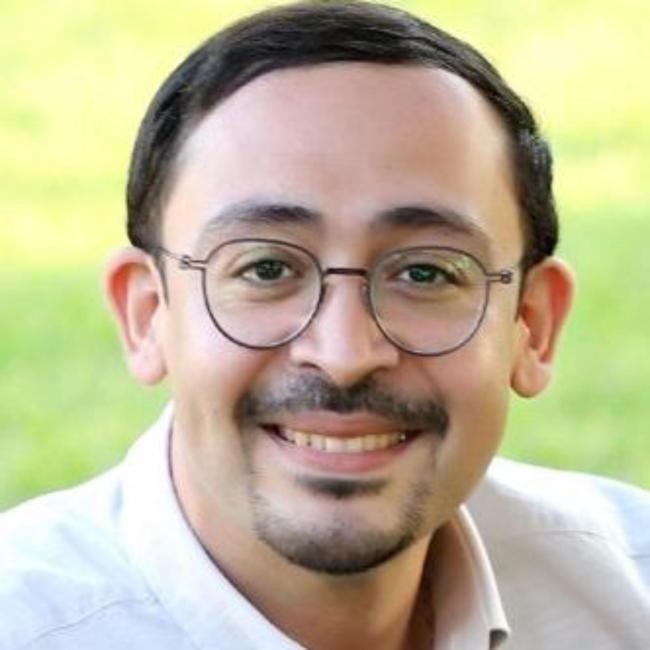
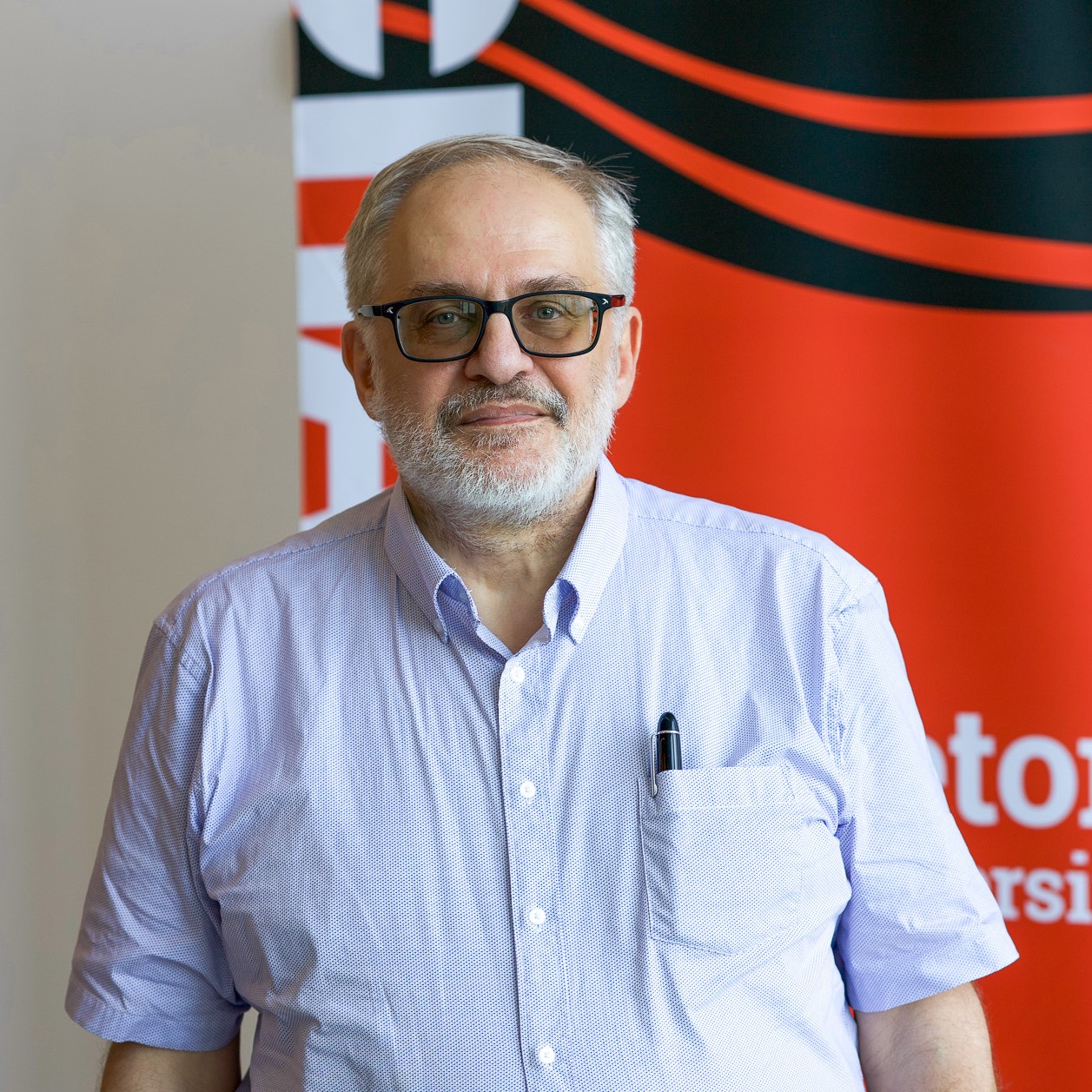
Reza Sirjani is a Senior Lecturer in Electrical Engineering at Karlstad University. He has over 15 years of research experience in energy systems optimization, renewable energy, and power electronics. His academic journey includes roles at Cyprus International University (2013-2017) and Eastern Mediterranean University (2017-2022), where he became an Associate Professor and served as Vice Chair of the Department of Electrical and Electronics Engineering (2020-2022). Education: BSc in Electrical Engineering (Power Systems) from Khajeh Nasir Toosi University of Technology, Iran (2006) MSc in Electrical Engineering (Power Systems) from Tehran Science and Research University (2008) PhD in Electrical Engineering from National University of Malaysia (2013) Research interests include renewable energy integration, optimization techniques in energy systems, power electronics, FACTS devices, and smart grids. His work addresses challenges in power quality, energy storage systems, and distributed generation. Current projects: GränsENERGI (2025-2028): Innovative solutions for future energy supply LOKEN (2024-2027): Local Energy Management in Värmland Riskville power system expansion (2023-2024) Teaching: Courses include Electrical Power Systems Technology, Power Electronics, Electric Machines, and Renewable Energy Integration. Collaborations include Glava Energy Center, CSR, and Clear River Racing. Publications: Over 40 peer-reviewed articles focusing on optimization algorithms, energy storage, and renewable integration. Supervised 18 Master/PhD students.
Madhav Marathe is a tenured Professor of Computer Science and the Distinguished Professor in Biocomplexity at the University of Virginia, where he also serves as Executive Director of the Biocomplexity Institute. He has held leadership roles at Virginia Tech and Los Alamos National Laboratory, and his work is deeply rooted in transdisciplinary team science. His research spans a wide range of domains including network science, artificial intelligence, computational epidemiology, high-performance computing, and complex systems. He develops foundational methods to model, analyze, and control large-scale biological, information, social, and technical (BIST) systems. His work integrates theoretical computer science with practical applications in public health, disaster response, and infrastructure resilience. The recent publications reflect a strong trend toward data-driven modeling of societal challenges—especially in pandemic response, forced migration, and energy systems. His team leverages agent-based simulations, machine learning, and high-performance computing to create scalable, policy-relevant models that support real-world decision-making. Fellow, American Association for the Advancement of Science (AAAS) Fellow, Association for Computing Machinery (ACM) Fellow, Institute of Electrical and Electronics Engineers (IEEE) Fellow, Society for Industrial and Applied Mathematics (SIAM) Distinguished Researcher Award, University of Virginia (2023) Honorary Doctoral Degree, Chalmers University (2023) Best Paper Award, SIGKDD 2021 (Applied Data Science) Endowed Distinguished Professor of Biocomplexity (2019) Dean’s Award for Excellence in Research, Virginia Tech (2018) Constellation Group’s Supernova Award (2016) Dr. Marathe has mentored over 30 doctoral students, 20+ MS students, and 15 postdoctoral fellows, and has led major federally funded projects including those related to computational epidemiology and national security. His lab, the Biocomplexity Institute, develops high-performance computing services and data analytics platforms for policymakers and emergency planners. He is also involved in initiatives such as the National Security Data and Policy Institute and the Expeditions in Global Pervasive Computational Epidemiology.
Mohammad Derawi is a Professor in the Department of Electronic Systems at the Faculty of Information Technology and Electrical Engineering, Norwegian University of Science and Technology (NTNU), Gjøvik campus. He leads the Smart Wireless Systems (SWS) research group and serves as the scientific leader of the IoT Lab at NTNU Gjøvik. Educational Background: PhD in Information Security from NISLab (Norway) and CASED (Germany) BSc and MSc in Informatics from DTU (Denmark) His research interests span smart wireless systems, Internet of Things (IoT), information security with a focus on biometric authentication, digital electronics, applied machine learning for activity recognition, and e-learning technologies. His work integrates cybersecurity, embedded systems, and data science to develop secure and intelligent IoT solutions for real-world applications. The recent publications highlight a strong trend in mmWave-based sensing for unmanned aerial systems, RF fingerprinting for secure identification, IoT security frameworks, and machine learning applications in education and human resource analytics. His research bridges theoretical innovation with practical implementation, particularly in smart cities, healthcare, and transportation. Scientific Awards and Recognition: Invitation to the Crown Prince and Princess's 50th birthday celebration, 2023 Study Quality Award, NTNU, 2017 Norway’s Youngest Professor Award, 2016 Denmark’s youngest M.Sc. engineering award, 2009 IEEE Commendation for Young Professionals Volunteer, 2011 Multiple best paper awards from IEEE, ACM, and Springer Mohammad Derawi has been involved in several funded research and development projects, including IoT Safetraffic (RFF Inland), Ambulance Drone (NTNU Vice-Rector), Wireless ECG (Innovation Norway), biometric handgun security (RFF Innlandet), and the EU Framework 7 TURBINE project. He mentors students and collaborates with international researchers, contributing significantly to both academic and applied domains. His leadership in the SWS group and IoT Lab fosters innovation in wireless and secure embedded systems. He is actively engaged in laboratory and team-based research, particularly through the Smart Wireless Systems group and the IoT Lab, focusing on developing secure, intelligent, and scalable solutions for next-generation wireless applications.
Fredrik Manne is a Professor at the Department of Informatics, University of Bergen, Norway. His work focuses on parallel and distributed computing, particularly in combinatorial scientific computing and self-stabilizing algorithms. He has contributed extensively to graph algorithms, including matching, coloring, and clustering, with applications in high-performance computing, numerical optimization, and wireless networks. His research involves designing algorithms for parallel architectures, including multi-core and GPU-based systems. He has co-authored numerous publications on topics such as spanning forests, vertex cover heuristics, and b-matching. His work often integrates theoretical and applied approaches, addressing challenges in sparse matrix computations and wireless mesh network communication. The recent articles highlight his exploration of graph neural networks for parallel coloring, efficient multithreaded matching algorithms, and GPU-accelerated clustering methods. These studies emphasize scalability, optimization, and real-world applications in computational science.
Øyvind Ytrehus is a Professor at the Department of Informatics, Faculty of Mathematics and Natural Sciences, University of Bergen (UiB), Norway. He is actively engaged in research and academic supervision, with a focus on coding theory and its applications in communication systems. Research Interests: His primary research areas include Coding Theory , Error-Correcting Codes , Information Theory , Network Coding , Cryptography , and RFID Communication . His work bridges theoretical foundations with practical implementations in wireless and networked systems. The recent publications (2024–2008) reflect a consistent trajectory in coding for communication security, RFID systems, and iterative decoding. Key trends include the use of formally unimodular lattices for secrecy gain, LDPC and turbo codes for erasure channels, and network coding for multicast and delay optimization. His work frequently intersects with physical-layer security and energy-efficient communication. Scientific Contributions: Co-edited special issues on coding theory and applications. Authored foundational work on convolutional codes, stopping sets, and generalized Hamming weights. Contributed to RFID and inductively coupled channel modeling. Advising and Grants: He has supervised several PhD candidates, including Bjørn Møller Greve, Christian W. Otterstad, and Mohsen Toorani. While specific grants are not listed, his extensive publication record and editorial roles suggest active grant involvement in coding and communication research. Labs and Teams: While no specific lab name is mentioned, his collaborations with researchers at Simula UiB, University of Valladolid, and Lancaster University indicate participation in interdisciplinary research networks focused on coding and communication systems.
Gianluca Aloi serves as an Associate Professor in Telecommunications (IINF-03/A) at the Department of Computer Engineering, Modeling, Electronics and Systems (DIMES) of the University of Calabria, Italy. He holds the position of scientific director for the Telecommunications and Information Theory for Advanced Networking Laboratory (TITAN Lab.). Dr. Aloi earned his PhD in Systems Engineering and Computer Science from the University of Calabria in 2003 and became a University Researcher in Telecommunications (ING-INF/03) in 2004 before advancing to his current academic rank. His research expertise spans wireless networks, cellular networks, sensor networks, Internet of Things systems and their interoperability, management of resources and services in the Cloud/Edge and IoT (CEI) Continuum, and management and orchestration of network resources using Artificial Intelligence. His work particularly focuses on UAV-assisted IoT systems for industrial applications, geological hazard monitoring, and maritime environments. Analysis of Dr. Aloi's recent publications (2023-2025) reveals a strong emphasis on applying reinforcement learning and deep learning techniques to solve complex networking challenges. His research shows a clear trajectory toward developing intelligent network architectures that optimize data collection, improve system resilience, and enhance resource management across the edge-to-cloud continuum. Key application areas include smart factories, disaster monitoring, and urban vehicular systems. Dr. Aloi teaches courses including Fundamentals of Telecommunications Networks and Telecommunications Networks for both Electronic Engineering and Computer Engineering programs. He maintains regular reception hours every Tuesday from 9am to 11am or by appointment via email. As scientific director of TITAN Lab, Dr. Aloi leads research initiatives focused on advanced networking technologies, with particular emphasis on developing solutions for next-generation communication systems that integrate artificial intelligence with traditional networking paradigms to address real-world challenges in telecommunications and IoT applications.
Feng Li is a Professor in the Department of Computer and Information Technology at Indiana University - Purdue University Indianapolis (IUPUI), School of Science. He received his PhD from Florida Atlantic University in 2009 and has since established himself as a leading researcher in network security, wireless networks, and privacy-preserving technologies. His research interests span across multiple domains in computer science, with a primary focus on Network Security , Wireless and Mobile Ad-hoc Networks , Federated Learning Security , Differential Privacy , and Social Network Analysis . Dr. Li's work consistently addresses critical challenges in securing distributed systems while preserving user privacy, with applications ranging from social networks to edge computing environments. His research methodology often combines theoretical frameworks with practical implementations, resulting in solutions that balance security, privacy, and system performance. Dr. Li's publication record reveals a strong trajectory in addressing evolving security challenges in distributed systems. His recent work has focused on securing federated learning systems against sophisticated attacks like backdoors, developing privacy-preserving techniques for social networks using differential privacy, and enhancing malware detection through advanced machine learning approaches. His research shows a clear evolution from traditional network security problems to more complex challenges in modern distributed AI systems. Dr. Li has successfully mentored numerous graduate students who have become active contributors in the field, including Agnideven Palanisamy Sundar, Tianchong Gao, Qin Hu, and Ryan Hosler, who frequently appear as co-authors on his publications. His research has been supported by various funding mechanisms that have enabled his team to tackle significant challenges in network security and privacy. His laboratory focuses on practical implementations of security and privacy solutions, with particular emphasis on real-world applicability of theoretical concepts. Current research directions include enhancing the security of federated learning systems, developing more robust privacy-preserving techniques for social networks, and creating advanced malware detection systems using deep learning approaches.
Dr. Shanti Krishnan is a Senior Lecturer in the School of Engineering at Swinburne University of Technology, where she conducts interdisciplinary research at the intersection of physics, engineering, and cybersecurity. Her work spans fundamental physics experiments and practical industrial applications. Her research focuses on nuclear and plasma physics , particle physics , and astronomical sciences , with key contributions to muon tomography for monitoring mining infrastructure, dark matter detection via the SABRE South experiment at the Stawell Underground Physics Laboratory, and instrumentation development for the W. M. Keck Observatory. She also explores cybersecurity in Industry 4.0 , particularly through digital twin technologies and anomaly detection in cyber-physical systems. Her recent publications highlight advancements in muon-based navigation for space exploration, cosmic ray-based cybersecurity systems, and simulation of dark matter detectors. These works demonstrate a strong trend toward applying particle physics principles to real-world engineering and security challenges. Dr. Krishnan has received multiple grants, including external funding from HILT CRC Limited and internal grants from Swinburne University, supporting projects such as impact-driven learning materials for net zero in heavy industries and digital twin applications for blood product manufacturing. Development of Impact driven learning materials for net zero in heavy industries – HILT CRC Limited (2025) Rapid Scenario Testing using digital twin for sustainable and scalable manufacturing of blood products – Swinburne University (2024) A Dynamic In-bed Weight Monitoring System for Aged Care Facilities – Cloud Burst Software Pty Ltd (2023) She is actively supervising PhD students, including a project on using digital twins and machine learning to detect cyber-attacks in Industry 4.0 manufacturing systems. Her work is supported by collaborations with institutions such as Caltech, UC Observatories, ANU, and W. M. Keck Observatory, reflecting a strong international research network. Dr. Krishnan leads and contributes to multidisciplinary research teams focusing on detector development, secure industrial systems, and sustainable manufacturing. Her lab and project teams integrate physics, engineering, and data science to solve complex real-world problems.
Jordi Domingo-Pascual is a distinguished academic and researcher in the field of computer networking, affiliated with Universitat Politècnica de Catalunya (UPC) in Barcelona, Spain. With a publication record spanning nearly three decades from 1994 to 2022, he has established himself as a leading expert in network architecture, quality of service, and network performance analysis. His work has significantly contributed to advancements in networking technologies including Software-Defined Networking, Locator/Identifier Separation Protocol (LISP), and wireless network optimization. Dr. Domingo-Pascual's research primarily focuses on network architecture and performance , with specific expertise in: Quality of Service (QoS) mechanisms in heterogeneous networks Locator/Identifier separation protocols and their scalability Software-Defined Networking control plane optimization Wireless network capacity estimation and performance analysis Inter-domain routing and multicast solutions Traffic measurement and hidden traffic analysis His work bridges theoretical network models with practical implementations, often collaborating with industry partners to address real-world networking challenges. Throughout his career, Domingo-Pascual has evolved from early ATM network research in the 1990s to IP/MPLS integration in the 2000s, and more recently to Software-Defined Networking and network function virtualization. His most recent publications (2020-2022) show a strong focus on controller placement optimization, addressing critical challenges in network latency and reliability. This represents a natural progression from traditional networking protocols toward more modern, flexible network architectures that can adapt to evolving service requirements. Dr. Domingo-Pascual has mentored numerous researchers and collaborated extensively with colleagues across Europe and internationally. His research group at UPC has been particularly active in projects related to European Union-funded initiatives in networking technologies. While specific grant details aren't provided in the available information, his consistent publication record suggests sustained research funding throughout his career.
Dr. Robert Vogt-Ardatjew is a researcher specializing in Radio Systems , with a focus on Electromagnetic Compatibility (EMC) , Risk Management , and Software Defined Radio (SDR) . His work spans Shielding Effectiveness , Propagation Channel Modeling , and Frequency-Selective Emission Detection , contributing to both academic research and practical EMC engineering solutions.
Ioannis Lambadaris is a Full Professor and Chancellor’s Professor at Carleton University's Department of Systems and Computer Engineering, Faculty of Engineering and Design. Holding a Ph.D. from the University of Maryland, he has contributed extensively to network performance analysis over 25+ years. Specializes in stochastic processes, cloud computing, and wireless edge systems Led Ericsson 5G Chair initiatives Supervised over 70 graduate students His research spans QoS control , VNF placement optimization , and IoT indoor localization , with over 170 publications. Recent work focuses on reinforcement learning and deep learning in network resource allocation. Scientific Recognition: Chancellor’s Professor Ericsson 5G Chair Contact: ioannis@sce.carleton.ca | Office: Mackenzie 4448, Ottawa, ON
Francisco Javier Falcone Lanas is a Professor in the Department of Electrical, Electronic and Communication Engineering at the Public University of Navarre. He is affiliated with the Institute of Smart Cities and leads research in the Communication, Signals and Microwaves research group. He also participates in the Doctoral Program in Communications Technologies, Bioengineering, and Renewable Energy. His research focuses on applied and computational electromagnetics, with specializations in: Analysis and design of complex electromagnetic media and metamaterials Design of communication devices (filters, diplexers, couplers, antennas) Implementation of devices on flexible/paper substrates Wireless power transfer systems Computational electromagnetic code development (FDTD, 3D Ray Launching, Radar RCS) Implementation of devices for PLMN, WSN, LPWAN and Radar systems Radioelectric analysis at physical layer and system level His recent publications demonstrate a strong focus on millimeter-wave technology, MIMO antenna systems, 5G/6G communications, and wireless sensor networks. His work often addresses optimization challenges related to energy consumption, interference handling, and capacity/coverage in communication systems. He has made significant contributions to the fields of metamaterials and their application in antenna design and performance enhancement. With an H-index of 58 in Scopus, Professor Falcone Lanas has established himself as a leading researcher in his field. His research has practical applications in various domains including: 5G/6G mobile communication systems Wireless body area networks Vehicle-to-everything (V2X) communications Wireless sensor networks for industrial applications Digital twin modeling for UAV communications Earthquake disaster management systems
Ana Maria Neves de Almeida Baptista Figueiredo is a Coordinator Professor and academic leader at the Institute of Engineering of Polytechnic of Porto (ISEP/IPP). She currently serves as President of the ISEP Scientific Council (since 2018), Sub-Director of post-graduation programmes in Big Data & Decision Making and Industry 4.0, and holds numerous leadership roles in accreditation processes including A3ES, EUR-ACE, and ABET. She is a Senior Researcher at GECAD (Research Group on Intelligent Engineering and Computing for Advanced Innovation and Development) and member of LASI (Associated Laboratory of Intelligent Systems). Education: PhD in Industrial and Systems Engineering (2003) from University of Minho MSc in Electronic and Computer Engineering - Specialization in Industrial Informatics (1996) from University of Porto BSc in Industrial Informatics (1993) from Polytechnic Institute of Oporto - Institute of Engineering BSc in Electronic Engineering (1990) from Polytechnic Institute of Oporto - Institute of Engineering Professor Figueiredo specializes in Ambient Intelligence, Decision Support Systems, and Intelligent Systems with applications spanning multiple domains. Her research combines artificial intelligence, big data analytics, and user-centered design to develop innovative solutions. She has particular expertise in creating personalized systems that adapt to user needs and contexts, with strong emphasis on practical applications in real-world settings. Her publication record reveals consistent research activity across three main application domains: tourism technology (personalized recommendation systems, smart travel planning), Industry 4.0 (intelligent manufacturing, production scheduling), and healthcare (respiratory monitoring, medical diagnostics). The research demonstrates a clear trajectory from foundational work in scheduling algorithms to increasingly sophisticated intelligent systems incorporating machine learning, sensor networks, and emotional computing. Awards and Recognition: 2017 Award of merit for scientific publication in TELEMATICA AND INFORMATICS journal 2017 Prémio SPAIC – AstraZeneca for FRASIS respiratory monitoring project 2013 PIPED honorable mention for Android e-learning platform 2012 1st place in POLIEMPREENDE entrepreneurship competition with NearTour project 1995 Best student award in Industrial Informatics Engineering Professor Figueiredo has supervised 3 completed PhD theses with 1 ongoing, and more than thirty MSc dissertations. She has participated as Principal or Co-Principal Investigator in 6 projects and as Researcher in more than 20 projects, securing funding from FCT and other agencies. Her work has been supported by significant grants including TheRoute, GROUPLANNER, Smartravel, ATT, InVALUE, INVALUE_PT, NIS, PIANISM, Cyberfactory, SECOIIA, and produtech_R3. She leads research activities within GECAD and LASI, collaborating with international teams from Spain, Canada, USA, Czech Republic, Turkey, and Italy. Her work bridges academic research with practical applications through partnerships with business organizations, public entities, and professional associations across multiple sectors.
Nicholas Bambos is the R. Weiland Professor in the School of Engineering at Stanford University, holding a joint appointment in the Department of Electrical Engineering and the Department of Management Science & Engineering. He served as the Fortinet Founders Department Chair of the Management Science & Engineering Department from 2016 to 2020. His academic career spans over three decades, with previous positions as an assistant professor (1989-1995) and tenured associate professor (1995-1996) at UCLA before joining Stanford in 1996. Prof. Bambos's primary research interests focus on the architecture and high-performance engineering of computer systems and networks, along with data analytics emphasizing medical and health-care applications. His work spans multiple domains including networking and the Internet, cloud computing, multimedia streaming, computer security, and digital health. Methodologically, his contributions extend to network control, online task scheduling, routing and distributed processing, and machine learning and artificial intelligence. His research has resulted in over 300 peer-reviewed publications that demonstrate a strong interdisciplinary approach, bridging theoretical computer science with practical healthcare applications. The trajectory of Prof. Bambos's recent publications reveals a strategic expansion from traditional networking and systems research into healthcare analytics, particularly opioid use prediction and digital health monitoring. His work increasingly integrates machine learning techniques with domain-specific medical knowledge, showing a clear evolution toward solving complex societal challenges through technological innovation. Many publications demonstrate collaborative work across engineering, medical, and data science disciplines, reflecting the growing importance of interdisciplinary research in addressing modern healthcare challenges. His significant scientific achievements have been recognized through numerous prestigious awards: R. Weiland Professorship in Engineering (2016-present) Eugene L. Grant Teaching Award (2014) IBM Faculty Award (2002) Cisco Systems Faculty Scholar (1999-2003) National Young Investigator Award from NSF (1992-1997) Prof. Bambos has graduated over 40 doctoral students who have gone on to leadership positions in academia, Silicon Valley industries, technology startups, finance, and venture capital. His research has been supported by significant funding, including a $30 million Stanford Networking Research Center which he directed from 1999 to 2005. Beyond traditional academic roles, he has served on various editorial boards, scientific committees, and as a consultant and co-founder of technology startups, demonstrating his commitment to translating academic research into real-world impact. He leads the Computer Systems Performance Engineering Lab (Perf-Lab) at Stanford, which comprises doctoral students and industry visitors engaged in various research projects. His lab serves as an interdisciplinary hub connecting theoretical computer science with practical applications in healthcare, energy, and networking domains. The lab's collaborative environment fosters innovation across traditional academic boundaries, reflecting Prof. Bambos's broader research philosophy of addressing complex problems through integrated, multi-disciplinary approaches.
Ramakrishnan Durairajan is an Associate Professor in the School of Computer and Data Sciences at the University of Oregon, where he co-directs the Oregon Networking Research Group (ONRG). He holds a Ph.D. and M.S. in Computer Sciences from the University of Wisconsin-Madison and a B.Tech in Information Technology from Anna University. His research employs data-driven approaches to enhance internet robustness, focusing on: Network infrastructure measurement using AI/ML and statistical methods Mitigation of intrinsic threats (e.g., terabit-scale DDoS attacks) Resilience against extrinsic threats (e.g., climate disasters) Innovations in programmable optics and multi-cloud systems Recent publications explore satellite-based internet resilience, optical topology programming, and dynamic telemetry systems, reflecting a strong emphasis on cybersecurity and network efficiency in high-stakes environments. Notable scientific honors include: NSF CAREER Award and CRII Award Best Paper Awards at ACM CoNEXT/SIGCOMM Popular Science's 'Best of What's New in Security' Ripple Faculty Fellowship He leads federally and industry-funded research projects totaling over $5M, advises graduate/undergraduate researchers, and consults for startups on network security and cloud architecture challenges.