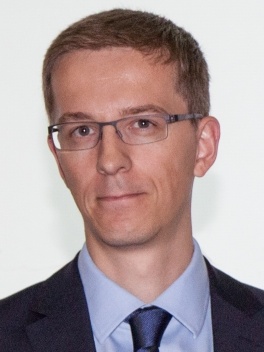
Randolf Ebelt serves as Professor and Chair of High Frequency Engineering within the Department of Electrical Engineering, Electronics and Information Technology (EEI) at FAU's Faculty of Engineering. His research focuses on radar systems and wireless localization technologies with applications in automotive and indoor environments. His primary research interests include automotive radar signal processing, deep learning applications for radar enhancement, and wireless sensor networks for precise localization. He has pioneered work in ghost detection identification, MIMO radar arrays, and 24 GHz transceiver design for real-time 3D positioning systems. Analysis of his publication trends shows increasing integration of artificial intelligence with traditional radar engineering since 2019, particularly using deep learning for automotive radar enhancement and ghost detection. His work consistently addresses practical implementation challenges including phase noise effects, antenna array optimization, and multipath mitigation in complex environments. No scientific awards were documented in the provided materials. Information regarding student advising or research grants was not specified in the source content. Professor Ebelt leads the Chair of High Frequency Engineering (LHFT) research group at FAU, which maintains active collaborations with industry partners on radar technology development and participates in international research initiatives focused on automotive and wireless positioning systems.
Giuseppe Durisi is a Professor at Chalmers University of Technology in Gothenburg, Sweden, specializing in information theory and communication systems. His research bridges mathematically rigorous solutions with practical engineering applications in wireless and optical communication. Primary affiliation: Communication Systems Group , Chalmers University. Research focus: Optimal information transmission, 6G network design, and theoretical foundations of deep learning. Research Interests: Durisi investigates the interplay between latency, reliability, and throughput in digital communication, particularly in millimeter-wave and optical fiber channels . He develops finite-blocklength theory for efficient coding and explores how information theory can explain deep learning performance. Recent Article Trends: His 2025–2024 work emphasizes 6G distributed MIMO networks , energy-harvesting protocols , and machine learning integration into communication theory. Key themes include random access protocols , privacy in wireless aggregation , and hardware-constrained massive MIMO . Scientific Recognition: An IEEE Senior Member, Durisi has published extensively in top journals like IEEE Transactions on Communications and IEEE Transactions on Wireless Communications . Notable Collaborations: Work with teams on radio-over-fiber fronthaul , unsourced multiple access , and time-synchronized URLLC links .
Ali Gurbuz is an Assistant Professor in the Department of Electrical and Computer Engineering at Mississippi State University's College of Engineering, specializing in smart sensing systems and machine learning applications. His research integrates signal processing with autonomous systems for environmental monitoring and medical imaging. His educational background includes a Bachelor's degree from Bilkent University (Turkey), and Master's/Doctoral degrees in Electrical and Computer Engineering from Georgia Institute of Technology. Since joining MSU in 2018 after a position at the University of Alabama, he has established himself as a leading researcher in sensing technologies. Gurbuz's research focuses on developing intelligent front-end sensing systems that optimize data acquisition using machine learning, addressing critical bottlenecks in processing capabilities for applications ranging from autonomous vehicles to precision agriculture. His work emphasizes efficient data collection through radar, lidar, and camera systems, with particular attention to soil moisture estimation and medical imaging applications. His publication portfolio demonstrates strong trends in UAS-based remote sensing, RF interference mitigation, and deep learning for signal processing. Key research areas include GNSS reflectometry for soil moisture mapping, radar-based sign language recognition, and seafloor gas seep detection using sonar data. NSF CAREER Award recipient (2021) for $500,000 to advance smart sensing systems research Gurbuz co-directs the Information Processing and Sensing (IMPRESS) research group at MSU, collaborating extensively with the Center for Advanced Vehicular Systems and Geosystems Research Institute. His work bridges theoretical signal processing with practical implementations in agricultural monitoring, environmental sensing, and medical applications, with several projects demonstrating hardware-software co-design approaches for next-generation sensing systems.
Prof. Dr.-Ing. Mario Neugebauer is a faculty member at the Faculty of Computer Science/Mathematics at Dresden University of Applied Sciences (HTW Dresden). His teaching areas span fundamental programming, database systems, mobile networks, and communication technologies. Research Focus: Off-road navigation, wearable systems for production/logistics, localization systems, and mobile sensor devices. Thesis Topics: Image analysis for bird conservation, shadow detection on wind turbines, bat monitoring, and mission planning for autonomous robots. Technologies: Rust, ROS2, Kotlin/Spring Boot, Python, Raspberry Pi, C/C++ for microcontrollers, and IEEE 802.15.4 protocols. Teaching Responsibilities: Courses include Programming I/II , Mobile Networks , and Business Informatics and Digitization for Informatik, Medieninformatik, and Umweltmonitoring programs.
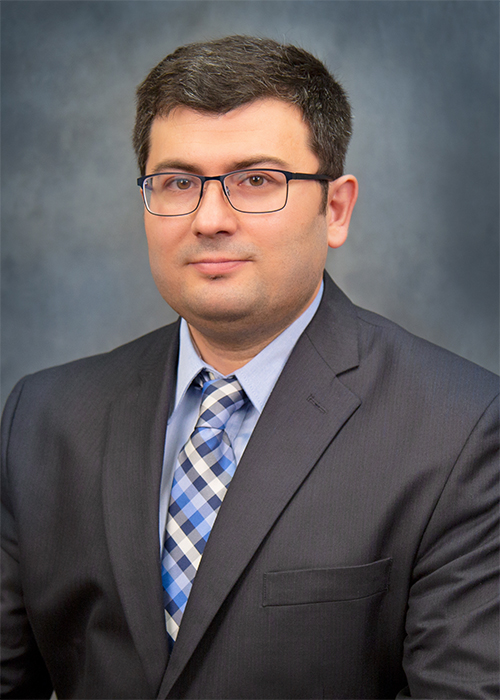
Haodong Wang is an Associate Professor in the Department of Electrical Engineering and Computer Science at Cleveland State University, where he maintains his office in FH 219. He previously served as an Assistant Professor in the Department of Math and Computer Science at Virginia State University before joining Cleveland State. Wang received his educational foundation through a Bachelor of Engineering in Electronic Engineering from Tsinghua University in Beijing, China, followed by a Master of Science in Electrical Engineering from Penn State University, culminating in a Ph.D. in Computer Science from the College of William and Mary in August 2009. His research primarily focuses on wireless and mobile computing security, with particular expertise in cryptographic implementations for resource-constrained sensor networks. Wang's WM-ECC project represents one of the most efficient publicly available ECC implementations for wireless sensor motes, adopted by numerous institutions including USC, UCLA, and Siemens Research Corporation. His work bridges theoretical security concepts with practical implementations for pervasive computing environments. Analysis of his 15 most recent publications reveals a progression from foundational wireless sensor network security work toward broader applications in cloud computing, virtualization, and web security, while maintaining his core expertise in wireless communications. His research consistently demonstrates a practical engineering approach to solving real-world security and performance challenges. Wang has served on technical program committees for major conferences including GLOBECOM 2014 and ICCCN 2014, reflecting his standing in the networking research community. He teaches a comprehensive range of courses at Cleveland State University from foundational programming and data structures to advanced topics in information security, blockchain, and artificial intelligence, demonstrating both breadth and depth in computer science education.
Lucas Schöffer serves as a Lecturer in the Department of Media and Digital Technologies at the University of Applied Sciences St. Pölten, Austria. He is affiliated with the Institute of Creative Media Technologies and contributes to multiple study programs including Creative Computing (BA), Media Technology (BA), Interactive Technologies (MA), and Smart Engineering (BA). His academic work spans both teaching and research in emerging digital technologies. Dr. Schöffer's research interests focus on the practical applications of extended reality technologies, particularly in healthcare, education, and industrial settings. His work explores how virtual and augmented reality can enhance user experiences in rehabilitation, training, and collaborative work environments. He has made significant contributions to understanding biomechanics in virtual environments and developing inclusive technologies for diverse user groups including elderly populations and young adults. His publication record demonstrates a clear evolution from early work on ambient assisted living and mobile technologies toward increasingly sophisticated XR applications. Recent publications highlight his expertise in quantitative gaze tracking, adaptive XR training systems, and biomechanical analysis in virtual environments. His collaborative research spans multiple disciplines including computer science, healthcare, industrial engineering, and human-computer interaction. Dr. Schöffer actively participates in numerous research projects including EyeQTrack, GreenTouch, IMPACT-sXR, MIRACLE, VeRgonomiX, and BRELOMATE. These projects demonstrate his commitment to applying media technologies to solve real-world problems in healthcare, ergonomics, industrial manufacturing, and social inclusion. He works within the Immersive Media Lab and ReMoCap Lab environments at the university, contributing to both theoretical research and practical implementations of emerging technologies.
Dajana Cassioli is a Senior Lecturer at the University of L'Aquila, Department of Information Engineering, Computer Science and Mathematics. Her research focuses on advanced computer networks, propagation modeling, and wireless communication technologies. Key research areas: 5G/6G networks, Software Defined Networking (SDN), Millimeter Wave Communications Principal investigator for the ERC Starting Grant VISION project and SafeCOP project Active in cybersecurity applications for O-RAN, quantum key distribution, and physical layer attack detection Her work bridges theoretical and applied aspects of wireless sensor networks, channel modeling, and emerging telecom technologies. Recent publications emphasize O-RAN security, edge computing optimization, and human-induced channel dynamics Recognized for contributions to network slicing, terahertz communication, and graphene-based devices Scientific awards include the prestigious ERC Starting Grant for the VISION project. She actively contributes to educational initiatives in cybersecurity through the CyberChallenge.IT@UnivAQ program.
B.H.W. Hendriks is a Professor in the Department of Mechanical Engineering at Delft University of Technology, specializing in Medical Instruments & Bio-Inspired Technology. His research develops optical and signal processing solutions for medical applications, particularly in surgical environments and tissue analysis. His primary research domains include: Biomedical Engineering Optical Spectroscopy (Diffuse Reflectance) Medical Device Development Surgical Technology Cardiac Signal Processing Tissue Characterization Analysis of his 55+ publications reveals dual expertise: (1) Intraoperative optical sensing (e.g., fiber-optic tissue identification during spine surgery and electrosurgery), and (2) Advanced signal processing for cardiac diagnostics (atrial fibrillation mapping via electrograms/ECG). His work bridges mechanical engineering with clinical practice through real-time surgical workflow analysis and tissue-mimicking phantoms. Hendriks actively supervises research students and has generated 3 significant datasets for tissue characterization. His fingerprint shows dominant activity in spectroscopy (100%), surgery (93%), and tissue analysis (91%), with emerging work in human pose tracking for cardiac catheterization laboratories.
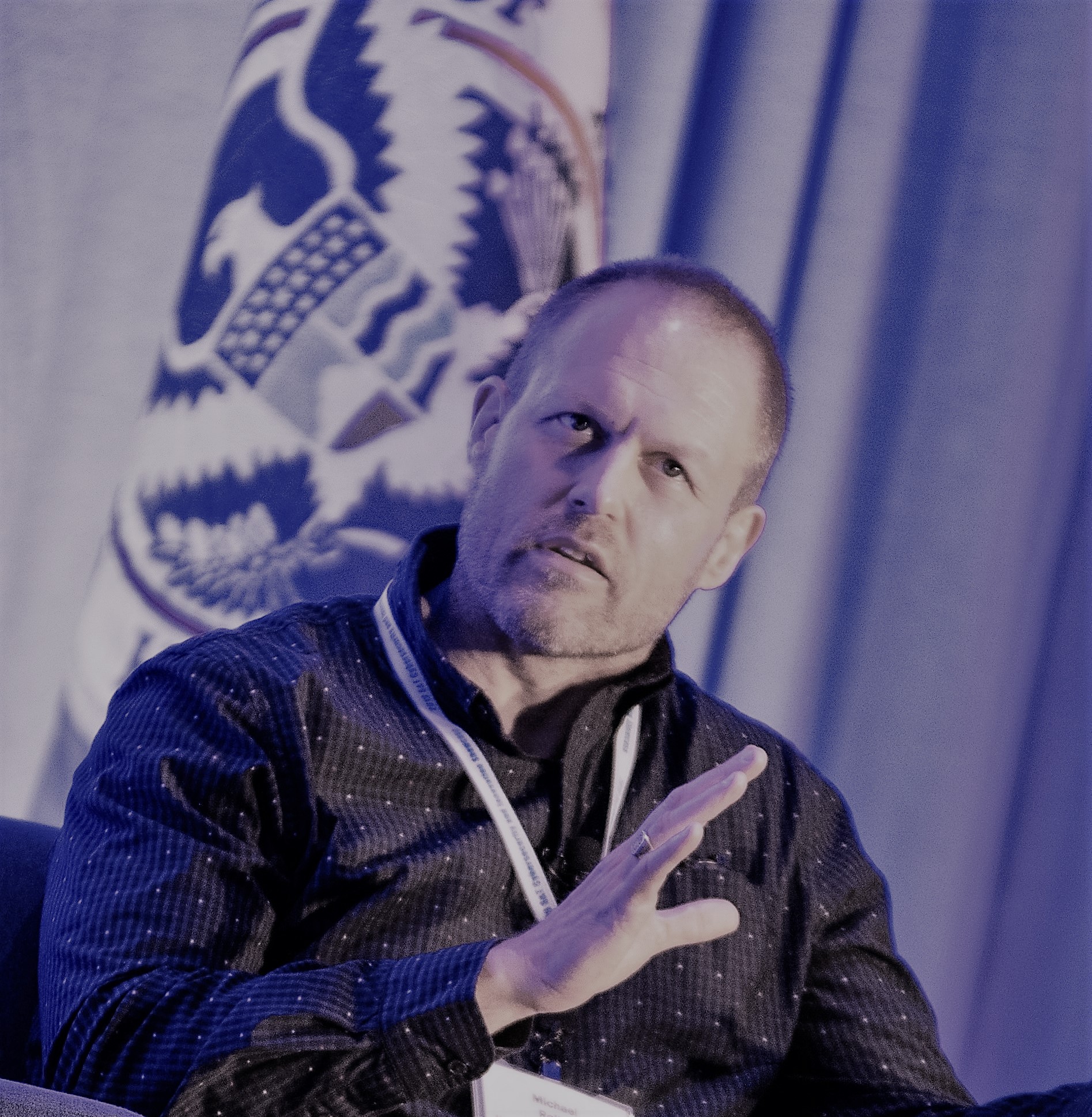
Michael Reiter is the James B. Duke Distinguished Professor in the Departments of Computer Science and Electrical & Computer Engineering at Duke University's Pratt School of Engineering. With a career spanning over three decades, he has established himself as a leading authority in computer security, distributed systems, and cryptography. His academic journey includes significant positions at Carnegie Mellon University, where he served as founding Technical Director of CyLab, and the University of North Carolina at Chapel Hill. Ph.D. from Cornell University, 1993 James B. Duke Distinguished Professor, Duke University Former Professor at Carnegie Mellon University Former Distinguished Professor at UNC Chapel Hill Former Director of Secure Systems Research at Bell Labs Professor Reiter's research spans the critical intersection of security, cryptography, and distributed computing. His work addresses fundamental challenges in computer and network security, with particular focus on Byzantine fault-tolerant systems, privacy-preserving protocols, and applied cryptography. His recent research has expanded into machine learning security, blockchain technologies, and the security implications of emerging network infrastructures like 5G. Reiter's approach combines theoretical rigor with practical implementation, resulting in systems that have influenced both academic research and industry practice. Analysis of Reiter's recent publications reveals a strong trend toward addressing security challenges in modern computing environments. His work bridges traditional security domains with emerging technologies, particularly focusing on the security implications of machine learning systems, blockchain applications, and next-generation network architectures. The breadth of his research demonstrates how foundational security principles can be adapted to address novel threats in increasingly complex computing ecosystems. Test of Time Award, ACM Conference on Data and Application Security and Privacy (2024) Lasting Research Award, ACM Conference on Data and Application Security and Privacy (2024) Test of Time Award, ACM Conference on Computer and Communications Security (2022, 2019) Outstanding Contributions Award, ACM SIGSAC (2016) Fellow, IEEE (2014) Fellow, ACM (2008) Throughout his career, Reiter has mentored numerous students and collaborated extensively with researchers across academia and industry. His work has been supported by significant research grants from NSF, DARPA, and other funding agencies, focusing on foundational security mechanisms and their application to real-world systems. He has taught courses ranging from introductory security to advanced cryptography and distributed systems. Reiter maintains an active research group at Duke that explores cutting-edge security challenges. His team works at the intersection of theory and practice, developing both novel security mechanisms and practical implementations that address real-world vulnerabilities. Current projects focus on securing machine learning systems, enhancing blockchain security through trusted execution environments, and developing privacy-preserving protocols for distributed applications.
Amjad Hussain is a researcher at the Faculty of Engineering , University of Deusto , specializing in geolocation technology and sensor fusion systems. His work focuses on improving smartphone navigation through advanced algorithms like Factor Graph Optimization (FGO) and Kalman Filtering (KF). Email: amjad.hussain@deusto.es Research Interests : - GNSS-PDR fusion for high-precision positioning - Comparative analysis of filtering algorithms - Mobile computing for real-time navigation systems Publication Trends : His recent works (2023-2024) explore optimization techniques for pedestrian navigation, emphasizing accuracy under diverse movement patterns and sensor error conditions.
Riku Jäntti is a Professor in the Department of Information and Communications Engineering at Aalto University. His research focuses on wireless communications, 5G/6G technologies, and backscatter communications systems. He leads research in areas including radio resource management, cognitive radio, machine type communications, and cloud radio access networks. Professor Jäntti's research interests span several key areas in modern wireless communications: Wireless Communications and 5G/6G technologies Backscatter and Ambient IoT communications Radio Resource Management and Cognitive Radio UAV and Drone communications networks Physical layer security and secure communications Machine Type Communications and Internet of Things His recent publications (2023-2025) demonstrate a strong focus on next-generation wireless technologies, particularly in backscatter communications, UAV networks, and 6G development. His work shows a trend toward integrating AI techniques with wireless communications, enhancing security in low-power networks, and developing practical solutions for real-world wireless challenges. His research has significant implications for the future of energy-efficient wireless communications and the Internet of Things. Professor Jäntti has received numerous awards for his research contributions: Most downloaded paper of IEEE Journal of Radio Frequency Identification (Dec 2024) IEEE TCGCC Best Conference Paper Award (Jan 2019) Second Best Paper Award (Jan 2019) Bronze best paper award (Jan 2020) Best Paper Award at COCORA 2011 Best Paper Award at WCNC 2013 Supervisor/manager of the year at Helsinki University of Technology, 2009 Professor Jäntti has supervised numerous students and researchers throughout his career, contributing to the development of next-generation wireless communication experts. His work has attracted significant research funding, particularly in the areas of 5G/6G technologies and IoT communications. He actively collaborates with industry partners to translate research findings into practical applications. He leads the Communication Engineering research group at Aalto University, which focuses on cutting-edge wireless communications research. The group works on multiple projects related to future wireless networks, including 6G development, backscatter communications, and UAV-based wireless systems.
Injung Kim is a PhD candidate in the Department of Computer Science at the University of Pittsburgh's School of Computing and Information. She is a US Permanent Resident with expertise in privacy, security, IoT, and cloud computing. Her research bridges theoretical and applied domains, focusing on smart cities, network resilience, and kernel-level anti-hacking systems. Education: PhD (CS, Pitt), MS (CS, Columbia), MS (Computer and Communications Engineering, POSTECH), B.S. (CS, SSWU) Teaching: CS0007 instructor, TA for operating systems, cloud computing, and algorithm courses Work: Program Manager Intern (Microsoft), Senior Program Manager (Korea Telecom), Research Engineer (AhnLab), Intern (Oracle/Sun Microsystems) Patents: 4 Korea patents in cloud billing, virtual desktops, and personal storage systems Her publications span smart campus privacy, bike-sharing analytics, and IoT cloud integration. Awards include the 2018 SCI Poster Competition People's Choice Award and multiple scholarships.
Mohsen Abedi is a Visiting Doctoral Researcher at the Department of Information and Communications Engineering, Aalto University. His research focuses on wireless network planning, optimization algorithms, and future communication technologies. University: Aalto University Department: Department of Information and Communications Engineering Research Interests: Mohsen's work primarily addresses challenges in cellular network planning, visible light communications, and energy-efficient systems. His research leverages geometric algorithms like Voronoi partitions to optimize network performance across 5G/6G and optical wireless domains. Publication Trends: His recent publications (2018–2025) emphasize network optimization, energy harvesting models, and novel planning approaches for next-generation communication systems. Key themes include algorithmic efficiency, quality of service adaptability, and hybrid wireless-optical infrastructure. Email: ext-mohsen.abedi@aalto.fi
Professor Qiang Ni is an esteemed academic at Lancaster University , affiliated with the School of Computing and Communications , Data Science Institute , and Security Lancaster Center . Currently serving as Head of Communication Systems Research Group , School Director of International Partnership , and Theme Lead in Security and Defence at the Lancaster Intelligent, Robotic and Autonomous Systems (LIRA) Research Centre , he has previously held roles as School Director of Postgraduate Studies and Deputy Director of Research . Research focus areas include Wireless Networks/Communications , IoT , Cyber Security , AI , Digital Twins , and Quantum Communication Key projects involve INTACT (secure IoT-to-Cloud), CoGNETs (swarm intelligence), SustainAIRA6G (AI-driven resource allocation), and TRACE-V2X (multi-RAT traffic steering) Recent publications address 6G communication design , quantum neural networks , blockchain-based border control systems , and intelligent vehicular networks As an IEEE Senior Member and IEEE Communications Society Distinguished Lecturer , he chairs editorial boards for IEEE Transactions on Green Communications and JSAC Machine Learning Series . His supervision spans Wireless Communication , Big Data Analytics , and Quantum Machine Learning PhD research topics. Active in H2020 , Horizon Europe , and UKRI funded projects, he also contributes to IEEE standard committees.
Prof. Yonina Eldar is a Professor of Electrical Engineering at the Faculty of Mathematics and Computer Science , Weizmann Institute of Science. She holds the Dorothy and Patrick Gorman Professorial Chair and serves as Head of the Manya Igel Center for Biomedical Engineering and Signal Processing . Her research bridges classical signal processing with modern deep learning techniques. Develops model-based deep learning frameworks combining domain knowledge with data-driven approaches Focuses on sub-Nyquist sampling for efficient data acquisition in radar, ultrasound, and communications Created hardware prototypes for time-encoding machines and modulo-ADC systems Innovates in joint radar-communication systems for autonomous vehicles Her work emphasizes algorithm unrolling to create interpretable neural networks with reduced training requirements. Publications demonstrate applications in: Medical imaging (ultrasound, ECG monitoring) Autonomous systems (automotive radar) Communication technologies (DFRC systems) Active in theoretical foundations of model-based deep learning, with recent work establishing mathematical guarantees for unfolded networks. Collaborations include Tsinghua University and industry partners for hardware validation.