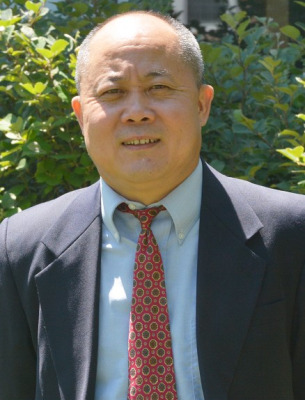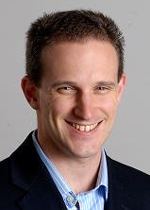
Elad AlonView profile
Professor
Elad Alon is a Professor of Electrical Engineering and Computer Sciences at the University of California, Berkeley, and co-director of the Berkeley Wireless Research Center (BWRC). He joined UC Berkeley in 2007 and has held visiting/consulting roles at companies like Intel, AMD, and IBM Research. His research focuses on energy-efficient integrated systems, including circuit design, communication techniques, and optimization for computing and communications. Alon holds a Ph.D. (2006), M.S. (2002), and B.S. (2001) in Electrical Engineering from Stanford University. Education: Ph.D., Electrical Engineering, Stanford University, 2006 M.S., Electrical Engineering, Stanford University, 2002 B.S., Electrical Engineering, Stanford University, 2001 Research Interests: Alon's work spans energy-efficient integrated circuits, wireless communication systems, and neural engineering. His research emphasizes: Ultra-low-power digital logic using MEMS relays High-speed analog-to-digital converters (ADCs) Wireless implantable devices (e.g., neural dust) Phased-array transceivers and massive MIMO systems Power management and voltage regulation techniques Recent Article Trends: His recent publications focus on: Neural Dust: Wireless neural recording in peripheral nervous systems via ultrasonic communication RF Transceivers: Low-power 60 GHz phased arrays and D-band MIMO systems MEMS Circuits: Capacitive-gap oscillators and relay-based logic Processor Design: RISC-V vector processors and energy-efficient SoCs Awards: IEEE Fellow (2019) ISSCC Jack Raper Award (2010) Multiple Best Paper Awards (ISSCC, CICC, VLSI Circuits) UC Berkeley Outstanding Teaching Award (2010, 2017) Advising & Labs: Alon has advised over 20 Ph.D. students, many focusing on: Neural engineering interfaces RF/mm-wave transceivers Energy-efficient ADCs Massive MIMO architectures He leads the BWRC and collaborates with the Center for Neural Engineering & Prostheses (CNEP), advancing projects like the Human Intranet and OMNI neuromodulation systems.