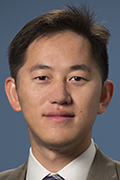
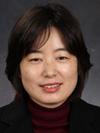
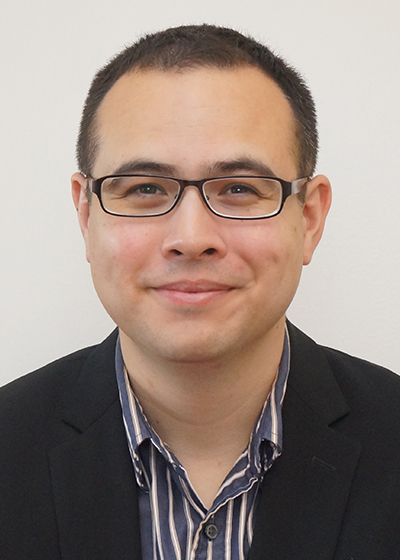
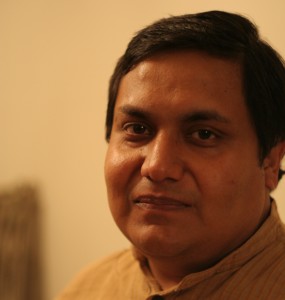
Kaiyuan Yang is an Associate Professor in the Department of Electrical and Computer Engineering at Rice University, leading the Secure and Intelligent Micro-Systems (SIMS) Lab. His research focuses on low-power integrated circuits and bioelectronic implants for applications like the Internet of Everything and medical devices. He holds a B.S. from Tsinghua University (2012) and M.S./Ph.D. degrees from the University of Michigan (2017). Research Interests: Low-power digital/analog/mixed-signal systems Bioelectronics and implantable devices Hardware security and PUF design Mixed-signal computing and emerging materials Recent work emphasizes magnetoelectric-powered implants, secure backscatter communication, and in-memory computing architectures. His publications span top venues like IEEE ISSCC, IEDM, and ACM MobiCom. Awards: 2022 NSF CAREER Award 2022 IEEE Top Picks in Hardware Security 2016 IEEE SSCS Predoctoral Achievement Award Dr. Yang serves on editorial boards for IEEE TVLSI and program committees for ISSCC/CICC. His lab develops miniature, secure, and energy-efficient systems for healthcare and IoT applications.
New Jersey Institute of Technology (NJIT)United States
Steven I-Jy Chien serves as Professor and Director of the Transportation Program within the Department of Civil and Environmental Engineering at the New Jersey Institute of Technology (NJIT). His career spans academia, government, and industry with significant contributions to transportation engineering research and practice. His educational credentials include: Ph.D. in Civil and Environmental Engineering from University of Maryland-College Park (1995) M.S. in Civil and Environmental Engineering from University of Maryland-College Park (1991) B.S. in Civil Engineering from Tamkang University (1983) Professor Chien's research focuses on transportation system resilience, sustainable transit operations, and advanced traffic modeling. His work addresses critical challenges in urban rail networks, demand-responsive transit services, and energy-efficient transportation systems. He employs sophisticated computational methods including genetic algorithms, machine learning, and Bayesian approaches to solve complex transportation problems involving network vulnerability, passenger behavior, and infrastructure optimization under uncertainty. Analysis of his recent publications reveals strong emphasis on transportation resilience against cascading failures, sustainable operations for electric transit systems, and pandemic-responsive aviation scheduling. His research spans diverse geographic contexts including major Chinese metropolitan areas and U.S. transportation networks, demonstrating global applicability of his methodologies. His professional recognition includes: 2024 Keynote Speaker at Union-Tech Lecture, National Taiwan Ocean University 2022 Keynote Speaker at International Conference of Chinese Institute of Transportation 2022 Best Poster Award from New Jersey Department of Transportation Professor Chien has secured research funding from federal agencies including the Federal Highway Administration (FHWA) where he contributed to CORSIM traffic simulation software development. His industry experience with China Engineering Consultants Inc. and Information Dynamic Inc. informs his practical approach to transportation challenges. As Transportation Program Director, he oversees curriculum development and industry partnerships that prepare students for transportation sector careers. He maintains active collaboration with transportation agencies globally, particularly through his leadership in the Transportation Program at NJIT which serves as a hub for innovation in urban mobility solutions.
Dr. Nanpeng Yu is a Full Professor at the University of California, Riverside , serving as Vice Chair and Graduate Advisor in the Department of Electrical and Computer Engineering . He maintains cooperative faculty affiliations with the Department of Computer Science and Department of Statistics , and directs the Energy, Economics, and Environment Research Center at UCR. Education : B.S. in Electrical Engineering from Tsinghua University (2006), M.S. in Electrical Engineering and Economics, and Ph.D. from Iowa State University (2010) Prior Industry Experience : Senior Power System Planner and Project Manager at Southern California Edison (2011-2014) Dr. Yu’s research bridges smart grid technologies , data-driven optimization , and machine learning for energy systems. Key areas include voltage control , renewable energy integration , transportation electrification , and grid resilience . His recent work focuses on physics-informed graph learning for unit commitment problems and adversarial purification in power system classifiers. The AI-Energy Nexus Laboratory under Dr. Yu has produced impactful publications in Applied Energy , IEEE Transactions on Power Systems , and Transportation Research series, covering topics like heavy-duty EV charging infrastructure and dynamic distribution network reconfiguration . Lab members have won the American-Made Digitizing Utilities Grand Prize ($300,000) from the U.S. DOE. Leadership Roles : Chair, IEEE Power and Energy Society Distribution System Operation and Planning Subcommittee Chair, IEEE Power and Energy Society Working Group on Data-Driven Modeling for Power Distribution Networks Associate Editor, IEEE Transactions on Smart Grid and IEEE Power Engineering Letters Scientific Awards : Regents Faculty Fellowship Regents Faculty Development Award Multiple IEEE Best Paper Awards
Frede Blaabjerg is a Professor at Aalborg University (AAU Energy) , affiliated with the Faculty of Engineering and Science . Since 1998, he has pioneered power electronics research in applications such as wind turbines , photovoltaic (PV) systems , reliability engineering , and Power-2-X technologies. Education : PhD in Electrical Engineering (1995, Aalborg University) Honorary Degrees : Honoris Causa at University Politehnica Timisoara (2017) and Tallinn Technical University (2018) His research focuses on power electronics control , system optimization , and reliability for renewable energy and electric mobility . Recent work includes grid-forming converters , virtual synchronous generators , and smart EV charging systems. Key publication trends span 15+ years , with over 3,733 peer-reviewed articles and 900+ journal papers in power electronics , renewables , and energy storage . Notable book series: Control of Power Electronic Converters and Systems (4 volumes, Elsevier). Scientific Awards : 46 IEEE Prize Paper Awards 2020 IEEE Edison Medal 2019 Global Energy Prize 2014 IEEE William E. Newell Power Electronics Award Leadership Roles : Editor-in-Chief, IEEE Transactions on Power Electronics (2006–2012) Chairman, Danish Council for Research and Innovation Policy (2020–) President, IEEE Power Electronics Society (2019–2020)
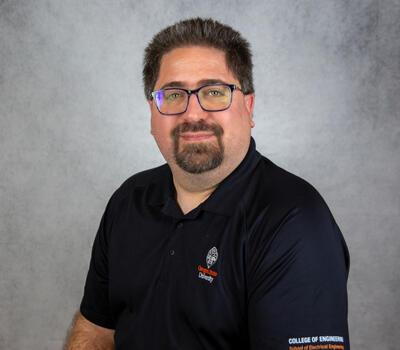
Scott Kerlin is a Senior Lecturer in the Department of Electrical Engineering and Computer Science at Oregon State University's College of Engineering. He holds an M.S. and B.S. in Computer Science from the University of North Dakota. Prior to academia, he worked at the Mayo Clinic on medical software systems and IBM as a build master for enterprise products. His career spans roles including network administrator, lab manager, and Undergraduate Director at UND. Dr. Kerlin's research focuses on bridging industry experience with academic curriculum, particularly in computer science education, project-based learning, and cybersecurity. He emphasizes practical applications of theoretical concepts, such as integrating 3D printing and scanning technologies with security systems for small satellites. His work also explores student efficacy in AI courses and scalable software project management methodologies. He has taught at multiple institutions, including the University of Minnesota and Augsburg University, and held roles at Michigan Tech as Senior Security Engineer. His 2024 Engineering+ Outstanding Teaching Award highlights his commitment to pedagogical innovation. Current projects include in-space 3D printing, solar energy systems, and cryptographic solutions for satellite communications. Key areas of contribution include: 3D printing/Scanning: Material characterization, key replication, and aerospace applications Cybersecurity: Intrusion detection, satellite communications security, and chaotic cryptosystems Educational Innovation: Active learning frameworks, PBL implementation, and student performance modeling His interdisciplinary approach connects computer science fundamentals with real-world engineering challenges, emphasizing sustainability and industry relevance in curricula.
Srdjan Lukic is the Deputy Director of the FREEDM Systems Center and a Distinguished Professor in the Department of Electrical and Computer Engineering at North Carolina State University. His research focuses on power electronics, power systems, and electric vehicle infrastructure. He holds a Ph.D. in Electrical Engineering from the Illinois Institute of Technology (2007). His work emphasizes high-power converters, DC microgrids, and extreme fast charging (XFC) technologies for electric vehicles. Recent projects include the development of a 13.2 kV solid-state transformer for EV XFC stations and resilient distributed control frameworks for smart grids. He has contributed to wireless charging systems and modular medium-voltage fast chargers. Key Awards: University Faculty Scholars (2022) Grants: DOE-funded XFC projects, modular EV charging infrastructure Labs/Teams: FREEDM Systems Center, RIAPS control architecture development Publications highlight innovations in microgrid control, power electronics modeling, and privacy-preserving distributed systems. His work addresses grid resilience, cyber-physical integration, and high-efficiency energy conversion.
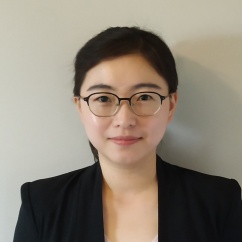
Dr. Yujie Tang is an Assistant Professor in the Faculty of Computer Science at Dalhousie University, Canada, where she has been serving since September 2022. Prior to this, she was an Assistant Professor at Algoma University (2019–2022) and a Post-Doctoral Fellow at the University of Waterloo (2017–2019). Her academic journey includes a PhD from the University of Waterloo and earlier degrees from Harbin Institute of Technology and Lanzhou Jiaotong University. PhD – University of Waterloo (2017) M.E. – Harbin Institute of Technology, Shenzhen, China B.E. – Lanzhou Jiaotong University, Lanzhou, China Her research focuses on intelligent networking and computing technologies for future IoT and 5G/6G systems. Key areas include Internet of Vehicles (IoV), AI-empowered edge computing, resource management in heterogeneous networks, software-defined networking, and UAV-assisted communications. She employs machine learning and optimization techniques to design energy-efficient and high-performance network protocols. The most recent publications reflect a strong trend in applying AI and machine learning to solve complex problems in vehicular networks, edge caching, and spectrum management. Her work spans top-tier IEEE journals such as IEEE Transactions on Vehicular Technology , IEEE Internet of Things Journal , and IEEE JSAC , with a clear emphasis on real-world deployable solutions for next-generation wireless systems. Faculty Research Startup Fund, Dalhousie University, 2022 NSERC Discovery Grant, 2021–2026 Algoma University Research Fund, 2021 Faculty Research Startup Fund, Algoma University, 2019 Best Speaker Award, University of Waterloo, 2017 Faculty of Engineering Award (4 times), University of Waterloo, 2013–2017 University of Waterloo Graduate Scholarship, 2013–2015 International Doctoral Student Award, 2012–2016 Graduate Research Studentship (twice), 2011–2012 Provost Doctoral Entrance Award for Women, 2011 Dr. Tang actively supervises graduate and undergraduate students and has secured competitive research grants, including the NSERC Discovery Grant. She serves on the technical program committees of major IEEE conferences such as INFOCOM, GLOBECOM, and ICC, and regularly reviews for top journals like IEEE JSAC , IEEE TWC , and IEEE TVT . She currently leads a research group focusing on B5G/6G networks, IoV, and edge computing, and she is actively recruiting new students and visiting scholars. Her research group operates within the Faculty of Computer Science at Dalhousie University, where she leads projects in intelligent resource management, AI-driven networking, and integration of space-air-ground networks. She is a member of IEEE, IEEE Communications Society, and IEEE Vehicular Technology Society.
Ki-Woong Park is a tenure-track full Professor in the Department of Computer and Information Security at Sejong University. He leads the System Security and Computer Engineering Research (SysCore) Lab, which focuses on system security research with numerous ongoing projects funded by major Korean research institutions including IITP, NRF, and KRIT. Sejong University, Department of Computer and Information Security System Security and Computer Engineering Research (SysCore) Lab Leader Member of IEEE, IEEE Computer Society, and ACM Education: Ph.D. in Electrical Engineering & Computer Science, KAIST (Advisor: Prof. Kyu-Ho Park) M.S. in Electrical Engineering & Computer Science, KAIST (Advisor: Prof. Kyu-Ho Park) B.S. in Computer Science, Yonsei University (Summa Cum Laude) Exchange Student at University of California, Los Angeles (UCLA) Professor Park's research focuses on designing, building, and analyzing secure systems, particularly for cloud computing, networked systems, and embedded systems. His work often involves reevaluating existing security mechanisms and actual system implementations with subsequent evaluation in real computing environments. He has made significant contributions to areas including cloud security, IoT security, ransomware detection, moving target defense, and metaverse security. His research approach emphasizes both theoretical foundations and practical implementation, with numerous publications in top-tier security and systems venues. His recent publications (2023-2024) demonstrate a strong focus on emerging security challenges in modern computing environments, particularly in metaverse platforms, UAV systems, and edge computing. These works span both theoretical security frameworks and practical implementations, with an emphasis on visualization techniques, hardware-based security mechanisms, and AI-enhanced security analysis. His research shows a clear progression from traditional cloud and network security toward next-generation security challenges in immersive virtual environments and cyber-physical systems. Scientific Awards: Microsoft Research Fellowship (2009-2010) Best Poster Gold Award at WISA 2020 Best Paper Award at MobiSec'18 Professor Park actively mentors numerous graduate and undergraduate students through the SysCore Lab, with current members including Ph.D. students, MS students, and undergraduate researchers. His research is supported by multiple significant grants, including the NRF Outstanding Researcher-Mid-career Researcher project, IITP Information Security Core Source Technology Development, and Defense Technology Advancement Research Institute projects. These grants total tens of billions of Korean won and address critical national security challenges in cyber defense, cloud security, and metaverse technologies. The SysCore Lab, under Professor Park's leadership, maintains a strong industry and government collaboration network, with part-time researchers from organizations including Hyundai Duty Free, Astron Security, Korea University, and various military cyber commands. This unique structure enables the lab to address both theoretical security challenges and practical implementation issues in real-world systems.
Prof. Ivan Martinovic is a Professor of Computer Science at the University of Oxford's Department of Computer Science, holding a Fellowship at the institution. He specializes in cyber-physical systems security, wireless network security, and behavioral biometrics. His research focuses on authentication mechanisms, intrusion detection, and trade-offs between security and performance in systems like satellite communications, EV charging infrastructure, and aviation networks. Education: PhD (TU Kaiserslautern); MSc (TU Darmstadt, Germany). Prior roles include postdoctoral research at UC Berkeley (2011) and UC Irvine (2009–2010), supported by a Carl-Zeiss Foundation Fellowship (2009–2011). He has also been an associate lecturer at TU Kaiserslautern. Research Interests: Cyber-physical systems security, wireless networks, behavioral biometrics (e.g., continuous authentication via physiological signals), robust communication protocols, and analysis of security vs. performance trade-offs in distributed systems. Technologies include software-defined radios, NFC/RFIDs, and EEG/eye-tracking devices. Scientific Awards: Carl-Zeiss Foundation Fellowship (2009–2011). Advising & Grants: No explicit student listings; however, his work involves interdisciplinary collaborations and has been funded by government and industrial grants. His research spans labs and teams focused on satellite cybersecurity, smart infrastructure security, and biometric systems. Labs/Teams: Engages with groups exploring satellite communication security, EV charging infrastructure vulnerabilities, and behavioral authentication systems, though specific lab names are not disclosed in the text.
Lei Lei is an Associate Professor at the University of Guelph, specializing in Computer Engineering. Her research focuses on Machine Learning/Deep Reinforcement Learning, Internet of Things (IoT)/Internet of Vehicles (IoV), Mobile Edge Computing, and Smart Grid Optimization. She explores cutting-edge applications in energy-efficient systems, autonomous vehicles, and intelligent transportation networks. Her work integrates advanced AI techniques with real-world challenges in communication and control systems. Key research areas include optimizing electric vehicle charging schedules using hierarchical deep reinforcement learning and enhancing vehicular networks through 6G communication protocols. She has pioneered methods for joint communication-control systems, securing federated learning models, and developing robust resource allocation strategies in IoT and edge computing environments. Lei Lei’s publications emphasize interdisciplinary solutions, bridging computer science, electrical engineering, and transportation systems. Her recent work addresses challenges in smart grid security, multitimescale control systems, and the application of AI tools like ChatGPT in connected vehicles. She is affiliated with the AI Affiliated Faculty at the University of Guelph, reflecting her contributions to artificial intelligence research.
Guan-Hua (Scott) Tu is an Associate Professor in the Department of Computer Science and Engineering at Michigan State University (MSU), leading the Security, Networking, and Mobile Systems Research (SNMS) laboratory. He holds a Ph.D. from UCLA and has industry experience at MediaTek, where he contributed to wireless communication as an engineer and researcher (inventing eight US patents). His research focuses on security, IoT, mobile systems, and wireless networking, with recent emphasis on 5G/4G architecture, cellular/Wi-Fi IoT, secure cloud computing, and blockchain technologies. Education includes a Ph.D. from UCLA (2015), MS from National Taiwan University (2003), and B.Sc. from National Central University (2001). Notable achievements include NSF grants (e.g., $1.73M NTIA grant as Co-PI, $1.2M NSF SaTC grant as PI), and awards like the Best Community Paper Award Runner-Up at ACM MobiCom'22 and Google Security Reward. His work addresses vulnerabilities in emergency services (9-1-1), cellular IoT, and IMS protocols, with publications in top venues like ACM MobiCom, IEEE Transactions, and ACM CCS. Current research includes exploring non-standardized policies in 5G networks, securing O-RAN infrastructure, and safeguarding next-gen emergency services. He advises Ph.D. students and has mentored alumni now in faculty roles (e.g., Utah State University, Michigan Tech). Teaching includes courses on computer security and networks.
Maxwell Young is an Associate Professor in the Department of Computer Science and Engineering at Mississippi State University's College of Engineering. His office is located in 312 Butler Hall and he can be reached at myoung@cse.msstate.edu. Previously, he served as an Assistant Professor at Drexel University in Philadelphia, following postdoctoral positions at the University of Michigan (working with Seth Pettie) and the National University of Singapore (working with Seth Gilbert). Young earned his PhD from the University of Waterloo, Canada, under the supervision of Raouf Boutaba and Martin Karsten, his MS from the University of New Mexico under Jared Saia, and his BS in mathematics from Queen's University, Canada. His research focuses on the design and analysis of algorithms for decentralized networks that yield provable guarantees with respect to security, fault tolerance, and performance. His primary research areas include distributed computing, computer security, and theoretical algorithms, with specific emphasis on contention resolution protocols, Sybil attack defenses, and resource-competitive approaches to network security. His work bridges theoretical computer science with practical applications in wireless networks and distributed systems. Analysis of his recent publications reveals a consistent trajectory focused on making distributed systems more resilient against adversarial attacks while optimizing resource usage. His research demonstrates sophisticated application of probabilistic analysis and algorithmic game theory to security challenges, with particular innovation in creating asymmetric defenses where attackers must expend disproportionate resources compared to legitimate users. Best Paper Award at SIROCCO 2025 for 'Bankrupting DoS Attackers' Best Paper Award at SSS 2024 for 'Softening the Impact of Collisions in Contention Resolution' Best Paper Award at ICDCN 2024 for 'Defending Hash Tables from Subterfuge with Depth Charge' Young has received significant research funding through grants including 'Collaborative Research: SaTC: CORE: Small: Bankrupting Attackers in Dynamic Networks' and 'CAREER: Make Them Pay! Algorithms for Securing Wireless Systems.' His work on resource-competitive algorithms provides theoretical foundations for designing systems where adversaries must spend significantly more resources than legitimate users to mount successful attacks. His research group appears to focus on distributed algorithms and network security, with particular attention to practical implementations of theoretically sound approaches. Young has collaborated extensively with researchers including Jared Saia, Seth Gilbert, and Diksha Gupta on security-related algorithmic challenges.
Mikael Johansson is a Professor at Kungliga Tekniska Högskolan (KTH), specializing in Control Technology . He teaches and coordinates courses such as Distributed Optimization (FEL3311) and various advanced-level degree projects in computer science, electrical engineering, and systems engineering. His research spans Control Systems , Machine Learning , and Optimization , with a focus on asynchronous algorithms, federated learning, and applications in energy systems and construction. His work includes 15 recent publications on topics like neural networks, distributed optimization, and battery technology. Notable areas of contribution are in asynchronous learning, federated learning with privacy constraints, and quasi-Newton methods for optimization. His research bridges theoretical advancements with practical applications in urban design, healthcare, and autonomous systems.
University of Maryland, Baltimore CountyUnited States
Anupam Joshi is the Acting Dean of the College of Information Technology and Engineering and Oros Family Professor of Computer Science and Electrical Engineering at the University of Maryland, Baltimore County (UMBC). He also directs UMBC’s Center for Cybersecurity and leads the National Cybersecurity FFRDC for the University System of Maryland. His research focuses on networked computing, AI-driven cybersecurity, privacy-preserving technologies, and policy-driven security frameworks. He holds a Ph.D. in Computer Science from Purdue University (1993), an M.S. (1991), and a B.Tech in Electrical Engineering from the Indian Institute of Technology, Delhi (1989). Dr. Joshi’s work spans over 400 publications with 32,650+ citations (h-index 92) and nine patents. His grants include funding from NSF, DARPA, NASA, NIST, and industry partners like IBM and Northrop Grumman. Key contributions include developing CAPD frameworks for IoT security, FABULA for automated threat intelligence, and KiNETGAN for intrusion detection through synthetic data. He is an IEEE Fellow and pioneer in applying AI to secure critical infrastructure, smart grids, and healthcare systems. His research trends emphasize AI-empowered cybersecurity, privacy compliance in data sharing (e.g., agriculture, healthcare), and mitigating attacks on smart systems. Notable projects include combating fake cybersecurity reports using provenance analysis, securing EV charging infrastructure, and enhancing smart farming resilience through policy-driven access control. Awards: IEEE Fellow Grants: Over $30M from NSF, DoD, NASA, and industry collaborations Labs/Teams: Director of UMBC Center for Cybersecurity, Cybersecurity Knowledge Graph initiatives Future work includes advancing neurosymbolic AI for cybersecurity, semantic data extraction from scientific literature, and AI ethics in healthcare applications.
Professor Mohan Lal Kolhe is a distinguished academic at the University of Agder , serving as a Full Professor in Smart Grid and Renewable Energy within the Faculty of Engineering and Science and the Department of Engineering Sciences . With over three decades of international academic experience, he has held positions at prestigious institutions including University College London, University of Dundee, and Hydrogen Research Institute in Canada. His career spans technical innovation, policy development (e.g., as a member of South Australia’s Renewable Energy Board), and extensive research leadership in sustainable energy systems. Research Leadership : Focus on Smart Grid integration, Electric Vehicles, Hydrogen Energy, Solar/Wind Systems, and Techno-Economic Energy Analysis. Global Recognition : Listed in the top 2% of scientists worldwide (2020-2023) by Stanford University, with 10 publications averaging 200+ citations. Recent publications emphasize advanced optimization techniques for renewable integration, EV charging infrastructure, hydrogen production, and power system stability. His work has secured competitive funding from entities like the Norwegian Research Council and EU programs. Awards and Expert Roles : Top 2% Global Scientist (Stanford, 2020-2023) Highly Cited Researcher (Top 10 publications, 200+ avg. citations) Expert evaluator for European Commission, Royal Society London, EPSRC, and Cyprus Research Foundation He actively contributes to international conferences as keynote speaker and editorial board member, with leadership roles in research groups like Autonomous and Cyber-Physical Systems and Energy Systems .