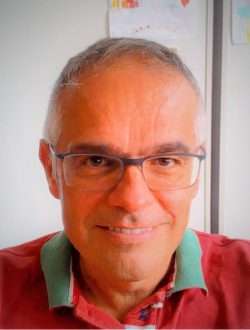
Marco Farina is a Full Professor in Electromagnetics at the Department of Information Engineering, College of Engineering, Polytechnic University of Marche, Italy. His research spans electromagnetic modeling, scanning microwave microscopy, and nanotechnology, with applications in 2D materials, biosensors, and advanced measurement systems. He is a Senior Member of IEEE and actively contributes to Technical Committees on RF Nanotechnology. Laurea and Ph.D. in Electronic Engineering from University of Ancona Research interests focus on quantitative scanning microwave microscopy, electromagnetic analysis of active/passive components, and nanoscale characterization techniques. His work bridges theoretical modeling with practical implementation, including the development of the EM3DS software suite and novel inverted SMM systems. Recent publications highlight interdisciplinary applications in biomedical analysis and semiconductor physics. Scientific recognition includes the 3M-Nano Best Conference Paper Award and grants from US Army Research Laboratory and US Air Force Office of Scientific Research. He holds an ESA-funded patent for VNA calibration and has co-authored a book on planar structure analysis. Collaborative projects emphasize RF device optimization and biological imaging.
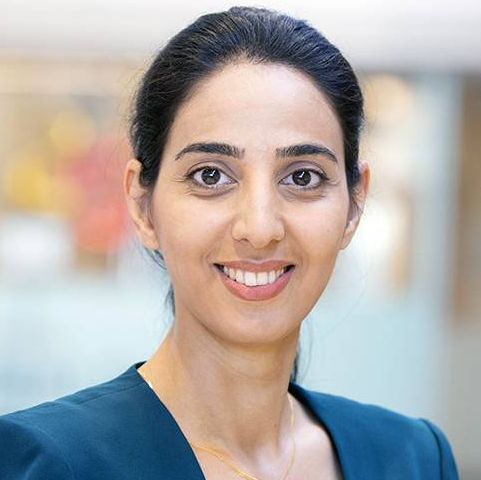
Dr. Shideh Kabiri Ameri serves as Associate Professor in the Department of Electrical and Computer Engineering at Queen's University, where she joined in September 2018 after completing postdoctoral research at the University of Texas at Austin. Her interdisciplinary expertise bridges nanomaterials engineering and biomedical applications, with particular focus on developing imperceptible wearable sensors for continuous health monitoring. Her educational foundation includes: PhD in Electrical Engineering (2015) from Tufts University Master's and Bachelor's degrees in Physics (solid state) AS degree in Medical Laboratory Sciences Dr. Ameri's research program centers on 2D material-based electronic devices for wearable bioelectronics, human-machine interfaces (HMI), and mobile healthcare systems . Her lab pioneered graphene electronic tattoos (GETs) that achieve unprecedented skin conformity while recording high-fidelity physiological signals. Current work emphasizes ultrasoft hydrogel-based sensors that eliminate motion artifacts and enable months-long wear without skin irritation, representing a paradigm shift from conventional rigid medical devices toward truly imperceptible health monitors. Analysis of her 40+ publications reveals a strategic evolution from fundamental nanomaterial characterization toward clinically viable systems. Recent work (2021-2025) demonstrates increasing sophistication in multimodal sensing (simultaneous ECG/EEG/temperature), reusable sensor architectures , and wireless power integration . The trajectory shows clear progression from lab prototypes to FDA-pipeline devices, particularly in cardiac and neurological monitoring applications. Her scientific recognition includes: Rising Star in EECE 2017 award Dr. Ameri leads the Ameri Nano Research Group which operates advanced nanofabrication facilities for developing next-generation bioelectronic interfaces. Her research has attracted significant media attention from BBC, IEEE Spectrum, and Phys.Org, highlighting real-world impact in remote patient monitoring. The group actively collaborates with medical institutions to translate innovations into point-of-care diagnostics, with current projects focusing on in-ear physiological monitors and strain-neutralized neural recording systems. The research team maintains strong industry partnerships for commercializing soft bioelectronics, with particular emphasis on creating accessible health monitoring solutions for underserved communities through low-cost manufacturing approaches.
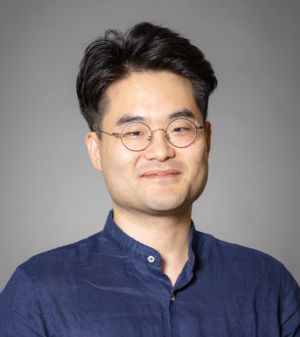
Albert Kim is an Associate Professor in the Department of Medical Engineering at the University of South Florida, affiliated with the College of Engineering and Morsani College of Medicine. His research focuses on biomedical applications of MEMS and nanotechnology, particularly developing implantable medical devices to address clinical challenges through interdisciplinary collaboration with physicians. He teaches BME 6931: Fundamental and BioMEMS and has received prestigious awards including the NSF CAREER Award (2022) and the Blavatnik Award Finalist recognition (2018). Education: Ph.D., M.S., B.S. in Electrical and Computer Engineering (Purdue University, 2008-2015) Research Interests: Kim’s work integrates engineering principles with medical needs to create innovative solutions such as smart stents for cardiovascular monitoring, piezoelectric biomaterials for anti-infective applications, and ultrasonic-powered implantable devices. His projects emphasize translational research, bridging laboratory innovations to clinical practice. Grants & Funding: He leads or co-leads several NSF and NIH grants totaling over $4 million, including initiatives on acousto-bioelectronics, smart dental implants, and antimicrobial biomaterials. Recent grants include NSF CNS Core funding for intrabody networks and NIH support for peri-implant disease prevention. Publications: His research spans bioMEMS, implantable systems, and energy harvesting, with recent contributions to ACS Materials Letters , IEEE Transactions on Biomedical Engineering , and Lab on a Chip . Key themes include omnidirectional ultrasound powering for microdevices and multifunctional smart stent designs. Awards: Beyond academic accolades, Kim has been recognized for teaching excellence, including the Eaton & Vashti Magoon Award (Purdue, 2013) and the USF BME Professor of the Year (2022-23).
Theresia Arbring Sjöström is an Assistant Professor at Linköping University, affiliated with the Department of Science and Technology (ITN) and the Laboratory of Organic Electronics (LOE). Her research focuses on overcoming biological barriers through multidisciplinary approaches, including electrophoretic drug delivery systems (iontronics), precision medicine, and organic bioelectronics. She integrates material science, computational modeling, and device engineering to develop innovative solutions for drug delivery challenges in neurological diseases and cancer treatment. Key research interests include programmable implantable drug systems, miniaturized chemical interfaces, and translating scientific breakthroughs into clinical applications. Collaborations span academia and industry, emphasizing preclinical validation and practical solutions. Recent work highlights include iontronic pumps for brain tumor chemotherapy and micropipettes for neuronal modulation. Her contributions to organic bioelectronics have advanced neurotransmitter release systems operating at synaptic speeds. Future efforts aim to further bridge device physics with biophysics, fostering precision medicine through dynamic implants.
Yunyun Wu is an Assistant Professor in the Department of Biomaterials & Applied Oral Sciences and the School of Biomedical Engineering at Dalhousie University. Her research focuses on developing cost-effective, sustainable, and scalable biomaterials and structures for healthcare applications, including eco/bioresorbable electronics, biosensors, and energy storage solutions. Her work emphasizes wearable and implantable devices for health monitoring and disease treatment. Research interests include electroactive biomaterials, biosensors, electronic textiles, and stretchable electronics. Key projects involve skin-interfaced microfluidic biosensors and sewing-based fabrication of bioresorbable electronics. Recent publications highlight innovations in wearable sensors, implantable devices, and textile-based electronics. These contributions address challenges in medical monitoring, energy storage, and biocompatible materials. The Wu Lab actively explores sustainable materials and scalable manufacturing techniques to advance wearable and bioresorbable technologies. No scientific awards are explicitly listed in the provided texts, but her extensive publication record reflects her impactful contributions to biomedical engineering. Advising and grants details are not provided in the current data. The lab’s activities are centered on interdisciplinary approaches to biomedical device development, as detailed on their website (www.yyunwulab.com).
Wei Ouyang is an Assistant Professor of Engineering at the Thayer School of Engineering, Dartmouth College. His research focuses on bio-integrated microsystems for neuroscience and healthcare innovation, leveraging MEMS, wearables, and implantables. He holds a BS from Peking University (2013), and SM/PhD from MIT (2016/2019). His work spans bioelectronics, microfluidics, and digital health, with notable contributions to implantable systems and molecular diagnostics. Education: BS in Microelectronics, Peking University, 2013 SM in Electrical Engineering and Computer Science, MIT, 2016 PhD in Electrical Engineering, MIT, 2019 Research Interests: Bioelectronics, MEMS, wearables, implantables, microfluidics, digital health, neuroengineering. His lab develops systems for wireless, battery-free neural recording/neuromodulation and closed-loop health monitoring. Awards: Chinese Government Award for Outstanding Self-Financed Students Abroad (2020) Siebel Scholar (2016) Ernst A. Guillemin Thesis Award (2016) Multiple MIT and Peking University honors Advising & Labs: Mentors students/postdocs in interdisciplinary engineering. Leads the Bio-Integrated Microsystems Group , focused on wearable/implantable systems for healthcare and neuroscience. Recent team members include Ben Fu, Jianyu Gu, and Yunxiang Huang. Key Projects: Injectable bioresorbable pacemakers, wireless neural implants, and multiparametric respiratory monitoring for pandemic response.
Dr. Mahmoud Tavakoli is a Professor at the University of Coimbra’s Department of Electrical Engineering and a leading researcher in stretchable electronics, soft robotics, and medical devices. He leads national, CMU-Portugal, and EU-funded projects including an ERC Consolidator Grant. University of Coimbra (current affiliation) Principal Investigator in soft/stretchable electronics research Recipient of multiple scientific awards His research focuses on Stretchable Electronics , Printed Electronics , Bio-monitoring , and Medical Robotics . Recent work includes 3D-printed liquid metal composites, recyclable electronics, and battery-free biomonitoring systems. Articles highlight advancements in energy storage , conductive hydrogels , and soft prosthetics with applications in healthcare and industrial robotics. ERC Consolidator Grant (Liquid3D project) Facebook Living Lab award Autodesk award for prosthetics EIT-Health prize He has supervised numerous projects in soft robotics, wearable technologies, and stretchable circuits, with grants from FCT (Portugal) and the European Research Council. His lab develops medical robots , smart textiles , and human-machine interaction systems through interdisciplinary approaches combining materials science and biomedical engineering.
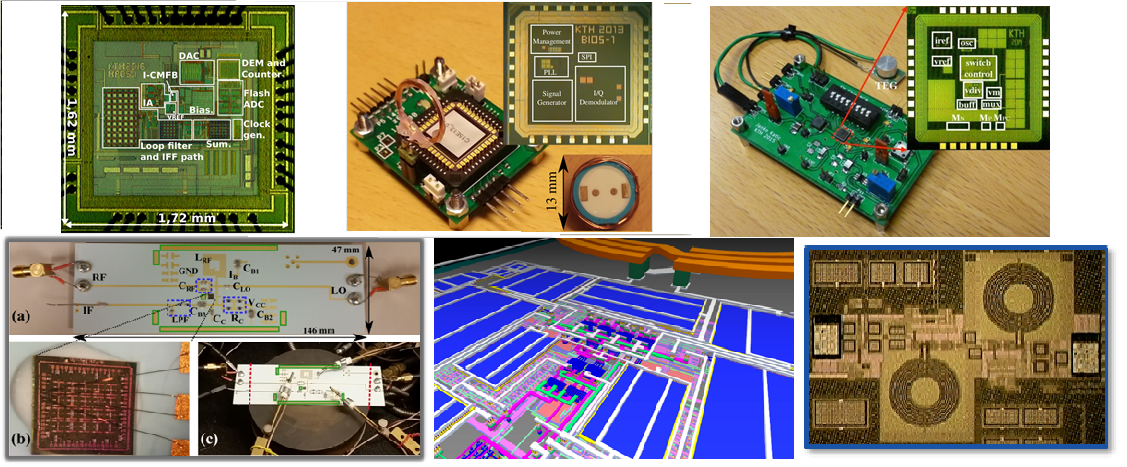
Ana Rusu is a Professor and leader of the Mixed-Signal Integrated Circuits and Systems Group at the Division of Electronics and Embedded Systems, Department of Electrical Engineering, KTH Royal Institute of Technology. She holds a Docent title from KTH and has been at the university since 2001. Her research focuses on energy-efficient circuits, biomedical applications, and emerging technologies like graphene and SiC. She has supervised numerous PhD students and led major projects such as AIsing (VR-funded) and Implantable Bioimpedance Spectrometer (SSF-funded). Education: Diploma Engineer (M.S.) from Technical University of Iasi (1983), PhD from Technical University of Cluj-Napoca (1998), Docent in Circuit Theory (KTH, 2006). She previously served as Director of Doctoral Education at the School of ICT (2013–2017) and Vice-Dean at EECS (2018–2022). Research interests include energy harvesting, spintronics-CMOS integration, and Ising Machines. Her work spans over 150 peer-reviewed publications and includes awards like the T-NANO Best Paper (2020) and ISCAS Best Paper (2023). She has advised 16+ PhD graduates and actively contributes to academic governance and education.
Daniele Allegri is a Professor of 'Programmable and Integrated Microelectronic Systems' at the University of Applied Sciences and Arts of Southern Switzerland (SUPSI), leading the Department of Innovative Technologies. He serves as Director of the Institute for Systems and Applied Electronics (ISEA) since 2023 and previously held roles including Head of the 'Digital Electronics, Microelectronics, and Bioelectronics' research area (since 2019). His professional career spans engineering roles at Mandozzi Elettronica SA (1998–2014) and academic research at SUPSI (2014–present). Education: Ing.-Dipl. in Electronic Engineering from ETH Zurich (1998), PhD in Microelectronics from the University of Pavia (2017). Research Focus: Development of integrated circuits and embedded systems for biomedical applications, mixed analog-digital circuits, FPGA systems, signal processing, imaging technologies, and Edge AI. His work addresses clinical needs like real-time hydration monitoring for dialysis patients and advanced solar telescope instrumentation. Key Projects: Probing semiconductor rad-hardness via ions/lasers Next-gen tunnel safety sensors High-precision 3D imaging systems Cardio Pulmonary Rescue Support System Wireless pulmonary edema sensing networks Publications emphasize biomedical instrumentation and astrophysical engineering. No scientific awards explicitly listed in text, but contributions suggest strong peer recognition. Advising activity details not provided in source text. Current affiliations include leadership roles at SUPSI's ISEA and teaching responsibilities in multiple electronics-related courses.
Dr. Yang Yi, a researcher at the National University of Singapore (NUS), has a multidisciplinary background in civil engineering, sustainability, and biomedical device development. He earned his BEng (1st Class Honours) and PhD in 2013 and 2017 respectively from NUS, focusing on lightweight sustainable construction materials and dynamic responses under blast loading. PhD, National University of Singapore, 2017 BEng (1st Class Honours), National University of Singapore, 2013 His research spans two distinct domains: sustainable construction and flexible bioelectronic devices . At NUS, he contributes to advancing implantable and wearable technologies for neuroscience applications, while previously driving sustainability initiatives at JTC Corporation and structural design at Meinhardt. The 15 most recent publications highlight his work on implantable optogenetic devices , flexible bioelectronics , and neural interfaces . These studies integrate materials science, neuroscience, and wireless engineering for applications in neuromodulation and biomedical systems. Scientific Awards: IES Sustainability Awards (Engineering Projects, 2023) Public Sector Engineering Innovation Challenge Award (2022) Silver Prize, ACI Singapore Chapter (2022) President Graduate Fellowship (2013-2017) Class of 1977 Silver Medal (2013) Multiple book prizes and medals (2010-2012) Contact: yangyi@nus.edu.sg
Roya Haratian serves as Principal Academic (equivalent to Associate Professor) in Electronic Science and Engineering at Bournemouth University's Department of Design and Engineering within the Faculty of Science and Technology. As Deputy Head of Department and Athena SWAN lead, she spearheaded the department's successful Bronze Award in 2021 for gender equality initiatives. Her leadership extends to curriculum development in Mechatronics and Robotics programs across undergraduate and postgraduate levels. Her academic credentials include a BSc (First Class Honours) and MSc (Distinction) in Electrical and Electronic Engineering, followed by a PhD in Electronic Engineering from Queen Mary University of London (2014). Prior to her current role, she worked as an Associate Lecturer at QMUL and Research Associate at Bristol Robotics Lab, focusing on on-body sensing systems and bio-signal processing for human-machine collaboration. Haratian's research centers on electronic engineering applications in human-robot interaction, with particular emphasis on on-body sensing technologies, signal processing, and machine learning. Her work bridges theoretical innovation with industrial implementation, developing assistive technologies for healthcare and safety-critical systems. Recent projects address diabetic foot ulcer prevention, emotion recognition in VR, and human-machine collaboration safety protocols, demonstrating strong translational impact across medical and industrial domains. Analysis of her 15 most recent publications reveals a strategic progression from foundational signal processing techniques toward integrated human-machine systems. Her work increasingly incorporates game theory for resource allocation, AI-driven predictive modeling, and inclusive design principles, with growing emphasis on real-world implementation challenges and ethical considerations in assistive technologies. Key recognitions include: Athena SWAN Bronze Award (Advance HE, 2021) for departmental gender equality leadership Senior Fellowship of Higher Education Academy (2021) BU Doctoral College Outstanding Contribution Award (2025) Design Review Award from Institute of Mechanical Engineering (2023) Student Experience 'You are Brilliant' Award (2017) As Recognised Research Supervisor (UK Council for Graduate Education), she currently co-supervises five PhD students on topics including AI surveillance, biomechatronics, and digital twin simulation. Her £1.2M+ research portfolio features strategic partnerships with Zimmer-Biomet, Computational Mechanics Wessex Institute, and Daido Industrial Bearing, with recent grants including HEIF-funded AI emotion recognition systems (2025) and QR-funded human-machine safety protocols (2024). She actively mentors through AdvanceHE's Aurora program and leads BU's Inclusivity Curriculum Evaluation project. Haratian directs the department's Athena SWAN initiative and collaborates with the Royal Institute on STEM outreach, designing bioelectronic masterclasses for GCSE students. Her public engagement includes 'Café Scientifique' discussions on machine emotion recognition and keynote addresses at Brockenhurst STEM Awards, focusing on translating on-body sensing research into real-world health applications.
Frederico Castelo Ferreira is an Associate Professor in the Department of Bioengineering at the Instituto Superior Técnico, University of Lisbon. His primary affiliation is with the Institute for Bioengineering and Biosciences (IST/IBB). He holds a dual focus on academic research and industrial collaboration, with expertise in bioengineering, bioprocess development, and biomaterials. Education: Ph.D. in Chemical Engineering (Imperial College London), postdoctoral training at Imperial College London and Universidade Nova de Lisboa, and MIT-Portugal Program involvement. Research: Specializes in sustainable biofuels, advanced separations in pharmaceuticals, and biomaterials for tissue engineering. Key projects include membrane-based systems for biofuel production, stem cell microenvironment engineering, and electroconductive scaffolds for neural and bone regeneration. Awards: 1st Prize for Knowledge Valorization (2008), Technology Venture Fellowship (2006). Activities: Founded the Portuguese Young Chemists Group, organized the 1st Portuguese Young Chemists Meeting (2007), and contributed to initiatives like CoHiTec 2008-2013. He has authored over 100 peer-reviewed publications, with a focus on biomaterials, bioprocesses, and tissue engineering. Teaching: Teaches courses in Bioentrepreneurship, Bioengineering Topics, and Advanced Biomaterials at the graduate level.
Takeo Miyake is a Professor at the Graduate School of Information, Production, and Systems , Waseda University , with a career spanning over 15 years in Biomedical Engineering and Bioprotonics . His work bridges bioiontronics , wireless power systems , and biofuel battery technologies. BS, MS, PhD in Electrical Engineering and Nanoscience & Nanoengineering from Waseda University Former Acting Instructor at University of Washington and Assistant Professor at Tohoku University Research focuses on bioelectronic interfaces for in vivo applications, including: Self-powered diagnostics using biofuel cells (glucose/lactate sensing) Protonic devices for ATP synthesis and pH modulation Wireless-powered smart contact lenses for health monitoring Nanotube-based intracellular delivery systems His 15 recent publications (2024–2019) emphasize flexible bioelectronics and implantable energy systems , with breakthroughs in: Parity-Time symmetric wireless biosensors (2023) Multienzyme logic biotransducers (2024) Nanostraw-mediated molecular delivery (2019) Scientific recognition includes: Young Scientists Award from Japan’s Ministry of Education (2020) Best Presentation Awards (2011–2020) Incentive Prize from Aoba Foundation (2013) As an active committee member and professional society member (Materials Research Society, Japan Society of Applied Physics), he drives innovation in biofuel cells and smart wearable systems .
Professor Dagou Zeze is a Professor of Nanotechnology & Microsystems and Director of International Engagement in the Department of Engineering at Durham University. He also serves as Deputy Executive Dean for Research in the Faculty of Science. Professor Zeze has established himself as a leading researcher in nanotechnology and microsystems, with significant contributions to the field of nanomaterials device integration. His educational background includes a BSc in Physics from the University of Abidjan, Ivory Coast (1990), followed by MPhil and PhD in Electronics from the Université of Clermont-Ferrand, France (1996). He completed postdoctoral research at the University of Ulster (2000) on thin amorphous carbon films and at the University of Surrey (2003) on microfabrication. Professor Zeze's research focuses on nanostructured materials, micro and nanofabrication, and the integration of nanomaterials (particularly carbon nanotubes and semiconductor nanowires) in devices. His current research themes include integration of nanostructured materials in device fabrication, nanofabrication & microfabrication, carbon nanotubes, smart devices, semiconductor nanowires, and multifunction devices. He has also explored thin films technology, organic electronics, and liquid handling robotic system design. His publication record shows a strong focus on nanomaterials for electronic and sensing applications, with recent work emphasizing piezoelectric sensors, ZnO nanowires, metasurfaces for structural color, and in-materio computing approaches. His research demonstrates a consistent trajectory toward practical applications of nanotechnology in sensors, electronics, and energy conversion devices. Senior Research Fellow of the Royal Academy of Engineering/The Leverhulme Trust (2013-14) Fellow of the World Academy of Materials and Manufacturing Engineering (2015-) Fellow of the Institute of Engineering and Technology External Degree Programme Examiner: University of Exeter (2016-2020) External Degree Programme Examiner: University of Bangor (2017-21) Professor Zeze has supervised numerous postgraduate students including Grainne Gilleece, Luis Ceron Oliver, Mana Saeed, and Shixian Sun. He has secured substantial research funding, having contributed to seven European Framework programme FP7 and Horizon 2020 projects totaling over €12.5 million. He serves as the scientific coordinator for three Marie Curie Actions international consortia on semiconductor nanowires (FUNPROB, NanoEmbrace, and H2020 INDEED ITN), which involve significant international academic and industrial collaboration across Europe. His leadership extends to his role as Chair of the Durham University EU Liaison Group (2018-2023) and as Director of Postgraduate Studies (2014-2017). Professor Zeze leads research activities in the Next Generation Materials & Microsystems Research Challenge and has established collaborative networks across Europe through his involvement in major EU-funded projects.
Shuo Li is a Professor in the Department of Macromolecular Engineering at ETH Zürich, Switzerland. His research focuses on innovative biomaterials, bioelectronic systems, and implantable medical devices. Key areas include bioresorbable materials for transient electronics, flexible/stretchable sensors, and soft robotics applications. His work integrates materials science with biomedical engineering to address challenges in tissue integration, real-time diagnostics, and programmable drug delivery. Recent projects emphasize wireless implantable sensors for continuous monitoring of physiological parameters such as blood flow, oxygen saturation, and pH levels in surgical flaps and organ grafts. He has pioneered 3D shape-morphing displays using liquid metal actuators and developed self-healing elastomeric switches for haptic interfaces. His research spans biomaterial synthesis, optoelectronics, and additive manufacturing of soft materials. Publications highlight advancements in bioresorbable platforms for drug delivery, light-controlled actuation systems, and optical probes for in vivo pharmacology. His interdisciplinary approach bridges material design, device fabrication, and clinical applications, with a focus on translating lab innovations into practical medical solutions. Advising and grants: No specific advisees or grant details listed in the provided text. However, his extensive publication record indicates active collaboration with research groups in bioelectronics, soft robotics, and biomedical engineering. Labs/Teams: Likely affiliated with ETH's Macromolecular Engineering lab and collaborate with multidisciplinary teams in materials science, robotics, and medical device development.