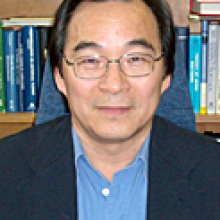
Timothy Lee is an Associate Professor in the Department of Mechanical Engineering at McGill University. He is affiliated with the Aerodynamic Research Group/Lab and is located in McConnell Engineering Building, Room 211. His research focuses on advanced aerodynamics and fluid mechanics, including unsteady experimental aerodynamics, wingtip vortex behavior, and turbulence control techniques. Education: Ph.D., University of Idaho M.S., Portland State University Research interests include dynamic-stall flow control, low-speed aerodynamics, and experimental methods like particle image velocimetry and wind tunnel testing. His work bridges theoretical fluid dynamics with practical applications in aerodynamic systems. Teaching responsibilities include courses such as MECH 331 (Fluid Mechanics 1), MECH 494 (Honours Design Project), MECH 499 (Interdisciplinary Design Project 2), and MECH 610 (Fundamentals of Fluid Dynamics). No academic awards or grants are explicitly listed in the provided materials.
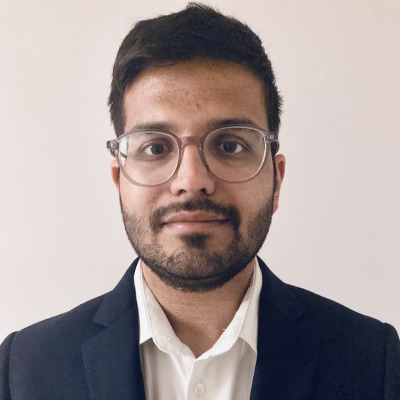
Kshitij Sabnis is a Lecturer in Aerospace Engineering at the School of Engineering and Materials Science, Queen Mary University of London. He serves as Admissions Lead and Outreach & Recruitment Lead for Aerospace Engineering, and Deputy Director of Industrial Engagement (Graduate Attributes). He is affiliated with the Centre for Intelligent Transport and conducts experimental research in high-speed aerodynamics. Education: PhD in Experimental Aerodynamics, University of Cambridge Master’s in Physics Dr Sabnis's research focuses on experimental aerodynamics across various speed regimes, particularly shock/boundary-layer interactions, vortex dynamics, and supersonic flows. His work involves wind tunnel experiments on simplified models to understand complex fluid mechanics in applications ranging from racecar wings to supersonic aircraft intakes. He employs advanced diagnostics and develops novel experimental setups to enhance physical insight into flow phenomena. His recent publications (2019–2025) reflect a strong emphasis on high-speed flow behavior, including shock-induced separation, vortex interactions, and nacelle aerodynamics. Key themes include flow control, wind tunnel design, and validation of turbulence models. His work bridges fundamental fluid dynamics with practical aerospace engineering challenges. Scientific Awards: FHEA (Fellow of the Higher Education Academy) Dr Sabnis actively supervises PhD students and leads externally funded research projects. He has secured grants from EPSRC and the Royal Society, supporting work on schlieren imaging enhancement and small-scale wind turbines for rural energy. He teaches advanced aerodynamics modules and contributes to curriculum and industrial engagement. He leads a research group focused on experimental high-speed aerodynamics and is involved in developing new diagnostic techniques and test rigs. His team investigates vortex interactions and aerodynamic performance under extreme flow conditions.
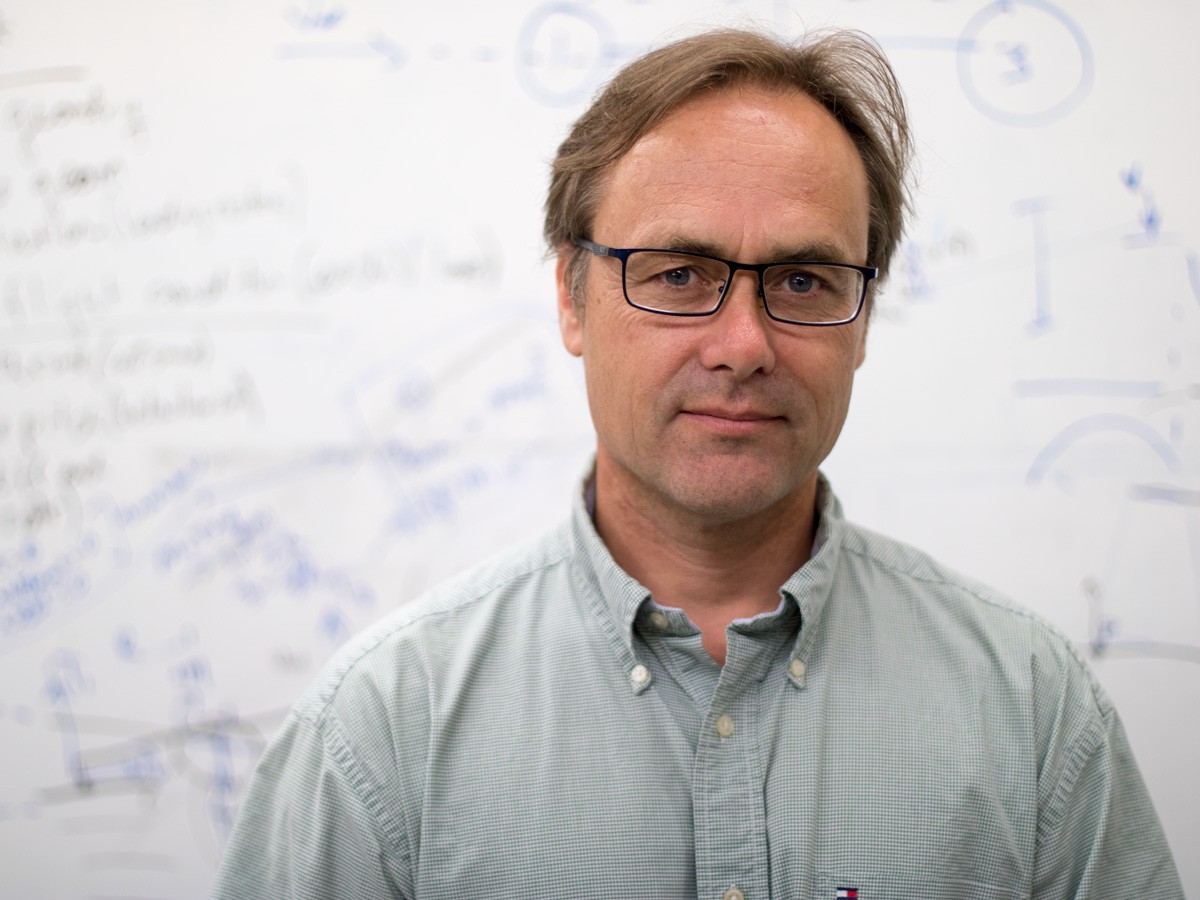
Dr. Goetz Bramesfeld serves as a Professor in the Department of Aerospace Engineering at Toronto Metropolitan University, where he leads research in applied aerodynamics and unconventional flight systems. His expertise spans flight vehicle design, small UAV development, and motorless flight dynamics, with particular emphasis on energy harvesting from atmospheric phenomena. Bramesfeld's educational background includes a PhD (2006) and MS (1999) from The Pennsylvania State University, and a BEng (1998) from Technische Universität Braunschweig. His research interests focus on applied aerodynamics , flight dynamics , and energy-efficient aircraft design , with notable contributions to sailplane optimization, gust energy extraction, and microwave-powered UAV concepts. His work bridges theoretical aerodynamics with practical applications in both terrestrial and planetary exploration contexts. Analysis of his publication record reveals consistent innovation in energy harvesting flight systems, particularly through gust energy extraction and unconventional propulsion methods. His research evolves from traditional sailplane optimization toward cutting-edge concepts like microwave-powered aircraft and planetary exploration gliders, maintaining strong connections between fundamental aerodynamics and real-world flight applications. Bramesfeld actively supervises graduate students through the Applied Aerodynamics Laboratory of Flight (AALF) and maintains significant professional engagement as a Senior Member of the American Institute of Aeronautics and Astronautics (AIAA), member of the Canadian Aeronautics and Space Institute (CASI), Associated Editor for the Technical Soaring Journal, and board member of the Organisation Scientifique et Technique du Vol à Voile (OSTIV).
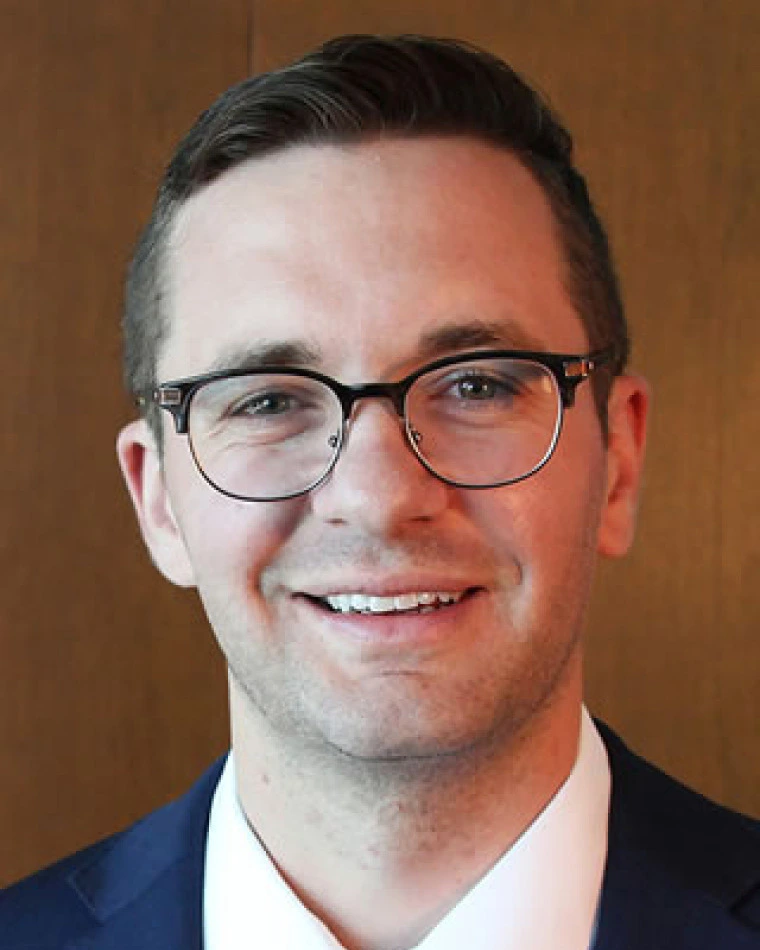
Kyle Hanquist is an Assistant Professor in the Department of Aerospace and Mechanical Engineering at the University of Arizona, where he is also a member of the Graduate Faculty. He directs the Computational Hypersonics and Nonequilibrium Laboratory (CHANL), focusing on advanced simulation techniques for high-speed flows. His academic journey includes a PhD and MSE in Aerospace Engineering from the University of Michigan and a BSE in Mechanical Engineering from the University of Nebraska. PhD, Aerospace Engineering, University of Michigan, Ann Arbor MSE, Aerospace Engineering, University of Michigan, Ann Arbor BSE, Mechanical Engineering, University of Nebraska, Lincoln Dr. Hanquist's research centers on hypersonics, aerothermodynamics, and nonequilibrium flows , with strong emphasis on computational fluid dynamics , low-temperature plasmas , and thermal management systems . His work involves modeling complex physical phenomena such as electron transpiration cooling, plasma-assisted flow control, and high-temperature gas effects in reentry environments. He also investigates molecular gas dynamics and finite-rate chemistry in extreme conditions. His recent publications reveal a strong trend in computational modeling of hypersonic boundary layers , plasma sheaths , and shock-tube validation of thermochemical models . The interdisciplinary nature of his work spans aerospace engineering, plasma physics, and materials response under extreme thermal loads. Much of his research integrates multi-physics simulations to address fluid-thermal-structural interactions critical for next-generation hypersonic vehicles. Dr. Hanquist has received several scientific honors, including: 2020 AIAA Plasmadynamics and Lasers Best Paper Award Editor's Choice, AIP Publishing - Physics of Fluids (Summer I 2020) Featured Article, AIP Publishing - Physics of Fluids (Summer I 2021) Frontiers in Physics – Plasma Physics (Spring 2020) As an advisor and lab director, he mentors graduate students in computational hypersonics and collaborates with institutions like NASA and the University of Michigan. His research is supported by grants from aerospace and defense agencies, though specific funding sources are not listed. He teaches courses in fluid mechanics, numerical methods, and nonequilibrium flows, contributing to both undergraduate and graduate education. He leads the Computational Hypersonics and Nonequilibrium Laboratory (CHANL) , which develops and applies high-fidelity simulation tools for hypersonic applications. The lab focuses on kinetic modeling, plasma interactions, and optimization of thermal protection systems, often using massively parallel CFD codes and multi-fidelity surrogate models.
Dr. Ilan Kroo Academic Appointments: Thomas V. Jones Professor in Aeronautics and Astronautics at Stanford University's School of Engineering. Active in teaching and research since at least 1983 (PhD Stanford). Education: PhD in Aeronautics and Astronautics, Stanford University (1983). Research Focus: Multidisciplinary optimization and aircraft synthesis Unconventional aircraft configurations (e.g., joined wings, oblique wings) Low-speed aerodynamics: vortex wake analysis, induced drag computation Awards: Elected Member of the National Academy of Engineering (2013–Present). Teaching: Leads courses on aircraft design, applied aerodynamics, and sustainable aviation. Courses include AA 146A/B, AA 241A/B, and independent study modules. Students: Advises master's students William Ho, Sean Lin, Adrian Loekman, and Sebastian Monsalvo. Labs/Teams: Involved in NASA and industry-sponsored projects on computational aircraft design and transonic formation flight. Recent Work: Focus on pilot-induced oscillation mitigation, extended formation flight efficiency, and UAV swarm control. Active in publishing since 2009, with 116+ papers.
Gaetano Iuso is a Full Professor in the Department of Mechanical and Aerospace Engineering (DIMEAS) at the Polytechnic University of Turin, and a member of the Interdepartmental Center Ec-L - Energy Center Lab. His academic career spans multiple doctoral programs in Aerospace Engineering, Mechanical Engineering, and Fluid Dynamics from 2003 to present, demonstrating sustained academic leadership. Professor Iuso's research focuses on fluid dynamics with emphasis on car aerodynamics, flow control, turbulent flows, and wind tunnel investigations. His work spans both fundamental studies of turbulent and separated flows and applied research in aeronautical and automotive fields. He employs experimental methodologies using wind tunnels and advanced measurement techniques including optical anemometry (PIV and StereoPIV), hot-wire anemometry, pressure measurement techniques, and wall friction stress analysis. Recent research trends show increasing integration of machine learning with traditional flow control techniques, particularly for closed-loop control of bluff body wakes. His work combines passive manipulation methods (riblets) with active manipulation using jets (continuous, intermittent, synthetic) and plasma actuators. These approaches have applications in reducing aerodynamic drag for vehicles and improving wind turbine performance, contributing to climate action goals as noted in his profile. Professor Iuso has supervised numerous PhD students including Edoardo Fracchia, Sara Montagner, Enrico Amico, and Alessandro Grava. He has led multiple research projects funded by competitive tenders including MechaTwing (2024-2027) and WATACO (2023-2025), as well as commercial research contracts in aerodynamic characterization for antennas, wind rotors, and automotive applications. His research is conducted through the Flow Control & Aeroacoustics Group at the Polytechnic University of Turin's Department of Mechanical and Aerospace Engineering. The group utilizes advanced wind tunnel facilities and measurement equipment for experimental fluid dynamics research, with strong connections to European research initiatives and industrial applications.
Raffaello Mariani is an Associate Professor at the Royal Institute of Technology (KTH), affiliated with the AEROSPACE, MOVEABILITY AND NAVAL ARCHITECTURE school and the Aeronautical and Vehicle Engineering Unit. He holds a BSc in Aerospace Engineering from Embry-Riddle Aeronautical University (2003), an MEng in Experimental Methods from Old Dominion University (2005), and a PhD in Fundamental Fluid Dynamics from The University of Manchester (2012). His career includes roles at BMT FM, ONERA, and Nanyang Technological University before joining KTH in 2018. Research focuses on experimental aerodynamics, supersonic jets, shock wave dynamics, and UAV design. Key areas include wind tunnel testing techniques (e.g., rainbow schlieren), flow control strategies, and hybrid-electric propulsion systems for sustainable aviation. He leads the Green Raven project, developing a hydrogen-powered blended-wing-body UAV to combat climate change. Teaching responsibilities include courses like Advanced Topics in Aeronautics and Future Sustainable Aviation . Active in interdisciplinary collaborations, he integrates electrochemistry, mechatronics, and embedded systems into aerospace engineering solutions. Award-winning contributions include pioneering work on vortex ring interactions and supersonic jet noise mitigation. His recent studies explore bio-inspired wing designs and ground-effect aircraft optimization.
Dr. Camli Badrya is an Assistant Professor in the Department of Mechanical and Aerospace Engineering at the University of California, Davis. Her research focuses on computational and experimental aerodynamics, particularly in rotary and fixed-wing aircraft design, unsteady flow analysis, turbulent modeling, and flow control systems. She leads the Davis Applied Aerodynamic Lab (DAAL), which aims to improve aviation efficiency and sustainability through innovations in laminar flow control and multidisciplinary design optimization. Education: B.Sc. in Aerospace Engineering, Technion, Israel M.Sc. and Ph.D. in Aerospace Engineering, University of Maryland, College Park (UMD), USA Research Interests: Hybrid laminar flow control (HLFC) systems for transport aircraft Aerostructural optimization of wings for hydrogen and electric aircraft Bio-inspired flight mechanics and low Reynolds number aerodynamics Wind tunnel testing of advanced flow control concepts Her work emphasizes energy-efficient aviation solutions, including boundary layer suction systems and transonic wing design. She has pioneered research on laminar flow control integration and has validated suction panel performance through large-scale experiments. Awards: Fulbright Scholarship (2011) Amelia Earhart Fellowship Award (2015) Lab Activities: DAAL collaborates on projects like the CITRIS Aviation Prize Design Contest and NCAS Fuels initiatives to advance sustainable aerospace technologies. Current research includes suction system design for subsonic aircraft and multidisciplinary optimization of regional electric aircraft wings.
Serhiy Yarusevych is a Professor and Professional Engineer (PEng) at the University of Waterloo's Department of Mechanical and Mechatronics Engineering, affiliated with the Fluid Mechanics Research Laboratory. His research focuses on fluid mechanics, aerodynamics, turbulence, and vortex dynamics, with a particular emphasis on laminar separation bubbles, boundary layer transition, and flow control mechanisms. He investigates phenomena such as droplet dynamics, vortex-induced vibrations, and aerosol dispersion, applying experimental techniques like particle image velocimetry (PIV) and temperature-sensitive paint analysis. Recent work includes studies on transient flow dynamics, free-stream turbulence effects, and mask efficacy for aerosol control. His contributions span both fundamental fluid mechanics and applied engineering challenges in aerodynamics and multiphase systems. Yarusevych's research often integrates experimental data with computational models to advance understanding of complex flow behaviors.
Dr. Yendrew Yauwenas is a Researcher in the College of Engineering at the University of New South Wales (UNSW), specifically within the Department of Aerospace Engineering . Based in the Ainsworth Building (J17), Level 4, Room 408, Kensington Campus, his work focuses on aerospace engineering, aerodynamics, acoustics, and noise control. Research Interests : Yendrew’s research spans aeroacoustics, drone propeller noise, turbulent boundary-layer dynamics, and blade-tower interaction noise. He investigates noise generation mechanisms in aerospace systems, including wingtip vortices, ducted propellers, and rotor turbulence. Publications : His work includes experimental and numerical studies on noise directivity in small rotors, unsteady thrust in strut wakes, and innovative noise control using 3D-printed porous materials. Recent articles (2024) explore wall-pressure anisotropy and cross-correlation of turbulent flows. Contact : yendrew@unsw.edu.au
Professor Christoph Bruecker is a leading figure in fluid mechanics and aeronautical engineering at City, University of London, where he holds the BAE SYSTEMS Sir Richard Olver Chair and the Royal Academy of Engineering Research Chair in Nature-Inspired Sensing and Flow Control for Sustainable Transport. He is based in the Department of Mechanical Engineering and Aeronautics within the School of Science and Technology, conducting interdisciplinary research at the intersection of biofluid mechanics, micro-fluidics, aeroacoustics, and sustainable transport. His research is centered on developing bio-inspired solutions for flow control and sensing, particularly through the creation of aerodynamic ‘skins’ for future aircraft, inspired by natural systems such as peregrine falcons and barn owls. His work combines experimental fluid dynamics with advanced optical sensing, including fibre-optic whiskers and flexible micro-pillar arrays, to detect and control complex flow phenomena. The 15 most recent publications highlight a strong trend toward bio-inspired engineering, with a focus on flow sensing, vortex control, morphing wings, and noise reduction. His team investigates how biological systems like bird flight and seal whiskers can inform the design of next-generation sensors and aerodynamic surfaces. The research spans from fundamental fluid dynamics to applied aerospace and renewable energy technologies. Professor Bruecker has received several prestigious awards, including: BAE SYSTEMS Sir Richard Olver Chair on Aeronautical Engineering Royal Academy of Engineering Research Chair in Nature-Inspired Sensing and Flow Control for Sustainable Transport President’s Award for Outstanding Research Engagement: Media and Outreach at City (2018) He actively supervises a team of research students, including Raphael Glick, Muthuramalingam Muthuramalingam, Oliver Selim, and Anna Court, and leads projects supported by the Royal Academy of Engineering and BAE SYSTEMS. His lab is equipped with advanced experimental facilities, including wind tunnels and optical measurement systems, and his research has been featured in media outlets such as BBC2. He has no reported grants listed in the text, but his chair positions imply significant institutional and industrial funding. His work is conducted in close collaboration with interdisciplinary teams, focusing on real-world applications in sustainable aviation, underwater sensing, and energy systems. Future directions include further development of self-adaptive aerodynamic surfaces and intelligent flow-sensing skins.
Dr. Wrik Mallik is a Lecturer in Aerospace Engineering at the School of Engineering, University of Glasgow, joining in September 2022. His research focuses on computational modeling of fluid dynamics, fluid-structure interaction, and acoustics for sustainable applications in aeronautics, wind engineering, and marine sectors. Education: BTech in Civil Engineering from Jadavpur University, PhD in Aerospace Engineering from Virginia Tech, Postdoctoral Fellow at University of British Columbia Collaborations: Marine Directorate Scotland, National Manufacturing Institute of Scotland, University of Strathclyde, University of Salford, University of British Columbia, Indian Institute of Technology Delhi Key research areas include: Aeroacoustic modeling of bio-inspired fliers Transonic aeroelasticity of transport vehicles Energy harvesting from urban aerodynamics Underwater noise in offshore wind farms Data-driven additive manufacturing Recent publications (2025-2017) span fluid-structure interaction, shape optimization, and sustainable energy systems. Grants include EPSRC ILN+ funding and international partnership awards.
Tufan K Guha is an Assistant Professor in the Department of Aerospace Engineering at Indian Institute of Technology Kanpur. Education: Ph.D. in Mechanical Engineering from Florida State University, USA (2017) B.Tech. in Mechanical Engineering from National Institute of Technology, Calicut (2010) Dr. Guha specializes in Experimental Aerodynamics and Fluid Mechanics , with particular expertise in Active and Passive Flow Control. His research focuses on understanding and manipulating fluid flow phenomena to improve aerodynamic performance of various systems. He employs both experimental approaches and computational methods to investigate complex flow behaviors in aerospace applications, with particular emphasis on vortex dynamics and flow control techniques for aircraft components. His research output demonstrates a consistent trajectory in aerospace fluid dynamics, with publications examining wingtip vortices, flow control over airfoils, and morphing structures for performance enhancement. Guha's work bridges fundamental fluid mechanics with practical aerospace engineering applications, contributing to advancements in aircraft design and efficiency optimization through innovative flow manipulation strategies. Dr. Guha maintains an active research program with collaborations both within IIT Kanpur and internationally, building on his postdoctoral experience at Rensselaer Polytechnic Institute where he worked from 2019-2022. His research integrates experimental methodologies with theoretical analysis to address challenging problems in modern aerospace engineering.
Matthew Ringuette is an Associate Professor at the University at Buffalo , affiliated with the School of Engineering and Applied Sciences and the Department of Mechanical and Aerospace Engineering . His research focuses on experimental fluid mechanics, vortex dynamics, and bio-inspired propulsion systems for autonomous air and underwater vehicles. PhD, Aeronautics, California Institute of Technology, 2004 MS, Aeronautics, California Institute of Technology, 2000 BS, Aeronautical and Mechanical Engineering, Rensselaer Polytechnic Institute, 1999 Dr. Ringuette’s work explores unsteady aerodynamics, fluid-structure interactions, and high-speed flow phenomena. His research has direct applications in the design of autonomous vehicles, leveraging bio-inspired propulsion mechanisms to enhance efficiency and maneuverability. His recent publications (2018–2025) analyze vortex dynamics, gust alleviation, and flow visualization techniques. Key themes include the aerodynamics of rotating and translating wings, bio-inspired design, and computational/experimental methods for studying complex flows. Contact: ringum@buffalo.edu | Office: 327 Jarvis Hall, Buffalo NY, 14260
Dr. Sidaard Gunasekaran is an Associate Professor and holds the Hans von Ohain Chair in Mechanical and Aerospace Engineering at the University of Dayton. He is affiliated with the School of Engineering's Department of Mechanical and Aerospace Engineering. His research focuses on low Reynolds number flows, unsteady fluid dynamics, and aerodynamic efficiency optimization. He has received several awards, including the 2018 Vision Award for Innovation in Teaching and the 2016 Outstanding PhD Research Award. Dr. Gunasekaran earned his Ph.D. and M.S. in Aerospace Engineering from the University of Dayton. He teaches courses such as MEE 225 Introduction to Flight, MEE 401 Fundamental Aerodynamics, and AEE 590 Advanced Data Science in Aerodynamics. His work integrates experimental and computational methods, with a focus on propeller performance, wing design, and wake energy harvesting. His research highlights include studies on propeller-ground/ceiling effects, wind lens turbine performance, and vortex dynamics. He has mentored students like Jielong Cai, Asa Palmer, and Daniel Curry, who have contributed to award-winning projects. His pedagogical innovations, such as problem-based learning in aircraft design, are featured in academic journals and institutional publications. Awards: 20+ honors, including teaching and research distinctions Grants: Multiple projects funded by institutional and external bodies Labs/Teams: Active in aerodynamics, propulsion, and experimental facilities at the University of Dayton