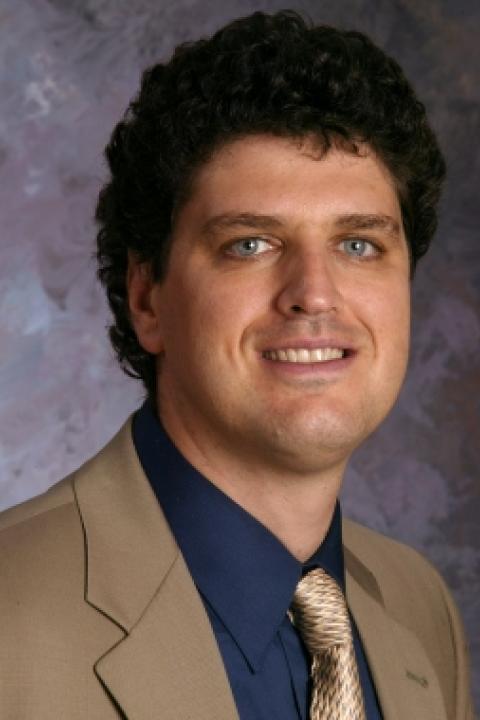
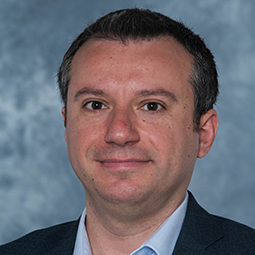
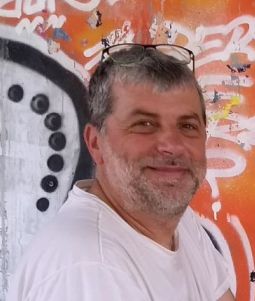
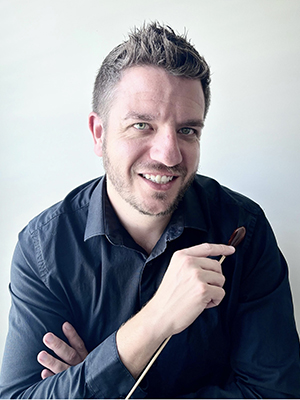
Dr. John Morgan is an Adjunct Research Fellow at Curtin University's School of Electrical Engineering, Computing and Mathematical Sciences, affiliated with the Curtin Research Institute and Curtin Institute of Radio Astronomy (CIRA). His research focuses on interplanetary scintillation, radio astronomy, space weather, and solar physics, leveraging facilities like the Murchison Widefield Array (MWA) and ASKAP. He contributes to large-scale surveys such as GLEAM-X and FLASH, analyzing transient radio sources and heliospheric phenomena. Education details are not explicitly provided in the text. Morgan collaborates widely on projects like the MWA IPS Survey, ionospheric remote sensing, and coronal mass ejection studies. His work appears in journals like Monthly Notices of the Royal Astronomical Society and Publications of the Astronomical Society of Australia . Key achievements include first ASKAP-based interplanetary scintillation measurements and detection of a three-decade-long radio transient. He advises on antenna design for small satellites and space weather applications. Awards or grants are not explicitly listed.
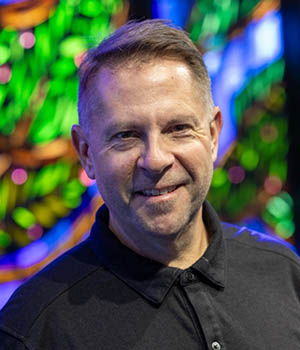
Dr. Steve Prabu is a Visiting/Adjunct Professor at Curtin University's Curtin Research Institute and Curtin Institute of Radio Astronomy (CIRA), affiliated with the School of Elec Eng, Comp and Math Sci (EECMS) under the Faculty of Science and Engineering. His work focuses on astrophysical phenomena such as black hole jets, X-ray binaries, and radio astronomy techniques. He is actively involved in space surveillance using low-frequency radio arrays like the SKA-Low and Murchison Widefield Array (MWA), contributing to satellite tracking and space domain awareness research. His research interests include studying jet dynamics in black hole systems, HI spectroscopic distance measurements, and improving observational techniques for space objects. Dr. Prabu has published extensively on topics ranging from radio galaxy structures to mitigating satellite interference in astronomical observations. He collaborates closely with institutions like CIRA and utilizes advanced instrumentation to advance both astrophysical understanding and practical applications in space surveillance. Awards & Recognition: No specific awards mentioned. Advising & Grants: No explicit details provided on student advising or grant funding. However, his involvement in major projects like SKA-Low suggests significant institutional support. Labs/Teams: Associated with Curtin Institute of Radio Astronomy (CIRA) and collaborates on MWA and SKA initiatives.
Dr. James Connell is a Professor in the Department of Physics and Astronomy at the University of New Hampshire's College of Engineering and Physical Sciences. His research focuses on measuring energetic particle radiation in space, including galactic cosmic rays, solar energetic particles, and anomalous cosmic rays. He leads instrumentation development for space weather monitoring, including the Energetic Heavy Ion Sensor (EHIS) for NOAA's GOES-R satellite program. His work advances radiation detection technologies like the Angle Detecting Inclined Sensors (ADIS) system and synthetic diamond Cherenkov detectors. Research encompasses cosmic ray composition studies using data from the Ulysses spacecraft and solar wind modulation effects on cosmic ray distribution in the heliosphere. Publications demonstrate expertise in space instrumentation design, cosmic ray physics, and nuclear astrophysics. Work consistently bridges theoretical modeling, experimental measurements, and practical instrument development for space applications.
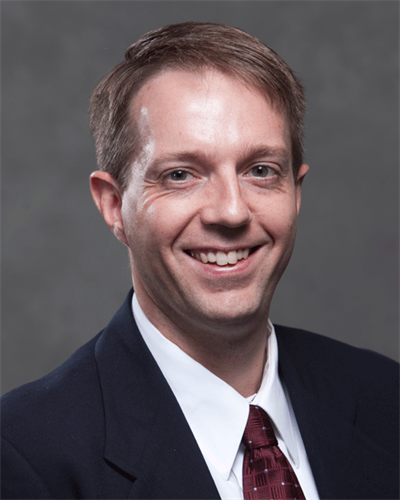
Nathan Schwadron is a Professor in the Department of Physics & Astronomy at the University of New Hampshire's College of Engineering and Physical Sciences. His research focuses on solar physics, heliospheric dynamics, and interstellar medium interactions. He teaches courses including statistical physics and doctoral research supervision. Education includes a Ph.D. in Physics from the University of Michigan (year not specified) and a B.A. in Physics from Oberlin College. His work utilizes instruments like IBEX and Parker Solar Probe to study cosmic radiation, solar wind, and interstellar boundaries. Key research interests involve solar energetic particles, heliospheric magnetic fields, and interstellar cloud mixing. Recent studies analyze solar wind dynamics near the Sun and global heliosphere observations. He has contributed to over 20 peer-reviewed publications since 2000, with recent emphasis on Parker Solar Probe data and space weather modeling. Labs/Teams: Likely involved with the Interstellar Boundary Explorer (IBEX) mission team and Parker Solar Probe science collaboration groups. Future work focuses on Interstellar Mapping and Acceleration Probe (IMAP) mission contributions.
Scott Corley is a Teaching Professor at the University of Wisconsin-Milwaukee's Peck School of the Arts, where he serves as Associate Director of University Bands and Music Director of the UWM Youth Wind & Percussion Ensembles program (UWAY). He also conducts the UWM Symphony Band, directs the Panther Pep Band, teaches conducting and music education courses, and assists in supervising University Bands operations. Doctorate in Musical Arts (DMA) in Conducting from University of Iowa Master of Music (MM) in Conducting from University of Georgia Bachelor of Music Education from University of South Carolina Dr. Corley specializes in instrumental music education, conducting pedagogy, and wind band performance. He actively advocates for new music for young/developing ensembles, participates in commissioning projects, and has led world premieres of works by composers like John Mackey and Michael Markowski. His professional activities include frequent guest conducting engagements at state, regional, and national conferences. Scientific awards include: Iowa Performance Fellow Dr. Corley has extensive experience as a clinician/adjudicator for music festivals and as a guest conductor for middle/high school honor bands. He also contributed to organizing the CBDNA Young Band Composition Competition and collaborates with various ensemble conductors and musicians.
Sherry Chhabra is a Research Fellow in the Physics & Astronomy Department at George Mason University. Her research focuses on solar physics, plasma dynamics, and radio astronomy, with a particular emphasis on coronal heating mechanisms, solar transient events, and space weather phenomena. She contributes to advanced observational facilities like the Owens Valley Long Wavelength Array (OVRO-LWA), leveraging low-frequency radio imaging to study solar activity and its heliospheric impacts. Her work spans theoretical modeling of coronal loops, observational analysis of solar radio bursts, and interdisciplinary projects involving multiwavelength observations. She actively participates in developing CubeSat missions for solar X-ray spectroscopy and advancing instrumentation for gravitational wave precursor detection. Recent efforts include diagnosing plasma properties in active regions and investigating particle acceleration processes in solar flares. Key research themes: Coronal plasma dynamics, solar radio emission mechanisms, and space weather forecasting. Instrumentation expertise: Radio interferometry, spectral imaging, and low-frequency solar observations. Chhabra's contributions bridge fundamental solar physics with applied space science, addressing questions about energy transfer in the corona and the role of transient events in shaping the heliosphere.
Dr. Vijay Gopal is an Assistant Professor in the Department of Mechanical and Aerospace Engineering at The University of Texas at Arlington. He holds a B.E. in Telecommunication Engineering from BMS College of Engineering, and M.Sc. and Ph.D. degrees in Aerospace Engineering from UTA. His research focuses on hypersonic aerothermodynamics, laser-based diagnostics, and plasma dynamics in supersonic flows. He has conducted extensive work in arc-jet wind tunnel testing and flow characterization techniques. Education: PhD in Aerospace Engineering, The University of Texas at Arlington (2020) MSc in Aerospace Engineering, The University of Texas at Arlington (2015) B.E. in Telecommunication Engineering, Visvesvaraya Technological University (2012) Research Interests: Hypersonic Aerothermodynamics Laser-Based Diagnostics (FLEET, Fs-TALIF) Plasma Discharge in Supersonic Flows Supersonic Vortex Dynamics Flow Mixing and Shock Wave Interactions His publications emphasize advanced diagnostics for hypersonic flows and scramjet propulsion systems. Recent work includes studies on filtered Rayleigh scattering (FRS) and FLEET velocimetry in arc-jet environments. Awards include the Kalpana Chawla Endowed Scholarship and an ONR fellowship. Teaching includes laboratory courses in aerodynamics and fluids, as well as graduate research supervision. He is a member of AIAA since 2019 and has presented at venues like the Princeton Collaborative Low Temperature Plasma Research Facility.
Luca Maddalena is a Full Professor of Aerospace Engineering and the Director of the Aerodynamics Research Center (ARC) at The University of Texas at Arlington. He leads research operations in multiple advanced wind tunnel facilities including a low-speed wind tunnel, transonic Ludwieg tube tunnel (0.4 Dr. Maddalena earned his PhD in Aerospace & Ocean Engineering from Virginia Polytechnic Institute and State University in 2007, with a dissertation titled "Investigations of Injectors for Scramjet Engines." Prior to that, he obtained his MS in Aerospace Engineering from Politecnico de Milano in 2004, with a dissertation on "Transverse Liquid injection into a supersonic flow for scramjet applications." His primary research focuses on experimental investigations of mixing and combustion in turbulent supersonic flows relevant to hypersonic airbreathing propulsion, and on reusable thermal protection systems and thermal management for sustained hypersonic flight. His work spans several key areas: Hypersonic air-breathing propulsion systems Injection mixing and combustion in high-speed flows Compressible turbulent mixing and vortex dynamics Hypersonic aerothermodynamics Thermal protection systems and thermal management strategies Experimental fluid dynamics and advanced instrumentation Dr. Maddalena's recent publications demonstrate a strong focus on advanced diagnostic techniques for hypersonic flow characterization, particularly using laser-based methods like Filtered Rayleigh Scattering and FLEET velocimetry. His work shows increasing emphasis on practical applications for thermal protection systems and the development of more accurate measurement techniques for high-enthalpy flows. The research consistently addresses the fundamental fluid dynamics challenges in hypersonic propulsion while maintaining strong connections to real-world engineering applications. Among his notable scientific achievements are: AIAA Ground Testing Award (2023) AIAA Hypersonics Best Paper Award (2020) Fellow of the Royal Aeronautical Society (2020) Nomination for University Award of Outstanding Research Achievement at UTA (2018) Associate Fellow of the American Institute of Aeronautics and Astronautics (2016) Dr. Maddalena has advised numerous graduate and undergraduate students, including multiple PhD and Master's candidates who have gone on to positions at NASA, Blue Origin, SpaceX, and other leading aerospace organizations. His research has been generously funded by various prestigious organizations including NASA Langley Research Center, the Office of Naval Research (ONR), the Air Force Research Laboratory, DARPA, and the Department of Energy. Notably, ONR and DARPA jointly funded his group for the design and construction of a National-Level Hypersonic Research Facility for High-Temperature Materials Development and Characterization. As Director of the Aerodynamics Research Center, Dr. Maddalena oversees a comprehensive suite of experimental facilities dedicated to hypersonic research. His team focuses on both fundamental fluid dynamics investigations and practical engineering solutions for hypersonic flight challenges. Current work includes developing advanced diagnostic techniques for arc-jet facilities, studying thermal protection systems, and investigating vortex dynamics for improved scramjet combustor designs.
Dr. J. Antonio Balderrama is Associate Professor of Instruction in the Department of Civil Engineering at The University of Texas at Arlington and serves as Area Coordinator for Architectural Engineering. He earned his Ph.D. (2015) and M.E. (2009) in Structural Engineering from the University of Florida, and his B.S. in Civil Engineering from the University of Notre Dame (2007). A Licensed Professional Engineer in Texas and several Mexican municipalities, he blends extensive academic training with 15+ years of international industry practice that includes design of >6 million ft² of buildings and offshore petroleum platforms. Education: Ph.D. Structural Engineering (Wind Engineering emphasis), University of Florida, 2015 M.E. Structural Engineering (Wind Engineering emphasis), University of Florida, 2009 B.S. Civil Engineering (Structural emphasis), University of Notre Dame, 2007 Research & Scholarly Focus: Dr. Balderrama’s scholarship targets wind-structure interaction, performance-based wind design, infrastructure resilience, and multi-hazard engineering. His work integrates large-scale boundary-layer wind-tunnel testing, full-scale field monitoring (Florida Coastal Monitoring Program), Monte-Carlo simulation, and post-disaster reconnaissance to refine codified wind loads and advance risk-consistent structural design. Interests span computational fluid dynamics, probabilistic load characterization, building-envelope failure analysis, and reliability-based optimization of high-rise, industrial, and offshore structures subjected to hurricanes, tornadoes, and seismic events. Teaching & Mentorship: He teaches undergraduate and graduate courses in structural analysis, structural dynamics, steel design, masonry design, timber design, finite-element methods, and senior capstone projects. He has advised more than 30 M.S. thesis, Ph.D. dissertation, honors, and capstone students, and actively mentors student competition teams and the UTA Architectural Engineering Institute chapter. Selected Honors: Civil Engineering Outstanding Instructor Award, UTA (2021-2022) Member, ASCE & Structural Engineers Association of Texas ACUE/ACE Certificate in Effective College Instruction Professional Engagement: Dr. Balderrama maintains an active consulting practice (founder, BalRob Internation Consultants) and contributes to ASCE, AISC, ACI, and API code committees. He routinely reviews for the Journal of Wind Engineering & Industrial Aerodynamics and chairs conference sessions on wind effects and structural resilience.
Dr. Rebecca Brownlow is a Senior Lecturer in Environmental Science at the School of Engineering and Built Environment, part of Sheffield Hallam University's College of Social Sciences and Arts. She joined the university in 2022 and teaches on courses including BSc Geography, BSc Climate Sustainability and Environmental Management, and MSc Environmental Management. Her research focuses on greenhouse gases, air quality, and emissions from burning, with expertise in low-cost sensor technology and landfill gas assessments. Dr. Brownlow holds an MSci in Environmental Geoscience and a PhD in Earth Science from Royal Holloway, University of London, where her doctoral work centered on tropical methane emissions using isotopic analysis. Post-PhD, she conducted post-doctoral research at the University of Groningen on greenhouse gas vertical profiles using AirCores. She later transitioned to environmental consulting, specializing in waste management and air quality assessments before joining academia. Her research interests span landfill gas risk analysis, waste lifecycle assessments, and the environmental impacts of prescribed burning. She has pioneered the use of UAVs (drones) for atmospheric sampling, contributing to studies on methane dynamics in tropical regions and urban environments. Her work frequently explores climate policy implications and novel emission reduction strategies. Notable contributions include analyzing methane trends post-2007, identifying isotopic shifts in emissions, and developing methods for measuring air quality impacts of upland fires. Her publications often intersect engineering innovations (e.g., drone technology) with environmental science, emphasizing practical solutions for sustainability challenges.
Linda Lukas is a Lecturer Faculty at San Francisco State University, where she has served as Flute Instructor since 1991. She concurrently holds the position of Second Flutist with the San Francisco Symphony since 1990. Her professional affiliations include memberships in the San Diego Symphony, San Diego Opera, and San Diego Chamber Orchestra prior to her current roles. Since 1996, she has been Principal Flutist of the Sun Valley Summer Symphony and was a core member of the Arioso Wind Quintet for a decade. The Arioso Wind Quintet released two CDs on Koch International, including a notable recording of Samuel Barber's works with Lukas as soloist in the Capricorn Concerto. Her expertise spans orchestral performance, chamber music, and flute pedagogy. She is affiliated with the Creative Arts Building at SFSU. Though no academic awards or grants are explicitly noted, her contributions to music performance and education are central to her career. Linda Lukas maintains active roles in multiple ensembles, reflecting her dedication to both teaching and professional performance in classical music.
Robert White is an Associate Professor in the Department of Mechanical Engineering at Tufts University's School of Engineering. He leads the Microscale Sensors and Systems Lab and advises the Tufts Micro and Nano Fabrication Facility. His expertise spans acoustic microsystems, MEMS/NEMS, microfabrication, and aerodynamic measurement technologies. White holds a PhD from the University of Michigan and MS/BS degrees from MIT. Education: Ph.D., University of Michigan, Mechanical Engineering (2005) M.S., Massachusetts Institute of Technology, Mechanical Engineering (1999) B.S., Massachusetts Institute of Technology, Mechanical Engineering (1999) Research focuses on acoustic sensors for planetary science (e.g., Mars missions), quench detection in superconductors, and high-altitude anemometry. Key contributions include fluid-filled MEMS hydrophones and sonic anemometers. He has over 120 publications and holds multiple patents in sensor design. Awards include AIAA Associate Fellow status and grants from NASA, DOE, and industry partners. Teaching responsibilities include courses in acoustics, mechanics, and MEMS systems. Current projects involve developing sensors for extreme environments and improving aerospace instrumentation. Labs/Teams: Microscale Sensors and Systems Lab Tufts Micro/Nano Fabrication Facility
Nikolaos Vitzilaios is an Associate Professor in the Department of Mechanical Engineering at the University of South Carolina's College of Engineering and Computing. He holds a PhD from the Technical University of Crete and specializes in autonomous unmanned systems, robotics, and control theory. His research integrates mechatronics and machine learning for applications in aerial robotics, structural inspection, and environmental monitoring. Recent publications focus on UAV-based railway infrastructure assessment, digital twins, and adaptive control under challenging environmental conditions. He has secured NSF funding for multi-robot systems and mentors graduate students in field robotics. Prior appointments include positions at Kingston University London and the University of Denver.
George Voulgaris is Professor of Coastal Processes and Sediment Dynamics at the University of South Carolina. With a PhD from the University of Southampton, his research examines surf-zone sediment transport, wave-current interaction, and hydrodynamic measurements using advanced field instrumentation and HF Radar systems. Research includes NSF-funded projects on coastal erosion, storm impacts, and operational oceanography. He directs the USC High-Frequency Radar network and serves as Associate Editor for Continental Shelf Research. Voulgaris received the 2014 USC Research Award and has supervised over 15 PhD candidates. Publications focus on coastal plume dynamics, wave inversion techniques, and turbulence measurements. Professional service includes SECOORA Board membership and advisory roles for Nanjing University's Key Laboratory for Coast and Island Development.
Christian M. Noon serves as Assistant Director of Bands and Assistant Teaching Professor of Music Education at the University of Missouri’s School of Music (College of Arts and Science). He teaches graduate/undergraduate music education courses, conducts the University Band, and oversees Marching Mizzou and Mini Mizzou. His career includes public school teaching in Colorado and advocacy for diverse, equitable wind ensemble programming. Education: PhD, University of South Carolina MM, University of Miami Frost School of Music BME, University of Colorado at Boulder Research focuses on sociology/social justice in music education, teacher identity development, and conducting pedagogy. He emphasizes making music education inclusive and expansive through curricular practices that engage diverse communities. Publications appear in Bulletin of the Council for Research in Music Education , Journal of Music Teacher Education , and others. Affiliations include NAfME, CBDNA, CMS, and honor societies Pi Kappa Lambda (member), Kappa Kappa Psi/Tau Beta Sigma (honorary). His work bridges scholarship with practical teaching, emphasizing equitable pedagogy and vibrant ensemble performance.