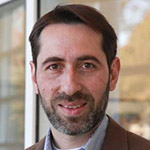
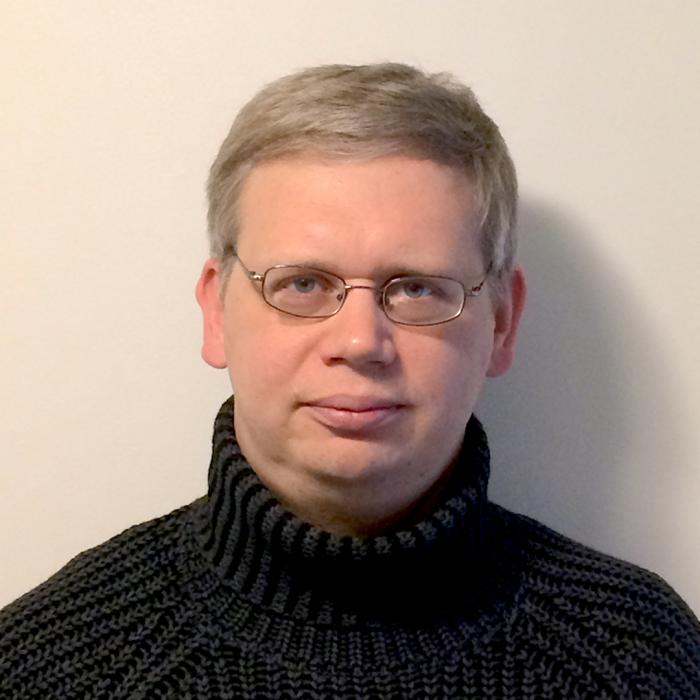
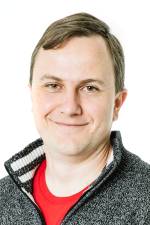
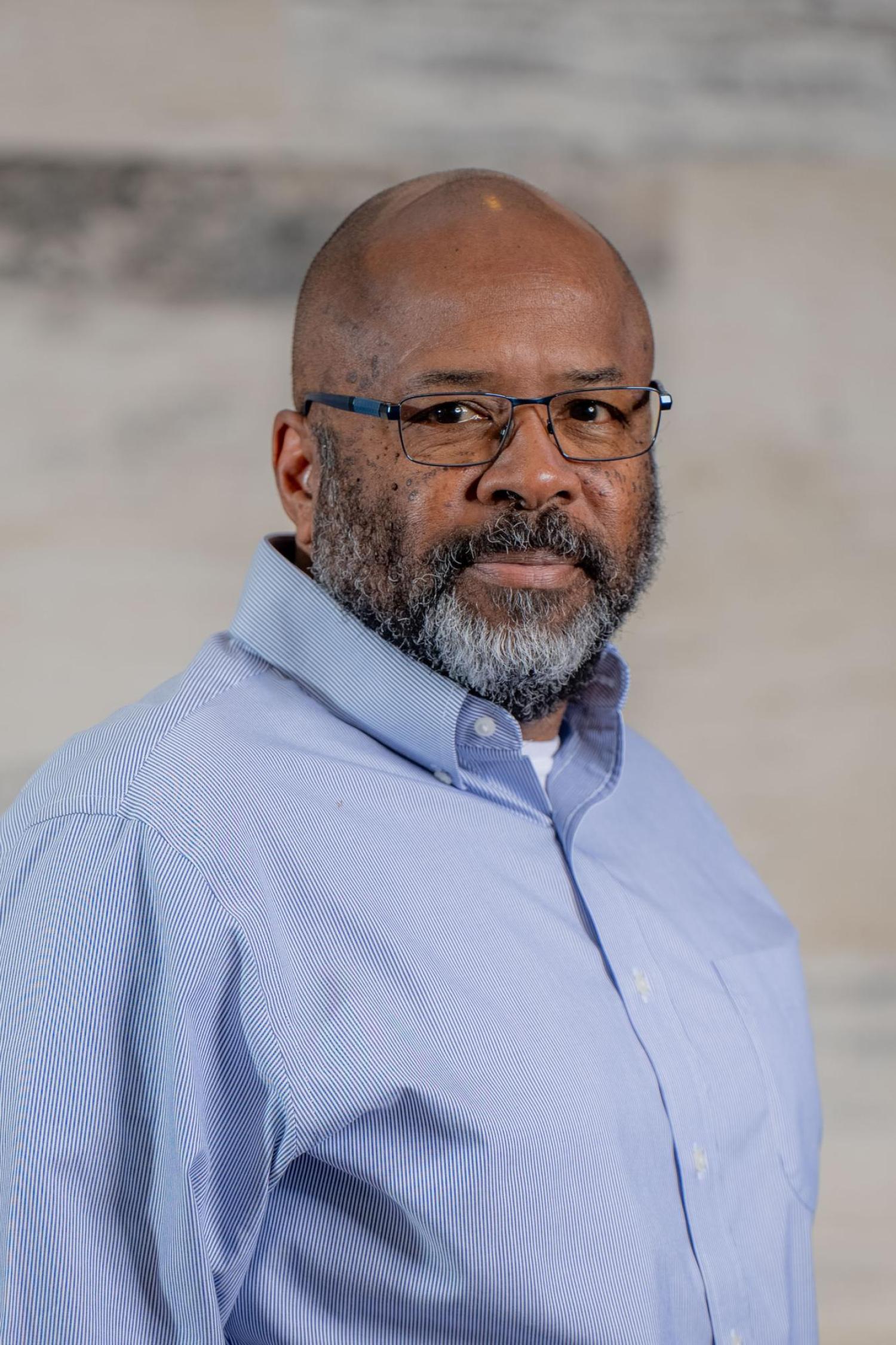
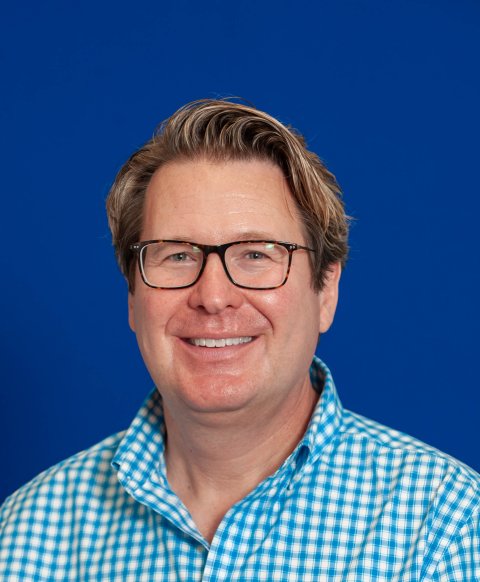
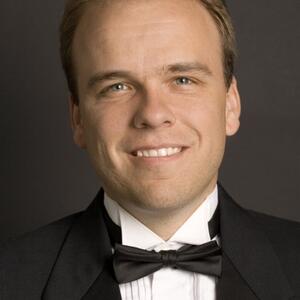
Leonid Sirotkin serves as an Adjunct Assistant Professor of Music at DePauw University and maintains an active orchestral career as principal English horn with the Fort Wayne Philharmonic and Des Moines Metro Opera. A native of St. Petersburg, Russia, he previously held the position of principal English horn with the Kirov Opera and Symphony Orchestra of the Mariinsky Theater under Maestro Valery Gergiev for nearly a decade. His educational foundation was established under the tutelage of Dr. Valery Sobolev and Dr. Mark Ostoich. His professional focus encompasses: Orchestral Performance across major U.S. ensembles including Cincinnati Symphony Orchestra, Indianapolis Symphony Orchestra, and Dayton Philharmonic Chamber Music engagements at international festivals spanning Finland, Russia, and Italy Music Education through extensive master classes throughout Russia and the United States Specialized expertise in Wind Instruments, particularly oboe and English horn repertoire His scholarly contribution centers on Tchaikovsky's orchestral works, with his 2000 publication serving as a definitive pedagogical resource for wind players. His performance career demonstrates consistent engagement with classical repertoire across opera, ballet, and symphonic traditions, highlighted by a 2010 feature on American Public Media's Performance Today.
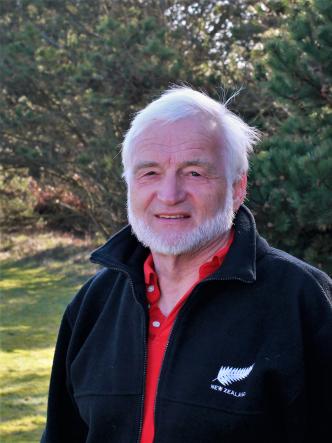
Professor Olav Hohmeyer holds the Chair of Energy and Resource Economics at the European University of Flensburg within the Interdisciplinary Institute for Environmental, Social and Human Sciences. He has been a faculty member since July 1998 and established the industrial engineering program "Energy and Environmental Management." His institutional affiliations include the German Advisory Council on the Environment (2008-2012) and ongoing advisory roles for Barbados and Seychelles on energy transitions. His research centers on energy systems analysis with a focus on achieving 100% renewable energy supply. Key research areas include climate change mitigation strategies, renewable energy economics, grid integration challenges, and policy frameworks for decarbonization. His work emphasizes systemic transformation of energy infrastructure and cross-sectoral coordination for climate neutrality. Professor Hohmeyer's publication portfolio reveals strong thematic concentration on renewable energy pathways, climate protection concepts, and economic analysis of energy transitions. His work spans technical feasibility studies, policy implementation frameworks, and socioeconomic impact assessments, with particular emphasis on municipal and national decarbonization roadmaps. Nobel Peace Prize (2007) as IPCC Working Group III member Fraunhofer Special Prize (1991) Inclusion in Who's Who in the World and Science and Engineering He has supervised doctoral students from Ethiopia, Barbados, Botswana, China, Ghana, Indonesia, Nepal, Peru, Pakistan, South Africa, Tanzania, Venezuela, USA, and Vietnam. His advisory work includes government consultations for Barbados (since 2013) and Seychelles (since 2015) on renewable energy transitions, plus contributions to IPCC Special Reports on renewable energy and climate change mitigation. Professor Hohmeyer coordinates research clusters focused on system integration and climate protection concepts at his university.
C. Keith Collins serves as an Adjunct Lecturer in Music specializing in Historical bassoons at the Historical Performance Institute within the Jacobs School of Music, Indiana University, and also teaches baroque bassoon and curtal at the University of North Texas. His educational background: Doctor of Music (D.M.), Indiana University Jacobs School of Music, 2008 Master of Music (M.M.), Indiana University Jacobs School of Music, 1999 Bachelor of Music (B.M.), Berry College, 1996 Dr. Collins is a renowned performer on historical wind instruments including baroque/classical bassoon, curtal, recorder, and shawm, with research focused on historical performance practice—particularly colonial Latin American music through his founding role in Ensemble Lipzodes. His scholarly interests extend to Appalachian folk music and banjo history, early American hymnody and shape-note traditions, and UK/Irish harp repertoire. His performance career spans collaborations with Washington Bach Consort, Tafelmusik, National Cathedral Baroque Orchestra, Opera Atelier, Apollo's Fire, and Grammy-nominated Musik Ekklesia, plus concerto appearances with Atlanta Baroque Orchestra and Bourbon Baroque. Beyond music, he serves on the Indiana Raptor Center board, leading public education initiatives on raptor conservation and ecology.
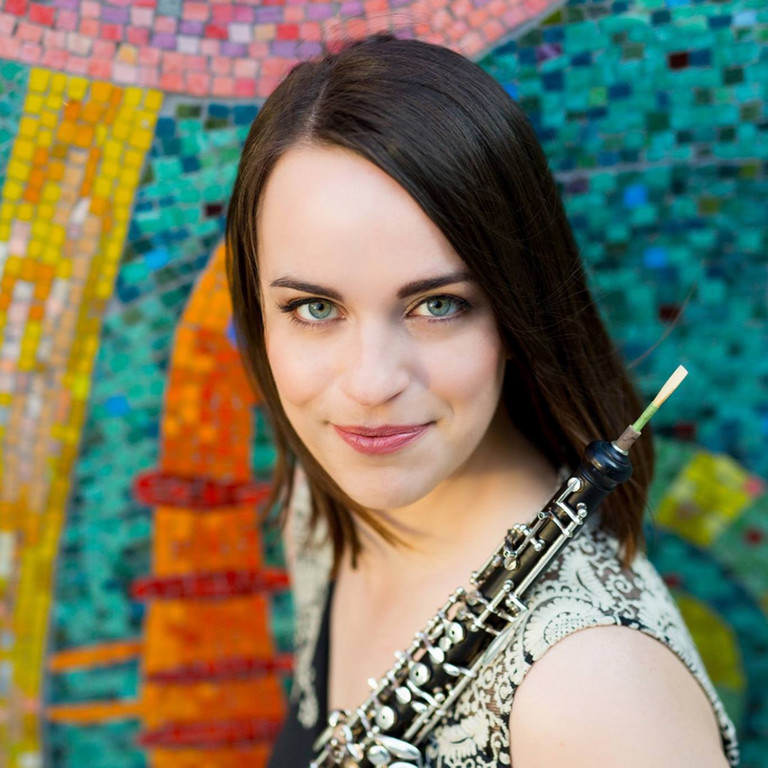
Jessica Warren serves as Adjunct Associate Professor of Music (Oboe) at Indiana University's Jacobs School of Music. An active performer, she collaborates with the National Symphony Orchestra, Kennedy Center Opera House Orchestra, Wintergreen Festival Orchestra, Berkshire Bach Society, and recently served as guest principal oboe for the United States Air Force Band's 2024 spring tour. Her educational background includes a Doctor of Musical Arts from Boston University (studying under John Ferrillo), a Performer Diploma and master's degree from the Jacobs School of Music (under Linda Strommen), and a bachelor's degree from The Ohio State University (under Robert Sorton). Warren specializes in oboe reedmaking education and gouging machine training, with research centered on reimagining collegiate reedmaking curricula as demonstrated in her dissertation 'Significant Learning as Reedmaking Pedagogy.' She actively develops mindfulness applications for reedmaking and practice techniques, presenting lectures and master classes internationally. Awards: Tanglewood Music Center Fellow (two-time) With extensive teaching experience at George Washington University, Interlochen Center for the Arts, and New England Conservatory, Warren maintains an active performance schedule while advancing pedagogical innovations in woodwind performance training.
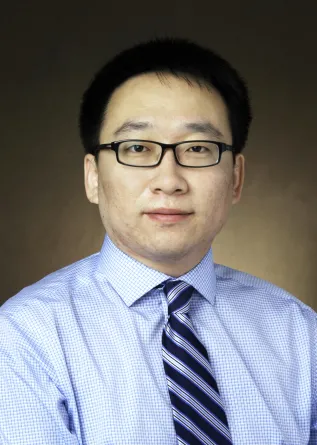
Dr. Yan Zhang is an Associate Professor in the Mechanical Engineering department at North Dakota State University (NDSU), where he joined in 2015 after completing his Ph.D. in Aerospace Engineering from Iowa State University in 2013. His research spans multiple interdisciplinary areas within fluid dynamics, with a particular focus on experimental approaches to complex flow phenomena. Dr. Zhang's educational background includes a B.S. in Energy and Power Engineering from Xi'an Jiaotong University, China (2008) and a Ph.D. in Aerospace Engineering from Iowa State University (2013). He completed postdoctoral research at Western Michigan University (2013-2015) before joining NDSU. His primary research interests focus on cardiovascular fluid dynamics, particularly pulsatile flow in the human cardiovascular system with applications to heart disease understanding and medical device design. Additional research areas include wind engineering, aerodynamics of vertical axis wind turbines, microfluidics for three-dimensional cell culture, and multiphase flow experimentation. His work frequently employs advanced flow diagnostics such as Particle Image Velocimetry (PIV), Laser Doppler Velocimetry (LDV), and ultrasound imaging techniques. Dr. Zhang's recent publications demonstrate a strong trend toward cardiovascular hemodynamics research, with particular emphasis on pulsatile flow in compliant vessels, aortic valve models, and cardiovascular adaptation to microgravity environments. His work combines experimental approaches with computational modeling to address complex fluid-structure interaction problems. His notable scientific achievements include multiple awards and recognitions, such as the NDSU Research Development Travel Award, Honorable Mention at NDSU EXPLORE, and several student awards under his mentorship. His students have received recognition at the Rocky Mountain Bioengineering Symposium, and one was a finalist in the NDSU Three-Minute-Thesis competition. Dr. Zhang has successfully secured substantial research funding from diverse sources including the NIH, NSF, NASA, DoD, and American Heart Association. Current projects include NIH R01 funding for aortic valve research, NASA EPSCoR funding for space physiology studies, and NSF MRI funding for a research ultrasound system. His laboratory, the Applied Fluid Dynamics Laboratory, is well-equipped with advanced instrumentation for multidisciplinary flow research. Dr. Zhang is actively involved in educational outreach, including delivering STEM lessons to Native American students at Cankdeska Cikana Community College as part of the NATURE Sunday Academy Program. He also serves as a technical judge for various student competitions and as a reviewer for multiple international journals and NSF grant panels.
Prof. Dr. Carmen Heß serves as Professor of Instrumental and Vocal Pedagogy at Cologne University of Music and Dance's Wuppertal campus and holds the position of deputy program director for Instrumental and Vocal Pedagogy. Appointed to a visiting professorship in 2018 and promoted to full professorship in 2019, she bridges academic scholarship with active musical performance. Her educational trajectory began with horn studies during pre-college training (Jungstudium), followed by formal education in music education and instrumental pedagogy (Lehramt). She earned her PhD in Music Education in 2016 with a dissertation analyzing conceptual tensions in wind instrument classroom music settings. Research focuses on resolving divergent pedagogical goals in ensemble contexts, particularly examining wind instrument instruction within classroom environments. Her work integrates horn pedagogy with broader vocal and instrumental teaching methodologies, addressing implementation challenges in institutional music education frameworks. This scholarship directly informs contemporary practices in music teacher training. Artistically, she maintains an active performance career through concert engagements and studio productions with her band, demonstrating the integration of scholarly research and practical musicianship.
Christian Sejer Pedersen is an Associate Professor at the Department of Electronic Systems, Aalborg University, within The Technical Faculty of IT and Design. His research focuses on acoustics, signal processing, and low-frequency noise, particularly in environmental and engineering contexts. He has contributed to studies on wind turbine noise, wireless sound zones, and psychoacoustic phenomena. Key research areas include low-frequency sound zones, packet loss concealment in wireless audio systems, and noise measurement technologies. His work integrates theoretical models with practical applications, addressing both technical and regulatory challenges in noise control. Pedersen has been involved in 12 major projects, including ISOBEL: Interactive Sound Zones for Better Living and initiatives on noise assessment methodologies. His publications span 20+ years, with recent emphases on robust sound zone filters, AR models for latency reduction, and free-field correction techniques. Media engagements highlight his expertise in public debates about noise from infrastructure projects like wind turbines and urban developments. Advising and grants involve multidisciplinary collaborations, focusing on sustainable energy systems and acoustic engineering innovations. His lab work centers on advanced audio systems and environmental noise mitigation strategies. Pedersen's contributions bridge academic research with real-world applications in acoustics and signal processing.
Oleg Kargaltsev is an Adjunct Professor of Physics at George Washington University. His research focuses on high-energy astrophysics, particularly neutron stars, black holes, pulsars, and pulsar wind nebulae. He applies machine learning and advanced statistical techniques to analyze multiwavelength data from observatories like Chandra, XMM-Newton, and JWST. His work bridges observational astronomy with theoretical models to study extreme astrophysical phenomena. Dr. Kargaltsev holds a PhD in Astronomy and Astrophysics from Pennsylvania State University (2004). He teaches undergraduate and graduate courses including 'Stars, Planets, and Life in the Universe,' 'Computational Physics,' and 'Astrophysics I.' His research emphasizes neutron star cooling mechanisms, magnetar behavior, and the interplay between pulsar winds and their environments. Recent studies include analyzing the Vela pulsar's hard X-ray spectrum and probing the infrared spectrum of magnetar 4U 0142+61 using JWST. He has pioneered machine learning approaches to classify X-ray sources in globular clusters and unidentified gamma-ray regions. Collaborations involve projects like the Advanced X-ray Imaging Satellite (AXIS) and the Swift Deep Galactic Plane Survey. His work contributes to understanding cosmic ray acceleration, relativistic outflows, and the evolution of stellar remnants in extreme conditions.
Associate Professor Fabian Zander is affiliated with the School of Engineering at the University of Southern Queensland. His expertise spans hypersonics, optical diagnostics, and flight testing measurements. He holds a BEng from the University of Queensland (2004) and a PhD (2013), followed by postdoctoral research at the University of Stuttgart (2014–2018). He currently leads the Institute for Advanced Engineering and Space Sciences' hypersonics research initiatives. Research Focus: Prof. Zander’s work focuses on hypersonic propulsion systems, re-entry aerothermodynamics, and space debris analysis. He develops advanced optical diagnostics techniques and leads airborne observation campaigns for spacecraft re-entry studies, such as the Hayabusa2 mission. His team operates the USQ hypersonic wind tunnel facility for experimental testing of thermal protection systems and aerodynamic configurations. Key Contributions: His research bridges laboratory experiments (e.g., plasma wind tunnel testing) with numerical simulations, addressing challenges in hypersonic flow control, material ablation, and trajectory analysis. He collaborates internationally on projects like the τ-Herculid meteor shower studies and OSIRIS-REx re-entry seismic measurements. Advisory & Facilities: Supervises doctoral research on hypersonic vehicle design, space debris dispersion modeling, and detonation engines. His lab develops innovative diagnostic tools like laser-induced diaphragm rupture systems and focused laser differential interferometry for hypersonic flow analysis.
Severine Millet is a Researcher affiliated with the Turbulence & Instabilités team at the Laboratoire de Mécanique des Fluides et d’Acoustique - UMR 5509 in Lyon, France. Her research focuses on fluid dynamics, turbulence, and related phenomena, with contributions to geophysical fluid dynamics and multiphase flows. She collaborates internationally on projects such as silicon purification processes and fluid dynamics in rotating systems. Education & Affiliations: Not explicitly detailed in text, inferred from lab and team affiliation. Research Interests: She investigates turbulence modeling, flow instabilities, and their applications in geophysical and industrial contexts. Her work includes numerical simulations and experimental studies on fluid mixing, stratified flows, and energy-related systems. Grants & Collaborations: Key projects include Franco-Algerian collaborations (e.g., silicon purification via directed solidification) and interdisciplinary efforts with institutions like CEA, Airbus, and universities in India/UK. Notable funding includes ANR grants and regional innovation programs. Labs & Teams: Active in the Turbulence & Instabilités team, contributing to experimental facilities like wind tunnels and fluid dynamics instrumentation. Engaged in developing numerical methods and flow visualization techniques.
Brian Argrow is a Distinguished Professor of Aerospace Engineering Sciences at the University of Colorado, Boulder. He holds the Glenn Murphy Endowed Chair and serves as Director of the Integrated Remote and In Situ Sensing (IRISS) and the Research and Engineering Center for Unmanned Vehicles (RECUV). His research focuses on unmanned aircraft systems (UAVs), hypersonic aerodynamics, and atmospheric science. He has led major field campaigns such as LAPSE-RATE, MOSAiC, and TORUS, advancing UAV-based environmental and meteorological data collection. Education: PhD (Aerospace Engineering, University of Oklahoma, 1989), MS (Mechanical Engineering, 1986), BS (Aerospace Engineering, 1983). Research interests include UAV design and autonomy, severe weather monitoring, Arctic atmospheric studies, and hypersonic radiation modeling. His work bridges aerospace engineering and environmental science, emphasizing autonomous systems for challenging environments. Publications highlight contributions to UAV applications in pollution assessment, Arctic climate observation, and storm dynamics. Awards include National Academy of Engineering membership (2022), AIAA Fellowship (2016), and multiple teaching accolades. Key projects: LAPSE-RATE (lower atmospheric profiling), MOSAiC (Arctic climate research), and TORUS (tornadic supercell observations). He also develops UAV-based payloads for wildfire detection and atmospheric boundary layer studies.
Lorenz Roth is an Associate Professor at the Division of Space and Plasma Physics at KTH Royal Institute of Technology. His research focuses on planetary magnetospheres, atmospheres, and surfaces, particularly studying Jupiter's Galilean moons (Io, Europa, Ganymede, Callisto), ice giants (Uranus/Neptune), and ultra-cool dwarf stars. He leads observational campaigns using the Hubble Space Telescope (HST), James Webb Space Telescope (JWST), and ground-based facilities like ALMA. He is principal investigator (PI) for multiple HST and ALMA projects and collaborates on missions like JUICE and Europa Clipper. Roth's work involves analyzing auroral emissions, atmospheric escape processes, and plasma interactions. He leads an ISSI international team investigating Io's atmospheric loss and offers master's projects on JWST/HST data analysis. He teaches courses in plasma physics, solar system physics, and space environment engineering at KTH. His recent articles highlight discoveries like sublimated water atmospheres on Ganymede/Callisto, CO2 exospheres on icy moons, and Uranus' seasonal atmospheric changes. He emphasizes interdisciplinary approaches combining observational data with modeling to understand planetary system dynamics.
Matthew Schmidt is a Professor in the Department of Oceanography at Old Dominion University (ODU). His career includes roles as Associate Professor at Texas A&M University (2013–2014) and Assistant Professor there (2007–2013). He holds a PhD in Geology from the University of California, Davis (2005), and prior degrees from Vanderbilt University (B.S., 1993) and the University of South Florida (M.S., 1997). Schmidt leads the Schmidt Paleoclimate Lab at ODU, focusing on reconstructing past climate dynamics in the tropical Pacific and Atlantic oceans. His research expertise includes Paleoceanography Climate Change mechanisms Geochemical proxy development ENSO variability Atlantic Meridional Overturning Circulation (AMOC) dynamics Key projects involve multi-proxy reconstructions of ENSO behavior during glacial periods and links between ocean-atmosphere carbon cycles and abrupt climate shifts. Major grants include NSF-funded studies totaling over $3.5M, investigating ENSO variability, CO2 dynamics, and tropical ocean circulation. His lab operates advanced instrumentation like plasma source mass spectrometers and isotope ratio mass spectrometers. Scientific honors include the Allen G. Marr Prize (2006) and NOAA Postdoctoral Fellowship (2005). Over 40 peer-reviewed publications span journals like Science , Nature Geoscience , and Paleoceanography .
Wille, C. is a Researcher at the GFZ German Research Centre for Geosciences , specializing in Remote Sensing and Geodesy. Their work focuses on environmental monitoring, particularly in measuring greenhouse gas fluxes (CO₂, CH₄) using advanced techniques like airborne eddy covariance and satellite remote sensing (e.g., Sentinel-2). Key contributions include developing platforms like the ASK-16 motorized glider for turbulence and matter flux measurements, and analyzing long-term methane emissions in Arctic and Siberian tundra ecosystems. Research interests include climate change impacts on ecosystems, carbon sequestration dynamics in peatlands, and the integration of hyperspectral and CubeSat data for environmental validation. Collaborations span global networks like FLUXNET-CH4 and involve multidisciplinary teams studying soil moisture, permafrost thaw, and GHG budgeting. Publications highlight methodologies for upscaling wetland methane emissions, quantifying lateral carbon export in tundra catchments, and validating satellite-derived vegetation indices. Their datasets and open-source codes contribute to advancing climate and environmental data analysis.
Dan Tremblay is a Continuing Adjunct Associate Professor at Queen’s University DAN School of Drama and Music since 2001. He also teaches trumpet and coaches chamber ensembles at the Crane School of Music, State University of New York in Potsdam. As a performer, he serves as Principal/Solo Trumpet with L’Orchestre Symphonique de l’Estuaire and plays with multiple orchestras, including the Kingston Symphony Orchestra and Ottawa Symphony Orchestra. His roles include conducting Queen’s University Wind Ensemble, Symphony Orchestra, Brass Choir, and Trumpet Ensemble, alongside being Music Director of the Quinte Symphony in Belleville, Ontario, since 2015. Education: Master of Music in Performance, McGill University Bachelor of Music in Performance, Université de Montréal His expertise spans trumpet instruction, chamber music, wind pedagogy, and orchestral conducting. He teaches courses like Introduction to Choral and Instrumental Conducting, Advanced Instrumental Conducting, Brass Techniques and Methods, and Wind Pedagogy, while leading the brass and percussion studio at Queen’s University. Awards: Ménard-Pomerleau Award (2006) with Alliage Brass Trio As a clinician and private trumpet teacher, Dan maintains an active presence in Quebec, Maritime Provinces, New York, and Ontario. He also manages the World Trumpet Society Seminar and collaborates with diverse orchestras and ensembles.