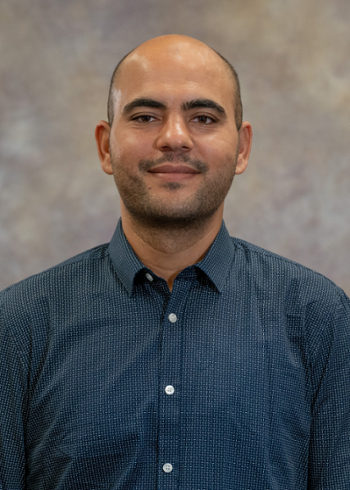
Tomas Karlsson is a Professor and Deputy Head of Department at the Royal Institute of Technology , specializing in Space and Plasma Physics . He teaches courses such as EF2240 Space Physics , EF2245 Space Physics II , and EI1240 Electromagnetic Theory , while serving as examiner or coordinator for advanced projects and thesis work in space-related fields. His research focuses on the interaction between the solar wind and planetary magnetospheres , with specific interests in bow shock physics , magnetosheath jets , solar wind magnetic holes , auroral physics , and comparative studies of magnetospheres across planets and comets. He employs spacecraft data (e.g., MMS , Cluster , BepiColombo ) and simulations to analyze plasma dynamics and space weather phenomena. The 15 most recent publications highlight trends in solar wind turbulence , magnetospheric boundary processes , and planetary plasma interactions , with recurring themes in SLAMS (Short Large-Amplitude Magnetic Structures) , magnetosheath jet formation , and magnetic hole propagation . These works span statistical surveys, hybrid simulations, and multi-mission data analysis.
Prof. Dr. Jürgen Biela serves as Full Professor at ETH Zurich within the Department of Information Technology and Electrical Engineering, where he leads the Laboratory for High Power Electronic Systems. His academic career at ETH Zurich has progressed from doctoral studies to his current position as head of his research laboratory, with significant contributions to power electronics research and education. Biela earned his diploma with honors from Friedrich-Alexander University in Erlangen, Germany in 2000 and completed his Ph.D. at ETH Zurich in 2005, both in electrical engineering. His educational background includes specialized work on resonant DC-link inverters at Strathclyde University and active control of series connected IGCTs at the Technical University of Munich. His research program focuses on multi-physics modeling, design and optimization of power electronic systems , with particular emphasis on applications for future energy distribution and transmission, pulsed power systems, and advanced medium voltage power electronics based on novel semiconductor technologies like silicon carbide (SiC). He also investigates integrated passive components for ultra-compact and ultra-efficient high-power converter systems, pushing the boundaries of power density and efficiency in electronic power conversion. Analysis of his recent publications reveals strong trends in high-frequency power conversion , with significant work on transformer and inductor design, insulation systems for medium-frequency applications, thermal management of power components, and advanced modeling techniques for electromagnetic phenomena. His research bridges fundamental electromagnetic theory with practical engineering applications, particularly in high-voltage and high-power scenarios where traditional approaches face limitations. As a prolific researcher, Biela has published over 85 journal papers and 210 conference papers while holding more than 35 patents. He serves as an Associate Editor for the IEEE Transactions on Power Electronics and regularly reviews for leading journals and conferences in the field. His work demonstrates consistent contributions to advancing power electronic systems through rigorous theoretical analysis combined with practical implementation. Biela has supervised numerous doctoral and master's students, with recent publications indicating active mentorship of researchers working on advanced power electronic components and systems. His laboratory at ETH Zurich serves as a hub for innovation in high-power electronics, with connections to industry research projects that translate theoretical advances into practical applications. Current research directions include developing cost-effective alternatives to traditional components like Litz wire, improving insulation systems for high-voltage applications, and creating more accurate models for predicting thermal and electromagnetic behavior in power electronic systems.
Dr. John Lehrter is a Professor of Marine Sciences and Associate Director of the Stokes School of Marine & Environmental Sciences at the University of South Alabama, as well as a Senior Marine Scientist at the Dauphin Island Sea Lab. He holds a Ph.D. in Marine Sciences from the University of Alabama (2003). His research focuses on coastal biogeochemistry, ecosystem modeling, and satellite ocean color remote sensing, with an emphasis on understanding eutrophication, hypoxia, and multiple stressor impacts on coastal ecosystems. Dr. Lehrter has advised numerous graduate and undergraduate students and leads a lab engaged in field studies, numerical modeling, and satellite data analysis. His work addresses societal challenges in coastal management and climate change adaptation. Research Interests: Multiple Stressor Impacts to Coastal Ecosystems, Marine Biogeochemistry, Ecosystem Modeling, Satellite Remote Sensing, and Hypoxia Dynamics. His lab develops tools to quantify nutrient pollution effects and predict ecosystem responses to management actions. Advising and Grants: Dr. Lehrter oversees a dynamic lab with graduate students, postdocs, and technicians. Current projects include modeling nutrient dynamics, satellite data applications for water quality, and experimental studies on multiple stressors (e.g., temperature, pH) impacting marine organisms. His lab collaborates with agencies like the EPA and NOAA, contributing to coastal policy and restoration efforts. Labs/Teams: Dauphin Island Sea Lab (DISL) and the University of South Alabama’s Stokes School of Marine & Environmental Sciences. The lab recently established a state-of-the-art facility for multiple stressor experiments on marine species.
Professor Mohammad E. Taslim is a faculty member in the Department of Mechanical and Industrial Engineering at Northeastern University's College of Engineering. He holds the role of Program Director for the Master of Science in Energy Systems program. His academic expertise spans experimental and numerical research in gas turbine cooling technology, renewable energy systems (solar/wind), non-Newtonian fluid dynamics, and nano-sensor development. Education: PhD in Mechanical Engineering from the University of Arizona (1981). Research focuses on heat transfer optimization in turbine blades, multiphase flow analysis, and energy sustainability. He leads projects funded by organizations like General Electric Aviation and the American Chemical Society. Key research areas include: 1) Advanced gas turbine cooling strategies, 2) Sand separation systems for helicopter engines, 3) Non-rotating wind energy generation. Notable publications include studies on droplet dynamics, film cooling effectiveness, and rib-roughened channel heat transfer. Awards include the 2022 Faculty Research Team Award, Fellowships from ASME and AIAA, and multiple patents (e.g., non-rotating wind turbine and carbon nanotube ladder technology). Active in academic leadership, he advises students on study abroad programs like the Vietnam Dialogue, integrating field visits with engineering coursework.
Lorenzo Melito is a Professor in the Faculty of Engineering at Università Politecnica delle Marche (UNIVPM) in Ancona, Italy. His research focuses on coastal engineering, fluid dynamics, and environmental modeling with particular emphasis on wave dynamics, tsunami inundation, and coastal adaptation to climate change in Mediterranean environments. Dr. Melito's research interests span several critical areas in coastal engineering and environmental fluid mechanics. His work on wave-current interactions, steady streaming, and infragravity dynamics provides fundamental insights into coastal processes. He has developed semi-empirical approaches for tsunami inundation mapping that have been applied to Italian coastlines. His research on munitions mobility in estuaries addresses important environmental contamination issues, while his work on coastal inundation modeling contributes to climate change adaptation strategies for the Marche Region and beyond. His publications demonstrate expertise in both theoretical modeling and experimental approaches to understanding complex coastal phenomena. Analysis of Dr. Melito's recent publications reveals a strong focus on coastal processes in the Adriatic Sea region, particularly in microtidal environments. His work combines theoretical modeling, numerical simulation, and experimental approaches to understand complex wave-bottom interactions, sediment transport, and coastal flooding mechanisms. A recurring theme is the application of fundamental fluid dynamics principles to solve practical coastal engineering problems, with emphasis on Italian coastal regions including the Marche Region and the Tyrrhenian and Adriatic coasts. His research bridges theoretical fluid dynamics with practical coastal management applications, particularly for hazard assessment and climate change adaptation.
Associate Professor Fangbao Tian is a distinguished researcher and academic at UNSW Canberra's School of Engineering and Technology, where he also serves as Deputy Head of School for Research since July 2023. Previously, he held positions as Senior Lecturer (2017-2021) and Lecturer (2014-2017) at the same institution after completing postdoctoral research at Vanderbilt University. His academic journey began with a BSc (2006) and PhD (2011) in Theoretical and Applied Mechanics and Engineering Mechanics from the University of Science and Technology of China. Dr. Tian's research focuses on Computational Fluid Dynamics (CFD) tools for complex flows and fluid-structure interaction, with particular emphasis on bio-inspired applications. His work spans modeling laryngeal aerodynamics and vocal-fold vibration, fluid-structure interaction of plates in viscous fluid, fish swimming and insect flight, blood flow dynamics, and non-Newtonian flow phenomena. Recent work has expanded into Martian atmosphere aerodynamics, showing his research's growing interdisciplinary nature. His extensive publication record demonstrates consistent contributions across fluid dynamics, with recent trends showing increasing focus on compressible flows, bio-inspired flight systems, heat transfer applications, and computational methods like Lattice Boltzmann approaches. The research shows strong connections between fundamental fluid mechanics and practical applications in aerospace, biomedical engineering, and environmental systems. UNSW Canberra Goldstar Award 2022 IEEE Outstanding SMCS Chapter Award 2021 Outstanding Volunteer Award 2021 UNSW Canberra Silverstar Award 2018 UNSW Canberra Silverstar Award 2017 Journal of Fluids and Structures Highly Cited Research 2017 ARC DECRA 2016 Dr. Tian actively supervises PhD students across diverse topics including bushfire-enhanced wind loads, bio-inspired flight on Mars, flow control optimization, and fluid-structure interactions in compressible flows. He has secured over $5 million in external funding as Chief Investigator, including significant Australian Research Council projects examining Martian atmosphere aerodynamics, bio-inspired flapping wings, and cardiovascular flow modeling. His editorial roles include Associate Editor for Journal of Fluids and Structures and Scientific Reports, reflecting his standing in the fluid dynamics research community.
Chuanfei Dong is an Assistant Professor of Astronomy at Boston University's College of Arts & Sciences and of Electrical and Computer Engineering at the College of Engineering. His research focuses on understanding plasma physics and its applications to space science, planetary atmospheres, and fusion energy. Dong joined BU in January 2023 after working as a staff scientist at the Princeton Plasma Physics Laboratory. Education: B.S. in Space Science from University of Science and Technology of China M.S. in Earth and Atmospheric Sciences from Georgia Institute of Technology M.S.E. in Nuclear Engineering and Radiological Sciences from University of Michigan M.S. in Planetary and Space Sciences from University of Michigan Ph.D. in Scientific Computing from University of Michigan Research Interests: Dr. Dong's research spans multiple disciplines within space physics and plasma science. His primary interests include Star-Terrestrial Planet Interactions in our Solar System and beyond, magnetic reconnection and turbulence phenomena, wave-particle interactions in space plasmas, and applications of physics-informed machine learning to plasma problems. He also investigates high-intensity laser-plasma interactions with applications to fusion energy research. His work bridges the gap between theoretical plasma physics and observational space science, with particular focus on planetary atmospheres, solar wind interactions, and exoplanet habitability. Dong's interdisciplinary approach combines computational modeling, observational data analysis, and theoretical frameworks to address fundamental questions in space physics. Research Trends: Dong's recent publications demonstrate a strong focus on applying advanced computational techniques to space plasma physics problems. His work spans solar system bodies including Earth, Mars, Mercury, and the Moon, with increasing attention to exoplanet systems. A notable trend is the integration of machine learning approaches with traditional plasma physics modeling, particularly for complex phenomena like Landau damping and magnetic reconnection. His research has significant implications for understanding atmospheric evolution, space weather, and potential habitability of planetary bodies. Scientific Awards: DOE Early Career Research Award (2023) - $875,000 grant for plasma turbulence research Alfred P. Sloan Research Fellow (2024) Metcalf Travel Award Advising and Grants: Dr. Dong mentors undergraduate research assistants and plans to expand his research group with the support of his DOE Early Career Award, which will fund a graduate student and postdoctoral researcher. His research is supported by the Department of Energy and has connections to NASA missions including MAVEN (Mars) and BepiColombo (Mercury). Dong is also involved with the Mauve telescope project as BU institutional PI. His work has been featured in numerous media outlets including Phys.org, Science Daily, and German TV program zdf/3sat. Labs and Teams: Dr. Dong leads a research group focused on computational plasma physics at Boston University. He collaborates with researchers at Princeton Plasma Physics Laboratory and is involved with multiple NASA missions. His team develops advanced computational models to simulate space plasma phenomena, with particular expertise in magnetohydrodynamics (MHD), particle-in-cell methods, and physics-informed machine learning approaches. Dong is also affiliated with BU's Hariri Institute for Computing.
Talhah Shamshad Ali Ansari is a Research Associate at the Chair of Structural Analysis and Dynamics at the Technical University of Munich (TUM) . He works on advanced computational methods, focusing on digital twins, adjoint-based system identification, and multiphysics simulations. His research addresses structural optimization, wind engineering, and robust meshing techniques. Research Highlights : Digital Twin technology for structural analysis Adjoint-based methods for system identification Multiphysics simulations in wind engineering Structural optimization for additive manufacturing Teaching : Contributed to courses in Theory of Plates and computational mechanics curricula Publications (2025): Developed adjoint-based thermal field recovery methods Analyzed algorithms for digital twin system identification Advanced high-fidelity simulations for structural weaknesses
Pooya Davari is a Professor and Head of the Section for Applied Power Electronic Systems at Aalborg University , Denmark. He leads the EMI/EMC in Power Electronics Research Group and serves as Vice Chair of the Energy Efficiency Mission. His research focuses on electromagnetic interference (EMI) and harmonic mitigation in power electronic systems, with over 200 publications and significant contributions to renewable energy integration. Education: B.Sc. and M.Sc. in Electronic Engineering (2004, 2008), Ph.D. in Power Electronics from Queensland University of Technology (2013) Prior Roles: Lecturer at QUT (2013–2014), Postdoc at AAU (2014) Research Interests: Harmonic and EMI analysis in grid-tied converters High power density converter design Signal processing for converter modeling Reliability of power electronic systems Article Trends: Recent work emphasizes EMI/EMC in renewable energy systems, wide bandgap semiconductors (SiC/GaN), and reliability modeling for EVs and hydrogen production via electrolysis. Sub-fields include converter topologies, grid integration challenges, and AI-driven diagnostics. Scientific Awards: Equinor 2022 Prize (Denmark’s oldest engineering award) IEEE EMC Society Young Professional Award (2020) World’s Top 2% Highly Cited Scientist (Stanford, 2021–2025) Multiple best paper awards (IEEE, Applied Sciences, etc.) Grants & Editorial Roles: Recipient of grants from Innovation Fund Denmark (Supra-EMC project), Horizon Europe (SOLARIS), and industry partnerships. Serves as Area Editor for IEEE Transactions on Transportation Electrification , Associate Editor for IEEE Transactions on Power Electronics , and Editor-in-Chief of Circuit World Journal (2020–2025). Labs & Standards: Coordinator of the EMC Laboratory at Aalborg University. Member of IEC standardization Working Groups 6 and 8 (TC77A), focusing on EMC strategies for power grids.
Elisa Perrone is an Assistant Professor in the Department of Mathematics and Computer Science at Eindhoven University of Technology. Her research focuses on dependence modeling, copula theory, and their applications in fields such as public transport analysis, environmental risk assessment, and renewable energy forecasting. Academic Rank: Assistant Professor University: Eindhoven University of Technology (TU/e) Department: Mathematics and Computer Science Elisa’s work explores discrete copulas, zero-inflated data, optimal experimental design, and uncertainty quantification. She has contributed to modeling dependence structures in complex datasets, particularly in transportation systems and climate science. Recent research outputs highlight copula-based statistical post-processing for weather forecasts, analysis of multi-way contingency tables, and uncertainty reduction in LED health management. Her publications span top-tier journals and conferences in statistics and applied mathematics. Scientific Award : Second Best Poster Presentation Award (2015) Elisa actively organizes workshops like the Eurandom Workshop on Dependence Modeling and contributes to editorial activities. She teaches courses on linear statistical models, regression models, and dependence modeling.
David Mohrig is a Professor in the Department of Earth and Planetary Sciences at the Jackson School of Geosciences, University of Texas at Austin, holding the Peter T. Flawn Centennial Chair in Geology. His research focuses on sedimentary deposits, transport processes, and the evolution of terrestrial and submarine landscapes. He employs laboratory experiments, field studies, and remote sensing to investigate channel formation, sediment dynamics, and subsurface deposits. Research Interests: Sedimentary Geology and Stratigraphy Geomorphology of Rivers, Deltas, and Coastlines Submarine Channels and Sediment-Gravity Currents Basin Analysis and Seismic Interpretation Key Contributions: Mohrig’s work integrates experimental methods with field observations to understand sediment transport mechanisms and their preservation in geological records. His research group has advanced understanding of fluvial and submarine processes, including deltaic deposits on Mars and coastal dynamics on Earth. Advising & Grants: Mohrig has advised numerous doctoral, master’s, and undergraduate students. He acknowledges support from grants like the IHS Markit Educational Grant for geoscience software. His lab facilities include state-of-the-art flumes and wind tunnels for sediment dynamics studies. Labs/Teams: The Mohrig Research Group uses specialized facilities such as the Deep Tank and 2D Wind Tunnel to simulate sediment transport and depositional processes. Collaborations span geology, engineering, and planetary science.
Manuel Crespo-Ballesteros is a Research Fellow at the Aston Institute of Photonic Technologies (AiPT) within the College of Engineering and Physical Sciences at Aston University. He holds a BEng in Electronics and Automation Engineering from the Technical University of Cartagena (2007), an MSc in Theoretical Physics from the University of Murcia (2012), and a PhD in Radar Systems from the University of Birmingham (2016). His research focuses on Surface Nanoscale Axial Photonics (SNAP) technology, particularly microresonators, nonlinear optics, and optical frequency combs. He has contributed to advancements in microresonator fabrication, resonant tunneling phenomena, light-by-light transportation, and parametrically modulated frequency combs. His work bridges quantum mechanics and photonics, with applications in sensing, communications, and optical computing. Education: BEng in Electronics and Automation Engineering, Technical University of Cartagena, Spain (2007) MSc in Theoretical Physics, University of Murcia, Spain (2012) PhD in Radar Systems, University of Birmingham, UK (2016) Research Interests: Crespo-Ballesteros investigates microresonators created via SNAP technology, emphasizing their picometer precision and quantum-mechanical analogies. Key areas include resonant tunneling, nonlinear soliton-based light transport, and parametric frequency comb generation. His work explores applications ranging from high-speed communications to quantum physics simulations, such as black hole analogues using time-dependent potentials. Grants and Labs: Active in AiPT’s advanced photonics research, his lab develops cutting-edge SNAP microresonators with applications in precision spectroscopy and sensing. Collaborations include projects on fiber-optic bending-induced tunability and soliton-based transportation systems.
Dr. Abdessattar Abdelkefi is a Professor in the Department of Mechanical & Aerospace Engineering at New Mexico State University's College of Engineering. He directs the Nonlinear Dynamics & Energy Harvesting Laboratory (NDEHL) and holds a Ph.D. from Virginia Tech (2012). His research bridges dynamics, fluid-structure interactions, and renewable energy, with applications in drones, MEMS, and energy harvesting. Research Focus Dr. Abdelkefi's work spans Dynamics & Vibrations , Aeroelasticity , and Robotics & Controls , emphasizing nonlinear phenomena and energy conversion. Key areas include: Vortex-induced vibrations for renewable energy harvesting Bio-inspired drone design and aerodynamic optimization Nanoscale sensors and microgyroscopes Flexoelectric and piezoelectric material applications Publication Trends Recent articles (2019-2020) focus on experimental/theoretical synergy in energy harvesting (galloping, vortex-induced, piezoelectric) and bio-inspired UAV design. Over 70% involve computational modeling validated with wind tunnel/field tests, highlighting innovations in broadband energy capture and nano/microsystem efficiency. Awards & Honors 2020: Outstanding Research Professor (MAE Academy) & Teaching-Research-Service Synergy Award (College of Engineering) 2019: Early Career Award (NMSU Research Council), Outstanding Research Professor, Los Alamos NMC Faculty Appointee 2013: Best Paper Award from Theoretical & Applied Mechanics Letters 2011–2012: Graduate Scholarships (Virginia Tech) Laboratory & Advising NDEHL researches vibration-based energy harvesting, nonlinear dynamics, and drone aerodynamics. Dr. Abdelkefi mentors graduate students in experimental/computational projects, though specific advisees are unnamed in available data.
Jukka Tuhkuri is a Professor at Aalto University's Department of Energy and Mechanical Engineering, specializing in ice mechanics and arctic marine technology . He serves as Editor-in-Chief of Cold Regions Science and Technology and became an Honorary Professor at University College London (Department of Earth Sciences) in 2023. His work spans numerical simulations using the Discrete Element Method (DEM) and experimental research in the Aalto Ice and Wave Tank, with fieldwork in both Arctic and Antarctic regions. Research Focus : Understanding ice fracture mechanics, sea ice ridge formation, and ice-structure interaction processes. He investigates how global warming alters ice conditions and affects loads on ships/marine structures, addressing risks from increased Arctic shipping activity. Scientific Awards 2023 POAC Founders Lifetime Achievement Award Teacher of the Year 2003 Espoo Ambassador 2012 1996 Best Dissertation Stipend from Helsinki University of Technology Collaborative Impact : His research directly informs offshore wind engineering and Arctic risk management frameworks through publications like Challenges with sea ice action on structures for Offshore wind (2023) and A comprehensive approach to scenario-based risk management for Arctic waters (2022).
Professor Rob Dwyer-Joyce is a leading academic in Tribology and Lubrication Engineering at the University of Sheffield , School of Mechanical, Aerospace and Civil Engineering. He serves as Director of the Centre for Doctoral Training in Integrated Tribology and manages the Leonardo Centre for Tribology. A Fellow of both the Royal Academy of Engineering and the Institution of Mechanical Engineers, his work focuses on developing ultrasonic sensors for real-time lubrication and wear monitoring in industrial systems. Academic Affiliation: University of Sheffield (since 1994) Education: BEng Mechanical Engineering (Imperial College), PhD Tribology Industry Experience: Former British Gas engineer (Rough gas field) His research interests center on industrial wear problems , lubrication metrology , and acoustic sensor development . Key applications include wind turbine bearings, marine diesel engines, and automotive systems. His team’s innovations in tribo-acoustic sensors have enabled non-invasive oil film thickness and viscosity measurements in challenging environments. Recent scientific contributions span lithium-ion battery monitoring, wind turbine bearing dynamics, and marine engine lubrication, with over 30 publications since 2020. Awards include the EPSRC Advanced Career Fellowship in Tribo-Acoustic Sensors and recognition as a Royal Academy of Engineering Fellow . Contact: r.dwyer-joyce@sheffield.ac.uk