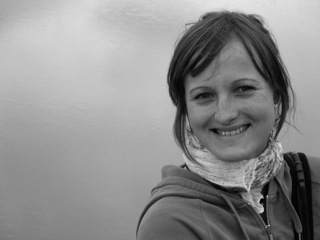
Katrine EldegardView profile
Professor
Katrine Eldegard is a Professor at the Norwegian University of Life Sciences (NMBU), Faculty of Environmental Sciences and Natural Resource Management (MINA), Department of Ecology and Natural Resource Management (INA). She leads BatLab Norway and contributes extensively to national and international conservation science policy. Institution: Norwegian University of Life Sciences School: Faculty of Environmental Sciences and Natural Resource Management Department: Department of Ecology and Natural Resource Management Position: Professor Her research centers on understanding how human activities and land use affect natural ecosystems and species across taxa and spatial scales. She specializes in the behavioral, population, and community-level responses of mammals, birds, and insects to anthropogenic pressures such as energy infrastructure, transport networks, and forestry. A major focus is on bat ecology and conservation, pollination dynamics, and biodiversity monitoring in boreal and agricultural landscapes. Her recent publications reveal strong trends in climate change impacts on bat morphology and distribution, pollinator-plant interactions under environmental change, and the ecological consequences of infrastructure development. These works integrate field ecology with advanced modeling and policy-relevant assessments. She has played leading roles in key scientific committees: Chair, Mammal Committee, Norwegian Red List for Species (2021) Chair, Mammal Committee, Norwegian Alien Species List (2023) Member, Norwegian Scientific Committee for Food and Environment (VKM), CITES Expert Panel Norway’s representative, UNEP/Eurobats Advisory Committee Eldegard has supervised numerous research projects and collaborated with government agencies and private partners on applied ecology. She teaches courses including NATF200 Vern og forvaltning av norsk natur and the upcoming NATF300 Conservation Science. Her work is supported by extensive fieldwork, interdisciplinary collaboration, and integration of ecological theory with practical conservation. She leads BatLab Norway, a research group dedicated to advancing knowledge on bat ecology, behavior, and conservation through innovative methods including telemetry, acoustic monitoring, and landscape analysis.