Jason R. Green is a Professor in the Department of Chemistry at the University of Massachusetts Boston. With a PhD from Purdue University (2007) and postdoctoral experience at the Universities of Chicago, Cambridge, and Northwestern University, his research bridges theoretical chemistry, physics, and data science to explore nonequilibrium systems. His work focuses on transforming chemical energy into dynamically functional materials through interdisciplinary approaches. Education: B.S., Case Western Reserve University (cum laude, 2002) Ph.D., Purdue University (2007) with NASA Graduate Fellowship NSF Postdoctoral Fellow at University of Chicago and University of Cambridge Research Interests: Theoretical chemical physics Nonequilibrium statistical mechanics Data science applications in chemical systems His recent publications analyze electrochemical material dynamics (ACS Nano 2024), chemically driven self-assembly (Chemical Science 2024), and thermodynamic speed limits across disciplines (Nature Physics 2020, Physical Review X 2022). He has received prestigious fellowships including NASA's Graduate Student Researchers Program and NSF Postdoctoral Fellowship. The Green Research Group at UMB applies theory, computation, and data science to understand energy transformation in synthetic and biological materials.
Kevin Pan is an Associate Professor of Quantitative Analysis at Samford University’s Brock School of Business, where he teaches and researches at the intersection of business analytics, finance, accounting, management, healthcare, education, and Christian faith integration. Education Ph.D. in Biomedical Informatics, Stanford University M.S. in Electrical Engineering, Stanford University B.S. in Electrical Engineering (minor Mathematics), National Taiwan University Research Interests Dr. Pan’s work centers on leveraging data analytics to solve real-world problems in business and society. He explores financial fraud detection, corporate social responsibility, healthcare quality, and the ethical implications of data-driven decision making. A distinctive thread in his scholarship is the integration of Christian worldview with business analytics education and practice. Publication Trends His recent articles (2017-2023) reveal a dual focus: methodological contributions in data visualization and analytics education, and applied studies addressing opioid prescribing, hospital fraud, congregational fraud, and pandemic ethics. The work spans accounting, finance, healthcare, pharmacy, and business ethics journals. Service & Outreach He actively volunteers with Hope Heals , a Christian disability ministry founded by Samford alumni, and participates in local church activities in Birmingham, Alabama.
Lindsay R. Mehrkam, Ph.D., BCBA-D is an Associate Professor in the Department of Psychology at Monmouth University. She directs the Human-Animal Wellness Collaboratory (HAWC) and Aquatic Animal Learning Lab, serves as Program Coordinator for the MU-Six Flags Affiliation, and holds Vice-Chair position on the Institutional Animal Care & Use Committee (IACUC). Her work bridges applied animal behavior, welfare science, and behavior analysis across diverse settings including zoos, shelters, and sanctuaries. Education: Ph.D., University of Florida M.S., University of Florida B.A., Franklin & Marshall College Research Focus: Dr. Mehrkam investigates environmental influences on play, aggression, and stereotypic behaviors in companion and exotic animals, develops evidence-based enrichment and training protocols for captive welfare, and evaluates human-animal interactions in therapeutic contexts. Her approach integrates behavior analysis with ethology to create practical solutions for animal care facilities, emphasizing measurable welfare outcomes through rigorous experimental design. Publication Trends: Analysis of her 15 most recent publications reveals consistent focus on applied behavior analysis in animal contexts (2014-2020), with 60% targeting canine behavior, 20% marine/exotic species, and 20% cross-species welfare assessment. Key methodological themes include functional analysis of problem behaviors (33% of papers), enrichment efficacy testing (27%), and preference assessment protocols (20%). Her work increasingly incorporates physiological biomarkers alongside behavioral metrics since 2017. Awards & Recognition: Creativity Grant (2020) Maddie's Fund Grant: Do Playgroups Increase Behavioral and Physiological Welfare in Shelter Dogs? (2017, $131,395 as PI) Doctoral-Level Board-Certified Behavior Analyst (BACB, Certificate #1-15-17919) Featured in Scientific American, Gizmodo, and Phys.org for feline/dolphin welfare research Professional Leadership: As Departmental Advising Coordinator, she guides students through field experiences at Six Flags and animal shelters. She serves as Vice President of ABAI's Applied Animal Behavior SIG and advisor for Big Oak Wolf Sanctuary. Her FEMA-invited webinar on Animal Emergency Preparedness demonstrates real-world impact of her research, while Swiss Veterinary Congress presentations establish international influence in clinical animal behavior. Laboratory Operations: The HAWC lab conducts collaborative research with animal shelters and sanctuaries on behavioral assessment protocols, while the Aquatic Animal Learning Lab partners with Six Flags to study marine mammal cognition. Both labs emphasize student involvement through the PY 411 Field Experience course, producing peer-reviewed publications with undergraduate co-authors and developing evidence-based welfare protocols adopted by multiple zoological institutions.
Aric Rindfleisch is the John M. Jones Professor of Marketing and Executive Director of the Illinois MakerLab at the University of Illinois Urbana-Champaign’s Gies College of Business. He serves as area chair of marketing and Vernon Zimmerman Faculty Fellow. His research focuses on 3D printing, new product development, consumer values, and AI applications in marketing. Rindfleisch has held editorial roles across 10 journals and received teaching accolades, including recognition by Princeton Review as one of America’s top professors. Education: Bachelor of Science from Connecticut State University (1987) Master of Business Administration from Cornell University (1990) Doctor of Philosophy from University of Wisconsin-Madison (1998) Rindfleisch’s research interests span innovation ecosystems, digital manufacturing, consumer behavior in the sharing economy, and materialism’s societal impact. His work bridges academic rigor with practical applications, particularly in leveraging technology like 3D printing for sustainable innovation. His recent publications highlight themes such as AI’s role in qualitative research, consumer responses to crises like the pandemic, and disruptive innovations in retail and transportation. Rindfleisch actively contributes to academic discourse through editorial roles and serves as a thought leader in marketing strategy and innovation management. Awards: Princeton Review’s “The Best 300 Professors” (2020) His leadership at Illinois MakerLab drives hands-on innovation, emphasizing collaboration between academia and industry. Rindfleisch’s work integrates marketing, technology, and consumer psychology to address modern challenges in product development and societal consumption patterns.
Joseph Patrick Gone is a Professor at Harvard University, holding appointments across multiple schools: Anthropology (Faculty of Arts & Sciences), Global Health and Social Medicine (Harvard Medical School), and Social and Behavioral Sciences (Harvard T.H. Chan School of Public Health). He also serves as Faculty Director of the Harvard University Native American Program. His work focuses on Indigenous mental health, cultural psychology, and addressing systemic inequities in healthcare for Indigenous communities. Gone earned his PhD in clinical-community psychology from the University of Illinois and trained at McLean Hospital/Harvard Medical School. His research includes reimagining mental health services through Indigenous frameworks, such as cultural immersion camps for substance abuse treatment and integrating traditional healing practices into urban clinics. He has authored over 100 publications and been awarded prestigious honors including the Gold Medal Award for Impact in Psychology (2023) and membership in the National Academy of Medicine (2021). Education: BA (Harvard College, 1992), PhD (University of Illinois at Urbana-Champaign, 2001) Key Projects: Culture and Mental Health Research Lab, Blackfeet Cultural Immersion Camp, Urban American Indian Traditional Spirituality Program Awards: 18+ fellowships and awards, including Guggenheim and Robert Wood Johnson Foundation recognitions His interdisciplinary work bridges Indigenous knowledge systems with mainstream psychology, advocating for decolonized approaches to mental health. Current initiatives include publishing his great grandfather’s writings on Gros Ventre traditions and advancing culturally responsive treatment models.
Eric Driscoll is a Lecturer in Ancient and Medieval Studies at the Massachusetts Institute of Technology (MIT), jointly appointed in the School of Humanities, Arts, and Social Sciences (SHASS) within its History and Literature Sections. He earned his B.A. in Classics from the University of Chicago and his M.A. and Ph.D. in Ancient History and Mediterranean Archaeology from the University of California, Berkeley. Prior to joining MIT in 2023, he taught at Harvard University (2021-23) and served as Assistant Director of the American School of Classical Studies at Athens (2019-21). Driscoll’s research spans the cultural, political, and intellectual history of Archaic through Hellenistic Greece, as well as the enduring legacy of Greek culture in medieval and modern contexts. His work interrogates the interplay between textual and material evidence, often exploring unconventional perspectives on historical questions. He is currently completing two books: one on the Athenian empire of the fifth century BCE and another on fortification walls across the Isthmus of Corinth and the conceptualization of the Peloponnese as an island from antiquity to the 15th century CE. At MIT, Driscoll teaches courses such as 21H.130 The Ancient World: Greece and 21H.007/21L.014 Introduction to Ancient and Medieval Studies . His projects integrate digital humanities methodologies, including collaborations with MIT’s Mellon-funded Digital Humanities programs, though specific publications or awards are not detailed in the available texts.
Rod Beresford is a Professor of Engineering at Brown University's School of Engineering, where he has held several leadership positions including Senior Associate Dean for Academic Programs and Associate Provost for Academic Space. He earned his B.S. (1979) and M.S. (1981) in electrical engineering from Yale University and his Ph.D. (1990) from Columbia University. In 2020/21, he served as an IEEE/AAAS Congressional Fellow working on the Senate Energy and Natural Resources Committee. His research focuses on semiconductor nanostructures, including synthesis, modeling, integration with microelectronics, and applications, with a particular emphasis on molecular beam epitaxy. Beresford has published over 80 scientific papers and has worked on molecular beam epitaxial growth of III-V semiconductors since 1987. His current research emphasizes engineering innovations for decarbonization and electrification of the economy. Professor Beresford's scholarly work spans semiconductor materials and devices, quantum structures, nanomaterials, microfluidics, and biosensing. His recent publications demonstrate a strong focus on quantum dot arrays, nanowire electrical properties, and biosensing applications. The research shows evolution from fundamental semiconductor physics toward practical applications in sensing and energy technologies. His honors and awards include: Tau Beta Pi (1978) Sheffield Fellowship (Yale University, 1980–81) Office of Naval Research Fellowship (Columbia University, 1987–90) Sigma Xi (1991) BBV Foundation Chair (Visiting Professor, Polytechnic University of Madrid, 1996) Institute of Electrical and Electronics Engineers, Senior Member (2002) Professor Beresford has been instrumental in Brown's academic infrastructure development, including facilitating the successful development of the Engineering Research Center, an 80,000-sf lab building completed in October 2017. He has served as Academic Director for the Master of Science in Technology Leadership program and has introduced new courses in VLSI Design and Nanoelectronics. His research has been supported by significant grants including: Nanoelectronics Research Initiative / National Science Foundation: "Direct-Write Synthesis of Graphene Devices" (PI, $400,000) National Science Foundation Materials Research Science and Engineering Center: "Micro- and Nano-Mechanics of Electronic and Structural Materials" (co-PI, $9,360,000) Air Force Office of Scientific Research Multidisciplinary University Research Initiative: "Direct Nanoscale Conversion of Biomolecular Signals into Electronic Information" (co-PI, $5,609,969) Professor Beresford leads a research group focused on semiconductor nanostructures and collaborates extensively with colleagues including Jingming Xu, Eric Chason, Brian Sheldon, Alexander Zaslavsky, and David Paine. His laboratory includes molecular-beam epitaxy systems for advanced materials research.
Dr. Kyrah K. Brown is an Associate Professor in the Department of Kinesiology at the University of Texas at Arlington's College of Nursing and Health Innovation. As a health equity researcher and community psychologist, her work focuses on participatory approaches to address structural determinants of Black women's cardiovascular and reproductive health across the lifespan. Her education includes: PhD in Psychology (Community Psychology) from Wichita State University (2014) MA in Psychology (Community Psychology) from Wichita State University (2012) BA in Psychology from Spelman College (2010) Dr. Brown leads interdisciplinary research on gendered racism and colorism, employing community-based participatory methods to investigate healthcare disparities. Her current projects examine systemic factors influencing maternal morbidity and diabetes management among minority populations. Her publications predominantly explore healthcare inequities through mixed-methods approaches, with recent work emphasizing: Community-centered interventions for maternal health Digital health adoption in minority communities Policy impacts on rural healthcare access Intersectional analysis of chronic disease management Scientific awards recognizing her contributions include: Samuel Hughes Professorship for health equity research Reby Cary Faculty Excellence Award for African American faculty leadership Early Career Award from the Society for Community Research and Action She mentors graduate students and postdoctoral researchers through the Young Children Are Researchers (YCAR) project and directs community partnerships with the Tarrant County Birth Equity Collaborative. Major grants include NIH-funded projects developing system dynamics models to reduce maternal morbidity disparities ($1.8M). She leads research teams across seven European countries for the CHILD-UP project on migrant children's integration.
Dr. Daniel E. Wells is an Associate Professor in the Department of Horticulture at Auburn University’s College of Agriculture. His research focuses on improving vegetable production in controlled environments such as greenhouses and vertical farms in the Southeast. He leads the AU Vertical Farms Project and the Rane Culinary Science Center Rooftop Garden Project, integrating research and teaching to address urban agriculture challenges. His work emphasizes sustainable systems linking seed-to-plate food production. Dr. Wells teaches courses including Hydroponics (HORT 2060), Advanced Controlled Environment Agriculture (HORT 4970/7970), Plant Nutrition (HORT 7050), and Organic Gardening (HORT 2040). His research team collaborates across disciplines at facilities like the Aquaponics Facility (E.W. Shell Fisheries Center), Rooftop Gardens (Rane Culinary Sciences Building), and Freight Farms hydroponic systems. These projects support campus dining and culinary programs while training future experts in controlled environment agriculture. Key research areas include aquaponic system optimization (fish health, plant yield, waste management), urban agriculture trial systems, and economic viability of vertical farming. His initiatives connect students with hands-on learning opportunities beyond traditional classrooms, fostering innovation in food production systems.
Christina Fattore is a Professor in the Department of Political Science at West Virginia University (WVU), affiliated with the Eberly College of Arts & Sciences. She also serves as a faculty member in the International Studies program and the Center for Women's and Gender Studies. Her research focuses on international trade, development, and the sociology of academia, with a particular emphasis on mentoring strategies and pedagogy of care. She holds a Ph.D. in Political Science from Florida State University (2007). Dr. Fattore teaches courses on international political economy, international organizations, and gender in international relations. She is actively involved in academic leadership, serving as Vice Chair/Program Chair of the International Studies Association's Women's Caucus. Her work bridges theoretical scholarship and practical pedagogy, addressing issues such as academic well-being, gender disparities in academia, and the impact of global events on scholarly productivity. Her research trends reflect a dual focus: analyzing international trade disputes and institutional frameworks while advocating for inclusive, care-centered educational practices. Recent studies examine post-pandemic scholarly challenges, gendered academic networks, and the psychological impacts of political events on marginalized groups. Dr. Fattore’s affiliations include cross-disciplinary roles that emphasize feminist methodologies and global justice. She contributes to policy-relevant research on trade liberalization in Latin America and the evolving dynamics of international dispute resolution mechanisms.
Kimberley Owens is a Senior Lecturer and Curriculum Transformation Lead at James Cook University (JCU) within the College of Medicine and Dentistry. She holds a PhD from the Australian National University (2008) and a Bachelor of Social Science (Hons) from JCU (2001). Her work spans medical education, historical archaeology, and student well-being initiatives. Teaching focuses include Health Professional Education, Social Contexts of Health Systems, and Historic Archaeology. She coordinates modules like [MD3000] Selective Study (2021–2023) and led grants addressing mindfulness training for health students (2015–2019). Owens actively participates in university committees, including the Medicine Board of Studies and CMD Curriculum Management Committee. Her research bridges archaeology and education, with notable projects on Lord Howe Island colonization (2008) and mindfulness interventions in medical training (2020). She has presented widely on health education pedagogy and curriculum transformation at ANZAHPE conferences since 2010.
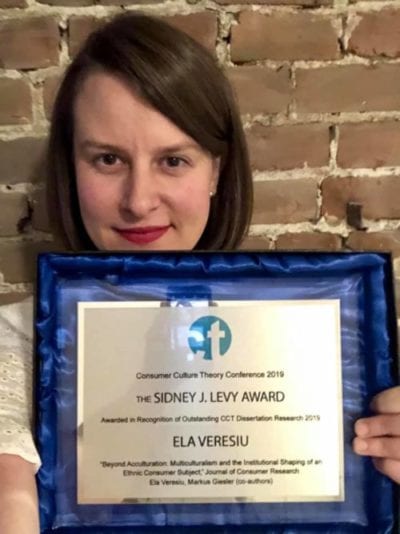
Ela Veresiu is an Associate Professor of Marketing and the Marketing Area Coordinator at the Schulich School of Business, York University. She holds the additional role of Marketing PhD Program Coordinator. Her research focuses on consumer well-being and market belonging, particularly addressing underrepresented groups through the lens of institutions, brands, technology, and identity. Dr. Veresiu earned her PhD and has been recognized with prestigious awards including the 2019 Sidney J. Levy Award for her groundbreaking work on multiculturalism and ethnic consumer subjects. Her research has been funded by SSHRC grants and featured in top journals like the Journal of Consumer Research and Journal of Marketing , alongside media outlets such as CBC News and The Conversation. Research Interests: Branding Strategies Consumer Culture Theory Multicultural Markets Gendered Ageism in Fashion Consumer Protection Regulations Nostalgia and Consumption Awards and Grants: 2024 SSHRC Insight Grant 2022 Top 10 Marketing Professors in Canada (Marketing News Canada) 2019 Sidney J. Levy Award Multiple York University Research Leader Awards Her work bridges academic rigor with real-world impact, addressing critical issues like racialized branding, consumer empowerment through regulations, and the temporal dynamics of market legitimacy. She actively contributes to policy discussions and industry practices through her research on inclusive market strategies.
Cary Wu is an Associate Professor and York Research Chair in Political Sociology of Health at the Department of Sociology, York University. His research focuses on trust, political sociology of health, race and ethnicity, and inequality. He holds appointments in the Faculty of Graduate Studies and contributes to interdisciplinary initiatives like the Dahdaleh Institute for Global Health Research. Wu’s work bridges sociology, political science, and public health, addressing topics such as pandemic governance, social trust dynamics, and health disparities. He has secured grants from major agencies including the Social Sciences and Humanities Research Council (SSHRC) and the Canadian Institutes of Health Research (CIHR), focusing on projects like 'Trust and the Political Sociology of Health' and 'Geopolitics of Anti-Asian Racism.' Education: Ph.D., University of British Columbia Research Interests: Political Sociology of Health, Trust, Inequality, Race and Ethnic Relations, Global Health, and Research Methods. Wu’s publications appear in top journals such as JAMA Network Open , Social Science & Medicine , and BMJ Global Health . His work often emphasizes public engagement, with contributions to media outlets like the Washington Post and Financial Times . He supervises graduate students in Sociology, Political Science, and Health Studies programs at York University. His teaching includes courses on social statistics, research methods, and advanced data analysis. He advises students such as Adri Ananya, Joanne Ong, and Chung-Ho Wang. Active in editorial roles, Wu serves on the International Editorial Board of Ethnic and Racial Studies and the COVID-19 Social Impacts Network Expert Advisory Committee . His research on anti-Asian racism and pandemic responses has gained international attention, reflecting his commitment to addressing societal challenges through rigorous scholarship.
Dr. Lori McKee is an Associate Professor and Graduate Chair in the Department of Curriculum Studies at the University of Saskatchewan's College of Education. With 20 years of elementary teaching experience, her work bridges classroom practice and academic research in literacies, pedagogies, and teacher professional learning. She specializes in multimodal pedagogies, intergenerational learning, and equity-centered literacy instruction. Education: Ph.D. in Multimodal Pedagogies, Western University (2018) M.Ed. in Multiliteracies and Multilingualism, Western University (2013) B.Ed. in Primary-Junior Education, Queen’s University (1997) B.A.Sc. in Child Studies, University of Guelph (1996) Research Interests: Dr. McKee’s research focuses on literacies education across diverse contexts, including: Intergenerational learning programs connecting elders and children Equitable pedagogical strategies for literacy instruction Professional development for teacher educators Integration of digital and multimodal tools in teaching Teaching Contributions: She teaches graduate courses in curriculum research and project design, as well as undergraduate courses in elementary English Language Arts and literacy assessment. Her pedagogy emphasizes reflective practice and adapting instruction to contemporary educational challenges. Collaborations: Engages with schools, elder care facilities, and teacher communities to co-design curricula. Active in national and international research networks, including the Reading Pedagogies of Equity Project.
Bokyung Kim is an Assistant Professor of Economics at the University of Connecticut's Department of Economics, part of the College of Liberal Arts and Sciences. She holds a PhD in Economics from the University of Texas at Austin (2023), an M.S. in Economics (2019), and prior degrees from Yonsei University in South Korea (B.A. 2015, M.A. 2017). Previously, she was a Postdoctoral Fellow at Stanford Institute for Economic Policy Research (SIEPR, 2023–2024). Her research focuses on health economics, public economics, labor economics, and applied microeconomics, with an emphasis on the substance use disorder crisis and its socioeconomic impacts, adolescent mental health, and long-term outcomes. Key themes include opioid crisis dynamics, prescription drug policies, trauma effects on education, and human capital development. Her recent work examines connections between pharmacy school costs and opioid dispensing practices, unintended consequences of drug monitoring programs, and labor market responses to the opioid crisis. She employs diverse datasets, including job postings and Korean panel data, to analyze complex social and economic phenomena. Contact: bokyung.kim@uconn.edu | Office: 304 Susan V. Herbst Hall | Personal Website