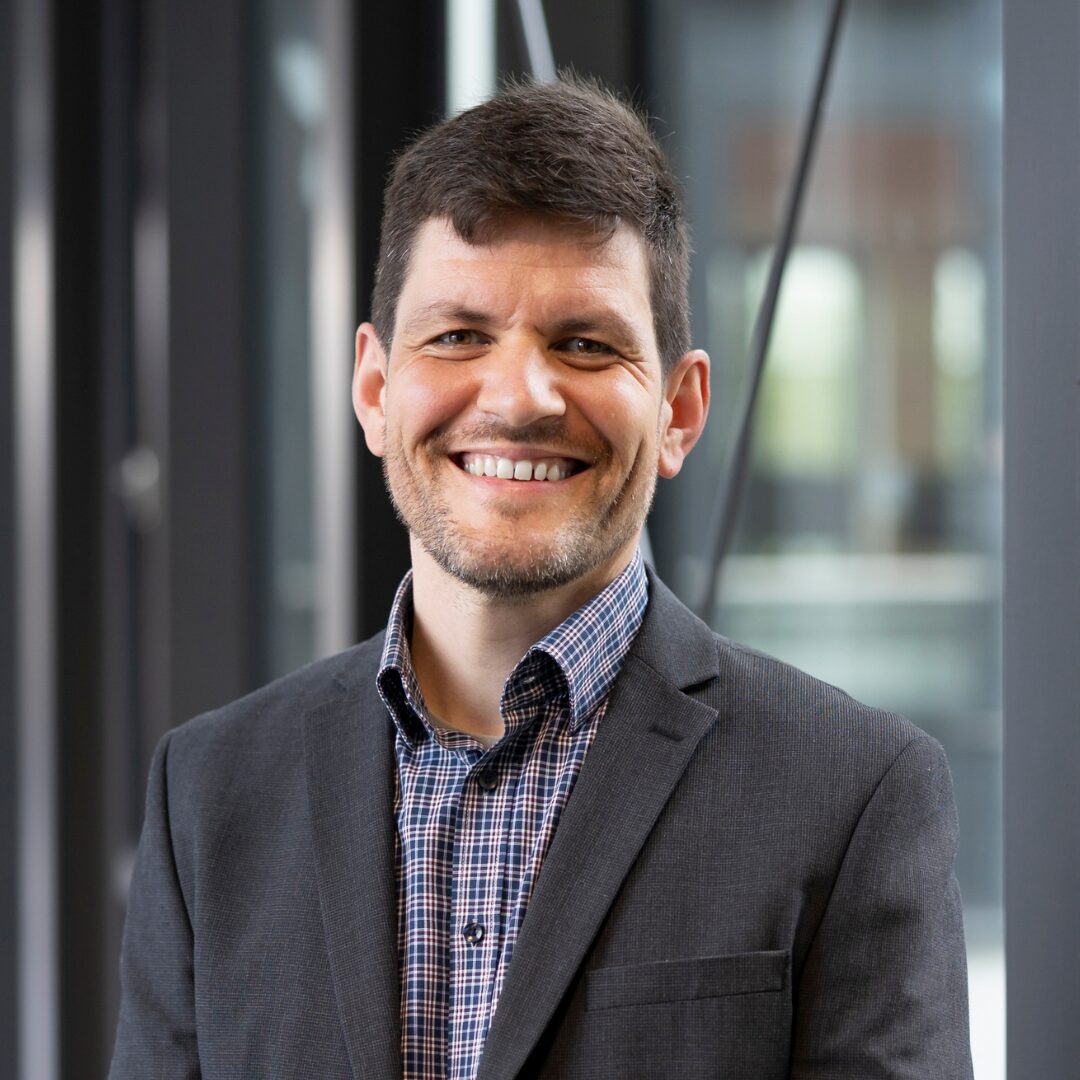
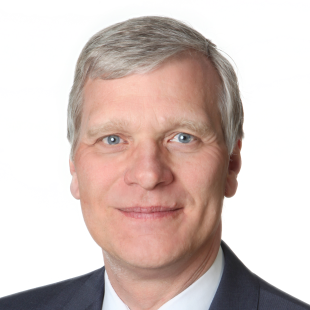
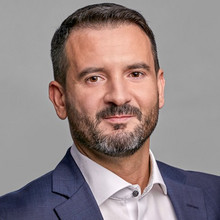
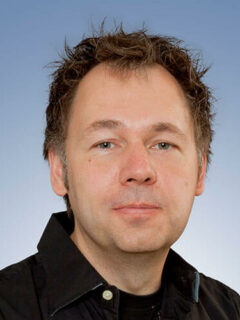
Prof. Dr.-Ing. Ahmad Osman is a Professor at the Saarland University of Applied Sciences (htw saar), specializing in Test Technologies and Test Methods within the Faculty of Engineering. He also holds an Adjunct Professor position at Laval University in Quebec, Canada, in the Department of Electrical Engineering and Computer Science. His research focuses on Artificial Intelligence applications in Signal and Image Processing for Non-destructive Testing (NDT) , with extensive work on Deep Learning , 3D Ultrasound Tomography , and Sensor Data Fusion in industrial contexts. Engineering Artificial Intelligence Signal Processing Image Processing Non-destructive Testing Quality Control Augmented Reality Osman leads the AutomaTiQ research group and serves as Head of the Algorithms/Signal and Data Processing Department at Fraunhofer IZFP . His recent publications (2017–2022) emphasize Deep Learning for defect detection in CFRP , Terahertz Imaging for artwork diagnostics, and Acoustic Sensors for agricultural quality control. He has organized international conferences on Structural Health Monitoring and contributed to Springer books on NDT technologies. His projects include ComforTex-AI (2024) and development of 3D positioners for ultrasound measurements. Collaborations span institutions in Germany, Canada, Italy, and Brazil, with advisory roles in the German Society for NDT and technical committees for conferences in Montreal and Egypt.
Dorina Siebert is a Researcher at the Chair of Metal Construction within the School of Engineering at the Technical University of Munich. She has been working as a research assistant at the Chair since 2019, contributing to various research projects related to steel and aluminum construction, fracture mechanics, and additive manufacturing in construction. Education: M.Sc. in Civil Engineering from Technical University of Munich (2012-2019) Affiliation: Chair of Metal Construction, School of Engineering, Technical University of Munich Contact: dorina.siebert@tum.de, Room 0101.Z1.038, +49 (89) 289-22527 Dorina's research primarily focuses on the fatigue strength of aluminum structures, fracture mechanics in railway bridges, and the application of additive manufacturing techniques in construction. Her work on powder bed-based laser beam melting of metal has significant implications for modern construction methods. She also investigates safe operating time intervals for historic steel bridges and has contributed to the development of a mobile vehicle barrier, demonstrating the practical applications of her theoretical work. Her publication record shows a strong trend toward computational and experimental analysis of material behavior under stress, particularly in aluminum alloys and steel structures. She has published extensively on fatigue properties, fracture mechanics calculations, and additive manufacturing applications, with a clear progression toward more complex modeling techniques and practical engineering solutions. Her work bridges theoretical computational models with real-world infrastructure challenges. Dorina teaches courses including 'Constructing with aluminum' for the Summer semester 2025 and 'Fracture mechanics and fatigue' for the Winter semester 2024/25. She also leads a seminar on plate buckling and steel bridge construction, sharing her specialized knowledge with engineering students. Her teaching directly reflects her research expertise, creating a strong connection between theoretical knowledge and practical application for her students.
Prof. Christian Liebscher is a Professor of Advanced Transmission Electron Microscopy at the Ruhr University Bochum , affiliated with the Faculty of Physics and Astronomy and the Research Center Future Energy Materials and Systems (RC FEMS). His work focuses on developing cutting-edge TEM techniques to understand energy-related materials' atomic-scale structure-functionality relationships. He combines aberration-corrected scanning TEM (STEM), 4D-STEM, and in-situ microscopy with machine learning to analyze complex material datasets. Education and Career: 2000–2006: Study of Materials Science at the University of Bayreuth. 2006–2010: PhD at the University of Bayreuth (summa cum laude) with a thesis on phase and dislocation analysis in superalloys. 2011–2014: Postdoc at the University of California, Berkeley, and the National Center for Electron Microscopy (Lawrence Berkeley National Laboratory). 2014–2015: Staff scientist at the University of Duisburg-Essen. 2015–2024: Group leader at the Max Planck Institute for Sustainable Materials in Düsseldorf. Research Interests: Prof. Liebscher’s research bridges microscopy innovation and materials understanding. He emphasizes atomic-scale characterization of interfaces, defects, and grain boundaries in metals and alloys using advanced STEM and 4D-STEM. His work addresses how structural features—like segregation, strain, and phase transitions—impact material properties. He also pioneers machine learning tools to automate data analysis from microscopy and tomography, advancing materials dataspaces. Key topics include energy materials (e.g., PEM fuel cells), high-entropy alloys, and nanomaterials for applications like semiconductors and electromagnetic absorption. Scientific Contributions: His publications highlight trends in grain boundary phase transitions, microstructure-property correlations, and integration of AI into microscopy. For example, recent work explores how grain boundary complexions affect mechanical strength in alloys and how in-situ TEM reveals deformation mechanisms under realistic conditions. He has contributed significantly to methodologies like scanning precession electron diffraction tomography and unsupervised machine learning for atomic-resolution datasets. Labs and Collaborations: Prof. Liebscher leads the Advanced Transmission Electron Microscopy group at RUB, building on his previous leadership at the Max Planck Institute. His lab collaborates with institutions like the Lawrence Berkeley National Laboratory and integrates interdisciplinary approaches combining experimental microscopy with computational modeling.
Volker Schöppner is Professor and Head of Plastics Processing at the University of Paderborn, concurrently serving as Professor Member in the Key research area Sustainable Materials, Processes and Products. Previously until 2022, he held the same professorial membership in the Direct Manufacturing Research Center (DMRC). His research centers on sustainable polymer processing innovations, particularly anvil-free ultrasonic welding for single-sided access scenarios and laser transmission welding scale-up rules for thermoplastics. He investigates mixing mechanisms in twin-screw extruders and develops eco-efficient plastics manufacturing methodologies, emphasizing recyclable material systems and energy-optimized processes. Analysis of his 2024 publications reveals concentrated expertise in plastics joining technologies and extrusion process optimization, with multiple conference presentations on ultrasonic welding variants and a significant journal contribution on extruder screw dynamics. This output demonstrates consistent focus on practical industrial applications within polymer engineering. Professor Schöppner actively contributes to the University of Paderborn's Key research area Sustainable Materials, Processes and Products, driving interdisciplinary collaboration on circular economy solutions for polymer materials and manufacturing systems.
Jakob Blankenhagen is a research assistant at the Chair of Metal Construction at the Technical University of Munich . He holds an M.Sc. in Civil Engineering from TUM and specializes in additive manufacturing , fire safety engineering , and hybrid steel-timber structures . B.Sc. in Civil Engineering (2015-2019) M.Sc. in Civil Engineering (2019-2022) International Welding Engineer (2021) His research focuses on optimizing fatigue-stressed hollow section structures using Laser Powder Bed Fusion (LPBF) and developing fire-safe hybrid steel-timber constructions. Current projects include TRR277 A06, which investigates LPBF fundamentals for structural steel elements. Key publications address material characterization , fire behavior of hybrid structures, and machine learning-based pore detection in additive manufacturing. He contributes to advancing 3D-printed steel components and sustainable construction methods . He teaches courses on steel construction, composite building, and computational design at TUM, with a focus on practical implementation of additive manufacturing in construction.
Prof. Dr. Marco Günther is a faculty member in the Faculty of Engineering at Saarland University of Applied Sciences, specializing in Mathematics and Fluid Mechanics. His academic role includes teaching and research leadership in computational fluid dynamics and simulation. Research Focus: Mathematical modeling of flow processes, multiphase flows, and CFD applications Lectures: Mathematics for engineering, numerical simulation, technical fluid mechanics Projects: Numerical simulation of laser welding, flow behavior in wastewater treatment, and particle-laden flows External Affiliation: Scientific consultant for Fraunhofer-ITWM's Transport Processes division His research emphasizes industrial applications of fluid mechanics, with projects spanning from wind turbine optimization to urban water management. The Linux-based simulation tool 'gm.linux' was developed as a companion to his widely adopted textbook on mathematical modeling.
Prof. Michael Koch is a Professor at Technische Hochschule Nürnberg, specializing in interdisciplinary research at the intersection of robotics, materials science, and industrial engineering. His work focuses on advancing additive manufacturing, robotics integration, and computational simulation in manufacturing processes. He holds a Dr.-Ing. and Dipl.-Wirt.-Ing., reflecting his expertise in engineering and applied sciences. Research interests include 3D printing optimization, cyber-physical systems, and safety analysis of materials under mechanical stress. He has contributed to innovations in robotics programming via augmented reality and developed frameworks for automated manufacturing processes. His studies on biomedical applications, such as ovarian cancer modeling, demonstrate a cross-disciplinary approach. Key projects involve robot-guided CT scanning for automotive industry 4.0, part orientation evaluation for additive manufacturing (Poeam), and safety protocols for explosives (PBX). His work emphasizes integrating real-world geometry data into simulations to improve accuracy and efficiency. Prof. Koch’s publications span over three decades, with a focus on manufacturing, robotics, and materials science. He has pioneered methods for energy-efficient CO2 capture systems and explored microstructural changes in materials under dynamic loading.
Professor Jane Jiang is a distinguished academic at the University of Huddersfield , affiliated with the School of Computing and Engineering and the Department of Engineering . She specializes in surface metrology, precision engineering, and advanced manufacturing technologies. Her work focuses on optimizing measurement techniques for additive manufacturing, X-ray computed tomography, and optical systems. Research Interests Her research spans surface texture analysis , 3D vision systems , and metrology for smart manufacturing . She develops novel methods for characterizing complex surfaces using techniques like phase measuring deflectometry and chromatic confocal sensors. Her contributions bridge engineering and materials science, emphasizing practical applications in aerospace, biomedical, and industrial sectors. Recent Contributions Her 2025 work includes advancements in freeform optics design, vibration-resistant microscopy, and neural network-based surface characterization. Her studies on XCT measurement for additive manufacturing parts address critical challenges in precision and data analysis. Affiliations & Projects She leads the Centre for Precision Technologies and actively collaborates on EU-funded projects. She organized the 1st International Conference on Metrology and Standard (2024) and contributes to interdisciplinary initiatives in bio-engineering and advanced materials. Grants & Teams Her team includes researchers like Shan Lou and Paul Scott , focusing on metrology for medical implants and aerospace components. She supervises PhD students exploring AI-driven surface specification and manufacturing process optimization.
Holger Heuermann is a Professor at the College of Electrical Engineering and Information Technology, Aachen University of Applied Sciences. His research focuses on microwave engineering, plasma technology, and RF circuit design, with a particular emphasis on calibration methods for network analyzers, nonlinear microwave systems, and industrial plasma applications. Recent publications highlight his work on microwave plasma jets for industrial and medical use, harmonic radar systems for maritime search and rescue, and advanced RFID and wireless CAN systems . His IMP Institute drives innovations in microwave and plasma technology, including mixed-mode S-parameter analysis and high-pressure lamp design. Heuermann’s expertise spans microwave measurement techniques , nonlinear circuit analysis , and plasma-driven energy systems . His 2024 book Microwave Technology consolidates decades of research in field simulation, antenna design, and plasma applications.
Prof. Rüdiger Deike is the Chair holder of the Chair of Metallurgy and Forming Technology at the University of Duisburg-Essen. His research focuses on metallurgical processes, raw material markets, recycling technologies, and sustainability in the foundry and steel industries. He leads the Institute for Metal Technologies (ITM), emphasizing innovation in material flow analysis, energy efficiency, and circular economy applications. Key research areas include analyzing global raw material market dynamics, optimizing waste-to-resource systems for foundries, and advancing metallurgical processes for non-ferrous and ferrous alloys. His work integrates numerical modeling of solidification behaviors and process optimization for industrial applications. Publications highlight trends in commodity markets, recycling strategies for valuable materials, and material recovery from industrial byproducts. His interdisciplinary approach bridges technical challenges with economic and environmental sustainability, influencing policy and industry practices. Laboratory and team activities center around the ITM, where research spans experimental and computational methods to address global metallurgical challenges. No specific grants or awards are listed, but his contributions are evident through extensive publication output and institutional leadership.
Thomas E. Weirich is an Associate Professor and Division Manager of FIB and TEM at the Central Facility for Electron Microscopy at RWTH Aachen University. His research focuses on advanced materials characterization using electron microscopy techniques, including TEM/STEM, FIB, and SEM. He specializes in crystallography, nanomaterials analysis, and the development of software tools for electron diffraction and microscopy data interpretation. Key areas of interest include phase formation in materials, structural stability under industrial conditions, and the application of electron microscopy to study alloys, ceramics, and nanowires. Recent work includes developing software like RAPID-DM and FINDS for automated diffraction pattern analysis, and studies on laser processing, additive manufacturing, and rolling contact fatigue in steels. His contributions bridge fundamental material science with applied engineering solutions, particularly in aerospace and energy sectors. Weirich collaborates extensively on interdisciplinary projects, contributing to the understanding of microstructural dynamics and material behavior under extreme conditions. His lab provides cutting-edge microscopy services to researchers across RWTH and partner institutions.
Prof. Dr.-Ing. Jörg Gollnick serves as a Professor in the Department of Mechanical Engineering and Energy Technology at the Technical University of Central Hesse, affiliated with the Institute of Mechanics and Materials (IMM) Research. His teaching portfolio includes core courses in Materials Science, Manufacturing Technology, and Fatigue Strength and Fracture Mechanics at both lecture and internship levels. His research spans Applied Materials Science with emphasis on steel material optimization, welding process technology, and failure analysis. Specialized interests include cyclic material testing per DIN/ISO standards, fracture mechanics (K IC determination, J-integral analysis), and sustainable material practices covering recycling methodologies and bio-based polymer development. Current work integrates RFID-enabled lifecycle monitoring for pharmaceutical glove integrity prediction. Prof. Gollnick leads the Digi-ster project (2023-2026), funded by Hesse's Distr@l program, developing AI-driven systems to forecast plastic glove aging in pharmaceutical isolators. This initiative combines Wi-Fi/RFID tracking with software modeling to prevent contamination in vaccine production. He operates within the IMM Research Institute framework, focusing on applied industrial solutions.
Marcus Oliver Weber is a Professor at the Department of Textile and Clothing Technology at Niederrhein University of Applied Sciences. He also serves as Head of the Department of Textile Management at Technische Universität Berlin (TUB). His work spans textile engineering, knitting innovation, and sustainable material science. Academic Rank: Professor Primary Role: Niederrhein University of Applied Sciences Secondary Role: Head of Department of Textile Management at TUB Research Interests focus on advanced knitting technologies , smart textiles , and sustainable fiber applications . Key areas include biodegradable textile solutions, conductive yarns for sensor applications, and technical textiles for protective, medical, and automotive sectors. Recent Publications highlight innovations in PLA-based biodegradable packaging , ultrasonic welding of nanofibers , and thermodynamic properties of spacer fabrics . His work emphasizes sustainable practices, material testing, and smart textile integration. Scientific Awards & Activities include UNIDO Technical Advisor Bundesgerichtshof (BGH) Technical Advisor ISO Standardization Committee for Knitting Machines Patents cover novel yarn feeding systems and textile machine designs. Teaching responsibilities include courses in Textile and Clothing Technology , Design Engineering , and Textile Product Management .
Prof. Dr.-Ing. Noomane Ben Khalifa is a Professor of Manufacturing – Innovative Manufacturing and Head of the Institute for Production Technology and Systems (IPTS) at Leuphana University. He concurrently leads the Institute for Material and Process Design at Helmholtz Center Hereon. His work focuses on sustainable manufacturing processes, particularly extrusion, sheet metal forming, and additive manufacturing, emphasizing eco-friendly production across material value chains. Education: Awarded a Doctorate in Engineering from TU Dortmund University (2012) with distinction for research on helical profile extrusion. Holds a Mechanical Engineering degree from TU Dortmund (2005), specializing in production engineering and forming technology. Research Interests: Sustainable manufacturing processes; material recycling (e.g., aluminum chips); lightweight material development; composite extrusion; die design optimization; and process simulation. His work bridges advanced manufacturing with environmental impact reduction, leveraging AI and machine learning for material-property modeling. Key Article Trends: Recent studies emphasize machine learning applications in materials science, die design for magnesium alloys, and sustainable recycling processes. His work spans from fundamental material behavior analysis to industrial process optimization. 2025: Focus on AI-driven texture-property modeling in Mg alloys and dieless wire drawing improvements 2024: LCA of aluminum recycling and deep-drawing process reliability Awards: 2009 ISPF Award for extrusion research; 2014 ZukunftErfindenNRW for innovative extrusion press design; invited keynote speaker at ICIT & MPT 2014. Advising & Grants: Oversees OPTUM-MAGNA (magnesium nanocomposites), FERNAPRO (sustainable manufacturing tech), and projects like TrICo (innovation cooperation). Collaborates with industry on tool design and eco-processes. Labs & Teams: Leads IPTS and co-leads Helmholtz material design institute. Supervises interdisciplinary teams focusing on compound casting, incremental forming, and smart manufacturing systems.
Professor Michael Schmidt serves as the head of the Institute of Photonic Technologies (LPT) within the Department of Mechanical Engineering at Friedrich-Alexander-Universität Erlangen-Nürnberg (FAU). His research focuses on advanced laser-based manufacturing technologies with particular emphasis on additive manufacturing processes and laser materials processing. The institute maintains state-of-the-art facilities for laser processing research and collaborates extensively with industrial partners in the automotive, medical device, and manufacturing sectors. Professor Schmidt's research interests span laser-based additive manufacturing of metals and polymers, with particular expertise in powder bed fusion (PBF-LB/M), directed energy deposition (DED-LB/M), laser beam shaping, and laser welding technologies. His work addresses fundamental challenges in process optimization, material-property relationships, and quality assurance in additive manufacturing. Recent research has focused on improving process stability for challenging materials like copper, developing novel beam shaping techniques, and advancing in-situ monitoring capabilities for industrial applications. His group maintains strong expertise in both experimental and computational approaches to laser materials processing. Analysis of Professor Schmidt's recent publications reveals a strong focus on advancing the scientific understanding of laser powder bed fusion processes, particularly regarding melt pool dynamics, scan strategy optimization, and material-property relationships. His work spans both metallic and polymer materials systems, with significant contributions to understanding the effects of laser wavelength, beam shaping, and process parameters on final part quality. The research demonstrates strong interdisciplinary connections between mechanical engineering, materials science, and photonics. Professor Schmidt leads a substantial research group comprising numerous doctoral students and postdoctoral researchers who contribute to his extensive publication record. His team collaborates with multiple industrial partners on applied research projects focused on implementing advanced laser processing technologies in industrial manufacturing environments. The research group benefits from state-of-the-art laser processing equipment and characterization facilities at FAU. The Institute of Photonic Technologies under Professor Schmidt's leadership maintains specialized laboratories for laser materials processing, including facilities for metal and polymer additive manufacturing, laser welding, and advanced optical diagnostics. The institute houses multiple laser systems with varying wavelengths and power capabilities, enabling comprehensive research across different material systems and process conditions. The research environment emphasizes both fundamental scientific investigation and practical industrial implementation of laser processing technologies.