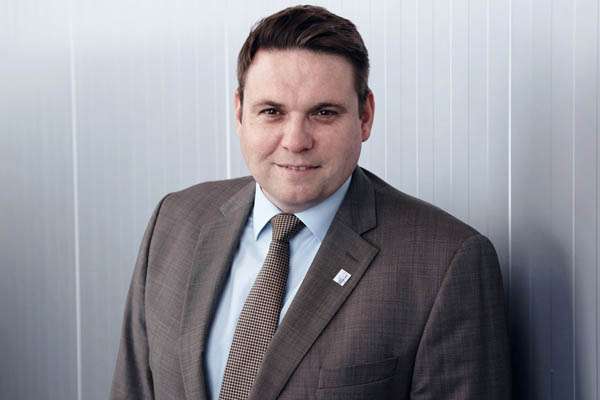
Frank BalleView profile
Professor
Frank Balle serves as Professor of Engineering of Functional Materials at the Faculty of Sustainable Systems Engineering (INATECH) of the University of Freiburg, holding the Walter and Ingeborg Herrmann Chair. His research focuses on sustainable hybrid materials systems, power ultrasonics applications, and multi-functional materials engineering for closed-loop technical metabolism. His educational background includes a diploma in materials engineering and design, followed by a Dr.-Ing. PhD in Engineering. He conducted post-doctoral research at Oak Ridge National Laboratory (USA) and established research groups at the University of Kaiserslautern with German Research Foundation (DFG) support before joining Freiburg in 2018. Research interests center on developing renewable materials systems through three core approaches: Hybrid Materials Systems : Combining dissimilar materials (e.g., metals with CFRP/GFRP composites) using novel manufacturing processes for cost-neutral lightweight structures Ultra + X : Pioneering power ultrasonics (20,000 Hz) for solid-state joining of dissimilar materials, end-of-life estimation of composites, and sustainable repair/separation technologies Multi + X : Developing multifunctional composites with enhanced durability, digital damage monitoring, and multi-spot joining techniques for aerospace/automotive applications His application-oriented research examines microstructure, bonding mechanisms, and material properties of aluminum/titanium alloys and polymer composites. Current projects address aging-resistant joints, accelerated fatigue testing, defect activation in hybrid systems, sustainable tooling, and conductive composites for aircraft. Prof. Balle leads the INATECH research group executing multiple funded projects including USS transfer, VHCFK, SCHARF, NaSoKo, MCFK, and Multi-Spot. His work bridges fundamental materials science with industrial implementation in aviation and automotive sectors, aiming to establish 'technical metabolism' where waste becomes resource through ultrasonic-enabled repair and recycling. The research group operates within Freiburg's Solar Info Center facility, focusing on translating laboratory-scale welding techniques to component-level structures while developing rapid shelf-life calculation methods for composite materials.