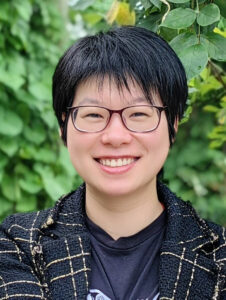
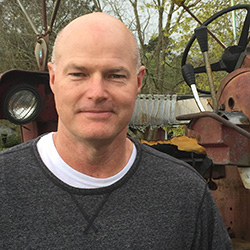
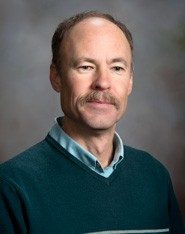
Arti Singh is an Assistant Professor in the Department of Agronomy at Iowa State University. Her research focuses on plant breeding, soybean diseases, genomics, and phenomics, with a strong emphasis on integrating artificial intelligence and high-throughput technologies into agricultural systems. She leads projects involving AI-driven disease identification, precision agriculture, and crop improvement strategies. Her expertise includes developing machine learning models for real-time weed and insect classification (e.g., WeedNet and InsectNet), deploying drones and ground robots for crop phenotyping, and leveraging genomic data to map traits like flowering time and disease resistance in legumes. Singh collaborates on initiatives like the AIIRA Institute for Resilient Agriculture and the BioTrove biodiversity dataset. Singh’s work spans plant stress phenotyping, digital twin technologies for plant sciences, and multi-sensor phenotyping for early disease detection. Her research bridges computational methods with traditional agronomy, aiming to enhance crop resilience and sustainability in the face of environmental challenges. Her recent projects include optimizing robotic navigation for precision agriculture, improving soybean yield estimation via video analysis, and dissecting genetic architectures of traits in mungbean and soybean using GWAS and genomic tools. She actively contributes to conferences and publishes in high-impact journals, advancing both foundational and applied aspects of agricultural science.
Dr. Yayun Du is an Assistant Professor in the Department of Electrical and Computer Engineering at Vanderbilt University School of Engineering. She holds a Ph.D. in Robotics and System Control (Minor: Solid Mechanics) from UCLA (2022) and was a postdoctoral scholar at Northwestern University's Rogers Group through 2024. Current faculty at Vanderbilt University Ph.D. from University of California, Los Angeles Postdoctoral experience at Northwestern University Her research integrates bioelectronics and robotics through three core directions: 1) Developing multimodal wearable/implantable sensors for health monitoring, 2) Creating human-in-the-loop interaction systems using brain-computer interfaces, and 3) Applying machine learning to medical environment robotics. She has deployed four sensor types across seven hospitals globally, serving users from neonates to elderly patients. Dr. Du's recent publications focus on wireless bioelectronic devices ( PNAS ), sustainable sensor materials ( ACS Sustainable Chemistry & Engineering ), and agricultural robotics ( ICRA , IROS ). She serves as Associate Editor for ICRA 2025 and has received two Best Paper Award final nominations at IROS 2021. Finalist - Best Paper Award in Agri-Robotics (IROS 2021) Finalist - Best Paper Award in Robot Mechanisms and Design (IROS 2021) As head of the Du Group, she leads interdisciplinary research with applications in both healthcare and agricultural contexts, collaborating with Vanderbilt Institute for Surgery and Engineering (VISE) and clinical partners. Her work emphasizes deployable systems that transition from academic research to real-world implementation in medical and industrial environments.
Dr. Anthony Filippi is an Associate Professor and Director of Graduate Programs at Texas A&M University. His research focuses on remote sensing, geographic information systems (GIS), and machine learning applied to aquatic and terrestrial environments. He leads the Fluvial-GEOS Lab, studying riverine/floodplain systems using remote sensing and GIS technologies. Educational Background: Ph.D. in Geography, University of South Carolina (2003) M.S. in Geography, University of South Carolina B.A. in Geography, Kansas State University Research Interests: Imaging spectroscopy, hyperspectral remote sensing of rivers and coastal oceans, GIS-based modeling, data fusion, aquatic optics, and machine learning. His work addresses coastal ocean bathymetry estimation, floodplain dynamics, and applications in environmental monitoring, including hazardous waste site tracking and agricultural studies. Recent Research Trends: Recent publications highlight advancements in UAS-based image analysis, LSTM networks for floodplain classification, and environmental policy impacts on forest resources. His work integrates machine learning with remote sensing to improve ecological and geomorphological understanding. Labs/Teams: Director of the Fluvial-GEOS Lab, focusing on remote sensing and GIS applications in riverine environments.
David L Jordan is the William Neal Reynolds Distinguished Professor in the Department of Crop and Soil Sciences within the College of Agriculture and Life Sciences at North Carolina State University. His appointment consists of 50% Extension, 25% Research, and 25% Academic responsibilities. He serves as a Crop Science Extension Specialist with a focus on peanut production and weed management, working closely with the North Carolina Peanut Growers Association, private consultants, industry representatives, and farmers. Dr. Jordan received his educational background from North Carolina State University and the University of Arkansas: PhD in Agronomy, University of Arkansas, 1993 MS in Crop Science, North Carolina State University, 1988 BS in Agronomy, North Carolina State University, 1985 AS, Chowan College, 1983 Dr. Jordan's research focuses primarily on peanut-based cropping systems, integrated pest management in peanut production, and the applied biology and management of weeds. His work addresses critical challenges in sustainable agriculture, including herbicide resistance management, crop rotation strategies, and aflatoxin mitigation in peanut production. He has developed significant expertise in developing risk tools to assist peanut growers and their advisors manage pests. His international work extends to Africa, where he collaborates with colleagues to develop more effective and sustainable pest management strategies for peanut (groundnut) and to improve food safety through aflatoxin mitigation. His recent publications reveal a strong focus on optimizing agricultural practices for peanut, cotton, and soybean production. Key themes include crop rotation effects on weed populations, nematode management in peanut systems, herbicide resistance evolution in agricultural weeds, and international peanut production practices. His research integrates field studies with practical extension applications to address real-world agricultural challenges across multiple continents. Dr. Jordan has received numerous prestigious awards throughout his career: Fellow of multiple professional societies including the American Society of Agronomy, Crop Science Society of America, Weed Science Society of America, and Southern Weed Science Society William Neal Reynolds Distinguished Professor (2015) Academy of Outstanding Faculty in Extension and Engagement, North Carolina State University (2022) Outstanding Extension and Engagement Award, North Carolina State University (2022) Dow AgroSciences Award for Excellence in Education from the American Peanut Research and Education Society (2010) Dr. Jordan has mentored numerous graduate students, serving as advisor or co-advisor for 3 MCS, 13 MS, and 12 PhD students, and has served on 40 MS, 45 PhD, and 7 MA graduate committees. His grant funding totals over $11.9 million from Louisiana State University Agricultural Center (1993-1996) and North Carolina State University (1996-present). He has led multiple USAID-funded international projects focused on peanut production and aflatoxin mitigation in countries like Ghana, Haiti, and Malawi. Dr. Jordan leads a comprehensive research and extension program focused on peanut production systems. His work involves close collaboration with multiple departments at NC State including Entomology and Plant Pathology and Biological and Agricultural Engineering. Internationally, he works with colleagues across Africa to develop sustainable pest management strategies. His program emphasizes interdisciplinary collaboration among many individuals, disciplines, and institutions with the common goal of improving the quality of life of people through agricultural improvements, education, and science.
Virginia Polytechnic Institute and State UniversityUnited States
Dr. Kevin Kochersberger is an Associate Professor in the Department of Mechanical Engineering at Virginia Tech , with a career spanning academic research, technical innovation, and educational leadership. His work focuses on autonomous aerial systems , robotic control , and applied aerodynamics , particularly through the Uncrewed Systems Laboratory . Kochersberger's research has pioneered UAV-based radiation detection , 3D terrain mapping , and low-resource drone applications , including establishing the African Drone and Data Academy in Malawi . Education: Ph.D., Mechanical Engineering, Virginia Tech (1994) M.S., Mechanical Engineering, Virginia Tech (1984) B.S., Mechanical Engineering, Virginia Tech (1983) A.S., Engineering Science, Jamestown Community College (1981) Kochersberger's publications demonstrate expertise in UAV path planning , smart material actuation , and radiation source localization , with over $9M in research funding. His scientific awards include AIAA Associate Fellow (2009) and Aviation Week Aerospace Laureate (2003). Notable projects involve helicopter-deployable robotic systems and urban canyon navigation without GPS. Recent articles highlight BVLOS drone simulators , 2.5D terrain mapping , and autonomous negative obstacle traversal , reflecting his focus on real-time adaptive control and heterogeneous robotic systems . He teaches Drone Technology and Flight Operations and Advanced Design Projects , emphasizing student-driven innovation and industry collaboration .
Keith Edmisten is a Professor in the Department of Crop and Soil Sciences at NC State University, serving as Extension Cotton Specialist and Director of Undergraduate Programs. He holds a BS, MS from NC State University, and a PhD in Crop Physiology from Virginia Tech (1987). His career includes faculty roles at Mississippi State University and Auburn University before joining NCSU in 1992. His research focuses on cotton and industrial hemp agronomy, germplasm evaluation, and regulatory science in agriculture. Notable awards include Extension Cotton Specialist of the Year (1997) and Cotton Physiologist of the Year (2015). He teaches courses on biotechnology, seed science, and regulatory frameworks, and advises students in the Plant and Soil Science biotechnology concentration. Edmisten's program integrates applied research with extension efforts, emphasizing sustainable input management, variety trials, and on-farm experimentation. Collaborations span departments like Entomology, Plant Pathology, and Agricultural Economics. Publications highlight fertilizer management, weed science, and crop modeling in cotton and hemp systems.
Jenny Kao-Kniffin is a Professor in the Horticulture Section of the School of Integrative Plant Science at Cornell University. Her research focuses on the belowground ecology of horticultural landscapes, particularly the ecology and management of invasive plants and weeds in horticultural landscapes, wetlands, and urban ecosystems. She applies concepts from microbial ecology to understand how soil microorganisms impact plant populations both beneficially (aiding in plant growth and fitness) and negatively (keeping populations in check). Dr. Kao-Kniffin's research interests include: Weed science and ecological management of weeds Urban ecology and urban agriculture Rhizosphere biology and plant-microbe interactions Soil microbiome selection and manipulation Ecological approaches to sustainable agriculture Her work centers on three main research areas: selection of rhizosphere microbiomes that modulate plant traits, identifying functional roles of microbiomes that mediate plant growth, and assembly of plant-microbial communities that enhance ecosystem services. She has demonstrated that microbiomes can be manipulated to alter flowering time in plants and has developed ecological approaches for weed management through soil carbon amendments. Her recent publications reveal a strong focus on urban soil microbiomes, nitrogen cycling in agroecosystems, and the application of microbial ecology to sustainable agriculture. The research spans from fundamental plant-microbe interaction studies to practical applications in urban agriculture and weed management, with particular emphasis on how soil amendments and microbial communities can be leveraged for ecological management of plant systems. Notable scientific achievements include: The White House Presidential Early Career Award for Scientists and Engineers (PECASE), 2019 Weihenstephan Science Award, International Collaboration for Early Career Scientists 2017 Cornell University CALS Award for Excellence in Mentoring Undergraduate Students in Independent Research 2013 Dr. Kao-Kniffin actively mentors graduate students and has developed extension programs focused on assisting public and private audiences with methods to manage weedy and invasive plants in horticultural landscapes. Her lab has developed a web-based software program that allows users to select weed management methods based on conventional or organic preferences. She teaches PLSCI 4900: Reflection on Plant Sciences Experiential Learning and maintains an active research program with several ongoing projects in urban agriculture, particularly working with New York City farmers to construct clean soil from local materials.
Bryan Brown is an Adjunct Assistant Professor at the School of Integrative Plant Science , Horticulture Section , and an Integrated Weed Management Specialist with Cornell Integrated Pest Management . His work focuses on minimizing agricultural and environmental risks through innovative weed control strategies. Ph.D., University of Maine, 2017 B.A., Colby College, 2009 Dr. Brown’s research emphasizes integrated weed management informed by weed species biology, including weed seedbank dynamics and culturally appropriate extension . His projects explore ecologically-based solutions like stacked cultivation, electrical weed control, and cover cropping to address herbicide resistance and labor shortages. He also investigates the interplay between weed management and soil health or economic viability in organic and conventional systems. Dr. Brown’s extension efforts prioritize farmer collaboration through on-farm demonstrations , educational media , and slow-motion analysis of cultivation tools. His outreach includes addressing glyphosate-resistant waterhemp in New York State and clarifying public health risks through the Into the Weeds podcast.
Miguel Castillo is an Associate Professor in the Crop and Soil Sciences Department at North Carolina State University (NC State), leading the Forage & Grassland Program and serving as Grassland Science Specialist. He holds a Ph.D. in Agronomy from the University of Florida and an MBA from NC State. His work focuses on improving ecosystem services in agricultural and pasture-based livestock systems through integration of silvopasture, agroforestry, and advanced technologies like near infrared spectroscopy (NIRS) for management decisions. Dr. Castillo's education includes a B.S. in Plant and Animal Sciences from Zamorano University (2006), followed by M.S. and Ph.D. in Agronomy from the University of Florida (2009, 2013). His research spans international collaborations in tropical/sub-tropical environments, with expertise in forage crop management, bioenergy grasses, and sustainable livestock systems. He is fluent in Spanish and Portuguese. Research Interests: Forage-Livestock Systems Optimization Silvopasture Development Bioenergy Crop Production NIRS Applications in Agriculture Pasture-Based Livestock Management Climate Resilient Forage Crops Recent work emphasizes NIRS for rapid forage quality analysis, evaluating new bermudagrass cultivars, and advancing silvopasture systems in the southeastern U.S. and Peruvian Amazon. His publications address topics like poultry litter impacts, switchgrass management post-freeze, and frost-seeding clover into tall fescue pastures. Grant-supported research includes USDA-funded projects on forage conservation techniques and bioenergy crop development. He advises graduate students on forage systems and collaborates with industry partners on applied agronomic solutions. Labs/Teams: Directs the Forage & Grassland Program at NC State, collaborating with USDA and international research networks. Active in extension programs, publishing guides on forage management, hay production, and silvopasture implementation.
Ankita Raturi is an Assistant Professor in the Department of Agricultural & Biological Engineering at Purdue University, leading the Agricultural Informatics Lab. Her work focuses on human-centered design, information modeling, and software engineering to enhance resilience in food systems. She develops decision support tools for cover cropping, agronomic data services, and soil health technologies. Her research integrates digital agriculture applications across field crops, livestock, and food systems, emphasizing open-source solutions. Key projects include modular decision tools for diversified farming systems and information management frameworks for community food resilience. Publications highlight her expertise in sustainable tech adoption, precision agriculture, and ecosystem impact design. She actively bridges engineering and agriculture through interdisciplinary collaborations. Dr. Raturi's lab explores digital tools for smallholder farmers, pandemic response systems, and ecological wealth restoration through technology. She emphasizes trust-building in tech-mediated research and advocates for nonhuman-centric design in agroecosystems.
Xavier Martini is an Associate Professor in Entomology at the University of Florida's North Florida Research and Education Center (NFREC). His work focuses on integrated pest management (IPM), insect behavior, and chemical ecology, particularly targeting plant pest vectors like the Asian citrus psyllid and ambrosia beetles. He leads research on citrus greening disease, laurel wilt, and invasive species management. His roles include 70% research and 30% extension, bridging academic and applied pest control strategies. Research emphasizes vector biology, semiochemical-based pest control, and community engagement. He collaborates on publications addressing cucurbit production, onion pest management, and organic vegetable systems. Current projects include repellent development for citrus pests and biological control of invasive vines. His lab group works on ecological interactions between plants, pathogens, vectors, and predators. Key achievements include developing traps for small insect vectors and exploring floral resource enhancements for pollinator populations. He contributes to Florida's citrus and vegetable industries through extension guides and workshops, ensuring practical applications of his research.
Jason Henderson is a Professor of Soil Science in the Department of Plant Science and Landscape Architecture at the University of Connecticut's College of Agriculture, Health and Natural Resources. His research focuses on developing sustainable turfgrass management practices through innovations in pesticide-free techniques, soil modification, and root zone assessment. Dr. Henderson holds a PhD in Crop and Soil Sciences from Michigan State University. Research Interests: His work encompasses turfgrass establishment optimization, laboratory methods for evaluating root zone constituents, and innovative approaches to enhance turf performance under traffic stress. Current projects investigate organic management systems, soil physical properties, and environmental sustainability in turf settings. Teaching: Dr. Henderson instructs courses including Introduction to Soil Science (SAPL 300), The Great American Lawn (SPSS 1060), and Advanced Turfgrass Management (SPSS 3150).
Dr. Emmanuel C. Omondi is an Assistant Professor in the Department of Agricultural Sciences and Engineering at Tennessee State University's College of Agriculture. His research focuses on industrial hemp agronomy, sustainable agriculture, and conservation practices. He holds a Ph.D. and M.Sc. in Agronomy from the University of Wyoming and a B.Sc. in General Agriculture from the University of Nairobi. His research explores industrial hemp’s role in crop rotations, reduced tillage systems, and economic viability in Tennessee. Key projects include USDA-funded studies on organic farming impacts, soil health, and hemp production economics. He has led over $6.8 million in grants, including a USDA NIFA project on organic hemp assessment and a William Penn Foundation initiative on soil health and water quality. Awarded the Gamma Sigma Delta Honor Society and multiple fellowships, Dr. Omondi’s work spans international development, including conservation agriculture projects in Kenya and Uganda. He has authored 20+ peer-reviewed articles on topics like soil carbon dynamics, organic farming profitability, and phytoremediation potential of hemp. Education: Ph.D. (Agronomy, University of Wyoming), M.Sc. (Agronomy, University of Wyoming), B.Sc. (General Agriculture, University of Nairobi) Grants: Over $6.8 million in funding for projects on hemp agronomy, soil health, and sustainable farming systems. His honors include the A.K. Dobrenz Student Paper Competition First Prize (2011) and recognition for international academic excellence. Current initiatives focus on bridging agricultural innovation with environmental stewardship through collaborative research.
Matthew R. Ryan is an Associate Professor in the School of Integrative Plant Science (Soil and Crop Sciences Section) at Cornell University. His research focuses on sustainable cropping systems, agroecology, and cover crop management with an emphasis on ecological weed suppression and organic production. Ryan leads the Sustainable Cropping Systems Lab and co-directs the Organic @ Cornell initiative. Education: PhD in Agronomy (2010), MS in Agronomy (2007) from The Pennsylvania State University; BS in Biology (2001) from Kutztown University. Research Interests: Development of diversified cropping systems that integrate perennial grains like Kernza Evaluation of cover crop genetics and management strategies Optimization of no-till systems for organic crop production Assessment of agronomic practices' environmental impact Recent Work Trends: Over 15 publications (2023–2025) emphasize cover crop genetics, no-till weed management, and perennial grain development. Collaborative projects across 16 U.S. states highlight regional adaptation strategies. Awards: No formal awards listed, though his work has been featured in news articles about cover crop adoption and perennial grain development. Teaching & Mentorship: Teaches PLSCI 1900 and 3800 courses. Advises graduate students in Soil and Crop Sciences. Coordinates multi-university courses like the Cover Crop Challenge. Labs/Teams: Leads Sustainable Cropping Systems Lab and collaborates with Cornell's Agricultural Experiment Station. Active in regional farmer-extension partnerships.
Aziz Amoozegar is a Professor in the Department of Crop and Soil Sciences at NC State University's College of Agriculture and Life Sciences. His research focuses on environmental soil physics, specifically investigating water and pollutant movement through soils, phosphorus dynamics, and soil characterization for agricultural and engineering applications. Research programs include evaluating soil-water interactions in contaminated environments, assessing fertilizer-enhanced phosphorus transport, and developing soil analysis techniques. Key areas of study involve pollutant migration through saprolite, cadmium release kinetics in amended soils, and hydraulic functioning of compacted soils. His work bridges environmental science, agricultural engineering, and soil chemistry. Recent publications cover topics such as phosphate mobility under unsaturated conditions, cadmium release in contaminated soils, and bioenergy grass residue effects on evaporation. He has contributed to methodological advancements in soil testing and remediation strategies for heavy metals like lead. Dr. Amoozegar's research emphasizes practical applications for sustainable agriculture and environmental protection. No specific awards or grants are listed in the provided information, but his involvement in USDA and EPA-related programs suggests active collaborative research efforts.