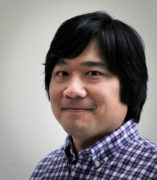
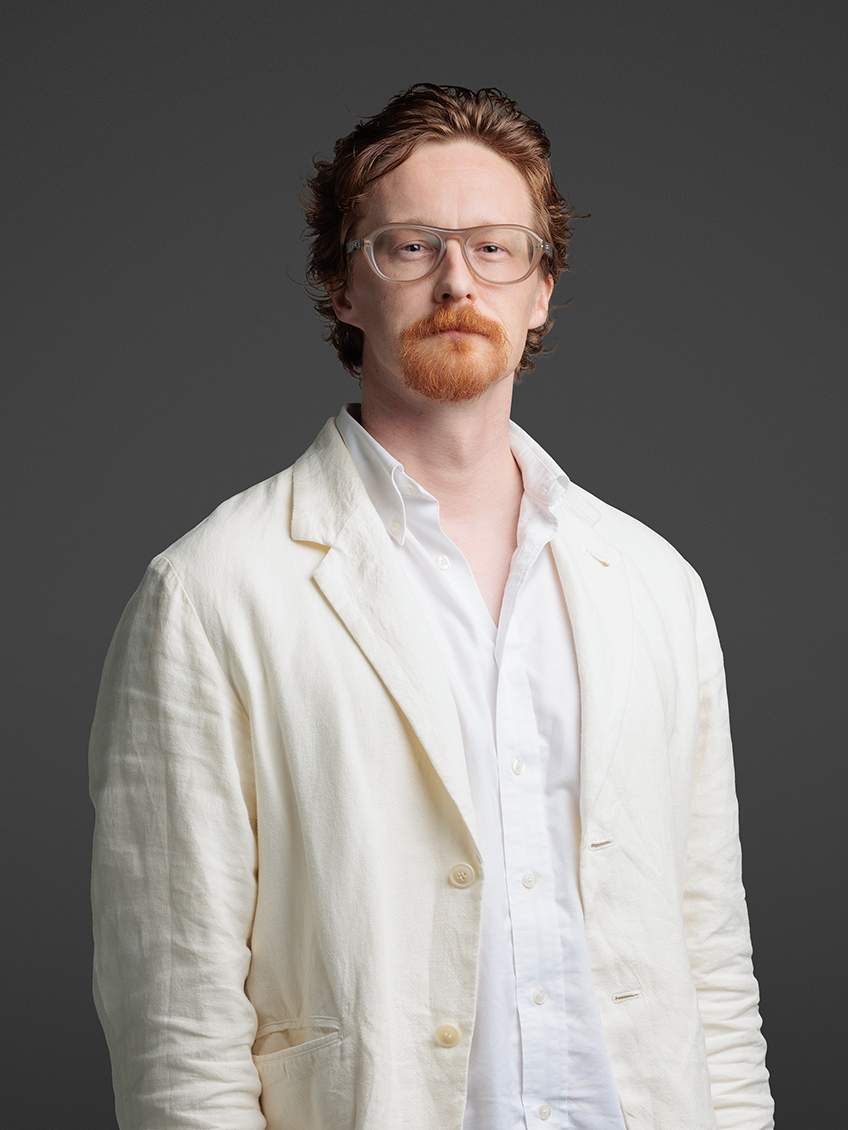
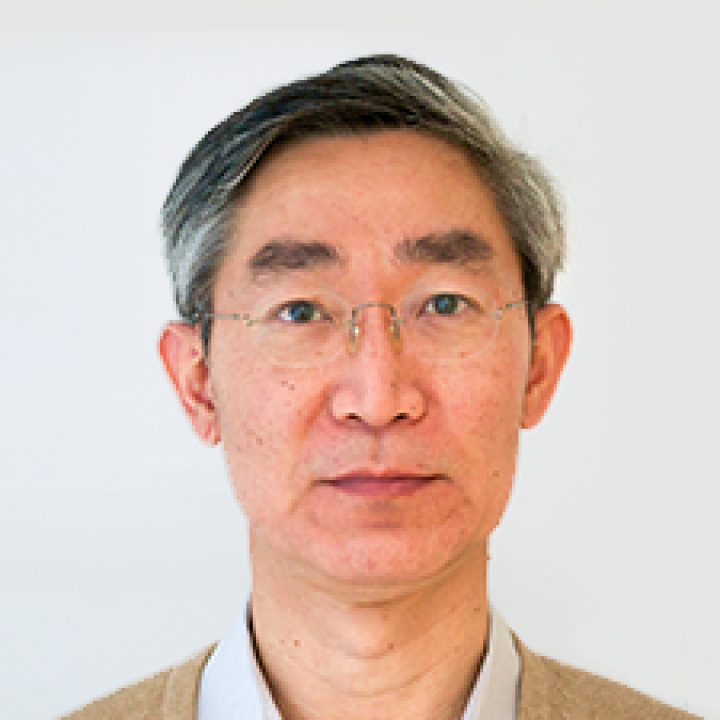
Romain Vuillemot is an Assistant Professor in Computer Science at École Centrale de Lyon, affiliated with the LIRIS Laboratory (CNRS UMR 5205). He holds an Habilitation (HDR) in Interactive Data Visualization from École Centrale de Lyon (2024) and specializes in data visualization, sports analytics, and video tracking systems. His research develops novel visualization techniques for sports analytics, particularly in table tennis and swimming. His current projects focus on real-time embedded visualization in sports videos and developing advanced tracking systems for athletic performance analysis. Vuillemot created benchmark datasets for swimmers detection and tracking, and developed visualization tools for robotics and deep learning applications. His publications demonstrate increasing focus on sports video analytics and multimedia datasets for computer vision applications. He teaches courses in algorithms, object-oriented programming, web development, and interactive data visualization. He has organized scientific events including the Sciences 2024 Challenge at École Centrale de Lyon.
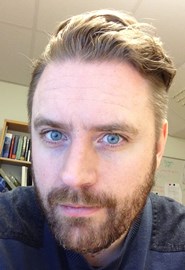
Andrew King is an Adjunct Assistant Professor in Earth and Environmental Sciences at the University of Illinois Chicago, and Research Manager of the Oceanography section at the Norwegian Institute for Water Resources. He holds a PhD in Chemical Oceanography from Scripps Institution of Oceanography, with postdoctoral research at USC and NOAA. His work focuses on marine biogeochemical cycles, particularly nutrient dynamics and ocean acidification impacts. King leads projects like NAUTILOS (low-cost ocean sensors) and NorSOOP (marine-atmospheric research), and contributes to initiatives like ProWind (offshore wind monitoring). His research combines field observations, shipboard experiments, and mesocosm studies to address climate change effects on marine ecosystems. Key projects include Arctic Ocean observing systems and plastic debris quantification. King's work spans international collaborations and technological innovations in environmental monitoring. Education: PhD in Chemical Oceanography, Scripps Institution of Oceanography Postdoctoral Research: University of Southern California (USC), NOAA Research Focus: King investigates ocean acidification's effects on plankton communities, nutrient cycling in coastal and open ocean systems, and the development of advanced monitoring technologies. His studies employ mesocosm experiments, ship-based surveys, and sensor networks to track biogeochemical changes. Current projects address Arctic methane dynamics, microplastic distribution, and iron limitation in marine ecosystems. Grants & Projects: NAUTILOS (2020-2025): Low-cost ocean sensors for citizen science NorSOOP (2018-2023): Marine-atmospheric observation infrastructure ProWind (2024-2030): Offshore wind monitoring technologies Labs & Teams: Leads the Oceanography section's research teams at NIVA, collaborating with international groups on Arctic observing systems and ocean acidification monitoring. Engages in cross-disciplinary initiatives like OceanObs'19 to advance global ocean observation frameworks.
Thomas Ng is an Instructor of Mathematics at Brandeis University (2023–2026), focusing on geometric group theory and low-dimensional topology. His research explores group actions, nonpositive curvature (e.g., hyperbolicity, CAT(0)), and algebraic properties of groups. Previously, he was a Zuckerman Postdoctoral Fellow at the Technion, working with Michah Sageev, and earned his PhD from Temple University under David Futer's supervision. Research interests include the interplay between combinatorial/dynamical group behavior and algebraic properties like residual finiteness. His work applies to groups with nonpositive curvature, such as Gromov hyperbolic or CAT(0) structures. Publications (2018–2024) address cosmic web dynamics, galaxy evolution, and numerical simulations (e.g., EAGLE), with tools like neural networks for cosmological data analysis. His articles highlight topics like halo spin evolution, tidal fields, and baryon distribution.
Nesibe Necla Uluğtekin is a Professor at the Department of Geomatics Engineering , Istanbul Technical University , with a career spanning over 35 years. Her work focuses on Geographic Information Systems (GIS), Cartography, and Remote Sensing applications in urban and environmental contexts. Education: PhD in Geodesy and Photogrammetry Engineering (1989, Istanbul Technical University); MSc (1983) and BSc (1979) in the same field; Additional training at ITC Netherlands (1986). Research: Specializes in GIS applications for public health, urban planning, land use analysis, and 3D modeling. Key projects include spatial evaluation of green spaces, disease distribution mapping, and CORINE land cover studies. Publications: Over 23 research outputs since 1996, with recent works focusing on GIS-based health service evaluation, urban accessibility, and 3D model generalization. Professional Memberships: Active in international organizations like ICA, HKMO, and AGISEE since the 1980s. Email: ulugtek@itu.edu.tr Institution: Istanbul Technical University, Ayazaga Campus, 34000 Istanbul, Turkey
Yu-Ping Chang is a Professor and Senior Associate Dean at the School of Nursing, University at Buffalo. She holds the Patricia H. and Richard E. Garman Endowed Professorship and serves as Chair of Family, Community & Health Systems Sciences. Her work focuses on substance use in older adults, dementia caregiving, and integrating behavioral health into primary care. PhD in Nursing, Saint Louis University MS in Psychiatric and Mental Health Nursing, Kaohsiung Medical University BS in Nursing, Kaohsiung Medical University Her research examines prescription drug misuse among baby boomers, motivational interviewing for opioid misuse, and sexual stigma in LGBTQ+ populations. She leads large-scale projects funded by HRSA grants, including a $1.5M award to transform primary care clinics in underserved areas through integrated behavioral health models. Recent publications analyze psychosocial phenotypes in aging, sexual stigma impacts, and e-cigarette use trends. She employs implementation science and machine learning in studies on dementia caregiver burdens and virtual reality training for behavioral health providers. Ellen Volpe Memorial Award (x2), Fall 2020 First Place, Faculty Posters, Fall 2020 Exceptional Scholars: Sustained Achievement Award, 2020 Fellow, International Academy of Addictions Nursing, 2019 Fellow, American Academy of Nursing, 2018 As Vice Chair for the Expert Panel on Psychiatric, Mental Health, and Substance Use in the American Academy of Nursing and Chair of the Research Interest Group on Mental Health Substance Use at Eastern Nursing Research Society, she has shaped interdisciplinary training programs. Her work also addresses healthcare worker burnout and COPD symptom management using mindfulness techniques.
Cristian Colliander is a Researcher affiliated with Umeå University, holding dual roles at the Umeå University Library (Scholarly Communication Section) and the Department of Sociology. His primary work involves advanced bibliometric and scientometric research, focusing on citation analysis, research evaluation methodologies, and the sociological dimensions of academic performance. He earned his expertise through projects like analyzing Arctic research trends, gender differences in doctoral student outcomes, and developing novel citation normalization techniques. His research integrates large-scale datasets (e.g., PubMed, Web of Science) to explore referencing practices, community detection in citation networks, and the predictive value of bibliometric indicators for early-career researchers. Key contributions include methodological innovations in science mapping, comparison of similarity measures for document clustering, and policy-relevant studies on field-normalized citation rates for university funding allocations. Colliander collaborates with international scholars, contributing to journals such as Scientometrics , Journal of Informetrics , and Studies in Higher Education . He is affiliated with the Sociology of Science, Knowledge and Information research group at Umeå University and has led projects on mass digitization and Swedish press analysis. His work addresses interdisciplinary challenges in higher education policy, academic collaboration dynamics, and the evolving role of bibliometrics in institutional evaluations.
Dr. Shayan Kabiri is a Post Doc Research Fellow Lvl I at the School of Biosystems and Food Engineering, University College Dublin. His research focuses on advancing analytical techniques in soil science, geochemistry, and hyperspectral imaging. He holds a PhD in Biosystems and Food Engineering from University College Dublin, an MSc in Animal Biology from the University of Tehran, and a BSc in Chemical Engineering from Sharif University of Technology. PhD: University College Dublin (Biosystems and Food Engineering) MSc: University of Tehran (Animal Biology) BSc: Sharif University of Technology (Chemical Engineering) His work integrates machine learning, hyperspectral imaging, and X-ray fluorescence (XRF) technologies for high-resolution soil analysis. Recent studies include evaluating model generalization for soil organic carbon prediction at finer resolutions and developing calibration methods for XRF core scanning. He also created HyperGUI, an open-source web tool for hyperspectral data analysis. Research trends emphasize bridging laboratory-scale precision with field applications, leveraging AI-driven models and novel calibration techniques. Collaborations include co-authors from UCD and institutions in Ireland.
Sébastien MONNET is a Professor at the University of Savoie Mont Blanc since 2016, affiliated with Polytech Annecy-Chambéry and the LISTIC laboratory (deputy director). Previously, he was an Associate Professor at Sorbonne University (2007–2016) and held roles at Inria. His HDR (2015) focuses on data replication in large-scale distributed systems. Education: PhD and HDR in Computer Science Research Interests: Focuses on distributed systems, fault tolerance, data replication protocols, cloud computing, and simulation methodologies. Recent work includes federated learning energy estimation, semantic integration in smart systems, and optimization of distributed architectures. Key Projects: ANR RainbowFS (2016–2020): Geo-replicated database optimization AAP USMB DEDICATED (2019–2020): Distributed AI and smart home systems ARMADA (2013–2015): Chile-France collaboration on cloud reliability Advising & Grants: Supervised 12+ PhD/Master students Co-PI in CNRS-Araucaria (2015–2017) and Maimonide (2014–2015) projects Labs/Teams: Deputy director of LISTIC, leading the ReGaRD theme (Resilient and Adaptive Distributed Systems).
Eva Bergman is a Full Professor in Aquatic Ecology at Karlstad University, Sweden. Her research focuses on fish ecology, migration patterns, and the impacts of climate change on freshwater ecosystems. She has collaborated extensively with international researchers and institutions, publishing over 150 peer-reviewed articles. Her work emphasizes salmonid behavior, stream ecosystem dynamics, and conservation strategies in regulated river systems. Key research themes include the effects of temperature on fish development, predator-prey interactions, and the ecological consequences of hydropower infrastructure. She has pioneered studies on downstream migration efficiency of Atlantic salmon smolts and the resilience of fish communities to habitat fragmentation. Her recent work addresses climate change impacts on boreal stream ecosystems, including winter survival strategies and thermal adaptation mechanisms. Dr. Bergman’s publications span experimental flume studies, field observations in boreal rivers, and large-scale modeling of dam removal effects. She has advised multiple graduate students and contributed to fisheries management policies in Sweden and Australia. Her research integrates ecological, physiological, and engineering perspectives to solve real-world conservation challenges. Her work is supported by interdisciplinary collaborations, including studies on forest-stream linkages and the role of terrestrial subsidies in stream food webs. She has also explored innovative methods for estimating fishery efforts and modeling fish population dynamics under climate change scenarios.
Davide Picca is a Lecturer (MER 2) at the Section of Language and Information Sciences, Faculty of Letters, University of Lausanne since 2016. His academic journey includes a PhD in Computer Science and Mathematical Methods (2010, University of Lausanne) and a degree in Philosophy of Science (specializing in Cognitive Science, 2003, University of Bologna). Research focuses on formal ontologies and semiotic theories , particularly applied to computational hermeneutics, moral foundation prediction, and cultural heritage digitization. Collaborations include Columbia University, ISTC-CNR Rome, Yahoo! Research Barcelona, and IBM Research. Key contributions span Emotional analysis in classical literature (Dostoevsky, Homer, Shakespeare) Ontology-based systems for Project Gutenberg texts and legal corpora Interdisciplinary methods combining fluid dynamics and emotion modeling Recent work explores AI ethics through semiotic lenses, moral prediction frameworks, and computational approaches to intangible cultural heritage preservation.
Nathan J Young is an Associate Professor/Senior Lecturer of Swedish as a Second Language at the Department of Swedish, Faculty of Arts and Humanities, Linnæus University. His work bridges linguistic theory with computational applications, focusing on the intersection of language variation, phonetics, and technology. Dr. Young received his Ph.D. in Linguistics from Queen Mary, University of London, where he completed his doctoral dissertation titled "Rhythm in Late-modern Stockholm – Social stratification and stylistic variation in the speech of men." His educational background is rooted in "Labovian" sociolinguistics, a quantitative field dedicated to studying variation and change within language sound systems. Young's research spans multiple areas of linguistics with a particular focus on Nordic languages. His work encompasses acoustic phonetics, language variation and change, contact linguistics, and the application of big data methodologies to linguistic analysis. He is particularly known for his investigations into European multiethnolects, forensic linguistics, and speech-language technology. His research demonstrates how computational approaches can scale linguistic analyses and address questions of representativity in language studies, especially with the integration of AI. As an educator, Young teaches courses in second language acquisition, language typology, phonetics and phonology, and theory and methodology. His teaching is informed by his research expertise, providing students with both theoretical foundations and practical applications in linguistic analysis. Young leads the Autophon project, an open-source initiative developing automatic phonetic annotation and forced alignment tools for Nordic languages. This project has resulted in multiple language-specific tools including SweFA (Swedish), DanFA (Danish), NoFA (Norwegian), FarFA (Faroese), and IceFA (Icelandic). Autophon represents a significant contribution to linguistic research infrastructure, making sophisticated phonetic analysis more accessible to researchers across the Nordic region. His scholarly contributions demonstrate a consistent focus on methodological innovation in linguistic research. Young has published extensively on topics ranging from rhythm in Stockholm Swedish to the emergence of new pronouns in multiethnolects, and from forensic speaker comparison to the application of deepfakes in sociolinguistic experiments. His work often addresses how computational methods can enhance traditional linguistic approaches while maintaining rigorous theoretical foundations.
Gustavo Yepes is a full professor at the Departamento de Física Teórica of the Universidad Autónoma de Madrid . He is affiliated with the Grupo de Astrofísica and the Theoretical Astroparticle Group , and is a member of the Centro de Investigacion Avanzada en Fisica Fundamental (CIAFF) and a research associate at the Center for Computational Simulation (CCS) . His research focuses on Cosmological Numerical Simulations , including projects like the Jubilee , Multidark , Music , and Clues initiatives. These collaborations aim to model galaxy and structure formation using supercomputers like MareNostrum . He has pioneered studies on constrained simulations of the Local Universe and the impact of baryonic physics on cluster dynamics. Teaching: Advanced courses in Computational Astrophysics, Large-Scale Structure, and Cosmology. Grants: Offers fellowships via the Spanish Ministry of Education (MECD) and European Marie Curie programs for PhD and postdoctoral researchers. Labs/Teams: Leads the Three Hundred Project and contributes to the Nikan2 Sunyaev-Zeldovich Large Program . His work bridges numerical methods, observational data, and theoretical models to understand cosmic phenomena like reionization and galaxy formation.
Sam Conrad Joyce is an Associate Professor at Singapore University of Technology and Design (SUTD), holding a joint appointment in the Architecture and Sustainable Design pillar. He serves as the PhD Programme Coordinator and leads the Spatial AI Studio under the Design and Artificial Intelligence (DAI ASD) initiative. Joyce heads the Meta Design Lab, focusing on the integration of computation, design, and urban systems to enhance collaborative human-machine workflows in architecture and master planning. His research emphasizes generative design, big data analytics, machine learning, and web-based visualization to augment design processes. Before joining SUTD, Joyce worked at Foster + Partners (2008–2015) and Buro Happold (2009–2011), contributing to high-profile projects such as the Apple Campus and the Louvre Abu Dhabi. His doctoral work at the Universities of Bath and Bristol explored data-rich systems for design space exploration and decision-making, integrating distributed computing, optimization, and visualization. Key research interests include design optimization, spatial big data analytics, AI-driven design collaboration, and web-based tools. Joyce has led projects funded by entities like URA-SUTD, Singapore Aviation, and Changi General Hospital. His work bridges academia and practice, emphasizing practical applications of computational methods in architecture and urban design. He has taught globally, including at the Architectural Association (London) and Chalmers University (Sweden), and collaborates on initiatives like the Venice Biennale and Smart Geometry conferences. His research outputs span design computation, AI integration, and urban analytics, reflecting a commitment to advancing innovative, data-informed design practices.
Patrick Brosi is a researcher at the Chair of Algorithms and Data Structures at the University of Freiburg. He earned his bachelor's degree in computer science from the University of Tübingen and his master's from the University of Freiburg. After working as a software developer for two years, he joined his current position in 2016 and completed his PhD in 2022. His research focuses on public transit data, geographic information systems (GIS), and algorithmic solutions for spatial data processing. Brosi has contributed to projects like Global Metro Maps from OSM data, Petrimaps, and staty, which address challenges in transit network visualization and data quality assurance. His teaching responsibilities include assisting in courses on algorithms, data structures, and programming languages such as C++. He has supervised numerous theses on topics ranging from geospatial data processing to public transit system analysis. Brosi has received recognition for his work, including Best Paper Candidate nominations at SSTD 2021 and ACM SIGSPATIAL 2018. His research emphasizes bridging the gap between theoretical algorithms and practical applications in cartography and transportation systems.
Namchul Shin is a Professor of Information Systems at the Seidenberg School of Computer Science and Information Systems, Pace University . He received his PhD in Management (MIS) from the University of California, Irvine (1997), MBA from the University of Toledo (1988), and BA in Linguistics from Seoul National University (1985). Research Interests: IT Value, Environmental Sustainability, Open Data, Geographic Information Systems (GIS), and Nonprofit Organizations Academic Leadership: Co-founder of SIGGIS (AIS Special Interest Group on Geographic Information Systems) Professional Roles: Associate Editor of Journal of Electronic Commerce Research, Editorial Board Member of Business Process Management Journal Recent Publications focus on GIS integration in sustainability research, smartphone environmental impacts, and nonprofit digital strategies. His work has appeared in Communications of AIS , Stanford Social Innovation Review , and Negotiation Journal . He organized minitracks/workshops at HICSS, AMCIS, and other conferences. Honors: Faculty Fellow, Wilson Center for Social Entrepreneurship (2013–2014, 2017–2018, 2021–2022) Faculty Fellow, Office of the Provost (2012–2014) Excellence in Research Award, Seidenberg School (2001) Professional Service: Reviewer and committee member for AIS, ICIS, ECIS, and journals like Decision Support Systems . Active in curriculum development for GIS and location analytics courses.