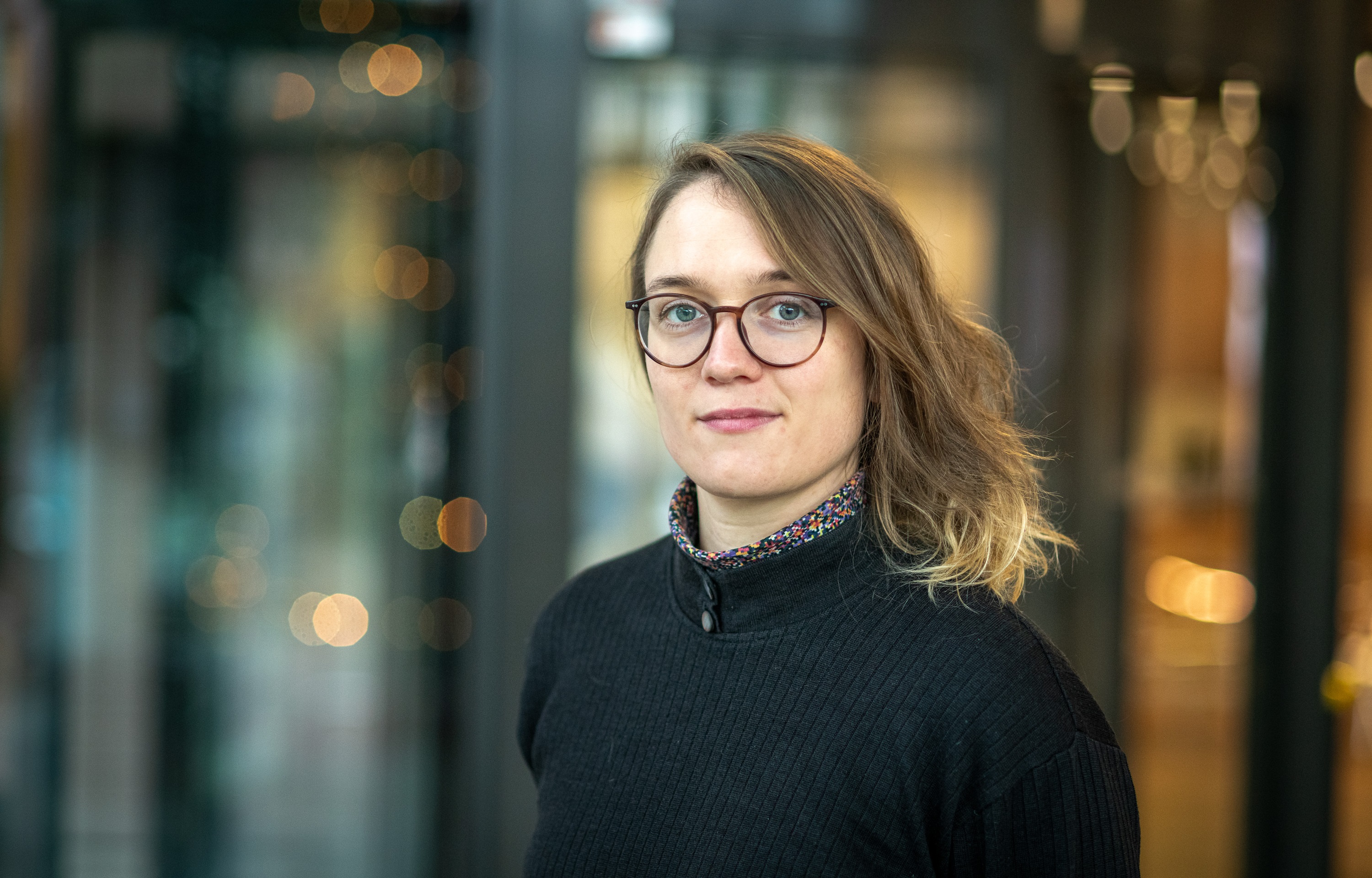
Nora Mittelstädt is a Researcher and Project Lead at the Helmholtz Center for Environmental Research - UFZ in Leipzig, Germany. She has held roles in project coordination and research since 2020, focusing on nature-compatible renewable energy expansion and bioeconomy monitoring . Department : Systems Analysis and Sustainability Assessment Education : M.Sc. in European and International Economics and Politics Research Interests : Her work centers on renewable energy systems , environmental impact assessments , and data-driven sustainability solutions . She specializes in spatial analysis of energy infrastructure and policy integration for climate-neutral transitions. Publications : Her recent articles analyze ground-mounted PV near transport routes , EE-Monitor's role in environmental assessments , and bioeconomy stakeholder perceptions . These contributions align with energy data transparency and land-use optimization . Scientific Recognition : UFZ Research Award 2024 (team award for developing the EE-Monitor and BENOPT system) Contact : nora.mittelstaedt@ufz.de | +49 341 60252832
Wynne Chin is a Professor of Decision & Information Sciences at the C.T. Bauer College of Business, University of Houston. He holds a Ph.D. from the University of Michigan, MBA from the University of Michigan, and degrees from Northwestern University and UC Berkeley. His research focuses on IT adoption, structural equation modeling (SEM), and predictive analytics. He developed the PLS-Graph software, widely used in PLS-based SEM, and has contributed to cross-cultural analysis of IT sourcing and workplace assessment. Education: Ph.D. (Computers & Information Systems, U. Michigan), M.S. (Chemical Engineering, Northwestern), MBA (U. Michigan), B.S. (Biophysics, UC Berkeley). Research interests include IT decision-making, end-user satisfaction, group process measures, and methodological innovations in SEM. He has been recognized globally, ranking 3rd in first-authored articles in MISQ/ISR. Awards include the AIS Fellow, Esther Farfel Award, and AIS Technology Legacy Award. His work bridges IS and statistics, influencing both academic and applied fields. His articles emphasize technology acceptance models, causal modeling, and PLS techniques. Grants and advising contributions are significant but not explicitly detailed here. He has held visiting roles at institutions like the Australian School of Business and is a leader in the PLS research community.
Prof. Dr.-Ing. Jürgen Melzner is a Professor at the Faculty of Civil and Environmental Engineering at Bauhaus-Universität Weimar. His research focuses on construction operations, occupational health and safety, and BIM integration. He leads projects in lean construction management, noise pollution modeling, and safety planning using BIM. His work emphasizes digital transformation in construction processes and legal aspects of building permits. Education includes a Dr.-Ing. (Doctor of Engineering) with extensive career contributions to construction safety and process optimization. His teaching and research involve BIM applications, IoT integration, and interdisciplinary methods in construction education. Research interests span BIM-based safety systems, predictive noise simulation, ontology networks for construction data, and lean principles in project management. Recent articles address stakeholder management in permits, machine learning for site monitoring, and metaverse applications in urban planning. Notable advising includes guidance of master's students like Mahshid Birkholz and Nasim Babazadeh. His work bridges academic research with practical implementation through projects like BIMwissT and DROHNIS. Labs/teams: Active in the Chair for Construction Management and BIM, focusing on digital tools and safety innovation.
Geoff Sutcliffe is a Professor in the Department of Computer Science at the University of Miami's College of Arts and Sciences. He holds a PhD from the University of Western Australia (1992), MSc from the University of Natal (1986), and BSc (Hons) from the University of Natal (1983). His research focuses on Automated Theorem Proving (ATP), evaluation methodologies for reasoning systems, and distributed computational frameworks. His primary research areas include developing infrastructure for ATP systems through the TPTP (Thousands of Problems for Theorem Provers) World project, organizing the CADE ATP System Competition (CASC), and creating standards for logic representation. His work bridges theoretical foundations with practical implementations in AI and computational logic. Research publications demonstrate sustained focus on ATP system improvements, logical framework extensions, and historical analyses of automated reasoning. Recent works explore non-classical logics, semantic web integrations, and performance benchmarking techniques. Scholarship consistently emphasizes practical tool development alongside theoretical advances.
Emmanuel Giguet is a Researcher at the French National Centre for Scientific Research (CNRS), affiliated with the GREYC Laboratory (Computer Science Department) at the University of Caen, Normandy, France. He holds an HDR (Accreditation to Supervise Research) from the University of Caen (2011) and a PhD in Computer Science (1998), both focusing on multilingual natural language processing and document analysis. Roles: Cybersecurity Researcher, Communication and Scientific Mediation Adviser (GREYC Lab), Former Computer Forensics Legal Expert (2005–2015). Expertise: Digital Forensics, Natural Language Processing, Document Structure Analysis, Open Source Intelligence, Competitive Intelligence. His research spans cybersecurity, digital forensics, and NLP applications in document analysis. He co-founded Semiotime (2012), a Competitive Intelligence startup, and has contributed to tools like the GREYC Digital Investigation Platform (G'DIP). He teaches cybersecurity modules at the University of Caen, emphasizing digital forensics and information retrieval. Key Projects: Development of open-source digital investigation tools (e.g., G'DIP). Analysis of deepfake videos and forensic video forgery detection. PDF document structure extraction for financial narrative processing (FinTOC). Affiliations: GREYC Lab (CNRS UMR 6072), University of Caen. Institute for Information Sciences, University of Caen. Communication: Advises GREYC on branding and media presence, including logo guidelines, virtual backgrounds, and scientific mediation resources.
André Bueno Gama is Assistant Professor in the Department of Plant Pathology and Crop Physiology at Louisiana State University's College of Agriculture. He specializes in applied and fundamental research on sugarcane diseases affecting Louisiana's agricultural industry. Education: PhD in Plant Pathology, University of Florida (2021) MSc in Plant Pathology, University of São Paulo (2017) BS in Agronomy, University of São Paulo (2015) Dr. Gama's research focuses on the etiology, epidemiology, and management of economically significant sugarcane diseases including red rot, smut, Sugarcane Yellow Leaf Virus, mosaic virus, and ratoon stunt disease. His program employs interdisciplinary approaches with breeders and entomologists to develop integrated disease management strategies. His recent publications (2008-2023) demonstrate expertise in disease management systems, fungicide efficacy, molecular diagnostics, and decision-support tools for crop protection. Research emphasizes practical applications for sugarcane, citrus, strawberry, and turfgrass production systems. Dr. Gama teaches PLHL 7083 (Epidemiology and Crop Loss Assessment), training graduate students in disease dynamics, prediction models, and management strategies. His extension program monitors disease outbreaks and delivers timely solutions to Louisiana growers.
Rui Manuel Pacheco Meireles is an Assistant Professor in the Computer Science Department at Vassar College since 2017. He is also a Researcher at the Instituto de Telecomunicações in Portugal. His research focuses on networking and distributed systems, particularly in Vehicular Ad-Hoc Networks (VANETs), aiming to enhance traffic safety, efficiency, and passenger entertainment through wireless vehicle communication. He holds dual PhDs from Carnegie Mellon University and the University of Porto, alongside an MS from Carnegie Mellon University. Education: PhD in Computer Science, Carnegie Mellon University PhD in Computer Science, University of Porto MS in Computer Science, Carnegie Mellon University Research Interests: Rui’s work emphasizes applied and experimental research, designing protocols, creating prototypes, and evaluating them in real-world environments. His primary focus is on vehicular networks, including Wi-Fi-based communication between vehicles and infrastructure. His contributions span network selection algorithms, throughput estimation, and geolocation-based sector selection for 802.11ad protocols. His research also touches on HTTP/2 performance analysis and testbed development like HarborNet. Publications: Rui has authored over 15 peer-reviewed articles, with recent work including Wi-Fi network diversity exploration and practical network selection protocols for vehicle-to-infrastructure communication. His 2016 paper on the LASP protocol won the Best Paper Award at IEEE VNC. Awards: Best Paper Award at IEEE Vehicular Networking Conference (VNC) 2016 Teaching: Rui teaches courses such as CMPU 203 (Software Design and Implementation) and has previously instructed data structures, algorithms, and computer networks courses at Vassar. He also shares teaching materials, including an introduction to Linux/Unix. Labs/Teams: Collaborates with the Instituto de Telecomunicações (Portugal) and has developed datasets for vehicular networks, including 802.11ad Wi-Fi datasets for infrastructure communication studies.
Prof. Olivia Romppainen-Martius is a Professor and Group Leader of the Climate Impacts research group at the Institute of Geography, University of Bern. She co-directs the Mobiliar Lab for Natural Risks and focuses on short-term climate dynamics, high-impact weather systems, and midlatitude weather patterns. Her work integrates advanced modeling techniques with real-world applications in disaster risk reduction. Her research spans climate variability analysis, probabilistic forecasting of extreme events, and the development of early warning systems. She leads collaborative projects combining machine learning with Earth system modeling to improve understanding of weather extremes under climate change. Key interests include flood forecasting, hailstorm dynamics, and Mediterranean cyclone behavior. Prof. Romppainen-Martius has pioneered web-based visualization tools for impact-based flood warnings and has contributed to kilometer-scale Earth system modeling frameworks like nextGEMS. Her methodologies emphasize statistical reconstruction of historical weather events and the application of AI to convective weather prediction. Her research outputs reflect a strong focus on bridging climate science with practical risk management strategies, particularly in alpine and pre-alpine environments. Current efforts include long-term analysis of Swiss hailstorms and development of crowd-sourced data integration for meteorological observations.
Daniel Layton-Matthews is an Associate Professor in Geological Science and Geological Engineering at Queen's University. His research program investigates chemical indicators in sedimentary rocks, post-depositional modification of minerals, and geochemical dispersion patterns for mineral exploration. Current research examines trace element signatures in ancient ore systems, with field sites including the Canadian Shield, Australian playa uranium deposits, and marine ferromanganese formations. His group develops analytical methods for in-situ geochemical analysis and isotopic tracing of element migration pathways. Research collaborations span industry partners and government geological surveys. Fieldwork integrates drone-based sampling techniques and advanced laboratory analysis including LA-ICP-MS and isotope ratio measurements.
Lutz Prechelt is Professor of Informatics at Freie Universität Berlin where he heads the Software Engineering research group (AG SE). His academic journey spans theoretical foundations, industry experience, and extensive empirical research in software engineering. He has held significant administrative positions including Executive Director of the Institute of Informatics and member of various academic senates. Prechelt's research interests have evolved from artificial intelligence and neural networks to empirical software engineering, with a recent focus on qualitative approaches to Agile processes and Pair Programming. His work has consistently emphasized methodological rigor, having conducted pioneering controlled experiments on topics like type-checking, inheritance depth, design patterns, and the Personal Software Process. His research has also ventured into plagiarism detection (JPlag), melody recognition, and qualitative studies of pair programming dynamics. His publication record shows a clear transition from quantitative to qualitative approaches in empirical software engineering. Early work featured controlled experiments on specific technical aspects of software development, while more recent publications focus on qualitative analysis of team dynamics, agile methodologies, and research methodology itself. A notable thread throughout his career has been platform comparison studies (Plat_Forms) examining how different technologies affect development outcomes. Ernst Denert Software Engineering Award 2020 Prechelt has served extensively as reviewer for major funding agencies including DFG, EU, ERC, and BMBF, and as editor for journals like Journal of Universal Computer Science and Transactions on Pattern Languages of Programming. He founded the Forum for Negative Results (FNR) to address publication bias in scientific research. His research group has developed several notable software tools including Saros for distributed pair programming, JPlag for plagiarism detection, and tools for maintainable lecture videos.
Dr. Jonathan Lazar is a Professor in the College of Information Studies (iSchool) at the University of Maryland, where he serves as Executive Director of the Maryland Initiative for Digital Accessibility (MIDA) and core faculty in the Human-Computer Interaction Lab (HCIL). He previously held a professorship at Towson University, where he founded the Universal Usability Lab and directed the information systems program. His work bridges human-computer interaction (HCI), disability rights, and legal policy to advance digital accessibility for marginalized populations, particularly blind users, individuals with cognitive impairments, and people with Down syndrome. Education: LL.M. (Disability Rights Law, University of Pennsylvania), Ph.D. (Information Systems, UMBC), M.S. (Information Systems, UMBC), B.B.A. (Management Information Systems, Loyola University Maryland). Research Focus: Dr. Lazar's work emphasizes ICT accessibility in developing countries, non-visual modalities for blind users, ballot accessibility for voters with disabilities, and legal frameworks to enforce accessibility standards. He has authored/co-authored 17 books and over 200 peer-reviewed articles, with notable contributions on accessible data visualization, automated accessibility testing, and the intersection of law and technology. Awards: Includes the ACM SIGACCESS Outstanding Contribution Award (2020), ACM SIGCHI Social Impact Award (2016), and multiple University System of Maryland Board of Regents Awards. His research has influenced U.S. federal regulations, including airline website accessibility mandates following his work on discriminatory pricing for blind travelers. Professional Service: Serves on the executive board of the Friends of the Maryland Library for the Blind, co-chairs the Cambridge Workshop on Universal Access and Assistive Technology (CWUAAT), and advises government agencies on accessibility policy. He advocates for inclusive design in public libraries, voting systems, and educational technologies. Labs & Projects: Leads the Trace R&D Center's legacy work on accessibility, co-designs health IT tools with individuals with Down syndrome, and develops tools like FormA11y for PDF accessibility remediation. His research emphasizes translating academic findings into actionable policies and practices.
Stephan Schlögl is a Full Professor at MCI - The Entrepreneurial School in Austria, leading research and teaching in Human-Computer Interaction (HCI), Artificial Intelligence (AI), and Information Systems. He holds editorial roles at journals like the Springer Discover Artificial Intelligence Journal and MDPI Multimodal Technologies and Interaction Journal. His work spans over two decades, with key roles including Postdoctoral Research Fellow at Télécom ParisTech (2012–2013) and PhD Researcher at Trinity College Dublin (2008–2012). Schlögl’s research focuses on HCI, AI-driven conversational systems, and assistive technologies for aging populations. Education includes a PhD in Computer Science from Trinity College Dublin, an MSc in Human-Computer Interaction from University College London, and a Mag.(FH) in Applied Informatics & Management from MCI. His teaching spans Software Engineering, Business Intelligence, and Research Methods. Research interests emphasize natural language interfaces, AI ethics, and technology’s societal impact. Notable projects include the EU-funded EMPATHIC initiative (2017–2021), developing an empathic virtual coach for elderly care, and the CRYSTAL project (2024–present) on conversational systems for emotional support. Schlögl has supervised numerous theses on AI applications, chatbots, and UX design. He co-organized major conferences like CUI (Conversational User Interfaces) and received awards for best papers in AI-HCI and CHIRA. His work bridges academia and industry, addressing challenges in AI adoption, digital well-being, and ethical technology design.
Barbara Carminati is a Professor at the Department of Theoretical and Applied Science, University of Insubria, Italy. Her work focuses on security, privacy, and trust management in decentralized systems, particularly online social networks, IoT, and emerging technologies like blockchain and digital twins. She has contributed extensively to access control, risk assessment, and collaborative frameworks. Her research spans trust modeling , privacy-preserving mechanisms , and malware detection , with a strong emphasis on decentralized social networks and UAV security . She actively explores the application of blockchain for secure workflows and information sharing. Recent publications highlight her engagement with large language models for security optimization, IoT botnet detection , and metadata leakage analysis . Her work bridges theoretical foundations with practical implementations in cybersecurity, social network management, and edge computing. Contact: barbara.carminati@uninsubria.it
Emily Wright serves as Associate Dean Education at Swinburne University of Technology's School of Design and Architecture, holding a PhD from the same institution alongside a Master of Design and Bachelor of Science in Graphic Design from the University of Cincinnati. With over 20 years of international design industry experience spanning branding, packaging, publishing, environmental and web design across the USA, UK, Mexico and Australia, she bridges academic theory with professional practice. Her research specializes in design education , packaging design , and sustainable design , with particular focus on pedagogical innovation including pass/fail grading systems, generative AI integration, and co-creation methodologies. Wright's scholarly output reveals strong emphasis on Transforming design pedagogy through technology Health communication design for vulnerable populations Cross-cultural co-creation frameworks Sustainable design integration in curricula Her recent publications (2020-2023) demonstrate accelerating focus on digital learning environments, AI ethics in design education, and child/family health communication systems. Wright has received the International Design Award for her child health team visualization work and secured research contracts with major organizations including Coles Supermarkets, IRESS Limited, and Access Health Community. Her grant portfolio reflects strong industry collaboration across healthcare, retail, and financial sectors. As a doctoral supervisor, Wright has guided seven PhD candidates through projects examining design feedback practices, 3D printing in bridal fashion, urban community development, and technology-based speech learning applications. She actively contributes to design education discourse through conference leadership including editing the Cumulus 38° South proceedings.
Dr. Daniel Goldberg is an Associate Professor at Texas A&M University and Director of the TAMU GeoInnovation Service Center. His expertise spans GIS, geocoding, and geocomputation, with a focus on health and environmental applications. He holds a Ph.D. in Computer Science (USC, 2010), M.Sc. (USC, 2003), and B.Sc. (Rutgers, 2002). His research interests include CyberGIS, 3D GIS, spatial databases, and environmental exposure assessment. Notable projects involve developing real-time mobile crowdsensing systems and analyzing the impact of natural disasters on public health. He has contributed to over 40 peer-reviewed articles, often leveraging interdisciplinary approaches. Dr. Goldberg has received awards such as the Texas A&M Montague Scholar Award (2015) and the CyberGIS Fellow designation (2014). His work emphasizes geospatial privacy, health data security, and innovative GIS education methods. He leads the TAMU GeoServices team and collaborates with national institutions like the National Center for Supercomputing Applications. Advising highlights include mentoring over 20 graduate and undergraduate students, with notable contributions to projects on cyberGIS frameworks and NTD surveillance. His lab focuses on bridging geospatial technology with societal challenges in health, environment, and urban planning.