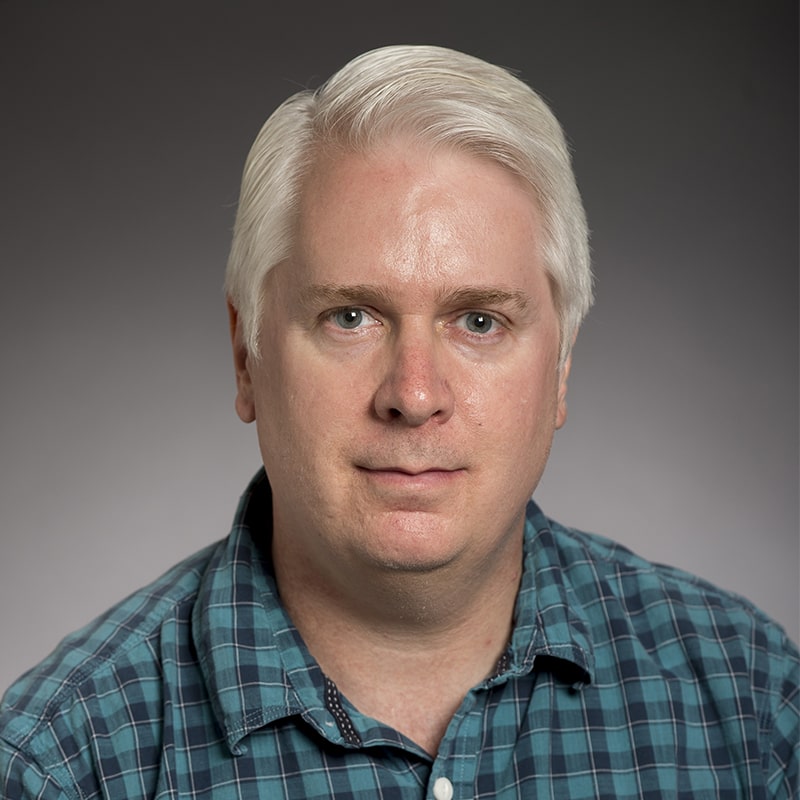
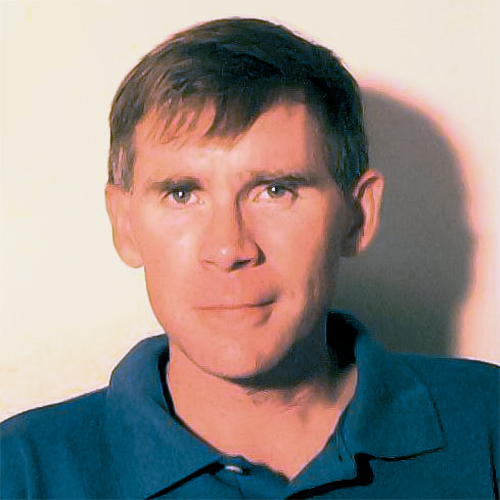
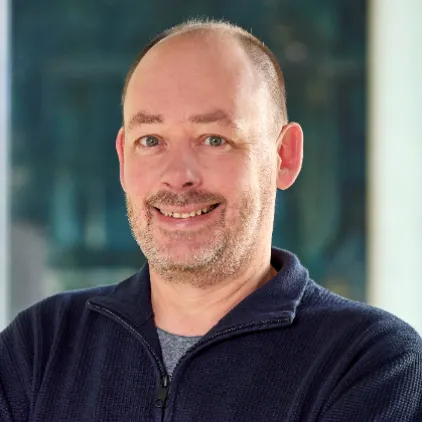
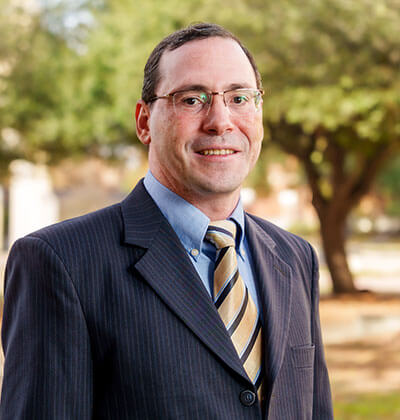
Dr. Michael Janzen is an Associate Professor in the Department of Computing Science at The King's University. He holds a PhD from the University of Saskatchewan, an M.Sc. from the University of Guelph, and a B.Sc. from Brock University. His research focuses on virtual camera selection using semi-ring constraint satisfaction problems (SCSPs), serious game modules, and camera trap image processing for ecological studies. His work intersects computer science, environmental monitoring, and AI ethics. Education includes: PhD in Computing Science, University of Saskatchewan M.Sc. in Computer and Information Science, University of Guelph B.Sc. in Computers and Physics, Brock University Research interests emphasize practical applications of AI and computational methods in virtual environments, wildlife monitoring, and educational gaming. Recent projects include developing automated systems for wildlife fence design analysis and image screening tools for ecological data. His work bridges theoretical computer science with real-world challenges in conservation and technology ethics.
Spiros Sirmakessis is a Professor in the Department of Electrical and Computer Engineering at the University of Peloponnese. He is the Director of the eBusiness and User Experience Lab, focusing on innovation and entrepreneurship, particularly in fostering startup ecosystems and promoting research for social benefit. His roles include Head of the Technology Transfer Unit, member of the Research Academic Computer Technology Institute (CTI), and elected member of the University’s Governing Council. Educated at the University of Patras, he holds a PhD in Computer Engineering and has coordinated over 100 research projects funded by EU, national, and private sources. His research spans Information Systems, eBusiness, Human-Computer Interaction, and Data Mining. He teaches courses on Interaction Design and e-Business, emphasizing practical applications of technology in education and industry. Notable contributions include developing personalized e-learning systems, enhancing e-government services, and exploring user experience in mobile and web applications. His work bridges technical innovation with societal impact, such as promoting sustainable development through STEAM education and blue economy initiatives. Publications span journals and conferences, addressing topics like adaptive learning communities, web mining, and UX design. His projects often involve cross-disciplinary collaboration and practical implementation, reflecting a commitment to applied research with real-world outcomes.
Peter Freeman is an Associate Teaching Professor and Director of the Undergraduate Program in the Department of Statistics & Data Science at Carnegie Mellon University's Dietrich College of Humanities and Social Sciences. He holds a B.A. in Physics (1989, University of California) and a Ph.D. in Astronomy and Astrophysics (1997, University of Chicago). Before joining CMU in 2004, he worked as a scientific programmer for the Chandra X-ray Telescope mission, specializing in data analysis methodologies. His research focuses on astrostatistics, developing advanced statistical techniques for analyzing complex astronomical datasets. Key areas include source detection algorithms, cosmic microwave background mapping, photometric redshift estimation, and galaxy morphology analysis. He has collaborated with faculty and students from CMU and the University of Pittsburgh on interdisciplinary projects, integrating machine learning and computational methods into astrophysical research. Freeman is actively involved in educational initiatives such as the STAMPS (Statistical Pedagogy & Educational Research) group and the Carnegie Mellon Sports Analytics Camp (CMSAC). His work emphasizes authentic, community-engaged learning experiences, particularly in undergraduate laboratory courses and data science curricula. His recent publications span astrostatistics, ecological studies (e.g., Coqui frog acoustic analysis), and pedagogical innovations in STEM education. He has contributed to major projects like the Rubin Observatory Legacy Survey of Space and Time (LSST) and the CANDELS galaxy structure classification effort.
David A. Albert, DDS, is an Associate Professor of Dental Medicine (in Health Policy and Management) at Columbia University Irving Medical Center and serves as Director of the Division of Community Health. He focuses on improving oral health access, tobacco cessation strategies, and maternal-child health outcomes through interdisciplinary approaches. His work bridges dental and medical fields to address systemic health challenges linked to oral health disparities. Education: Received his DDS from New York University School of Dentistry. Completed residency training at Morrisania Diagnostic and Treatment Center in the Bronx. Research Interests: Dr. Albert’s research emphasizes leveraging dental care settings for broader health interventions, such as HIV testing and diabetes screening. He investigates the impact of oral health on pregnancy outcomes, tobacco cessation in underserved populations, and the role of clinical decision support systems in improving care delivery. Grants & Projects: He has led initiatives including a novel tobacco control program for seniors using home care workers, the Columbia Community DentCare Program, and studies on sealant usage in dental plans. His federal and private grants span topics like oral health decision support systems and diabetes prevention. Awards: No specific awards listed, though his contributions to public health policy and dental education have been impactful. Advising & Programs: As a program director, he oversees training programs in oral health networking and collaborates with healthcare professionals to enhance children’s oral health through interprofessional teamwork. His work extends to geriatric oral care and addressing health inequities in underserved communities.
Associate Professor Cao Hung Pham is a faculty member at the School of Civil Engineering, University of Sydney, specializing in Structural Engineering. His research focuses on the behavior and design of thin-walled structures, particularly cold-formed steel and aluminium alloys, with emphasis on stability, shear performance, and connection mechanics. Education: BE MConstMgt MEngSc PhD Research Interests: His work explores fundamental and applied aspects of structural systems, including buckling phenomena in thin-walled members under combined loading, development of Direct Strength Method (DSM) design approaches, experimental characterization of high-strength materials, and innovation in fastener technologies for lightweight construction. Research integrates laboratory testing, computational modeling, and theoretical analysis to advance design standards. Publication Trends: Recent articles (2021-2023) demonstrate strong focus on shear design innovations in perforated cold-formed steel sections, performance optimization of power-actuated fasteners, buckling behavior of aluminium alloy beams, and methodological improvements in structural testing. Work frequently combines experimental validation with analytical/numerical solutions to develop practical design guidelines. Advising and Projects: Actively supervises PhD candidates researching: Cold-formed steel members with web holes under shear AI-assisted welding quality control Screwed connections in floor systems DSM enhancements for localized loading Serviceability of cold-formed steel floors Laboratories and Teams: Member of the Structures Research Group and Materials and Structures research theme, focusing on experimental mechanics and advanced structural systems at the University of Sydney's civil engineering facilities.
Dr. Charles Conner is a Professor of Engineering at Capitol Technology University, where he has held a full-time faculty position since transitioning from part-time teaching in 1984. He specializes in digital signal and image processing, with expertise in DSP Assembly/C++, MATLAB/Octave, and Linux systems development. Dr. Conner has also been instrumental in securing ABET accreditations for the university and held adjunct roles earlier in his career. His career spans over four decades in academia and industry, including roles as a Staff Scientist at Morehead State University’s Space Science Center, contributing to small satellite control software and the Lunar IceCube mission. He has developed critical systems such as the core Flight System (cFS) and AMMOS Instrumentation Toolkit (AIT). His technical skills include embedded systems design, Verilog/VHDL, and web development using Java/XML/Perl/Python. Research interests focus on signal/image processing, Linux systems, and aerospace applications. Notable projects include thermographic defect detection algorithms and free-space optical communication synchronization using Haar wavelets. His work bridges theoretical research and practical engineering, with contributions to both academic conferences and industry projects. Awarded multiple Esteemed Professor titles from Alpha-Chi Honor Society and recognized in Who’s Who publications, Dr. Conner emphasizes service, including Outstanding Service accolades at Capitol College and the Space Operations Institute. He advises IEEE student chapters and fosters interdisciplinary collaboration between engineering disciplines. Dr. Conner holds a B.S.E.E. (magna cum laude) and M.S.E.E. from the University of Maryland, and a Ph.D. in Electrical Engineering from Catholic University of America. He remains active in technical communities, including the Laurel Linux Users’ Group and Alpha-Chi Honor Society.
Dr. Pat Engebretson is an Associate Professor and Coordinator for the PhD in Cyber Operations Program at Dakota State University's The Beacom College of Computer & Cyber Sciences. He previously served as Dean of The Beacom College (2020-2023), Chief Information Officer at East River Electric, and held roles in the U.S. Department of Defense focusing on cybersecurity. His expertise spans cybersecurity fundamentals, penetration testing, malware analysis, and ethical hacking. Education: DSc. in Information Systems, Dakota State University MS in Information Systems, Dakota State University BS in Psychology & Sociology, North Dakota State University Dr. Engebretson's research focuses on cybersecurity fundamentals, including penetration testing methodologies and malware analysis. He has conducted groundbreaking work on gaming console vulnerabilities (Xbox 360) and wireless security. His publications emphasize practical cybersecurity education and training tools, with two bestselling books translated into nine languages. Awards & Recognition: Ernest M. Teagarden Award for Excellence in Teaching (2014) Grants & Funding: National Science Foundation Scholarship for Service (2014) Department of Defense Information Assurance Scholarship Program (2012-2014) He has presented at major conferences including DefCon, Black Hat, and Department of Homeland Security forums. His teaching interests include networking and cybersecurity curriculum development.
Prof. Jürgen Schönwälder is a Professor of Computer Science at the School of Computer Science and Engineering, Constructor University Bremen gGmbH. His research focuses on computer networks, distributed systems, embedded systems, and computer security. He has held positions at TU Braunschweig, University of Twente, and Bell Labs. He leads the Computer Networks and Distributed Systems research group, which addresses challenges in robust network infrastructure and distributed systems resilience. Education: Doctoral Degree in Computer Science, Technical University Braunschweig (1996) Diploma in Computer Science, Technical University Braunschweig (1990) Research Interests: Design of scalable and resilient network services Security in distributed systems Measurement of network performance and behavior IoT and constrained device management Standardization of network protocols (e.g., NETCONF, YANG) Funded Projects: EU Horizon 2020 Concordia (2019-2023) EU FP7 Flamingo (2012-2016) Industry-funded projects in network management and security Key Contributions: Over 100 publications in top venues (IEEE/ACM Transactions, SIGCOMM) and co-chair roles in IETF working groups (NETMOD, ISMS). His work on network configuration (NETCONF), flow analysis, and IPv6 transition mechanisms has shaped modern network management practices.
Prof. Dr. Sören Schmidt is Professor of Psychology in Social Work and Dean of the Department of Social Work and Health at the University of Applied Sciences Emden/Leer. He is also a core member of the research focus "Resource Orientation in the Tension Field of Individual and Society (RoSiG)". Research Interests: ADHD across the lifespan – from childhood to adulthood and aging Development and validation of clinical diagnostic instruments for mental disorders Psychological stress assessment across age groups Impact of ADHD and personality on road traffic behavior Digital tools for mental health diagnostics and intervention Prevention and treatment programs for children and adolescents with ADHD His work integrates psychological diagnostics with social work practice, aiming to improve care for individuals with mental disorders. He leads the revision and re-standardization of the ADHD screening for adults (ADHS-E) and collaborates with external institutes such as the Institute for Training Measures (IFS) in Hamburg on traffic-related ADHD studies. Scientific Contributions: Over 50 peer-reviewed publications on ADHD, diagnostics, and mental health Active contributor to evidence-based diagnostic tools for ADHD in adults and adolescents Developer of web-based platforms for systemic psychotherapy evaluation Advising and Grants: While specific student names or grant details are not listed, Prof. Schmidt is involved in methodological workshops and research supervision within the Department of Social Work and Health. His role as Dean and professor implies active mentoring and advisory responsibilities for students and junior researchers. Labs and Teams: He is affiliated with the research focus "Resource Orientation in the Tension Field of Individual and Society (RoSiG)" at the University of Applied Sciences Emden/Leer, which supports interdisciplinary research in applied social sciences and health.
Ayad Barsoum is an Associate Professor of Computer Science at St. Mary's University, where he serves as the Graduate Program Director of Cybersecurity and Director of the NSA/DHS Designated Center for Cyber Excellence. He joined the university in 2013 and has been instrumental in developing the Master of Science in Cybersecurity program. His leadership secured grants from the Hearst Foundation and Valero Energy Foundation to establish the cybersecurity lab. He holds a Ph.D. from the University of Waterloo (2013), M.S. from Ain Shams University (2004), and B.S. from Ain Shams University (2000). His research integrates cybersecurity, cloud computing, data integrity, and machine learning, with a focus on practical solutions for network security and cryptographic protocols. His publications concentrate on cloud security, network protocols, and machine learning applications in cybersecurity, demonstrating consistent innovation in defensive cyber techniques. Awards: Distinguished Faculty Award (2022-2023) Amazon Web Services Education Grant Multiple research awards from University of Waterloo He serves as a reviewer for NSA CAE-CD and editorial boards, while maintaining collaborations with the Centre for Applied Cryptographic Research.
Gayle Jesse is an Associate Professor of Computer Information Systems at the College of Business, West Liberty University. She holds a D.Sc. from Robert Morris University and multiple certifications including Microsoft Master Instructor and Adobe Certified Expert Educator. Her research focuses on educational technology, cybersecurity curriculum development, and pedagogical innovations in information systems education. Education: D.Sc., Robert Morris University (Information Systems and Communications) K-12 Pennsylvania Teaching Certificate (Technology Business Education), Robert Morris University M.S.B.A., California University of Pennsylvania B.S., Robert Morris University (Information Systems Management) A.S., Community College of Allegheny County Research Interests: Dr. Jesse explores topics such as SQL education, e-textbook adoption trends, student perceptions of digital tools, and service-learning integration in technical curricula. Her work emphasizes practical applications of technology in both educational and community contexts. Publications: Her work spans peer-reviewed journals like ISEDJ and IACIS, with a focus on educational technology, cybersecurity program development, and student engagement strategies. Recent studies include analysis of smartphone usage in higher education and usability study methodologies. Awards: Marquis Who’s Who winner (2012) Most outstanding achievement award for D.Sc. Cohort 10 at RMU (2011) Employ of the month – Liberty University (July 2016) Advising & Grants: While specific grants are not listed, her research often involves collaborative projects and curriculum development initiatives. She has advised on multiple service-learning initiatives and honors projects. Labs/Teams: Affiliated with the College of Business at West Liberty University, contributing to its technology and information systems programs.
Dr. Caroline Jones is an Associate Professor of Law at Swansea University's Hillary Rodham Clinton School of Law. She specializes in healthcare law, family law, and the legal implications of artificial intelligence (AI) in healthcare. Her research explores litigation strategies in healthcare law, trust in clinical AI systems, and regulatory frameworks for emerging technologies. Fluent in Welsh, she holds a Fellowship from the Higher Education Academy. Her career spans roles at Swansea University (since 2017) and the University of Southampton (2003-2017). She has supervised numerous PhD students researching topics like surrogacy ethics, minority shareholder protection, and Nigerian legal systems. Key grants include projects on AI regulation in healthcare (funded by British Academy/Leverhulme) and frameworks for clinical decision support systems. Research interests include hidden law-making via test cases and legal parenthood in assisted conception. Recent work focuses on public trust in AI for mental health services, presented at global conferences like the ACM Web Conference 2024. She teaches modules on family law, covering marriage, divorce, and child custody. Awards: Fellow of the Higher Education Academy. Grants include £9,912 for AI trustworthiness studies and £7,035 for clinician guidance development. Active in collaborative projects with institutions like UCL and Nottingham Trent University.
Harri Oinas-Kukkonen is a Professor of Information Systems Science and Dean of the Graduate School at the University of Oulu, Finland. He is affiliated with the Faculty of Information Technology and Electrical Engineering and leads the Oulu Advanced Research on Service and Information Systems group. His research focuses on persuasive design, behavior change interventions, and humanized ICT systems, with applications in healthcare, sustainability, and workplace well-being. He co-authored Humanizing the Web: Change and Social Innovation and has published extensively in journals spanning computer science, healthcare informatics, and behavioral science. Research Interests: Persuasive Systems Design (PSD) Digital Behavior Change Support Systems (BCSS) Health Informatics and mHealth Sustainable Technology Adoption Workplace Health Promotion Ethical AI in Persuasive Technologies Recent Work Trends: His articles (2024-2025) highlight emerging technologies in behavior change, including LLM-based mental health tools, CHD management interventions, and compliance mechanisms in digital health systems. He emphasizes integrating psychological theories like Self-Determination Theory into system design while addressing ethical challenges in data privacy (GDPR) and technology overreliance. Professional Contributions: Serves on conference organizing committees (e.g., Persuasive Technology Conferences) and has advised over 20 doctoral students through workshops and thematic analyses. Active in interdisciplinary collaboration involving healthcare providers, tech developers, and policymakers to advance human-centered health innovations. Labs/Tech: Leads development of sensor-based care solutions for aging populations and eco-friendly ICT systems, with prototypes validated through formative evaluations and RCTs.
Xinhui Duan, Ph.D., is an Associate Professor of Radiology at the University of Texas Southwestern Medical Center and a member of its Medical Physics section. He provides clinical diagnostic medical physics services to Parkland Health and Hospital System, Children’s Medical Center, and Clements University Hospital. His roles include overseeing over 160 diagnostic imaging devices to ensure high-quality imaging while safeguarding patient and staff radiation exposure. Dr. Duan holds certifications from the American Board of Radiology in Diagnostic Medical Physics and has extensive training, including a fellowship at Mayo Graduate School and a Senior Research Fellowship at Mayo Clinic. Education: Bachelor’s in Nuclear Engineering and Nuclear Science from Tsinghua University Doctoral Degree in Nuclear Technology and Applications from Tsinghua University Clinical Fellowship in CT Imaging at Mayo Graduate School Research & Expertise: Dr. Duan specializes in spectral CT imaging, radiation dose reduction, and image quality optimization. His work has led to over 45 peer-reviewed publications and presentations at major conferences. Key areas include spectral CT technology translation to clinical practice, photon-counting detectors, and dual-energy CT applications. Service & Leadership: He serves on national committees such as the AAPM CT Subcommittee and the Alliance for Quality Computed Tomography Working Group. At UTSW, he contributes to IRB, Radiation Protocol Committees, and leads spectral CT technical initiatives. He also guest edits Medical Physics and reviews for journals like Radiology and American Journal of Roentgenology . Education Innovation: A pioneer in online medical physics education, Dr. Duan developed web-based tools for radiology residents, earning high praise for his engaging lectures and use of multimedia. His educational focus bridges complex physics concepts with clinical practice.
Herman Aguinis is the Avram Tucker Distinguished Scholar and Professor of Management at the George Washington University School of Business, where he also served as Chair of the Department of Management and Director of the Master of Human Resources Management Program. Every year since 2018, for 8 consecutive years, Web of Science Highly Cited Researchers Reports has ranked him among the world's 100 most impactful researchers in Economics and Business. He served as President of the Academy of Management (AOM), Deputy Dean of the AOM Fellows, and has been inducted into The PhD Project Hall of Fame. His interdisciplinary research focuses on behavioral and policy issues regarding the global acquisition and deployment of talent in organizations and research methods, technology, and analytics (i.e., behavioral science and data science). His work has received about 71,000 Google Scholar citations (h-index = 110) and over 26,000 Web of Science citations. He has published 13 books and written 230+ refereed journal articles and 50+ book chapters, monographs, and other publications. His research spans corporate social responsibility and business sustainability, innovation and entrepreneurship, leadership, workforce inclusion and diversity, human capital development, performance management and star performance, interpersonal relationships at work, and innovative methodological approaches for developing and testing theories. His work demonstrates a strong integration of micro and macro theories and research domains, as well as qualitative and quantitative methodological approaches. Professor Aguinis has received numerous awards including Distinguished Career Awards from three different Academy of Management Divisions, the Losey Award by the Society for Human Resource Management Foundation, SIOP Scientific Contributions Award, and multiple best-article-of-the-year awards. His research has been published in all seven journals of the Academy of Management. He has served as Editor-in-Chief of Organizational Research Methods, has been on the editorial boards of 30 journals, and has delivered over 40 keynote speeches and 500+ presentations worldwide. His professional and life agenda is to impact both the academic community and society at large, as evidenced by his consulting work with organizations like the United Nations, AT&T, and Accenture, as well as his service on the Board of Examiners for the United States Foreign Service.