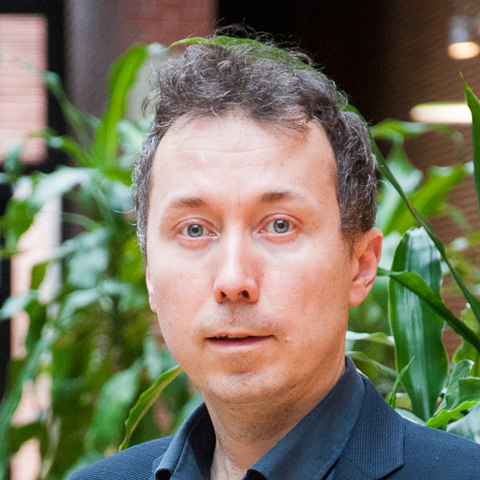
Wolfram Wingerath is a Professor for Data Science at the University of Oldenburg (since 2022) and previously served as Head of Data Engineering & Research at Baqend GmbH (2018-2022). He earned his PhD in Computer Science (2019) from the University of Hamburg, focusing on scalable push-based real-time query systems (InvaliDB). His research interests include: Real-time databases and stream processing NoSQL and polystore systems Web performance optimization Probabilistic data management Cloud computing and distributed systems Key publication trends show expertise in real-time data architectures, caching mechanisms, and performance engineering. Notable collaborations include Benjamin Wollmer and Felix Gessert . He has advised 49+ student theses and served on PC committees for ICDE, VLDB, and EDBT. His editorial roles include membership on Datenbank-Spektrum and organizing the BTW 2025 Data Science Challenge .
Örjan Sundin is a researcher at the Department of Psychology and Social Work (PSO) at Mid Sweden University. His work spans clinical psychology, psychosomatics, and public health, with a focus on stress, anxiety, burnout, and cardiovascular disease. Sundin has contributed to psychometric validation studies and behavioral interventions, particularly in perinatal psychology and digital mental health solutions. Research Interests: Anxiety disorders, stress recovery, intimate partner violence, psychosomatics, and cognitive-behavioral interventions. Key Collaborations: European multicenter studies on intimate partner violence, Swedish trials on internet-based CBT, and cross-cultural psychometric adaptations. Recent Trends: 2022-2025 publications highlight genetic risk prediction in mental health, psychological flexibility, and digital health applications for cardiac patients.
Associate Professor Wayne Wilson is an Associate Professor in the Discipline of Audiology at the School of Health and Rehabilitation Sciences, The University of Queensland. He is affiliated with the University of Queensland Centre for Hearing Research (CHEAR) and actively contributes to research, teaching, and clinical practice in audiology. Education: Bachelor of Science, The University of Queensland Postgraduate Diploma in Audiology, The University of Queensland Doctor of Philosophy, University of the Witwatersrand Dr. Wilson's primary research focuses on three interconnected areas: listening difficulties in children, objective auditory function assessment, and clinical competence in audiology. His work on children's listening aims to determine why some struggle in noisy environments like classrooms and to develop identification and management tools. His objective assessment research combines audiology and engineering to create new electroacoustic and electrophysiological technologies. His clinical competence research seeks to improve how competency is taught and assessed in audiology education. His impact is significant, with research cited in international guidelines and clinical practices. Analysis of Dr. Wilson's recent publications reveals a strong focus on practical applications in educational settings, clinical practice, and healthcare systems. His work spans from fundamental auditory processing research to applied studies on assessment technologies and clinical guidelines. A notable trend is his increasing focus on Indigenous health disparities related to hearing and competency-based assessment tools for audiology students and practitioners. His research consistently translates scientific findings into practical clinical applications that improve patient care. Scientific Recognition: Research cited in national white papers and clinical guidelines internationally Publications regularly listed as 'most read' and 'all-round favourites' in journals Ranked in top three most cited papers on specific topics in Web of Knowledge Described in journal editorials as 'of considerable significance' One third of his 300+ conference presentations were invited Chair of multiple national and international task forces on auditory processing Dr. Wilson has secured over 35 competitive research grants totaling more than AUD$4.2 million. His current funding includes projects on detecting otitis media in children (William Demant Foundation, 2023-2026) and vibrotactile neurofeedback training for older adults with hearing impairment (Sonova AG, 2018-2025). He actively supervises multiple PhD students on topics including auditory processing disorder diagnosis and hearing monitoring for chemotherapy patients. Since 2013, he has led an Auditory Processing Disorder Special Interest Group with over 100 international members. Dr. Wilson was a founding member and Chief Audiological Scientist for two commercial ventures: Ausonex Pty Ltd (2006-2013), specializing in hearing test instrumentation, and Fidelio (2008-2015), focusing on hearing protection for musicians. His work has resulted in two published patents and one provisional patent related to physiological response acquisition, hearing protection devices, and cochlear implant improvements.
Tomi Kauppinen serves as Head of Aalto Online Learning at Aalto University, where he leads the university's digital education initiatives through the Learning Services unit (U902). His position combines academic research with practical implementation of online and blended learning solutions across the university. Dr. Kauppinen's research spans multiple interconnected domains including Cognitive Systems, Information Visualization, Ubiquitous Computing, and Educational Sciences. His work focuses on human-centered approaches to digital learning environments, with particular emphasis on making online education more engaging, accessible, and effective. He has made significant contributions to the fields of semantic web technologies applied to education, game-based learning methodologies, and the design of virtual learning environments that enhance student participation. Analysis of his recent publications reveals a clear trajectory toward more immersive and interactive educational technologies. His work has evolved from foundational semantic web applications in education to cutting-edge implementations of 360° learning environments, game-based educational tools, and human-centered design approaches for online learning platforms. The interdisciplinary nature of his research bridges computer science, educational theory, and design principles to address contemporary challenges in digital education. EUNIS Dørup E-learning Award 2020 for 'Designing Digital Higher Education: Case Aalto Online Learning' 2016 Learning Contribution Achievement Award (awarded May 2017) for exemplary leadership in Aalto's digitalization project As Head of Aalto Online Learning, Kauppinen has played a pivotal role in developing operational models for teaching development across Aalto University. His work has significantly advanced the pedagogically sound digitalization of teaching at the institution. While specific grant information isn't detailed in the provided text, his extensive publication record suggests involvement in multiple research projects related to educational technology and semantic web applications in learning environments. Kauppinen's work with Aalto Online Learning functions as his primary research and development team, focusing on creating and implementing digital solutions for higher education. His collaborations extend across disciplines, frequently involving partnerships with game design researchers, educational specialists, and computer scientists to develop innovative learning approaches and production pipelines for educational content.
Gregory Blanc is a Lecturer in SCN at Telecom SudParis, a leading French graduate school of engineering specializing in digital technologies. His academic work focuses on network security, with particular expertise in intrusion detection systems, software-defined networking security, and machine learning applications for cybersecurity. Dr. Blanc's research spans several critical areas in modern cybersecurity: Development of reinforcement learning frameworks for DDoS mitigation while preserving quality of service Analysis of adversarial attacks against machine learning-based security systems Privacy considerations in intrusion detection systems Security challenges in 5G networks and Internet of Things environments Methods for reproducible evaluation of security tools and frameworks His recent publication record demonstrates consistent contributions to top venues in the cybersecurity field. Over the past two years (2024-2025), he has published 15 papers across journals and conferences, reflecting active research engagement. His work shows strong international collaboration, with co-authors from institutions across Europe and Asia. Dr. Blanc is involved in significant research projects, including the SuperviZ initiative focused on security supervision and orchestration, indicating ongoing research funding and institutional support for his work.
Ombretta Gaggi is an Associate Professor at the Department of Mathematics, University of Padua, where she has been conducting research and teaching since April 2006. Her academic journey began with a Laurea degree cum laude in Computer Science from Ca' Foscari University of Venice in 1998, followed by a PhD in Computer Science from the Consortium of Universities of Bologna, Padova and Venice in 2003. Her research spans mobile computing and networking, web technologies, social networks, and semantic web, with a strong emphasis on accessibility technologies and serious games for educational and medical applications. She has made significant contributions to developing solutions for visually impaired users, early identification of developmental dyslexia, and safety mechanisms for mobile communications. Professor Gaggi's recent publications demonstrate a consistent track record of high-impact research in top venues including ACM Transactions on the Web, IEEE Transactions on Mobile Computing, and IEEE Access. Her work increasingly focuses on leveraging technology for social good, addressing challenges in accessibility, education, and online safety. Best Paper Award at IEEE International Conference on Multimedia and Expo (ICME 2013) As an educator, Professor Gaggi teaches Web Technologies and Mobile Programming and Multimedia courses at the University of Padua. Her research group offers opportunities for students to work on cutting-edge projects at the intersection of mobile computing, web technologies, and accessibility solutions. She has established international collaborations and regularly publishes in top-tier conferences and journals, demonstrating sustained research productivity across multiple domains. Her laboratory work focuses on practical implementations of theoretical frameworks, particularly in accessibility technologies and serious games applications, with strong connections to real-world challenges in education and healthcare.
Serhiy Vasyliovych Hrytsay serves as a Senior Lecturer in the Department of Transport Technologies at Zaporizhzhia Polytechnic University (formerly Zaporizhia State Technical University). With over 25 years of academic service since 1996, he graduated with honors from the university's Faculty of Automechanics in 1996, specializing in 'Organization of transportation and management in transport' with the qualification of 'engineer in organization and management'. His scientific interests focus on warehouse systems, modern computer technologies in transportation, and technical means of traffic management. Professor Hrytsay teaches 'Fundamentals of Systems and Control Theory' and 'Warehouse systems and complexes,' demonstrating his expertise across both theoretical and practical aspects of transportation engineering. His publication portfolio reveals significant contributions to transportation engineering, particularly in recent years (2016-2021) with research spanning vehicle operation efficiency, railway cargo temperature maintenance, freight flow analysis, and pedestrian crossing optimization. These works demonstrate a consistent focus on practical transportation challenges with emphasis on efficiency, safety, and system optimization. Certificate from Zaporizhia City Council for contribution to specialist preparation (2021) Honorary Certificate from ZNTU for scientific contributions (2014) Honorary Certificate from district administration for transport industry training (2012) Rector's gratitude for student olympiad contributions (2007) ZNTU Certificate for scientific supervision excellence (2006) Regional Administration gratitude for professional work (2006) Professor Hrytsay maintains an active research profile with 40 scientific works including 6 patents, 1 monograph, and 1 textbook. His international scholarly presence is evidenced by accounts on ORCID (0000-0001-7055-6977), Web of Science (G-9767-2019), Scopus (57193439947), and Google Scholar.
Sergiy Bezhenov is an Associate Professor at the Department of Automobiles, Heat Engines and Hybrid Power Plants within the Faculty of Transport at National University "Zaporizhzhia Polytechnic" (ZNTU). With a career spanning since 1984, he has established himself as a respected academic and researcher in the field of mechanical engineering, specializing in material science and fatigue analysis. Bezhenov received his higher education from Zaporizhzhia Machine-Building Institute named after V.Ya. Chubar in 1984, graduating with honors in "Machinery and technology of metal processing by pressure" with the qualification of "mechanical engineer". He earned his Candidate of Technical Sciences degree in 1993 with a thesis on "Use of acoustic emission to assess the strength and failure of samples and parts of aviation gas turbine engines under static and dynamic loading". He was awarded the title of Associate Professor in 1999. Bezhenov's primary research focuses on the development and improvement of methods for effective assessment of the performance of structural materials under conditions of multi-cycle fatigue. His work heavily utilizes acoustic emission monitoring techniques to evaluate material degradation and fatigue damage. He has made significant contributions to understanding the fatigue behavior of various materials including Ni-based alloys, structural carbon steels, and aviation gas turbine engine components. His research has practical applications in improving the reliability and lifespan of mechanical components in automotive, aerospace, and power generation industries. With a total of 54 scientific works, including 1 educational manual and 4 patents, Bezhenov has established himself as a prolific researcher. His publications span international journals and conference proceedings, with recent works appearing in Procedia Structural Integrity and other reputable publications. His research demonstrates a consistent focus on material fatigue, acoustic emission monitoring, and structural integrity assessment. Gratitude from the Ministry of Education and Science of Ukraine, May 2024 Gratitude from the Zaporizhzhia Regional State Administration, November 2021 Badge of the National University "Zaporizhzhya Polytechnic" "For impeccable work" II degree, July 2020 Certificate of Honor from the Executive Committee of the Zaporizhzhia City Council, December 2019 Certificate of Honor from the Department of Education and Science of the Zaporizhia Regional State Administration, November 2016 Certificate of Honor from the Mayor of Zaporizhia, 2014 ZNTU Breastplate "For Impeccable Work" III degree, 2013 Certificate of Honor from the Zhovtnev District Administration, September 2012 Honorary Certificate of ZNTU, December 2008 Bezhenov has served as a scientific supervisor for the master's degree program "Internal Combustion Engines" and has extensive experience in public academic service. Until 2022, he held positions as secretary of the academic council of the mechanical engineering institute (over 5 years) and scientific secretary of the seminar for preliminary examination of dissertations in the specialty 01.02.04 "Mechanics of a deformable solid" (over 30 years). He has also participated in numerous professional development activities, including internships at "Energoalyans" and other institutions focusing on hydrogas dynamics and thermal energy applications. His expertise spans multiple languages including Ukrainian, Russian, English, and German, allowing him to collaborate internationally. Bezhenov maintains active scientific profiles on ORCID, Scopus, Web of Science, and Google Scholar, reflecting his commitment to academic transparency and international scholarly communication.
Dr. Marina Milošević is an Associate Professor at the Department of Computer and Software Engineering, Faculty of Technical Sciences in Čačak, University of Kragujevac. She specializes in medical image processing, particularly breast cancer detection using thermography and mammography, along with database systems and human-computer interaction. Her work bridges computer engineering with biomedical applications, focusing on practical implementations for healthcare improvement. Her educational background includes a Bachelor's degree in Computer Engineering from the Technical Faculty in Čačak (2010, GPA 9.47) and a PhD from the Faculty of Electronics, University of Niš (2016). She has received multiple awards for academic excellence and was a scholarship recipient from several prestigious institutions including the Fund for Young Talents and the Ministry of Education of Serbia. Dr. Milošević's research interests focus on medical image processing, particularly breast cancer detection using thermography and mammography. She has developed systems for remote mammogram processing and comfort level classification during patient transport. Her work also extends to database systems, geographic information systems, and human-computer interaction. She holds multiple professional certifications in database technologies from INTERGRAPH and ORACLE ACADEMY. Her publication record shows a strong trend toward interdisciplinary research combining computer engineering with medical applications. Recent work has expanded into transportation systems, earthquake detection using mobile phones, and agile software development methodologies. Her research consistently focuses on practical implementations with real-world applications, particularly in healthcare diagnostics and monitoring. Scholarship recipient of the Fund for Young Talents Scholarship recipient of the University of Kragujevac Scholarship recipient of the Ministry of Education of the Republic of Serbia Vuk Karadžić diploma for exceptional academic performance Dr. Milošević teaches across all academic levels, from Bachelor's courses in Fundamentals of Computer Engineering and Databases to PhD-level courses on Virtual Reality Applications in Medicine and Biomedical Image Processing. Her work on a patent for a random number generator based on Geiger-Muller counter technology demonstrates her innovative approach to solving engineering problems. She has been actively involved in adapting engineering education for remote learning during the pandemic. She leads research in the Computer Science Laboratory at the Faculty of Technical Sciences, focusing on medical image processing systems and database applications. Her recent work includes developing web-based systems for remote mammogram processing and analyzing vehicle vibration signals for comfort assessment. She collaborates with researchers across multiple institutions on interdisciplinary projects that bridge computer engineering with healthcare applications.
Prof. Dr. Stefan Kuhlins is a Professor of Business Informatics at Heilbronn University's Faculty of Economics. He specializes in Business Engineering Logistics and previously worked at the universities of Mannheim and Regensburg. His research focuses on E-commerce, XML technologies, and enterprise software integration. He also operates as a freelance business information technology specialist. Current: Professor at Heilbronn University (Faculty of Economics) Previous: University of Mannheim, University of Regensburg Specialization: Business Engineering Logistics (formerly Technical Logistics Management) Freelance: E-commerce and software projects Education : Graduate in Business Information Technology Research Interests : His work spans business informatics, information technology, and programming with particular emphasis on database systems, XML standards, and Robotic Process Automation (RPA). He has developed frameworks for enterprise application integration and explored wireless usability metrics through Java software agents. His publications reflect a strong focus on E-commerce systems, XML schema design, and software development methodologies. Publications Trends : His scholarly output from 1993-2018 covers XML technologies, Java applications in enterprise systems, simulation modeling for logistics, and web service integration. The articles demonstrate consistent engagement with software engineering challenges in E-commerce and enterprise contexts. Technical Leadership : Since 2014, he has served as Head of the Internship Office for Business Engineering Logistics (BEL) and Technical Logistics Management (TLM) programs at Heilbronn University. This administrative role complements his technical expertise in systems design. Programming Expertise : With deep knowledge of C++ standard libraries and Java technologies, he has contributed to areas like garbage collection, CORBA optimization, and multithreaded frameworks. His technical work spans from core programming challenges to enterprise-scale integration solutions.
Jorge Aguilera Tejero is a Professor in the Department of Electronic and Automatic Engineering at the University of Jaén. He leads research initiatives at the Center for Advanced Studies in Earth Sciences, Energy, and works within the Electronics Technology area. His work focuses on photovoltaic systems, solar energy development, and sustainability in energy projects. Education: PhD from Polytechnic University of Madrid (1995), thesis on photovoltaic solar energy in development cooperation in the Bolivian Altiplano. Research Interests: Specializing in photovoltaic technology, bifacial solar panels, off-grid energy systems, and sustainable energy applications in cooperation projects. His work bridges electronics engineering with solar energy deployment in diverse environments. Projects & Tools: Developed software for PV system monitoring, designed educational tools for photovoltaic design (Design SFVA v1.0), and contributed to international collaborations like Solar Decathlon Europe 2012 with self-sufficient housing prototypes. His research includes environmental impact assessments of PV systems and wireless monitoring technologies. Labs & Initiatives: Involved in the Research and Development in Solar Energy group and the Center for Advanced Studies in Earth Sciences, Energy. His experimental work spans over two decades, including validation of photovoltaic models and degradation studies of solar modules.
Svitlana Volodymyrivna Domashenko serves as an Associate Professor at Zaporizhzhia National Technical University (ZNTU), where she has been active since 2007. She is affiliated with the Department of Information Technologies in Tourism, contributing to both teaching and research activities in the intersection of information technology and tourism management. Her educational background includes a degree in Physics from Zaporizhia State University (1993) and a Master's in Personnel Management and Labor Economics from Zaporizhzhia National Technical University (2014). She holds the academic title of Associate Professor and earned her Candidate of Physical and Mathematical Sciences degree (equivalent to PhD) with a thesis on magnetic materials in 2000. Her research interests span the application of information systems in tourism, GIS technologies for tourism management, and information systems in personnel management. She teaches a diverse range of subjects including Information technologies in personnel management, Econometrics, Economic and mathematical models, Higher mathematics, Internet marketing, and Informatics. Her work demonstrates a strong focus on practical applications of technology in tourism and business management. Her publication record shows consistent scholarly activity from 2010-2017, with a primary focus on how information technologies can enhance tourism management, particularly in the Zaporizhzhia region. Her work bridges theoretical concepts with practical regional applications, showing particular interest in geoinformation systems, CRM technologies, and digital transformation in tourism services. She has actively participated in numerous scientific conferences from 2009 to 2019, primarily at Zaporizhzhia National Technical University's 'Week of Science' events and international conferences on tourism and economics, demonstrating sustained engagement with the academic community.
Hans Uszkoreit is a Scientific Director at the German Research Center for Artificial Intelligence (DFKI) , where he coordinates collaborative activities and leads China-related cooperations. He was a Professor (C4) for Computational Linguistics and Computer Science at Saarland University from 1988 to 2015 and founded the DFKI Berlin project office in 2007. Uszkoreit studied linguistics and computer science at the Technical University of Berlin and earned his doctorate at the University of Texas at Austin in 1984. Former roles: Researcher at SRI, Stanford, and IBM Germany Co-founder and Chief Scientist of GIANCE (DFKI spin-off, 2018) Principal Investigator at Berlin Big Data Center and German Smart Data Forum His research focuses on language and knowledge technologies , with applications in enterprise intelligence , machine translation , and semantic systems . Recent work includes AI for social inclusion and smart data projects . Publications span topics like translation quality evaluation , hybrid NLP methods , and big data analytics . Scientific achievements include membership in the European Academy of Sciences and leadership roles in international collaborations. He has supervised over 20 PhD theses in computational linguistics, covering areas like German syntax , relation extraction , and cross-lingual QA systems . Uszkoreit co-founded startups such as Acrolinx and Sematell , and frequently contributes to conferences on AI and language technology.
Andrew Loza, MD, PhD, is an Instructor of Biomedical Informatics and Data Science at Yale School of Medicine. He holds joint appointments in both the Department of Biomedical Informatics and Data Science and the Department of Pediatrics. Dr. Loza is also affiliated with the VA Connecticut Healthcare System where he completed his Clinical Informatics fellowship and postdoctoral training. Dr. Loza's educational background includes a PhD in Biophysics from Washington University in St. Louis (2016), where he studied mechanisms of collective cell migration using time lapse microscopy, computer vision, and simulation. He earned his MD from Yale University School of Medicine and completed his residency in Internal Medicine-Pediatrics at Yale. His training was further enhanced by a Clinical Informatics fellowship in the ACGME Yale/VA program and a postdoctoral fellowship in the VA Biomedical Informatics program. Dr. Loza's research focuses on developing statistical and deep learning methods to leverage Real-World Data to improve clinical care, with particular emphasis on multimodal medical foundation models. His work spans several key areas including predictive analytics for patient risk assessment, analysis of electronic health record patterns, and understanding the impact of healthcare interventions. The Loza Lab aims to transform data into actionable information that can be seamlessly integrated into clinical workflows to enhance patient care without disrupting physician workflow. His research demonstrates strong trends in applying advanced computational methods to solve healthcare delivery challenges, particularly in pediatric care, population health management, and clinical decision support. Dr. Loza's work bridges the gap between complex data science techniques and practical clinical applications, with a focus on creating tools that physicians can readily use in their daily practice. Hartwell Foundation Award 2024 for Pediatric Predictive Modeling Dr. Loza is actively involved in mentoring and has expressed interest in developing the next generation of physician-scientists who can bridge clinical medicine and data science. His work at the intersection of Yale and the VA Connecticut Healthcare System provides unique opportunities to develop and test predictive models across different healthcare settings. Current projects include developing transformer-based generative models for healthcare applications and refining data collection processes to better inform clinical decision-making. The Loza Lab operates at the forefront of biomedical informatics, leveraging the resources of both Yale School of Medicine and the VA Connecticut Healthcare System to develop innovative solutions for healthcare delivery challenges. The lab's work emphasizes practical implementation of predictive models that can be integrated into clinical workflows without disrupting physician-patient interactions.