Víctor Caballero Codina is an Assistant Professor at the Digital Engineering School (Ramon Llull University), where he contributes to the Engineering Department. His work bridges academic research with industrial applications, focusing on Industry 4.0 , Internet of Things (IoT) , and Smart Energy Systems . Active projects include EXCEL4HOUSING4.0 (European Commission, 2025-2029) for vocational excellence in sustainable housing Developed the ClassroomMate IoT solution (2023-2024) to enhance educational environments Lead PI for the Smart Campus 2 initiative (2021) prioritizing sustainable well-being His research spans Digital Twins , Ontology-Driven Architectures , and Prosumer Energy Communities , with 8 indexed publications and 250+ Scopus citations. Collaborations extend to Spain and international institutions, emphasizing Smart Cities and Renewable Energy . While no specific awards are listed, his work has garnered 150+ citations for digital twin sustainability studies and 24+ for energy community research.
Khandakar Ahmed is an Associate Professor of Information Technology at Victoria University's College of Arts, Business, Law, Education & IT (CoABLEIT) and Discipline Leader for Emerging Trends in Science, IT & Engineering at the Institute for Sustainable Industries and Liveable Cities (ISILC). His career spans roles at Victoria University (2017–present), RMIT University (2015–2017), and Shahjalal University of Science and Technology (2007–2015). Education: PhD in Electrical and Computer Engineering (RMIT University, 2014), MSc in Networking and e-Business Centered Computing (University of Reading, 2009), BSc in Computer Science and Engineering (Shahjalal University of Science and Technology, 2007) His research expertise includes Artificial Intelligence, Cyber Security, Digital Health, Federated Learning, Quantum Computing, and the Internet of Things . He has published over 100 refereed papers with 4,200+ citations (h-index 32) and secured $3.4 million+ in funding since 2018 from partners like Australia's Economic Accelerator and Western Health. His recent work focuses on AI-driven mental health analysis , blockchain security frameworks , and edge computing optimizations . He serves as lead supervisor for 6 PhD and 1 Master of Research student and has mentored over 100 students through industry-linked projects. Dr Ahmed actively contributes to editorial roles for leading journals such as Scientific Reports , IEEE Transactions , and ACM Computing Surveys . His research aligns with UN Sustainable Development Goals 3 (Good Health), 9 (Industry Innovation), and 11 (Sustainable Cities).
Petra Hermankova serves as an Assistant Professor in Classical Archaeology at Aarhus University's School of Culture and Society, where she also contributes to the Social Resilience Lab. Her academic appointment is active with ongoing projects through 2025 and recent publications in 2025 confirm her current faculty status. Her research focuses on digital epigraphy and the application of computational methods to ancient inscriptions. She employs text mining, machine learning, and social network analysis to study inscription functions across Graeco-Roman societies, economic history patterns, and labor specialization. Her work emphasizes FAIR and Open Science principles in archaeological data management, particularly through leadership in the Epigraphy.info initiative which develops international standards for digital epigraphy. Hermankova's publication trends reveal increasing engagement with computational approaches to ancient social networks and epigraphic big data , with recent work integrating SPARQL querying, RDF modeling, and network visualization techniques. Her research bridges traditional archaeological methods with cutting-edge digital humanities tools, focusing on Mediterranean communities from Thrace to the Roman Empire. She actively participates in major collaborative projects including The Past Social Networks Project (Carlsberg Foundation, 2022-2025), PPAP: Perachora Peninsula Archaeological Project (2019-2024), and SDAM: Small data - Big Challenges (2019-2023). Hermankova regularly organizes international workshops through Epigraphy.info and teaches practical courses in digital epigraphy methodology.
Thomas P. Jensen is a Directeur de recherche (Research Director) at INRIA, the French National Institute for Computer Science and Applied Mathematics. He has been affiliated with INRIA since 2010, previously serving as a researcher at CNRS (French National Center for Scientific Research) from 1993 to 2010. Currently, he leads the Epicure project-team on semantic analysis and compilation for secure execution platforms, and since 2022, he serves as director of the Laboratoire d'Excellence CominLabs. His educational background includes a Cand. scient. in Computing and Mathematics from the University of Copenhagen (1990), a PhD from Imperial College, University of London (1992), and a Habilitation à diriger des recherches from Université Rennes 1 (1999). Dr. Jensen's research focuses on program analysis and software security , with particular expertise in static program analysis based on abstract interpretation theory, language-based security, information flow control, and Software Fault Isolation. His work bridges theoretical foundations with practical applications in secure compilation and program verification. His recent publications reveal a strong trend toward formally verified security mechanisms, particularly in the integration of Software Fault Isolation with verified compilers like CompCert. His research spans both theoretical aspects of program semantics and practical security applications, with increasing emphasis on algebraic data types, relational analysis, and formal verification of program transformations. Best paper award at GPCE 2018 for Verification of High-Level Transformations with Inductive Refinement Types Editor of Strategic research and innovation roadmap for the SPARTA cybersecurity competence network (2022) Dr. Jensen has been actively involved in numerous research projects including JavaSec, Decert, Seccloud, AJACS, Anastasec, SPARTA, and SecurEval. His leadership roles in research teams and projects demonstrate his significant contributions to both academic research and practical cybersecurity applications. His work often involves collaboration with researchers across Europe on large-scale cybersecurity initiatives. He maintains strong connections with the international programming languages and security research communities, regularly publishing in top venues including PLDI, POPL, ICFP, SAS, ESOP, and CSF, and participating in program committees for major conferences in these fields.
Johannes Mäkelburg is a Doctoral Researcher at Technische Universität München , affiliated with the Chair of Data Engineering . His research focuses on addressing challenges related to uncertainty in cyber-physical systems , conducted in collaboration with the Collaborative Research Center (CRC) 1608 . He holds an M.Sc. in Mathematics from Ruhr-Universität Bochum (2021-2023) and a B.Sc. in Business Mathematics from the University of Trier (2017-2021). Research Interests : Uncertainty Representation, Knowledge Graphs, Graph Neural Networks, Data Engineering, Machine Learning Teaching : Seminar on Knowledge Graphs (INHN0015, INHN4006), Practical Course in Data Engineering (INHN0021) Email : johannes.maekelburg@tum.de His recent publications explore the intersection of knowledge graphs and uncertainty modeling in cyber-physical systems. Key contributions include unified frameworks for uncertainty representation and automation techniques for invoice validation using semantic technologies.
Professor Krassen Stefanov Stefanov is a researcher at the Faculty of Mathematics and Informatics (FMI), Sofia University "St. Kliment Ohridski", with over 30 publications and leadership roles in 15 European Commission RTD projects. He holds a PhD in Computer Science from Sofia University and is a Cisco Certified Academy Instructor. 2003–2004: Cisco Certified Network Professional (CCNP) Instructor, Birmingham, UK 2002: Euro Innovation Manager certification, Brno University of Technology 2000–2001: Cisco Certified Academy Instructor (CCAI and CCNA) 1996–1997: MSc in Educational and Training Systems Design, University of Twente 1977–1982: MSc in Mathematics and Computer Science, Sofia University His research focuses on Technology Enhanced Learning , Semantic Knowledge Systems , Mobile Applications , and Open Development Platforms . He specializes in designing educational programs, modeling social processes, and consulting SMEs on ICT adoption. His publications from 2010–2012 emphasize digital libraries , metadata repositories , serious games , and cloud-based learning networks , with a strong emphasis on lifelong competence development and ICT standardization . Scientific Awards Best Paper Award, 5th International ePortfolio 2007 Conference He has led projects like the Share.TEC portal and weSPOT cloud platform , contributing to teacher training, SME consulting, and European RTD initiatives. His work involves designing competence assessment models and service-oriented e-learning infrastructures . Labs & Teams Professor Stefanov is affiliated with FMI Researchers and has collaborated extensively in the TENCompetence network, developing open-source infrastructures for lifelong learning. He co-created the Share.TEC portal for educational resource sharing and contributed to the I*Teach methodology for teacher training.
D. (Dimka) Karastoyanova is a Professor of Information Systems at the University of Groningen , Faculty of Science and Engineering, Computer Science Department. She leads the Information Systems Group and serves as vice-chair of the Bernoulli Institute Board since 2024. Previously, she was Head of the Computer Science Department (2020-2024) and a member of the Informatics Europe Board since 2023. Dimka's research focuses on data-driven, service-based process automation for cross-organizational collaboration, emphasizing runtime adaptability, security, and sustainability . Her work spans applications in manufacturing, logistics, healthcare, and eScience , integrating Scientific Workflows, Cloud Computing, and Middleware Systems to enhance process flexibility. Her scientific contributions include 15+ publications on topics like Choreography Lifecycle Management, BPEL Adaptation, and Cloud Migration Frameworks , reflecting her expertise in Service-Oriented Computing, Workflow Technologies, and Distributed Systems . She received the Rosalind Franklin Fellowship and has served on program committees for IEEE, ICWS, and BPM conferences . Dimka holds a PhD in Computer Science (TU Darmstadt, 2006), an MSc in Computational Engineering (University of Erlangen-Nuremberg), and MSc/BSc in Industrial Engineering (Technical University of Sofia). She previously held roles as Associate Professor of Data Science at KLU Hamburg and Senior Researcher at Hasso Plattner Institute, University of Potsdam.
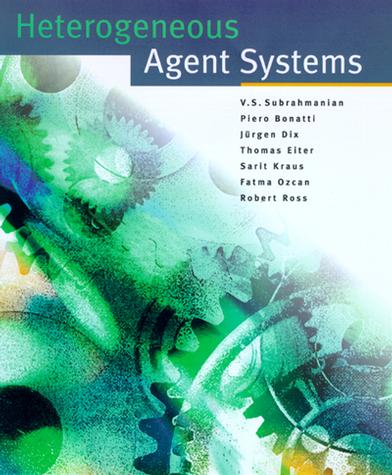
Thomas Eiter is a Full Professor at the Institute of Logic and Computation, Technical University of Vienna (TU Wien), where he serves as Head of Research Unit. He is a Full Member of the Division of Mathematics and Natural Sciences since 2022 and holds leadership roles within the university. His research focuses on knowledge representation and reasoning, computational logic, algorithms and complexity in AI, declarative problem solving, nonmonotonic logic programming and databases, and reasoning about actions and change. His work bridges theoretical foundations with practical applications in artificial intelligence, particularly in logic programming and knowledge-based systems. He has made significant contributions to Answer Set Programming (ASP), developing frameworks like DLV and HEX programs that enable sophisticated reasoning capabilities. His recent publications demonstrate a strong focus on stream reasoning (LARS framework), knowledge forgetting, modular reasoning systems, and the integration of logic programming with ontologies. His research shows consistent contributions to both theoretical foundations and practical implementations of AI systems over several decades. ACM Fellow (2020) Fellow of the European Association for AI (2006) Distinguished Paper Award of the 17th International Joint Conference on Artificial Intelligence (IJCAI, 2001) Prominent Paper Award of the Artificial Intelligence Journal (2013) Test of Time Award (10 years) of the International Conference on Logic Programming (2013) Eiter has led and participated in numerous research projects, both internationally funded (such as LogiCS@TUWien, Humane AI, AI4EU) and nationally funded (including projects like BILAI, TAIGER, and several FWF-funded initiatives). His research unit has received substantial support from European Commission programs (H2020) and Austrian funding agencies (FWF, FFG, WWTF). He is actively involved in the academic community as a member of the Austrian Academy of Sciences (ÖAW), Academia Europaea, and has served on the Executive Council of AAAI. His research unit maintains strong connections with international collaborators and has developed influential systems like the DLV answer set programming system.
Giorgia Lodi is a Researcher at the Semantic Technology Laboratory (STLab) of the Institute of Cognitive Science and Technologies (ISTC) under the National Research Council (CNR) in Italy. She also serves as a consultant at AgID (Agenzia per l'Italia Digitale). Her work integrates Semantic Web technologies, Linked Open Data, and distributed systems to advance smart governance and community development. Research Interests: Semantic Web Technologies Ontology Design Patterns Smart Cities and Communities Linked Open Data Big Data Applications Key Contributions: Recent publications focus on knowledge graphs for water-health domains (2023-2025), semantic modeling in cultural heritage (2017-2024), and ontology design patterns for IoT and public data (2016-2017). Earlier work includes privacy solutions for cloud computing (2012-2013) and failure prediction in distributed systems (2012). Laboratory: Affiliated with STLab at CNR-ISTC, where she contributes to semantic technology research and development.
Valentina Presutti is an Assistant Professor at the University of Bologna and an Associate Researcher at the Institute of Cognitive Science and Technologies (CNR). She coordinates the STLab (Semantic Technology Laboratory) and leads the EU H2020 Polifonia project (2021–2024), following previous roles in projects like MARIO , IKS , and NeOn . She is the co-founder of ontologydesignpatterns.org and the Ontology Patterns (WOP) workshop series. PhD : Computer Science, University of Bologna (2006) Key Collaborations : LIPN (University of Paris 13 and CNRS), CNRS Her research focuses on Semantic Web , Linked Data , Ontology Design , and Social Robotics , with a strong emphasis on Knowledge Engineering , Empirical Semantics , and Collaborative Content Management . Recent publications highlight trends in LOD analysis , Ontology Applications , and Human-Robot Interaction . She serves on the editorial boards of Journal of Web Semantics , Data Intelligence , JASIST , and Intelligenza Artificiale , and co-directs the International Semantic Web Research Summer School . Her work bridges semantic technologies with ICT for eHealth and cognitive computing .
Krzysztof Walczak is a Professor at the Department of Information Technology, University of Economics in Poznan. His work bridges Information and Communication Technology (75%) with Management and Quality Studies (25%). 2020–Present: Professor 2010–2020: Assistant Professor 2001: Doctorate Research focuses on Virtual & Augmented Reality applications in education, industry, and cultural heritage. Key themes include semantic modeling for adaptive XR interfaces, 3D content creation for marketing, and AI integration in immersive environments. Recent work explores: Generative AI ethics in education Industry 4.0 VR training systems Financial data visualization in AR Green digital transition policies As a scientific leader, he has published 70+ works and supervised 110+ research activities. His Hirsch index (approx. 25) reflects significant impact in semantic XR systems and 3D web technologies.
Michela Spagnuolo is a Research Director at the Italian National Research Council’s Institute of Applied Mathematics and Information Technology (CNR-IMATI-GE) since 2001. Her work bridges Computer Graphics , Geometry Processing , and Computational Topology , with applications in 3D Shape Analysis , Cultural Heritage , and Bioinformatics . Co-supervised 6 PhD theses (plus 2 ongoing) Associate Editor for journals like The Visual Computer and Computers&Graphics Chair of conferences including Shape Modeling International and EG Workshops on 3D Object Retrieval Research Interests : Focus on geometric and semantic modeling of 3D objects , computational topology for shape analysis , and structural/similarity evaluation . Her work enables advanced 3D search engines , semantic annotation , and medical imaging applications . Article Trends : Recent publications emphasize mesh quality indicators for Virtual Element Methods in engineering simulations and semantic-driven 3D model analysis for medical diagnostics and cultural heritage . Key subtopics include topological decomposition , data processing services , and multi-scale modeling . Scientific Awards : Fellow of the Eurographics Association (2014) Notable Contributions : Led projects like IQmulus (geospatial data analytics) and MultiScaleHuman (medical shape modeling). Pioneered CIDOC CRMdig for cultural heritage documentation and developed techniques for kernel computation in polyhedra .
Tim Würtele is a Ph.D. researcher at the Institute of Information Security at the University of Stuttgart. His work focuses on formal security analysis of cryptographic protocols, particularly those underpinning critical web standards like OAuth 2.0, OpenID Connect, FAPI, ACME, and Web Payment APIs. He has contributed to identifying and mitigating vulnerabilities in these protocols, collaborating with standardization bodies such as the OpenID Foundation and W3C. University of Stuttgart Würtele's research interests include web security , cryptographic protocol verification , and formal methods for analyzing real-world implementations. His work addresses both theoretical and practical security flaws in protocols used by billions of users globally, spanning high-risk sectors like open banking and healthcare. He has published extensively in top-tier venues such as IEEE S&P, CCS, and ESORICS, often uncovering critical vulnerabilities and proposing formally verified fixes. In 2025, Würtele co-authored a paper introducing audience injection attacks , a novel class of vulnerabilities in Web-based authentication standards. His 2024 publications focused on fixing and verifying the FAPI 2.0 protocol , while 2023 papers addressed GNAP and layered protocol analysis . Earlier works (2021–2022) scrutinized the ACME certificate management standard and W3C Web Payment APIs , revealing over-charge vulnerabilities and formalizing security guarantees.
Ruben Verborgh is a Professor of Decentralized Web Technology at IDLab of Ghent University – imec and a Visiting Fellow at the Oxford Martin School within the University of Oxford . As a hybrid academic and industry expert, he serves as a Solid Ecosystem Architect for Inrupt and advises other companies on decentralized data architectures. His research focuses on enabling a post-Big Data era through decentralized knowledge graphs, where individuals control their data storage and sharing. He investigates technologies that balance societal trust with economic incentives , aiming to dismantle data harvesting business models. Key areas include Linked Data , Web APIs , and trust envelopes for responsible data reuse. Recent publications emphasize automated policy negotiation , ODRL policy interoperability , and query optimization in Solid environments. His work spans decentralized healthcare data, semantic transport systems, and rule-based agents for personal data stores, reflecting a cross-disciplinary approach to digital trust and data sovereignty . As a co-designer of the Solid ecosystem , Verborgh contributes to projects like Components.js for dependency injection and Comunica for federated SPARQL query engines. His collaborations with institutions such as Oxford and industry partners highlight his role in bridging academic innovation with real-world implementation .
Louise Parkin serves as a Lecturer in the Department of Networks and Telecommunications at the University Institute of Technology of Blois (IUT Blois), University of Tours, with additional affiliations at the Polytechnic School of the University of Tours (EPU) and the Fundamental and Applied Computer Science Laboratory of Tours (LIFAT). Her academic profile centers on advancing cooperative methods for knowledge base interrogation and semantic data management. Her research specializes in Semantic Web technologies, focusing on resolving critical challenges in RDF and SPARQL query processing including plethoric answer sets, unexpected results, and scalability limitations. She develops cooperative frameworks that enhance user interaction with knowledge bases like Wikidata through query explanation mechanisms, adaptive result filtering, and on-demand analysis architectures. Her work bridges theoretical database concepts with practical knowledge engineering applications. Within LIFAT laboratory, Parkin contributes to cutting-edge research in semantic data management systems. Her recent projects include Rankingdom's cooperative architecture for Wikidata analysis and scalable techniques for knowledge base exploitation, demonstrating sustained innovation in query processing methodologies from 2020 through 2025 publications.