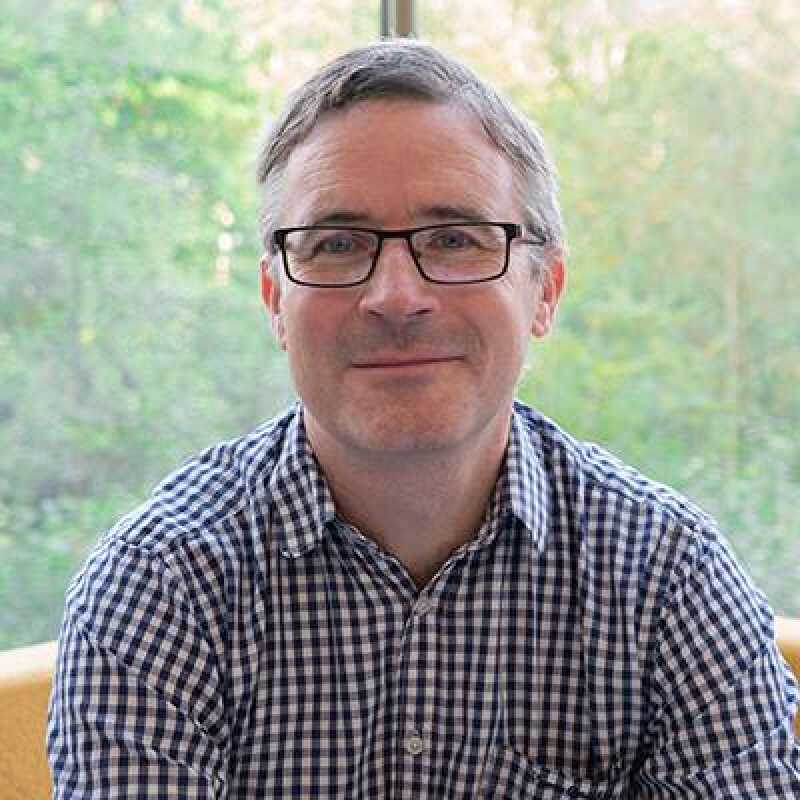
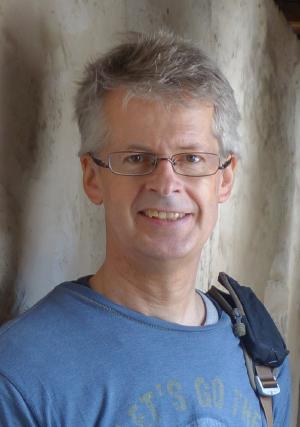
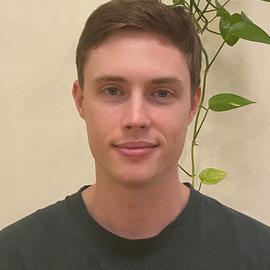
Guido Zuccon is a Professor at Queensland University of Technology (QUT), specializing in Information Retrieval and Medical Informatics. He is affiliated with QUT's ielab, contributing to research in health information systems, semantic web technologies, and quantum models for IR. His work emphasizes evaluation methodologies in medical search, clinical decision support, and healthcare informatics. Education: PhD in Information Retrieval (University of Glasgow, 2012). Research focuses on medical information extraction, ontology mapping, and user-centered IR systems. He has co-authored over 130 publications, including landmark studies on consumer health search, clinical query framing, and de-identification of health records. Key contributions include advancements in task-oriented search, diversity in rankings, and evaluation frameworks for health IR. His work bridges theoretical models (e.g., quantum probability ranking) with practical applications in healthcare and biomedical systems.
Prateek Jain is a Lecturer at the School of Information, San José State University, where he teaches courses in Big Data Analytics and Python programming. He holds a Ph.D. in Computer Science and Engineering from Wright State University and has over a decade of industrial experience in data science and artificial intelligence at leading institutions such as IBM T.J. Watson Research Center, Nuance Research Labs, and Liveperson. His research interests include Knowledge Graphs, Natural Language Processing, Machine Learning, and Big Data, with over 30 peer-reviewed publications and patents in these areas. His academic and professional background bridges advanced research and practical deployment of AI-driven systems. Ph.D. (Computer Science and Engineering), Wright State University (2007–2012) Ph.D. (Computer Science), University of Georgia (2006–2007, transferred) BS (Information and Communication Technology), Dhirubhai Ambani Institute of ICT (2002–2006) Prateek's research publications focus on the development and application of Knowledge Graphs, particularly in areas like NLP, enterprise search, healthcare, and financial services. His work emphasizes scalable, explainable, and practical AI solutions, with recurring themes in graph embeddings, semantic reasoning, and large-scale data integration. He has served as an Adjunct Instructor at Chabot College and Northwestern Polytechnic University, and currently contributes to academic instruction at SJSU while maintaining an active role in industry as Principal Data Scientist at Liveperson. His industrial roles have spanned: Principal Data Scientist, Knowledge Graphs – Liveperson Inc. (2021–Present) Engineering Manager, Machine Learning – AppZen Inc. (2018–2021) Principal Research Engineer – Nuance Inc. (2016–2018) VP/Data Scientist – BlackRock Inc. (2015–2016) Data Scientist – Ignition One (2015) Research Staff Member – IBM T.J. Watson Research Center (2012–2015) There are no listed scientific awards or advisees in the provided information.
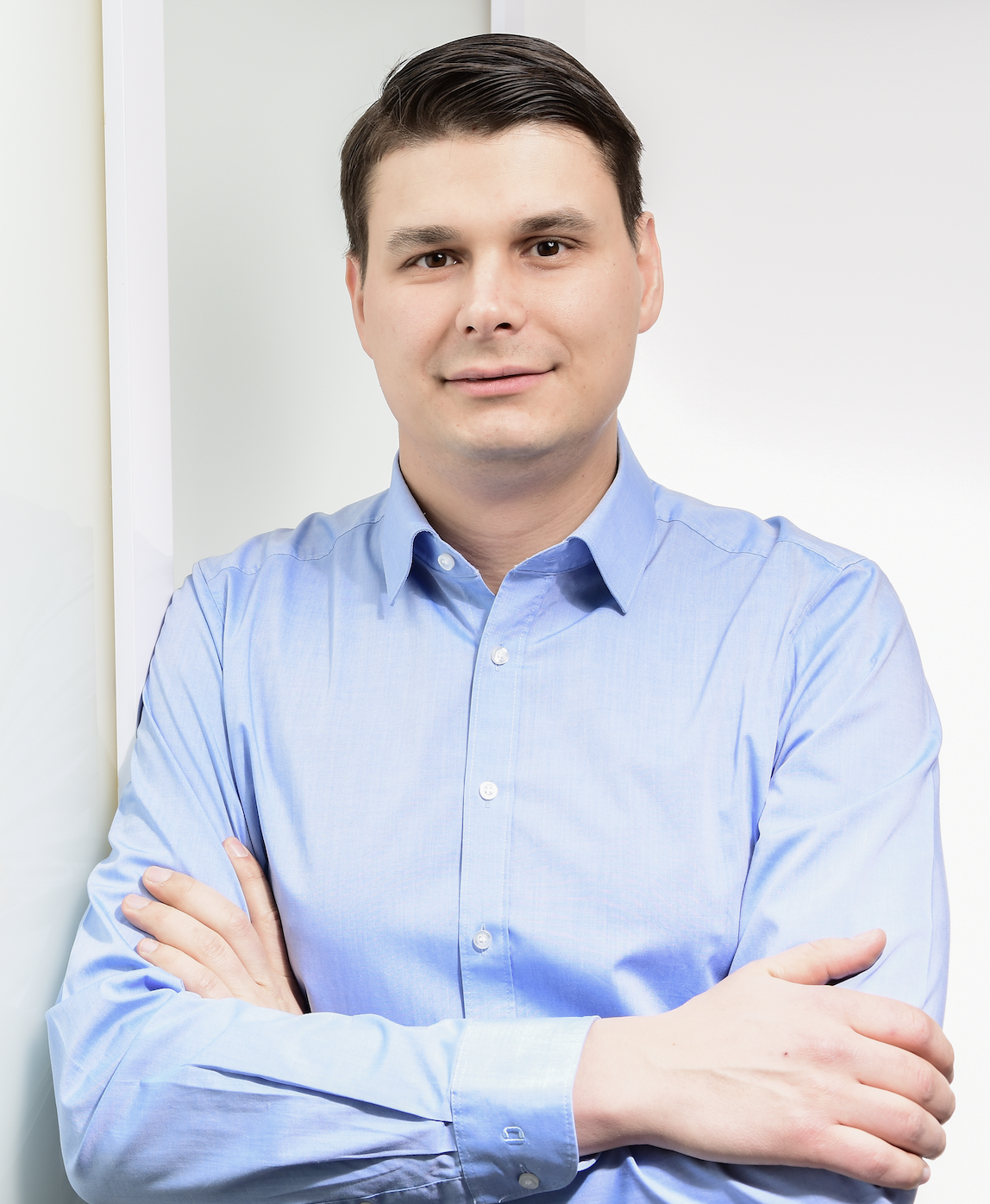
Alexander Bondarenko is an Assistant Professor in the Department of Computer Science at Martin-Luther-Universität Halle-Wittenberg, Germany, specializing in information retrieval, argument mining, and comparative question answering. His research focuses on developing systems that can retrieve argumentative content and answer comparative questions, with particular applications in health misinformation detection and biomedical question answering. His primary research interests include Argument retrieval and mining Comparative question understanding and answering Health misinformation detection Neural ranking models Causal question answering Biomedical information retrieval His work bridges theoretical information retrieval with practical applications in domains where accurate information is critical, such as healthcare. His recent publications (2023-2025) demonstrate a clear trajectory from foundational work on comparative questions to more specialized applications in biomedical domains. The Touché evaluation lab series represents his most significant contribution to the field, providing standardized benchmarks for argument retrieval research. His 2024-2025 work shows increasing focus on large language model applications and robustness against misinformation in specialized domains. Bondarenko has received recognition through numerous publications at top-tier venues including SIGIR, WSDM, ECIR, and AAAI. While specific awards aren't documented in the provided data, his consistent publication record at major conferences indicates recognition within the information retrieval community. As a relatively early-career researcher (completing his PhD in 2023), Bondarenko has established himself as a key contributor to argument retrieval research through the Touché lab series and related publications. His work often involves interdisciplinary collaboration, particularly with researchers from biomedical informatics domains. His laboratory work centers around the development and evaluation of argument retrieval systems, with significant contributions to dataset creation (Touché series) and evaluation methodologies for argumentative content. His recent work with biomedical applications suggests expanding research into domain-specific information retrieval challenges.
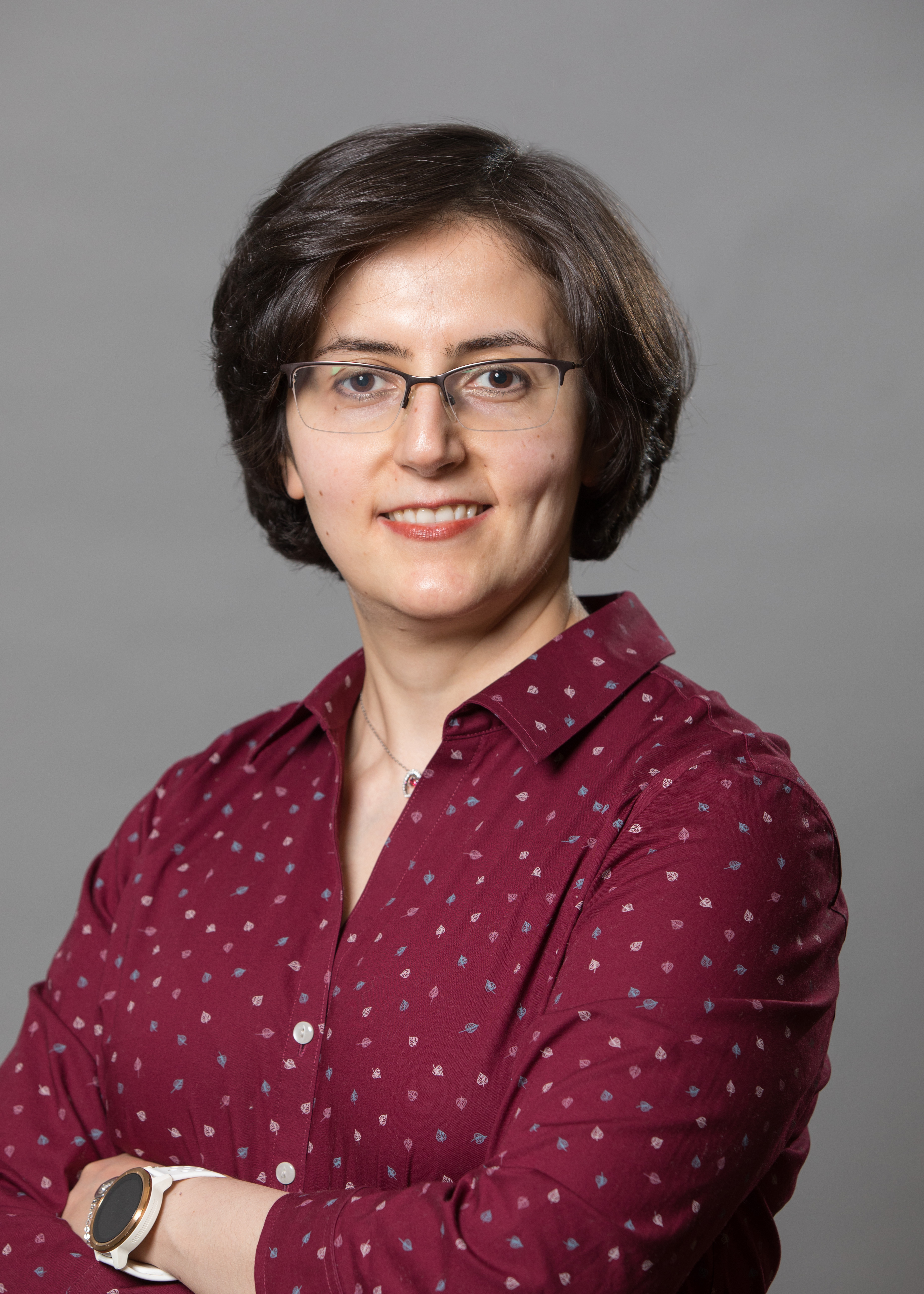
Maryam Elahi is an Associate Professor in the Department of Mathematics & Computing at Mount Royal University (MRU), part of the Faculty of Science and Technology. She holds a PhD in Computer Science from the University of Calgary (2017), an MSc in Software Engineering of Distributed Systems from KTH Royal Institute of Technology (2009), and a BSc in Computer Engineering from Azad University of Mashhad (2005). Her research focuses on networked and distributed systems, emphasizing performance analysis, dynamic bandwidth allocation, and speed-scaling systems. She has secured grants including the Petro-Canada Young Innovators Award (2022) and the Provost’s Teaching and Learning Enhancement Grant (2023). Education: PhD in Computer Science, University of Calgary (2017) MSc in Software Engineering of Distributed Systems, KTH (2009) BSc in Computer Engineering, Azad University of Mashhad (2005) Her research interests span network performance modeling, real-time systems optimization, and energy-efficient computing. She actively contributes to academic committees for major conferences and has participated in leadership programs like WISE Planet Change Leadership (2021/22). Maryam is passionate about mentoring students, particularly through Mitacs Globalink Internships, fostering their growth in academic and professional careers. Her articles explore topics such as frequency scaling in multilevel queues, fair dynamic bandwidth allocation, and turbocharged speed-scaling mechanisms. These contributions reflect her expertise in optimizing resource allocation in distributed environments while balancing fairness and efficiency.
Georgios J. Fakas is an Associate Professor (Docent) in the Department of Information Technology at Uppsala University, Sweden, where he leads the Uppsala DataBase Laboratory (UDBL). He has held academic positions at prestigious institutions including the Hong Kong University of Science and Technology, EPFL, UMIST, University of Cyprus, and Manchester Metropolitan University, where he served as a Senior Lecturer. Education: Ph.D. in Computation, UMIST, Manchester, UK (1998) M.Phil. in Computation, UMIST, Manchester, UK (1996) B.Sc. in Computation, UMIST, Manchester, UK (1995) His research spans big data, keyword search on structured and graph data, spatial databases, web and geo-social search, workflow management, and data summarization . He also explores applications in educational technologies, distance learning, and health informatics. His work emphasizes efficient, user-centric data access and intelligent querying paradigms. The 15 most recent publications highlight a sustained focus on keyword search, object summarization, spatial and semantic data, and ranking , published in top venues like SIGMOD, VLDBJ, IEEE TKDE, and PVLDB. His work integrates algorithmic innovation with practical database applications. Scientific Awards: International Sabbaticals grant from Teknat (2023), hosted by Boston University Fellowship 'Hosting of Experienced Researchers from Abroad' from RPF, Cyprus (2009) ERCIM Fellowship (2001), hosted by EPFL, Switzerland He is actively involved in PhD supervision and grant leadership. He currently serves as Principal Investigator for an eSSENCE-funded project on Data-intensive analytics for discovering critical minerals using Machine Learning , in collaboration with industry partners. He has supervised multiple PhD students to completion, including Georgios Kalamatianos, Khalid Mahmood, Zhi Cai, and Ben Cawley. He is a frequent reviewer for leading journals and serves on program committees of major conferences such as ACM SIGMOD and PVLDB. He leads the Uppsala DataBase Laboratory (UDBL) , a research group focused on advanced data management systems, where he mentors students and drives innovation in database technologies.
Ying Zhang, PhD, is an Assistant Professor in the Department of Pathology at the University of California, Irvine (UCI) School of Medicine. Her research focuses on digital libraries, usability evaluation, metadata frameworks, and information systems. She has contributed to studies on digital humanities integration, search algorithm optimization, and user interaction design in digital environments. Her work frequently addresses challenges in library systems, search functionality, and metadata standards for moving image collections. Key areas of interest include improving digital library interfaces, analyzing user behavior in web searches, and developing holistic evaluation models for digital infrastructure. Her research spans topics like neural network applications for clickthrough prediction and the impact of field weights on search performance. She has also explored cultural aspects of librarianship, such as technologies in Chinese librarianship and cross-cultural digital resource management. Dr. Zhang's publications reflect a focus on bridging technical systems with user-centric needs, emphasizing both theoretical models and practical applications in digital information management. She has consistently engaged with issues of usability, metadata efficacy, and the evolving role of libraries in the digital age.
Evgeny Kharlamov is an Associate Professor at the University of Oslo and Senior Research Expert at Bosch AI. His research focuses on Neuro-Symbolic AI, Knowledge Representation (knowledge graphs, rules, ontologies), data integration, and applications in manufacturing, energy, and corporate intelligence. He has published over 190 papers in venues like IJCAI, AAAI, WWW, and holds an h-index of 41 with ~6K citations. Key awards include ranking 7th in the AI 2000 Knowledge Engineering list (2024) and top 111 German AI researchers (2023). **Education & Previous Roles**: Previously held positions at the Universities of Oxford and Bozen-Bolzano, INRIA Saclay, and Telecom Paris. His expertise spans individual research to managing teams at Bosch AI and coordinating a research center at the University of Oslo. He raised ~6.7M EUR in EU/UK research funding and led multiple large-scale EU projects. **Research Interests**: Combines theoretical advances in AI with industrial applications, emphasizing explainable and scalable solutions. Key areas include knowledge graphs, semantic web technologies, and LLM-centered systems like RAG. **Awards**: Notable recognitions include the 2020 Best Research Paper Award at ESWC, multiple ISWC awards (2015–2017), and IBM’s Best Master’s Thesis Award (2008). His PhD thesis was honored by AI*IA (2012). **Grants & Projects**: Co-secured ~6.7M EUR in funding. Led projects in semantic data integration (e.g., Siemens streaming data), digital twins, and predictive quality monitoring in manufacturing. **Teaching**: Taught courses on Digital Ecosystems (2024), Semantic Web (2023), Knowledge Graphs (2023), and Foundations of Databases (2007). **Labs/Teams**: Active in Bosch AI’s research initiatives and the University of Oslo’s data science teams, focusing on industrial AI applications.
Dennis McLeod is a Professor at the University of Southern California , specializing in Database Systems , Ontology Engineering , and Semantic Heterogeneity resolution. His work bridges Federated Database Systems and Web Engineering , focusing on component-based architectures, adaptive ontologies, and geospatial data processing. Key Research Areas : Semantic heterogeneity, ontology-driven data mining, mobile web information management, and distributed systems. Collaborations : Extensive partnerships with researchers like Qing Li , Cyrus Shahabi , and Stefania Leone across institutions. Publications (2014-1995) span topics from component-based web engineering to distributed earthquake science , with recent work on geostreaming, social network tag-geotag analysis, and spam filtering using ontologies. His contributions include frameworks for multi-resolution document transmission , object-oriented database sharing , and adaptive query optimization in federated systems. Scientific Impact : Co-chairs and tutorials at major conferences (VLDB, CoopIS, ICDE). Co-edited proceedings for ICWL 2008 and contributed to Expert Database Systems (1989-1991). Pioneered INTERBASE for controlled sharing in federated databases (1990).
Des Laffey is a Senior Lecturer in E-Commerce at the Kent Business School, University of Kent, with over 25 years of teaching experience across multiple universities and countries. He specializes in digital marketing, online gambling, search engines, and new venture creation. He pioneered the MA in E-Commerce program at Kent and serves as Programme Director for the MSc Marketing. His research focuses on electronic markets, crowdfunding, and digital innovation, with notable recognition including being ranked 9th globally in Information Systems Research (2007-2009). Dr. Laffey’s research has been widely adopted in academic curricula, such as his paper on paid search being required reading in U.S. business schools. He has secured research funding for projects like 'The Start-Up Bank Relationship' and 'Digital Health Campaigns.' He actively contributes to academic communities through editorial roles, conference presentations, and invited seminars at institutions like Oxford and Manchester universities. His teaching excellence was acknowledged with a University of Kent Faculty Teaching Prize (2011) for integrating Twitter into marketing courses. He has supervised four PhD students exploring topics like social enterprise dynamics and B2B service quality. Professionally, Laffey has provided corporate training and consultancy in sectors like finance and telecommunications. He has served as an external examiner at multiple universities, including Surrey and Nottingham Trent. His work bridges academic research and practical applications, emphasizing digital transformation and innovation in business ecosystems.
Marco Braga is a researcher focused on information retrieval, large language models, and parameter-efficient fine-tuning techniques. His work spans personalized community question answering systems, synthetic data generation, and adapter-based model optimization. Recent research interests include: Zero-shot learning and task arithmetic for LLMs Context-aware personalization in retrieval systems Hybrid neural-symbolic approaches for structured reasoning Telecommunications domain modeling Key article trends show expertise in: Adapter modules and low-rank parameter optimization Community question answering personalization Synthetic dataset creation for training LLMs Model efficiency in resource-constrained settings Collaborations include Gabriella Pasi, Pranav Kasela, and Alessandro Raganato. His work appears in SIGIR, COLING, WI-IAT, and IIR conferences, with notable Zenodo dataset contributions.
Fernando Diaz is an Associate Professor at the Language Technologies Institute of Carnegie Mellon University and a Research Scientist at Google Research . His work bridges information access systems, machine learning, and societal implications of AI. Research Focus: Design and evaluation of information retrieval systems (e.g., web search, recommender systems), with emphasis on fairness, preference-based evaluation, and retrieval-enhanced machine learning. Key Contributions: Development of evaluation metrics, algorithms for time-sensitive ranking, cursor behavior analysis for intent inference, and frameworks for responsible AI in multi-stakeholder environments. Interdisciplinary Themes: AI's impact on cultural industries, crisis informatics, pseudo-relevance feedback, and query performance prediction. Contact: diazf@acm.org
Prof. Dr. Martin Middendorf is a faculty member at the Department of Computer Science , Faculty of Mathematics and Computer Science , Leipzig University , Germany. He leads the Swarm Intelligence and Complex Systems Group and focuses on interdisciplinary research at the intersection of computational methods and biological systems. Fields of Interest Swarm Intelligence Bioinformatics Genome Rearrangement Analysis Combinatorial Optimization Evolutionary Algorithms Task Allocation in Multi-Agent Systems His recent research emphasizes mitochondrial genome annotation , predator-prey dynamics in swarm systems , and metaheuristic algorithms for dynamic optimization . Key trends include de-Bruijn graph applications , pheromone-dependent movement modeling , and automated behavior tracking in social insects . Supervised Students Dr. Nicolas Wieseke Dr. Hoang Thanh Le Dr. Fatma Turna Tobias Jagla Carsten Seemann Prof. Middendorf's group develops tools like DeGeCI 1.1 for mitochondrial gene annotation and explores swarm-controlled emergence in ant clustering systems. They apply swarm intelligence principles to solve real-world problems in vehicle routing , sewer network design , and biomedical signal processing .
Martin Szummer is a Researcher at the University of Cambridge, UK, and part of the Spoken Dialogue Systems group. Previously, he worked at Microsoft Research in Cambridge (Machine Learning and Perception Group). He holds a Ph.D. in Machine Learning from MIT (2002) and an M.S. from the MIT Media Lab. Research Focus: Szummer’s work spans probabilistic models, deep learning, reinforcement learning, and natural language processing. He explores methods to improve interactions with users through dialogue systems and develops techniques to manage complex data via Bayesian inference, semi-supervised learning, and structured prediction. His contributions include probabilistic programming frameworks, big data processing on cloud clusters, and applications in text mining, image recognition, and computational advertising. Notable Achievements: Recipient of the SIGDIAL 2013 Best Paper Award for dialogue system adaptation research. Developed the Temporal Texture database, foundational for video analysis and synthesis. Collaborations & Mentoring: Advised prominent students like Percy Liang (Stanford) and Volodymyr Mnih (DeepMind). His work at Microsoft Research led to innovations in POMDP-based dialogue systems and semi-supervised learning. Technical Contributions: Publications on dialogue systems, probabilistic modeling, and web-scale data mining. Authored datasets like the Temporal Texture collection, widely used in computer vision research.
Sam Lindley is a Reader (equivalent to Associate Professor) in Programming Language Design and Implementation at the Laboratory for Foundations of Computer Science within the School of Informatics at the University of Edinburgh. He maintains an active research profile in programming language theory and implementation, with a particular focus on effect handlers and type systems. His research interests span multiple dimensions of programming language design, with significant contributions in effect handlers, type systems (particularly modal and linear types), WebAssembly integration, and session types. Lindley's work bridges theoretical foundations with practical implementations, as evidenced by his publications on effect handlers for C and WebAssembly standardization. His research consistently explores how advanced type systems can enable safer and more efficient programming paradigms. The trends in his recent publications (2023-2025) demonstrate a deepening focus on modal effect systems, with increasing connections to memory management (particularly through Rust-inspired approaches), formal language specification, and practical applications in WebAssembly. His work shows a clear progression from theoretical foundations of effect handlers toward concrete implementations and standardization efforts. UKRI Future Leaders Fellowship in Effect Handler Oriented Programming Lindley has been actively involved in the programming language community through service on numerous program committees, including serving as Program Chair for ICFP 2023 and as an Area Chair for PLDI 2025. His mentoring activities include participation in the Programming Languages Mentoring Workshop (PLMW) where he has presented on research, graduate school, and community building. His grant activity is highlighted by the prestigious UKRI Future Leaders Fellowship, which supports his work on effect handler oriented programming. As a member of the Laboratory for Foundations of Computer Science at the University of Edinburgh, Lindley contributes to one of the world's leading research groups in theoretical computer science and programming languages. His work often involves collaboration with researchers across institutions, particularly evident in his WebAssembly-related publications which include multiple international collaborators.
Harry Scells is an Assistant Professor at the University of Tübingen specializing in information retrieval. His research spans retrieval models, query processing, evaluation methodologies, and applications to health and medicine. Previously, he was an Alexander von Humboldt research fellow at Leipzig University and a postdoctoral research fellow at The University of Queensland where he completed his PhD. Dr. Scells holds a PhD from The University of Queensland (2021), a Bachelor of Information Technology (Hons) from Queensland University of Technology (2016), and a Bachelor of Information Technology from the same institution (2015). His research interests focus on advancing information retrieval systems with particular emphasis on retrieval models , query processing , evaluation methodologies , and applications to health and medicine . Dr. Scells has made significant contributions to the field of systematic review automation , large language models for information retrieval , and green information retrieval . His work bridges theoretical advancements with practical applications, particularly in medical and health-related domains where efficient and accurate information retrieval is critical. Analysis of his recent publications reveals a strong focus on improving retrieval effectiveness through innovative architectures (like Set-Encoder and Rank-DistiLLM), addressing evaluation challenges in modern retrieval systems, and developing practical tools for systematic review automation. His work increasingly explores the intersection of traditional information retrieval with large language models, examining both opportunities and limitations in this evolving space. Best Short Paper award at ECIR 2025 for 'Rank-DistiLLM' Best Paper Honorable Mention at ECIR 2025 for 'Set-Encoder' Best Paper Honourable Mention at SIGIR 2025 for 'The Viability of Crowdsourcing for RAG Evaluation' Dr. Scells is actively involved in the information retrieval community, serving as a program committee member for major conferences including SIGIR (2021-2024), ECIR (2022-2024), and CIKM (2020-2021). He has also been an invited reviewer for journals such as Transactions on Information Systems and Information Retrieval Journal. His leadership in the MANILA workshop series demonstrates his commitment to addressing information retrieval challenges related to climate change impacts. He maintains strong collaborative ties with the Webis research group and contributes to advancing information retrieval methodologies and tools across European institutions.