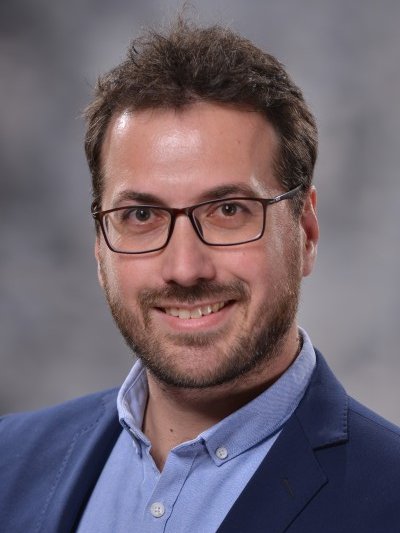
Marika Apostolova Trpkovska is an Associate Professor at the Faculty of Contemporary Sciences and Technologies, South East European University (Tetovo, Macedonia). Her academic work spans cybersecurity, blockchain technology, and educational technology with a focus on Industrial IoT security, semantic web applications, and digital learning systems. PhD in Computer Science (Specialty: e-Medical Services based on Semantic Web) MSc in Software Development and Applications BSc in Computer Sciences Her research covers cybersecurity frameworks for Industrial IoT, blockchain applications in public administration, and educational technology innovations including VR/AR integration and gamification. She has published extensively in international conferences and journals on these topics, with recent works focusing on machine learning-enhanced security protocols and decentralized real estate management systems. Current publications (2023-2024) highlight her expertise in IIoT security standards, smart contract development using Ethereum/IPFS, and cybersecurity threat modeling. Earlier works examine e-learning systems implementation, gender disparities in CS research, and real-time operating system validation. She serves as part-time academic staff member while maintaining technical roles in learning management system administration (LIBRI, ANGEL) and teaching responsibilities across software engineering, algorithms, and programming disciplines.
Ivan Chorbev, Ph.D. is an Assistant Professor at the Institute for Computer Science and Engineering , Faculty of Electrical Engineering and Information Technologies (FEIT), Ss. Cyril and Methodius University in Skopje, North Macedonia. Since 2009 he has taught courses ranging from Structured Programming to Computer Animation and consulted on numerous EU and national ICT projects. Education B.Sc., Faculty of Electrical Engineering, Skopje, 2004 M.Sc., Faculty of Electrical Engineering, Skopje, 2006 Ph.D., Faculty of Electrical Engineering and Information Technologies, Skopje, 2009 Research Interests His work integrates combinatorial optimization and machine learning to solve complex real-world problems. Core themes include designing heuristic algorithms and constraint programming models for scheduling, resource allocation and telemedicine systems, developing medical expert systems that leverage knowledge extraction and predictive modeling, and creating web-based platforms for e-health, smart living and educational services. Publication Trends Over 70 peer-reviewed works (2005-2014) reveal a clear trajectory from foundational optimization and constraint-solving research toward interdisciplinary applications in telemedicine , social media analytics , and assistive technologies . A notable 2011-2014 surge focuses on cloud-supported e-health systems, 3-D printing for assistive devices, and mining social media for epidemiological insights. Scientific Awards Golden engineering ring – awarded by the Organization of Engineers of Macedonia for best student of his generation. Projects & Funding Risk Assessment for Customs in Western Balkans – FP6 COST IC0602 Algorithmic Decision Theory – management committee member (FP6) COST IC1002 MUMIA – management committee member (FP7) E-HFISN – e-Health applications using folksonomy & social networks (FP7) TEMPUS – Innovation and Knowledge Management toward eStudent Information System Laboratory & Team He conducts research within the Institute for Computer Science and Engineering laboratories, supervising graduate projects in optimization, medical informatics and smart environments.
Suzana Loshkovska, PhD , is a Full Professor at the Faculty of Computer Science and Engineering of Ss. Cyril and Methodius University in Skopje , Macedonia. Since 1992 she has held continuous academic appointments, interrupted only by a visiting-researcher stay at the Academy of Sciences of Lower Austria (1993–1994) where she designed a medical information system for Krems Hospital. Education : BSc (1989) and MSc (1992) in Computer Science and Automation, Faculty of Electrical Engineering, Skopje PhD (1995) in Technical Sciences, Technical University of Wien, Austria Research Interests span programming, visualization, human–computer interaction, virtual reality, medical imaging, and modelling/visualization of medical processes. Her work integrates advanced algorithmic techniques—such as hierarchical multi-label classification, support-vector machines, predictive clustering trees, and Bayesian networks—into practical medical and multimedia applications. Across more than one hundred peer-reviewed publications, her recent articles concentrate on content-based medical image retrieval , annotation of medical images , visual concept detection , and interactive medical systems . These contributions collectively advance computer-aided diagnosis, clinical decision support, and efficient management of large-scale medical data sets. Scientific Awards & Recognition : Member, Editorial Board, INFORMATICA (international journal, Slovenia) Projects & Funding : Principal investigator or participant in bilateral and EU-funded projects including SEE-ERA.NET Plus, TEMPUS DL@WEB, TEMPUS M.Sc. E-Learning, and multiple Macedonian Ministry of Science grants covering medical imaging, environmental modelling, distance learning, and electromagnetic-effects visualisation. While no specific research group or laboratory name is provided, her sustained involvement in national and international projects indicates active leadership within the university’s medical-informatics and multimedia-research community.
Xhemal Zenuni is a Full Professor and current Dean at the Faculty of Contemporary Sciences and Technologies, South East European University (Tetovo, North Macedonia). His academic career spans multiple roles from IT Administration Assistant (2003-2004) to progressively senior positions including Young Assistant (2004-2006), Assistant (2006-2008), Assistant Professor (2013-2018), Associate Professor (2018-2023), and now Full Professor since 2023. Education: PhD in Computer Sciences (2006-2012, Technical University of Sofia), specialization in Computer Systems, Complexes and Networks Master of Sciences in Informatics (2004-2005, New Bulgarian University), specialization in Internet Software Technologies Bachelor of Sciences in Computer Sciences (2001-2003, SEEU) With expertise in Machine Learning , IoT , Cloud Computing , and Database Systems , his research focuses on applying AI/ML techniques across multiple domains. Recent work includes predictive modeling in education, hate speech detection for Albanian social media, smart agriculture systems, and microservices architecture migration. His publications demonstrate consistent engagement with modern computational challenges, particularly around low-resource language processing , smart city infrastructure , and educational technology . While serving as Dean and Vice-Dean, he has maintained active research output through collaborations with colleagues like Mentor Hamiti, Jaumin Ajdari, and Florije Ismaili.
Leyla Abazi-Bexheti is a Full Professor of Computer Sciences at the Faculty of Modern Sciences and Technologies, South East European University (SEEU) in Tetovo, Macedonia. She holds a Doctorate in Computer Science (2009) from SEEU, a Master's in Electrical Engineering (2006) from Ss. Cyril and Methodius University, and a Computer Science Engineering degree (2000) from the same institution. Her research focuses on e-learning systems, cybersecurity, open data governance, VR/AR integration in education, and gender disparities in computing. She has held leadership roles including Director of the PhD School (2019–present), Pro Rector for Academic Issues (2016–2018), Dean of Faculty (2014–2015), and Director of the eLearning Center (2010–2014). Her work spans 20+ peer-reviewed publications since 2016, emphasizing machine learning applications in safety analytics, VR/AR pedagogy, and policy-driven open data initiatives. She has co-authored studies on road accident prediction using web data and cyber efficacy in public platforms. Her research often intersects technology adoption challenges in Balkan educational systems. Abazi-Bexheti has led institutional reforms in academic governance, curriculum development, and digital transformation initiatives. She contributes to international conferences (MECO, MIPRO, ENTRENOVA) and collaborates with institutions across Europe on ICT education frameworks and gender equity in STEM fields.
Daniela Sandeva is a Lecturer at American Horizons School Skopje, teaching Computer Science, Information Technology, Programming Languages, and IB DP Digital Society. With over two decades of experience as a VET (Vocational Education and Training) teacher, she has held roles ranging from software development to educational reform coordination and curriculum assessment. Her work extends into mentorship, where her students have garnered significant awards in IT and 3D printing fields. Bachelor of Electrical Engineering, BA in Computer Science and Automatics Daniela's research interests focus on programming, programming languages, and software tools for 3D modeling and web design. She also contributes to vocational education frameworks in Macedonia through her involvement in national qualification standards and curricula development. A dedicated educator, she combines her teaching with hands-on mentorship of student projects. Her notable recognitions include: Mentor of students who won state prizes in IT competitions Mentor of students who won a European award for the best project in 3D printing applications in education Daniela is further engaged in educational reform and curriculum assessment, having served as a school coordinator, local expert, and team leader in Phare VET 2 project. Her diverse skills also extend to crafts, reading, and baking, which she pursues in her spare time.
Sashko Ristov is a Macedonian computer-science educator and researcher currently serving as a teaching and research assistant at the Institute of Informatics, Faculty of Computer Science and Engineering (FINKI), Ss. Cyril and Methodius University in Skopje. Born on 20 November 1976 in Kavadarci, he has been affiliated with UKIM since 2008, after nearly a decade of industry experience at Macedonian Telecom. Education: Primary and secondary education: Kavadarci, Republic of Macedonia – consistently top pupil with >100 diplomas and national olympiad medals in mathematics, informatics and physics. B.Sc. in Computer Engineering, Automation and Informatics, Faculty of Electrical Engineering, UKIM, 2000 (average grade 9.29/10, best-student award every year). M.Sc. in “Analysis of Web Service Security and its Impact on Web Server Performance”, Faculty of Electrical Engineering and Information Technologies, UKIM, defended 11 May 2011. Ph.D. in progress: “Performance and Security in Cloud Computing”, started 2011. Research interests lie at the intersection of cloud computing, network security and performance evaluation. He investigates secure and efficient architectures for cloud services, the impact of cryptographic mechanisms on web-server throughput, PKI and certificate-authority systems, and practical aspects of computer-network design and microprocessor systems. Scientific awards and distinctions: Recipient of over 100 diplomas and medals in city, regional and national competitions in mathematics, informatics and physics. Participant, 37th International Mathematical Olympiad 1995. Best-student award every study year, 1995–2000. Macedonian Telecom “Employee of the Year” 2002. Teaching and professional experience: 2000–2008: Macedonian Telecom – Project Manager for Software Applications, IT Security Senior Specialist, First Security Officer for MTnet CA PKI System. 2008–2011: Institute of Informatics, Faculty of Natural Sciences and Mathematics, UKIM – Teaching and Research Assistant; courses taught include Computer Architecture, Microprocessors & Microcontrollers, Computer Networks, Internet Programming, Software Quality & Testing, and Teamwork. CISCO Certified Network Associate (CCNA) instructor, Regional CISCO Academy.
Mile Jovanov is a Professor at the Faculty of Computer Science and Engineering (FCSE), Ss. Cyril and Methodius University in Skopje, Macedonia, and Head of the Institute of Intelligent Systems. He has taught over twenty subjects across undergraduate, master's, and doctoral programs and authored around fifteen books/tutorials. Doctoral Mentoring: Mentor to two PhD students and numerous graduate theses advisors Leadership: Led international student teams to 80+ medals in informatics competitions (IOI, BOI) His research spans computer science education , competitive programming , semantic web , and intelligent systems , with over 70 publications. He contributes to curriculum development and government strategies in IT education. He chairs international conferences, edits journals, and collaborates on international projects. His career includes roles from demonstrator (2002) to Professor (2023), with leadership in academic administration and Olympiad organization.
Dr. Ivan Dionysiev is Assistant Professor of Accounting at the Faculty of Economics, University of Ss. Cyril and Methodius in Skopje , within the Department of Accounting and Auditing. He joined the faculty in December 2019 as associate assistant and was promoted to assistant professor in April 2025. In parallel, he has served since 2013 as a senior professional at the State Audit Office of the Republic of North Macedonia, contributing to major capacity-building projects with Norwegian and EU partners. Education PhD in Economic Sciences, Faculty of Economics – Skopje, 2024 (thesis: The Supreme Audit Institution in the Republic of North Macedonia – Evolution, Challenges and Perspectives ) MSc in Accounting & Auditing, Faculty of Economics – Skopje, 2017 (thesis: Public Internal Financial Control in the Republic of Macedonia ) BSc in Accounting & Auditing, Faculty of Economics – Skopje, 2013 (average grade 9.4/10) Secondary education: Orce Nikolov Gymnasium bilingual French section; French Matura diploma Research Interests Dr. Dionysiev’s research spans public-sector auditing, supreme audit institutions, sustainability reporting, corporate social responsibility disclosure, internal auditing education, and the impact of digital transformation and crises (e.g., COVID-19) on audit practice . He adopts interdisciplinary approaches—combining accounting, governance, data analytics, and policy perspectives—to address contemporary challenges in both public and private sectors. Publication Trends His recent publications (2020-2025) reveal three dominant themes: (1) supreme audit institutions & public-sector accountability , (2) sustainability assurance and non-financial reporting , and (3) audit-education innovation and digital adaptation . Studies frequently employ case analyses focused on North Macedonia while engaging with broader European and global debates. Scientific & Professional Awards / Recognitions Young Researcher Programme 2022-2024, jointly organised by IAAER (USA) & ACCA (UK) Visiting researcher, Faculty of Economics, University of Zagreb, 2022 One-month mobility, Chonnam National University, South Korea, 2024 Invited moderator & speaker, EUROSAI Youth Conferences, Jerusalem & Tallinn Grants, Projects & Consultancies EPSAM – Efficient Public Sector Asset Management (Slovenian MFA/CEF) PACT – Public Accountants Certification Program (Slovenian MFA/CEF) Individual Consultant, Chartered Institute of Public Finance and Accountancy (CIPFA), UK, 2021 State Audit Office twinning project: Further strengthening of capacities and efficiency for external audit (EU IPA) Norwegian technical-assistance project: Implementation of the Audit Management System (AMS) MAK-12/015 Laboratory & Team Affiliations Dr. Dionysiev conducts research within the Accounting & Auditing Research Group at the Faculty of Economics – Skopje. He collaborates closely with the State Audit Office’s methodology unit and participates in international consortia coordinated by IAAER, ACCA, and CEF, providing a bridge between academia and audit practice.
Xhemal Zenouni is a Full Professor and currently serves as Dean of the Faculty of Modern Sciences and Technologies at South East European University (SEEU) in Tetovo, North Macedonia. He holds a PhD in Computer Sciences from the Technical University of Sofia (Bulgaria), specializing in 'QoS Aware Semantic Service Composition via AND/OR Graphs.' His academic career spans over two decades, with roles including Acting Dean, Vice-Dean, and Associate/Assistant Professor at SEEU. Education: PhD in Computer Sciences (2012): Technical University of Sofia, Sofia, Bulgaria MSc in Internet Software Technologies (2005): New Bulgarian University, Sofia, Bulgaria BSc in Computer Sciences (2003): South East European University, Tetovo, Macedonia Research Interests: Machine Learning and AI applications in education, agriculture, and social media IoT-driven smart systems for agriculture and urban planning Cloud computing architectures and metadata-driven data integration Web programming, distributed systems, and game development Algorithmic solutions for hate speech detection and ethical AI Articles Trends: His recent work focuses on predictive modeling for student success, hate speech detection in Albanian social media, IoT-based agricultural systems, and cloud-agnostic data integration frameworks. Over 30 publications since 2017 highlight contributions to machine learning, data mining, and technology-driven solutions for societal challenges. Leadership Roles: Dean (2023–Present) Acting Dean (2023) Vice-Dean for Academic Affairs (2016–2021) Pro-Dean for Academic Issues (2004–2008) Labs/Teams: Leads interdisciplinary teams in SEEU's Faculty of Modern Sciences and Technologies, focusing on AI, IoT, and educational technology projects.
Elena Hadzieva, PhD, is a Full Professor and currently serves as Dean of the Faculty of Information Systems, Visualization, Multimedia and Animation at the University of Information Science and Technology ‘St. Paul the Apostle’ in Ohrid, North Macedonia. She holds a PhD in Mathematics from the University ‘Ss. Cyril and Methodius’ (Skopje) with a thesis on Iterated Function Systems. Her academic journey includes roles from Assistant Professor (2004) to Associate Professor (2015) before attaining Full Professor status in 2020. Education: PhD in Mathematics (2009), University ‘Ss. Cyril and Methodius’, Skopje MSc in Mathematics (2004), University ‘Ss. Cyril and Methodius’, Skopje BSc in Mathematics (1999), University ‘Ss. Cyril and Methodius’, Skopje Research focuses on Fractal Geometry, Dynamical Systems, and Educational Mathematics, with contributions to software applications for fractal modeling and interdisciplinary STEM education. Recent work addresses medical imaging challenges, pandemic-era online teaching, and analog circuit design. Her articles reflect multidisciplinary engagement: combining fractal analysis with medical diagnostics (e.g., melanoma detection), developing educational tools for 3D fractals, and analyzing pandemic-era pedagogical innovations. She also contributes to electrical engineering through low-power amplifier designs and fault-tolerant systems. Professional roles include Membership in the American Mathematical Society (AMS), Macedonian Mathematical Society, and leadership in CEEPUS networks (e.g., Active Methods in Teaching Mathematics). She serves as National Contact Point for SEFI’s Mathematics Working Group and Editor of the journal Numerus. Her administrative leadership includes coordinating national STEM education initiatives and managing interdisciplinary academic programs. She has pioneered software tools for fractal visualization and contributed to defense technology via IR imaging research.
Branislav Gerazov is a Professor at the Faculty of Electrical Engineering and Information Technologies (FEIT), Ss. Cyril and Methodius University of Skopje. He holds a PhD in Technical Sciences from the same university and has extensive experience in academic and industry roles. His primary research interests include speech technology (synthesis, recognition, and prosody modeling), biomedical signal processing, and applications of machine learning/deep learning in audio and biomedical domains. He has led and contributed to 7 international and 4 national research projects, including the EU-funded ProsoDeep project on prosody modeling and the Erasmus+ VALENCE initiative advancing machine learning in vocational education. His work has been published in leading journals like IEEE TASLP and conferences such as Interspeech. Gerazov has also co-authored a patent on speech processing and developed open-source tools like ProsoBeast for prosody annotation and PySFC for prosody analysis. As a mentor, he has advised 6 Master students and over 30 Bachelor students, leading teams to win international competitions like the IEEE Signal Processing Cup 2023. He has organized numerous academic events, including serving as Technical Program Chair for IWSSIP 2023 and co-leading the COST Action a-STEP working group. Gerazov's industry collaborations include roles as CTO at ListenUp Technologies (Israel) and ASR consultant for Speech AI (Macedonia). His technical expertise spans Python, PyTorch, signal processing libraries, and tools for data analysis and visualization.
Besnik Selimi is a Full Professor at the Faculty of Contemporary Sciences and Technologies, South East European University (SEEU). He holds a Ph.D. in Computer Sciences from Joseph Fourier University (Grenoble 1), France, specializing in Software Testing. His academic career spans roles as Associate Professor (2015–present), Assistant Professor (2010–2015), and part-time Lecturer (2009–2010). He also served as a State Advisor on Information Technologies for the Republic of Macedonia (2007–2008) and held research roles in France. Education: Ph.D. in Computer Sciences (2009), Joseph Fourier University, Grenoble Master in Software Engineering (2004), Joseph Fourier University Bachelor of Computer Sciences (2002), Joseph Fourier University Research Interests: Software Testing and Formal Methods Blockchain Technology and Smart Contracts IoT and Smart Agriculture Natural Language Processing for Low-Resource Languages Recommender Systems and Trust Metrics Cybersecurity and Data Privacy Recent work focuses on systematic reviews in testing methodologies, blockchain applications, and AI-driven solutions for education and agriculture. His contributions include the BCERT blockchain-based academic certification system and neural network models for low-resource language processing. Labs/Teams: Active in SEEU's research initiatives, collaborating with institutions like the "Max van der Stoel" Institute and the Institute for Environment and Health .
Mentor Hamiti is a full-time Professor at the Faculty of Contemporary Sciences and Technologies, South East European University, and part-time Professor at the Faculty of Computer Sciences, University of Prizren 'Ukshin Hoti' and AAB College. He holds a PhD in Computer Sciences from South East European University, specializing in Algorithms, Natural Language Processing, Programming Languages, and Professional Ethics. His research focuses on AI, machine learning, and IoT applications in agriculture and social media analysis. His recent publications analyze AI-based hate speech detection, smart agriculture prediction models, and educational technology usability. He supervises PhD and Master's students, integrating machine learning with low-resource language processing and data security in educational contexts. Key trends in his work include: AI ethics and hate speech detection in Albanian social media IoT-driven smart agriculture and predictive modeling Educational technology usability and well-being in digital learning Work Responsibilities : PhD and Master's thesis supervision, lecturing in Bachelor's and Master's courses.
Florije Ismaili is a Full Professor at the Faculty of Contemporary Sciences and Technologies at South East European University (SEEU) in Tetovo, Macedonia. With a PhD in Computer Science from Technical University of Sofia and a Master's in Informatics from New Bulgarian University, her research focuses on Machine Learning , Semantic Web , Internet of Things (IoT) , and Data Mining . She has led research initiatives and taught courses including Web Programming and Distributed Systems. Doctor of Computer Science (2011), Technical University of Sofia, Bulgaria Master of Science (2005), New Bulgarian University, Sofia Bachelor of Mathematics (2003), EGE University, Izmir, Turkey Her publications demonstrate expertise in applying Machine Learning to domains like education, healthcare, and smart farming. She specializes in Semantic Web techniques for IoT data integration and causal reasoning in complex datasets. Recent work includes predictive modeling of student success and ethical considerations in AI applications. Professor Ismaili's research spans IoT semantic annotation, Cloud Computing architectures for healthcare, and causal rule mining. She has contributed to journals such as IEEE Transactions and Springer publications, with a focus on contextual data integration and ethical data analysis. Her career at SEEU includes prior roles as Assistant Professor, Head of Research Office (CST Faculty), and Young Assistant. She has collaborated on projects addressing database migration, hate speech detection, and e-Government maturity assessment.