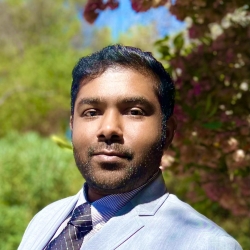
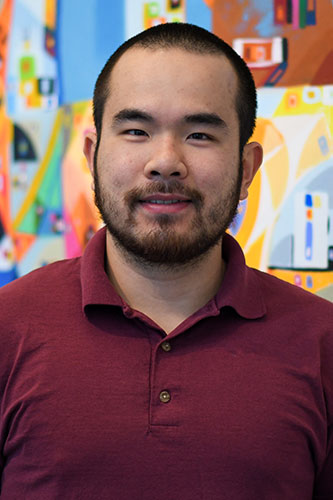
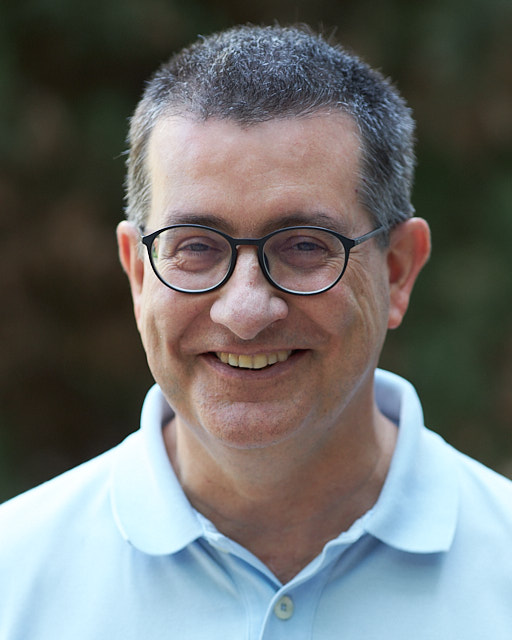
Akila de Silva is an Assistant Professor of Computer Science at San Francisco State University (SFSU). He holds a PhD from UC Santa Cruz (advised by Prof. Alex Pang and James Davis) and an MS from Columbia University. His research focuses on artificial intelligence, machine learning, computer vision, and applied AI for environmental monitoring. Key projects include RipViz/RipScout systems for real-time rip current detection using ML and UAVs, and citizen science platforms like SmartCS for creating no-code mobile apps. Education: PhD in Computer Science & Engineering (UCSC), MS in Computer Science (Columbia). Grants include a NOAA-funded coastal observation system (2025-26) and an ethical generative AI in CS education initiative (2025-26). Notable award: Michael Richman Award (2024-25). Research emphasizes interdisciplinary applications: coastal safety via AI-driven monitoring, STEM education through citizen science tools, and improving data quality in facial recognition systems. Active reviewer for IEEE Visualization, CVPR, and other top conferences. Lab opportunities available for motivated students.
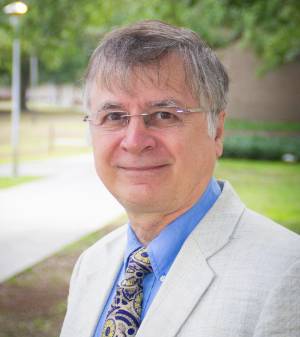
Gity Karami is Assistant Professor of Instruction in the Computer Science Department at UT Dallas' Erik Jonsson School of Engineering and Computer Science. Her research focuses on software engineering methodologies, particularly software reliability, data mining applications, and web system development. Karami investigates web usage modeling, software testing frameworks, and HCI-task integration to enhance application reliability. Her work bridges theoretical computer science with practical software development challenges. Courses taught include Web Programming Languages, Data Structures, Machine Learning, and Programming Paradigms. She coordinates undergraduate research initiatives and advises student organizations including Women in Cybersecurity and Women Who Compute.
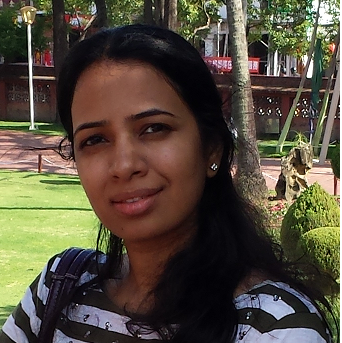
Professor Jitendrapal (Jit) Sharma is a Professor and former Inaugural Department Chair (2013-2018) of Civil Engineering at York University's Lassonde School of Engineering. He holds a P.Eng license in Saskatchewan and Ontario and has held academic positions globally, including at the University of Saskatchewan where he was a Professor of Geotechnical Engineering. His research focuses on theoretical and computational geomechanics, geotechnical centrifuge modeling, and soil-structure interaction. Dr. Sharma is an Associate Editor of the Canadian Geotechnical Journal (2006-2018) and a specialist in geotechnical engineering consulting. He is renowned for innovative teaching methods using web-based tools to enhance student engagement in problem-solving. His work emphasizes integrating out-of-classroom learning with in-class discussions. His research interests include unsaturated soil mechanics, ground improvement techniques, and geosynthetics. While no specific grants or labs are mentioned, his publications reflect advanced computational and theoretical contributions to geotechnical engineering. He has received multiple teaching excellence awards for his educational innovations.
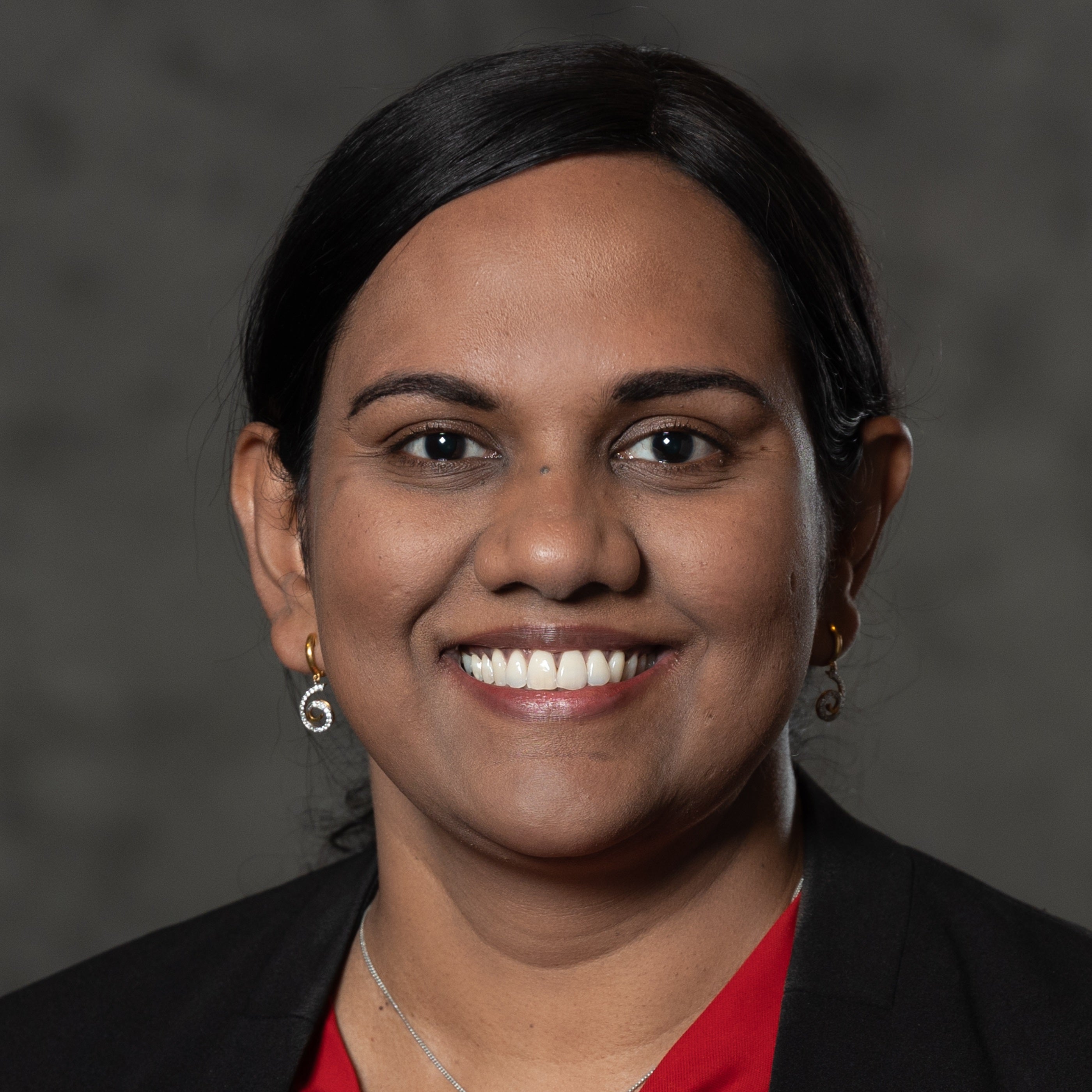
Ivano Bilenchi is a postdoctoral researcher at the Polytechnic University of Bari's Information Systems Laboratory (SisInf Lab). He holds a Master's in Computer Science Engineering (2020) and a Ph.D. in Electrical and Information Engineering (2024) from the same institution. His research focuses on AI, Semantic Web technologies, edge computing, and IoT applications, with notable contributions to embedded OWL reasoners and cloud-edge intelligence frameworks. He teaches courses such as Formal Languages and Compilers, Secure Programming, and Information Systems Security. His work bridges academic research with practical applications, including iCleaner (iOS system cleaner), Tiny-ME (Semantic Web reasoner), and AI-LMD (fleet optimization tool). He actively participates in conferences like ICWE and I-CiTies, and has contributed to initiatives like the sustainable development project HowtUyoga. His awards include a First Prize at the Sustainable Development Festival (2018). Research highlights include developing Cowl (lightweight OWL library for edge devices) and proposing innovative architectures for cloud-edge AI in sensor networks. Collaborations span semantic blockchain marketplaces (RideMATCHain) and UAV autonomy using knowledge representation.
Dr. Aydin K. Sunol is a Professor of Chemical, Biological and Materials Engineering at the University of South Florida's College of Engineering. With a distinguished career spanning several decades, he leads the Environmentally Friendly Engineered Systems (EFES) Lab and serves as principal investigator for numerous research projects funded by NASA, DOD, NSF, and industry partners. Education: PhD in Chemical Engineering, VPI & SU, Blacksburg, Virginia MEng in Industrial Engineering and Operational Research, VPI & SU, Blacksburg, Virginia Diploma in Chemical Engineering, University of Aston, Birmingham, England BS in Chemical Engineering, Bogazici University, Istanbul, Turkey Dr. Sunol's research focuses on green engineering and chemistry, sustainability in the chemical industry, systems engineering, and cleaner energy conversion processes. His work integrates global computational methods, machine learning, product prototyping, and experimentation across multiple temporal and spatial scales. Recent projects include developing nano-structured photo-catalysts, therapeutic particles, and energetic materials using environmentally friendly pathways, as well as creating efficient fuel conversion processes utilizing supercritical fluids. His research demonstrates a consistent trend toward sustainable solutions that address fundamental challenges in materials science, energy conversion, and environmental protection through innovative application of supercritical fluid technology and computational methods. Scientific Awards: USF Chemical and Biomedical Engineering Department Outstanding Teaching Award, 2018 University of South Florida Outstanding Undergraduate Teaching Award, 2002-2003 Engineering Professor of the Year, 1984 Outstanding Professor of Chemical Engineering, VPI & SU, 1981 Outstanding Technology Innovation Award, Aerospace Space System Conference, 2010 As an educator, Dr. Sunol has advised 18 PhD and 29 Master's students, developing innovative teaching methods and curricula including NSF-funded Web-based Teaching Modules and Design Course Series. His research has been supported by diverse funding sources including DOE, NSF, NATO, UNESCO, NAVY, NASA, and numerous industry partners. Dr. Sunol also serves as principal partner and CTO of Temptroll LLC and Accent Creations LLC, which develop self-heating and cooling products, demonstrating the practical application of his research. The EFES Lab, which Dr. Sunol directs, brings together interdisciplinary researchers including chemical engineers, mechanical engineers, and computer scientists to tackle complex challenges in sustainable engineering. Current team members include PhD candidates working on nano-structured materials, wastewater management systems, and temperature modulation products, continuing the lab's tradition of innovation in environmentally friendly engineered systems.
Swapna Gottipati is a Full-time Associate Professor of Information Systems (Education) and Associate Dean (Undergraduate Education) at the School of Computing and Information Systems , Singapore Management University . Holding a PhD from SMU (2014) , she specializes in text analytics, education technology, and digital business. Current focus areas: Artificial Intelligence, Data Science, Technology-Enhanced Learning Interdisciplinary applications: Health Informatics, Social Media Analytics Research Interests span text analytics, opinion mining, curriculum analytics, and digital transformation. She applies machine learning and data mining to educational systems, business processes, and health domains. Scientific Contributions: 2016 Best Paper Award (AIS SIG-ED) 2016 MOE TRF Grant 2017-2020 Conference Best Paper Nominations 2013 Best Paper Finalist (CIKM) Academic Leadership includes: Director of Undergraduate Education Co-developer of SMU-X pedagogy Founder of MyCompetencies mobile platform Organizer of curriculum analytics workshops Grant Projects include the Learning Analytics on Qualitative Student Feedback system (MOE TRF 2016) and ICDL-funded digital literacy studies. She has delivered 12+ invited talks on digital transformation in education and industry.
Oshani Seneviratne is an Assistant Professor of Computer Science at Rensselaer Polytechnic Institute (RPI), leading the BRAINS Lab. She holds a Ph.D. and S.M. from MIT (Computer Science) and a B.Sc. (Hons) from the University of Moratuwa, Sri Lanka. Her research focuses on decentralized systems, blockchain, health informatics, and federated learning. She previously directed RPI's Health Data Research division. Education Ph.D. in Computer Science, MIT S.M. in Computer Science, MIT B.Sc. (Hons) in Computer Science and Engineering, University of Moratuwa Research Interests Her work bridges decentralized technologies with clinical and financial applications. Key areas include blockchain-based frameworks for federated learning, explainable AI in healthcare, and semantic web technologies for data interoperability. She emphasizes ethical AI, data provenance, and scalable systems for real-world challenges. Recent Work Trends Recent publications highlight advancements in smart contract auditing, LLM applications in financial systems, and blockchain-enhanced data provenance. Her work often combines technical innovation with societal impact, such as improving health data sharing and combating misinformation. Awards & Grants No awards explicitly listed, but her research has been supported by grants related to blockchain, health informatics, and decentralized systems. Advising & Labs Leads the BRAINS Lab, focusing on resilient, intelligent networked systems. Collaborates on projects like the Punya platform for clinical apps and BlockIoT for health data integration. Future Work Expanding into AI explainability for clinical decision support, decentralized mental health monitoring, and blockchain interoperability solutions.
Paolo Buono is Associate Professor at the Department of Computer Science, University of Bari Aldo Moro, Italy. He holds a PhD in Computer Science with specialization in Visual Data Analysis. His research focuses on Information Visualization, Visual Analytics, Human-Computer Interaction, and Mobile Applications. Co-founder and CEO of LARE (2010), a university spinoff providing real-time surgical support through audio-video telestration Member (since 2002) and computer science coordinator at METEA Research Center for environmental protection Visiting scientist at AVIZ (France), University of Maryland (USA), and Fraunhofer IPSI (Germany) His work spans multiple application domains including: Cultural Heritage through interactive exploration systems Healthcare with smart therapeutic devices Environmental Monitoring via CET system IoT-based Smart Interactive Experiences He has contributed to: Dynamic hypergraph visualization techniques End-User Development frameworks (EUDroid) Usability evaluation methodologies Mobile health applications As project leader, he has coordinated: EU-funded VisMaster Coordination Action (2008-2010) Italian Ministry-funded LOGIN project (2014-2015) Apulia Region environmental projects His professional engagements include: Co-chair roles at INTERACT, AVI, IS-EUD conferences Program committee participation in VIS series and HCI conferences Member of ACM, IEEE, and SIGCHI Italy
Giuseppe Desolda is an Associate Professor at the Computer Science Department of the University of Bari Aldo Moro , where he has been since July 2, 2022. He leads research at the Interaction, Visualization, Usability & UX (IVU) Lab , focusing on Novel Interaction Techniques , Internet of Things development, and Usable Security . His work includes coordinating the PRIN PNRR DAMOCLES project (2022-2025) on human-centric cybersecurity and leading Work Package 1 of PNRR SERICS. PhD in Computer Science from University of Bari Co-author of over 110 publications Associate Editor for IEEE Access Journal Research interests span Human-Computer Interaction (HCI), End-User Development (EUD) for IoT, and Usable Security systems. His recent work explores AI-driven usability evaluation, voice-based 3D modeling, and GDPR-compliant software frameworks. Article trends show focus on phishing mitigation , smart environment customization , and privacy-by-design methodologies. Publications appear in TOCHI , FGCS , IJHCS , and BIT . Scientific achievements include: Selected for Heidelberg Laureate Forum (2019) LARE spin-off grant (EUR 50,000, 2013) He supervises PhD students Andrea Esposito and Francesco Greco, and has advised multiple funded research projects (PRIN DAMOCLES, DevProDev, PNRR SERICS). Teaching roles include courses on Human-Centered AI, IoT Security, and Web Programming across undergraduate and graduate programs.
Professor Keith Phalp is the interim Pro-Vice Chancellor for Education and Quality at Bournemouth University. With over 30 years in higher education, he has held roles ranging from lecturer to Executive Dean. His research focuses on software engineering, model-driven development, AI applications, and social computing, particularly digital addiction and online gambling. He leads research and knowledge exchange at the university, with over 200 refereed publications. His work addresses challenges in software project phases, business-software model relationships, and ethical tech design. Recent articles highlight his contributions to safer gambling transparency, social media misinformation intervention design, and fairness in cloud computing. He collaborates extensively on interdisciplinary projects, such as combating digital addiction through peer support groups and enhancing educational tools with AI. Professor Phalp’s leadership spans strategic academic roles, balancing administrative duties with advancing research in socially impactful areas like responsible technology and user behavior analysis.
Dr. Hy Truong Son is an Assistant Professor in the Department of Computer Science at the University of Alabama at Birmingham (UAB), affiliated with the College of Arts and Sciences. He holds a Ph.D. in Computer Science from the University of Chicago and has prior experience as a Lecturer and Postdoctoral Fellow at the Halicioglu Data Science Institute, UC San Diego. His research focuses on AI-driven solutions for science and engineering, particularly deep learning applications in drug discovery, repurposing, and biomedical problem-solving through his HySonLab group. Dr. Son’s educational background includes a Ph.D. from the University of Chicago, emphasizing foundational training in computer science. His postdoctoral work at UC San Diego further solidified his expertise in data science and interdisciplinary AI applications. Research interests span AI for drug discovery, generative AI, multimodal learning, and healthcare technologies. His lab’s work integrates AI with molecular biology, medical imaging, and wearable sensor data to address challenges in precision medicine and environmental science. Notable projects include DrugPipe for drug repurposing and SilVar-Med for explainable medical imaging analysis. His recent publications highlight advancements in generative models, speech synthesis, protein design, and scalable graph neural networks. These works reflect a focus on bridging AI with real-world biomedical and engineering applications. While no awards are explicitly listed, his prolific publication record and active lab indicate significant contributions to the field. He advises students and engineers in his team, fostering collaborative research environments. Ongoing projects include wearable device datasets for mental health and multimodal biomedical knowledge graph development. Dr. Son’s HySonLab group emphasizes translational research, aiming to deploy AI solutions in clinical and scientific settings. Current efforts include optimizing molecular interactions via large language models and enhancing drug discovery pipelines through interdisciplinary computational methods.
Sergio Gómez Jiménez is an Associate Professor in the Department of Computer Engineering and Mathematics at Rovira i Virgili University (URV), Tarragona, Spain. He joined URV in 1995 and has held his current position since 1997. He obtained degrees in Physics (1990) and Mathematics (1995) and a PhD in Physics (1994) from the Universitat de Barcelona. His research focuses on complex networks, including community structure analysis, epidemic spreading, urban congestion, and applications to biology, medicine, and social systems. He has authored over 100 publications in high-impact journals like Nature Methods and Physical Review Letters. He coordinates the interuniversity Master's in Biomedical Data Science and the PhD Program in Bioinformatics. His editorial roles include Associate Editor of Complexity and Review Editor of Frontiers in Physics. Notable awards include the American Physical Society's Outstanding Referee (2015) and the Web Science Trust's Test of Time Award (2024). His work on modeling the spatiotemporal spread of epidemics, such as the 2020 COVID-19 pandemic, has received significant attention. He also contributed to urban traffic congestion analysis and developed algorithms for hierarchical clustering (e.g., MultiDendrograms). Collaborations span institutions like the University of Oxford and CERN, reflecting his interdisciplinary approach to complex systems.
Tara Whalen is an Adjunct Professor at the School of Computer Science, Carleton University. Her research focuses on cybersecurity, privacy engineering, usable security mechanisms, and information control systems. She has contributed to studies on password security, authentication alternatives to CAPTCHA, and mobile device privacy challenges. Her work bridges technical security practices with human factors, emphasizing how security systems interact with end-users. Notable projects include breach alerting services and empirical studies on browser security interfaces. She has published extensively since 2003, with recent work addressing modern challenges in password management and privacy-by-design frameworks. No academic awards or grants are listed, though her publications indicate active collaboration in computer security research. She maintains an affiliation with Carleton's Herzberg Laboratories and can be reached at tjwhalen@gmail.com.
Scott Ruoti is an Associate Professor in the Min H. Kao Department of Electrical Engineering and Computer Science at the University of Tennessee, Knoxville (UTK), affiliated with the Tickle College of Engineering. He directs the USER Lab, focusing on bridging theoretical and practical gaps in cybersecurity through interdisciplinary research. His work emphasizes empirical studies of security systems, design innovations, and rigorous evaluations. Education: PhD (2016), MS (2015), BS (2011) in Computer Science from Brigham Young University, and a BA in Chinese (2011). Prior to UTK, he was a technical staff member at MIT Lincoln Laboratory, leading projects like the Cyber.gov cybersecurity architecture and blockchain research. Research interests include authentication, usable encryption, IoT security, and smart agriculture. He has secured over $4 million in funding, including NSF CAREER and USDA grants. Awards include the John Karat Award and UTK's Professional Promise in Research Award. Teaching: Courses on cybersecurity fundamentals, applied cryptography, software security, and human factors in cybersecurity. Advisor for HackUTK student club and involved in curriculum development for UTK's online MS program. Labs/Teams: USER Lab explores usable security principles through prototyping and user studies. Collaborations span academia, industry, and government (e.g., USDA, DoE).
James Tweedley is a Senior Lecturer at Murdoch University, affiliated with the School of Environmental and Conservation Sciences within the College of Environmental and Life Sciences. He is also part of the Centre for Sustainable Aquatic Ecosystems and Harry Butler Institute. His research focuses on aquatic ecosystem health, fisheries management, and restoration strategies, with particular expertise in estuarine ecology and benthic macroinvertebrates. Education: Tweedley holds a BSc (Marine Biology) from the University of Portsmouth (2005), an MRes in Marine Biology from the University of Plymouth (2006), and a PhD in Marine Science from Murdoch University (2011). Research Interests His work spans two core areas: (1) understanding ecological linkages between fish/invertebrate communities and environmental drivers to develop estuarine health indices, and (2) fisheries management including aquaculture-based enhancement, artificial reefs, and socio-economic dimensions of fishing. Recent projects address eutrophication mitigation via mussel habitat restoration, barrier impacts on fish migration, and invasive species effects on ecosystems. Key Contributions Tweedley has pioneered methods for assessing fish communities in hypersaline environments and evaluated artificial reef effectiveness in temperate waters. His work on mass mortality events and tidal exclusion barriers provides critical insights for conservation planning. Awards - Young Tall Poppy and West Australian Young Tall Poppy of the Year (2021) - Recognizing outstanding research and science communication. Grants & Collaboration Funded projects include shellfish reef restoration studies and small-scale fisheries management in Indonesia. Collaborates with institutions like the Australian Institute of Policy and Science and local Indigenous communities for culturally significant estuary monitoring. Labs/Teams Leads the Sustainable Aquatic Ecosystems research group and contributes to the Harry Butler Institute’s coastal resilience initiatives.