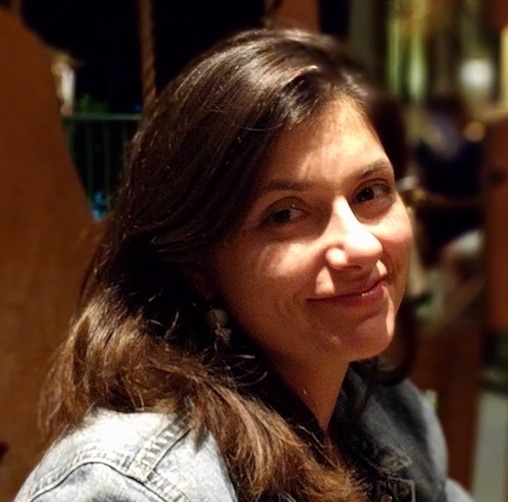
Prof. Gabriela Alves Werb, Ph.D. is a faculty member affiliated with the Bundesbank Research Data and Service Centre (RDSC) and holds her academic background from Johann Wolfgang Goethe University Frankfurt am Main. Her research spans interdisciplinary areas at the intersection of finance, machine learning, and digital economy, with a focus on non-financial risks and search engine analytics. Education: Doctoral Dissertation (2020), Goethe-Universität Frankfurt Research Interests include machine learning applications in financial risk assessment, user-generated content analysis, and digital marketplace dynamics. Her work bridges computational methods with economic policy challenges. Recent Publications highlight trends in climate-related financial data, predictive modeling in marketing, and the economic implications of search engine visibility. Key subfields span ESG investing, SEO vulnerability, and digital risk assessment.
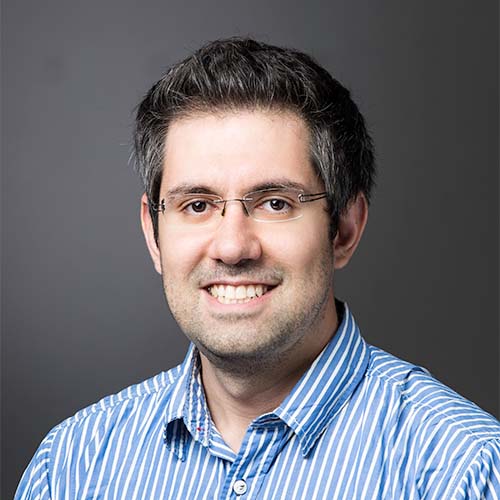
Magdalini Eirinaki is a Professor and Academic Program Coordinator for the MS in Artificial Intelligence at San José State University's Charles W. Davidson College of Engineering. With a career spanning two decades, her work bridges recommender systems , machine learning , and smart city applications . PhD in Computer Science (2006), Athens University of Economics and Business MSc in Advanced Computing (2000), Imperial College London BSc in Computer Science (1998), University of Piraeus Her research focuses on machine learning and recommender systems with extensions to generative AI , privacy-sensitive algorithms , and social network analysis . Recent publications explore federated learning , multi-resolution diffusion models , and autonomous network defense using reinforcement learning. Current projects include NSF-funded CollaborAIte (2024) EU Horizon/Marie Sklodowska-Curie's MUSIT (2024) IBM SkillsBuild Cloud Credits for Sustainability (2024) She has received multiple teaching and mentorship awards including: Newnan Brothers Award (2019) Applied Materials Award (2017) 5-time SJSU Distinguished Faculty Mentor Award Dr. Eirinaki advises students in AI , ML , and smart city projects, with recent graduates presenting at IEEE CAI (2025) and CSU Conference (2025).
Dr. Crystal Fausett is an Assistant Professor in the School of Information at San José State University. Her academic work bridges human factors, cybersecurity, and human-computer interaction, with a strong focus on how individuals and teams interact with technology in high-stakes environments such as healthcare, emergency services, and cyber operations. She teaches courses including ISDA 121 – Human Centered Cybersecurity and ISDA 130 – User Centered Interface Architecture and Prototyping, reflecting her interdisciplinary expertise. Ph.D. in Human Factors, Embry-Riddle Aeronautical University (2024) M.S. in Human Factors, Embry-Riddle Aeronautical University (2022) B.A. in Psychology, San José State University (2020) A.A. in Social and Behavioral Sciences, Santa Barbara City College (2018) Her research interests include human-centered cybersecurity, human-computer interaction, usability and UX design, teamwork and transactive memory systems, training methodologies (particularly simulation-based), and information behavior across diverse user groups such as healthcare providers, cyber defenders, and naval personnel. She applies both qualitative and quantitative methods, including expert interviews, board game simulations, and meta-analytic techniques. The recent publications highlight a strong trend in applying human factors principles to cybersecurity team performance, adaptive training, and healthcare safety. Her work increasingly explores innovative methods such as gamified simulations to study team dynamics and cognitive load in complex operational environments. There is a consistent emphasis on improving system efficiency, safety, and collaboration through human-centered design. Dr. Fausett has no listed scientific awards in the provided text. She has served as an Instructor of Record in Human Factors and Behavioral Neurobiology at Embry-Riddle Aeronautical University (2023–2024) prior to her current role. There is no mention of current grant funding or student advising in the provided materials. Her research often involves collaboration with experts in human factors and healthcare, particularly Dr. Joseph R. Keebler and Dr. E. Salas, suggesting active participation in research teams focused on team performance and safety-critical systems. She is involved in research labs or teams centered on human factors in cybersecurity and healthcare, particularly through collaborative projects involving simulation-based training and team cognition studies. Her use of board games like [d0x3d!] as experimental testbeds indicates innovative lab-based methodologies for studying real-world team interactions in controlled environments.
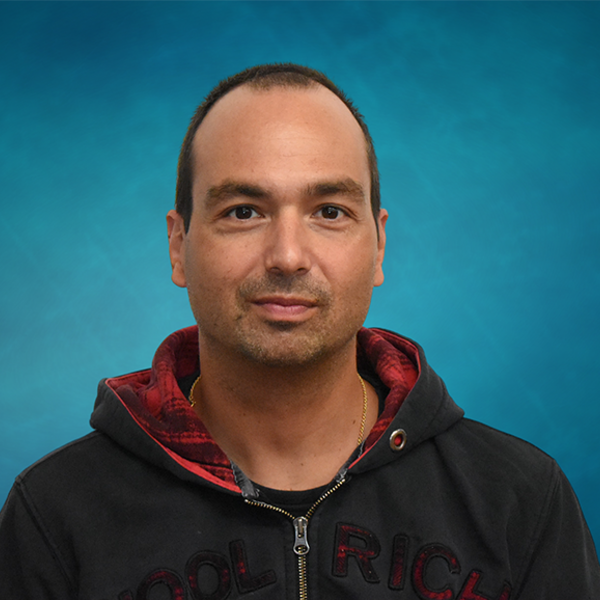
Hadi El-Amine is an Associate Professor at George Mason University's Department of Systems Engineering and Operations Research, focusing on applying operations research to healthcare and public policy challenges. His methodological expertise spans stochastic and robust optimization, probability theory, and resource allocation under uncertainty. PhD in Operations Research from Virginia Tech (2012) MS in Engineering Management and BS in Electrical and Computer Engineering from American University of Beirut, Lebanon His research addresses critical healthcare issues through mathematical modeling, including blood bank safety, pandemic control, organ transplantation logistics, and surgical infection risk assessment. Recent work explores fair clustering algorithms, risk-based quarantine policies, and incentive design for absenteeism reduction. Scientific awards include the 2015 INFORMS Bonder Scholarship and finalist recognitions for the 2015 Pierskalla Award and 2014 Washington DC Student Excellence Competition. Collaborations with the American Red Cross have produced impactful blood screening strategies balancing safety and budget constraints.
Dr. Arham Muslim serves as a Professor in the Department of Computer Science at the School of Electrical Engineering and Computer Science (SEECs), National University of Sciences and Technology (NUST), Pakistan. He leads the Learning Technologies research group (Informatik 9), directing development of open-source learning analytics infrastructure with emphasis on user-centered design and academic ecosystem integration. His research program focuses on Learning Analytics and Educational Technology , specializing in open learning analytics platforms like OpenLAP. Key contributions include modular framework architectures, rule-based indicator systems, and data modeling standards that enable personalized learning experiences through academic network visualization and adaptive feedback mechanisms. His work bridges software engineering principles with pedagogical requirements in higher education contexts. Publications from 2013-2018 reveal consistent advancement in learning analytics ecosystems, with increasing emphasis on interoperability standards, open-source sustainability, and ethical implementation frameworks. The research trajectory demonstrates progression from foundational data modeling to sophisticated user-centered platform development, addressing critical gaps in educational data utilization. As head of the Learning Technologies research group at SEECs, he drives innovation in educational data systems through collaborative development of OpenLAP and related tools, positioning NUST as a significant contributor to global learning analytics research infrastructure.
Lena Schmidt is a Research Fellow at the University College London (UCL) Social Research Institute , specializing in methods development for systematic reviews , evidence maps , and living evidence syntheses . She leverages machine learning and neural networks to optimize data mining and classification during the screening process. Her work emphasizes automation tools for large-scale literature analysis and addressing reproducibility in evaluations. MSc Applied Health Sciences , Furtwangen University (2018) NIHR Systematic Reviews Fellowship (2018–2020) Predoctoral Fellowship in Living Reviews and Automation Her research focuses on enhancing systematic review efficiency through NLP , AI , and data engineering , particularly for grey literature in health research. Recent publications address pandemic impacts on mental health , automation in evidence synthesis , and knowledge graph development for toxicology. Scientific awards include the NIHR Fellowship and Intelligent and Adaptive Systems Certification from the University of Sussex. She actively collaborates with organizations like the Campbell Collaboration and ICASR , co-organizing automation workshops and contributing to methodological frameworks.
Paul Johannesson is a Professor at the Department of Computer and Systems Science , Stockholm University. He leads the PRECIS research group (Process Requirements Enterprise Capability Information Systems Modeling), focusing on theories and methods for integrated organizational and IT solutions. Education: BSc in Mathematics (Stockholm University), PhD in Computer Science (1993, Stockholm University). Research Interests: Conceptual modeling, enterprise modeling, process integration, design science, and ontological analysis, with applications in healthcare systems, IoT security, and digital innovation. His work bridges linguistic instruments with information systems design. Recent Article Trends: Focus on healthcare interoperability, IoT security, and ontological frameworks. Topics include drug-drug interaction modeling, decentralized identity management, and policy-based decision-making systems. Projects: Current work includes intelligent IoT security solutions and data-driven services for elderly care (DISRA, DISAL). Past projects examine EU knowledge systems, IT in healthcare, and process modeling education. Teaching: Courses on enterprise modeling and business models at bachelor and master levels. Thesis supervision at the Department of Computer and Systems Sciences. Labs/Teams: Leads the PRECIS research group, which integrates conceptual modeling with IT strategy and organizational design.
Professor Kristian Bankov holds a Doctor of Science (DSc) in Semiotics from New Bulgarian University (2023). He serves as Professor in the Southeast European Center for Semiotic Studies at NBU. Director of Southeast European Center for Semiotic Studies since 2007 General Secretary of International Association for Semiotic Studies (2014-2024) Vice-Rector for International Affairs and Public Relations at NBU (2011-2012) Chief Organizer of the annual Early Fall School of Semiotics since 2006 His research spans multiple dimensions of semiotics: Continental philosophy of language and Bergson's philosophy Sociosemiotics and identity studies Consumer society and digital culture Artificial intelligence and new media Semiotics of economic transactions Digital education and technological transformation Recent publications focus on digital culture, economic sign systems, and digital transformation with particular attention to: Digital semiosphere and platfospheres Monetary semiotics and digital currencies Social media analysis and consumer rituals Trust systems and digital experience economy Identity formation in post-truth environments Audiovisual translation in digital culture
Ioannis Tzimas is a Professor at the Department of Electrical and Computer Engineering of the University of Peloponnese. He is a highly active researcher with numerous publications in areas of Service-Oriented Architectures, Web Engineering, Big Data, and Artificial Intelligence applications. University: University of Peloponnese Department: Department of Electrical and Computer Engineering Academic Rank: Professor Email: tzimas@uop.gr Ioannis Tzimas received his education from the Department of Computer Engineering and Informatics of the University of Patras, where he also completed his PhD in Web Engineering. His research spans multiple interdisciplinary domains at the intersection of computer science and practical applications. Service-Oriented Architectures and Information Systems Web Data Engineering and Web Modeling Big Data Management and Data Science Machine Learning and Artificial Intelligence Applications Digital Ecosystems and Digital Transformation for the Public Sector Bioinformatics Professor Tzimas' recent research output demonstrates a strategic focus on applying advanced computational techniques to address contemporary challenges. His work shows particular expertise in labor market analysis using large language models, electricity demand forecasting in Greece, and social protection systems. His publications reveal a pattern of bridging theoretical computer science with practical, real-world applications across multiple sectors. Since 2018, he has served as an international consultant to the World Bank in the field of information systems and digital transformation, working on projects across Europe, Africa, the Caribbean, the Pacific Islands, and China. His earlier career included significant technical leadership roles at the University of Patras and other Greek institutions. Technical Manager of the Graphics, Multimedia and Geographic Systems Laboratory (1996-2018) Technical Coordinator of the Internet and Multimedia Technologies Research Unit (1997-2011) Scientific Manager of the Network Management Center of the TEI of Messolonghi (2009-mid 2013)
Robert Sitnik is a Professor and Dean of the Faculty of Mechatronics at Warsaw University of Technology, where he is affiliated with The Institute of Micromechanics and Photonics. He earned his Doctorate in 2002 and has established himself as a leading researcher in 3D optical measurement techniques and applications. His research focuses on 3D light measurement, optical shape analysis, structured light techniques, and 3D data processing with applications spanning cultural heritage documentation and medical imaging. As the leader of the 3D/4D Optical Surface Measurement Team, he has pioneered innovative approaches to surface measurement and documentation. His work demonstrates strong interdisciplinary connections between mechanical engineering, computer vision, and practical applications in both cultural preservation and healthcare. His research has led to significant advancements in 3D scanning technologies, particularly for human body analysis and cultural heritage conservation. His publications reveal a consistent research trajectory focused on improving accuracy, efficiency, and applicability of 3D measurement systems. His scientific impact is evidenced by 159 publications, an h-index of 18 in Scopus and 17 in Web of Science, and 103 promoted theses. His research has been supported by 22 projects, resulting in 1 patent and substantial contributions to both academic knowledge and practical applications. As an academic leader, he has supervised numerous students and researchers, contributing significantly to the development of expertise in optical measurement technologies. His work bridges theoretical research with real-world applications in medical diagnostics, cultural heritage preservation, and industrial measurement systems.
Katharine Suding serves as a Professor in the Department of Ecology and Evolutionary Biology at the University of Colorado Boulder, leading the Suding Lab focused on plant community ecology at the intersection of ecosystem, landscape, and population biology. Her work integrates long-term monitoring, modeling, and experimental approaches across diverse ecosystems—from alpine tundra to grasslands—with conservation groups, government agencies, and land managers to develop evidence-based solutions for restoration, species invasion, and environmental change. Her educational background includes a PhD from the University of Michigan (1999) and a BS from Williams College (1994). Key research interests center on plant-soil feedbacks, functional traits, species effects on ecosystem processes, and non-linear/threshold dynamics in ecological systems. Her work emphasizes usable science that addresses biodiversity conservation, human well-being, and management opportunities through frameworks like cross-scale facilitation and adaptive capacity for restoration. Recent publications reveal strong trends in integrating remote sensing with causal inference for biodiversity monitoring, redefining restoration intervention continua beyond active-passive dichotomies, and exploring climate change impacts on alpine phenology and soil communities. Her research consistently bridges theoretical ecology with practical applications, particularly in grassland and tundra restoration under global change. Scientific recognition includes: Bower Award and Prize for Achievement in Science (Franklin Institute, 2025) Eminent Ecologist (Journal of Ecology, 2023) Highly Cited Researcher (Web of Science, 2016-2019) MacArthur Award (Ecological Society of America, 2018) Fellow of AAAS and ESA Dr. Suding actively mentors 26 degree-seeking students (current and alumni), including PhD candidates in grassland restoration and MS students in conservation biology. Her lab secures significant grants for projects like alpine climate resilience and invasive species management, emphasizing collaborative frameworks with stakeholders. The Suding Lab maintains a strong commitment to inclusive science through field safety protocols, peer mentorship, and equitable opportunity strategies, operating from CU Boulder's Sustainability, Energy and Environment Community building. The lab fosters interdisciplinary teams studying critical transitions in ecological systems, with current projects spanning from Colorado grasslands to tropical restoration. Future work focuses on scaling restoration science through remote sensing integration and developing adaptive capacity metrics for climate-vulnerable ecosystems.
Giorgio Scorzelli is a researcher at the University of Utah, serving as Director of Software Development for the Center for Extreme Data Management, Analysis, and Visualization (CEDMAV) and the National Science Data Fabric (NSDF) . He specializes in extreme data management, scientific visualization, and computational topology, with a focus on scalable solutions for climate science, materials science, and neuroscience datasets. His work emphasizes democratizing data access through platforms like OpenVisus , enabling efficient analysis of petascale and exascale data. Key contributions include orchestrating cyberinfrastructure, optimizing parallel I/O, and developing real-time visualization systems for heterogeneous resources. Notable scientific contributions include the NSF Grant #2127548 for NSDF development . His projects integrate cloud computing, geo-distributed storage, and FAIR digital objects to lower barriers to data democratization. Giorgio's research spans multi-resolution algorithms , computational topology , and 3D geometric modeling , with applications in infrastructure security, archaeological reconstruction, and biomedical imaging. His work bridges abstract mathematical frameworks (e.g., Boolean algebras, chain complexes) with practical software solutions.
Gérard Berry (born December 25, 1948) is a distinguished French computer scientist currently serving as Professor at the Collège de France, holding the permanent chair Algorithmes, machines et langages (Algorithms, Machines, and Languages) since 2012. He previously held the Informatique et sciences numériques chair (2009-2010) and the Technological Innovation Liliane Bettencourt chair (2007-2008) at the same institution. Before joining Collège de France full-time, he served as Director of Research at INRIA Sophia Antipolis (2009-2012) and at École des Mines de Paris (1977-2001). His research spans over 30 years in three main fields: lambda calculus and functional programming, parallel and real-time programming languages, and design automation for synchronous digital circuits. He is particularly renowned for developing the Esterel programming language. His work bridges theoretical computer science with practical industrial applications. Berry's research has evolved to include current work in Hop and HipHop for Web programming, formal verification of compilers, and languages for computer music. His publications demonstrate consistent contributions to programming language theory, formal methods, and their applications in hardware and software systems. Gold Medal of CNRS (2014) Chevalier de l'Ordre de la Légion d'Honneur (2012) Member of French Academy of Sciences (2002) Member of Academia Europaea (1993) Monpetit Prize of Académie des sciences (1990) Berry has advised 17 PhD students and reviewed numerous theses. His industrial experience includes serving as Chief Scientist Officer of Esterel Technologies (2000-2009), where he directed the implementation of the Esterel v7 compiler. He has also held significant leadership roles including President of the Scientific Council of IRCAM and membership on the Scientific Council of the National Education. His teaching at Collège de France has covered topics ranging from the foundations of computation to the societal impact of digital technology, with courses including The Informatics of Time and Events and Proving Programs: Why? When? How? His laboratory work has focused on developing practical applications of theoretical computer science concepts.
Kiyoshi Ono is a Professor at Waseda University's School of Creative Science and Engineering, Faculty of Science and Engineering, specializing in structural and earthquake engineering. He holds a Doctor of Engineering degree from Osaka University and has been actively contributing to academia since at least 2007, following his tenure as Associate Professor at Osaka University Graduate School of Engineering (2002-2007). His academic journey demonstrates a consistent focus on advancing structural engineering knowledge with practical applications for infrastructure resilience. Professor Ono's research interests center around structure engineering and earthquake engineering, with particular expertise in steel structures, bridge engineering, and high-performance steel materials. His work explores the seismic performance of steel structures, innovative bridge design methods, and the application of high-strength steel materials (particularly SBHS series) to improve structural safety and durability. He investigates how material properties affect structural behavior under seismic loads, developing evaluation methods that balance safety with economic considerations. His publication record shows a consistent research trajectory with 41 papers, 123 citations, and an h-index of 4 according to Scopus. The most recent publications (2015-2024) demonstrate his ongoing commitment to advancing knowledge in steel structure performance, particularly focusing on high-performance steel materials and their application in seismic-resistant design. His research spans fundamental material properties investigations to practical structural applications, showing a comprehensive approach from microscopic material behavior to macroscopic structural performance. Scientific Awards: New Road Technology 5-Year Plan Award (2003) Professor Ono actively contributes to academic knowledge dissemination through numerous publications, presentations, and his role in developing industry standards. His work on the 'Steel and Composite Structure Standard Specifications' and 'Buckling Design Guidelines' demonstrates his influence on engineering practice. He serves on committees including the Japan Society of Civil Engineers Kansai Branch (as General Affairs and Accounting Committee Member since 2010) and the Performance-Based Seismic Design Committee for Bridges. His professional memberships include the Japan Society of Civil Engineers Kansai Branch, Japanese Society of Steel Construction, and Japan Society of Civil Engineers, reflecting his active engagement with the engineering community. His research projects consistently address practical challenges in bridge engineering while advancing theoretical understanding of structural behavior under extreme loading conditions.
Professor Boris Konev is a faculty member at the University of Liverpool, affiliated with the School of Electrical Engineering, Electronics and Computer Science. He holds the academic rank of Professor in Computer Science. Description Logics Ontologies Automated Reasoning Temporal Logic Formal Verification Encrypted Database Applications His recent research focuses on temporal queries mediated by ontologies, knowledge evaluation agents using large language models, and semantic modularity in description logics. Key sub-fields include LLM applications, encrypted databases, and formal verification techniques. He has contributed to software development projects and industry partnerships, including design of equine simulators and online services with Racewood Limited. Current teaching includes the Foundations of Computer Science module (COMP109). Professional roles include guest editorships for AI Communications and program committee membership for the European Conference on Logics for Artificial Intelligence (JELIA).