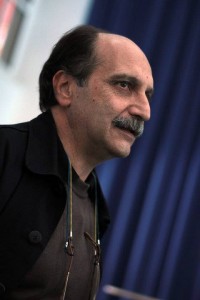
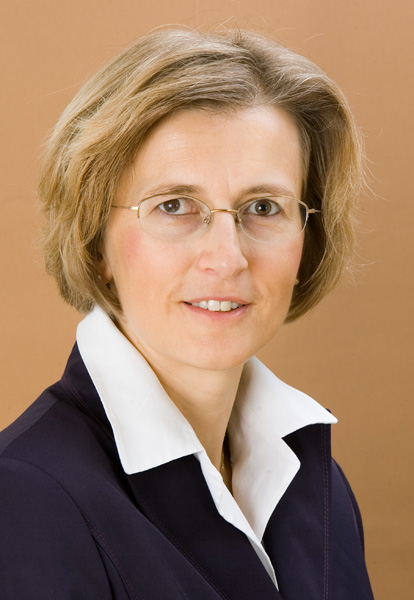
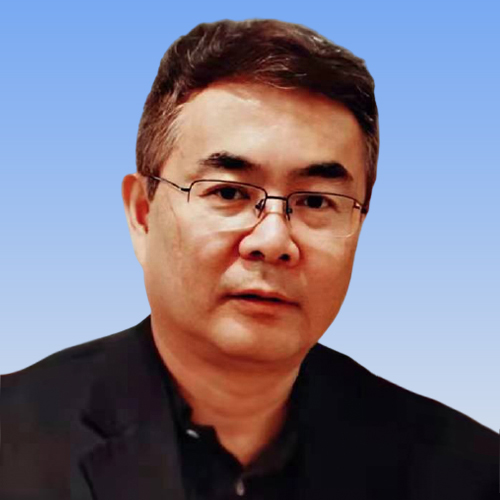
Johannes Eschner is a PhD student and researcher at the Research Unit of Computer Graphics, TU Wien. His work focuses on geospatial visualization, real-time risk assessment systems, and motion visualization techniques. He is part of the Visualization Group and contributes to projects like the FWF-funded Joint Human-Machine Data Exploration (2023–2026). His research includes developing interactive tools for avalanche risk visualization using high-resolution geospatial data, as well as methods for attention-guided animations through motion smoothing techniques. Notable outputs include a real-time avalanche risk visualization system and studies on motion blur's impact in molecular animations. Key technical expertise includes 3D mapping, generative models, and user-centered design. His work bridges computer graphics with practical applications in environmental safety and scientific communication.
Stefan Fenz is a Senior Scientist at Vienna University of Technology (TU Wien), key researcher at SBA Research, and co-founder of Xylem Technologies GmbH. His academic appointments include positions at TU Wien's Faculty of Informatics, Institute of Information Systems Engineering, where he conducts research on organizational information security, semantic technologies, and decision support systems. He previously served as a member of ENISA's Permanent Stakeholder Group (2012-2015) and as a visiting scholar at Stanford University's Center for Biomedical Informatics Research (2010). Dr. Fenz holds multiple advanced degrees including an MSc in software engineering & internet computing, MSc in business informatics, and PhD in computer science from TU Wien, plus an MSc in political science from University of Vienna. His educational background reflects his interdisciplinary approach that bridges technical and organizational aspects of information systems. His research spans several interconnected domains with primary focus on organizational information security, semantic technologies for decision support, and AI applications in building energy efficiency and agriculture. His work demonstrates consistent integration of semantic web technologies with practical decision support applications across diverse domains. Recent publications show an expansion into AI-driven agricultural optimization while maintaining his foundational work in security ontologies and risk management. His publication record reveals evolving research trajectories from early work on security ontologies (2008-2012) through semantic approaches to building energy efficiency (2012-2018) to current applications of AI in agriculture and building renovation. The consistent thread throughout is the application of semantic technologies and formal modeling to complex decision problems in security, energy, and now agriculture. Dr. Fenz is actively involved in research projects including Innov:ATE Austria's Digital Innovation Hub for Agriculture, Timber and Energy (2021-2024) and ICT for Decision Making in Farming (2017-2021), demonstrating his commitment to practical applications of his research. He has supervised numerous master's theses on topics ranging from cloud security to crop rotation optimization. As a court-sworn expert for IT security, member of IFIP WG 11.1, IEEE Systems, Man, and Cybernetics Society, and ISC², he maintains strong connections between academic research and practical security challenges. His international experience includes lecturing positions at Peking University, Beijing Jiaotong University, Konkuk University, and University of Applied Sciences Technikum Wien (2008-2012).
Eva Giralt Steinhauer serves as a Visiting Scientist at TU Wien within the Faculty of Informatics, specifically affiliated with the Databases and Artificial Intelligence research group (Institute of Logic and Computation, E192-02). She is categorized under both External Lecturers and Guest Professors at the institution, indicating her dual role in academic instruction and research collaboration. Her research centers on database systems and artificial intelligence, with particular emphasis on machine learning integration, semantic data modeling, and knowledge representation frameworks. These interests align with contemporary challenges in data-intensive computing, focusing on scalable architectures for AI-driven information systems and advanced query processing techniques. While no specific advising activities or grant projects are documented in the source material, her position within this specialized research unit suggests active participation in collaborative projects addressing next-generation database technologies and AI applications. The Databases and Artificial Intelligence group provides the primary operational context for her scholarly work at TU Wien.
Johannes Heurix serves as a Research Fellow within the Data Science group (E194-04) at Vienna University of Technology's Faculty of Informatics. His interdisciplinary work bridges agricultural technology, information security, and semantic web applications, supported by major grants from the European Commission, Austrian Research Promotion Agency (FFG), and Vienna Business Agency. Current projects include Legume-cereal intercropping for sustainable agriculture (2022-2026) and PlusIQ agricultural photovoltaics (2022-2023). His research focuses on three interconnected domains: Sustainable Agriculture: Developing AI-driven digital twins for crop rotation optimization and pre-crop value modeling Privacy Engineering: Pioneering pseudonymization frameworks for healthcare data secondary use Smart Building Systems: Applying semantic web technologies to energy-efficient building design through the SEMERGY project Analysis of his 15 most recent publications reveals a strategic shift from foundational security research (2013-2016) toward agricultural data science (2023-2024), with 60% of recent work addressing climate-resilient farming solutions. Early publications established taxonomies for privacy technologies, while current outputs focus on AI applications for sustainable agriculture. Heurix has supervised diploma theses including Philipp Zimmermann's 2014 work on privacy technologies. His grant portfolio features: €2.1M Legume-cereal intercropping project (European Commission, 2022-2026) PlusIQ photovoltaics integration (FFG, 2022-2023) FarmIT digital agriculture initiative (Vienna Business Agency, 2021) He operates within TU Wien's Data Science research group and collaborates with the SEMERGY consortium, working alongside architects, agricultural scientists, and healthcare institutions to develop practical implementations of his research.
Maxime Jakubowski is a PostDoc Researcher at TU Wien's Faculty of Informatics, affiliated with the Databases and Artificial Intelligence research group. Based in Room HA0320 at Favoritenstrasse 9, he can be contacted at maxime.jakubowski@tuwien.ac.at and maintains an ORCID profile (0000-0002-7420-1337). His research centers on graph data management within the Semantic Web ecosystem, specializing in RDF validation through shape constraint languages like SHACL and ShEx. He investigates formal foundations, expressiveness boundaries, and practical implementations including SQL compilation and neighborhood-based graph description. Current projects include FRESH (2021–2026), KtoAPP (2018–2025), and TARGET (2024–2028), focusing on graph data theory and implementation. Recent publications (2021–2025) demonstrate consistent contributions to RDF validation standards, with 14 articles addressing shape language formalization, compilation techniques, and provenance tracking. His work bridges theoretical database concepts with industrial applications in knowledge graph validation. Dr. Jakubowski supervises bachelor theses and teaches courses including Management of Graph Data (192.161) and Project in Computer Science. His research collaborations span international projects and the Dagstuhl Seminar 24102 on Shapes in Graph Data. He is an active member of the Databases and Artificial Intelligence research group, contributing to TU Wien's leadership in graph data management and Semantic Web technologies through both theoretical research and practical tool development.
Elia Annibale is a Full Professor of Computational Linguistics at the University of Salerno, Italy, holding positions since 1987. He leads the Department of Political, Social and Communication Sciences and previously directed the Department of Communication Sciences. His academic journey includes a PhD in Computational Linguistics from Paris 7 University (1979) and earlier roles at the University of Paris and the University of Southern California. Research focuses on computational linguistics, machine translation, and semantic web technologies. Notable projects include the ESPRIT MULTILEX and GENELEX EU initiatives, developing multilingual linguistic resources. Awards include Academia Europaea membership (1989) and leadership in PRIN research units. Education: PhD in Computational Linguistics, University of Paris VII (1979) Laurea in Modern Literature, University of Naples (1972) Publications span theoretical linguistics, applied computational linguistics, and semantic analysis. Current projects include a semantic web search engine and lexical resource development for e-government.
Monika Henzinger is a Full Professor of Computer Science at the University of Vienna since 2009. Previously, she held faculty positions at the Ecole Polytechnique Federale de Lausanne (2005-2009) and the University of the Saarland (1999-2005). She has also worked as a Director of Research at Google Inc and as a Research Staff member at Digital Equipment Corporation . Education: Ph.D., Computer Science, Princeton University (1993) Diploma, Computer Science, University of the Saarland (1989) Her research focuses on combinatorial algorithms , data structures , algorithmic game theory , and web information retrieval , with significant contributions to dynamic graph algorithms and probabilistic verification. Her work addresses problems in sponsored search auctions, web mining, and formal verification of stochastic systems. Key trends in her publications include web algorithmics , dynamic graph processing , probabilistic verification , and online optimization . Her research has been recognized through prestigious grants like the ERC European Young Investigator Award and the NSF CAREER Award . Scientific Awards: ERC Advanced Grant (2013) Honorary Doctorate, Technical University Dortmund (2013) European Young Investigator Award (2004) NSF CAREER Award (1995) She has advised PhD students at EPFL and the University of Vienna , including Paul Dütting and Veronika Loitzenbauer . Her editorial roles include serving as Editor of EATCS Monographs in Theoretical Computer Science and on the ACM Research Highlights board. She has led projects such as the Doctoral School Computational Science and Dynamic Graph Algorithms in Directed Graphs .
Jiebo Luo is a Professor of Computer Science at the University of Rochester, where he has been since 2014. Prior to this, he spent over 15 years at Kodak Research Laboratories, rising to Senior Principal Scientist. His research spans computer vision, natural language processing, machine learning, and computational social science. BS and MS in Electrical Engineering from University of Science and Technology of China (USTC), 1989 and 1992 PhD in Electrical Engineering from University of Rochester, 1995 Dr. Luo's work focuses on bridging computer vision with social science through multimedia analysis, social media modeling, and digital health. His research includes innovative approaches to unsupervised learning, event recognition in videos, and multi-label classification. His publications highlight trends in deep learning for medical imaging, social media as sensors, and video analytics. Key subfields include semantic understanding, attention mechanisms, and multimodal fusion. 2021 ACM SIGMM Technical Achievement Award 2018 IEEE Region 1 Technological Innovation in Academic Award 2004 Eastman Innovation Award Fellowships: ACM, AAAI, IEEE, IAPR, SPIE Dr. Luo serves as Editor-in-Chief for IEEE Transactions on Multimedia (2020-2022) and has held leadership roles in multiple IEEE Technical Committees. He is a Data Science CoE Distinguished Researcher at the Goergen Institute for Data Science and a Board Member of the Greater Rochester Data Science Industry Consortium.
Dr. Hervé Panetto is a Professor of Enterprise Information Systems at the University of Lorraine, TELEM Nancy. His career spans multiple prestigious institutions, including visiting professorships at the Federal Technological University of Paraná (Brazil) and La Sapienza Rome (Italy). He has held continuous academic roles since 1991, with a focus on enterprise information systems modeling and interoperability research at CRAN (Research Centre for Automatic Control), a CNRS-affiliated unit. Positions: Full Professor (University of Lorraine, 2012-present), Full Professor (University Henri Poincaré Nancy 1, 2008-2012), Visiting Professor (Technological Federal University of Parana, 2015), Visiting Professor (La Sapienza Roma 1, 2006), Associate Professor (University Henri Poincaré Nancy 1, 1991-2008) His research focuses on information systems modeling , interoperability assessment , semantics formalization , and human-centric AI applications in enterprise environments. He pioneered ontology-based approaches for production systems interoperability and contributed significantly to the theoretical foundations of enterprise information systems integration. Research Themes: Semantics modeling, Ontology development, Cyber-physical manufacturing, Enterprise sustainability, Digital transformation, Cooperative control systems Dr. Panetto has received numerous honors including: 2025 Member of the National Academy of Artificial Intelligence 2025 HUMAN-AI Chair holder 2024 IEEE Senior Member 2024 AIIA Fellow 2021 AAIA Fellow Multiple IFAC/INCOSE Outstanding Service Awards As an editorial leader, he serves as Associate Editor or member of editorial boards for major journals including IEEE IoT Journal, Enterprise Information Systems, and Annual Reviews in Control. He has led international conferences as General Co-chair of OTM Federated conferences and chaired IFAC committees.
Thomas Einwoegerer is a researcher at the Austrian Academy of Sciences and head of the Quaternary Archaeology Research Group since 2017. He has taught at the Institute of Prehistory and Historical Archaeology at the University of Vienna since 2003, focusing on Paleolithic studies. Affiliation: Austrian Academy of Sciences (since 2000), University of Vienna (since 2003) Education: Doctorate in Prehistory and Early History from the University of Vienna (2009) His research centers on Paleolithic settlement structures, artifact morphology, and experimental archaeology. Key projects include long-term excavations at Krems-Wachtberg (2005–2015) and Kammern-Grubgraben (since 2015), with a focus on loess stratigraphy and subsistence strategies during the Last Glacial Maximum. Recent publications analyze geochemical proxies, radiocarbon chronologies, and osseous industries at LGM sites in Lower Austria. His work bridges archaeological data with Quaternary science to understand environmental impacts on hunter-gatherer societies. He leads the Quaternary Archaeology Research Group and contributes to public archaeology through excavations and outreach. Collaborations span institutions in Austria, Germany, and international venues.
**Dominik Bork** is an Assistant Professor at the Department of Business Informatics within the Faculty of Informatics at TU Wien. His core research focuses on conceptual modeling, model-driven engineering, and the integration of artificial intelligence into enterprise systems. He leads projects such as the Network Lab and has coordinated initiatives like the Automatisiertes End-to-End-Testen von Cloud-basierten Modellierungswerkzeugen and MFP 4.2 Advanced Analytics for Smart Manufacturing . His work emphasizes GLSP-based web modeling tools , including the development of open-source platforms like BIGUML for UML modeling. He has published extensively on topics like knowledge graph transformation, accessibility in modeling tools, and AI-enhanced decision management. Bork actively contributes to academic communities through conference organizing roles and guest editorial work for journals like Enterprise, Business-Process and Information Systems Modeling . His research bridges theoretical advancements with practical applications in enterprise architecture and sustainable systems engineering. Education & Background : Holds titles including Dipl.-Wirtsch.Inf.Univ. and Dr.rer.pol., reflecting his interdisciplinary expertise in business informatics and economics. Key Contributions : - Developed CM2KGcloud , a web-based platform for conceptual model-to-knowledge graph transformation. - Pioneered EA ModelSet , a FAIR dataset advancing machine learning in enterprise modeling. - Authored influential papers on inclusive conceptual modeling for disability-aware tools. - Led efforts in model-based construction of enterprise architecture knowledge graphs . Grants/Projects : Automatisiertes End-to-End-Testen von Cloud-basierten Modellierungswerkzeugen (Principal Investigator) Digital Platform Enterprise (Principal Investigator) MFP 4.2 Advanced Analytics for Smart Manufacturing (Principal Investigator) Labs/Teams : Active in the Network Lab at TU Wien, focusing on cutting-edge research in modeling technologies and AI integration.
Henning Deters is a political scientist and researcher at the University of Vienna's Centre for European Integration Research (EIF), part of the Faculty of Social Sciences. He holds a PhD from Bremen International Graduate School of Social Sciences. His primary research focuses on EU judicial politics, environmental policy, single market policy, and computational analysis. Deters has held roles including Assistant Professor at the University of Innsbruck and postdoctoral researcher in FWF-funded projects on EU judicial appointments. He has taught courses on EU regulatory policies and European integration at multiple institutions. Education includes a Diplom degree in Political Science from Universität Bremen and an MA from BIGSSS. His work combines qualitative and quantitative methods, with recent emphasis on computational approaches. Notable publications analyze EU policy dynamics in areas like the Posted Workers Directive, climate governance, and judicial politics. He actively contributes to academic discussions through blogs like Regioparl and maintains a focus on EU institutional transformations. His research highlights include examining the role of German regional parliaments in EU policymaking and analyzing the EU's Green Deal. Deters' current projects investigate judicial appointments at the Court of Justice of the EU and the politicization of legal challenges. His work bridges theoretical insights with practical data analysis, often using web-scraping and statistical methods. Key Positions: Postdoctoral Researcher (University of Vienna), Assistant Professor (University of Innsbruck), Research Associate (Danube University Krems) Teaching: Courses on EU policy, judicial politics, and European integration Awards: None explicitly listed, though his work has been peer-reviewed and published in top journals Labs/Teams: EIF Research Group, Regioparl Project
Rudolf Krska is a full Professor at the University of Natural Resources and Life Sciences, Vienna (BOKU), where he leads the Institute for Bioanalytics and Agro-Metabolomics in Tulln. His joint appointments include Professorships at Queen's University Belfast and Kansas State University. With a career spanning over three decades, he specializes in analytical chemistry, food/feed safety, and mycotoxin research. Research Focus: Krska's work centers on developing cutting-edge analytical methods (LC-MS/MS, infrared spectroscopy) for detecting contaminants in food chains. Key areas include: Mycotoxin control strategies and metabolomics of plant-fungi interactions Immunoassays, reference materials, and proficiency testing Climate change impacts on food contaminants and rapid on-site detection technologies Scientific Output: His recent publications (2024-2025) demonstrate a strong emphasis on spectroscopic mycotoxin detection, climate-related contaminant patterns, and global food safety challenges, particularly in vulnerable regions like Sub-Saharan Africa. Awards & Honors: Nils Foss Excellence Prize (2024), Chemistry Leader Award (2023) 5x Web of Science Highly Cited Researcher (2015-2019) Honorary Professor (China), Royal Irish Academy Membership Golden Ring of Tulln, Fritz-Pregl-Medal, and 20+ other distinctions Leadership & Projects: Krska directs major initiatives including FFoQSI's strategic research and EU projects like MyControl-ET. He founded two spin-offs (Biopure, Quantas Analytics) and oversees BOKU's analytical core facilities. Education & Training: Trained at TU Wien (Dipl.-Ing. 1990, Dr.techn. 1993), he mentors emerging scientists through international collaborations and laboratory management.
Egon Lüftenegger is a Senior Lecturer at Fachhochschule Salzburg's Department of Information Technologies and Digitalisation. His work bridges academia and industry through innovative process mining and sentiment analysis applications. PhD in Information Systems (TU Eindhoven) Focus on Service-Dominant Logic and Business Process Management Active in Industry 4.0 and Digital Transformation research His research explores sentiment-driven process redesign, technology-enabled social inclusion, and smart production analytics. Publications highlight process mining frameworks , LLM applications in BPM, and service-dominant business models . Current projects involve creating tools like SentiProMoWeb and Cost-Benefit Tracker, with applications in manufacturing, airline services, and education sectors.
Gabriele Kotsis is a Full Professor at the Institute of Telecooperation, Johannes Kepler University Linz, with extensive contributions to Artificial Intelligence research. Her institutional presence spans multiple departments through interdisciplinary projects while maintaining her primary affiliation with JKU's engineering-focused research units. Her research expertise encompasses: Natural Language Processing and Neural Machine Translation systems Reinforcement Learning applications for Smart Grid optimization Mobile Computing and Multimedia Intelligence frameworks Big Data Analytics and Database Systems innovation Human-centered AI development methodologies Recent publications (2024-2025) reveal a strategic focus on practical AI implementations addressing multilingual communication barriers and energy efficiency challenges. Her work consistently bridges theoretical AI advances with real-world applications across multiple domains. Professor Kotsis maintains an active supervision record with thesis guidance and leads multiple funded research initiatives. Her current portfolio includes: 'Enhancing Neural Machine Translation' project (2025-2026) for Southeast Asian languages 'INTES' regulatory compliance ecosystem (2023-2026) 'Human-centered Artificial Intelligence' initiative (2022-2026) Through her leadership in international conferences (iiWAS, MoMM, DEXA) and editorial roles for major proceedings, she maintains significant influence in the global computer science research community while advancing JKU's research profile.