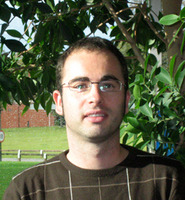
Ernesto Jimenez-Ruiz is a Researcher at the University of Oslo affiliated with the Centre for Scalable Data Access (SIRIUS) and Logic and Intelligent Data group. He holds a PhD in Computer Science from University Jaume I of Castellon and specializes in semantic technologies and ontology engineering. His research spans bio-medical information processing, ontology reuse/alignment, and semantic web technologies for data analytics. Current projects include Artificial Intelligence for Data Analytics (AIDA) at The Alan Turing Institute, where he serves as Senior Research Associate. Recent publications (2024-2025) focus on neurosymbolic AI systems, knowledge graph construction from tabular data, and ontology alignment techniques. His work demonstrates strong emphasis on practical applications of semantic technologies. Dr. Jimenez-Ruiz has developed several tools including LogMap for ontology matching and BootOX for relational-to-ontology mapping. He teaches Semantic Technologies (INF3580/INF4580) and supervises PhD students in ecotoxicological effect prediction using knowledge graphs.
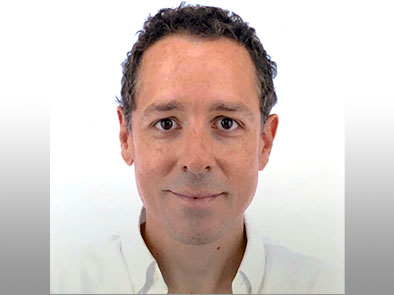
Bogdan Vrusias is a Visiting Professor at the University of Surrey's School of Computer Science and Electronic Engineering (part-time). He concurrently serves as Global Head of AI and Data Engineering at The Economist. His academic journey began at Surrey as an undergraduate (BSc Computing and Information Technology, 1998), followed by a PhD in multi-modal information retrieval (2004) and an MBA (2010). He is a Fellow of the Higher Education Academy (FHEA). Education: PhD, University of Surrey (2004) MBA, University of Surrey (2010) BSc Computing and Information Technology, University of Surrey (1998) His research spans Generative AI, Large Language Models, Foundation Models, Machine Learning, Deep Learning, Cloud Computing, Natural Language Processing, and Computer Vision . His work focuses on developing scalable AI architectures and semantic technologies for real-world applications. Publications consistently explore semantic systems, neural networks, and multimodal information retrieval . Recent articles emphasize video annotation frameworks and P2P network architectures, while earlier work established foundations in self-organizing maps and feature selection for high-dimensional data. Awards: FHEA (Fellow of the Higher Education Academy) He previously directed UG/PG programs at Surrey and created pioneering courses like Web Hacking Countermeasures. His industry leadership includes founding tech startups and heading Amazon Web Services' AI/ML Specialist Solutions Architects team for EMEA. At The Economist, he drives AI and data transformation.
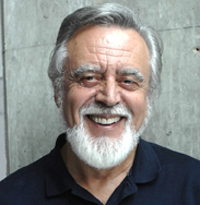
Dr. Ryan Shaw is an Associate Professor at the University of North Carolina. His expertise spans knowledge organization, philosophy of information, and digital humanities. He holds a PhD in Information Management & Systems from UC Berkeley, with a Designated Emphasis in New Media (2010), and a B.S. in Symbolic Systems from Stanford University. Shaw’s work focuses on historical periodization, linked data, and computational methods for organizing cultural heritage materials. His research includes the PeriodO project (NEH-funded), a gazetteer of historical periods, and the Editors’ Notes initiative (Mellon Foundation), developing collaborative research tools for humanists. He has received grants such as the 2012 IMLS Early Career Development Award for civil rights history digitization projects. His book chapter in The Discipline of Organizing (2014) earned ASIS&T’s Book of the Year award. Key research areas involve linking open data (e.g., LODE ontology), nanopublications for period assertions, and semantic tools for historical analysis. He explores intersections between information science and disciplines like sociology, philosophy, and archaeology. Shaw’s recent work addresses challenges in temporal modeling, digital epigraphy, and the ethics of computational historiography. Grants: IMLS (2012), Mellon Foundation, NEH Labs/Teams: PeriodO Project, Editors’ Notes, Electronic Cultural Atlas Initiative Key Tools: LODE ontology, PeriodO gazetteer His articles analyze topics like big data’s epistemological implications, collaborative scholarly notebooks, and the socio-technical dimensions of knowledge organization systems. He advocates for open, decentralized approaches to information infrastructure in humanities research.
Dr. Prashant Khare is a Researcher at Queen Mary University of London's School of Electronic Engineering and Computer Science. His research focuses on Natural Language Understanding, Machine Learning, and Social Data Science, with applications to organizational communication, crisis information analysis, and internet standards. He has contributed to datasets like LEDA for decision dialogue analysis and explores linguistic markers of influence in online organizations. His work bridges computational methods with real-world challenges in communication and crisis management. Key research interests include dialogue modeling, NLP for organizational contexts, and cross-lingual crisis data classification. He has analyzed social graphs of technical communities like the IETF and studied the co-spread of misinformation during global health crises. His technical contributions span RFC errata analysis, decision detection algorithms, and semantic validity assessment in linked open data. Though no formal awards are listed, his publications reflect sustained engagement with interdisciplinary challenges at the intersection of computer science and social systems. His research often involves collaboration with industry and standards bodies, as seen in his work on RFC deployment and large-organization email analysis.
Jacopo Urbani is an Associate Professor at Vrije Universiteit Amsterdam, affiliated with the Faculty of Science, Computer Systems department, and the Network Institute. His research focuses on Knowledge Graphs, Stream Reasoning, and Distributed Computing. He explores scalable reasoning techniques for large-scale datasets, integrating semantic technologies with real-time data processing. His work emphasizes practical applications of logic-based systems, including existential rules, probabilistic reasoning, and trigger graphs for efficient knowledge base materialization. Recent contributions address challenges in handling dynamic data streams and enhancing the scalability of semantic web technologies. Urbani has published extensively in top venues like the Semantic Web Conference (ESWC) and the International Conference on Principles of Knowledge Representation and Reasoning (KR). Notable projects include the VLog rule engine for knowledge graphs and the Tab2Know platform for extracting structured data from scientific tables. He supervises PhD theses in areas like stream reasoning and knowledge graph embeddings. His research also involves collaborative efforts with institutions worldwide, addressing topics such as data compression, distributed computing architectures, and hybrid reasoning systems.
Yangfeng Ji is an Associate Professor in the Department of Computer Science at the University of Virginia, where he has been since 2018. Previously, he held a postdoctoral position at the Paul G. Allen School of Computer Science & Engineering, University of Washington, from 2016 to 2018. He earned his PhD in Computer Science from the Georgia Institute of Technology in 2016. His research focuses on Natural Language Processing (NLP) and Machine Learning, with an emphasis on ethical AI, bias mitigation, and model interpretability. Education: PhD in Computer Science, Georgia Institute of Technology, 2016 Postdoctoral Researcher, Paul G. Allen School of Computer Science & Engineering, University of Washington, 2016–2018 Research Interests: Dr. Ji’s work addresses critical challenges in NLP and Machine Learning, including fairness and bias in Large Language Models (LLMs), model interpretability through techniques like saliency estimation and rationale evaluation, and the development of robust evaluation frameworks. His contributions span topics such as gender representation vectors in LLMs, allocational harms, and improving temporal awareness in recommendation systems. He also explores data selection methods for model fine-tuning and secure data appraisal techniques. Recent Research Trends: His publications emphasize addressing biases and fairness in LLMs, enhancing model interpretability via contrastive activation analysis, and improving robustness through adversarial training and data selection. Key themes include mitigating vulnerabilities in model explanations and optimizing latent spaces for out-of-distribution detection. Scientific Awards: No awards explicitly mentioned in the provided information. Advising and Grants: No advisees or grant details provided in the text. Dr. Ji’s research group focuses on collaborative projects in ethical AI and NLP applications. Labs/Teams: No specific lab or team affiliations explicitly stated in the text.
Valderi Reis Quietinho Leithardt is a Full-time Assistant Professor at ISCTE - University Institute of Lisbon, Portugal, where he also serves as an Integrated Researcher at ISTAR/ISCTE. An IEEE Senior Member since 2019, he specializes in Computer Science with emphases on algorithms, distributed systems, and data privacy across Internet of Things, Cloud Computing, and Intelligent Systems domains. Education: Postdoctoral in Computer Engineering, University of Salamanca, Spain (2019-2021) Postdoctoral in Distributed Systems and Data Privacy, University of Coimbra, Portugal (2017-2019) Ph.D. in Computer Science, Federal University of Rio Grande do Sul, Brazil (2011-2015) Master's in Computer Science, Pontifical Catholic University of Rio Grande do Sul, Brazil (2006-2008) Graduate Certificate in Computer Networks, Federal University of Rio Grande do Sul, Brazil (2003-2004) Bachelor's in Data Processing Technology, Centro de Ensino Superior de Foz do Iguaçu, Brazil (1999-2002) His research centers on developing middleware solutions for privacy control in ubiquitous environments (UbiPri), cryptographic protocols for IoT security (PRISEC series), and machine learning applications for infrastructure monitoring. Recent work demonstrates strong interdisciplinary connections between data privacy frameworks, edge computing optimization, and real-world implementations in smart agriculture, healthcare, and power grid systems. His publications reveal consistent focus on solving resource-constrained environment challenges through algorithmic innovation. Research Impact: 2025 publications show expansion into transformer models for time-series forecasting and JVM optimization techniques 2024 work emphasizes healthcare data privacy, forged image detection, and elderly activity monitoring Core contributions to IoT security protocols and distributed system architectures since 2019 Leadership and Service: Principal investigator on 12+ funded projects including Physically Unclonable Functions (FCT, 2025) and Smart Textile for Dogs (Salamanca University, 2025) Organizer of WTTFC workshops (2024-2025) and IEEE CiSTI conference sessions Active thesis committee member for 30+ graduate students across Portugal, Brazil, and Spain Professor Leithardt maintains strong industry connections through IEEE activities and collaborates with research groups including UNINOVA, ISTAR, and University of Salamanca's computer engineering department on next-generation secure system architectures.
Kimberly Smith is a Lecturer in the Program in the Environment at the University of Michigan, specializing in environmental ethics, policy, and law. Her research examines the development of the American 'green state' - the institutional capacity to manage complex socioecological systems. Her interdisciplinary scholarship bridges political theory, environmental law, and sustainability studies. Key interests include agrarian environmental thought, environmental justice frameworks, and normative dimensions of environmental governance. Prior to joining University of Michigan, she taught political science and environmental studies at Carleton College for over two decades. She holds degrees in anthropology and political science. Her publications analyze topics ranging from African American environmental thought to animal policy and the history of environmental law.
Dr. Paolo Mengoni is a Lecturer I at Hong Kong Baptist University (HKBU), specializing in Artificial Intelligence and Complex Network Analysis. Originally from Italy, he brings over 20 years of experience as an IT consultant and researcher. His work focuses on AI applications in education, natural language processing, emotion recognition, and autonomous agents. He holds a Ph.D. in Computer Science from the University of Florence and MSc/BSc degrees from the University of Perugia (Italy). Teaching responsibilities include courses like AI and Digital Communication , Basic Programming for Data Science , and Recommender Systems for Digital Media . His research explores topics such as learning analytics, sentiment analysis in social networks, and community detection in collaborative environments. He actively contributes to academic activities, including organizing international workshops like the 2020 Global Virtual Hack and Design Challenge and the HKBU-University of Perugia exchange program. His publications span journals and conferences including IEEE/WIC/ACM Web Intelligence, Future Generation Computer Systems, and IEEE International Symposia. He serves as a reviewer for venues such as IEEE Congress on Evolutionary Computation and the International Conference on Computational Science and Its Applications.
Dr. Gaetano Manzo is a Researcher at the HES-SO Valais-Wallis - School of Management , focusing on Machine Learning , eHealth , and Recommender Systems . He holds a BSc in Management Information Systems and leads research in agent-based systems for healthcare support, data-driven clinical decision frameworks, and vehicular networking optimization. His research interests include: Digital transformation in healthcare Explainable AI for medical decision support Personalized health-assistant chatbots Privacy-preserving data sharing Context-aware recommendation systems Key publication trends (2020-2025) show expertise in: Agent-based modeling for cancer survivor support Rule extraction from neural networks Floating content optimization in vehicular networks Weak supervision techniques for clinical datasets Multicultural streaming media recommendations He has contributed to projects like: The Ark (REPS-CITI Real Estate PaaS) Regional Development Axis (2019) for local innovation support
Jean-Paul Calbimonte is an Associate Professor at the University of Applied Sciences and Arts Western Switzerland (HES-SO Valais-Wallis) , specifically affiliated with the School of Business Administration . His research spans multiple domains, including Medical Informatics , Semantic Web , Ontology Engineering , Stream Processing , and Knowledge Management . His recent work focuses on AI applications in healthcare (Alzheimer’s diagnosis via MRI analysis, cancer survivor support systems), semantic web technologies for wind energy data sharing, and decentralized health data management systems. He leads projects like TechnoPortal (ontology hosting for wind energy) and SMARTEDGE (edge intelligence toolchain). He employs cutting-edge methods in Machine learning for medical diagnostics Semantic stream processing Blockchain for clinical data governance Multi-agent systems for personalized healthcare His publications highlight collaborations with institutions like CHUV , Pryv SA , and University of Maribor , alongside industry partners including NVIDIA and Bosch .
Panagiotis Zervas serves as an Associate Professor in the Department of Electrical and Computer Engineering at the University of Peloponnese since June 4, 2020. His academic career includes prior appointments as Assistant Professor at the Department of Music Technology and Acoustics, Hellenic Mediterranean University (2015–2020) and Technological Educational Institute of Crete (2015–2019), and as Lecturer at the same department of the Technological Educational Institute of Crete (2008–2015). His research spans Natural Language Processing applications for text analysis , Large Language Models for structured data extraction , audio signal processing , and music information retrieval using machine learning . He specializes in developing AI-driven systems for knowledge mining from multimodal information, with applications in social protection and intelligent audio systems. His work integrates Retrieval-Augmented Generation techniques and focuses on embedded systems for IoT audio applications. Zervas leads major European research initiatives including EU-ALMPO (2025–), Train4Blue (2025–), GROWTH4BLUE (2024–), and MICROIDEA (2024–) as Principal Investigator or Deputy Scientific Director. Since 2023, he collaborates with the World Bank as a Short-Term Consultant, first implementing Greece's National Skills Framework with AI-based skill profiling (2022–2024), and currently developing an AI-driven job matching portal for the Pacific Islands Network for Employment. His teaching portfolio includes Signals & Systems, Digital Signal Processing, Statistical Processing & Learning, Audio & Music Technology, Machine Learning, and Educational Technology. He completed his PhD in 2007 at the University of Patras' Department of Electrical Engineering on Greek language modeling for text-to-speech systems, and has published in journals like Acoustics and Mathematics while presenting at conferences including Web Audio Conference (WAC2022) and Forum Acusticum 2023.
Apurva Gandhi is a Researcher at Carnegie Mellon University , affiliated with the School of Computer Science and the Computer Science Department. Their research focuses on Artificial Intelligence with applications in program synthesis , agentic tasks , and handwritten content analysis . Research Interests : Artificial Intelligence Machine Learning Natural Language Processing Program Synthesis Publications highlight expertise in web agents , AI-driven database systems , deepfake detection , and sequence modeling for cybersecurity . Contact : apurvag@andrew.cmu.edu
Dimitri Bertsekas is the Jerry Mcafee (1940) Professor in Engineering at the Massachusetts Institute of Technology. His research focuses on optimization, game theory, systems, networking, control, and autonomy. He works within the Laboratory for Information and Systems Decisions. His recent publications demonstrate a strong emphasis on reinforcement learning, dynamic programming, and algorithmic solutions for complex systems. Work spans applications in robotics, transportation optimization, computer vision, game AI, and knowledge systems. Common themes include multi-agent coordination, real-time decision-making under uncertainty, and scalable computational methods. Bertsekas contributes to both theoretical frameworks and practical implementations, with innovations in auction algorithms, rollout methods, and model predictive control integration.
Sérgio Nunes is an Assistant Professor at the Faculty of Engineering (FEUP) of the University of Porto, Portugal, and a Senior Researcher at INESC TEC's Information and Computer Graphics Systems Unit. He holds a MSc (2004) and PhD (2010) in Informatics Engineering from FEUP, focusing on Information Retrieval. His research spans Information Retrieval, Web Technologies, Entity-Oriented Search, and Natural Language Processing. Key research interests include entity-oriented search models (e.g., Hypergraph-of-Entity), low-resource language datasets, narrative extraction, and misinformation detection. His work often integrates graph theory, visualization tools (e.g., MediaViz), and collaborative platforms for text analysis. Publications emphasize innovations in search algorithms, dataset construction, and ethical AI applications. Notable projects include Labadain-30k+ for Tetun language resources and Text2Story for narrative analysis in European Portuguese news.