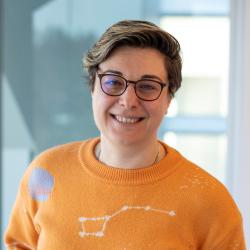
Shane Lishawa is a Senior Research Associate in the Department of Environmental Science at Loyola University Chicago , where he has worked since 2008. His research focuses on the interplay between invasive plant species, biodiversity, nutrient cycling, and climate change in Great Lakes coastal wetlands. He collaborates extensively with tribal communities, federal agencies, and conservation organizations on applied restoration projects. Education: BS in Resource Ecology and Management (University of Michigan, 2001), MS in Forest Ecology (University of Vermont, 2005) Research Interests center on Wetland Ecology , Invasive Species , and Restoration Ecology . His work investigates: Invasive species dynamics (particularly Typha and Phragmites) Climate change impacts on Great Lakes wetlands Biochar applications for soil remediation Ecosystem services in urban wetlands Collaborative restoration with tribal partners Recent publications highlight advancements in: Using remote sensing for invasive species monitoring Developing habitat suitability models for wild rice Biomass harvesting techniques for pollution mitigation Climatic stressor experiments on wetland plants Scientific Awards include substantial grants from: United States Fish and Wildlife Service ($1.1M) Bureau of Indian Affairs Illinois Tollway National Fish and Wildlife Foundation His research integrates field experimentation with community-based conservation efforts, particularly focusing on culturally important species like wild rice (Zizania palustris). He has developed field measurement tools for invasive plant biomass estimation and investigates the trade-offs between mechanical treatment strategies and ecosystem responses.
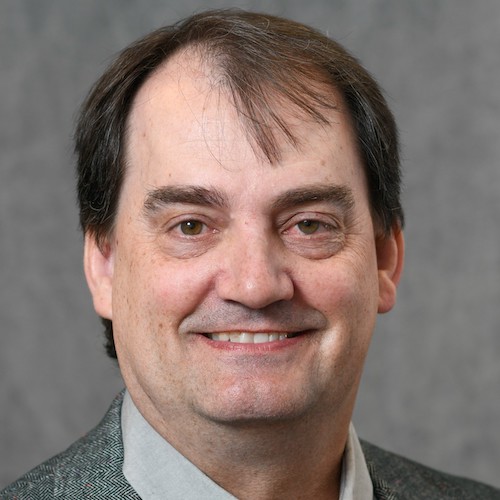
Jihoon Ryoo is an Associate Professor in the Department of Computer Science at SUNY Korea, where he has been employed since 2017. He directs the AI2S Lab and co-founded the startup IDCITI. He holds a Ph.D. from Stony Brook University (2017) and M.S./B.S. degrees from Korea University. Research Interests: Dr. Ryoo's work focuses on practical implementations in wireless networking and mobile systems, including backscatter communication, IoT connectivity, saliency-based video streaming, and GNSS-independent localization. His projects span uGPS (metro localization), SALI360 (360° video optimization), and autonomous anti-drone systems, often leveraging deep learning and RF analytics. Awards & Grants: Incheon City Mayor Award (Entrepreneur, 2024 & S/W Hackathon, 2020) Prime Minister Awards (ICT Colloquium & Applied Data Competition, 2020) IITP Excellence Research Award (2019) Grants: National XR-Lab initiatives (MSIT), Incheon-RISE program (2025–2030), NRF streaming platform research, and multiple Incheon Techno Park projects. Teaching & Service: Courses include Computer Networks, Computer Vision, Algorithms, and Wireless Networks. Service includes TPC roles (MobiSys, ICCCN), Director of SUNY Korea's ICT CCP Program (2018–2020), and XR-Lab Director (2021–2023).
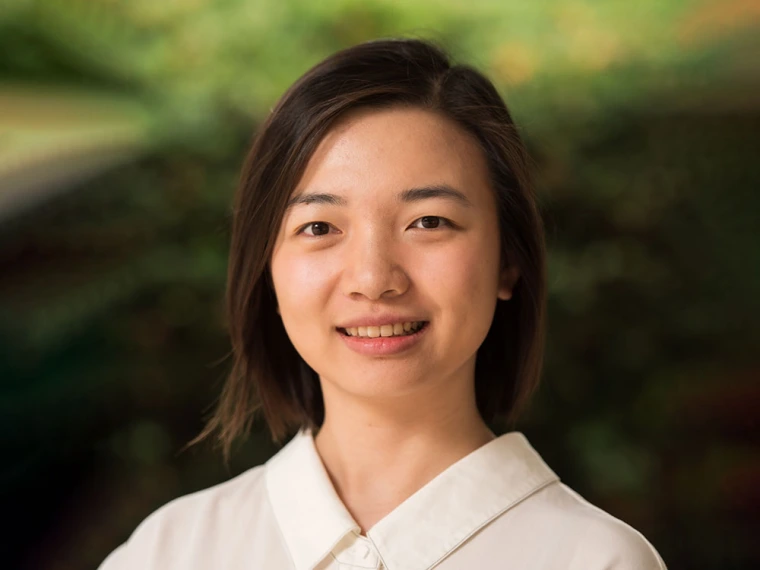
Dr. Tiago Mendes Ferreira is a Research Fellow at the Institute of Physics within the Faculty of Natural Sciences II at Martin Luther University Halle-Wittenberg. His research focuses on biophysics, molecular dynamics, lipid membranes, and solid-state NMR. He utilizes computational and experimental methods to study complex biological systems, contributing to advancements in medical imaging and material science. Research interests include: Molecular dynamics simulations of lipid membranes Solid-state NMR techniques for biomolecular analysis Computational modeling of membrane proteins Biophysical properties of cellular structures Advanced imaging for medical diagnostics His recent publications emphasize deep learning applications in ophthalmology and biomechanics, reflecting interdisciplinary collaborations. Article trends show strong focus on medical AI, universal design in web interfaces, and sports analytics.
Dr. Seunghyun "Brian" Park is an Associate Professor in the Department of Administration and Economics at St. John’s University, part of The Lesley H. and William L. Collins College of Professional Studies. He joined the faculty in 2017 after earning a PhD in Hospitality Management from Kansas State University and degrees in Tourism Science from Hanyang University (South Korea). His research focuses on customer experience management, social media analytics, disability tourism, and event tourism management. He has published extensively in top journals like Annals of Tourism Research and Tourism Management . Education PhD, Hospitality Management, Kansas State University MS and BS, Tourism Science, Hanyang University Research Interests Dr. Park explores innovative applications of social media analytics in hospitality marketing, including big data analysis for customer sentiment and event participation. He advocates for inclusive tourism practices, particularly for disabled travelers, and examines how events enhance community quality of life. His work bridges qualitative methods like netnography with quantitative data visualization techniques. Teaching Teaches courses in hospitality marketing, event management, social media analytics, and tourism operations. Courses include Event & Festival Management and Social Media Analytics & Technology in Hospitality . Grants & Awards No specific grants or awards listed in the provided information. Lab/Team No dedicated lab or team explicitly mentioned, though his research collaborations involve tourism institutes and hospitality organizations.
Dr. Ramiro Liscano is a Professor in the Department of Electrical, Computer and Software Engineering at Ontario Tech University's Faculty of Engineering and Applied Science. He holds a PhD in Systems Design Engineering from the University of Waterloo (1998), an MScEng in Mechanical Engineering from the University of Rhode Island (1984), and a BScEng in Mechanical Engineering from the University of New Brunswick (1982). His research focuses on Pervasive and Mobile Computing (including service discovery and security), Distributed Computing (peer-to-peer, web services, grid services), and Sensor Networks (wireless/Internet interoperability). He teaches courses such as Network Design, Pervasive and Mobile Computing, and Software Design Fundamentals. His work includes significant contributions to patent-pending innovations in presence-aware telephony systems, context-aware call handling, and service discovery protocols. Dr. Liscano is a Professional Engineer (PEng) and a Senior Member of IEEE (SMIEEE). Education: PhD (Systems Design Engineering), University of Waterloo, 1998 MScEng (Mechanical Engineering), University of Rhode Island, 1984 BScEng (Mechanical Engineering), University of New Brunswick, 1982 Research Themes: His work bridges theoretical and applied aspects of distributed systems, emphasizing practical implementations in mobile computing environments. Recent efforts include developing interoperable sensor networks and secure service discovery mechanisms. Patents: Over 10 patent filings in areas such as context-aware telephony systems, presence services, and distributed application messaging. Notable filings include interactive conflict resolution for personalized services and availability predictors using call processing data.
Paul McNicholas is a Professor in the Department of Mathematics and Statistics at McMaster University, where he holds a Tier 1 Canada Research Chair in Computational Statistics. He serves as Editor-in-Chief of the Journal of Classification and has directed the MacData Institute (2017-2022). His academic leadership extends to his role as Associate Chair of Statistics (2021-2023) and his extensive supervision of graduate students across multiple cohorts. Dr. McNicholas earned his academic credentials from Trinity College Dublin, including a Sc.D. in Statistics, Ph.D. in Statistics, M.Sc. in High Performance Computing, and B.A./M.A. in Mathematics. His educational background reflects the interdisciplinary nature of modern computational statistics, combining deep mathematical knowledge with advanced computational skills essential for contemporary data science. His research focuses on computational statistics, particularly mixture model-based clustering and classification. Current research includes work on non-Gaussian mixtures, matrix variate distributions, and real problems in big data analytics. McNicholas has made significant contributions to developing statistical methods for higher-order data, mixed-type data, and multivariate longitudinal data, with special applications in autism and aging research. His methodological innovations have enabled more sophisticated analysis of complex datasets across various domains, particularly in health sciences. Analysis of his recent publications reveals a strong focus on advancing mixture model methodology for increasingly complex data structures. His work spans theoretical developments in distribution theory, computational algorithms for model fitting, and practical applications in health sciences. A notable trend is the extension of traditional statistical methods to handle high-dimensional, non-Gaussian, and structured data while maintaining computational efficiency, with increasing attention to applications in autism spectrum disorder and aging research. Dr. McNicholas has received numerous prestigious awards recognizing his contributions to statistics: Dorothy Killam Fellowship (2023) John L. Synge Award, Royal Society of Canada (2021) Steacie Prize for the Natural Sciences (2020) E.W.R Steacie Memorial Fellowship (2019) College Member, Royal Society of Canada (2017) University Scholar (2017) Tier 1 Canada Research Chair (2015) Dr. McNicholas actively mentors the next generation of statisticians, currently supervising eight Ph.D. students, a Master's student, and an undergraduate researcher. His research group has secured significant funding through various grants and fellowships, enabling cutting-edge research in computational statistics. He has also contributed to the field through software development, with R packages like 'mixture', 'pgmm', 'CDGHMM', 'longclust', and 'vscc' that implement his methodological innovations and make advanced statistical techniques accessible to practitioners. His research group operates within the broader context of the MacData Institute at McMaster University, which he directed from 2017-2022. The group fosters interdisciplinary collaboration, particularly in applications related to health sciences, including autism spectrum disorder research and aging studies. McNicholas has built a vibrant research community that bridges theoretical statistics with practical applications through regular seminars, workshops, and collaborative projects with researchers across multiple disciplines, with particular emphasis on methodological innovations that address real-world challenges in health analytics.
Jonathan Terhorst is an Associate Professor of Statistics at the University of Michigan, affiliated with the Department of Statistics within the College of Literature, Science, and the Arts. He holds a Ph.D. in Statistics from UC Berkeley (2017) and joined the University of Michigan faculty in 2017. His research focuses on applying statistical and machine learning methods to problems in genetics and population biology, particularly in developing computational tools for analyzing genomic data. His work emphasizes demographic inference, phylogenetic modeling, and the application of advanced statistical techniques to understand human and microbial population histories. Notable contributions include methodologies for decoding coalescent models, analyzing allele frequency spectra, and detecting natural selection in ancient and modern populations. Terhorst’s research often bridges theoretical statistics with practical computational challenges in large-scale genomic datasets. He oversees a lab dedicated to advancing statistical genetics, as reflected in his Lab Web Site . While specific student advisees are not listed here, his academic role implies active mentorship in the Ph.D. and Master's programs. His work has been recognized through collaborations in high-impact studies, such as the analysis of Bronze Age British populations and African demographic histories. Terhorst’s publications span topics from coalescent theory to scalable algorithms for genomic data, reflecting a commitment to both foundational and applied research in population genetics. His research addresses questions about human migration, evolutionary processes, and the statistical underpinnings of modern genetic inference.
Luca Ardito is an Associate Professor at the Department of Control and Computer Engineering (DAUIN) of Politecnico di Torino. His research focuses on software engineering methodologies, mobile computing, and gamification strategies in education and testing. His work integrates technical domains such as Android development, GUI testing automation, energy efficiency in software systems, and IoT security. Ardito is a core member of the SoftEng research group, contributing to projects like SIFIS-home for privacy-preserving smart home systems. Research Interests: Advanced GUI testing techniques for Android and web applications Application of gamification in software education and quality assurance Energy-aware software development and green computing practices Certification frameworks for IoT device firmware and cybersecurity His recent work emphasizes empirical studies on gamification in UML modeling education, Kotlin adoption in Android ecosystems, and innovative approaches to firmware certification. Ardito has pioneered tools like Umlegend for gamified UML learning and Bipmin for BPMN education. Grants & Collaborations: Leading multidisciplinary projects combining computer science with agriculture (e.g., UAV-based hazelnut tree characterization) Active in industry partnerships for mobile testing frameworks (e.g., TOGGLE library) Labs & Teams: Core contributor to Politecnico's SoftEng Research Group , collaborating on projects like SIFIS-home (FP7/ERC-funded).
Irem Onder Neuhofer is an Associate Professor and PhD Program Coordinator in the Department of Hospitality & Tourism Management at the University of Massachusetts Amherst, a position she has held since 2019. Previously, she served as Associate Professor (2017–2019) and Assistant Professor (2008–2016) at Modul University Vienna, Austria. She earned a Ph.D. in Travel and Tourism Management from Clemson University (2008), an MSc in Information Systems Management from Ferris State University (2002), and a BA in Economics from Marmara University (1999). Her research focuses on the intersection of information technology and tourism, including big data analytics, blockchain applications, tourism demand forecasting, and the sharing economy. She has received the prestigious Peter Keller Award (2019) for her work on serious gaming in sustainable tourism planning. Teaching interests include social media marketing, destination development, and sustainable tourism strategies. Her publications span top journals such as Annals of Tourism Research and Tourism Management , addressing topics like Airbnb market dynamics, blockchain in tourism, and the use of social media metrics in destination marketing. She actively engages in interdisciplinary research bridging hospitality economics, digital transformation, and sustainable development.
Jinyang Li is a Professor of Computer Science at New York University's Department of Computer Science, part of the Courant Institute of Mathematical Sciences. His research focuses on distributed systems, machine learning systems, operating systems, and wireless networks. He holds a Ph.D. from MIT (2005) and a B.S. from the National University of Singapore (1998). He co-leads the NYU Systems Group and NYU WIRELESS. Key research interests include distributed training, fault tolerance, and parallel computing. Recent projects include Grendel (distributed 3D Gaussian Splatting) and Ares (memory-efficient GNN training). Awards: Distinguished Artifact Award (ASPLOS 2023), Best Paper Award (APsys'17) Teaching: Machine Learning Systems (Fall 2025), Computer Systems Organization (Spring 2026) Labs: NYU Systems Group, NYU WIRELESS Publications span topics like distributed protocols, database optimization, and deep learning systems, with a focus on scalability and efficiency. He advises students in collaboration with Prof. Panda, including Ding Ding, Haitian Jiang, and others.
Dr. Jeroen van Engen is a Senior Lecturer of Dutch and Head of Modern Foreign Languages at the Faculty of Arts, University of Groningen. He specializes in second language acquisition, CALL technologies, and online language education. His research focuses on Dutch as a second language (Nt2), e-learning methodologies, and intercultural competence development through projects like SpeakApps (EU LLP 2010-2014) and Magicc (EU LLP 2011-2014). Key research areas include vocabulary acquisition strategies, learning analytics in digital language tools, and the evolution of personal language learning communities through Web 2.0 platforms. He has published extensively on CALL applications, E-learning frameworks, and the integration of technology in language education. Van Engen is actively involved in academic conferences, presenting at events such as the EUROCALL Conference (2014, 2019) and the Bremen Symposium on Language Learning. His work bridges theoretical linguistics with practical educational technology innovations, emphasizing authentic oral language production and digital interaction frameworks. Contact: j.van.engen@rug.nl | Office: Room 1315.0144, Language Centre, Oude Kijk in 't Jatstraat 39, Groningen
Spencer Muse is a Professor in the Department of Statistics at North Carolina State University (NC State). He currently serves as the Director of the Statistics Undergraduate Program and the Director of the Bioinformatics Graduate Program. His work focuses on integrating statistical methodologies with biological data analysis, particularly in molecular evolution and genetics. He is affiliated with the Bioinformatics Research Center and contributes to interdisciplinary collaborations within the university. Spencer Muse holds a Ph.D. in Statistics and Genetics from NC State University, earned in 1993. His educational background merges advanced statistical training with genetic research, enabling him to address complex problems at the intersection of quantitative sciences and biology. His primary research interests include Bioinformatics , Statistical Genetics , and Molecular Evolution . He specializes in developing computational tools for evolutionary hypothesis testing and refining models that account for substitution rate variations and alignment errors. His work aims to improve the accuracy of selection analyses and parameter estimation in genetic datasets. Muse’s recent articles emphasize advancements in evolutionary analysis frameworks, including alignment error correction, substitution rate modeling, and software development (e.g., HyPhy, PowerMarker). These tools are widely used in studying viral, plant, and microbial genomes, enhancing the understanding of evolutionary processes and genetic diversity. No scientific awards or honors are explicitly mentioned in the provided information. His contributions to education and research administration highlight his role in shaping academic programs and fostering student development in quantitative biology and bioinformatics. In advising and grants, while no specific students or grants are listed, Muse’s leadership in undergraduate and graduate programs suggests active mentorship roles. His software contributions (e.g., HyPhy, PowerMarker) reflect significant grant-funded research. He is also part of the Administration Faculty group, overseeing departmental and programmatic activities. Muse is affiliated with the Department of Statistics and the Bioinformatics Graduate Program. His office is located in SAS Hall 5276, and he maintains a professional website linked to his profile.
Xuan Lu is an Assistant Professor at the School of Information, University of Arizona. She holds a PhD in Computer Science from Peking University, alongside dual bachelor's degrees in Computer Science and Economics. Her research focuses on human-centered data science, emphasizing methodologies that integrate machine learning, causal inference, and natural language processing to address societal challenges in work, education, healthcare, and technology-driven innovations. Education: PhD in Computer Science, Peking University (2016-2019) Master's in Computer Science, Peking University (2013-2016) Bachelor of Science in Computer Science & Bachelor of Arts in Economics, Peking University (2009-2013) Research Interests: Her work bridges human-AI collaboration, emoji analysis in developer communication, and future-of-work dynamics. She has contributed to premier venues like The Web Conference, UbiComp, and ICSE, with notable awards including the WWW Best Paper Award (2019) and Microsoft Research Asia Fellowship (2017). Awards & Honors: AI Chinese Female Youth Scholar List, Baidu Scholar (2023) Microsoft Research Asia Fellowship (2017) National Scholarship (2017, 2012) Outstanding Graduate of Beijing & Peking University (2013) Teaching & Service: Taught courses like INFO 521/ISTA 421 (Introduction to Machine Learning) and served on program committees for IEEE BigData, The Web Conference, and ACM SIGKDD.
Özlem Özgöbek is an associate professor at the Department of Computer Science at NTNU, focusing on recommender systems, privacy in AI, and fake news detection. She holds a part-time role as a program manager at the Norwegian Research Center for AI Innovation (NorwAI) since November 2023. She coordinates the International Work-Integrated-Learning in Artificial Intelligence (IWIL AI) project and actively participates in organizing committees such as the INRA Workshop Series and the Norwegian Big Data Symposium (NOBIDS). She collaborates with the Center for Excellent IT Education (Excited) center, contributing to advancements in semantic web technologies and machine learning applications in education. Her research bridges academic and industrial challenges, emphasizing ethical AI deployment and user-centric systems. Key contributions include multimodal fake news detection frameworks, educational technology innovations, and sustainable wardrobe recommendation systems leveraging Linked Open Data. She has organized multiple international workshops (e.g., INRA 2021–2023) and contributed to benchmarking initiatives like MediaEval’s news image analysis tasks. Her academic work spans over 30 peer-reviewed publications since 2014, including studies on classroom interaction tools, privacy perceptions in recommender systems, and the Adressa news dataset for evaluation purposes. She maintains strong ties with collaborative projects such as the IWIL AI initiative, fostering international education-industry partnerships in AI.
Guro Jørgensen is an Associate Professor in Social Sciences specializing in Museum Studies/Museology at the Norwegian University of Science and Technology (NTNU). She serves as Study Program Manager for the Bachelor in Archives, Museums and Documentation Management within the Department of Teacher Education at the Faculty of Social and Educational Sciences. Her academic journey began with a Master's degree in Archaeology (2003), followed by extensive work as an archaeologist at NTNU Science Museum from 2003 to 2016, and culminated in a PhD in Museology (2021). Dr. Jørgensen's research spans multiple interconnected domains focused on museums as knowledge institutions. Her primary interests include the history and social role of university museums, research dissemination practices, audience participation in museums, museum connections to democratic citizenship, and museums as expanded learning spaces. She investigates the hybrid nature of university museums as places where research, exhibition, and communication intersect across different knowledge cultures. Her work on collection management, local history, private archives, and archaeology in school contexts demonstrates her commitment to bridging academic research with public engagement. Her publication record from 2001-2024 reveals a strong focus on museum communication, visitor participation, and interdisciplinary approaches. Recent works emphasize museum pedagogy, particularly through projects like MUSEAL (The museum as an alternative learning arena) and exploring how museums function as expanded classrooms. Her 2021 PhD thesis 'SAKER SOM BEVEGER' investigated the social role of Norwegian university museums through historical documents and contemporary interviews. Many of her publications address practical museum challenges, especially regarding digital transformation and audience engagement in the Web 2.0 era. As an educator, Dr. Jørgensen teaches multiple courses in the archives and museum program including Introduction to Archives and Museums, Ethics and Politics for Archives and Museums, and Collection Management. She supervises bachelor's and master's theses on diverse museum-related topics such as museological theory, museum-school connections, digital public spheres, museum didactics, and collection management. Her teaching reflects her research interests in connecting museum theory with practical applications in democratic knowledge societies.