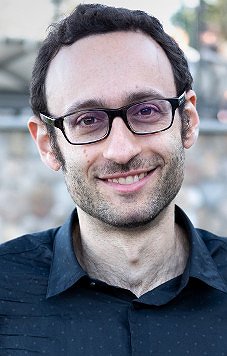
Bouras Christos is a Professor in the Department of Computer Engineering at the University of Patras , focusing on advanced research and teaching in computer science and telecommunications. His work spans both theoretical foundations and practical applications. Network Performance Analysis 5G/6G Communication Systems Machine Learning for Network Optimization IoT and Telematics His recent research emphasizes 5G network optimization , with publications on beamforming techniques, resource allocation algorithms, and energy efficiency in MIMO and DUDe architectures. Key subtopics include: Deep learning for user allocation Game theory-based resource management IoT latency reduction Adaptive beamforming Network slicing optimization Techno-economic modeling He contributes to the academic community through leadership in the Division of Applications and Foundations of Computer Science, which includes laboratories focused on distributed systems, combinatorial algorithms, and machine learning applications.
Komninos Andreas is an Assistant Professor in the Computer Engineering & Informatics Department at the University of Patras, specializing in Mobile and Pervasive Computing, Internet of Things, and Human-Computer Interaction. His research spans intelligent environments, context awareness, and virtual reality applications. His research focuses on mobile text entry systems, psycho-cognitive modeling of human behavior, and accessibility for visually impaired users. Key areas include large language model applications for text entry evaluation, pseudo-haptic feedback in VR, and spatial multimodal alerts for industrial environments. He develops simulation tools like RoboType for realistic text entry evaluations and open-source cognitive models. Notable achievements include a Best Paper Award at the ACM Greek SIGCHI Chapter (2023) for VR text entry research. He serves as co-general chair for EICS'26 and holds leadership roles in MobileHCI'24 and UbiComp/ISWC'24 as Workshops & Tutorials Chair and Student Competition Chair respectively. Best Paper Award at ACM Greek SIGCHI Chapter (2023) Co-General Chair for EICS'26 Workshops & Tutorials Chair for MobileHCI'24 Student Competition Chair for UbiComp/ISWC'24 His publications demonstrate strong emphasis on empirical validation of text entry systems, with recent work integrating LLMs for affective phrase generation and psycho-cognitive modeling. He actively promotes open data practices in HCI research and has contributed to digital twin systems for environmental education and maritime industry applications.
Arjun Guha is an Associate Professor at Northeastern University's Khoury College of Computer Sciences, where he also serves as the Area Chair for Software. He conducts research in programming languages with a focus on program synthesis for low-resource programming languages and understanding how computer science education is impacted by large language models. His work spans multiple domains including WebAssembly, software-defined networking, and serverless computing. Guha's research interests center around programming language design, implementation, and application. He has made significant contributions to understanding JavaScript through formal semantics (LambdaJS), developing functional reactive programming for web applications (Flapjax), and creating tools for software-defined networks (NetKAT, Frenetic). His recent work focuses on leveraging large language models for code generation in specialized programming languages and understanding their impact on programming education. His publications reveal a strong trend toward applying AI and machine learning techniques to programming language problems, particularly in code generation and understanding. The research spans from foundational programming language theory to practical applications in education and software development tools, with increasing focus on the intersection of programming languages and large language models. Guha has received several prestigious awards including the OOPSLA Most Influential Paper Award in 2019 for his work on Flapjax, an ACM SIGPLAN Research Highlight for his work on NetKAT, and a Best Student Paper Award. His research has been recognized for its foundational contributions to programming language theory and practical impact on software development. OOPSLA Most Influential Paper Award (2019) for Flapjax ACM SIGPLAN Research Highlight for A Fast Compiler for NetKAT Best Student Paper Award for Flapjax paper Guha advises numerous PhD, MS, and undergraduate students, with several alumni now at leading tech companies and academic institutions. His research has been supported by the National Science Foundation, the Department of Energy, the Office of Naval Research, and industry partners including Google, JPMorgan Chase, MathWorks, Meta, Oracle, and Roblox. He leads the Programming Research Laboratory at Northeastern and is actively involved in major research collaborations like the BigCode Project. Guha is a member of the Programming Research Laboratory at Northeastern and leads several major research initiatives including the BigCode Project's evaluation working group. His lab develops practical software systems like MultiPL-E (a polyglot benchmark for Code LLMs) and WasmFX (bringing effect handlers to WebAssembly), with applications in education, software development, and high-performance computing.
Adam Chlipala is a Professor at the Massachusetts Institute of Technology working at the intersection of programming languages, formal methods, and computer systems. His research focuses on building practical verified systems with end-to-end machine-checked proofs, particularly using the Coq proof assistant. His educational background includes a Computer Science undergraduate degree from Carnegie Mellon University (2003) and a PhD in Computer Science from the University of California, Berkeley (2007). Following a postdoctoral position at Harvard University through 2011, he joined MIT as faculty. Chlipala's research spans multiple domains with strong emphasis on dependent types , verified compilation , and hardware-software co-verification . His work consistently bridges theoretical foundations with practical implementation, as evidenced by his development of the Ur/Web programming language and his focus on creating clean-slate hardware-software stacks with formal guarantees. Key research thrusts include cryptographic constant-time verification, side-channel security, and verified tensor compilation. His recent publications (2020-2025) reveal a clear trajectory toward increasingly complex verified systems, with growing emphasis on hardware-software integration, cryptographic implementations, and performance-critical applications. The work consistently leverages Coq for machine-checked proofs while addressing real-world constraints like timing channels and hardware interfaces. Chlipala is the author of the influential textbook Certified Programming with Dependent Types , which serves as a primary educational resource for Coq at numerous institutions worldwide. His professional activities include significant service to the PL community through program committees for major conferences including PLDI, POPL, ICFP, and CPP. He leads research initiatives connecting hardware and software verification, most notably through the DeepSpec project which aims to build fully verified computing stacks. His current work focuses on practical applications of dependent types for business applications through Ur/Web and verified cryptographic implementations.
Angelo Sifaleras is a Full Professor at the Department of Applied Informatics, School of Information Sciences, University of Macedonia (Thessaloniki, Greece). He also serves as an Adjunct Professor of Quantitative Methods at the Hellenic Open University. His academic credentials include a Ph.D. in Applied Informatics (University of Macedonia, 2007) and a B.Sc. in Mathematics (Aristotle University of Thessaloniki, 1999). Research Focus: Professor Sifaleras specializes in Mathematical Programming , Network Optimization , and Heuristic Methods . His work integrates computational optimization with real-world logistics, supply chains, and sustainable systems. Key research themes include metaheuristic algorithms for vehicle routing, pollution-aware logistics, and parallel computing solutions for network analysis. Publication Trends: His 15 most recent articles emphasize hybrid metaheuristics (e.g., combining reinforcement learning with Variable Neighborhood Search), sustainable supply chain modeling, and high-performance computing applications. Dominant domains include operations research, environmental optimization, and educational algorithm visualization. Teaching & Service: He instructs courses in Combinatorial Optimization, Linear Algebra, and Heuristic Methods, employing tools like CPLEX, Gurobi, and SageMath. As an editor for Operations Research Forum and the Yugoslav Journal of Operations Research , he supports academic discourse in optimization. A Senior ACM member, he contributes to conferences like ICVNS and ITS.