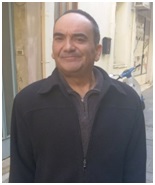
Panagiotis Tsanakas is a Professor of Computer Engineering at the National Technical University of Athens (NTUA), serving as Dean of the School of Electrical and Computer Engineering. He holds a PhD in Computer Engineering from NTUA (1988) and has extensive academic experience in parallel computing, medical informatics, and IoT applications. His work includes co-authoring seven textbooks on computer systems and supervising eight doctoral dissertations. Prof. Tsanakas has led major national and EU projects like EuroHPC and GRNET, managing Greece's academic networks and supercomputing infrastructure (ARIS). He pioneered systems like Eudoxus (textbook distribution), ZEUS (secure e-voting), and DIAVLOS (webcasting). His professional roles include Board membership of EuroHPC and leadership in GRNET, contributing to €60M annual savings through tech optimization. Research focuses on high-performance architectures, cloud systems, and AI in healthcare. He has published over 100 papers and actively teaches courses like Digital Health Technologies and Computer Architecture. His projects emphasize medical informatics, telemedicine platforms, and IoT-enabled health monitoring.
Professor Euripides G.M. Petrakis serves as a Professor and Laboratory Director at the Technical University of Crete (TUC) within the School of Electrical and Computer Engineering. He has been a faculty member since 1999 and has directed the Intelligent Systems Laboratory since 2006. As a Senior Member of IEEE, he maintains an active research profile with over 175 publications and more than 4,000 Google Scholar citations. Education: Ph.D. in Computer Science (1993), University of Crete B.Sc. in Physics (1985), National University of Athens Professor Petrakis' research spans Cloud Computing, Internet of Things, Semantic Web, and Computer Vision. His work has evolved from early computer vision and image databases to modern information systems, semantic web technologies, and most recently cloud computing and IoT applications. His research demonstrates consistent innovation across multiple computing domains with practical implementations in healthcare, security, and smart systems. His recent publications reveal a strong focus on IoT architectures, cloud/fog computing optimization, semantic service descriptions, and real-time video processing with Apache Flink. The research shows increasing integration of blockchain for security, advanced scheduling algorithms for microservices, and semantic approaches to improve interoperability in distributed systems. Scientific Recognition: Best paper award at AINA 2024 TUC Excellence Award 2022 Keynote speaker at EIDWT-2025 Ranked in top 2% of scientists worldwide (Stanford rankings 2021-2023) Professor Petrakis has supervised numerous graduate students, resulting in over 120 co-authored papers. He has successfully secured substantial research funding, attracting more than 2.5 million euros for TUC through multiple EU and Greek government projects. His grant portfolio includes leadership roles in Horizon 2020, FP7, and national research initiatives spanning border surveillance, smart farming, healthcare systems, and semantic web technologies. As Director of the Intelligent Systems Laboratory, he leads research in cloud computing, IoT, semantic web, and computer vision. The lab has produced multiple system prototypes including IntelliSearch, Semantic Similarity tools, MedSearch, and WebSummarization systems. Current research directions focus on secure federated architectures for IoT, advanced service description frameworks, and real-time video analytics in distributed environments.
John D. Garofalakis is a Professor at the University of Patras , Greece, within the Department of Computer Engineering and Informatics . He also serves as the Vice President of the Computer Technology Institute and Press "Diophantus" (CTI) . His expertise spans performance modeling , web technologies , distributed systems , mobile computing , and semantic web . Education: Diploma in Electrical Engineering, National Technical University of Athens, 1983 Ph.D. in Computer Engineering and Informatics, University of Patras, 1990 Research Interests: His research focuses on performance modeling of computer systems , particularly multistage interconnection networks and multicast traffic . He has contributed significantly to web technologies , including web optimization , semantic analysis of web usage , and personalized web search . In mobile computing , his work includes Bluetooth-based indoor positioning , context-aware mobile applications , and mobile commerce systems . He has also explored e-learning technologies , developing intelligent tutoring systems and adaptive virtual learning environments. Scientific Awards: Best Paper Award at the IEEE International Conference on Big Knowledge (ICBK 2017) Best Paper Award at the 14th European Conference on Ambient Intelligence (AmI 2018) Research Contributions and Labs: He has published extensively in top-tier journals and conferences, with over 100 peer-reviewed papers and book chapters. His work on web search personalization and mobile user positioning has been influential. He leads research teams in ubiquitous computing and web engineering , fostering interdisciplinary collaborations in smart environments and digital divide solutions .
National and Kapodistrian University of AthensGreece
Manuel Serrano is a Research Professor at Inria Sophia-Antipolis, France, affiliated with Université Côte d'Azur. He is a leading researcher in programming languages, specializing in web programming, JavaScript compilation, and synchronous reactive systems. His work bridges theoretical computer science with practical applications, particularly in the development of innovative programming languages and tools. Dr. Serrano's research interests focus on programming language design and implementation, with particular emphasis on web technologies. He is the creator of several influential systems including Hop (a language for multitier web programming), HipHop.js (a synchronous reactive language for JavaScript), and Bigloo (an optimizing Scheme compiler). His work addresses fundamental challenges in making web programming more structured, efficient, and reliable, while maintaining the flexibility required by modern web applications. His publication record reveals a consistent focus on improving JavaScript performance through ahead-of-time compilation techniques, exploring novel concurrency models for web applications, and developing practical tools for real-world programming challenges. His recent work shows increasing interest in applying synchronous reactive programming to interactive music systems and IoT applications, demonstrating the versatility of his language design approaches. Dr. Serrano actively contributes to the academic community through service on program committees for major conferences including PLDI, ICFP, ECOOP, and SPLASH. He has served as General Chair for Programming 2018 and Scheme 2001, and is a member of the steering committees for the Scheme and Functional Programming workshop and the Dynamic Language Symposium. He leads the INDES research team at Inria Sophia-Antipolis, which focuses on innovative programming models for distributed and ubiquitous computing. His team has developed several open-source software projects including Hop, HipHop, Bigloo, and related tools that have influenced both academic research and practical web development.
Leonidas Akritidis serves as a Lecturer at the Department of Science and Technology within the School of Science and Technology at International Hellenic University. He holds a PhD and Diploma in Electrical and Computer Engineering from University of Thessaly and Aristotle University of Thessaloniki respectively. His educational background includes: PhD in Electrical and Computer Engineering, University of Thessaly (2007-2013) Diploma in Electrical and Computer Engineering, Aristotle University of Thessaloniki (1997-2003) Akritidis specializes in Natural Language Processing, Deep Machine Learning, and Data Mining with particular expertise in short text clustering, dimensionality reduction, and rank aggregation techniques. His research addresses challenges in sparse data environments and high-dimensional feature spaces, developing novel algorithms for text representation and processing. He has contributed significantly to parallel and distributed computing approaches for big data analytics. His publication trends reveal a consistent focus on NLP and machine learning applications, with recent work expanding into generative models for tabular data, medical image analysis, and advanced fault detection systems. The research demonstrates progression from foundational text processing techniques to more complex applications in healthcare, e-commerce, and software engineering. Akritidis has taught multiple courses including Big Data and Cloud Computing, Machine Learning Principles and Concepts, Mobile Application Development, and Web Programming. His research projects include CyberPi (intelligent cyber threat detection), NANOTRIM (transistor sizing optimization), and iMuSe (virtual museum platform). He collaborates extensively with researchers like Panayiotis Bozanis, Miltiadis Alamaniotis, and Athanasios Fevgas, primarily within the Greek academic community.
Ευριπίδης Γ.Μ Πετράκης is a Professor & Laboratory Director at the School of Electrical and Computer Engineering, Technical University of Crete (TUC) since 1999. He holds a Ph.D. in Computer Science (University of Crete, 1993) and a B.Sc. in Physics (National University of Athens, 1985). His research focuses on Cloud Computing, IoT, Semantic Web, and Image Indexing, with over 175 publications and top international recognition including the 2024 AINA Best Paper Award and Stanford's Top 2% Global Impact ranking (2021-2023). Key projects include leading roles in Horizon 2020-funded BorderUAS (2020-2023), MARS smart farming initiative (2018-2021), and FP7-funded FI-STAR (2013-2016). He has pioneered solutions for IoT security (iBoT), edge-cloud computing (DeFog), and semantic service frameworks (OASL). His academic contributions span advanced distributed systems, including Apache Flink-based real-time video processing (Video2Flink) and Kubernetes optimization strategies. He also actively contributes to standards development for IoT interoperability and semantic web services.
Pavlos Fafalios is an Assistant Professor at the School of Production Engineering and Management, Technical University of Crete. His research focuses on Information Systems, with specialties in Information Retrieval, Semantic Web, and Knowledge Engineering. He holds a PhD in Computer Science (University of Crete, 2016) and conducted postdoctoral research at L3S Research Center (Germany) and FORTH (Greece). He has been a visiting lecturer at the Hellenic Mediterranean University and actively contributes to the international research community through over 50 publications. His work emphasizes semantic interoperability, knowledge graphs, and interdisciplinary applications in cultural heritage and digital humanities. Education: Diploma in Information and Communication Systems Engineering (University of the Aegean, 2009) Master's in Information Systems (University of Crete, 2012) PhD in Computer Science (University of Crete, 2016) Research interests include: Information Retrieval (e.g., exploratory search, semantic search) Knowledge Engineering (ontology design, data integration) Applications in maritime history, disaster informatics, and circular economy His recent articles explore ontology governance, knowledge graph applications in fact-checking, and semantic interoperability frameworks. Notable achievements include the Marie Skłodowska-Curie Fellowship (2016-2019) and contributions to projects like the Claimskg system.
George Xylomenos is a Professor in the Department of Informatics at Athens University of Economics and Business (AUEB), where he has been a faculty member since 2002, progressing from Lecturer to Professor. He serves as Scientific Coordinator of the Information Systems Management Center and previously held roles including Deputy Chair of the Department of Informatics and Deputy Rector for Financial Planning and Development. He is affiliated with the Mobile Multimedia Laboratory (MMlab) at AUEB and has made significant contributions to computer networking research. Professor (System Software) at AUEB, Department of Informatics (2020-present) Associate Professor at AUEB, Department of Informatics (2015-2020) Assistant Professor at AUEB, Department of Informatics (2007-2015) Lecturer at AUEB, Department of Informatics (2002-2007) Research Associate at University College London (2016-2017) Education Ph.D. in Computer Science, University of California, San Diego (1999) M.S. in Computer Science, University of California, San Diego (1996) Diploma in Applied Informatics, Athens University of Economics and Business (1993) Professor Xylomenos' research focuses on computer network and operating system design and implementation. His primary interests include Future Internet architecture, Information-Centric Networking, Quality of Service provisioning, communication protocols for wireless and mobile networks, and Network Music Performance systems. His work bridges theoretical networking concepts with practical implementations, particularly in the areas of content-centric networking and multimedia communications. He has pioneered research in multi-service link layers for wireless networks and has made significant contributions to the understanding of TCP performance over wireless links. His recent publications demonstrate a strong focus on Named Data Networking, decentralized identity systems, and Network Music Performance. The research trends show a progression from traditional IP networking toward information-centric architectures, with increasing emphasis on security, privacy, and multimedia applications in distributed environments. Scientific Awards Best demo award at ACM ICN Conference (2017) Future Internet Award from FP7 PURSUIT project (2013) Runner up for best local student paper at IEEE Symposium on Computers and Communications (2011) Best non-student paper award at European Wireless Conference (2007) National Semiconductor Corporation Graduate Fellowship (1996) Professor Xylomenos has supervised numerous research projects, including multiple EU-funded initiatives such as PURSUIT, PSIRP, and EIFFEL in the Future Internet domain, and MUSINET for Network Music Performance. He has served on the editorial board of IEEE Transactions on Mobile Computing (2016-2024) and has been active in numerous Technical Program Committees for major networking conferences. His research has attracted significant funding from European Union programs including FP7, H2020, and Horizon 2020. He is a core member of the Mobile Multimedia Laboratory (MMlab) at AUEB, which focuses on advanced networking technologies, multimedia systems, and future Internet architectures. The lab has been instrumental in Greece's participation in major European research initiatives related to Information-Centric Networking and Network Music Performance. The laboratory maintains strong collaborations with international research groups, particularly in Europe and the United States.
National and Kapodistrian University of AthensGreece
Associate Professor Aphrodite Tsalgatidou holds a faculty position at the Department of Informatics and Telecommunications, National and Kapodistrian University of Athens. Her research focuses on blockchain technology, social network analysis, and reputation systems with applications in e-commerce, distributed systems, and business process management. Her work spans over three decades, addressing challenges in interoperability of heterogeneous services, P2P systems, and mobile commerce. Notable contributions include frameworks for secure blockchain scaling (Adrestus), real-time social tracking systems (BLACE), and reputation mechanisms for e-commerce platforms. She has also explored abstracting BPMN models for complex process comprehension. Her research integrates computer science with practical applications in distributed systems, cybersecurity, and service-oriented architectures. Recent efforts emphasize scalable blockchain solutions and AI-driven big data pipelines. Despite extensive contributions, no scientific awards are explicitly mentioned in available materials. Her advising and grant activities are not detailed in the provided data, though her prolific publication history suggests active involvement in academic collaborations. No lab affiliations or teams are specified in the text.
National and Kapodistrian University of AthensGreece
Mira Mezini is a Professor of Computer Science at the Technical University of Darmstadt, Germany, leading the Software Technology Lab. She serves on steering committees, program committees, and editorial boards of top-tier conferences and journals. Her affiliations include the National Research Center for Applied Cybersecurity ATHENE and co-directorship of hessian.AI, the Hessian Center for Artificial Intelligence. Her research focuses on programming systems for reliable distributed software and AI, automated software analysis, and foundational code models. She has developed large-scale module concepts for adaptability, extensible programming languages, and intelligent software development environments that leverage web-based resources to generate programming rules and patterns. Specializes in software engineering Expert in programming language design Contribution to cybersecurity and AI Her recent work emphasizes static analysis, distributed systems, and programming language design, with trends in API misuse detection, decentralized applications, and secure local-first programming. The focus spans from foundational type systems to practical tools enhancing software quality and developer productivity. Scientific Awards Two-time IBM Eclipse Innovation Award recipient (2005, 2006) Google Research Award (2017) Horst Görtz IT Security Award (2014) ERC Advanced Grant (2012) ACM Fellow Dahl-Nygaard Prize (2025) She has held leadership roles including Dean of Computer Science at TU Darmstadt (2013-2014) and Vice President positions (2014-2019). Her service extends to international juries, funding panels, and editorial boards. Labs & Teams Leads the Software Technology Lab at TU Darmstadt, driving research in programming paradigms and tools. Co-directs hessian.AI and contributes to the Excellence Cluster 'Reasonable Artificial Intelligence.'
Christos Katsanos is an Assistant Professor of Human-Computer Interaction at the Department of Informatics, School of Sciences, Aristotle University of Thessaloniki since 2018. He also holds adjunct professor positions at Hellenic Open University (2011-2012, 2014-present), University of Patras (2017-2018), Open University of Cyprus (2016-2018), and previously at Technological Educational Institute of Western Greece (2011-2018) and Technological Educational Institute of Western Macedonia (2005-2010). His research spans multiple domains of interactive systems with a strong focus on user-centered design methodologies. Education: 2010: Doctor of Philosophy (PhD) in Human-Computer Interaction, Department of Electrical and Computer Engineering, Polytechnic School, University of Patras 2004: Diploma (Master of Engineering degree) in Electrical and Computer Engineering, Department of Electrical and Computer Engineering, University of Patras 1999: Certificate of Secondary Education, 3ο General High School of Kozani, 19.6/20 Dr. Katsanos' research interests center on Human-Computer Interaction (HCI) and Human-Robot Interaction (HRI), with significant contributions to web science, web accessibility, educational technologies, and methods for designing and evaluating interactive software systems. His work often bridges theoretical cognitive models with practical applications, particularly in information architecture and user experience evaluation. He has developed several tools for automated website evaluation based on information foraging theory and semantic analysis. His publication record shows a consistent trajectory from foundational work on information scent and web navigation (2004-2010) through to more recent work on stress detection using physiological signals, HRI in agricultural robotics, and personality factors in UX evaluation. The research demonstrates an evolution from purely web-based interaction to broader interactive systems including robotics and mobile applications, while maintaining a strong methodological focus on evaluation techniques. As an educator and advisor , Dr. Katsanos has supervised numerous undergraduate, master's, and doctoral students on topics related to web accessibility, user experience design, information architecture, and educational technologies. His teaching portfolio includes courses on Human-Computer Interaction, Quality Assurance of Software Systems, and Interactive Mobile Applications. His administrative service includes membership in various departmental committees at Aristotle University of Thessaloniki, including selection committees for postgraduate students and doctoral candidates, as well as the General Assembly of the Department. He has also served on evaluation committees for research projects.
Prof. Nikolaos Mitrou is a Full Professor in the Department of Communications, Electronics and Information Systems at the School of Electrical and Computer Engineering, National Technical University of Athens (NTUA). He holds a Diploma in Electrical Engineering from NTUA (1980), an MSc in Systems and Control from UMIST (1982), and a PhD in Electrical Engineering from NTUA (1986). His research focuses on broadband and mobile communications, multimedia systems, sensor networks, and semantic web technologies. He has led major EU-funded projects like RACE, ESPRIT, and IST, coordinating initiatives totaling over €13M in digital library services (SEAB, KALLIPOS). Education: PhD in Electrical Engineering, NTUA (1986) MSc in Systems and Control, UMIST (1982) Electrical Engineering Diploma, NTUA (1980) Research interests span digital communication systems , network architecture optimization , sensor network applications , and knowledge representation systems . His work bridges theoretical advancements with practical implementations in fields like geographic information systems and multimedia content management. Prof. Mitrou has supervised 21 completed PhD students and currently guides 6 more across topics including sensor networks and distributed knowledge systems. He contributed over 45 journal papers and served as a reviewer for major journals, while holding IEEE and IFIP WG memberships. He led the Networking 2004 conference and managed critical projects like AC235-WATT for ATM network monitoring and OPENISE for interactive services platforms. His technical coordination of national and EU projects underscores his leadership in bridging academic research with industrial applications.
Nikolaos Papadakis is an Associate Professor at the Department of Electrical and Computer Engineering of the Hellenic Mediterranean University (HMU). He holds additional roles including Vice President of the Department of Social Work at HMU and Head of the Telecommunication and Informatic Technology team at the same department. His academic journey includes a BSc in Computer Science from the University of Cyprus (1997), an MSc from the University of Crete (1999), and a PhD in Computer Science from the University of Crete (2004). Prior to HMU, he held visiting professorships at the University of Crete, Technical University of Crete, and Technological Educational Institute of Crete, alongside research contributions at FORTH from 1997-2006. His research focuses on Databases and Knowledge Representation Artificial Intelligence Applications Semantic Web Technologies Software Engineering Methodologies Distributed Algorithms and Communication Protocols Renewable Energy Systems (wind, solar, energy efficiency) Notable projects include the SAVE initiative for net-zero sports facilities and studies on wind turbine blade optimization. His work bridges theoretical computer science with applied engineering solutions. Recent publications emphasize sustainable energy systems, composite material analysis, and quantum optics technologies. He maintains active collaborations in interdisciplinary areas such as epidemiological data modeling and space optical systems development. His career trajectory includes tenure at the Technological Educational Institute of Crete (2009-2019), reflecting a consistent commitment to academic innovation and applied research. Current research continues to explore emerging trends in renewable energy integration and advanced material science.
Christos Doulkeridis is a Professor at the Department of Digital Systems, University of Piraeus. Specializing in big data management, distributed systems, and mobility analytics, he has led projects such as CHOROLOGOS (ELIDEK-funded) and contributed to EU initiatives like datAcron and Track&Know. He holds Marie-Curie and ERCIM fellowships, and his work emphasizes energy-efficient data architectures and semantic trajectory analysis. Education: PhD in Informatics, Athens University of Economics and Business (2007) MSc in Informatics, Athens University of Economics and Business (2003) Diploma in Electrical & Computer Engineering, National Technical University of Athens (2001) Research Interests: Big data analytics, cloud computing, spatiotemporal query processing, mobility forecasting (e.g., traffic patterns, maritime monitoring), and semantic trajectory modeling. His work bridges theory with practical applications in smart cities and environmental sustainability. Awards: Winner of SemEval’17 Task4 (sentiment analysis) Best Paper Award at EuroVA’19 Michalis Dertouzos Award (2004) for Human Face of Computing Grants & Projects: Principal Investigator for CHOROLOGOS (semantic spatiotemporal data) Core contributor to datAcron (maritime data ontology) European projects: BigDataStack, RoadRunner (ARISTEIA II) Labs & Teams: Leads research teams developing frameworks like SPARTAN (semantic integration) and ARGO (trajectory prediction). Collaborates on open-source tools like ST_VISIONS (spatiotemporal visualization) and NoDA (unified NoSQL access).
Christos Michalakelis is a Professor at the Department of Informatics and Telematics, Harokopio University of Athens. He specializes in technoeconomic analysis, costing, and pricing strategies for ICT services, particularly in cloud computing and IoT. Currently serves as Director of the Applied Informatics Postgraduate Program and President of 'Study in Greece', the national agency for promoting Greek universities internationally. Previously worked as an IT manager in the Greek Ministry of Education. Education: No formal education details provided in the text. Research Interests: Focus on technoeconomic engineering, cloud service pricing, IoT applications, and socio-economic analysis of telecommunications. Explores decision support systems, machine learning applications in economics, and pandemic impact modeling. Recent work includes cloud brokerage models and cost-benefit analyses of infrastructure investments. Publications: Over 100 papers across journals and conferences, emphasizing cloud pricing models, IoT, and socio-economic forecasting. Recent trends highlight innovative applications of ML in price prediction and policy analysis. Grants/Advising: Manages postgraduate programs and internationalization initiatives. No explicit grant data provided, but extensive project experience in database systems and socio-technical frameworks. Labs/Teams: Leads the Applied Informatics program and collaborates with Study in Greece to enhance Greece's global academic profile.