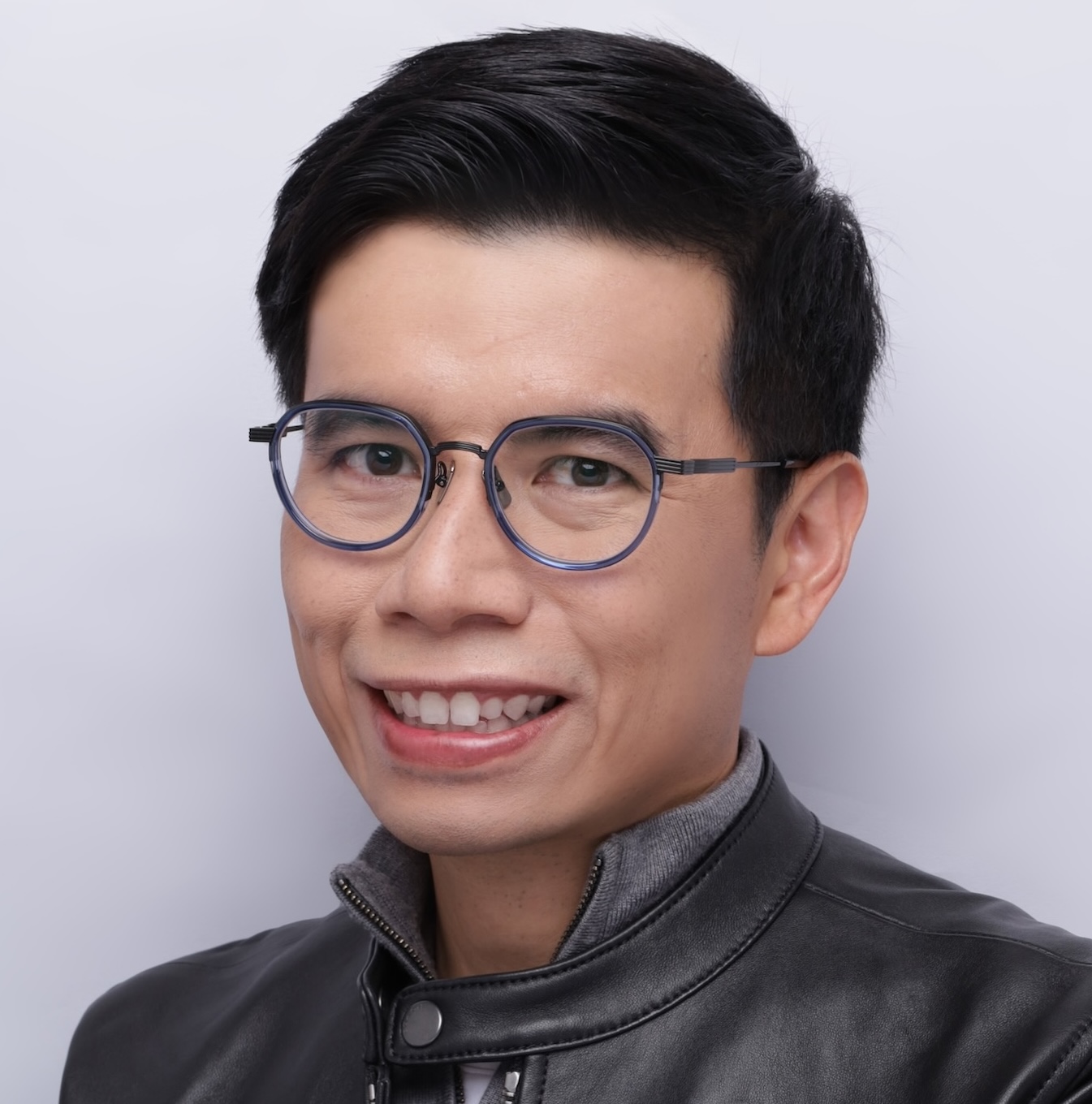
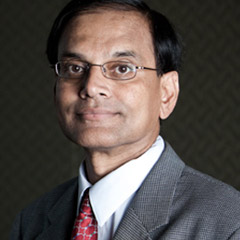
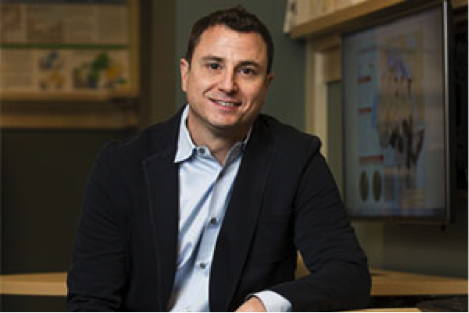
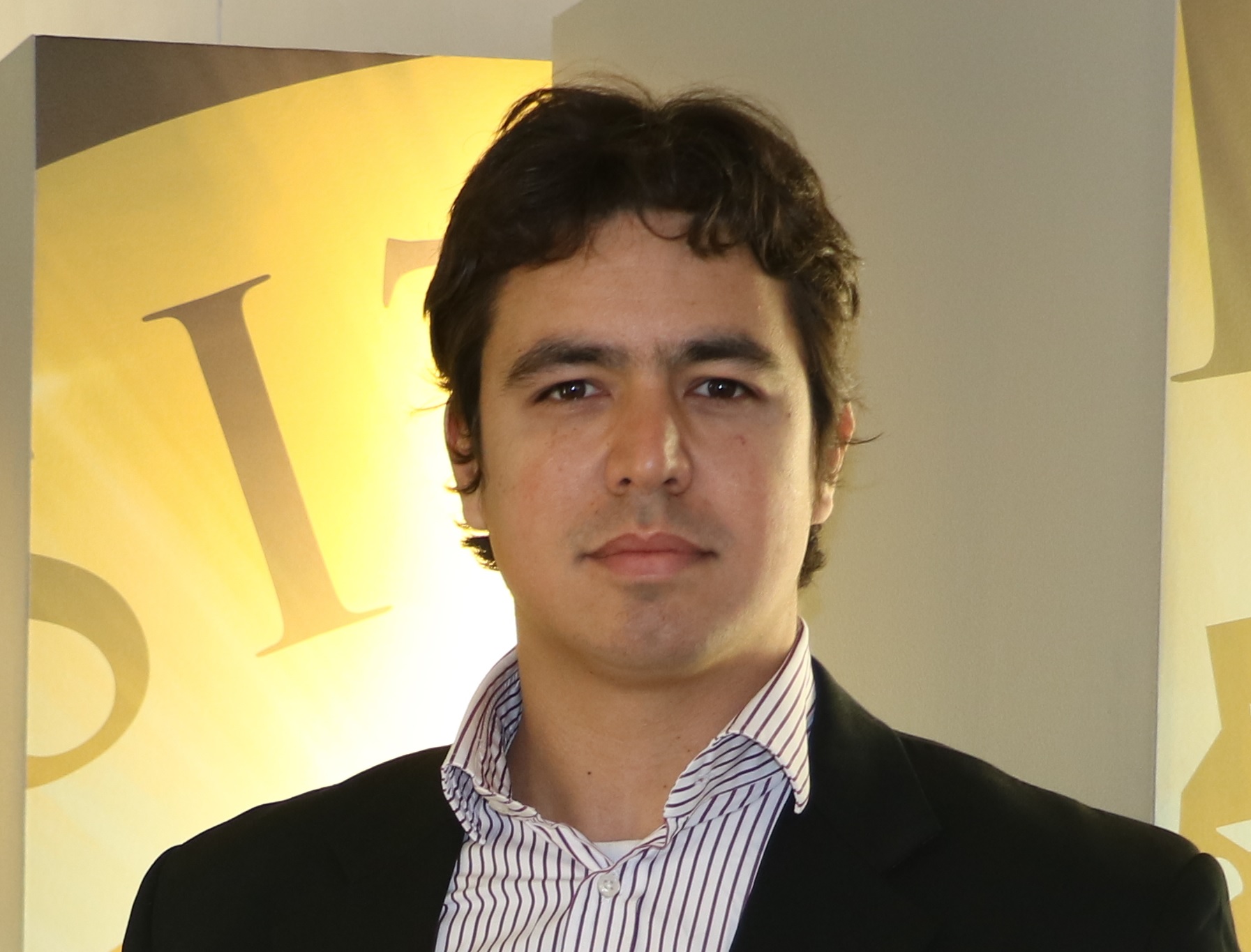
Dr. Tim Chen is a Senior Lecturer at the School of Computer Science, University of Adelaide, with research focused on augmenting human capabilities through human-centered AI systems. He leads interdisciplinary teams in projects like the Augmenting Ability CRC and the IMAGENDO Project , which received the Eureka Prize and NHMRC Idea Grant. Affiliation: University of Adelaide Collaborators: Prof. Patrick Baudisch (HPI), Prof. Takeo Igarashi (U of Tokyo), Prof CT Lin (UTS), Dr. Li-Yi Wei (Adobe Research) Research Interests: Human-AI interaction paradigms ( AI as Assistant, Collaborator, Oracle ), virtual reality training, contrastive learning, and data visualization. His work bridges AI/ML, computer graphics, and human-computer interaction to empower knowledge workers. Recent Achievements: Two CHI 2025 papers on VR learning, SIGGRAPH 2025 jury committee role, and ARC DP analysis website development. Funding includes NHMRC (~$2M) and AEA Ignite grants. Scientific Awards: Eureka Prize-winning leadership NHMRC Idea Project Grant AEA Ignite Grant (~$500k)
Dr. Peter Bloodsworth is a Lecturer and Professional Masters Programme Project Supervisor in the Department of Computer Science at the University of Oxford. He holds a PhD in Multi-agent Systems from Oxford Brookes University. His research focuses on multi-agent systems, cloud computing, distributed computing, and artificial intelligence, with applications in medical research and robotics. Dr. Bloodsworth has over a decade of academic experience, including a role as a Foreign Professor at the National University of Sciences and Technology (NUST) in Islamabad, Pakistan (2011–2016), and prior work as a Research Fellow at the University of the West of England (UWE), Bristol. He has contributed to major European projects such as the FP7-funded neuGRID project, where he acted as a workpackage leader and User Manager. His research emphasizes applying semantic technologies and multi-agent systems to solve complex problems, including medical ontology integration and grid computing in healthcare environments. Dr. Bloodsworth is a full member of the IEEE and a Chartered Member of the British Computing Society (BCS), reflecting his commitment to professional standards in computing. His recent research themes include deploying multi-agent systems for scalable cloud solutions, robotic control, and managing cloud resources through agent-based frameworks. He has over 30 publications in international journals and conferences, with notable work on cloud marketplaces, elastic multi-agent systems, and neuroimaging analysis using grid computing.
Jun Yan is a Professor at the University of Wollongong's School of Computing and Information Technology within the Faculty of Engineering and Information Sciences. His roles include academic leadership and research supervision, with active involvement in committees like the Student Academic Experience Sub-Committee and Quality Assurance Review Group. Current research focuses on service-oriented computing, workflow technology, adaptive process management, and AI-driven systems. His work intersects with IoT, UAV systems, federated learning, and multi-agent reinforcement learning. Research interests span service-oriented software engineering, decentralized workflow management, and cybersecurity challenges in autonomous systems. Notable projects include an ARC-funded initiative on robust defenses against adversarial ML for UAV systems (2025–2027). He supervises Masters/PhD projects on topics like diffusion model-based MRI, graph prompt learning, and industrial defect detection. His publications from 2023–2025 emphasize scalable multi-agent systems, federated learning with non-IID data, and UAV applications in intelligent transportation. Key areas of contribution include trust models for e-commerce, privacy-preserving cloud computing, and fault-tolerant service architectures.
Professor Yong Wu holds the position of John Curtin Distinguished Professor at Curtin University's School of Electrical Engineering, Computing and Mathematical Sciences (EECMS), within the Faculty of Science and Engineering. He obtained his PhD from the University of Wollongong (1990) and has been a faculty member at Curtin since 1993, progressing through roles including Lecturer, Senior Lecturer, and Professor. His research focuses on applied and computational mathematics, industrial optimization, and financial engineering with applications in traffic flow control, asset-liability management, and insurance strategy optimization. Education: PhD (Mathematics) from University of Wollongong (1990), followed by postdoctoral research at the same institution before joining Curtin University in 1993. Research Interests: Applied Mathematics: Fractional differential equations, nonlinear systems, and PDEs Industrial Modeling: Optimization algorithms and traffic flow dynamics Financial Engineering: Blockchain-based investment systems and risk management Key Contributions: Over 300 peer-reviewed articles in journals like Journal of Differential Equations and Nonlinear Analysis Recipient of 13 competitive grants including ARC and NSFC funding Listed as Clarivate Analytics Web of Science Highly Cited Researcher Labs/Teams: Active in interdisciplinary research groups focusing on computational mathematics, financial engineering, and industrial systems optimization at Curtin University.
Wei Ai is an Assistant Professor at the University of Maryland, affiliated with the College of Information (INFO) and the Institute for Advanced Computer Studies (UMIACS). His research focuses on data science for social good (DSSG), integrating machine learning, causal inference, and experimental design to address societal challenges in education, virtual collaboration, and quantum computing. He leads the Center for Educational Data Science and Innovation (EDSI) and has secured grants from the NSF, Gates Foundation, and Walton Family Foundation for projects like M-Powering Teachers and classroom quality assessment tools. Education: PhD in Information from the University of Michigan (advised by Qiaozhu Mei). Previous academic roles include teaching at the University of Michigan and Peking University in courses like Data Mining and Information Retrieval. Research Interests: Machine Learning and Causal Inference, AI for Education, Virtual Teams and Social Identity, Large Language Models for Social Applications. He has published in venues such as PNAS, Management Science, ACL, and the Web Conference. Grants: Major awards include a NSF grant on middle-grade math instruction analysis (with Min Sun) and a Gates Foundation grant for classroom dataset development (with Jing Liu). Labs/Teams: CLIP Lab member, collaborating on interdisciplinary projects with UMIACS and the Joint Quantum Institute. Prospective students: Open to mentoring PhD students through INFO and Computer Science programs. Actively supervises current students in education technology and quantum computing domains.
Pezhman Ghadimi is an Assistant Professor of Manufacturing Systems at the School of Mechanical and Materials Engineering, University College Dublin (UCD). He holds a PhD in Industrial Engineering and Operations Management from the University of Limerick. His research focuses on Circular Economy, Sustainable Manufacturing, and Operations Research, with notable contributions to supply chain resilience, waste management, and global trade dynamics. He has secured significant grants, including a €2.56m Marie Curie Doctoral Network (iCircular3) for circular economy research. Education: BEng (Mazandaran University of Science & Tech, Iran), MEng (UTM Malaysia), PhD (University of Limerick), and a Professional Diploma in University Teaching & Learning (UCD). Research Interests: Circular Economy, Sustainable Development, Sustainable Supply Chains, Data Analytics, and Risk Analysis. He emphasizes applying these themes to global trade networks, medical device supply chains, and EV battery systems. Key Awards: Second Best PhD Student Award in Engineering (2015) by the Iranian Association for Postgraduate Students in Europe and Russia. He actively reviews for journals like International Journal of Production Research and Journal of Cleaner Production . Grants & Projects: Over 14 grants, including leadership in the iCircular3 project and contributions to CircularDev initiatives. His work addresses disruptions in global supply chains, particularly under pandemic conditions and geopolitical shifts. Labs/Teams: Leads research groups focused on circular economy strategies, sustainable manufacturing systems, and Industry 4.0 integration in supply chains. Collaborates internationally on projects involving China, the EU, and Ireland.
Prof. Markus Nüttgens is a Professor at the University of Hamburg Business School's Department of Information Systems. His research focuses on digital transformation, business process management, sustainability management, and blockchain applications in Industry 4.0. He leads projects like smartTCS and EMOTEC , developing platforms for customer integration in technical services and mobile assistance systems. Notable contributions include frameworks for data-driven sustainability management, semantic verification in process modeling, and standards like DIN SPEC 33451 for service catalogs. His work bridges theory and practice, emphasizing hybrid value chain strategies, mobile service support systems, and process audits. He has pioneered methodologies for service engineering and smart service ecosystems, with a particular focus on empowering technical customer services through IT innovations. Prof. Nüttgens has contributed to over 50 peer-reviewed publications and actively participates in academic conferences, editing volumes on service modeling and process auditing. His research portfolio spans IT governance, cybersecurity awareness in enterprises, and the diffusion of Web 2.0 in healthcare and SME networks. He collaborates with industry partners to design productivity-enhancing solutions for hybrid service systems, ensuring alignment between technological advancements and organizational efficiency.
Dr Jane Henriksen-Bulmer is a Professor in the Department of Computer Science at Bournemouth University, specializing in Privacy, Cyber Security, and managing privacy risks at individual and organizational levels. She leads a university-wide cybersecurity training initiative for 18,000 students, enhancing their digital resilience. Her roles include Level Tutor for second-year undergraduates and former Placement Tutor, alongside teaching Business Analytics and Enterprise courses. Her PhD focused on privacy, GDPR, and risk decision-making in organizations. She actively collaborates with industry and has pioneered projects like CyGamBIT (game-based cyber education) and Privacy Game (digital literacy tools). Her work aligns with UN SDGs, particularly Quality Education and Sustainable Infrastructure, emphasizing inclusive learning and secure digital practices. Key grants include Innovate UK’s CyGamBIT (2022) and the EU’s Ideal Cities (2018). Her research spans privacy frameworks, data lifecycle management, and cybersecurity threats, with publications in Electronics , Future Internet , and Computers and Security .
Joydeep Mukherjee is an Assistant Professor in the Department of Computer Science and Software Engineering at California Polytechnic State University (Cal Poly), San Luis Obispo, USA. He also holds an Adjunct Assistant Professor role at the University of Calgary's Department of Electrical & Software Engineering, where he collaborates on research and student supervision. His research focuses on software performance management in cloud computing and IoT systems, with a particular emphasis on detecting and mitigating performance interference in cloud-native applications. Education: Ph.D. and M.Sc. in Computer Science from the University of Calgary (supervised by Dr. Diwakar Krishnamurthy) Bachelor's in Computer Science and Engineering from NIT Durgapur, India Research Interests: Dr. Mukherjee's work addresses challenges in cloud and IoT systems, including performance anomaly detection, resource contention management, and machine learning-driven optimization. His Ph.D. introduced a novel model-based runtime performance management technique that avoids reliance on hardware counters, enabling cloud subscribers to autonomously manage application performance. He has also contributed to frameworks for IoT security, FaaS scalability, and DevOps automation. Key Research Contributions: His publications explore predictive auto-scaling, interference modeling, and anomaly detection using spectrograms and CNNs. He co-developed PRIMA and RAD systems for subscriber-driven performance mitigation in cloud environments. Awards: No specific awards mentioned in the provided text. Lab and Collaborations: Active in the CERAS Lab at York University (during his postdoc) and collaborates with the University of Calgary on research programs. His work bridges academic and industrial challenges in cloud computing and IoT through interdisciplinary approaches.
Roman Lukyanenko is an Associate Professor of Commerce at the University of Virginia’s McIntire School of Commerce. He teaches courses in global strategy, systems, and business analytics. Prior to academia, he worked in IT roles including web programming, database development, and consulting for organizations like ExxonMobil and CapitalOne. His research focuses on conceptual modeling, information quality, AI/ML, and design science research. Notable contributions include work on citizen science data quality and transparency in design science. His research has been published in top journals like Nature , MIS Quarterly , and Information Systems Research . Education : Ph.D. in Operations and Information Management (University of Newfoundland), Bachelor of Technology, and IT Diploma (New Brunswick Community College). Key awards include the Gold Medal from Canada’s Governor General, INFORMS Design Science Research Award, and AIS Dissertation Award. He has led professional organizations, serving as Vice President and President of the AIS Special Interest Group on Systems Analysis & Design. Lukyanenko’s work bridges academic and practical domains, emphasizing information systems’ societal impact. He contributes to interdisciplinary initiatives at UVA’s Centers for Business Analytics and Management of IT. His prior industry experience enriches his teaching and research on real-world IT challenges.
W. Raghupathi is a Professor at Fordham University’s Gabelli School of Business, Department of Information, Technology, and Operations, where he has been since 1998. He directs the Design and AI labs within the Center for Digital Transformation and co-edits the International Journal of Healthcare Information Systems and Informatics for North America. His work bridges analytics, artificial intelligence, and deep learning with applications in climate change, healthcare, crowdfunding, cybersecurity, and ESG. Education : L.L.M. in Intellectual Property in Information Technology (Fordham Law School, magna cum laude ), Ph.D. (University of Texas at Arlington), M.B.A. (University of Texas at Arlington), M.Com (Sri Venkateswara University, India), B.Com and B.L. (Osmania University, India). His research spans health informatics , climate change analytics , ESG and sustainability , cybersecurity , and AI ethics . Articles highlight trends in visual analytics for public health and climate impact, machine learning in legal and cybersecurity contexts, and cross-country sustainability studies . Awards include grants from IBM and Verizon, while his labs focus on digital transformation and AI-driven research . Scientific Awards : Faculty awards from IBM Corporation Grants from IBM Corporation Faculty awards from Verizon Grants from Verizon Dr. Raghupathi’s prior roles include positions at California State University, The University of Texas at Arlington, Intel Corporation, and industry experience in India and the U.S. before his academic career.
Patrick Florance is the Director of Research Technology at Tufts University, where he leads Tufts Technology Services’ support for High-Performance Computing, research storage, scientific instrumentation, and data science. He is concurrently an affiliate of the Department of Urban & Environmental Policy & Planning in the School of Arts and Sciences and a senior instructor at the Fletcher School of Law and Diplomacy. Education Bachelor of Arts, University of Oregon, Eugene, United States Master of Arts, Geography – Geographic Information Science, City University of New York – Hunter College, New York, United States Research & Scholarly Interests Florance’s scholarship and service converge on the design, deployment, and governance of open-source geospatial infrastructures. His work encompasses: Global and humanitarian mapping, crisis mapping, and geospatial support for disaster response Development of the Open Geoportal (OGP) Federation — a Sloan-funded collaborative platform for sharing geospatial data across universities 3D GIS, remote sensing, UAV/drone workflows, and spatial data infrastructures for urban modeling Digital humanities, natural language processing, and data-mining approaches to historical and textual geodata Geospatial pedagogy, open-data advocacy, and capacity-building in the developing world Publications & Intellectual Trajectory Across more than two decades, Florance has authored or co-authored scholarly articles, software reviews, and special journal issues that advance both technical architectures and sociotechnical practices for geospatial information curation. His writings trace a trajectory from foundational concerns of GIS collection development in academic libraries to contemporary challenges of real-time, open, and ethical crisis mapping. Scientific Awards & Grants Alfred P. Sloan Foundation – Open Geoportal Cloud (OGP) Federation (US$ grant, 2013) University Service & Leadership Patrick chairs or serves on multiple university committees driving data-intensive research strategy: Data Analytics Steering Committee, School of Arts & Sciences Digital Humanities Steering Committee, Tufts University Data-Intensive Scholarship Center (DISC) Advisory Committee on Infrastructure and Services (ACIS) GIS Steering Committee Research Data Services Committee Labs, Teams & Infrastructure He directs the Tufts Data Lab , a campus hub for GIS, statistics, visualization, and machine-learning services, and oversees the Open Geoportal Project , a multi-institutional consortium providing federated discovery and access to geospatial data sets. His team supports thousands of researchers university-wide with high-performance compute clusters, research storage arrays, and discipline-specific scientific instrumentation.
Felippe Cronemberger serves as a Research Fellow at the University at Albany, SUNY, specializing in Information Science and Systems with expertise spanning Business and Government Intelligence, Information Sharing, Simulation Modeling, and Smart Cities. With over 15 years of cross-sector experience in technology, consulting, human resources, and education, he has held research roles through the SUNY Research Foundation and as a Visiting Research Fellow at ITMO University, Russia. His academic credentials include: Ph.D. in Information Science, University at Albany, SUNY (2018) M.B.A., University at Albany, SUNY (2011) B.A. in Communications, Universidade Federal do Rio de Janeiro (UFRJ) Cronemberger's research centers on data-driven governance, particularly factors influencing data analytics adoption in local governments, as demonstrated by his dissertation. His interdisciplinary work bridges smart city infrastructure, business intelligence frameworks, and public-sector information systems, reflecting a commitment to translating theoretical models into practical government and business applications. Key recognitions include: University at Albany Dissertation Research Fellowship Award (2017) Graduate Academic Achievement Award: MBA Full Time (2010) Towers Perrin Student Award for Outstanding Academic Achievement and Service (2011) As an educator, he has taught courses in web development, emerging IT trends, design thinking, and business intelligence. His Fall 2017 Visiting Scholar position at ITMO University's E-Governance Center underscores international engagement in public-sector technology innovation, though current grant activities and research teams remain unspecified in available materials.
Jennifer Galloway is a Researcher at the Geological Survey of Canada and a Professor at Brandon University's Department of Geology. She specializes in palynology and paleoecology , focusing on climate change impacts across various time scales, particularly in Arctic Canada and northern ecosystems . Her work spans Jurassic-Cretaceous stratigraphy , Holocene lake sediments , and contaminant geochemistry in mining-impacted environments. Education: PhD in Earth Sciences from Carleton University (2002-2006), BSc in Biology from Queen's University (1997-2002) Her research integrates palynological biostratigraphy , geochemical analysis , and environmental monitoring to address questions about terrestrial vegetation changes , volcanic impacts , and metal contamination dynamics . Recent publications highlight studies on peat accumulation rates , Arctic wildfire history , and arsenic mobility under climate change. She has served as Editor-in-Chief for the Bulletin of Canadian Energy Geoscience (2020-2024) and editorial advisory boards for journals like the Journal of Cretaceous Research. Key scientific awards include the Natural Sciences and Engineering Council of Canada Visiting Fellow in Canadian Government Laboratory (2009) . She has collaborated with international institutions such as Aarhus University (Denmark) and Geological Survey of Denmark and Greenland . Her fieldwork includes significant projects in Ellesmere Island , Vancouver Island , and Northwest Territories , utilizing techniques like Itrax XRF core-scanning and uranium-lead zircon dating . She has also contributed to environmental monitoring frameworks for mining impacts and climate change resilience studies in subarctic lakes.
Dipo Dunsin serves as Lecturer in Computer Science & Applied Computing at London Metropolitan University, where he also manages the University's Digital Forensics Laboratory. His research develops innovative frameworks for malware investigation and cyber incident response. Dunsin's work applies reinforcement learning to automate threat analysis and evidence extraction, with recent focus on IoT forensics and dark web criminal activities. He creates specialized protocols like D2WFP for analyzing deep/dark web browsing and hybrid methods for detecting steganographic evidence in audio files.