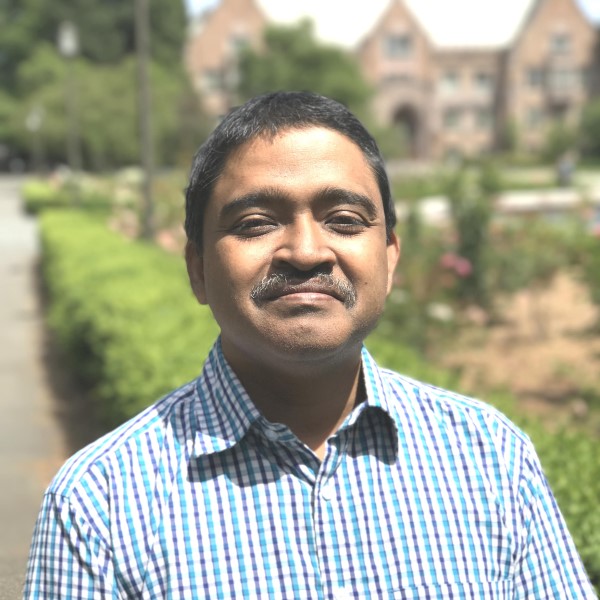
Ben Seiyon Lee is an Assistant Professor in the Department of Statistics at George Mason University's College of Science. His work bridges computational statistics, climate modeling, and environmental risk assessment. Education: PhD in Statistics, Pennsylvania State University (2020) Lee specializes in computational methods for high-dimensional spatiotemporal data and uncertainty quantification in climate models. His research explores climate change impacts on extreme hydrological events, wildfire emissions, and medical decision-making. Recent publications focus on Bayesian spatiotemporal frameworks for extreme precipitation analysis, zero-inflated spatial models, and multisector uncertainty quantification. His work addresses challenges in flood risk assessment, agricultural yield projections, and healthcare compliance metrics.
Dr. Jean Goodwin is the SAS Institute Distinguished Professor of Rhetoric & Technical Communication at NC State University's Department of Communication, part of the College of Humanities and Social Sciences. She specializes in science communication ethics, civil argumentation, and the rhetoric of controversial scientific topics such as climate change and GMOs. Her work bridges theory and practice, including NSF-funded initiatives like Teaching Responsible Communication of Science, which develops case studies for STEM graduate students. She also leads the Leadership in Public Science cluster through NC State's Chancellor’s Faculty Excellence Program. Education: B.A. in Mathematics (University of Chicago, 1979), J.D. (University of Chicago, 1984), and Ph.D. in Communication/Rhetoric (University of Wisconsin-Madison, 1996). Her career includes over 25 years of teaching rhetoric and mentoring students across communication subfields. Research focuses on how scientists communicate effectively with non-experts, leveraging discourse analysis and conceptual frameworks like speech act theory. Key themes include trust-building in contentious contexts, ethical advocacy roles for scientists, and historical rhetorical strategies from Cicero to modern policy debates. Her work often intersects with civic engagement and interdisciplinary collaboration, such as organizing conferences for science communication scholars and advising organizations like the AAAS. Major publications explore ethical dimensions of science communication, including climate change advocacy, disinformation detection, and pandemic messaging. Awards include the EB Knight Journal Award (2007) and her distinguished professorship. Current initiatives emphasize translating scholarly insights into practical tools for scientists and fostering dialogue between scientific and public communities through funded research partnerships.
Cathryn Mitchell is a Professor of Radio Science and Royal Society Industry Fellow at the University of Bath, specializing in ionospheric physics, position, navigation, and timing (PNT). She leads research in the Space & Telecoms Research Group (STAR), focusing on radio propagation, data assimilation, and space weather impacts on communication systems. Her work bridges theoretical, computational, and experimental approaches, with applications in satellite navigation, climate monitoring, and defense sectors. Her research interests include ionospheric tomography, HF communications, and the development of robust PNT systems. Mitchell collaborates extensively with industry partners like Spirent Communications on future navigation technologies and space weather resilience. She has held roles such as Academic Director of the Doctoral College and contributes to interdisciplinary projects like the DRIIVE initiative exploring ionospheric variability with EISCAT-3D radar. Recent work emphasizes ionospheric effects during geomagnetic storms (e.g., the 2024 Gannon Storm) and cooperative autonomous systems under communication constraints. Her projects are funded by the Royal Society, Natural Environment Research Council (NERC), and ESA, addressing challenges in space weather forecasting and PNT system reliability. Awards: Royal Society Industry Fellow (2022–present) Key Projects: Royal Society Industry Fellowship on Future PNT Technologies DRIVERS (DRIIVE): Ionospheric Variability Studies EISCAT-3D FINESSE: Ionospheric Structuring Analysis Mitchell’s lab, STAR, integrates academic and industrial partnerships to advance space weather applications and sustainable navigation systems, contributing to UN Sustainable Development Goals related to climate action and innovation.
Sarah Kang is the Director of the Department of Climate Dynamics at the Max Planck Institute for Meteorology in Hamburg, Germany, a position she has held since August 2023. She leads the Director's Research Group (CDY) focusing on fundamental climate dynamics. Prior to this, she served as Professor in the Department of Urban and Environmental Engineering at Ulsan National Institute of Science and Technology (UNIST) in South Korea from 2011-2023, progressing through assistant, associate, and full professor ranks. Her research examines complex climate system dynamics, with emphasis on: Large-scale atmosphere and ocean circulation patterns Tropical-extratropical climate interactions Hydrological cycle responses to climate change Mechanisms of polar amplification Teleconnections between ocean basins and climate zones Analysis of her recent publications reveals dominant research themes: Ocean-atmosphere coupling mechanisms Radiative forcing and climate sensitivity Hemispheric climate asymmetries Tropical precipitation dynamics Polar warming impacts on global circulation with consistent methodology employing high-resolution climate modeling and observational verification. Major scientific recognitions include: AGU Atmospheric Sciences Ascent Award (2022) AOGS Kamide Lecture Award (2018) Editor's Citation for Excellence in Refereeing (GRL 2018) UNIST Teaching Excellence Award (2012) NCAR Advanced Studies Fellowship (2009) She maintains extensive professional engagement as: Co-chair of CLIVAR Climate Dynamics Panel Science Steering Committee member for CFMIP Associate Editor for Frontiers in Climate Editor for AGU Advances Board member of Korean Meteorological Society
Dr. HAJNAL Géza is an Associate Professor at the Budapest University of Technology and Economics (BME), Faculty of Civil Engineering, where he serves in the Department of Hydraulic and Water Resources Engineering. His office is located in Room K. ép / mf. 12/7, and he can be contacted via email at hajnal.geza@emk.bme.hu or phone at +36 1 463 2362. His teaching portfolio includes active courses such as Hydraulic Engineering, Water Management (BMEEOVVAT43) and Hydrometric Field Course (BMEEOVVAI44). Previously, he taught Hidrogeology (BMEEOGMMET3) and Hydrogeology of Subsurface Water (BMEEOGMDT81). HAJNAL's research specializes in hydrogeology , with emphases on karst aquifer dynamics, groundwater flow modeling, climate impacts on hydrology, and hydraulic engineering. His work integrates field measurements (e.g., drip-water monitoring in Buda Castle Cave) with advanced numerical modeling to address complex hydrological challenges in Hungarian watersheds. Analysis of his 15 most recent publications (2013–2025) reveals dominant themes: 73% focus on karst/fractured aquifers , 20% on hydrological modeling techniques , and 7% on socio-environmental conflicts. Recurrent technical subfields include seepage flow validation, transmissivity determination, and rainfall-runoff sensitivity. No scientific awards, grants, student advisees, or lab affiliations are documented in the provided materials.
Themistoklis Sapsis is a Professor in the Department of Mechanical Engineering at the Massachusetts Institute of Technology (MIT), where he also holds an affiliation with the MIT Institute for Data, Systems, and Society. He earned his Ph.D. in Mechanical Engineering from MIT in 2011 and previously served as an Assistant Research Scientist at NYU’s Courant Institute of Mathematical Sciences. His research focuses on developing analytical, computational, and data-driven methods to predict and quantify extreme events in high-dimensional nonlinear systems, such as turbulent fluid flows and mechanical systems. Key areas include probabilistic modeling of climate extremes, machine learning for climate simulation corrections, and uncertainty quantification in complex dynamical systems. Recent work emphasizes applications in ocean engineering (e.g., vortex-induced vibrations, wave energy systems) and environmental science (e.g., spatially resolved climate extremes, bias correction in Earth system models). His methodologies combine stochastic emulators, Bayesian experimental design, and neural networks to address challenges in data sparsity and model fidelity. Notable contributions include frameworks for correcting coarse-scale climate simulations using machine learning, real-time ocean temperature reconstruction from satellite data, and data-driven modeling of hydrodynamic interactions in marine risers. His research bridges theoretical developments with practical applications in energy systems, structural monitoring, and autonomous systems. Prof. Sapsis collaborates with interdisciplinary teams and has contributed to initiatives such as FIRSTLING-DIGIMAR (a marine riser digital twin) and multi-fidelity frameworks for autonomous seakeeping. His work is supported by grants focused on advancing machine learning in scientific modeling and extreme event prediction.
Dr. Philipp Porada is a Junior Professor of Ecological Modeling at the University of Hamburg, affiliated with the Department of Biology within the Faculty of Mathematics, Computer Science and Natural Sciences. He works at the Institute of Plant Sciences and Microbiology, specifically in the Applied Plant Ecology group, based at the Otto Warburg House. His research integrates process-based modeling with ecological field studies to investigate non-vascular vegetation, biogeochemical cycles, and climate-vegetation interactions across multiple temporal and spatial scales. Porada's research focuses primarily on non-vascular vegetation (bryophytes, lichens, and biocrusts), examining their role in global biogeochemical cycles, biodiversity-ecosystem functioning relationships, and paleoclimate dynamics. His work spans from contemporary ecosystem processes to geological time scales, with particular emphasis on the impacts of climate change on non-vascular communities. He has developed several process-based models including LiBry for lichen and bryophyte communities, LiDELS for soil-vegetation interactions, and LYCOm for early vascular plants. His research demonstrates how non-vascular vegetation influences carbon sequestration, water cycling, and soil processes across diverse ecosystems from urban forests to polar regions. Analysis of Porada's publication record reveals a strong interdisciplinary approach combining ecological theory, biogeochemistry, and computational modeling. His work spans multiple ecosystems including peatlands, drylands, urban forests, and coastal blue carbon systems. A consistent theme across his research is understanding how non-vascular vegetation mediates the relationship between environmental conditions and ecosystem functions. His most recent work increasingly focuses on climate change impacts and potential mitigation strategies through vegetation management. Porada leads two major research projects funded by the German Research Foundation (DFG): 'Effects of nutrient limitation on non-vascular vegetation under climate change' and 'The role of early plants for palaeoclimate dynamics'. These projects reflect his dual interest in contemporary environmental challenges and deep-time ecological processes. His collaborative work, evident in his extensive publication record with international researchers, demonstrates strong interdisciplinary connections across ecology, biogeochemistry, and climate science. Dr. Porada maintains an active research laboratory focused on ecological modeling, with particular expertise in non-vascular vegetation dynamics. His team develops and applies process-based models to address questions ranging from micro-scale lichen water relations to global biogeochemical cycles. The research group collaborates extensively with field ecologists, climate scientists, and biogeochemists to ground-truth model predictions and explore new ecological phenomena.
Professor Asterios Bakolas is affiliated with the Department of Materials Science and Engineering at the School of Chemical Engineering, National Technical University of Athens (NTUA). His research focuses on materials science, cultural heritage conservation, and sustainable construction technologies. Key areas include the development of compatible restoration mortars for historic structures, analysis of traditional building materials, and application of non-destructive testing (NDT) techniques for heritage assessment. He has contributed to projects involving Hagia Sophia, the Parthenon, and Cretan architectural heritage. Research interests span materials characterization, composite materials, and environmental impact assessment of construction materials. Notable work includes studies on polychromy in ancient art, weathering phenomena in historic buildings, and integration of AI for material property prediction. His interdisciplinary approach combines chemistry, civil engineering, and digital humanities to address challenges in conservation and sustainable building practices. No scientific awards are explicitly listed, but his extensive publications reflect recognition in academic circles. Advising and grants are not detailed here, though his involvement in restoration projects implies active collaboration with funding bodies. He is part of the School’s research groups focused on materials science and heritage preservation.
Erhan Kutanoglu is an Associate Professor in the Operations Research and Industrial Engineering Graduate Program at The University of Texas at Austin's Cockrell School of Engineering. He joined the faculty in 2002 and received a National Science Foundation Early Career Development Award that year. His research focuses on integrating predictive models with stochastic optimization to address challenges in disaster resilience, humanitarian logistics, and semiconductor manufacturing. Key areas include hurricane mitigation, power grid resilience, and supply chain optimization. Education: PhD in Industrial Engineering from Lehigh University (1999). Research Interests: Applied operations research for manufacturing/service logistics, disaster resilience decision-making, semiconductor cycle time optimization, and inventory modeling. Recent work emphasizes hurricane evacuation planning, flood mitigation for critical infrastructure, and equity considerations in grid resilience. Publications: Over 50 peer-reviewed articles in journals like IEEE Transactions, European Journal of Operational Research, and Annals of Operations Research. Notable work includes models for power grid resilience, patient evacuation strategies, and semiconductor manufacturing efficiency. Awards: NSF CAREER Award (2002), recognized for contributions to service logistics optimization and stochastic modeling. Advising & Grants: Advised graduate students on projects involving hurricane preparedness and semiconductor scheduling. Active in collaborative research with industry partners to streamline manufacturing processes and enhance disaster response systems. Labs/Teams: Engaged with the Cockrell School's infrastructure resilience research groups and interdisciplinary teams addressing climate adaptation challenges.
Ji Hwan Park is an Assistant Professor in the School of Interactive Games and Media at RIT's Golisano College of Computing and Information Sciences (GCCIS). He holds a PhD from Stony Brook University under Prof. Arie Kaufman. His research focuses on accessible data visualization, digital twins, human-AI collaboration, and VR/AR applications. Notable contributions include developing tools for ADHD-friendly visualizations and interactive protein motif identification. He has received funding from the Department of Defense for biomedical research and earned an Honorable Mention at CHI 2024. Current teaching includes courses on game design and advanced algorithms. Research activities span medical imaging analytics (e.g., CMed framework for crowd-sourced diagnostics), climate modeling through Bayesian deep learning, and creative visualization techniques like Graphoto. His work bridges technical innovation with human-centered design principles, particularly in healthcare and neurodivergent accessibility contexts.
Professor John Parnell is the Chair in Geology & Petroleum Geology at the University of Aberdeen , affiliated with the School of Geosciences and Department of Geology and Petroleum Geology . His research focuses on geochemistry, paleoenvironmental reconstruction, trace element cycling, and sedimentary systems , with significant contributions to studies of the Rhynie Chert, Bowland Shale, and Lewisian Complex. Research Interests Professor Parnell's work spans: Geochemical analysis of Paleoproterozoic and Neoproterozoic systems Trace metal mobility in sedimentary and metamorphic environments Organic carbon burial and its tectonic implications Planetary analog studies for Mars exploration Shale resource characterization and environmental impact assessment Recent Publications His recent articles highlight investigations into: Graphitization processes in Scottish Highlands marbles Sulphur isotope records in Precambrian successions Trace element dynamics in the Bowland Shale Biogeochemical cycling at the Precambrian-Cambrian boundary Labs & Collaborations He leads research in the Geofluids Group and collaborates with the Planetary Sciences Department on Mars analog studies.
Seth Blumsack is a Professor at the Pennsylvania State University in the Department of Energy and Mineral Engineering and serves as Director of the Center for Energy Law and Policy . He holds an Adjunct Research Professor position at the Carnegie Mellon Electricity Industry Center and is affiliated with the Santa Fe Institute as an External Faculty member. His research spans energy economics , power grid reliability , and complex infrastructure networks . Key projects include: Interdependent natural gas and electricity systems analysis Governance of regional transmission organizations Smart grid consumer behavior studies Power grid reliability tools development He has secured funding from the U.S. National Science Foundation , Department of Energy , Environmental Protection Agency , and private industry. His Best paper award at Hawai’i International Conference on System Sciences (2011) and John T. Ryan, Jr. Fellowship (2011-17) highlight his scientific recognition. Publications emphasize electricity market deregulation , energy infrastructure resilience , and consumer response to smart grid technologies . His work has been cited in major media outlets like The New York Times and The Los Angeles Times , and he has consulted for National Renewable Energy Laboratory , U.S. Department of Energy , and other industry stakeholders.
Dr. Frederick Li is an Associate Professor in the Department of Computer Science at Durham University, UK. He holds editorial roles as Associate Editor of Frontiers in Education (Digital Education) and Editorial Board Member of Virtual Reality & Intelligent Hardware. His research focuses on Computer Graphics, Machine Learning, Geometric Modelling, Collaborative Virtual Environments, Visual Aesthetics, and Educational Technologies. He earned his B.A. (Hons) and M.Phil. from The Hong Kong Polytechnic University and his Ph.D. in Computer Graphics from City University of Hong Kong. Prior roles include Assistant Professor at HK PolyU and project manager of a Hong Kong Government ITF-funded project. **Education**: B.A. (Computing Studies) and M.Phil. from HK PolyU; Ph.D. in Computer Graphics (CityU Hong Kong). **Research Interests**: His work spans mesh saliency detection, human-object interaction recognition, cloud modeling, face beautification, and educational technology. Recent achievements include awards for papers (e.g., Best Paper at ITiCSE 2014) and recognition such as EPSRC Peer Review College membership. He leads Durham's Undergraduate Board of Examiners and has been an external examiner at Northumbria University. **Awards**: Best Paper (ACM ITiCSE 2014), Outstanding Paper (ICALT 2013), EPSRC Peer Review College (2024), Outstanding BMVC 2024 Reviewer. **Grants & Labs**: His research is supported by grants from EPSRC and others. He collaborates with the Centre for Vision and Visual Cognition, VIViD, and AIHS group at Durham.
Kishalay Mitra is a Professor at the Indian Institute of Technology Hyderabad , with affiliations to the Department of Chemical Engineering , Department of Climate Change , and Department of Artificial Intelligence . He also holds visiting professorships at Washington University in St. Louis and University of Washington, Seattle . His work in the Global Optimization & Knowledge Unearthing Laboratory (GOKUL) spans interdisciplinary optimization, machine learning, and their applications in industrial-scale engineering problems. Education : Ph.D. from IIT Bombay. Research Interests : Mitra's research focuses on optimization under uncertainty , surrogate modeling , multi-objective optimization , and integrating machine learning with physics-based models . His work addresses real-world challenges in wind energy , bioenergy supply chains , chemical process control , nanoscience , and environmental modeling (e.g., PM10 spatiotemporal analysis, forest fire prediction, and carbon capture). Article Trends : His recent publications emphasize wind energy systems (layout optimization, yaw control, forecasting), materials science (precipitate growth prediction, polymerization), and industrial processes (crystallization, grinding circuits). Techniques include neural operators , Bayesian optimization , generative adversarial networks (GANs) , and explainable AI .
Nathan Yee is a Professor at Rutgers University, where he has held academic appointments since 2004. He earned his B.Sc. from McGill University (1997) and Ph.D. from the University of Notre Dame (2001), followed by postdoctoral research at the University of Leeds (2001-2003). His career progression includes positions as Assistant Professor (2004-2010), Associate Professor (2010-2016), and full Professor since 2016. Research Focus Yee's research integrates geochemistry and geomicrobiology to study: mineral transformation processes, interactions between metal ions and mineral surfaces, microbial influences on inorganic element cycling, and contaminant behavior in environmental systems. His work combines experimental approaches with modeling to investigate biogeochemical processes relevant to early Earth evolution, microbial metabolism, and environmental remediation. Key themes include biologically catalyzed redox reactions, metal isotope fractionation, and geomicrobial controls on contaminant transport. Publication Trends Yee's recent publications (2021-2025) demonstrate strong emphasis on microbial-metal interactions, isotope geochemistry, and planetary science. Dominant themes include: isotopic tracing of metal cycling (Ni, Cu, Hg), microbial redox transformations of contaminants (Se, Te, U), photochemical processes in early Earth systems, and astrobiological investigations of planetary bodies like Mars and Enceladus. Methodologies frequently combine laboratory experiments with geochemical modeling.