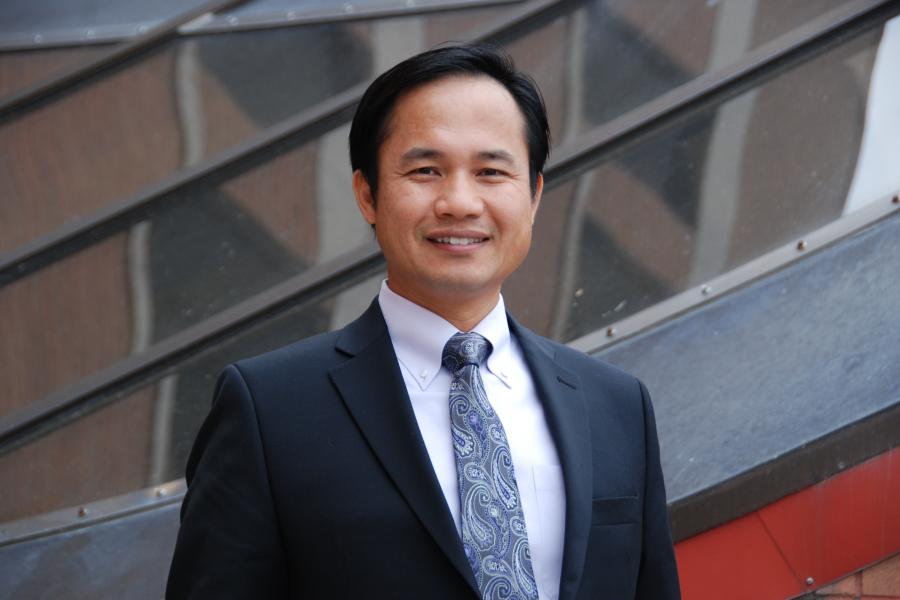
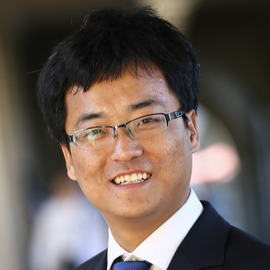
Stefan Bruckner is Professor of Visualization at the University of Bergen, specializing in biomedical visualization, volume rendering, and visual data exploration. His work develops novel techniques for analyzing complex scientific datasets across meteorology, medicine, and materials science. Dr. Bruckner's research group develops interactive visual analytics tools for weather forecasting, medical diagnostics, and ensemble data analysis. His methodological innovations include GPU-accelerated rendering, visual parameter exploration, and uncertainty visualization. He received the 2011 Eurographics Young Researcher Award for contributions to illustrative visualization. Professional service includes program committee roles for IEEE VIS, Eurographics, and ECRTS conferences. His pedagogical contributions span visualization, computer graphics, and programming languages at institutions including École normale supérieure and École polytechnique.
Dr. Zdravko Kunić is an Assistant Professor at the University of Algebra, Department of Information Systems and Business Analytics, and a Senior Lecturer at the University of Zadar's Department of Tourism and Communication Sciences. He leads projects at AlgebraLAB, the university's research institution, focusing on data science, AI, and decision support systems. His work spans high-performance computing architectures, cybersecurity honeypots, wind forecasting algorithms, and automated video editing systems. He collaborates with the Jožef Stefan Institute in Slovenia and participates in EU initiatives like the Pan-European Network of Digital Innovation Centers. His research emphasizes visual business analytics, integrating data science into economic and educational progress. Notable projects include developing scientific web applications using Python, traffic management systems with weather forecasting corrections, and TLS security analyses for Croatian websites. He actively contributes to international conferences and the Erasmus+ program, enhancing his expertise in global academic networks. Dr. Kunić's teaching spans undergraduate and graduate courses in information systems, digital communication, and data-driven decision making. His applied work includes designing systems for insurance, telecoms, and public administration. Despite no explicitly listed awards, his extensive project portfolio underscores his impact in both academia and industry.
Helena Flocas is a Full Professor at the Department of Physics (Section of Environmental Physics-Meteorology) at the National and Kapodistrian University of Athens, Greece. She holds a B.Sc. in Physics from the University of Thessaloniki (1987), an M.Sc. in Meteorology from the University of Reading, UK (1990), and a Ph.D. in Meteorology and Climatology from the University of Thessaloniki (1993). She was tenured as a Lecturer in 2000 and promoted to Full Professor in 2018. Her research focuses on Atmospheric Dynamics, Synoptic and Mesoscale Meteorology, and Climate Variability in the Mediterranean basin. She has published over 110 peer-reviewed journal articles, 200 conference papers, and 13 book contributions, with a total citation count exceeding 2,500 (H-index 26). She has supervised 6 completed PhD students and over 53 postgraduate students. Dr. Flocas has coordinated 7 projects out of 60 total participations in research initiatives. She serves on the editorial boards of Theoretical and Applied Climatology , Climate , Global Nest , and Meteorology , and has acted as a guest editor for other journals. She has reviewed manuscripts for over 40 scientific journals and has been recognized with scholarships from the National Institution of Scholarships (undergraduate) and NATO (postgraduate studies in the UK). Her work emphasizes understanding Mediterranean climate extremes, cyclone dynamics, and environmental interactions. She has contributed to developing indices for forecasting heavy rainfall and improving numerical weather prediction models in the region. Her research also explores links between the Indian monsoon and Mediterranean climate patterns.
Professor Pierre Pinson is the Chair of Data-centric Design Engineering at the Dyson School of Design Engineering, Imperial College London (UK). He also serves as a Chief Scientist at Halfspace (Denmark), Editor-in-Chief of the International Journal of Forecasting, and holds affiliated roles at Technical University of Denmark and Aarhus University. His research focuses on generating societal value from data through interdisciplinary approaches combining mathematics/statistics with applications in energy, logistics, and business analytics. Notable contributions include probabilistic energy forecasting, market design innovations, and optimization under uncertainty. Research interests span forecasting methodologies, stochastic optimization, game theory (with energy applications), and data markets. He has held visiting roles at institutions like the University of Oxford and the European Centre for Medium-Range Weather Forecasts. Awards include the prestigious INFORMS Edelman Award (2024) and IEEE Fellow status. Prof. Pinson actively advises PhD candidates with strong applied mathematics/programming backgrounds. His work bridges academia and industry, addressing challenges in renewable energy integration, grid management, and decentralized market mechanisms. Collaborative projects include the Smart4RES initiative for advanced renewable forecasting. Awards: INFORMS Edelman Award (2024), IEEE Fellow, Simons Fellowship (2021) Labs/Teams: Dyson School Research Group, Halfspace R&D Team, CoRE (Aarhus University) Grants: Imperial College President's PhD Scholarship, EU Smart4RES Project
Sarah Fletcher is an Assistant Professor of Civil and Environmental Engineering at Stanford University and a Center Fellow at the Woods Institute for the Environment. Her research focuses on advancing water resources management through interdisciplinary approaches that integrate hydrology, policy analysis, and data science to address climate-related challenges. She leads the Fletcher Lab, which develops computational models to enhance resilience and equity in water systems. Education: B.A. in Physics and Economics from the University of Pennsylvania (2010), M.S. in Technology and Policy from MIT (2012), and Ph.D. in Engineering Systems from MIT (2018). She is affiliated with the Lee and Kitty Price Center at Stanford's Woods Institute. Research emphasizes adaptive water infrastructure planning under climate uncertainty, with notable work on tools like PLANWater funded by the Stanford Sustainability Accelerator Grant. Key areas include water affordability metrics, socio-hydrological modeling, and equity-focused decision frameworks. Awards: Woods Institute Center Fellow, Sustainability Accelerator Grant Lab Focus: Partner-driven solutions for sustainable water systems Advising: Mentors students like Keani Willebrand, whose work challenges traditional drought management approaches Labs/Teams: The Fletcher Lab collaborates across disciplines to tackle environmental challenges, emphasizing transparency, equity, and anti-racism initiatives. Current opportunities include diverse roles in systems modeling and policy analysis.
Joshua Gray is an Associate Professor in Forestry and Environmental Resources at North Carolina State University, specializing in geospatial analytics to study land use/vegetation dynamics and their climate interactions. His research develops remote sensing algorithms that blend satellite imagery to improve time-series datasets for phenological studies, with additional interests in unmanned aerial systems and big-data geocomputation. Dr. Gray's work includes using Kalman Filters to merge MODIS and Landsat data for better understanding phenological change in managed landscapes. His research examines how vegetation dynamics interact with climate systems to affect carbon and water cycles, particularly in agricultural and timber plantation contexts.
Jonathan Poterjoy is an Associate Professor in the Department of Atmospheric and Oceanic Science at the University of Maryland, serving as Graduate Program Director. He holds a Ph.D. in Meteorology from Pennsylvania State University and a BS in Meteorology and Applied Mathematics from Millersville University. His research focuses on advancing data assimilation techniques for Earth system models, particularly addressing challenges in probabilistic forecasting of hazardous weather like tropical cyclones and severe storms. He has held postdoctoral positions at NOAA’s Hurricane Research Division and NCAR’s Mesoscale and Microscale Meteorology Laboratory. His current projects include improving NOAA’s Global Forecast System through enhanced parameterization and sea ice data assimilation, as well as developing methods for quantifying uncertainty in novel atmospheric measurements. Notable grants include NSF CAREER Award AGS1848363 and NOAA grants NA19NES432000 and NA22OAR4590184. His work emphasizes interdisciplinary collaboration with modelers, observation specialists, and uncertainty quantification experts to enhance environmental prediction systems.
Olmo Zavala Romero is an Assistant Professor in the Department of Scientific Computing at Florida State University. His research focuses on applying machine learning techniques to solve complex problems in medical imaging and earth sciences. He specializes in developing neural network-based models for oceanographic data assimilation, environmental forecasting, and medical image segmentation. His expertise includes integrating satellite observations and ocean models to study Gulf of Mexico circulation patterns, marine litter dynamics, and vertical mixing processes. He has also contributed to clinical applications such as automated tumor segmentation in cervical and prostate cancers using deep learning algorithms. Dr. Zavala Romero has developed tools like the NcDashboard software for ocean dataset visualization and the KPP_DNN parameterization framework for turbulence modeling. Key research themes include: Machine learning for environmental modeling and prediction Medical image analysis using deep learning techniques Data assimilation in oceanographic systems Software development for scientific data exploration His recent work emphasizes interdisciplinary applications, combining geoscience and biomedical challenges with cutting-edge machine learning solutions. No scientific awards have been explicitly mentioned in the provided materials.
Dr. Kianoush Emami is a Lecturer in the Department of Electrical Engineering at the School of Engineering and Technology, Central Queensland University (CQU). He holds a PhD in Power Systems from the University of Western Australia (2016) and has professional engineering experience in EPC projects across Mining, Oil & Gas, and Power Systems as an Electrical and Instrumentation (EI&C) engineer. His research focuses on Power Systems Dynamics, Smart Grids, Renewable Energy Integration, and Application of Machine Learning in Energy Systems. Education: PhD in Power Systems, University of Western Australia (2016) Master of Science in Electrical Engineering, Ferdowsi University of Mashhad, Iran (2002) Bachelor of Science in Electrical Engineering, Ferdowsi University of Mashhad, Iran (1999) Research Interests: Dr. Emami’s work centers on sustainable energy systems, including microgrid energy management, hybrid renewable energy solutions, and reducing carbon emissions. He specializes in load forecasting, battery energy storage systems, and the integration of solar/wind resources into smart grids. His expertise also extends to advanced control strategies for power systems, such as sliding mode control and deep learning-based solutions for grid stability. Publications: His recent work explores topics like hydrogen-based microgrids, hybrid renewable energy optimization, and forced oscillation mitigation in power systems. These studies highlight a trend toward sustainable energy solutions and data-driven control methodologies. Awards: Australian Postgraduate Award Supervision & Teaching: Currently available to supervise PhD candidates, Dr. Emami co-supervises research on renewable energy technology development in Far North Queensland. He teaches units such as Electrical Machines and Drives Applications and Engineering Futures at CQU. Affiliations: Active member of the Hydrogen Renewable Energies Centre and Centre for Intelligent Systems at CQU. Chartered Member of the Institution of Engineers Australia and Senior Member of IEEE.
Jeffrey Pai is a Professor at the Warren Centre for Actuarial Studies and Research within the Asper School of Business at the University of Manitoba. With over 30 years of academic experience spanning multiple countries, he specializes in actuarial science, risk modeling, and financial derivatives. His research examines livestock/crop insurance, weather derivatives, and Bayesian statistical methods for risk assessment. Research encompasses quantitative risk management frameworks, stochastic modeling of insurance products, and econometric analysis of financial instruments. Recent work focuses on parametric insurance for natural disasters, mortality catastrophe modeling, and agricultural risk transfer mechanisms using advanced statistical approaches. Publications demonstrate consistent focus on practical applications of actuarial science, particularly in agricultural insurance and weather-related financial instruments. Recent trends show increased emphasis on Bayesian methods, catastrophe modeling, and developing market applications. Awards: Students' Teacher Recognition Awards (2021, 2002) CAS Best Paper Award (2016) Literati Network Outstanding Paper Award (2011) Featured in MACLEAN's Guide to Canadian Universities (2004) Extensive teaching includes courses in life contingencies, risk theory, and actuarial modeling. Secured research funding from international agencies including SSHRC (Canada), Society of Actuaries (USA), and UK Development Partnerships.
Kim Wood is Associate Professor of Hydrology and Atmospheric Sciences at the University of Arizona, specializing in tropical cyclone dynamics. Research integrates satellite observations, machine learning, and climate analysis to study hurricane intensification, structural evolution, and climate change impacts. Teaching interests include tropical meteorology and remote sensing applications. Research focuses on hurricane-ocean interactions, rapid intensification prediction, and climate-driven changes in storm behavior. Recent publications emphasize machine learning applications for intensity forecasting and spatiotemporal analysis of subsurface ocean responses.
Cesare Alippi is a Full Professor at the Faculty of Informatics, Università della Svizzera italiana (USI), and also holds a professorship at Politecnico di Milano, Italy. He serves as a visiting Professor at Guangdong University of Technology (China) and Consultant Professor at Northwestern Polytechnic of Xi'an (China). His academic leadership extends to multiple international institutions where he has served as a visiting researcher including UCL (UK), MIT (USA), ESPCI (France), CASIA (China), A*STAR (Singapore), and University of Kobe (Japan). Professor Alippi's research interests center around graph-based learning, adaptation and learning in non-stationary environments, and intelligence for embedded, cyber-physical systems and IoT. His work bridges theoretical foundations with practical applications in sensor networks, environmental monitoring, and industrial processes. He has established significant research infrastructure including the Wireless Embedded Systems (WEmSy) Lab and the Internet of Things Lab, with notable deployments for marine environment monitoring in Queensland, Australia and the Fiji Islands, as well as rockfall and landslide monitoring systems across Italy and Switzerland. His research output shows a clear evolution toward graph-based deep learning approaches for time series analysis, anomaly detection, and spatiotemporal forecasting, reflecting the growing importance of graph neural networks in handling complex relational data in non-stationary environments. Major Awards: IEEE CIS Enrique Ruspini Meritorious Service Award (2024) IEEE CIS Outstanding Computational Intelligence Magazine Paper Award (2018) Gabor Award from International Neural Network Society (2016) IBM Faculty Award (2013) IEEE Instrumentation and Measurement Society Young Engineer Award (2004) Professor Alippi has held significant leadership roles including Past Board of Governors member of the International Neural Network Society, Past member of the Administrative Committee of the IEEE Computational Intelligence Society, and Past Vice-President for Education of the IEEE Computational Intelligence Society. He has served as Associate Editor for Proceedings of IEEE and several other prestigious journals. His research has been supported through numerous grants including an IBM Faculty Award in 2013 specifically for research on Intelligent Embedded Systems working in non-stationary environments. His research infrastructure includes the Wireless Embedded Systems (WEmSy) Lab and the Internet of Things Lab, with notable deployments including a sophisticated automatic, adaptive, sustainable and reliable wireless monitoring system for marine environments deployed in Queensland, Australia (2007) and under deployment at the Fiji Islands (2014-2015). He has also led several top-world deployments for rockfall and landslide monitoring across Italy and Switzerland since 2010, demonstrating the practical impact of his research in real-world harsh environments.
Dr. Dongjin Song is an Assistant Professor in the School of Computing at the University of Connecticut, specializing in continual learning, graph representation, and time series analysis. He holds a PhD from UC San Diego (2016) and previously worked at NEC Labs America. His NSF CAREER award (2024) supports research on evolving graph learning for applications in healthcare, energy, and transportation. Recognized with the Frontiers of Science Award (2024) and UConn AAUP Excellence Award (2025), he develops algorithms addressing catastrophic forgetting and generalization in dynamic systems. Research interests include: Robust representation learning for time-series and graph data Meta-knowledge distillation for heterogeneous systems Privacy-preserving federated learning LLM-enhanced multimodal forecasting He actively contributes as Area Chair at NeurIPS and Associate Editor for Neural Networks . Educational initiatives integrate research into AI/ML courses, and outreach targets K-12 STEM engagement. Current projects explore power outage prediction, clinical time-series analysis, and cross-platform mental health monitoring.
Pierre Gentine is a Professor of Geophysics in the Department of Earth and Environmental Engineering at Columbia University, with additional appointments in Earth and Environmental Sciences and Climate. He directs the Center for Learning the Earth with Artificial Intelligence and Physics (LEAP). His research integrates machine learning, remote sensing, and multiscale modeling to address climate change impacts on water cycles, land-atmosphere interactions, and extreme weather events. Key areas include drought forecasting, vegetation-climate feedbacks, and improving Earth system models through AI. Education: PhD (2010) and MSc (2006) in Civil and Environmental Engineering from MIT, and an M.Eng. (2002) in Applied Mathematics from SupAéro, France. Research focuses on advancing climate science through innovative applications of machine learning, such as parameterization of subgrid-scale processes, data assimilation, and climate prediction. His work bridges geophysical turbulence, hydrological extremes, and ecological dynamics, with recent emphasis on urban climate and generative AI for climate modeling. Notable awards include the AGU Macelwane Medal (2022), AGU Fellowship (2022), and multiple NSF/DOE Early Career awards. He leads high-impact projects like the LEAP Center and contributes to global datasets on evapotranspiration, vegetation phenology, and climate extremes. Advising and grants encompass over 22 publications and leadership in interdisciplinary initiatives. His lab (GentineLab) develops open-source tools for climate modeling and AI integration, fostering collaboration across geosciences and computer science.
Romit Maulik is an Assistant Professor at the College of Information Sciences and Technology, Pennsylvania State University, and holds a joint appointment as a faculty member at Argonne National Laboratory. His research focuses on integrating machine learning with computational physics, particularly in turbulence modeling, fluid dynamics, and high-performance computing. He leads projects such as the Interdisciplinary Scientific Computing Laboratory (ISCL), which develops AI-driven algorithms for applications like weather modeling and fusion energy. Education: Ph.D. from Oklahoma State University under Dr. Omer San, specializing in computational fluid dynamics. Postdoctoral work at Argonne National Laboratory with Prasanna Balaprakash and Bethany Lusch on scalable machine learning for scientific computing. Research interests include data-driven closure models, reduced-order modeling, and interpretable AI for fluid flow reconstruction. He is associated with the DeepHyper project for neural architecture search and has contributed to open-source tools like TensorFlowFoam and PythonFOAM. Recent achievements include awards from the NERSC AI4Science program for GPU hours and recognition for students like Xuyang Li and Dibyajyoti Chakraborty. His work bridges advanced computing, physics, and AI to solve complex multiscale problems.