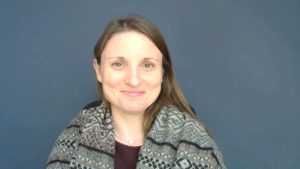
Professor Liz Stephens is a faculty member at the University of Reading's Department of Meteorology, specializing in flood forecasting, climate variability, and disaster risk management. Her work focuses on improving hydrological and meteorological models to enhance flood preparedness and climate adaptation strategies globally. Research Interests: Probabilistic flood forecasting Climate impacts on extreme events Enhancing forecast communication for decision-makers Applications in data-scarce regions like Kenya and Uganda Key Projects: Global Flood Awareness System (GloFAS) World Weather Attribution studies Probabilistic forecast evaluation frameworks Her research bridges academic analysis with practical implementation, collaborating with international organizations like ECMWF and humanitarian agencies to translate scientific insights into actionable disaster preparedness measures.
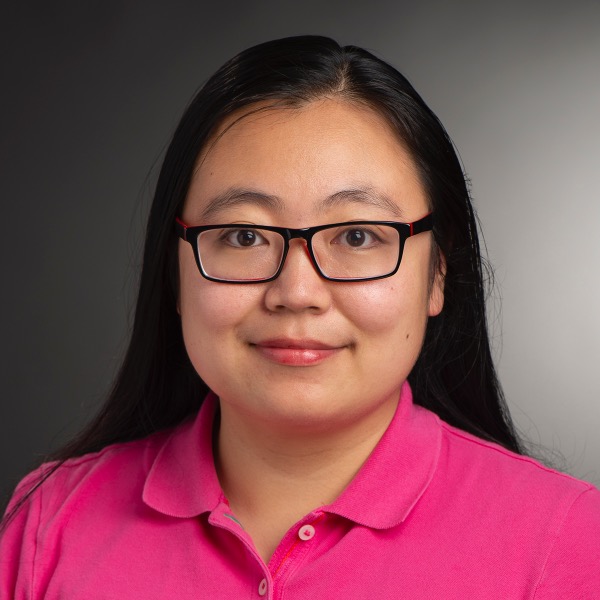
Bing Yan is an Assistant Professor in the Department of Electrical and Microelectronic Engineering at Rochester Institute of Technology (RIT), affiliated with the Kate Gleason College of Engineering. She holds a B.S. in Information Management from Renmin University of China (2010), and M.S. and Ph.D. degrees in Electrical Engineering and Statistics from the University of Connecticut (2012–2017). Prior to RIT, she was an Assistant Research Professor at the University of Connecticut. Dr. Yan’s research focuses on power system optimization , including grid integration of renewables (wind/solar), microgrid operations, distributed energy systems, and manufacturing scheduling. She has published over 30 peer-reviewed articles and secured grants from the National Science Foundation (including a CAREER Award), Department of Energy, and industry partners like Brookhaven National Laboratory and ABB. Her work emphasizes mixed-integer linear programming and machine learning applications in energy systems. Notable contributions include stochastic unit commitment models for wind farms, voltage control via deep reinforcement learning, and multi-layer weather models for PV prediction. She advises on projects involving grid resilience, smart manufacturing, and data-driven optimization. Awards: National Science Foundation Faculty Early Career Development (CAREER) Award Multiple NSF grants, DOE grants, and industry contracts Teaching: Courses include Circuits I , Electric Power Transmission & Distribution , and Advanced Power Systems . She also mentors students through co-op programs and independent studies. Labs/Teams: Leads the Intelligent Lab of Power and Manufacturing (ILPM), focusing on multidisciplinary solutions for energy and manufacturing systems. The lab emphasizes hands-on training and innovation in smart grid technologies and sustainable energy systems.
Renate Egan is a Professor and Deputy Head of School (Engagement) at the School of Photovoltaics and Renewable Energy Engineering , University of New South Wales (UNSW). She leads UNSW's activities in the Australian Centre for Advanced Photovoltaics , a national research consortium involving multiple Australian institutions. Her research focuses on: Techno-economic analysis of photovoltaic technologies Energy data analytics for decentralized systems Electricity market restructuring Technology transfer and commercialization Recent work examines machine learning applications in energy demand forecasting, thermal storage optimization, and bushfire resilience. She collaborates extensively across academia, industry, and government sectors. Key affiliations include: Co-Founder of Solar Analytics (Australia's largest independent energy monitoring provider) Executive Committee member of the IEA PV Power Systems program
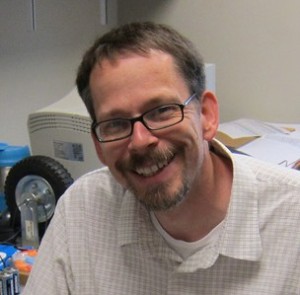
Dr. Tim Oates is a Professor in the Department of Computer Science and Electrical Engineering at the University of Maryland, Baltimore County . His research spans machine learning, artificial intelligence, and brain-machine interfaces, with a focus on weakly supervised methods, human-in-the-loop reinforcement learning, and grounded policy development for robotics. Ph.D., Computer Science, University of Massachusetts, Amherst, 2000 M.S., Computer Science, University of Massachusetts, Amherst, 1997 B.S., Computer Science and Electrical Engineering, 1989 Current research threads include: Developing non-invasive brain injury severity assessment via medical time series Modeling human brain development through computational frameworks Designing algorithms for autonomous robotic learning Recent publications highlight AI security mechanisms (backdoor detection via tensor decomposition, matrix factorization) Medical applications (3D artery reconstruction, skin lesion diagnosis, EEG denoising) Neuro-symbolic integration (holographic representations, language-guided reinforcement learning) Mathematical reasoning (schema-based problem solving, subitizing algorithms) Contact: oates@cs.umbc.edu | Office: 336 Information Technology and Engineering (ITE) Building
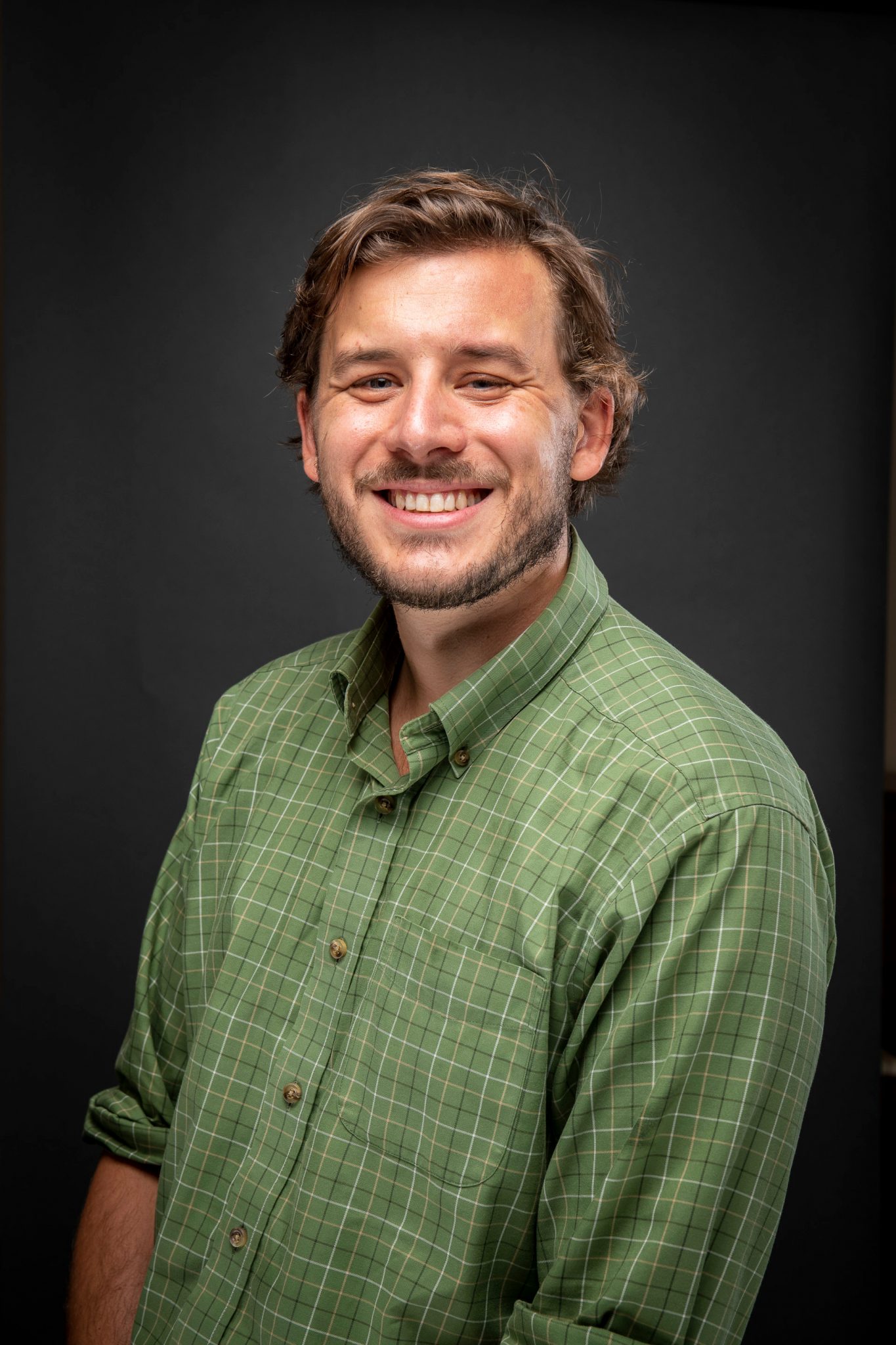
David Wanik is an Assistant Professor in the Department of Operations and Information Management and Associated Faculty in the Department of Civil and Environmental Engineering at the University of Connecticut. He serves as Academic Director for Business Data Analytics at the Stamford campus and conducts research in the Eversource Energy Center, focusing on data science, natural hazards, remote sensing, and IoT applications in utility systems. PhD, MS, and BS in Environmental Engineering from University of Connecticut His research bridges natural hazard prediction, power grid resilience, and environmental data science. Key themes include: Machine learning for power outage prediction Climate change impact on energy demand Remote sensing for population and environmental monitoring IoT-enabled infrastructure hardening Recent publications emphasize deep learning for nighttime light imagery analysis, hybrid physics-data-driven models for grid resilience, and climate-integrated demand forecasting. His work integrates satellite data, LiDAR, and utility infrastructure records for predictive analytics. Teaching includes courses in business analytics, Python-based data science, and deep learning for the MS Business Analytics and Project Management program.
Pavlos S. Georgilakis is a Professor at the School of Electrical and Computer Engineering, National Technical University of Athens (NTUA), specializing in modern techniques for power system analysis, optimization, and renewable energy integration. He holds a Diploma (1990) and PhD (2000) in Electrical Engineering from NTUA. His career includes roles as Lecturer (2009) and Associate Professor (2018–2023) at NTUA, and Assistant Professor at the Technical University of Crete (2004–2009). Research focuses on power transmission/distribution systems, transformer design, and applying AI/optimization for grid efficiency. He led 10 research projects, including Horizon 2020 initiatives SHAR-Q, WiseGRID, and NobelGrid. He authored 3 books and over 230 publications (SCOPUS citations: >5,500). Editor of IET Smart Grid, Energies, and Electricity journals; senior IEEE member. He supervised 4 doctoral, 9 master’s, and 76 diploma theses. Awards include the 2013 Best Reviewer Award from Electric Power Systems Research. Active in energy storage, smart grids, and decentralized energy resource integration.
Yulia Gel is a Professor in the Department of Statistics at Virginia Tech and serves as a Part-Time Program Director-Expert at the National Science Foundation (NSF). She holds a MSc (summa cum laude) and PhD in Mathematics from Saint Petersburg State University (Russia) and completed a postdoc in Statistics at the University of Washington. Her research focuses on uncertainty quantification in AI, statistical foundations of data science, spatio-temporal processes, and applications in climate science, healthcare, and blockchain analytics. She has received prestigious awards including the NSF Director’s Award (2023), ASA Distinguished Achievement Medal (2018), and TIES Abdel El-Shaarawi Award (2014). Gel has led grants on wildfire prediction, climate informatics, and blockchain data science. She serves on editorial boards of Statistica Sinica, Electronic Journal of Statistics, and Technometrics, and organizes workshops on AI for climate sustainability and fragile Earth systems. Her research group develops topological and geometric methods for graph neural networks, with applications to digital twins, environmental justice, and public health. Education: MSc (1997), PhD (2000) in Mathematics from Saint Petersburg State University; Postdoc in Statistics at University of Washington (2001–2003). Past roles include Professor at University of Texas at Dallas (2015–2024) and Associate Professor at University of Waterloo (2004–2014). Selected visiting positions include NASA Jet Propulsion Lab (2016–2017) and Isaac Newton Institute (2016–2017). She has pioneered statistical software packages like snowboot and funtimes for network inference and time-series analysis. Awards highlight her contributions to environmetrics and statistical methodologies. Current projects include NSF-funded research on AI-driven wildfire prediction and blockchain analytics for climate resilience. Her lab’s recent work emphasizes topological methods (e.g., zigzag persistence) for graph-based forecasting and adversarial robustness.
Jonathan Weare is a Professor of Mathematics at the Courant Institute of Mathematical Sciences, New York University. He holds affiliations with the Faculty of Arts and Science and the Graduate School of Arts and Science. His academic journey includes roles as an Associate Professor at the University of Chicago (2014–2019) and Assistant Professor (2011–2014), following postdoctoral work as a Courant Instructor at NYU. He earned his Ph.D. in Mathematics from UC Berkeley in 2007. His research focuses on stochastic algorithms and models, with applications in astrophysics, biophysics, computational chemistry, and climate science. Key areas include Monte Carlo methods, rare event simulation, and machine learning-driven scientific analysis. Collaborations with domain experts ensure his work addresses real-world challenges in diverse fields. Recent publications emphasize advancements in trajectory stratification, rare event prediction using machine learning, and efficient algorithms for high-dimensional problems. Notable contributions include the BAD-NEUS framework and AI-based solar system instability predictions. His group’s interdisciplinary approach bridges computational methods with scientific inquiry. Weare has advised numerous students and mentored postdocs, fostering talent in applied mathematics and computational science. His work on Mercury’s orbital dynamics and extreme weather prediction showcases the societal impact of his research. Current projects explore AI applications in weather modeling and rare event analysis, leveraging cutting-edge machine learning techniques. Labs/Teams: His research group at Courant develops stochastic algorithms and collaborates with interdisciplinary teams in computational chemistry, climate science, and astrophysics. Key collaborations include the University of Chicago and Columbia University.
Soroosh Sorooshian is a Professor at the Samueli School of Engineering , University of California, Irvine, with joint appointments in Civil and Environmental Engineering and Earth System Science . He serves as Founding Director of the Center for Hydrometeorology and Remote Sensing (CHRS) and holds the Samueli Endowed Chair in Engineering . His expertise spans hydrometeorology, climate-water interactions, remote sensing applications, and water resource management in arid regions. Education : Ph.D. in Engineering (1978), Engineer Degree in Systems Engineering (1977), M.S. in Operations Research (1973), B.S. in Mechanical Engineering (1971). Leadership & Affiliations : Member of US National Academy of Engineering , International Academy of Astronautics , and multiple scientific bodies (AAAS, AGU, AMS, IWRA). Former advisor to NASA, NOAA, and UNESCO initiatives. Recent research focuses on machine learning integration for hydrological modeling , satellite precipitation product development , and climate change impact assessments . Key trends include deep learning for bias correction , multi-sensor precipitation fusion , and atmospheric river hydrology in California. Awards include the AGU Horton Medal , NASA Distinguished Public Service Medal , and Prince Sultan Bin Abdulaziz International Water Prize . He consults on urban flooding and surface hydrology challenges. Scientific Honors : Chinese Academy of Sciences Einstein Professorship (2014) UNESCO Great Man-Made River Water Prize (2007) AMS Walter Orr Roberts Lecturer (2009) Multiple Distinguished Educator Awards Advisory Roles : Served on committees for NASA, DOE, and World Climate Research Programme's Hydrology Commission.
Luis Amaral is an Associate Professor at the School of Engineering, University of Minho, where he has served since 1998. He holds a PhD in Computer Science (Information Systems) from the University of Minho (1995) and has extensive experience in teaching, research, and administrative leadership. His research focuses on Information Systems in social and organizational contexts, particularly in public administration, with over 400 publications including books, journal articles, and conference papers. Key roles include Vice-Rector for Organizational Transformation and Administrative Simplification, Director of the Information Systems Department (2005–2006, 2010–2012), and leadership in projects like the Virtual Campus (e-UM). He has held numerous administrative positions, including President of the School of Engineering’s Council (2013–2016) and Pro-Rector (2006–2009). His work emphasizes e-government, digital transformation, and public procurement systems. Recent research trends include digitalization of public services, regulatory compliance (e.g., GDPR in higher education), and optimization of renewable energy systems. He has contributed to international initiatives such as the ICEGOV conference and projects in Mozambique and Timor-Leste. His publications highlight innovation in administrative processes, citizen engagement, and institutional digital readiness. Luis Amaral has coordinated postgraduate programs, including the Master’s in Information Systems (2001–2002, 2016–2017), and led research centers like IDITE Minho. His career reflects a balance between academic rigor and practical impact in technology-driven governance and organizational change.
Assoc. Prof. Dr. Ayhan Gün is an Associate Professor in the Department of Electrical and Electronics Engineering at Kütahya Dumlupınar University's Faculty of Engineering. With a career spanning over two decades, he has held various academic positions including Research Assistant, Assistant Professor, and currently Associate Professor since 2024. His extensive administrative experience includes serving as Head of the Control and Command Systems Department (2007-2021) and various leadership roles in university-industry collaboration initiatives. Dr. Gün completed his Bachelor's degree at Near East University (1991-1996), Master's at Dumlupınar University (1998-2001), and PhD at Eskişehir Osmangazi University (2001-2007). His research focuses on control systems, mathematical modeling, artificial neural networks, robotics, SCADA, PLC programming, electromechanical systems, nonlinear control, fuzzy logic, optimization techniques, automation, biomechanics, and mechatronics. His recent publications demonstrate a consistent research trajectory in control engineering, with particular emphasis on optimization algorithms applied to quadrotor control, inverted pendulum systems, and electrical motor design. His work bridges theoretical control concepts with practical implementations in robotics and power systems. A significant portion of his research involves applying swarm intelligence and evolutionary algorithms to solve complex control problems. Bilim, Sanayi ve Teknoloji Bakanlığı Kurumsal Kapasitenin Arttırılması (2016) BİLİM SANAYİ VE TEKNOLOJİ BAKANLIĞI Çift Beslemeli İndüksiyon Generatörü Tasarımı ve İmalatı (2016) Dr. Gün has supervised multiple graduate students and managed numerous research projects, including the current 'Robotic Arm Design and Implementation for Patients with Hemiparetic Arms' project. His external roles include serving as an expert witness for judicial institutions, project referee for TÜBİTAK, and publication reviewer for IEEE Transactions. He has also contributed to regional development through his work with Kütahya Governorship's Planning and Development Board.
Professor Cathryn Birch is a leading academic in Meteorology and Climate at the University of Leeds' School of Earth and Environment. She holds a Professorship specializing in high-impact weather systems and climate modeling, with extensive collaborations across international meteorological services including the Indonesian Met Service (BMKG) and the UK Met Office. Her research focuses on tropical meteorology , particularly thunderstorm formation and extreme rainfall mechanisms in Southeast Asia. She employs convection-permitting models , satellite observations, and machine learning techniques to develop nowcasting systems that predict severe weather 2-3 hours in advance. Key research areas include: Weather and climate extremes in tropical regions Flood forecasting and early warning system development Climate impacts on health (particularly humid heat extremes) Machine learning applications for weather prediction Her recent publications demonstrate strong trends in applied meteorology with emphasis on real-world implementation - 60% of her 2023-2025 work involves operational forecasting systems, while 40% focuses on climate-health linkages. Notable methodological innovations include satellite-based humid heat early warning systems and deep learning frameworks for convection initiation. Major scientific recognition includes: 2024 Emerging Environmental Impact Award for flood early warning systems 2021 Queen's Anniversary Prize for tropical community resilience 2014 European Meteorological Society Young Scientist Award Professor Birch actively supervises 6 PhD students and 3 postdocs while leading multi-million pound projects including the £6M National Hub on Net Zero, Health and Extreme Heat (HEARTH). Her team develops practical forecasting tools currently being tested with African meteorological services and the Indonesian Met Service. She also serves on the European Meteorological Society Awards Committee and the Met Office K-scale project steering group.
Vishnu S Nair serves as Assistant Professor (Grade I) in the School of Earth, Environmental and Sustainability Sciences at IISER Thiruvananthapuram since January 2024, following postdoctoral positions at IRD-France (2022-2023) and UC Berkeley (2019-2021). His research bridges tropical meteorology and climate science with practical applications for monsoon forecasting and climate adaptation. Education PhD in Meteorology & Oceanography, ESSO-INCOIS/Andhra University (2011-2017) Dr. Nair's research centers on monsoon low-pressure systems, investigating their historical variability, climate change impacts, and connections to extreme rainfall events. He develops advanced tracking algorithms and dynamical downscaling techniques to improve climate projections for vulnerable regions like South Asia and Pacific Islands. His work integrates observational analysis, climate modeling, and real-time forecasting systems to address critical questions about monsoon dynamics under global warming. His 14 publications (2014-2023) reveal consistent focus on monsoon system behavior, with recent work emphasizing future projections of low-pressure systems and observed increases in extreme rainfall rates. Key methodologies include high-resolution modeling, global dataset creation, and teleconnection analysis between monsoons and phenomena like ENSO and IOD. Scientific Recognition Gold Medal for Best PhD Thesis, Andhra University (2018) Junior Research Fellowship with Lectureship, CSIR-UGC (2011) CLIPSSA Postdoctoral Fellowship at IRD-France (2022-2023) Monsoon Mission Postdoctoral Fellowship at UC Berkeley (2019-2021) Dr. Nair actively recruits PhD candidates (requiring CSIR-JRF/GATE fellowships) and offers winter/summer internships in tropical meteorology. His research is supported by international projects including CLIPSSA for Pacific Island climate adaptation and India's Monsoon Mission for forecasting improvements. He contributes to global monsoon datasets used by meteorologists worldwide and serves as referee for leading journals like Geophysical Research Letters . He leads the Monsoon Dynamics Research Group at IISER-TVM, collaborating with institutions including Météo-France, UC Berkeley, and Indian climate research centers. Current initiatives focus on dynamical downscaling for island-scale climate projections and real-time tracking systems for monsoon low-pressure systems.
Dawei Han serves as Professor of Hydroinformatics at the University of Bristol's School of Civil, Aerospace and Design Engineering, leveraging advanced computational techniques to address hydrological challenges. Holding a B.Eng. and M.Sc. from Huabei alongside a Ph.D. from Salford, he is recognized as a Chartered Engineer (C.Eng.) and Fellow of the Chartered Institution of Water and Environmental Management (FCIWEM). His academic credentials include: Bachelor of Engineering (B.Eng.) from Huabei Master of Science (M.Sc.) from Huabei Doctor of Philosophy (Ph.D.) from University of Salford Professor Han's research focuses on integrating hydroinformatics with practical water management solutions, particularly in urban environments. His work pioneers applications of machine learning for rainfall nowcasting, radar-based hydrological monitoring, and climate change impact assessment. Key innovations include DREE-RF for rainfall energy estimation and frameworks for urban flood resilience, emphasizing data-driven approaches to enhance prediction accuracy and risk mitigation strategies. Analysis of his 2024-2025 publications reveals dominant themes in urban hydrology (40%), flood risk management (30%), and climate-remote sensing integration (30%). His research spans global contexts from UK catchments to Iraqi rainfall systems, consistently employing computational methods like neural networks and WRF modeling to address data-scarce environments and extreme weather events. Professional recognition includes: Fellow of the Chartered Institution of Water and Environmental Management (FCIWEM) While specific student supervision details are unavailable, his extensive publication record indicates active mentorship in hydroinformatics. Research grants likely support his work on radar remote sensing and urban climate adaptation, though explicit funding sources aren't documented in the source material. His affiliation with Bristol's engineering school positions him within interdisciplinary teams addressing infrastructure resilience, though laboratory-specific information remains unreported.
Eric Frew is a Professor in the Department of Aerospace Engineering Sciences at the University of Colorado Boulder. He holds leadership roles including Director of the Autonomous Systems Interdisciplinary Research Theme (ASIRT) and former Director of the Research and Engineering Center for Unmanned Vehicles (RECUV). His research focuses on autonomous systems, heterogeneous unmanned aircraft systems, and optimal distributed sensing. He earned his PhD from Stanford University in 2003, and has been a faculty member at CU Boulder since 2004. Education: PhD, Aeronautics and Astronautics, Stanford University, 2003 MS, Aeronautics and Astronautics, Stanford University, 1996 BS, Mechanical Engineering, Cornell University, 1995 Research Interests: Networked unmanned systems Optimal distributed sensing Controlled mobility in sensor networks Miniature self-deploying systems Guidance and control of unmanned aircraft in complex atmospheric phenomena Notable Awards: Outstanding Mentor Award (2023) AIAA Associate Fellow (2013) NSF CAREER Award (2009) Grants and Labs: Leads the Center for Autonomous Air Mobility and Sensing (CAAMS), and has conducted field campaigns such as TORUS (Targeted Observation by Radars and UAS of Supercells). His work integrates theoretical research with practical deployment of autonomous systems for environmental monitoring and severe weather studies. Labs/Teams: Active in CAAMS and RECUV, collaborating with industry/government on pre-competitive research in autonomous air mobility and sensing.