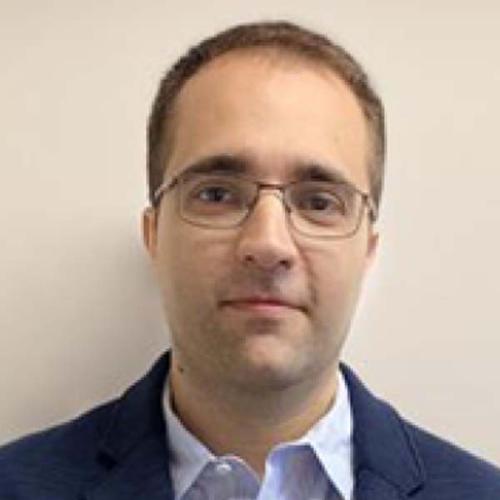
Prof. Dr. Selcuk Paker is a faculty member at the Department of Electronics and Communication Engineering , Faculty of Electrical and Electronics Engineering , Istanbul Technical University. His research spans electromagnetic field theory, microwave systems, and telecommunications, with a focus on antenna design, radar imaging algorithms, and bioelectromagnetics. Research Interests : Electromagnetic scattering, inverse scattering, radar systems, SAR imaging, GNSS algorithms, microwave heating, and wireless communication. Recent publications highlight his work in 5G antenna design , radar-based earthquake detection , and biological effects of RF exposure . He contributes to microwave and radar technologies, including applications in structural diagnostics and sensor networks.
Dr. Pei Huang is a Senior Lecturer in Energy Engineering at Dalarna University, Sweden, working within the Department of Information and Technology. His academic career focuses on multidisciplinary research at the intersection of energy systems, electromobility, and sustainable urban development, with significant contributions to both teaching and research in renewable energy and energy efficiency. Dr. Huang received his Ph.D. from the City University of Hong Kong in 2017. His educational background has provided a strong foundation for his current research in energy systems and sustainable technologies, bridging engineering principles with practical applications in the energy transition. Dr. Huang's research interests span several critical areas in modern energy systems. He specializes in peer-to-peer energy sharing, urban energy systems, and electromobility, with particular focus on electric vehicles as mobile power sources. His work also encompasses positive energy districts, district heating systems, building energy efficiency, and HVAC systems. A distinctive aspect of his research involves applying machine learning to address uncertainty in energy systems, creating more resilient and adaptive solutions for the energy transition. His multidisciplinary approach connects energy engineering with computer science, urban planning, and sustainability science. Analysis of Dr. Huang's recent publications reveals a strong emphasis on integrating electric vehicles into energy systems as flexible resources. His work demonstrates how vehicle-to-grid technology can enhance grid resilience and enable community energy sharing through innovative solutions like the Electric Vehicle based virtual Electricity Network (EVEN). There's also a notable focus on applying artificial intelligence to optimize energy systems, particularly in data-scarce scenarios where he combines clustering analysis and transfer learning. His research bridges the gap between theoretical models and practical implementation, with several studies based on real-world data from Sweden, demonstrating immediate relevance to current energy challenges. Dr. Huang has been highly successful in securing research funding, with approximately SEK 10 million secured for projects at Dalarna University. His current research portfolio includes: PI for a 2023-2026 Energy Agency project on enhancing grid resilience through electric vehicle-based virtual electricity networks (SEK 2.64 million) PI for a 2023-2026 FORMAS project on photovoltaic and electric vehicle utilization (3.75 million SEK, with a competitive success rate of 13.8%) Co-PI and national coordinator for a 2023-2026 CETPartnership project on thermal energy storage in district heating (2.32 million Euro) Co-PI for a 2024-2026 Swedish Energy Agency project on electric vehicles for frequency regulation (3.25 million SEK) Dr. Huang serves on the editorial board of the journal Buildings and has published extensively, with 49 journal articles, 1 book, 5 book chapters, and 19 conference papers to his name. His research has active participation in IEA tasks, demonstrating international recognition of his expertise. In addition to his primary energy research, Dr. Huang has made significant contributions to neuroscience, particularly in Parkinson's disease diagnostics and treatment, showing the breadth of his interdisciplinary approach.
Craig Shultz is an Assistant Professor in the Department of Electrical and Computer Engineering at the University of Illinois Urbana-Champaign and co-founder of Fluid Reality . His research focuses on interactive embedded systems and haptic actuation , particularly tactile interfaces for VR/AR, IoT, and wearable devices. He employs an interdisciplinary approach blending psychophysics, electrical and mechanical engineering, and human-computer interaction (HCI) to advance haptic rendering. Specializes in surface haptics , non-contact haptics , and electroosmotic pump arrays . Develops technologies for scalable shape displays , mid-air haptic interactions , and haptic-augmented spatial computing . Teaches Interactive Haptic Systems (since 2025). His research has led to 6 best paper awards and nominations at ACM and IEEE venues, including the IEEE Transactions on Haptics Best Application Paper of the Year (2018). He received the Sony Faculty Innovation Award (2025) and the IEEE Technical Committee on Haptics Early Career Award (2025) . His publications emphasize haptic rendering , low-latency touchscreens , and non-contact tactile actuation . He actively collaborates with institutions like Northwestern University and KAIST HCI . Key research areas: tactile interfaces, scientific engineering, VR/AR haptics, and haptic design practices. Technologies developed: Fluid Reality haptic gloves, DynaButtons, LRAir synthetic jets, and TriboTouch micro-patterned surfaces.
Sven Mayer is a Professor at TU Dortmund University’s Faculty of Computer Science and leads the Chair for Human-AI Interaction. He previously held a postdoctoral position at LMU Munich’s Media Informatics group and completed his PhD at Carnegie Mellon University (2014–2018). His research focuses on Human-AI/Robot Interaction , machine learning for touch systems , and sensor fusion . Recent work includes super-resolution capacitive touchscreens, pose estimation via smartphones, and city-scale sensing using retroreflective markers. The 15 most recent publications highlight trends in AI-driven interaction design , robot expressions , and smartphone-based sensing , with keywords spanning robotics, machine learning, and smart cities. Subdomains include contextual awareness, ergonomic constraints, and novel touch input paradigms. Scientific contributions recognized with Honorable Mention for 'Flyables' (2022) Honorable Mention for ISS piano learning paper (2022) . He has supervised projects in augmented reality and human-robot interaction courses , and frequently contributes to conferences like CHI, UIST, and MobileHCI as both author and organizational leader (e.g., Publications Chair at CHI 2022).
University of California, Los AngelesUnited States
Dejan Markovic is a Professor of Electrical and Computer Engineering at the University of California, Los Angeles (UCLA), holding the Mukund Padmanabhan Term Chair in Electrical Engineering and serving as Area Director for Circuits and Embedded Systems. His research spans implantable neuromodulation systems, domain-specific compute architectures, and energy-efficient design methodologies for biomedical and embedded applications. Dr. Markovic earned his PhD (2006) and MS (2000) from UC Berkeley and BS (1998) from the University of Belgrade, Serbia. His research focuses on ultra-low-power integrated circuits for neural interfaces, including artifact-free stimulation/sensing platforms and neural recording front-ends, alongside domain-specific architectures for sparse linear algebra in IoT and mobile computing. Recent work demonstrates strong trends in medical neuromodulation and energy-efficient VLSI for biomedical signal processing and wireless communications. His scientific contributions have been recognized with prestigious awards including IEEE Fellow (2021), ISSCC Lewis Award (2014), ISSCC Jack Raper Award (2010), and NSF CAREER Award (2009). Additional honors include UC Berkeley's David J. Sakrison Memorial Prize (2007) and multiple best paper awards. Dr. Markovic co-founded semiconductor IP startup Flex Logix Technologies (2014) and leads the DMGroup research lab at UCLA. He teaches core courses including ECE 115C (Digital Integrated Circuits), ECE M216A (VLSI Design), and BME M260 (Neuroengineering), mentoring students in cutting-edge VLSI design for medical and communication applications. The DMGroup lab specializes in developing implantable neuromodulation systems, domain-specific compute engines, and novel design methodologies, with recent projects featured in UCLA's coverage of brain-computer interface technology and Anari AI's $2M funding for personalized AI hardware.
Muhammad Hussain is a Professor at the Elmore Family School of Electrical and Computer Engineering, Purdue University. His research focuses on futuristic electronics spanning healthcare, environment, energy, robotics, and defense applications, utilizing state-of-the-art CMOS technology for mass production of IoT and IoE devices. These systems range from rigid to flexible/stretchable electronics, emphasizing manufacturability and sustainability. Campus: West Lafayette Office: BRK 2042 Email: mmhece@purdue.edu Labs: DREAM (Device Research Engineering Applications and Manufacturing) Research Interests: His work in microelectronics and nanotechnology drives innovations like: Flexible hybrid electronics for extreme environments and defense applications Brain organoid electrophysiology tools Dissolvable chip packaging for sustainable e-waste reduction 3D heterogeneous integration of CMOS systems Wearable sensors for marine environments and robotics
Jorge Camba is an Associate Professor at the School of Engineering Technology and holds a courtesy appointment in the Department of Computer Graphics Technology at Purdue University . He also serves as a Senior Research Scientist (by courtesy) in the Department of Industrial Engineering at the University of Naples Federico II , Italy. PhD in Systems and Engineering Management (Universidad Politécnica de Valencia, Spain) MSc in Digital Media (East Tennessee State University) MSc in Computer Science (Universidad de Vigo, Spain) His research explores intelligent CAD systems , digital manufacturing , and mixed reality environments , focusing on model quality assurance , design intent communication , and collaborative design tools . Recent work investigates spatial cognition in CAD education , geometric variability analysis , and annotation-driven knowledge management . Key trends in his publications include parametric modeling strategies , 3D annotation systems , and XR applications in design evaluation. Awards include the Purdue Faculty Scholar (2021) and I3B Fellow (2021). He has presented at conferences on topics like Industry 4.0 , space habitat design , and digital product quality .
Sayna Rotbei is a postdoctoral researcher at the Karolinska Institutet , affiliated with the Department of Medical Epidemiology and Biostatistics and part of the Predictive Medicine – Mattias Rantalainen's Research Group . She holds a PhD in Information Technology and Electrical Engineering from the University of Naples Federico II (2024) and focuses on applying artificial intelligence to healthcare challenges. Education : PhD in Information Technology and Electrical Engineering, University of Naples Federico II (2024). Her research interests center on artificial intelligence and machine learning applications in healthcare, including clinical decision support systems , outcome prediction , and interdisciplinary data-driven solutions . She combines medical data , computational models , and public health perspectives to address real-world clinical challenges. Recent publications highlight her work on diabetes (2024), robot cybersecurity (2023), lockdown-induced psychiatric symptoms (2022), prostate surgery outcomes (2023, 2024), and early autism detection (2020, 2021). These studies span systematic reviews , predictive modeling , and smart diagnostic architectures . In teaching , she has supported undergraduate and postgraduate courses in information technology and data processing, and guided master’s students on research design and implementation.
Eva Swinnen is a researcher at the Vrije Universiteit Brussel within the Brubotics Rehabilitation Research Center, focusing on physiotherapy, human physiology, and anatomy. Her work bridges robotics and rehabilitation medicine. Key research areas: Walking (100%), Gait Analysis (86%), Systematic Reviews (59%), Orthotic Devices (51%) Recent Publications (2025): Explore AI applications in stroke rehabilitation, virtual twin technology, and electrotherapy effects on muscle recovery. Notable collaborations include projects with KU Leuven and Radboud University Medical Center. 2022 Kuka Innovation Award Finalist 2019 Phase I & II App Development Competition Winner Supervision: Guided master's theses on topics like Kinect™ system validation, volleyball spike biomechanics, and EMG patterning in motor tasks. Currently involved in EU-funded TARGET consortium initiatives for stroke management.
Yuta Sugiura is an Associate Professor in the Department of Information and Computer Science at Keio University's Faculty of Science and Technology. His research focuses on innovative human-computer interaction techniques, particularly in wearable computing, tangible interfaces, and novel input methods. Previously, he worked as a postdoctoral researcher at the National Institute of Advanced Industrial Science. Dr. Sugiura's research interests span Human-Computer Interaction, Wearable Computing, Augmented Reality, Tangible User Interfaces, Gesture Recognition, Ubiquitous Computing, Haptics, and Virtual Reality. His work often explores how everyday objects and environments can become interactive surfaces, with notable projects including the iRing (intelligent ring), SenSkin (skin as interface), and EarHover (mid-air gesture recognition for hearables). He has developed numerous novel interaction techniques that leverage physical properties of materials and human physiology for input and output. His recent publications indicate a strong focus on hearable computing, medical applications of HCI, edible interfaces, and novel authentication methods. The research shows a consistent pattern of exploring unconventional interaction surfaces and leveraging subtle physical phenomena for input sensing. His work has significant implications for healthcare applications, particularly in neurological disorder screening and rehabilitation. Best Paper Award Dr. Sugiura has advised numerous students who have gone on to publish significant work in top-tier HCI venues. His research has been supported by various grants enabling the development of novel interaction techniques and systems. He maintains strong collaborations with researchers across Japan and internationally, particularly in the fields of wearable computing and medical applications of HCI. His laboratory appears to focus on lifestyle computing, developing interfaces that integrate seamlessly into daily activities. Current projects include exploring edible displays, adaptive ear interfaces, and novel authentication methods using wearable devices. Future work seems to be heading toward more medical applications of HCI, particularly in neurological assessment and rehabilitation.
Gaang Lee is an Assistant Professor in the Department of Civil and Environmental Engineering at the University of Alberta's Faculty of Engineering, where he joined in 2022 after earning his Ph.D. from the University of Michigan. His research pioneers 'sympathetic' built environments that enhance safety, health, productivity, and comfort for workers and users through integration of wearable biosensors, AI, extended reality, and robotics with psychophysiological theories. Education: Ph.D in Civil and Environmental Engineering, University of Michigan, Ann Arbor (2022) - Emphasis: Construction Engineering and Management; Graduate Certificate in Computational Discovery and Engineering Graduate Certificate in Computational Discovery and Engineering, University of Michigan, Ann Arbor (2022) M.S. in Architectural Engineering, Yonsei University, South Korea (2012) - Emphasis: Construction Engineering and Management B.S. in Architectural Engineering, Yonsei University, South Korea (2010) Dr. Lee combats technological exclusion for marginalized groups (construction workers, older adults) by developing empathetic technologies for workplaces, buildings, and urban spaces. His work applies human sensing, AI, and digital twins to create environments that adapt to diverse human needs, with key projects spanning psychophysiological safety monitoring, human-robot collaboration, and inclusive urban design. He integrates psychophysiological and socio-cognitive theories to address real-world gaps in construction engineering and computer science. His recent publications (2023-2025) reveal strong trends in AI-driven safety hazard identification, biosensor-based stress/fatigue monitoring, and virtual reality for construction team dynamics. A critical emerging focus is equity-centered technology design, with increasing publications addressing inclusive built environments and technological access for vulnerable populations through graph-based algorithms, domain adaptation, and interpretable AI models. Scientific Awards: No awards mentioned in the provided text. Dr. Lee actively recruits students for his 'Empathetics' research group starting in 2026, prioritizing candidates with empathy, research motivation, and commitment to diversity and inclusion. While specific grants are not detailed, his research program receives institutional support from the University of Alberta and likely external funding given its interdisciplinary scope and industry relevance. He leads the 'Empathetics' research group (part of Attentive Hub) which emphasizes diversity as fundamental to innovation. Current projects include psychophysiological monitoring for occupational safety, trustable human-robot collaboration systems, and extended reality frameworks for empathetic built environments. The group collaborates with IHT LAB (https://www.iht-lab.com/) and focuses on deploying technologies that make daily surroundings safe, healthy, and truly inclusive for all individuals.
Catherine Arnott Smith is a Professor at the University of Wisconsin–Madison’s School of Computer, Data & Information Sciences (Information School). Her expertise spans consumer health informatics, medical informatics, and health information management. She holds advanced degrees from the University of Michigan (AMLS, M.A. 1992) and University of Pittsburgh (MS 2000; PhD 2002). Research focuses on patient-facing health technologies, including clinical note accessibility, health literacy, and public library roles in health information provision. Key areas include pediatric open notes, wearable device terminology, and disability-related health management. She teaches courses such as Digital Health (LIS 517) and Information Organization (LIS 602). Publications emphasize healthcare transparency, misinformation mitigation, and stakeholder engagement. Recent work explores cognitive/cultural factors influencing vaccination attitudes and parent perspectives on pediatric clinical notes. She advocates for inclusive design of health IT systems, leveraging qualitative methods like interviews and content analysis. No scientific awards are explicitly listed, but her extensive grant-funded research addresses topics like health information equity and consumer engagement. She collaborates with interdisciplinary teams in medical, library, and educational sectors. Her work bridges clinical documentation practices with public health needs, particularly for vulnerable populations such as disabled youth and low-literacy caregivers.
Jonas Stålhand is a Professor at Linköping University, affiliated with the Department of Management and Engineering (IEI) and the Division of Solid Mechanics (SOLMEK). His research focuses on biomechanics, smart textiles, haptic technologies, and cardiovascular mechanics. He leads interdisciplinary projects such as a study on pain relief using smart textile garments, combining neuroscience, materials science, and biomechanics. His work spans arterial wall mechanics, wearable haptic systems, and biomaterial characterization. Recent projects include parameter identification in arteries and the development of electroactive yarn actuators for wearable applications. Collaborations involve multidisciplinary teams across engineering, medicine, and textile science. Research interests emphasize translating biomechanical insights into clinical and industrial applications. Notable contributions include studies on aortic stress analysis, acetabular cup stability, and electroactive polymer-based actuators. His publications address both fundamental and applied aspects of soft tissue mechanics and medical engineering. No scientific awards are explicitly listed, but his work has been highlighted in university news for its innovative potential in healthcare and technology.
Marco Rozendaal is a researcher at Delft University of Technology's Industrial Design Engineering department, specializing in Human-Centered Design and Human Technology Relations. He focuses on ethical dimensions of technology, human-robot interaction, wearable health solutions, and critical design philosophies. His work bridges theoretical research and practical applications, such as designing embodied coaches for stroke rehabilitation and exploring moral stress in technical practice. Research Interests: Rozendaal investigates how technology impacts human behavior and ethics, emphasizing embodied interaction, friction in digital systems, and healthcare innovations. Notable areas include AI ethics, wearable technologies for body awareness, and the sociotechnical implications of robotics in workplaces and healthcare settings. His projects often involve interdisciplinary collaborations with theater professionals, medical practitioners, and farmers. Publications Trends: His recent work highlights themes like moral stress in technical fields, human-robot collaboration in mixed-reality environments, and ethical design frameworks. Key contributions include guidelines for robot communication in dairy farming and critical analyses of seamless technology's societal impacts. Awards: He received the 2018 Best Paper Award for exploring ambiguity in behavioral design, recognizing his contributions to design theory and ethics. Teaching & Projects: Rozendaal teaches courses like Design in Robotics and Videography . He leads research initiatives such as Wearable Technology for Increased Body Awareness and MUG CUP , which support parents of hospitalized children. His work also addresses the 'New Normal' in post-pandemic design practices. Labs & Teams: His research is conducted within TU Delft's Human-Centered Design group, collaborating with industry partners and academic networks to advance ethical and human-centric technological solutions.
Prashant Shenoy is a Distinguished Professor and Associate Dean in the College of Information and Computer Sciences at the University of Massachusetts Amherst. He has been on the faculty since 1998 and heads the Laboratory for Advanced Systems Software while directing the Center for Smart and Connected Society. His research focuses on systems issues for distributed systems ranging from large server clusters to networks of small sensors. Shenoy received his PhD in Computer Science from the University of Texas at Austin in 1998, following an MS from the same institution in 1994. He earned his BTech in Computer Science and Engineering from the Indian Institute of Technology, Bombay in 1993. His academic progression at UMass Amherst has been from Assistant Professor (1998-2004) to Associate Professor (2004-2009) to Professor (2009-2020) to Distinguished Professor (2020-present). His primary research interests include distributed systems, networking, cloud and edge computing, mobile computing and Internet of Things, and energy and sustainability. Over the past decade, his work has increasingly focused on computational decarbonization, as evidenced by his recent $12 million NSF Expedition award in this area. His research group maintains several important resources including the UMass Trace Repository, UMass CS Weather Station, BenchLab, and Smart* Dataset. Shenoy's publications reflect a progression from foundational distributed systems work to increasingly sustainability-focused research. His recent work centers on carbon-aware computing, energy optimization, and computational decarbonization across various computing domains including cloud, edge, and IoT systems. ACM Fellow (2019) AAAS Fellow (2018) IEEE Fellow (2013) ACM Sigmetrics Test of Time Award (2016) NSF Career Award recipient Conti Research Fellowship recipient Lilly Foundation Teaching Fellow As an educator, Shenoy has consistently taught Distributed and Operating Systems (Compsci 677) and has mentored numerous PhD students who have received awards and gone on to successful careers. He serves as the founding Chair of the ACM Special Interest Group on Energy (SIGEnergy) and has organized numerous conferences including serving as PC chairs for the ACM Symposium on Edge Computing in 2025. His research has secured significant funding, including a recent $12 million NSF Expedition in Computational Decarbonization awarded in May 2024. Shenoy leads the Laboratory for Advanced Systems Software at UMass Amherst and directs the Center for Smart and Connected Society. He serves on editorial boards of several journals including ACM Transactions on IOT (TIOT), ACM Modeling and Performance Evaluation of Computing Systems (TOMPECS), and ACM Transactions on the Web (TWEB).