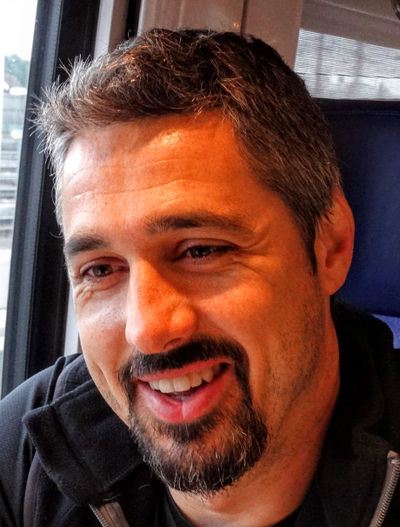
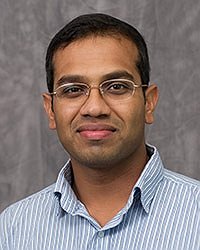
Cédric Wemmert is a Full Professor in Computer Science at the University of Strasbourg, where he heads the SDC team at the ICube laboratory (Engineering, Computer and Imaging Sciences Laboratory). He is a member of CNU 27 and teaches in the Computer Science department of the Technology Institute Robert Schuman. His research focuses on Data Science and Machine Learning , with key applications in: Digital Pathology (colon cancer, renal diseases) Air Pollution Modeling Network Analysis His recent publications demonstrate a strong trend in applying deep learning to histopathological image analysis, with contributions in stain invariant segmentation, virtual stain transfer, and colon cancer classification. His work bridges computer science and medicine, resulting in high-impact publications in journals like Knowledge-Based Systems and Artificial Intelligence in Medicine. Professor Wemmert actively supervises PhD researchers: Current PhD students: 4 Graduated PhD students: 11 His research is funded by: ANR (TURFU-Net, HistoGraph, AIR&D, CHOICED) INSERM (MAIA, IMPULSE) Regional bodies (ReSP-Ir, Grand-Est) He leads the SDC team at ICube, which develops machine learning and computer vision techniques for health, environmental, and urban infrastructure applications.
Thomas Wendler is a Professor at the Chair of Computer Aided Medical Procedures & Augmented Reality at Technische Universität München (TUM). His research focuses on the intersection of Artificial Intelligence, Medical Imaging, and Robotics, with specific interests in Longitudinal Image Analysis, Image-Guided Interventions, and Dosimetry for Radioisotope Therapy. Current affiliation: TUM Institute of Informatics Former leadership: Director of the Interdisciplinary Research Lab (IFL) Research Interests: Thomas Wendler's work bridges Artificial Intelligence Applications in Medicine with Robotic Imaging , emphasizing Longitudinal Image Analysis for disease progression and Image-Guided Interventions in clinical settings. His technical expertise includes Dosimetry for nuclear medicine and 3D Computer Vision for surgical applications. Teaching: He actively contributes to TUM's curriculum through lectures and practical courses such as: Computer Aided Medical Procedures I Medical Augmented Reality Introduction to Surgical Robotics Foundations in 3D Computer Vision Collaborations: Wendler collaborates with Prof. Nassir Navab and researchers like Mohammad Farid Azampour, Francesca De Benetti, and Zhongliang Jiang. His work has been published in journals including IEEE Transactions on Medical Imaging and Medical Image Analysis , with recent advancements in robotic ultrasound navigation and catheter tracking methodologies.
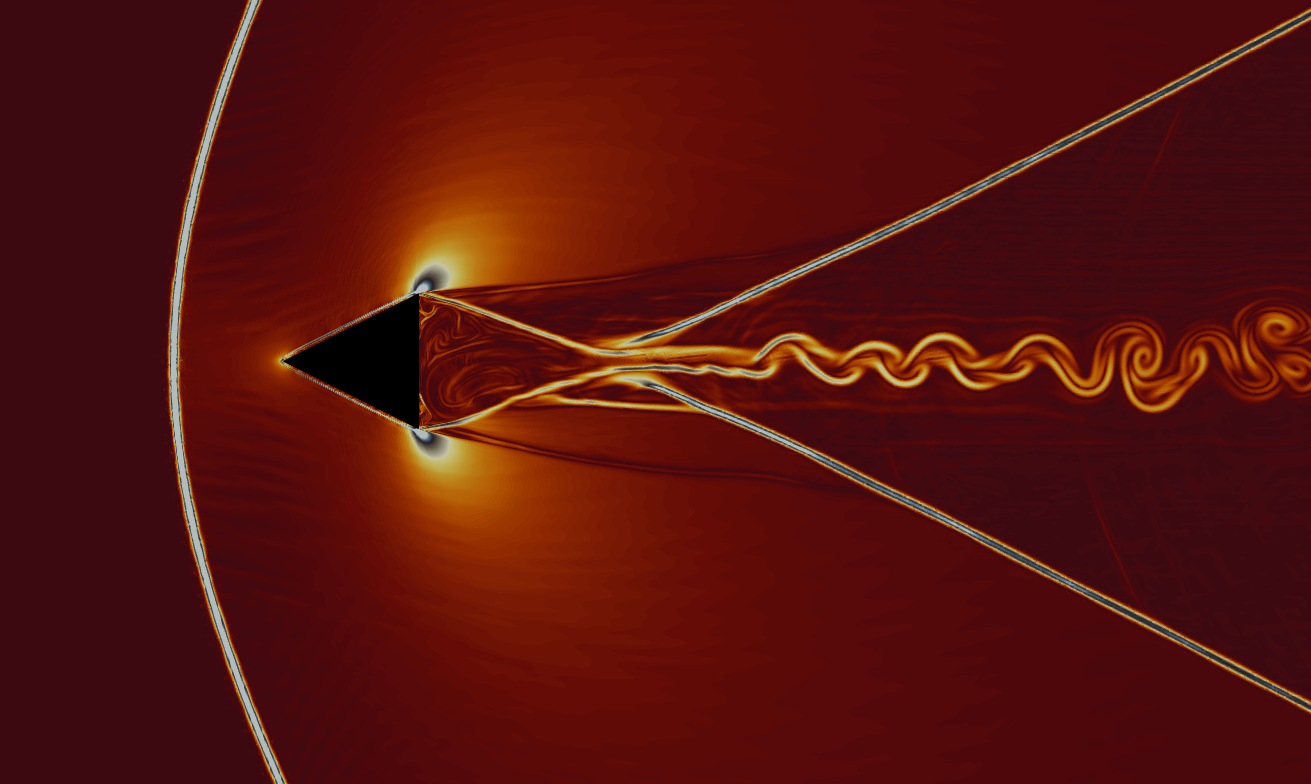
Ali Karakus is an Associate Professor at Middle East Technical University (METU) and Deputy Head of Department. He obtained his Bachelor's degree (2005), Master's degree (2009), and PhD (2015) from METU. His research focuses on computational fluid dynamics, high-order numerical algorithms, and GPU-accelerated solvers for multiphysics problems. Specializes in high-performance scientific computing and finite element methods. Develops GPU-optimized solvers for compressible/incompressible flows, level-set reinitialization, and physics-informed neural networks. The Accelerated Multiphysics (AMiP) research group, led by Dr. Karakus, emphasizes discontinuous Galerkin approaches, adaptive mesh refinement , and Jacobian-free Newton-Krylov methods . His recent work integrates data-driven modeling with traditional fluid dynamics solvers. Notable scientific achievements include: 2024 Lecturer of the Year award from METU Parlar Foundation Collaborative publications on NekRS , a GPU-accelerated Navier-Stokes solver Selected as a groundbreaking paper in Parallel Computing journal Dr. Karakus has supervised multiple M.Sc. theses on topics including: High-order Boltzmann solutions for low Mach aerodynamics Physics-informed neural networks in CFD GPU-accelerated level-set reinitialization His publications demonstrate expertise in GPU parallelization , mesh deformation , and weakly compressible flow modeling .
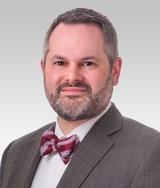
Andrew M Naidech is Professor at Northwestern University's Feinberg School of Medicine with appointments across multiple departments including Neurology (Neurocritical Care), Medical Social Sciences (Outcome and Measurement Science), Preventive Medicine (Biostatistics and Informatics), Anesthesiology, and Neurological Surgery. He serves as leader of the Master of Public Health program and directs research at the intersection of neurocritical care and artificial intelligence. Dr. Naidech earned his MD from Temple University (1997) and MSPH from Tulane University (2001), completed residency at Tulane University Hospital & Clinics (2002), and fellowship at Columbia Presbyterian Hospital (2004). He holds board certifications in Neurology, Vascular Neurology, Clinical Informatics, and Neurocritical Care from the American Board of Psychiatry and Neurology. His research focuses primarily on intracerebral hemorrhage, with significant contributions to understanding hematoma expansion mechanisms, developing AI applications for stroke management, and analyzing critical care outcomes. Recent publications demonstrate a strong emphasis on machine learning for medical image analysis, thromboelastography biomarkers, and patient-centered AI implementation in stroke care. Dr. Naidech has received prestigious honors including Fellowship in the American Academy of Neurology (2017) and election to Fellowship in the American Neurological Association (2012). He maintains active professional service as Member of American Schools and Programs of Public Health (2024-present), MCCKAP committee member at Society of Critical Care Medicine (2012-present), and previously served on FDA's Peripheral and Central Nervous System Committee (2010-2019). Fellowship, American Academy of Neurology (2017) Fellowship (elected), American Neurological Association (2012) AOA - Tulane University, Alpha Omega Alpha Honor Medical Society (2001) He contributes significantly to editorial work as former Editorial Board Member of Neurocritical Care (2015-2020) and maintains active membership in multiple professional societies including the American Neurological Association, American Academy of Neurology, American Heart Association, Neurocritical Care Society, and Society of Critical Care Medicine. Dr. Naidech's work is supported through affiliations with the Institute for Augmented Intelligence in Medicine, Center for Health Services & Outcomes Research, and Northwestern University Clinical and Translational Sciences Institute.
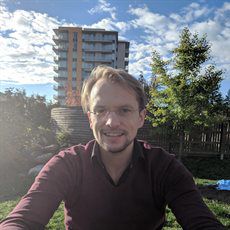
Dr Ben Cardoen is a Research Fellow at the School of Mathematics, University of Birmingham, specializing in algorithm development for biomedical imaging analysis at multiple scales—from diffuse optical tomography to superresolution microscopy. His work focuses on recovering minimal causal signatures for pathologies in ageing and inflammation using sparse high-dimensional data. His educational background includes: BSc in Computer Science, University of Antwerp (2015) MSc in Computer Science, University of Antwerp (2017) PhD in Computing Science, Simon Fraser University (2024) Following postdoctoral work at the University of British Columbia (2025), he joined the University of Birmingham. Dr Cardoen designs scalable, interpretable algorithms leveraging belief theory, graph algorithms, and structural causal discovery to push beyond empirical resolution limits in imaging modalities. His research targets degenerative diseases (Alzheimer, ALS, ageing), metabolic disorders (diabetes), and infectious diseases, with emphasis on robustness to complex noise models. Key methodologies include weakly supervised learning for protein-organelle interaction analysis in volumetric point cloud data, utilizing distributed computing on SLURM-based supercomputers. No scientific awards are documented in the provided materials. Regarding academic mentorship and funding, the text indicates no formal advising roles or grant details beyond his current fellowship position. Dr Cardoen's active projects involve extending probabilistic learning algorithms for nested label recovery in multichannel superresolution microscopy, with applications spanning genomic analysis, viral infection tracking, and cellular drug response modeling.
Dr. Jun Li is a Senior Lecturer at the School of Computer Science, Faculty of Engineering and Information Technology, University of Technology Sydney (UTS), Australia. He received his Ph.D. in Computer Science from Queen Mary University of London in 2009 and is affiliated with the Australian Artificial Intelligence Institute (AAII) at UTS. His research spans multiple domains within artificial intelligence, with primary focus on Machine Learning applications in computer vision and 3D geometry. Dr. Li has published extensively in high-impact journals including IEEE Transactions (TPAMI, TIP, TNNSLS) and Pattern Recognition, with recent work expanding into interdisciplinary research in earth science and marine applications. His research output demonstrates consistent productivity with numerous publications each year across diverse AI application areas. Dr. Li's work shows strong thematic progression from foundational computer vision techniques to applied interdisciplinary research. Early work focused on face hallucination and video super-resolution, while more recent publications address environmental applications using Graph Neural Networks for wave prediction and damage classification for disaster response. His research consistently bridges theoretical AI advances with practical real-world applications across healthcare, autonomous systems, and environmental science. AI to assist disaster emergency response (2023-2026) Applying Generative Adversarial Network in Medical Image Analysis (2020-2021) Big Massive Open Online Course (MOOC) Data Retrieval (2017-2020) As an educator, Dr. Li teaches core courses including '31005 Machine Learning' and '32513 Advanced Data Analytics Algorithms' at UTS, and is available for Masters Research and PhD student supervision, contributing to the development of next-generation AI researchers.
Mayur Naik is the Misra Family Professor in the Department of Computer and Information Science at the University of Pennsylvania's School of Engineering and Applied Science. He holds office in Room 642B, Amy Gutmann Hall and maintains an active research program focused on the intersection of programming languages and artificial intelligence. Before joining UPenn, he was faculty at Georgia Institute of Technology and a researcher at Intel Labs, Berkeley. Naik received his PhD in Computer Science from Stanford University in 2008 under Alex Aiken, a Masters from Purdue University in 2003 under Jens Palsberg, and a Bachelors from BITS Pilani in 1999. He grew up in Goa, India. His primary research interests center around neurosymbolic programming, which combines symbolic reasoning with machine learning to create more accurate, interpretable, and domain-aware AI systems. His group develops language design, learning algorithms, and compiler optimizations in this space, with their most mature effort being the Scallop neurosymbolic programming language and compiler toolchain. He also conducts research in trustworthy AI for healthcare applications and AI-enabled programming tools that improve programmer productivity. Analysis of his recent publications shows a strong trend toward neurosymbolic programming frameworks (Scallop, TorchQL), LLM-assisted program analysis (IRIS), and applications of these techniques to security, healthcare, and computer vision. His work consistently bridges theoretical foundations with practical implementations, often releasing open-source systems. Misra Family Professor (endowed chair, effective July 2024) Multiple distinguished paper awards (PLDI 2019, FSE 2015, PLDI 2014) Test-of-Time Paper Awards (FSE 2013, FSE 2012, EuroSys 2011) His student Elizabeth Dinella won the 2025 ACM SIGSOFT Outstanding Dissertation award Naik has advised numerous PhD students who have gone on to faculty positions at top institutions including Peking University, University of Toronto, Ashoka University, Bryn Mawr College, and Johns Hopkins University. His research is supported by grants from NSF, Google, Amazon, and other industry partners. His lab maintains active collaborations with clinicians and bioinformatics researchers to apply neurosymbolic programming to healthcare problems. His research group, which includes current PhD students and postdocs, develops practical open-source systems and applies them to diverse domains including computer vision, cybersecurity, medicine, and bioinformatics. The group maintains strong industry connections with Google, Microsoft, Amazon, and other tech companies.