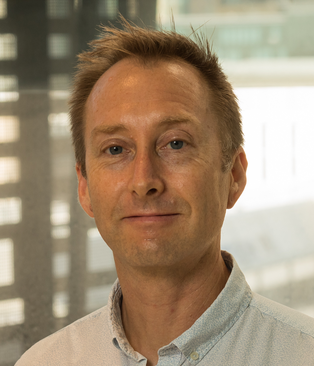
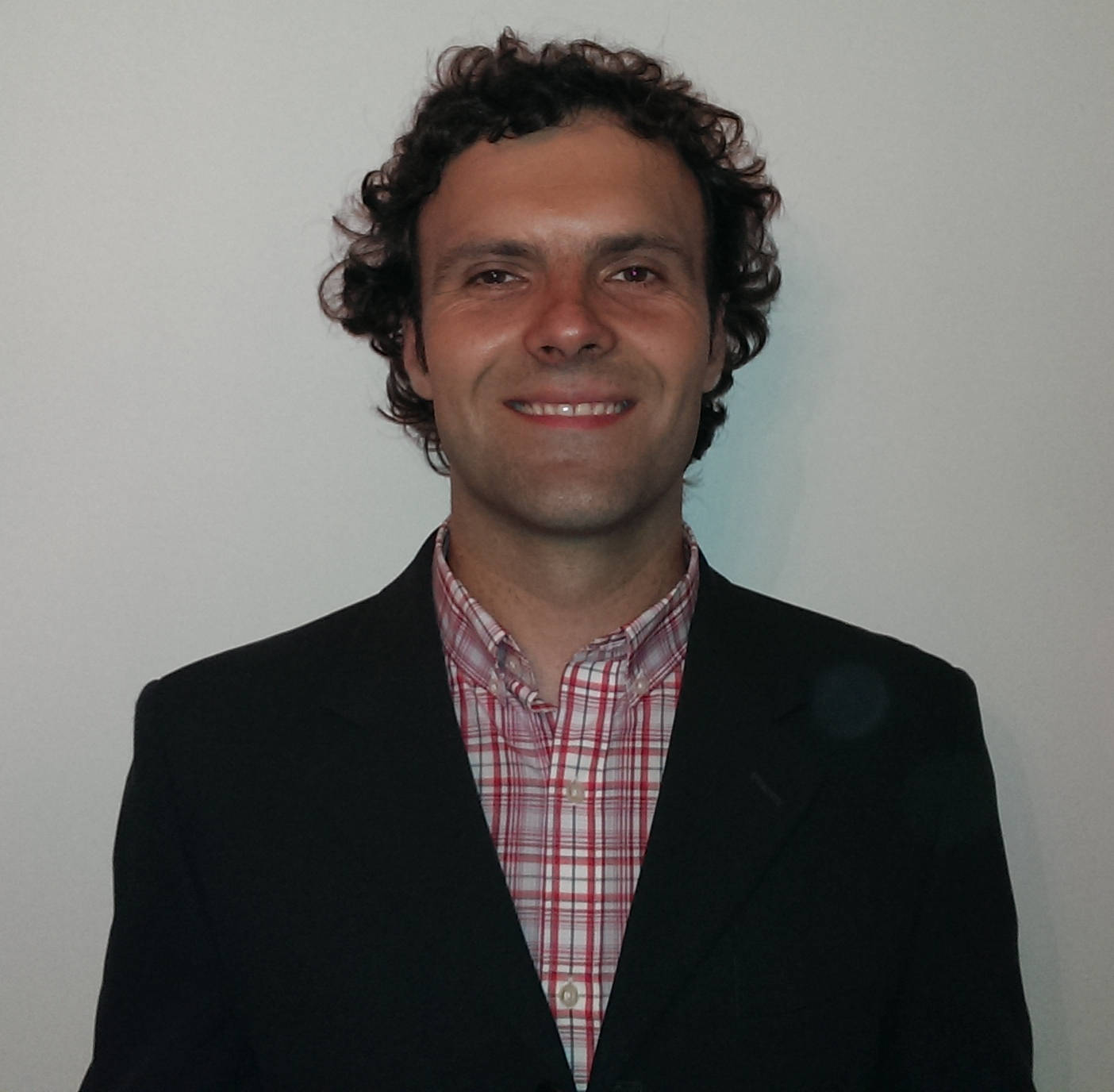
Aseem Behl is a researcher at the School of Business and Economics, University of Tübingen. His work bridges deep learning methodologies with business intelligence, focusing on extracting insights from visual and textual data. He teaches practical courses on deep learning for visual and language processing, including 'Practical Deep Learning from Visual Data' in Summer Semester 2022 and 'Practical Deep Learning for Language Processing' in Winter Semester 2021/22. His research interests include: Deep Learning Business Intelligence Computer Vision Natural Language Processing Publications reveal a focus on autonomous driving, scene flow estimation, and data aggregation techniques. He has also explored interdisciplinary work in corpus linguistics using complex network theory for Bollywood song lyrics analysis. Contact: aseem.behl@uni-tuebingen.de
Sun-Yuan Kung is a Professor of Electrical and Computer Engineering at Princeton University specializing in high-performance learning networks and explainable AI. His research develops beyond back-propagation paradigms to create optimal neural architectures through structural learning and discriminant information metrics. His academic credentials include: Ph.D. in Electrical Engineering, Stanford University (1977) M.S. in Electrical Engineering, University of Rochester (1974) B.S. in Electrical Engineering, National Taiwan University (1971) Professor Kung pioneered Explainable Neural Networks (XNN) incorporating Internal Neuron's Learnability (INL) using internal teacher labels and discriminant information (DI) for node/layer ranking. This enables deep compression while enhancing model robustness and adaptability for real-time applications in image processing, privacy protection, and security-sensitive environments. His work directly addresses DARPA's Explainable AI (XAI) initiatives through end-user-adaptive labeling mechanisms. Recent publications (2023-2025) demonstrate sustained innovation in efficient deep learning architectures, with dominant themes in remote sensing applications (object detection, image captioning, change detection), quantum-inspired algorithms, and multimodal representation learning. Key trends include neural architecture search, model compression techniques, and reinforcement learning integration for specialized domains. His distinguished honors include: Life Fellow of IEEE (2016) IEEE Third Millennium Medal (2000) IEEE Signal Processing Society Best Paper Award (1996) IEEE Signal Processing Society Technical Achievement Award (1992) IEEE Fellow (1988) Professor Kung mentors graduate researchers including Katherine Shu-Min Li, Xiaxin Shen, and Zhuoqing Song, with funding supporting projects in deep compression, privacy-preserving ML, and XAI frameworks. His group develops foundational techniques for discriminant information-based network pruning and structural gradient methods. He leads a research team advancing the XNN framework for DARPA's Explainable AI initiatives, focusing on real-time decision support through internal neuron explainability and channel exploration for model optimization.
Professor Paul Kennedy is the Head of the School of Computer Science at the University of Technology Sydney (UTS) Faculty of Engineering and Information Technology. He has made significant contributions to data analytics education, receiving a 2013 OLT Citation for Outstanding Contributions to Student Learning and multiple UTS teaching awards. His research focuses on biomedical data analytics, particularly in pediatric cancer treatment outcomes, bioinformatics pipelines for vaccine discovery, and visual analytics for explainable AI in healthcare. His recent publications highlight advancements in multi-criteria decision-making for vaccine candidates, edge-cloud frameworks for omics data, and immersive VR environments for genomic data visualization. He leads the Biomedical Data Science Laboratory at UTS Australian Artificial Intelligence Institute and co-directs the UTS-Queens University AI-driven clinical tools initiative. A key collaborator with the Children’s Hospital at Westmead, he has secured over $2.4 million in research funding and served on international data mining conference committees since 2006. Scientific Awards: 2013 OLT Citation for Outstanding Contributions to Student Learning 2012 UTS Learning and Teaching Award 2020 Team Teaching Award 2019 Team Teaching Citation His methodological innovations span topological data analysis for stress detection, feature-ranking in RNA sequencing, and domain-adaptation techniques in machine learning. He also contributes to global AI ethics standards through ISO/IEC SC42 committee membership.
Sabine Barrat is an Assistant Professor at the University of Tours, affiliated with the University Institute of Technology of Tours (IUT) and the Fundamental and Applied Computer Science Laboratory (LIFAT). She teaches courses in website design and databases. Dr. Barrat obtained her PhD in Computer Science from Nancy 2 University in 2009, focusing on probabilistic models for image recognition. She completed a JSPS Postdoctoral Fellowship at Osaka Prefecture University and served as Vice-President for Digital Systems at the University of Tours (2016-2020). Her research explores image analysis, indexing/retrieval systems, automatic annotation, and document processing. Core methodologies include Bayesian networks, feature indexing structures, and hybrid visual-semantic modeling. Recent publications emphasize scalable image retrieval systems and document classification techniques. She received the JSPS Postdoctoral Fellowship for her work on character recognition. Dr. Barrat collaborates with the RFAI research team at LIFAT laboratory, focusing on pattern recognition and intelligent indexing systems.
Michael Hobley is a Postdoctoral Researcher at CalTech focusing on AI for ecology, working as the Head Scientist on FishEye. He is the founder of Noonien, a Machine Learning consultancy that delivers bespoke solutions to clients. His academic background includes a DPhil in Computer Vision and Machine Learning from the University of Oxford. DPhil, Computer Vision and Machine Learning, University of Oxford Michael's research spans ecology, weakly-supervised computer vision, large-scale data understanding, generative AI, and engineering pipeline acceleration. He specializes in developing innovative AI methodologies for diverse applications, including optical engine analysis and neural surface reconstruction. His recent publications highlight advancements in low-SNR video denoising (SAVeD), machine learning benchmarking for engine research (EngineBench), and class-agnostic counting techniques (MCAC, ABC Easy as 123). These works demonstrate his interdisciplinary approach to solving complex problems. Michael's work has been presented at major conferences including ECCV, CVPR, and ICLR, and he has contributed datasets like MCAC and FSC-133. He leads projects at the intersection of AI and engineering, emphasizing practical applications in both academic and business contexts. Current affiliations include CalTech's FishEye project and Noonien's bespoke ML solutions. He has previously collaborated with the Active Vision Laboratory at Oxford, developing core vision algorithms and datasets.
Nikolaos Papanikolopoulos is a Professor, McKnight Presidential Endowed Professor, and Distinguished McKnight University Professor at the University of Minnesota's Department of Computer Science and Engineering. He serves as Director of Graduate Studies for Robotics and Director of the Minnesota Robotics Institute, leading significant research initiatives in robotics, computer vision, and artificial intelligence. His work spans multiple domains including medical applications, transportation systems, and agricultural technology. Department of Computer Science and Engineering, University of Minnesota Director of Graduate Studies for Robotics Director of Minnesota Robotics Institute Director of Center for Distributed Robotics Director of AI, Robotics and Vision Laboratory Education Ph.D. in Electrical and Computer Engineering, Carnegie Mellon University (1992) M.S. in Electrical and Computer Engineering, Carnegie Mellon University (1988) Diploma of Engineering, Electrical and Computer Engineering, National Technical University of Athens (1987) Professor Papanikolopoulos's research focuses on robotics, computer vision, and control systems with applications across diverse fields. His work includes developing miniature robots for search and rescue operations, vision-based systems for intelligent transportation, medical image analysis for kidney tumor detection, agricultural robotics for crop phenotyping, and behavioral monitoring systems for mental health assessment. His laboratory has pioneered innovations in distributed robotics, 3D reconstruction, and real-time computer vision algorithms. His research bridges theoretical advances with practical implementations, resulting in numerous real-world applications across healthcare, transportation, and agriculture. His recent publications demonstrate a clear trend toward applying computer vision and machine learning to solve critical problems in healthcare, particularly in medical imaging for kidney cancer diagnosis and surgical planning. He has also maintained strong research in transportation systems and agricultural robotics, with work on truck parking availability systems and corn phenotyping. The interdisciplinary nature of his work is evident in the diverse applications of his core expertise in robotics and computer vision. Scientific Awards IEEE RAS George Saridis Leadership Award in Robotics and Automation (2016) IEEE Fellow Distinguished McKnight University Professorship Award (2007) NSF Career Award (1995-1998) Multiple best paper awards at major robotics and computer vision conferences McKnight Presidential Endowed Professor (2016-) Professor Papanikolopoulos has advised over 40 Ph.D. and M.S. students who have gone on to successful careers in academia and industry. His research has been supported by more than $35 million in funding from diverse sources including NSF, NIH, DARPA, Department of Homeland Security, and industry partners. His grants span multiple domains including medical applications, transportation systems, homeland security, and agricultural technology. Notable projects include the AI-LEAF Institute for climate-land interactions, the Safety, Security, and Rescue Research Center, and the Center for Robots and Sensors for Human Well-being. He leads the Artificial Intelligence, Robotics, and Vision Laboratory and the Center for Distributed Robotics at the University of Minnesota. These labs focus on developing innovative robotic systems for applications ranging from miniature search and rescue robots to medical imaging analysis tools. His team has developed the Scout robot platform and other specialized robotic systems for various applications including underwater exploration (Aquapod robot) and walking robots (Loper robot). The labs maintain strong collaborations with medical researchers, transportation agencies, and agricultural scientists to address real-world challenges through robotics and computer vision solutions.
Eduard Dragut is an Associate Professor in the Department of Computer and Information Science at Temple University's College of Science and Technology. He received his Ph.D. in Computer Science from the University of Illinois at Chicago, M.S. from the University of Iowa, and B.S. in Computer Science from the University of Bucharest. His research spans databases, information retrieval, extraction, cleaning, and integration, with particular focus on opinion mining, web data management, and cyber-infrastructure for science. His educational background includes a Ph.D. from University of Illinois at Chicago, M.S. from University of Iowa, and B.S. from University of Bucharest. His research interests cover multiple areas including databases, information retrieval, extraction, cleaning, and integration; opinion mining and retrieval; web data management; and cyber-infrastructure for science. Current research activities focus on record linkage and fusion, deep learning for entity recognition, sentiment analysis, and news mining. His recent publications demonstrate a consistent focus on information extraction, data integration, and sentiment analysis across various domains including climate science, social media, and scientific literature. His work increasingly bridges traditional database research with machine learning applications, particularly in the areas of entity recognition, knowledge graph construction, and comment analysis. Professional Service Chair SIGMOD/PODS PhD Symposium 2016, San Francisco, USA Chair ICDE PhD Symposium 2015, Chicago, USA PC Member: SIGMOD 2016, SIGMOD 2015, EMNLP 2015, DASFAA 2015, INFOCOM 2015, NAACL-HLT 2015, WWW 2014, COLING 2014, DASFAA 2014, ADBIS 2014 Referee for TKDE, TWEB, TSC, TiiS, ISJ, TKDD, JWS, WWWJ Served on NSF CISE/IIS panels in 2016 Professor Dragut has advised multiple graduate students including Andrew Thomas Schneider (PhD Fourth Year), Lihong He (PhD Second Year), and Abdullah Aljebreen (PhD First Year). His teaching portfolio includes courses such as Data-Intensive and Cloud Computing, Principles of Data Management, and Topics in Computer Science: Information Retrieval. He has taught consistently from Fall 2013 through Spring 2025, demonstrating his commitment to education in the field of computer science. He co-authored the book 'Deep Web Query Interface Understanding and Integration' with Weiyi Meng and Clement Yu, contributing significantly to the field of web data integration.
Artem Sokolov serves as an Honorary Professor in the Department of Computational Linguistics at Heidelberg University and as a Research Scientist at Google Berlin. His primary research focuses on machine translation and structured prediction within natural language processing. Previously, he held positions at Amazon, the Statistical NLP Group at Heidelberg University led by Prof. Stefan Riezler, LIMSI, and Orange Labs in France, contributing to advancements in statistical and neural machine translation systems. He earned his PhD in Computer Science and Artificial Intelligence from the IRTCITS research center in Kyiv. His doctoral thesis investigated randomized algorithms for locality-sensitive embeddings of the Levenstein edit distance, establishing foundational work for efficient string similarity search in computational linguistics and intrusion detection systems. Dr. Sokolov's research expertise spans machine translation, imitation learning, bandit algorithms, and weakly supervised learning. He has pioneered methods for learning from partial feedback in structured prediction tasks, particularly addressing exposure bias in sequence generation and multi-facet evaluation of translation systems. His work bridges theoretical machine learning with practical NLP applications, emphasizing robustness against noisy data and scalable optimization techniques for real-world deployment. Analysis of his recent publications reveals trends toward scalable influence functions for model interpretability, multi-attribute control in machine translation, and rigorous auditing of multilingual datasets. His research consistently intersects natural language processing, machine learning optimization, and data quality assessment, with increasing emphasis on ethical AI considerations and efficient learning from weak supervision signals. Scientific awards include: 1st place at ECML/PKDD Discovery Challenge 2010 (English quality task) 2nd place at ECML/PKDD Discovery Challenge 2010 (general task) 2nd place in Semi-Supervised Feature Learning Challenge at NIPS 2011 3rd place in Semi-Supervised Feature Learning Challenge at NIPS 2011 As co-Principal Investigator for the 2015-2017 grant "Weakly Supervised Learning of Cross-Lingual Systems", Dr. Sokolov developed techniques for learning cross-lingual rankings from weakly supervised data sources like patent citations and Wikipedia hyperlinks. He has mentored students through teaching advanced courses including Imitation Learning, Stochastic Learning, and Statistical Machine Translation at Heidelberg University, supervising seminar projects on structured prediction and optimization algorithms. Dr. Sokolov is an active member of the Statistical NLP Group at Heidelberg University and collaborates with research teams at Google Berlin. His current work focuses on advancing production-scale machine translation systems through scalable inverse reinforcement learning and robust training methodologies, building on his extensive background in both academic research and industrial applications.
Xiaochen Yang is an Assistant Professor in the Department of Artificial Intelligence at the School of Computer Science and Control Engineering, University of Chinese Academy of Sciences. With a PhD from University College London completed in 2020, Dr. Yang has established a prolific research career spanning machine learning, computer vision, and computational mathematics. Their work bridges theoretical foundations with practical applications across multiple domains. Dr. Yang's research interests focus on advancing machine learning methodologies, particularly in distance metric learning, few-shot learning, and multimodal systems. Their work spans both theoretical aspects of numerical methods for stochastic differential equations and practical applications in computer vision, hyperspectral imaging, and security of large language models. This interdisciplinary approach has led to significant contributions in multiple fields. Analysis of Dr. Yang's recent publications reveals a strong trajectory in developing novel machine learning architectures, with particular emphasis on few-shot learning techniques, multimodal fusion approaches, and applications of diffusion models. Their work demonstrates increasing sophistication in handling complex data modalities while maintaining mathematical rigor, particularly evident in their publications from 2023-2025. Dr. Yang has established productive collaborations across institutions, as evidenced by their extensive co-author network spanning Chinese academic institutions and international partners. Their research has been published in top-tier venues including IEEE Transactions, Pattern Recognition, NeurIPS, and CVPR, reflecting the high impact of their contributions to the field.
Daniel Lokshtanov is a Professor and Vice Chair at the Department of Computer Science at the University of California, Santa Barbara (UCSB) , with a visiting professor affiliation at the University of Bergen . He is renowned for his work in Theoretical Computer Science and Discrete Mathematics , particularly focusing on Algorithmic Graph Theory and Parameterized Complexity . Key roles: Professor (UCSB, since 2020), Vice Chair (UCSB), Visiting Professor (University of Bergen) Research focus: Kernelization, Graph Minors, Exact Algorithms, Treewidth, Subexponential Algorithms Research Trends : His recent publications (2022-2020) demonstrate expertise in applying Parameterized Complexity to Graph Algorithms , including work on Unit Disk Graphs , Graph Reconfiguration , and Subexponential Time Algorithms . Topics span Graph Contraction , Obstacle Removal , and Kemeny Rank Aggregation . Scientific Awards : Outstanding Young Researcher Meltzer Award Best ESA Paper Award (2015) Advising : While not actively seeking new PhD students, he supervises MS students at UCSB and has mentored numerous advisees through Parameterized Algorithms research. He co-organizes the Inter-Collegiate Programming Contest at UCSB and the Norwegian Informatics Olympiad for high school students.
Shirui Luo is a Research Scientist at the National Center for Supercomputing Applications (NCSA), University of Illinois . Their work bridges Artificial Intelligence and Geoscience , focusing on deep learning applications for feature extraction from geological data, critical minerals mapping , and parkinson's disease analysis . Their research spans: Development of deep learning methods for historical geologic maps exascale computing in turbomachinery flows multimodal AI benchmarks for neurodegenerative disorders weakly supervised segmentation in geospatial datasets Recent publications highlight expertise in computational fluid dynamics , neural networks , and remote sensing , with applications in energy transition, critical minerals, and healthcare. Contact: shirui@illinois.edu
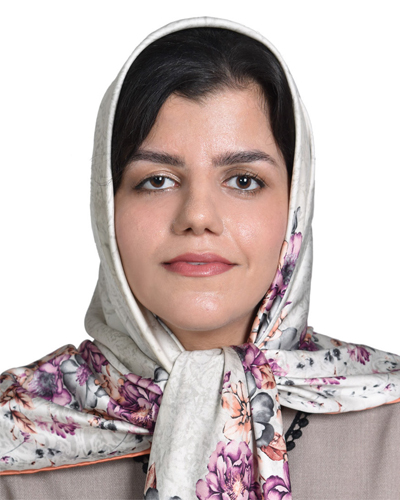
Maryam Tabar is an Assistant Professor in the Department of Computer Science at The University of Texas at San Antonio (UTSA), College of Sciences. She holds a Ph.D. in Informatics from The Pennsylvania State University and M.Sc./B.Sc. degrees in Computer Engineering from Sharif University of Technology. Ph.D. in Informatics, Pennsylvania State University M.Sc. in Computer Engineering, Sharif University of Technology B.Sc. in Computer Engineering, Sharif University of Technology Her research focuses on Machine Learning and Data Science for Social Good, addressing grand challenges faced by vulnerable communities through computational approaches. The Society-Based Data Science Lab, which she directs, develops data-driven solutions for social equity, housing policy, agricultural resilience, and healthcare misinformation. Recent publications span topics like fairness in regression models, generative AI risks, eviction prediction, and locust movement forecasting. She has mentored 10 students, including 4 PhD candidates and 6 undergraduate researchers. She previously interned at Microsoft and The Washington Post, and teaches graduate courses in Data Science and Research Methods. Her work integrates technical rigor with social impact, leveraging interdisciplinary methodologies to address systemic inequities.
Dr. Dong Hye Ye is an Assistant Professor of Computer Science at Georgia State University, specializing in medical image processing through machine learning. He holds a B.S. from Seoul National University, an M.S. from Georgia Institute of Technology, and a Ph.D. in Bioengineering from the University of Pennsylvania. His research focuses on advancing computational imaging techniques for medical applications such as brain/cardiac MRI analysis, CT reconstruction, and high-throughput microscopy. He is affiliated with the Department of Computer Science at Georgia State University's 55 Park Place campus on the 18th floor. Education: Bachelor of Science in Electrical and Computer Engineering, Seoul National University (2007) Master of Science in Electrical and Computer Engineering, Georgia Institute of Technology (2008) Doctor of Philosophy in Bioengineering, University of Pennsylvania (2013) Research Interests: Dr. Ye’s work integrates deep learning and computational imaging to address challenges in medical diagnostics. His key areas include generative adversarial networks for data augmentation, cross-modal fusion of imaging and genomic data for neuropsychiatric disorders, and weakly supervised learning for spatiotemporal brain network analysis. His recent projects emphasize real-time intraoperative tumor margin assessment via deep UV fluorescence imaging and physics-guided neural networks for clinical imaging artifacts reduction. Publications: His 2024-2025 works highlight advancements in multimodal medical imaging, including transformer-based frameworks for retinal and brain imaging analysis, and AI-driven approaches for disease classification. Notable trends include integration of clinical context with visual data, physics-informed machine learning, and dynamic sampling strategies for high-throughput microscopy. Labs & Teams: While no specific lab name is mentioned, his interdisciplinary work suggests collaboration with biomedical imaging groups and participation in initiatives like the NIH Human Biomolecular Atlas Program (HuBMAP).
Jan Schlüter is an Assistant Professor at the Institute of Computational Perception, Johannes Kepler University Linz. His research focuses on deep learning, acoustic sequence labeling, and audio signal processing. He has held academic positions including University Assistant at JKU, postdoctoral researcher at the University of Toulon, and research roles at the Austrian Research Institute for Artificial Intelligence (OFAI). Schlüter holds a PhD in Informatics from JKU and advanced degrees from TU Munich and the University of Hamburg. Education: PhD in Informatics, Johannes Kepler University Linz (2017) Master of Science in Informatics, Technical University Munich (2011) Bachelor of Science in Informatics, University of Hamburg (2008) Schlüter's research interests include convolutional neural networks, weakly-labeled learning, and differentiable time-frequency representations. He contributes to projects involving birdcall monitoring, music structure analysis, and environmental acoustics. Teaching responsibilities include courses on audio processing, machine learning, and artificial intelligence. His work bridges theoretical advancements in deep learning with practical applications in audio analysis, environmental monitoring, and music informatics. Notable contributions include the madmom Python library for audio and music processing.
Xuan Wang is an Assistant Professor in the Department of Computer Science at Virginia Tech (VT), also affiliated with the Sanghani Center for Artificial Intelligence and Data Analytics. Specializing in Natural Language Processing (NLP), Data Mining, and AI applications in healthcare and sciences, their research focuses on weakly-supervised learning, multi-agent systems, and foundation models. They hold a Ph.D. in Computer Science from the University of Illinois at Urbana-Champaign (UIUC), with additional M.S. degrees in Statistics and Biochemistry from UIUC, and a B.S. in Biological Science from Tsinghua University, China. Education: Ph.D., Computer Science, UIUC (2022) M.S., Statistics, UIUC (2017) M.S., Biochemistry, UIUC (2015) B.S., Biological Science, Tsinghua University (2013) Research Interests: Focus on NLP with limited supervision, LLM agents for reasoning, multi-modal science foundation models, and healthcare AI. Current projects include small language model agents, EEG-to-text translation, and gene regulatory network inference. Grants & Awards: Recipient of NSF NAIRR Pilot Award (2024-2025), Cisco Research Award (2025), and NAACL Best Demo Award (2021). Active in securing funding for projects in healthcare AI, multi-agent systems, and scientific computing. Lab & Students: Mentors PhD/Master students in NLP, data mining, bioinformatics, and AI. Current advisees include Daniel Hajialigol, Zhenyu Bi, Meng Lu, and others. Alumni Yueyan Gu has contributed to large energy models research. Service & Leadership: Organized workshops at ACL 2025, VL/HCC 2025, and SDM 2025. Served as co-chair for ICDM 2025 Undergraduate Symposium. Active in tutorial development on AI for science and trustworthy LLMs.