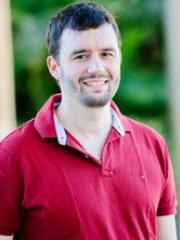
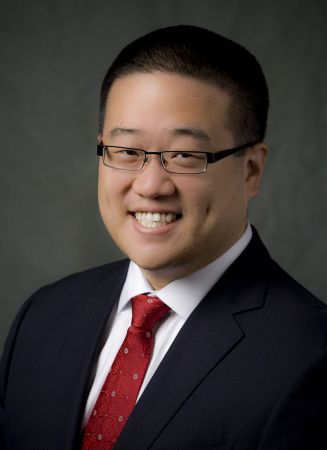
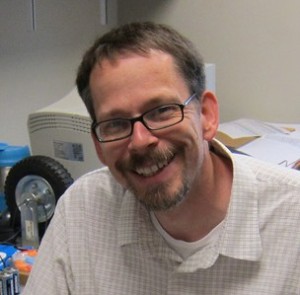
Dr. Christoph Mueller is a Teaching Professor in the School of Economics at The University of Queensland (UQ). His academic background includes a Doctor of Philosophy and two Master’s degrees from the University of Minnesota, alongside a Master’s from the University of Mannheim. His research focuses on Economic Theory and Microeconomic Theory, with a specialization in Mechanism Design and Epistemic Game Theory. His recent work explores robust implementation in strategic environments, as seen in his 2023 publication in Games and Economic Behavior . Prior contributions include studies on weakly perfect Bayesian strategies (2020) and virtual implementation under rationality assumptions (2015). Mueller is not currently available for student supervision.
Zenun Kastrati is an Associate Professor at the Department of Informatics, Linnaeus University. His research focuses on Artificial Intelligence, Natural Language Processing, Machine Learning, Semantic Web, Sentiment Analysis, and Learning Technologies. He contributes to the Data-driven Business Innovation (DBI) and Interaction Design Research Groups, leading projects like Forest 4.0, RAPID, and IGNITE. His recent work involves Explainable AI, medical imaging, and multilingual NLP. Ph.D. in Computer Science (NTNU, 2018) Master's in Computer Science (EU TEMPUS Programme) Previous Lecturer/Researcher at University of Prishtina His research spans AI applications in medical diagnostics , NLP , sentiment analysis , and semantic technologies . Key projects include Forest 4.0 (environment monitoring) and RAPID (online education in Pakistan). Publications highlight his expertise in deep learning , transformer models , and context-aware systems . Recent publications demonstrate trends in Explainable AI (XAI) for healthcare, medical imaging techniques, and multilingual NLP frameworks. Other work explores social media analytics , student feedback analysis , and pedagogical document classification . Zenun's teaching includes Fundamentals of Programming , Object-Oriented Programming , Web Applications , Data Analytics , and Adaptive Web courses at BSc and MSc levels.
Professor Hossein Rahmani serves at the School of Computing and Communications , Lancaster University , with a focus on Computer Vision and Machine Learning . His career spans institutions like the University of Western Australia (PhD), Shahid Beheshti University (MSc), and Isfahan University of Technology (BSc). Research Interests : Computer Vision, Machine Learning, Video Analysis, Action Recognition/Detection, Object/Human Pose Estimation, 3D Reconstruction, Diffusion Models, Human-Object Interaction Editorial Roles : Associate Editor for IEEE Transactions on Neural Networks and Learning Systems , Pattern Recognition , ACM Computing Surveys ; Area Chair for CVPR 2025, ICLR 2025, ECCV 2024, IJCAI 2024 His recent work leverages diffusion models for domain-generalized object pose estimation, 3D scene editing, and human mesh recovery, published in top venues like TPAMI , CVPR , ICCV , and ECCV . He received the Best Scientific Paper Award from the International Conference on Pattern Recognition and actively supervises 5 PhD students with interdisciplinary projects in digital health and data science.
Ken Wong is an Associate Professor in the Department of Computing Science at the University of Alberta's Faculty of Science. He also serves as Associate Chair within the same department. Holding a PhD in Computer Science from the University of Victoria (1999), his research focuses on software engineering challenges such as reverse engineering, program understanding, and software visualization. He emphasizes improving software evolution through tools like architecture recovery and root cause analysis, with applications in web/mobile platforms and diverse system understanding. Teaching highlights include developing Massive Open Online Courses (MOOCs) via Coursera, including the 'Software Product Management Specialization' and courses on Agile practices, client needs analysis, and software metrics. His recent publications (2023–2025) span AI-driven healthcare innovations (e.g., medical imaging, photoacoustic tomography) and advanced computer vision techniques (e.g., diffusion models, video inpainting). Notable collaborations include EVAREST studies on heart failure management and lung transplantation outcomes. His work bridges software engineering theory and practical applications in healthcare technology, with contributions to federated learning frameworks (e.g., FedLPPA) and AI-augmented clinical decision support systems. Research also extends to autonomous driving (DriveGPT4-V2) and 3D human avatar generation (DreamAvatar), showcasing interdisciplinary impact.
Dr. Brian Y. Chen is an Associate Professor and Doctoral Program Director in the Department of Computer Science & Engineering at Lehigh University. His research focuses on bioinformatics, structural biology, and machine learning applications in computational biology. He holds a Ph.D. in Computer Science from Rice University and B.A. degrees in Mathematics and Computer Science from Rutgers University. Dr. Chen's work emphasizes developing algorithms to analyze protein structures, protein-protein interactions, and ligand binding mechanisms. He has contributed to tools like DeepVASP-S and MechPPI, which explain molecular interactions and predict binding specificity. His recent projects include Alzheimer’s disease diagnosis using multimodal data and containerization frameworks for bioinformatics software. He previously served as a postdoctoral researcher in Barry Honig's Lab at Columbia University, where he contributed to the Center for Computational Biology and Bioinformatics. His research spans structural bioinformatics, computational methods for protein function prediction, and interdisciplinary applications in medicine and materials science. Key achievements include a nomination for Outstanding Mentorship (2017) and collaborative projects funded by the Army Research Lab and Lehigh University. His lab explores cutting-edge AI techniques for biomedical problems, including interpretable machine learning models and scalable bioinformatics pipelines.
Dr. Tim Oates is a Professor in the Department of Computer Science and Electrical Engineering at the University of Maryland, Baltimore County . His research spans machine learning, artificial intelligence, and brain-machine interfaces, with a focus on weakly supervised methods, human-in-the-loop reinforcement learning, and grounded policy development for robotics. Ph.D., Computer Science, University of Massachusetts, Amherst, 2000 M.S., Computer Science, University of Massachusetts, Amherst, 1997 B.S., Computer Science and Electrical Engineering, 1989 Current research threads include: Developing non-invasive brain injury severity assessment via medical time series Modeling human brain development through computational frameworks Designing algorithms for autonomous robotic learning Recent publications highlight AI security mechanisms (backdoor detection via tensor decomposition, matrix factorization) Medical applications (3D artery reconstruction, skin lesion diagnosis, EEG denoising) Neuro-symbolic integration (holographic representations, language-guided reinforcement learning) Mathematical reasoning (schema-based problem solving, subitizing algorithms) Contact: oates@cs.umbc.edu | Office: 336 Information Technology and Engineering (ITE) Building
Nick Koudas is a Professor in the Department of Computer Science at the University of Toronto. His research focuses on large-scale data management, integrating machine learning into data systems, and developing efficient query processing techniques for unstructured and streaming data. He holds a PhD from the University of Toronto, an MSc from the University of Maryland at College Park, and a Bachelor's from the University of Patras in Greece. Research interests include data systems, big data analysis, video query processing, and natural language interfaces for databases. He leads projects like ReDD (Relational Deep Dive), SVQ (Streaming Video Queries), and Reliable Text-to-SQL, aiming to bridge human-readable queries with database execution. His work emphasizes scalability, intelligence, and real-world applicability. Recipient of the University of Toronto's Inventor of the Year Award (2011), he translates research into startups like Sysomos, Aislelabs, and Workorb. His contributions span over 200 publications in top venues such as SIGMOD, VLDB, and ICDE. Courses taught include advanced data systems, database design, and system internals. Current projects explore schema extraction from unstructured data, video query optimization, and cost-effective machine learning pipelines. Collaborations with industry and academic partners drive innovations in both theory and practical applications.
Maozhen Li is a Professor in the Department of Electronic and Electrical Engineering at Brunel University of London , within the College of Engineering, Design and Physical Sciences . He serves as the Vice-Dean of the NCUT Transnational Education (TNE) programme, overseeing a joint school with North China University of Technology. He has been at Brunel since 2002, progressing from Lecturer to Professor in 2013. Education: PhD, Institute of Software, Chinese Academy of Sciences (1997) Postdoctoral Research, School of Computer Science and Informatics, Cardiff University (1999–2002) His primary research interests lie in high performance computing, big data analytics, and artificial intelligence, with applications in smart grids, smart manufacturing, and cybersecurity. He focuses on developing interpretable, robust, and lightweight AI models, including work in causal AI, parallel machine learning, and edge computing. His research integrates advanced techniques such as deep learning, reinforcement learning, and blockchain for real-world system optimization. An analysis of his recent publications reveals a strong and consistent research trajectory in AI-driven solutions for environmental monitoring (e.g., PM2.5 prediction), industrial defect detection, IoT security, and intelligent transportation. His work frequently combines deep learning with graph-based modeling and federated or reinforcement learning, emphasizing scalability, efficiency, and robustness in distributed and edge environments. Scientific Awards and Recognition: Fellow of the Institution of Engineering and Technology (IET) Fellow of the British Computer Society (BCS) Shortlisted for the Computing UK BIG DATA EXCELLENCE AWARDS 2018 in the category of Most Innovative Big Data Solution Maozhen Li has successfully supervised 25 PhD students and examined over 30 PhD theses externally. He has secured significant research funding from EPSRC, the European Union (Horizon 2020), Innovate UK, and the Royal Society , with projects including Z-BRE4K, IoRL, and TDX-ASSIST. He serves as an Associate Editor for journals such as the Journal of Cloud Computing and the International Journal of Grid and High Performance Computing . Research Groups and Teams: He is affiliated with the Intelligent Engineering Frameworks (IEF) research group at Brunel, contributing to collaborative efforts in AI, IoT, and smart systems. His leadership in transnational education also fosters international research collaboration between Brunel and Chinese institutions.
Tongtong Wu is a Research Fellow in the Department of Data Science & AI at Monash University, actively contributing to cutting-edge research in artificial intelligence and natural language processing. She collaborates with leading researchers such as Gholamreza Haffari and Yuefeng Li on projects involving knowledge extraction, continual learning, and generative modeling. Education: Ph.D. in Artificial Intelligence, Southeast University (Jiangsu, China), awarded December 20, 2023. Thesis: Structured Knowledge Extraction with Limited Data . Her research focuses on developing advanced AI models for structured knowledge extraction, with emphasis on generative event extraction, weakly supervised learning, and continual adaptation of language models. She leverages deep learning and probabilistic methods to improve model robustness and generalization in low-data regimes. The recent publications demonstrate a strong trend toward integrating external knowledge into generative frameworks and advancing weakly supervised techniques for real-world NLP tasks. Her work spans event detection, topic modeling, and socio-cultural norm discovery, often using pretrained language models and mutual information-based regularization. Scientific Awards: No awards listed in the provided text. She is currently a Chief Investigator on the active project Lifelong Version-controlled Code Generation (2025–2026), indicating involvement in grant-funded research. While there is no mention of formal student supervision, her collaborative output suggests integration within a vibrant research team. She is affiliated with a research network focused on AI and data science at Monash, contributing to both journal articles and top-tier conference proceedings.
Qi Yu is a Professor in the School of Information at the Golisano College of Computing and Information Sciences at Rochester Institute of Technology (RIT). He serves as the Graduate Program Director and directs the Machine Learning and Data Intensive Computing Lab. His research focuses on machine learning, deep learning, and data-driven knowledge discovery, particularly in knowledge-rich domains like medicine and bioinformatics. He holds a B.E. from Zhejiang University, an M.E. from the National University of Singapore, and a Ph.D. from Virginia Tech. His work emphasizes interpretable models, multimodal data fusion, and human-in-the-loop learning. He has secured significant grants, including a $500K NSF award and a $1.6M ONR grant, supporting projects on Bayesian learning frameworks and decision-making under uncertainty. His lab actively explores active learning, few-shot learning, and uncertainty quantification. He advises a vibrant group of Ph.D. and MS students and teaches courses such as Data-Driven Knowledge Discovery and Thesis/Project Capstones. Education: B.E., Electrical Engineering, Zhejiang University (2001) M.E., Computer Engineering, National University of Singapore (2003) Ph.D., Computer Science, Virginia Tech (2008) Research Interests: Machine Learning, Deep Learning, Vision-Language Models, Uncertainty Quantification, Active Learning, Multimodal Data Fusion, Bayesian Methods, and Applications in Healthcare and Cybersecurity. Recent Work Trends: His articles emphasize label-efficient learning, interactive systems, and applying ML to complex domains like medical imaging and anomaly detection. Notable projects include Bayesian learning for dynamic decision-making and evidential optimization for robust models. Awards/Grants: NSF IIS Award ($500K, 2018–2023); DoD/ONR Award ($1.6M, 2018–2023); multiple conference recognitions (NeurIPS, ICML, CVPR). Advising spans over 20 students, many securing roles at Amazon, Samsung, and academia. Labs/Teams: Leads the Mining Lab, collaborating on interdisciplinary projects with domain experts in medicine, cybersecurity, and material science.
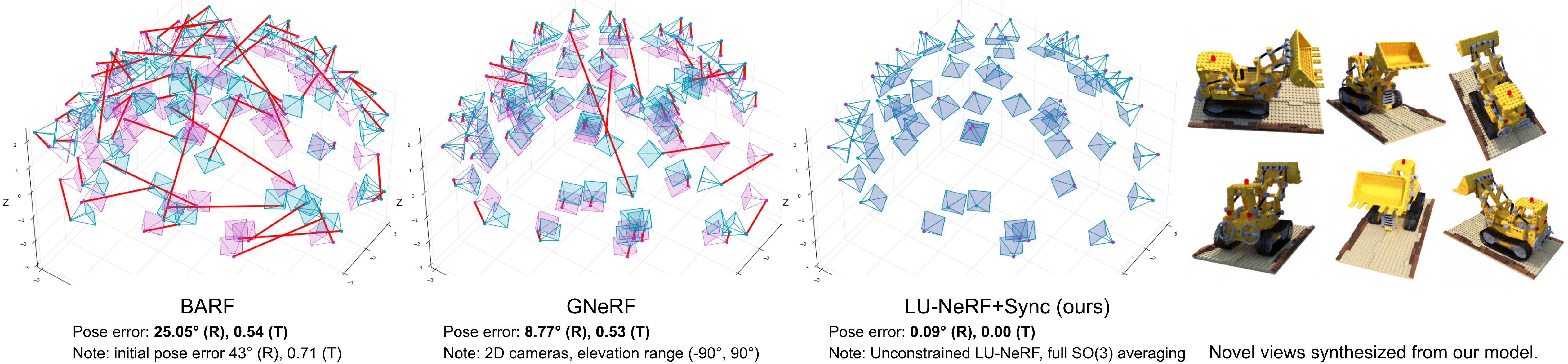
Zezhou Cheng is an Assistant Professor of Computer Science at the University of Virginia, leading the Computer Vision Lab. He holds a Ph.D. from UMass Amherst (2023), a postdoctoral position at Caltech, and a Bachelor's degree from Sichuan University (2015). His research focuses on computer vision, machine learning, and their applications in ecology, materials science, and autonomous systems. Key areas include 3D understanding, self-supervised learning, and AI-driven ecological monitoring. He has received awards such as the Best Synthesis Award (2020) and Outstanding Reviewer (CVPR 2021). His work spans publications in top venues like CVPR, ICCV, and ECCV, addressing challenges in 3D reconstruction, generative models, and ecological data analysis. Education: Ph.D. in Computer Science, UMass Amherst (2023) Bachelor's Degree, Sichuan University (2015) Postdoctoral Researcher, Caltech (advised by Georgia Gkioxari) Research Highlights: Developed LU-NeRF for unposed scene reconstruction and camera pose estimation Contributed to AI for ecology via bird roost detection using weather radar data Advanced 3D representation learning through procedural programs and self-supervised techniques Awards & Recognition: Outstanding Reviewer, CVPR 2021 Best Poster Award, New England Computer Vision Workshop 2019 National Scholarship (China, 2014 and 2016) His lab explores cutting-edge topics in computer vision, with a focus on interdisciplinary applications. Teaching roles include leading Caltech's AI Bootcamp and serving as a Teaching Assistant at UMass Amherst. Industry collaborations include internships at Google Research, Snap, and Amazon.
Jean-Baptiste Alayrac is a Researcher at DeepMind, focusing on structured learning from video and natural language. His academic background includes a PhD from the Sierra and Willow groups at Ecole Normale Supérieure and Telecom ParisTech, where he explored machine learning and computer vision. He has held teaching roles as a Teaching Assistant at Ecole Normale Supérieure and other universities, contributing to courses in statistical machine learning and mathematics. His research interests span multimodal learning, vision-language models, self-supervised learning, and efficient retrieval systems. Notable projects include the Flamingo model for few-shot learning and the Perceiver IO architecture for structured data processing. He has also contributed to foundational works like HowTo100M, leveraging large-scale video-text embeddings. Alayrac's publications emphasize cross-modal interactions, with key contributions in adversarial robustness, layered video representations, and weakly supervised learning. His work often bridges computer vision and natural language processing, with applications in instructional video analysis and cross-lingual translation.
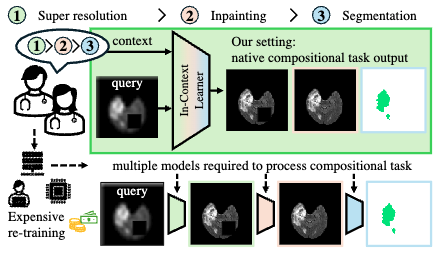
Prof. Dr. Erik Rodner is a faculty member at the University of Applied Sciences Berlin (HTW Berlin), where he serves as a Professor for Machine Learning and Data Science. He also contributes to the School of Engineering Sciences - Technology and Life. His research spans computer vision, machine learning, and biomedical applications, with a focus on learning with limited data, robust visual recognition models, and medical image analysis. He has developed innovative methods for medical diagnostics, industrial classification, and anomaly detection. Recent publications (2025-2016) highlight his expertise in visual in-context learning, semi-weakly segmentation, and active learning frameworks. He has collaborated with institutions such as ZEISS Group, Friedrich Schiller University Jena, and UC Berkeley. Scientific Awards: Award for Excellent Teaching (2023)
Dr. Weihao Li is a Research Fellow at The Australian National University's School of Computing, specializing in computer vision and machine learning. His research focuses on object detection, image segmentation, open-set recognition, and point cloud segmentation. He holds a Dr. rer. nat. (PhD equivalent) and is registered to supervise research students. His research interests revolve around advancing techniques for dynamic instance segmentation, open-set learning, and 3D point cloud analysis. Notable projects include the ANU bushfire smoke dataset and contributions to generalized semantic segmentation and anomaly recognition. His work emphasizes data augmentation strategies and weakly-supervised learning methods. Key technical areas include synthetic dynamic instance copy-paste for video segmentation, curved geometric networks for anomaly detection, and cross-modal fusion in building facade analysis. He collaborates on computing-for-social-good initiatives, such as environmental monitoring via hyperspectral imaging. Dr. Li's publications span 2016–2024, with a focus on advancing computer vision through innovative architectures and methodologies. His recent work explores open-set recognition, few-shot learning with reinforced attention, and geometric prior-based segmentation techniques.
Roles: Prof Peter Bell holds a personal chair in speech technology at the University of Edinburgh's School of Informatics and is a core member of the Centre for Speech Technology Research (CSTR). His primary research focus is automatic speech recognition (ASR), particularly in cross-domain adaptation, lightly supervised training, and minority language systems. He teaches the Automatic Speech Recognition course and advises multiple PhD students. Research Interests: Prof Bell's work spans ASR system development for diverse domains, audio-visual integration, end-to-end models, and under-resourced languages. His projects include the CoG-MHEAR healthcare initiative and the Unmute project addressing language marginalization. He has pioneered techniques for speaker adaptation, raw-waveform modeling, and multi-task learning. Commercial Activities: He advises industry on speech tech adoption, co-founded Quorate Technology (acquired by LSEG), and provides consultancy to firms developing speech solutions. His work bridges academic research with commercial impact through projects like the BBC's MGB Challenge and EU-funded SUMMA platform. Grants & Projects: Leads EPSRC-funded CoG-MHEAR and Unmute initiatives, collaborates on IARPA MATERIAL for low-resource ASR, and contributed to the SpeechWave waveform-based ASR project. His research has been supported by Bloomberg, Ericsson, Samsung, and Toshiba. Labs & Teams: Active in CSTR, leading teams in speech representation learning, adaptation techniques, and multi-modal ASR. His lab supports interdisciplinary work with NLP, HCI, and biomedical engineering groups. Personal: A passionate hillwalker, he explores Scottish Highlands and Corbetts. Previously active in Edinburgh University Hillwalking Club, his outdoor pursuits reflect his disciplined approach to research exploration.