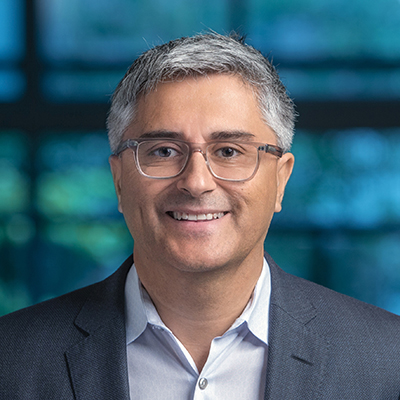
Dr. Shan Du is an Assistant Professor in the Department of Computer Science, Math, Physics & Statistics at the University of British Columbia Okanagan Campus. She holds a PhD in Electrical and Computer Engineering from UBC (2009) and has over 15 years of experience in image/video processing, computer vision, and machine learning. Previously, she worked as an Assistant Professor at Lakehead University and as a Research Scientist at IntelliView Technologies. Her research focuses on computer vision, deep learning, and biometrics, with applications in video surveillance systems and environmental monitoring. She has secured grants including NSERC Discovery, CFI JELF, and Alberta Innovates. Dr. Du is a Senior Member of IEEE and serves as an Associate Editor for IEEE Transactions on Circuits and Systems for Video Technology and the IEEE Canadian Journal of Electrical and Computer Engineering. Teaching interests include Image Processing, Computer Graphics, and Software Engineering. She advises graduate students and has published extensively on topics like gas leak detection, 3D face modeling, and medical image fusion.
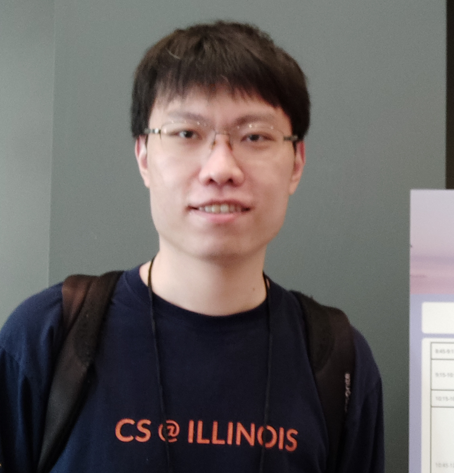
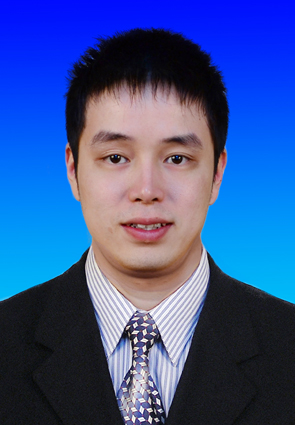
Yu Zhang is an Assistant Professor at the Department of Computer Science & Engineering at Texas A&M University, leading the SKY Lab. He holds a Ph.D. and M.Sc. from the University of Illinois at Urbana-Champaign (UIUC), advised by Jiawei Han, and a B.Sc. from Peking University. His research focuses on NLP and data mining for scientific domains, graph-augmented NLP, and weakly supervised learning. He has been recognized with the ACM SIGKDD Dissertation Award Runner-Up and multiple outstanding reviewer awards. Education: Ph.D. and M.Sc. in Computer Science, UIUC (201X-201X) B.Sc. in Computer Science, Peking University (201X-201X) Professional Roles: PC Area Chair for KDD 2026, ACL 2025, NeurIPS 2025 Co-organizer of SKnowLLM and MLoG-GenAI workshops His research interests span NLP applications in biology, medicine, and mathematics; graph-based NLP techniques; and LLMs under weak supervision. He has published extensively in top venues like ACL, KDD, and EMNLP, focusing on scientific LLMs, knowledge graphs, and automated reasoning. Key awards include the ACM SIGKDD Dissertation Award Runner-Up (2025) and multiple best paper/poster awards. He teaches graduate courses on NLP for Science (CSCE 689) and Information Storage and Retrieval (CSCE 670).
Xingcheng Zhou is a Research Assistant at the Technical University of Munich (TUM), affiliated with the Chair of Robotics, Artificial Intelligence and Real-time Systems since 2023. He holds an M.Sc. in Electrical and Computer Engineering from TUM (2021) and previously worked as an Industrial AI Researcher at Siemens. Research Interests: Focus on Large Language Models , Vision Language Models , 3D Environment Perception , and Domain Adaptation in autonomous driving contexts. Publications: Contributions to 3D object detection refinement, sim2real domain adaptation, vision-language models, and dataset development for intelligent transportation systems. Teaching Involvement: Co-supervisor for master's theses and seminars on autonomous agents, perception models, and traffic environment understanding. Advising: Mentoring students on projects including LiDAR-guided monocular detection, world models, and multimodal benchmarks for transportation scenes. Trends in Research: Zhou's work bridges low-light image enhancement with spatial-frequency features, surface-aware frameworks for 3D detection, and weakly-supervised domain adaptation. He contributes to benchmarking spatio-temporal video understanding and evaluating autonomous driving datasets. Supervision and Collaboration: Co-authored key surveys and frameworks with Prof. Alois C. Knoll and peers, focusing on real-time roadside LiDARs, graph-based object relationships, and vision-language integration for traffic analysis.
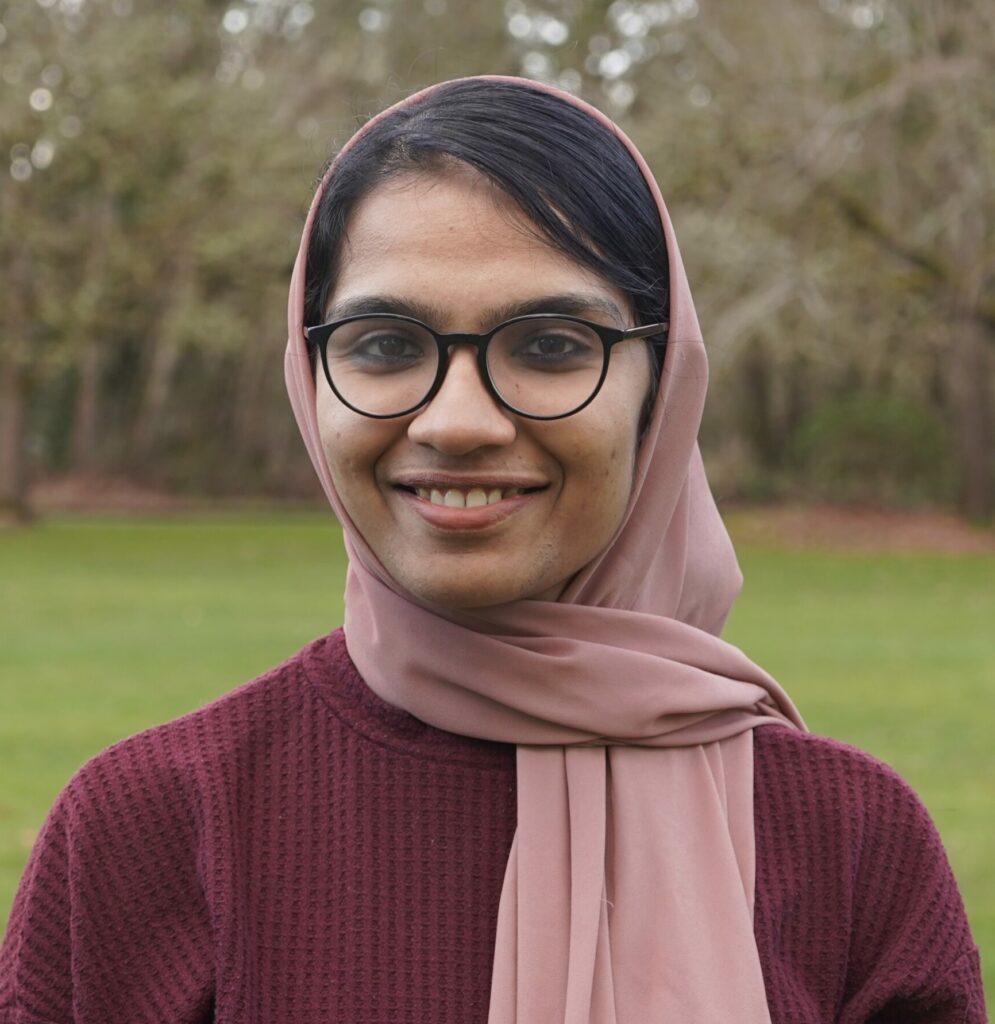
Shahana Ibrahim is a tenure-track Assistant Professor at the University of Central Florida under the AI Initiative, holding a joint appointment in the Department of Electrical and Computer Engineering and Computer Science. Her research develops provable methods for robust machine learning systems with applications in critical real-world scenarios. Education: Ph.D. in Electrical and Computer Engineering, Oregon State University (advised by Dr. Xiao Fu) Prior industry experience: System Validation Engineer at Texas Instruments (2012-2017) and NVIDIA GPU intern (2018) Her research spans machine learning, signal processing, and optimization with core expertise in weakly supervised learning, tensor decomposition, and stochastic algorithms. She focuses on enhancing AI reliability through theoretical guarantees for noisy data environments, particularly addressing label noise, incomplete annotations, and structured factorization challenges. Her work bridges signal processing theory with modern AI to solve practical problems in data quality and system robustness. Recent publications (2023-2025) reveal strong thematic consistency in handling imperfect supervision. Key trends include crowdsourced label modeling, instance-dependent noise characterization, and tensor/matrix completion techniques. Her approach uniquely integrates signal processing perspectives with deep learning, emphasizing identifiability conditions and geometric regularization to extract reliable patterns from corrupted data. Scientific Awards: Outstanding PhD Dissertation Award from EECS, Oregon State University (2024) Dr. Ibrahim actively mentors graduate researchers including Faizul and Grey, who co-authored her ICIP 2025 and IEEE CAMSAP 2023 publications. She secured the AI-BTO DARPA grant (December 2024) for physics-informed machine learning research on intrinsically disordered proteins. Current funding supports multiple RA/TA positions for PhD students in her lab. She serves on program committees for AISTATS, AAAI AI for Social Impact, and WiML at NeurIPS. Her research group develops end-to-end learning frameworks for noisy data environments, with active projects funded by DARPA focusing on biomedical applications and robust AI validation. The lab maintains strong industry connections through NVIDIA and Texas Instruments collaborations.
Jefersson Alex dos Santos is an Assistant Professor (Lecturer) in Computer Vision at the University of Sheffield, UK. Previously, he served as an Associate Professor at Universidade Federal de Minas Gerais (UFMG), Brazil (2013–2022). He holds a PhD in Computer Science from the University of Campinas (Unicamp) and the University of Cergy-Pontoise, France (2013). His research focuses on remote sensing image processing, computer vision, and machine learning, with applications in geospatial data analysis and medical imaging. He is an IEEE Senior Member and serves as an Associate Editor for IEEE Geoscience and Remote Sensing Letters and Co-Chair of the ISPRS Working Group for AI/ML in Geospatial Data. Education: PhD in Computer Science: University of Campinas (Unicamp) & University of Cergy-Pontoise, 2013 Master's in Computer Science: Unicamp, 2009 Bachelor's in Computer Science: University of Mato Grosso do Sul (UEMS), 2006 Research Interests: Remote sensing image processing, computer vision, machine learning, and geospatial data analysis. His work emphasizes interdisciplinary research, including applications in environmental monitoring, medical imaging, and digital forensics. Grants & Awards: CNPq Productivity Research Scholarship (2016–2022) Serrapilheira Institute Research Grant (2021) Labs & Teams: Founder of the Laboratory of Pattern Recognition and Earth Observation (PATREO) at UFMG's Department of Computer Science.
Ruth Breu is a Full Professor and Dean of the Faculty of Mathematics, Computer Science and Physics at the Universität Innsbruck, where she also leads the Quality Engineering research group. She has been a key figure in the Department of Computer Science since 2002 and served as its Head from 2013 to 2024. Her academic journey began with a PhD summa cum laude from the University of Passau in 1991, followed by a habilitation at the Technical University of Munich in 1999. Her research interests include: Quality Engineering Model and Security Engineering Requirements and Software Development Processes Enterprise Architecture Management Threat Intelligence and Digital Twins Her recent publications reflect a strong focus on model-based systems, automated programming assessment, security engineering, and digital twins in construction and energy systems. She frequently collaborates with researchers such as Michael Felderer, Clemens Sauerwein, and Philipp Zech, contributing to advancements in software testing, threat intelligence sharing, and cyber-physical systems. Notable awards include her PhD awarded summa cum laude. She has also been actively involved in national research governance, serving on the board of the Austrian Science Fund (FWF) from 2011 to 2020. She co-founded Txture GmbH in 2017 and holds advisory roles at Universität Passau and FH OST. Ruth Breu advises several students and leads a vibrant research group. Her leadership extends to organizing workshops and contributing to major conferences in software engineering and enterprise modeling. She is deeply engaged in both academic and applied research, bridging theory and practice in IT quality and security.
Zhang Jin is a Professor at the Department of Mathematics in the College of Science at Southern University of Science and Technology (SUSTech) since December 2024. He also serves as the Associate Vice Director of the Shenzhen National Applied Mathematics Center since February 2023. Education: Ph.D. in Applied Mathematics (2014, University of Victoria); M.Sc. in Operational Research (2010, Dalian University of Technology); B.Art in Journalism (2007, Dalian University of Technology) Research Interests span optimization theory , variational analysis , bilevel programming , and their applications in machine learning , economics , and data science . His work includes convergence analysis of first-order methods , stochastic/robust optimization , and error bound conditions . Recent Publications focus on nonconvex bilevel optimization , gradient-based algorithms , and stochastic programming , with papers in IEEE TPAMI , SIAM Journal on Optimization , and conferences like ICML , NeurIPS , and ICLR . Scientific Awards include the Youth Science and Technology Innovation Award from Guangdong Province (2022) , Youth Science and Technology Award from the Operations Research Society of China (2020) , and Junior Research Award from SUSTech's Faculty of Science (2020) . Students: Supervises Ph.D. candidates like Yixia Song , Peixuan Yang , and Qichao Cao , along with Master's students Yixuan Zhang , Kaiqi Sun , and Feifan Wang . Grants: Leads projects such as the National Key R&D Program (3.2M RMB, 2024-2028) and National Science Fund for Distinguished Young Scholars (2M RMB, 2023-2025) .
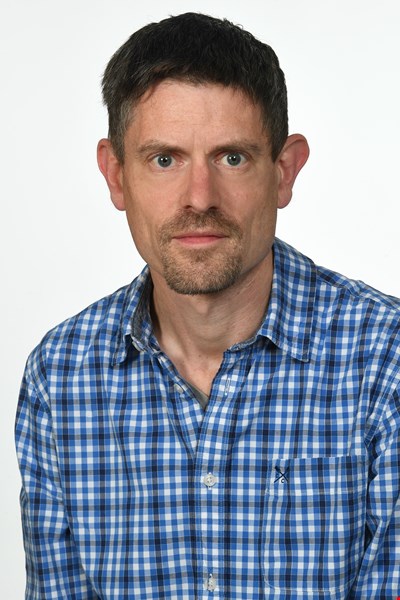
Professor Stephen Langdon is a faculty member at Brunel University London , holding the position of Professor of Mathematics and serving as Associate PVC for Academic Planning & Strategic Projects . His academic career includes over 15 years at the University of Reading , where he was Head of the Department of Mathematics and Statistics for five years. He also served as Interim Executive Dean of the College of Engineering, Design and Physical Sciences at Brunel from 2022 to 2024. Education: PhD in Numerical Analysis, University of Bath (1999) BA in Mathematics, Oxford University (1994) Postgraduate Certificate of Academic Practice, University of Reading (2009) Research Interests: Professor Langdon's research is centered in Numerical Analysis , with a strong focus on the development, analysis, and implementation of numerical methods for partial differential equations . His work encompasses: Boundary integral and finite element methods High-frequency scattering problems in acoustics and electromagnetics Fluid flow in porous media Computational modeling of tumor growth Machine learning applications in numerical methods Publications Overview: His recent work includes modeling helicopter rotor-induced particle-fluid interactions , developing frequency-independent numerical methods for far-field scattering , and advancing high-frequency boundary element methods . These publications span journals such as AIAA Journal , Journal of Fluid Mechanics , SIAM Journal on Scientific Computing , and IMA Journal of Numerical Analysis . Teaching and Supervision: He teaches MA2690 - Professional Development and Project Work and actively supervises PhD students in areas aligned with his research interests. He welcomes prospective PhD applicants in numerical analysis, PDEs, and related computational fields. Contact: Email: stephen.langdon@brunel.ac.uk Phone: +44 (0)1895 266554 Office: Tower A 030, Brunel University London
René Vidal is the Rachleff & Penn Integrates Knowledge (PIK) University Professor at the University of Pennsylvania, with appointments in the Departments of Electrical and Systems Engineering, Radiology, Computer and Information Science, and Statistics and Data Science. He also serves as Director of the Center for Innovation in Data Engineering and Science (IDEAS) and the NSF-Simons Collaboration on the Mathematical Foundations of Deep Learning (THEORINET). A dual faculty member at Johns Hopkins University in Biomedical Engineering, Computer Science, and other departments, Vidal is an Amazon Scholar and Affiliated Chief Scientist at NORCE. PhD, Electrical Engineering and Computer Sciences, University of California, Berkeley (2003) M.S., Electrical Engineering, University of California, Berkeley (2000) B.S. (valedictorian), Electrical Engineering, Pontificia Universidad Catolica de Chile (1997) His research spans the mathematical foundations of deep learning, focusing on non-convex optimization , learning dynamics , and overparametrization . Key contributions include Sparse Subspace Clustering , Kernel GPCA , and Low-Rank Matrix Factorization , with applications in autism diagnosis , robotic surgery , and cardiac imaging . Recent work explores continual learning , adversarial robustness , and trustworthy AI in biomedical contexts. His 15 most recent publications highlight advances in medical imaging , language models , and robust computer vision , spanning topics from chest X-ray analysis to motor imitation tasks in autism . Articles like Geometric Analysis of Nonlinear Manifold Clustering underscore his theoretical contributions, while works on KDA: Knowledge-Distilled Attacker and Conformal Information Pursuit address practical AI safety and interpretability. Scientific accolades include: 2022 ACM Fellow 2021 IEEE McCluskey Technical Achievement Award 2017 Jean D’Alembert Fellowship 2012 J.K. Aggarwal Prize 2009 Sloan Research Fellow 2005 NSF CAREER Award His lab mentors 11 current PhD students across Johns Hopkins and University of Pennsylvania , with alumni contributing to institutions like Meta , Amazon , and GE Research . Vidal’s interdisciplinary work bridges mathematics , engineering , and healthcare , supported by grants from the DoD , NSF , and ONR .
Dilip K. Prasad is a Professor at the Department of Informatics, UiT The Arctic University of Norway. His work bridges Artificial Intelligence and Medical Imaging , with a focus on Interpretable AI , Scalable AI , and Life Science Applications . He has contributed to Maritime Technology and Biomedical Engineering . Ph.D. and B.Tech from Nanyang Technological University and IIT Dhanbad Senior Research Fellow at NTU (2015-2019), Research Fellow at NUS (2012-2015) Industry experience at IBM, Infosys, Mediatek, Philips His research explores Image Processing , Machine Learning , and AI Applications in Biomedicine . Recent work includes Dense Video Captioning , 3D Mitochondrial Modeling , and Physics-Guided Loss Functions . Articles span Neurocomputing , Optics Express , and top AI conferences like CVPR and NeurIPS . Prasad has received the Rolls-Royce Inventor Award (2016) and Best Paper Award (IJCIE 2017) . He has reviewed for 50+ journals and 30+ conferences, serving as Area Chair for NeurIPS 2022-23 and Organizer Chair for ICCV Workshop 2023 .
Francois Lauze is an Associate Professor at the Department of Computer Science , University of Copenhagen, affiliated with the Image Analysis, Computational Modelling and Geometry research group. His work bridges mathematical rigor and practical applications in image processing and shape analysis. Research Focus: Mathematical Image Analysis (variational/PDE methods) Differential and Riemannian geometry for shape statistics Applications: image inpainting, motion estimation, segmentation, medical imaging Contact: Email: francois@di.ku.dk Phone: +4535335671, +4521553933 Location: Universitetsparken 1, 2100 Copenhagen Ø Recent publications highlight advancements in SE(3) group CNNs for diffusion imaging, locally orderless networks for efficient processing, and refractive multi-view stereo techniques. His work integrates geometric modeling with computational implementations, emphasizing medical and video applications.
Shilin Zhao is an Assistant Professor of Biostatistics at Vanderbilt University Medical Center, specializing in artificial intelligence applications for digital pathology and multi-omics integration. His work bridges computational methodology development with clinical pathology to address challenges in kidney disease, gut microbiome research, and metabolic disorders. Education PhD in Bioinformatics, Shanghai Institutes for Biological Sciences Research Focus Dr. Zhao's research centers on AI-driven pathology and spatial omics , with primary emphasis on: Glomerular and kidney layer segmentation using cross-species data integration Foundation model assessment for cell nuclei analysis in renal histopathology Multi-omics approaches to colitis, atherosclerosis, and metabolic diseases Development of graph networks for spatial transcriptomics prediction His methodologies frequently combine deep learning with biostatistical rigor to translate computational insights into clinical pathology applications. Publication Trends Dr. Zhao's 2025 publications demonstrate intense focus on AI pathology tools (14/15 articles), particularly glomerular analysis and spatial transcriptomics. Key themes include cross-species model adaptation (GLAM), multi-level attention networks (MagNet), and clinical validation of AI foundation models in kidney pathology. His work consistently targets diagnostic precision through computational innovation. Scientific Recognition No specific awards or honors were documented in the provided materials. Academic Contributions While student advising details are unavailable, Dr. Zhao actively contributes to methodological advances in biostatistics through high-impact publications. His involvement in the KPIS 2024 challenge indicates leadership in establishing glomerular segmentation benchmarks for the pathology AI community. Research Environment As primary faculty in Vanderbilt's Department of Biostatistics, Dr. Zhao likely collaborates with institutional resources including the Vanderbilt Biostatistics Data Coordinating Center (VBDCC) and Vanderbilt Technologies for Advanced Genomics Analysis and Research Design (VANGARD), though specific affiliations aren't explicitly stated.
Thivya KANDAPPU is an Assistant Professor at the School of Computing and Information Systems, Singapore Management University (SMU). Her research focuses on mobile and wearable computing systems for human cognition monitoring, memory modeling, and technology-enhanced learning. Education: PhD in Computer Science, University of New South Wales (2014) Research Interests span: Human-Centric Wearable Systems Cognitive State Analysis Event-Based Vision & Sensing Privacy in Pervasive Systems Health & Wellbeing Applications Smart City Mobility Analytics Selected Publications demonstrate expertise in eye tracking, cognitive monitoring, and privacy-preserving wearables, with recent work appearing in NeurIPS and ACM IMWUT. Research Grants include projects funded by MOE and A*STAR on cognitive dynamics, privacy-aware systems, and multimodal travel analytics. Professional Service involves organizing AutoMLPerSys 2025, and serving on TPCs for ACM MobiSys 25, IEEE PerCom 25, and ICDCN 25.
Dr Ahmed Fetit is a Senior Lecturer and Senior Teaching Fellow at Imperial College London's Department of Computing (Faculty of Engineering), specializing in AI for Healthcare through the UKRI Centre for Doctoral Training. His research focuses on applying machine/deep learning to medical imaging, particularly in collaboration with NHS Trusts. He holds a PhD from the University of Warwick (2015) and degrees from the University of Birmingham (MSc, BEng). He is a Fellow of the Higher Education Academy (FHEA). Education: PhD: University of Warwick (2015), applications of machine learning to tumor diagnosis/prognosis via MRI MSc: University of Birmingham BEng (Hons): University of Birmingham Research Interests: Ahmed's work bridges AI and healthcare, emphasizing medical imaging applications such as MRI segmentation, adversarial robustness, fetal brain connectivity analysis, and retinal biomarker discovery. His projects often involve NHS collaborations to translate AI innovations into clinical practice. Recent Article Trends: Recent publications highlight advancements in CNN robustness (e.g., k-space artifact simulation), fetal/neonatal brain segmentation, and XAI explanations in healthcare imaging. His work also explores cross-modal MRI inference and cardiovascular risk stratification using retinal features. Awards: Fellow of the Higher Education Academy (FHEA) Advising & Grants: While specific grant details are not listed, his NHS collaborations imply involvement in funded healthcare AI projects. No advisees are explicitly mentioned. Labs/Teams: Active in the UKRI CDT in AI for Healthcare and the Department of Computing's Neuroimaging research groups.
Jesse Davis is a Professor at the Department of Computer Science , KU Leuven , actively contributing to the Machine Learning group and the Sports Analytics Lab . He is part of the Faculty of Engineering Science and the Leuven.AI Institute . Ph.D. in Computer Sciences from University of Wisconsin-Madison (2007) M.S. in Computer Sciences from University of Wisconsin-Madison (2005) B.A. in Computer Science from Williams College (2002) His research focuses on machine learning, data mining, big data analytics, and sports analytics, with significant work in: Transfer learning and Markov logic networks Anomaly detection and semi-supervised learning Medical NLP and biomechanical data analysis Soccer performance metrics and tactical analysis His recent work explores spatio-temporal data analysis in sports and explainable AI for medical applications, with collaborations spanning finance, healthcare, and semiconductor manufacturing. Notable scientific awards include: Best Paper Award (Applied Data Science Track) at KDD 2019 Best Technical Paper Award at Intelligence Analysis Workshop He advises numerous PhD and Master's students in areas like: Football analytics Tree ensemble compression Medical question-answering systems Biomechanical load prediction His lab develops tools such as: GSSL for Markov network structure learning TODTLER for transfer learning Alchemy system for Markov logic networks