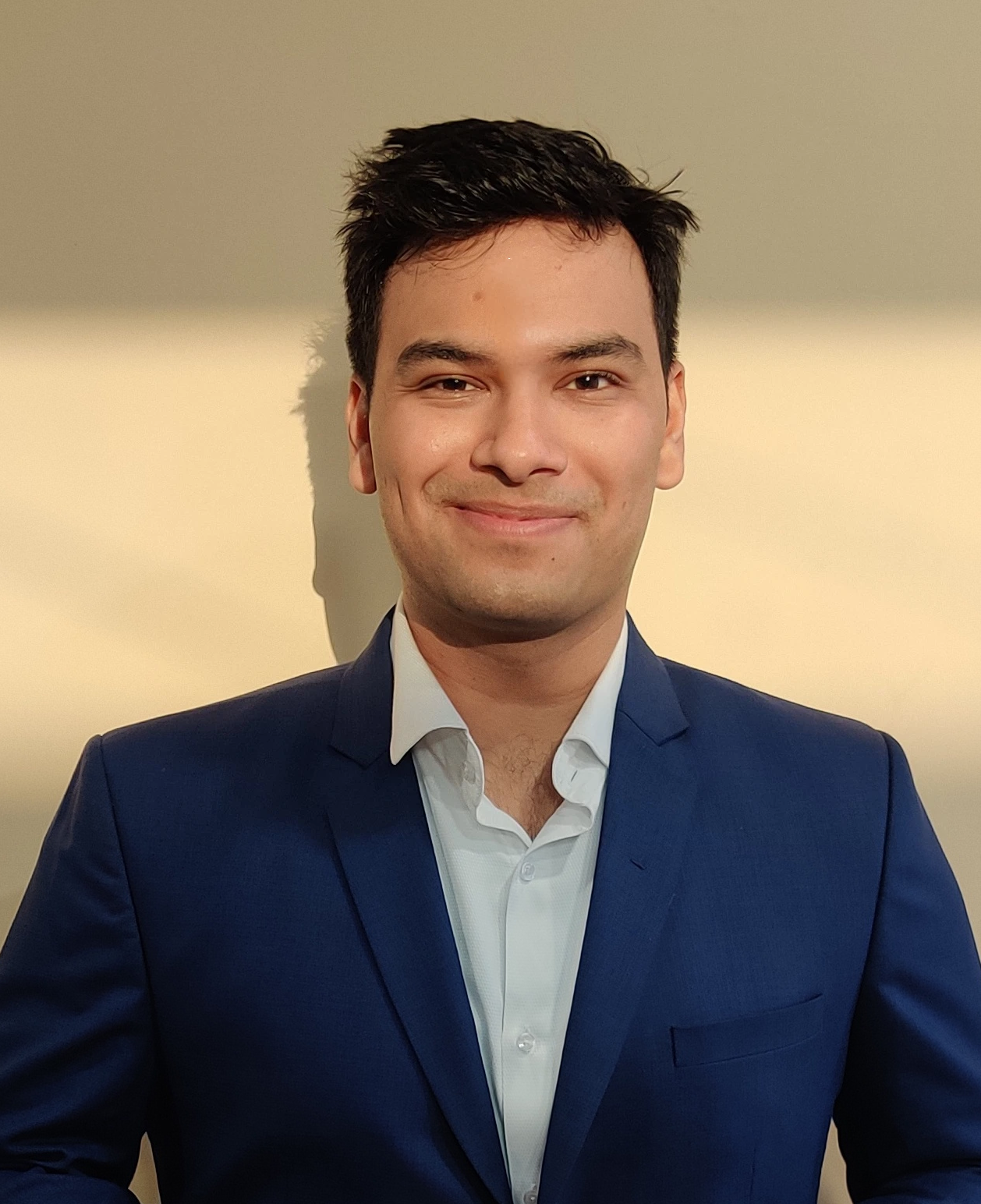
Prof. Dr. Haris Gačanin is a faculty member at RWTH Aachen University, affiliated with the Institute for Distributed Signal Processing under the College of Electrical Engineering. His research focuses on integrating machine learning with wireless communication systems, particularly in industrial IoT, edge computing, and network optimization. Current academic rank: Professor Contact: harisg@dsp.rwth-aachen.de Research Interests: Wireless systems, machine learning, signal processing, and network optimization. Key contributions include: Adaptive resource allocation in IIoT and vehicular networks AI-driven channel estimation and feedback mechanisms Security-oriented emitter identification via metric learning Federated/transfer learning for edge environments Hardware-efficient deep learning models for mmWave and THz communications Methodological Focus: Combines reinforcement learning, attention mechanisms, and robust neural architectures with practical implementations on FPGA and vehicular systems.
Antoine Miech is a Researcher at DeepMind's Vision Group , with prior affiliations at Inria and Ecole Normale Supérieure where he completed his computer vision Ph.D. under Ivan Laptev and Josef Sivic . He has collaborated with researchers from Facebook AI and Google during his academic career. Research Interests span video understanding, weakly-supervised machine learning, and multimodal analysis. His work focuses on: Text-video embedding Self-supervised video representation Action localization Anticipatory video modeling Scalable multimodal learning Scientific Contributions include: HowTo100M - A massive dataset of narrated instructional videos MIL-NCE - A novel loss function for video-text alignment MEE - A model for handling heterogeneous data Context Gating - Learnable pooling architecture Awards & Recognition : Google Ph.D. Fellowship (2018) Technical Leadership : Created the LOUPE TensorFlow toolbox for feature pooling and maintained annotated video dataset catalogs. Organized the Data Science Game competition (2016-2017).
Professor Fabio Cuzzolin is a Professor of Artificial Intelligence at Oxford Brookes University, leading the Visual Artificial Intelligence Laboratory (VAIL). He holds roles in the Institute of Ethical AI and the Healthy Ageing and Care (HAC) network. His research focuses on uncertainty theory, belief functions, and their applications in AI, surgical robotics, healthcare, and autonomous driving. He has secured over £5.4M in external funding, including the H2020 Epistemic AI project. Education and Academic Background: While specific formal education details are not explicitly stated in the text, Professor Cuzzolin holds a PhD and has held academic positions across institutions in Italy, the US, and the UK. His teaching experience spans three countries, including roles as a Module Leader for undergraduate and postgraduate courses in Computer Vision, Machine Learning, and related fields. Research Interests: Professor Cuzzolin is a global leader in uncertainty theory, belief functions, and geometric approaches to probability. His work bridges AI with healthcare, robotics, and autonomous systems. Recent projects include the SARAS surgical robotics project, Epistemic AI, and continual learning frameworks. His lab, VAIL, is a leading group in action detection and neurosymbolic AI. Awards and Recognition: Awards include the IMechE Formula Student AI competitions (2021, 2020), W&B Best Library Award (2021), and the Next 10 Award (2012). His students and collaborators have also achieved notable recognitions, such as BMVC Best Reviewer Awards and dataset development accolades. Grants and Funding: Key funded projects include the H2020 Epistemic AI (£966k), SARAS (£4.3M), and the AIDA incubator (£1.25M). Current lab funding exceeds £3.2M, supporting nine active projects across Horizon 2020, Innovate UK, and industry partnerships. Labs and Collaborations: VAIL collaborates with top institutions (Oxford, Cambridge, Imperial College) and companies (Samsung, Huawei). Projects span autonomous driving datasets (ROAD), surgical AI, and continual learning libraries (Avalanche).
Zehang Richard Li is an Assistant Professor in the Department of Statistics at the University of California Santa Cruz. His research focuses on statistical methods for demography, epidemiology, and global health, with expertise in latent variable modeling, space-time models, survey sampling, data integration, and weakly supervised learning. He develops workflows and pipelines for complex statistical analysis and real-world data-driven decision-making. Ph.D. in Statistics from the University of Washington (advisor: Tyler McCormick) Postdoctoral Researcher at Yale School of Public Health (Department of Biostatistics, advisor: Forrest Crawford) His work emphasizes high-dimensional data and uncertainty quantification in prevalence mapping. He leads the development of the SUMMER R package and SAE4Health platform, including ShinyApps for subnational health indicator analysis. Current projects address farmworker health under climate change through a UCOP grant and Bayesian frameworks for integrating verbal autopsy data via NIH funding. Recent publications highlight methodological advances in small area estimation, verbal autopsy analysis, and pandemic modeling. Key article themes include: Bayesian hierarchical modeling and tensor decomposition (2025) Domain adaptation for cross-population cause assignment (2024) Verbal autopsy validation and diagnostic accuracy (2023) Bayesian multilevel poststratification for disease prevalence (2022) Respiratory virus transmission dynamics and immune mechanisms (2021) Grants supporting his research include: National Institutes of Health Melinda and Bill Gates Foundation Vital Strategies Hellman Fellows Program University of California Office of President (UCOP) UCSC Committee on Research He advises Ph.D. students Yu (Zoey) Zhu, Qianyu Dong, Sho Kawano, and Toshiya Yoshida, all of whom have received academic recognition for their work on Bayesian models, small area estimation, and prevalence mapping.
Zhaozheng Yin is an Associate Professor in the Department of Biomedical Informatics and Department of Computer Science at Stony Brook University, affiliated with the College of Engineering and Applied Sciences. His research focuses on biomedical image analysis, computer vision, machine learning, and human-robot collaboration in smart manufacturing contexts. Ph.D. in Computer Science and Engineering from Pennsylvania State University (2009) M.S. in Electrical and Computer Engineering from University of Wisconsin-Madison B.S. in Automation from Tsinghua University Active in advancing microscopy image analysis through novel algorithmic approaches, Dr. Yin's work bridges theoretical computer science with practical applications in healthcare and industrial automation. His research emphasizes: Intelligent human-robot collaboration systems Cyber-physical sensing and augmented reality for manufacturing Medical image segmentation and classification techniques Temporal action localization and counting algorithms His publications demonstrate expertise in domain adaptation, vision-language integration, and graph-based modeling. Grant-funded projects include NSF CAREER support for microscopy analysis and NRI/CPS grants for collaborative robotics research. Best Doctoral Spotlight Award, CVPR 2009 Young Scientist Awards at MICCAI (2010-2015) NSF CAREER Award recipient (2014) Best Paper Awards at CVPR workshop (2015) and IISE (2018)
Teresa Cristina de Freitas Gonçalves is an Associate Professor at the Department of Informatics, School of Sciences and Technology, University of Évora, where she has been employed since 1999. She serves as an integrated researcher at the ALGORITMI research centre and is the Director of the VISTA Lab (Video, Image, Speech and text Analysis Lab), the unit of the ALGORITMI research centre at University of Évora. Her leadership roles include Director of the Master programme in Informatics Engineering and deputy Director of both the Master programme in Artificial Intelligence and Data Science and the Doctoral program in Computer Science. She earned her PhD in Computer Science from University of Évora and a MSc degree in Informatics Engineering from New University of Lisbon. Her academic journey at University of Évora has included significant leadership positions including Head of the Computer Science Department (2011-2015), Director of the Bachelor programme in Informatics Engineering (2016-2021), and Deputy Director roles for various undergraduate and graduate programs. Dr. Gonçalves' research focuses on intelligent systems, particularly Machine Learning approaches, with substantial contributions in evolutionary algorithms, information extraction and retrieval, and supervised learning across multiple data modalities including tabular data, text (in both Portuguese and English), and images (medical and satellite). Her work bridges theoretical advances with practical applications in healthcare, remote sensing, and natural language processing. She has successfully supervised 6 doctoral theses, 19 master theses, and 3 postdocs, and currently mentors 5 doctoral and 6 master students from diverse international backgrounds including Bangladesh, Cabo Verde, Nepal, Philippines, India, Sri Lanka, China, Mongolia, and Portugal. Her publication record includes over 100 scientific articles indexed by Scopus with 640 citations and an h-index of 12, demonstrating significant international impact with 56% of her work involving international collaboration. Her recent research shows a strong trend toward applying advanced machine learning techniques to healthcare applications, information retrieval systems, and remote sensing analysis, with particular emphasis on transformer networks, learning-to-rank methodologies, and multimodal data analysis. Dr. Gonçalves has made substantial contributions to the academic community through her service as a reviewer for over 50 articles in prestigious international journals and conferences, and as chair for major international conferences including IDEAL 2023, PROPOR 2020, SKIMA 2017 and 2018, and CLEF 2016. She serves on the board of APRP (Associação Portuguesa de reconhecimento de Padrões) and as a jury member for APRP prizes for best MSc and PhD theses. Her current research portfolio includes coordination of the Horizon Europe MSCA Staff Exchange HarmonicAI project and local coordination of WP6 in the NewSpace Portugal mobilising agenda. She is also actively involved in numerous other international research initiatives including Interreg VI-B Sudoe SenforFire, PRR CANTE, La Caixa INCOME, Erasmus+ KA220-HED REDINEST, Interreg POCTEP TID4AGRO, and ATTRACT DIH projects. Previously, she led the FCT AI in the Public Administration SNS24.Scout.IA project and coordinated the FEDER R&D NIIAA project. As Director of the VISTA Lab, Dr. Gonçalves leads a dynamic research team focused on video, image, speech, and text analysis. The lab serves as the Évora hub of the ALGORITMI research centre and has established strong international collaborations. Under her leadership, the VISTA Lab has developed innovative approaches in medical image analysis, natural language processing for Portuguese, and satellite image classification, with applications spanning healthcare, environmental monitoring, and public administration.
Boqing Gong is an Assistant Professor in the Department of Computer Science at Boston University. He concurrently serves as a part-time research scientist at Google. His research focuses on advancing visual recognition, video analysis, and the safety/generalization of AI models through novel algorithms in computer vision and machine learning. He holds editorial roles as an Associate Editor for IEEE TPAMI (since 2024) and TMLR. He has organized major conferences including co-chair roles for WACV 2023, CVPR 2022/2025 tutorials, and ICCV 2025 workshops. Education: Ph.D. Computer Science, University of Southern California (2011-2015) Visiting Graduate Student, University of Texas at Austin (Summer 2012) MPhil Information Engineering, Chinese University of Hong Kong (2008-2010) Bachelor's in Electronic Information Engineering, University of Science and Technology of China (2004-2008) Research Interests: Dr. Gong develops algorithms to understand objects, human activities, and scene relationships. His work emphasizes mathematical structures for effective and efficient solutions with strong analytical guarantees. Key areas include domain adaptation, long-tailed recognition, adversarial robustness, few-shot learning, and generative models. He explores intersections between language, vision, and reinforcement learning. Professional Contributions: Senior/Area Chair for CVPR, ICCV, ECCV, NeurIPS, ICML, ICLR, AISTATS, AAAI Outstanding Reviewer Awards (CVPR 2017/2021)
Jianke Zhu is a Professor at the College of Computer Science and Technology of Zhejiang University . He obtained his Ph.D. in Computer Science and Engineering from The Chinese University of Hong Kong and conducted postdoctoral research at the BIWI Computer Vision Lab, ETH Zurich . His research focuses on Computer Vision and Machine Learning , with a particular emphasis on 3D scene understanding, LiDAR-based mapping, and neural rendering. Dr. Zhu’s research spans several subfields, including 3D Reconstruction , Semantic Segmentation , Multimodal Learning , and Autonomous Driving . His work integrates Neural Networks , LiDAR Processing , and Uncertainty Quantification to address challenges in real-time and adverse conditions. Selected Recent Trends: 2025 publications highlight his work in Hexagonal Mesh-based Neural Rendering , Instance-aware 3D Scene Understanding , and Efficient Visual Projectors for Multimodal LLMs . Earlier works include Box2Mask for Instance Segmentation (2024) and Token Selection for Point Cloud Learning (2025). Scientific Awards : Senior member of the IEEE Advising and Grants : As a Doctoral Supervisor , he mentors students in advanced topics like LiDAR Odometry and Multi-view Stereo Recovery . His projects have attracted funding for autonomous driving , 3D scene modeling , and neural rendering .
Associate Professor Wayne Wobcke is a faculty member in the School of Computer Science and Engineering at the University of New South Wales (UNSW), where he has been employed since 2002. His academic career includes previous positions at the University of Sydney until 1998, British Telecom Labs in the UK for three years, and the University of Melbourne for one year. He holds a PhD in Computer Science from the University of Essex (1989), an MSc from the University of Queensland (1985), and a BSc (Hons) in Mathematics/Computer Science from the University of Queensland (1984). Dr. Wobcke's research spans both theoretical and practical aspects of artificial intelligence and data science. His work encompasses intelligent agents, data mining, agent-based modeling, dialogue management, personal assistants, recommender systems, and computational social science. He has collaborated extensively with industry through three Cooperative Research Centres (Smart Internet Technology CRC, Smart Services CRC, and Data to Decisions CRC), where he served as a Programme Manager and Project Leader for over 10 years. Notable achievements include developing a voice-controlled mobile application for email and calendar interaction (a precursor to Apple's Siri) and deploying a people-to-people recommender system for online dating on one of Australia's largest dating sites. His recent research focuses on data science in humanitarian contexts and machine learning applications in official statistics, conducted in collaboration with BPS (Statistics Indonesia) and STIS (Politeknik Statistika, Indonesia). His publication record shows a consistent trajectory of impactful research, with recent work concentrating on poverty targeting, domain adaptation, natural language processing for recommender systems, and political opinion mining. Scientific Awards: Best Paper Nomination, 11th Workshop on Argument Mining (2024) UNSW Arc Postgraduate Research Supervisor Award (2017, 2018) AAAI Deployed AI Application Award, Twenty-Sixth Annual Conference on Innovative Applications of Artificial Intelligence (2014) Best application paper runner up, 17th Pacific-Asia Conference on Knowledge Discovery and Data Mining (2013) Dr. Wobcke has successfully supervised numerous research students, with Irwan Rahadi currently working on 'Causal Modelling and Machine Learning for Official Statistics'. His grant portfolio includes significant funding from the Australian Research Council and various Cooperative Research Centres, totaling over $3.7 million since 2003. He teaches COMP9414 Artificial Intelligence and COMP9727 Recommender Systems at UNSW.
Gaël Richard is a Professor at Télécom Paris specializing in machine learning and audio signal processing. He leads the Hi! Paris center, focusing on AI and data science applications. His research emphasizes hybrid interpretable AI for sound analysis, including projects like Hi-Audio funded by a €2.5M ERC Advanced Grant (2022). Key areas include machine listening, music source separation, and speech processing. Applications span autonomous vehicle acoustics and music technology. Notable contributions include neural audio compression (QINCODEC), diffusion models for music synthesis (Diff-TONE), and source separation techniques (Inverse Drum Machine). Research & Awards Recipient of the 2022 ERC Advanced Grant for the Hi-Audio project exploring hybrid AI models that integrate domain knowledge with neural networks. This approach reduces data requirements and enhances model interpretability. Active in audio-visual scene analysis and weakly-supervised learning systems. Affiliations & Labs Executive Director of Hi! Paris, a multidisciplinary lab advancing AI and data science for societal impact. Collaborates on projects like the HI-AUDIO online platform for distributed music data collection and the MAD-EEG EEG dataset for auditory attention decoding.
Zhaozheng Chen is a Research Scientist at Singapore Management University (SMU), affiliated with the School of Computing and Information Systems (SCIS) and the Department of Computer Science. He holds a Ph.D. in Computer Science from SMU (2020–2023) and a B.Sc. in Computer Science and Technology from Shandong University (2015–2019). His research focuses on computer vision and machine learning, with particular emphasis on weakly-supervised learning, semantic segmentation, and deep learning applications in multi-task frameworks. **Education**: Ph.D. in Computer Science, Singapore Management University (Jan 2020 – Dec 2023; Advisor: Prof. Qianru Sun) B.Sc. in Computer Science and Technology, Shandong University (Sep 2015 – Jun 2019; Advisor: Prof. Liqiang Nie) **Research Interests**: Zhaozheng’s work spans computer vision, machine learning, and deep learning, with recent contributions to weakly-supervised semantic segmentation, class activation maps, and multi-task learning for urban perception. He also explores applications in virtual try-on systems and text classification. **Awards**: He has been awarded the SMU Presidential Doctoral Fellowship (2022/2023 and 2023/2024), the SCIS Dean’s List (2023), and national scholarships for academic excellence. Notably, he secured a Bronze Medal in the ACM-ICPC Asia Regional Contest and a Meritorious Winner title in the Mathematical Contest in Modeling. **Teaching & Work Experience**: He served as a Teaching Assistant for CS 701 (Deep Learning and Vision) at SMU (2021–2022). Prior to his Ph.D., he interned at YouTu Lab, Tencent (Oct 2018 – Jan 2019), working under Dr. Xiaoyong Shen. Currently, he advises under Prof. Qianru Sun’s research group and contributes to open-source projects like ReCAM and LPCAM on GitHub. **Professional Services**: He actively reviews for top conferences including BMVC, ICCV, ECCV, IJCAI, CVPR, and journals such as IJCV, IEEE TPAMI, and ACM TOMM.
Rishabh Dabral is a Research Group Leader at the Max Planck Institute for Informatics since August 2024, leading the "3D Visual Intelligence" group. He is also affiliated with the Research Training Group on Neuro-Explicit Models of Language, Vision, and Action at Saarland University. Expertise: 3D computer vision, computer graphics, human-object interaction modeling, and motion synthesis. Leadership: Conducts cutting-edge research on 3D human performance capture and physical plausibility in motion. His research focuses on: 3D human pose estimation under gravity constraints Multi-modal gesture synthesis using neural architectures Quantum auto-encoding for 3D representations Wearable robotics informed by human behavior Temporal dynamics in human-object interaction Recent publications at top venues like SIGGRAPH , CVPR , and ICCV demonstrate his work on: Music-driven motion synthesis Egocentric motion capture systems Reactive two-person interaction models Diffusion-based gesture generation Object-aware motion prediction Wearable robotic limb design
Kristina Mach is a researcher at the Chair of Computer Science Applications in Medicine at the Technische Universität München (TUM) . She focuses on interdisciplinary projects combining computer science and medical applications, particularly in imaging and robotic assistance. Research area: Medical imaging, machine learning, and surgical robotics Key technologies: Deep learning, image registration, and generative adversarial networks Applications: Ophthalmic surgery, radiology reporting, and intraoperative OCT Her recent work includes SpecstatOR for iOCT segmentation, Multitask Weakly Supervised Networks for MR-US registration, and Flexr for few-shot chest X-ray classification. These projects emphasize interoperability between imaging modalities and structured reporting in clinical workflows.
Dima Damen is a Professor of Computer Vision at the School of Computer Science, University of Bristol , and leads the Machine Learning and Computer Vision Group . She also holds a position as Senior Research Scientist at Google DeepMind. Her research focuses on egocentric vision , video understanding , and action recognition , with significant contributions to human routine modeling , hand-object interaction analysis, and multimodal learning from real-world environments. EPSRC Early Career Fellow (2020-2025) ELLIS Society Member Active in organizing workshops and challenges (e.g., EPIC, Ego4D, EgoVis) Her recent work explores temporal discrimination in video captioning ( It's Just Another Day ), active memory representations for long egocentric videos ( AMEGO ), and hand-object interaction referral ( HOI-Ref ). She has co-authored 15+ articles in top venues like CVPR, ICCV, NeurIPS, and IJCV, with a focus on egocentric scene modeling , audio-visual binding , and cross-scenario generalization . Awards include the Best Paper at ACCV 2024 and recognition as an Outstanding Reviewer at CVPR 2020 . She has supervised numerous PhD students and postdocs , including Adriano Fragomeni, Jacob Chalk, Alexandros Stergiou, and others who now hold academic or industry roles. Her funded projects include VISUAL AI (EPSRC Programme Grant) and UMPIRE (EPSRC Early Career Fellowship), supporting innovations in egocentric dataset creation , real-time tracking , and industrial workflow assistance .
Dr. Thomas Sutter is a Researcher affiliated with the Department of Computer Science at ETH Zurich , specifically part of the Professorship for Medical Data Science. His work focuses on advanced machine learning techniques applied to medical data, including anomaly detection, generative AI, and multimodal learning. He contributes to healthcare innovation through projects like improving radiology diagnostics via Vision-Language Models (RadVLM) and developing denoising techniques for physiological signals in cardiology. Research Interests: Medical Data Science, Anomaly Detection in Healthcare, Generative AI for Biomedical Signals, Multimodal Representation Learning, and Cardiac Function Prediction using Echocardiograms. His methods often combine deep learning with domain-specific medical challenges. Key Publications Trends: Recent work emphasizes medical imaging analysis (e.g., MIMIC-CXR studies), generative models for signal denoising, and contrastive learning for anomaly detection. His research bridges computer science theory with clinical applications, particularly in cardiology and radiology. Awards & Grants: No specific awards or grants mentioned in the provided texts. Advising & Teams: While no advisees are listed, he collaborates within the Medical Data Science research group at ETH Zurich, contributing to interdisciplinary projects in healthcare AI.