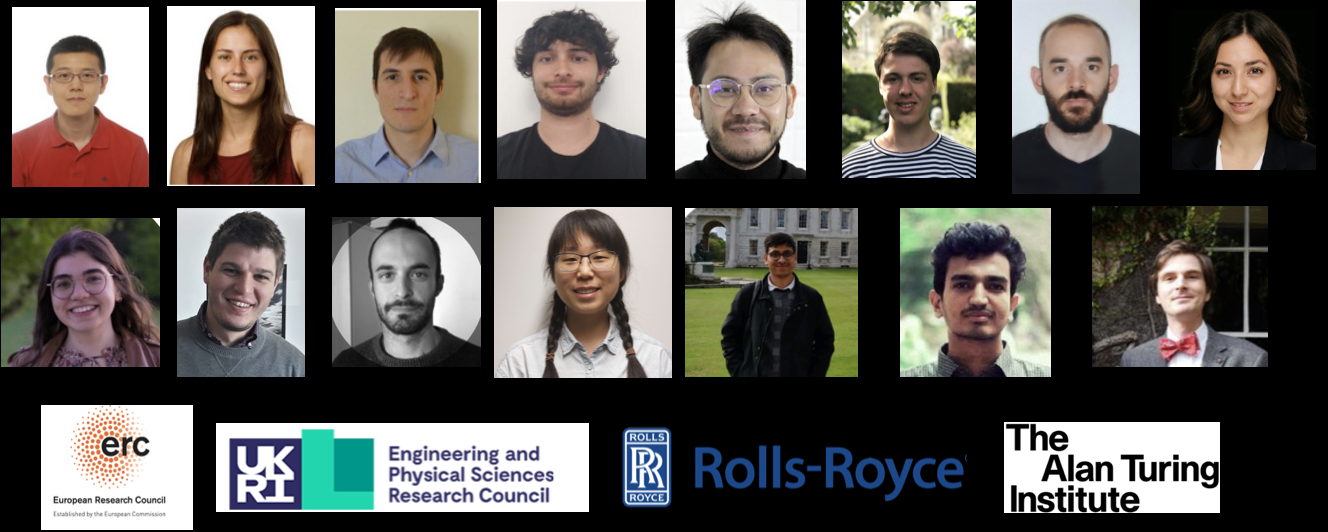
Thomas Dunning serves as a Battelle Fellow with a joint appointment in the Advanced Computing, Mathematics & Data division at Pacific Northwest National Laboratory (PNNL), a U.S. Department of Energy national laboratory. His research spans computational chemistry, quantum mechanics, and high-performance computing infrastructure development. His primary research interests focus on computational chemistry methodologies , particularly in quantum chemistry software development, electronic structure theory, and molecular modeling. Dunning has pioneered advancements in correlated molecular wave function calculations, basis set development, and high-accuracy simulations for chemical systems ranging from noble gas dimers to environmental contaminants. His work bridges theoretical chemistry with practical high-performance computing applications. Dunning's publication record demonstrates consistent contributions to quantum chemistry software frameworks and benchmark methodologies, with emphasis on NWChem development, accurate potential energy surfaces, and molecular interaction modeling. His research trends show evolution from fundamental molecular physics in the 1990s toward integrated environmental and materials applications in later work. Battelle Fellow (prestigious internal PNNL recognition for exceptional scientific contributions) As a Battelle Fellow, Dunning leads critical research initiatives in computational chemistry infrastructure without documented student advisement or external grant mentions in the provided materials. His work maintains strong connections to PNNL's Environmental Molecular Sciences Laboratory and advanced computing facilities.
Roger Blandford is the Luke Blossom Professor in the School of Humanities and Sciences at Stanford University, where he also serves as Professor of Physics and Particle Physics and Astrophysics. He joined Stanford in 2003 from Caltech to become the founding Director of the Kavli Institute for Particle Astrophysics and Cosmology (KIPAC), a position that established him as a central figure in Stanford's astrophysics community. His work bridges theoretical physics and observational astronomy, with significant contributions to our understanding of high-energy astrophysical phenomena. Professor Blandford's research spans a remarkable breadth of astrophysical phenomena, with particular focus on black hole physics, neutron star systems, and cosmological structures. His investigations into relativistic jets, gravitational lensing, and cosmic ray acceleration have provided fundamental insights into extreme astrophysical environments. More recently, his work has expanded into interdisciplinary areas including the potential astrophysical origins of biological homochirality, demonstrating his ability to connect cosmic phenomena with questions of life's fundamental properties. His theoretical frameworks have become standard references in multiple subfields of astrophysics. Blandford's publication record reveals a consistent trajectory of high-impact research across decades, with recent work showing increasing interdisciplinary reach. His 2019-2022 publications demonstrate continued leadership in black hole physics and relativistic phenomena while expanding into biophysics and cosmology. Notably, his work on the chiral puzzle of life represents an innovative bridge between astrophysics and biology. His collaborations span observational, theoretical, and experimental approaches, often bringing together diverse expertise to tackle fundamental questions in astrophysics. Luke Blossom Professorship at Stanford University Chair of the National Academy of Sciences Decadal Survey of Astronomy and Astrophysics (2008-2010) Co-author of the influential textbook 'Modern Classical Physics' Founding Director of the Kavli Institute for Particle Astrophysics and Cosmology Professor Blandford maintains an active mentoring role at Stanford, serving as Doctoral Dissertation Reader for Bryen Irving, Postdoctoral Faculty Sponsor for Dylan Jow and Navin Sridhar, Orals Evaluator for Anthony Flores, and Doctoral Dissertation Co-Advisor for Andrew Sullivan. His teaching portfolio includes advanced courses in General Relativity, Cosmology and Extragalactic Astrophysics, and Special Topics in Astrophysics focusing on Extreme Astrophysics. His academic leadership extends to significant contributions to major collaborative projects including the Fermi Gamma-ray Space Telescope mission and the Large Synoptic Survey Telescope initiative. As the founding Director of KIPAC, Blandford established one of the world's leading centers for particle astrophysics and cosmology research. The institute brings together physicists, astrophysicists, and cosmologists to tackle fundamental questions about the universe's structure and evolution. His leadership helped shape KIPAC's research directions across cosmic structure, extreme astrophysics, physics of the universe, and stellar/interstellar/planetary astrophysics, creating a vibrant interdisciplinary research environment that continues to produce groundbreaking results.
Luca Magri is a Professor of Scientific Machine Learning at Imperial College London's Department of Aeronautics (Faculty of Engineering), leading the MagriLab . He holds dual roles as Director of Research in Aeronautics and Director of the Research Centre in Data-Driven Engineering. He is also a Professor in Fluid Mechanics at Politecnico di Torino under the PNRR project on Twin Real-time digital twins. His research bridges physics-aware machine learning, data assimilation, and fluid mechanics, with applications in quantum computing, turbulence modeling, and thermoacoustics. Magri completed his PhD in Engineering at the University of Cambridge (2012-2015) and held postdoctoral roles at Stanford University (2015-2016). He has been a Royal Academy of Engineering Research Fellow (2016-2021), Simons Fellow (2022-2023), and Hans Fischer Fellow at TUM (2018-2021). He leads the Alan Turing Institute's Scientific Machine Learning group and collaborates with institutions like Pembroke College and the Isaac Newton Institute. His research interests span quantum reservoir computing, data-driven stability analysis, and real-time digital twins for combustion systems. Key projects include optimizing wind farm layouts and suppressing extreme events in chaotic flows. He has pioneered methods like Proper Latent Decomposition (PLD) and physics-constrained neural networks for turbulence reconstruction. Magri has secured funding from EPSRC, Royal Academy of Engineering, and EU initiatives. His group includes engineers, physicists, and computer scientists addressing net-zero challenges in aerospace propulsion and energy systems. Recent work focuses on quantum computing for nonlinear PDEs and AI-driven process design in manufacturing.
Wei Tang is an Assistant Professor at the Department of Computer Science , University of Illinois Chicago , focusing on computer vision and machine learning with emphasis on visual compositionality and data-efficient approaches. PhD from Northwestern University (2019) Research Interests : Computer Vision Machine Learning Visual Compositionality Data-Efficient Vision 3D Reconstruction Human Pose Estimation Recent Publication Trends : Pioneering part-whole structure modeling for 3D objects (CVPR'25, ECCV'24) Advancing visual dependency modeling in semantic segmentation (CVPR'21, PR'22) Innovating graph networks for pose estimation (ICCV'21, BMVC'20) Developing compositional networks integrating stochastic grammars (ECCV'18, ICCV'17) Academic Service : Associate Editor for Pattern Recognition (2024-present) Area Chair for ICCV'25 , BMVC'25 , ICME'25 , etc. NSF Panelist (2023-2024) Teaching : CS 515 Advanced Computer Vision (Spring 2025) CS 415 Computer Vision I (Fall 2024) CS 412 Introduction to Machine Learning (Spring 2024)
Matthieu Perrin is an Associate Professor at the University of Nantes, affiliated with the GDD team at LS2N (Laboratoire des Sciences du Numérique de Nantes). He holds a PhD from the University of Nantes (2016), advised by Claude Jard and Achour Mostéfaoui. His research focuses on distributed computing, particularly message-passing systems, weak consistency models, and distributed algorithms. He has co-advised PhD students including Grégoire Bonin and supervised undergraduate projects like Damien Maussion's work on weak consistency enforcement. Key contributions include seminal work on differentiated consistency for gossip protocols, causal broadcast algorithms, and extensions of the Herlihy wait-free hierarchy to multi-threaded systems. His publications span journals like IEEE TPDS and conferences such as EuroSys and PODC. Perrin's work bridges theoretical foundations (e.g., consistency models) with practical implementations (e.g., state-machine replication for large-scale systems). He collaborates widely, including postdoctoral work at Technion and IMDEA Software Institute.
Daniel Yuh Chao is a Professor in the Department of Management Information Systems at National Chengchi University's College of Commerce, specializing in Petri nets, discrete event systems, and flexible manufacturing systems control. His academic career at NCCU spans from Associate Professor (1994-1997) to full Professor (1997-present), with recognition as a Distinguished Professor in 2008. National Chengchi University, Department of Management Information Systems (1994-present) Ph.D. in EECS from University of California, Berkeley (1983-1987) M.S. in Electrical Engineering from University of California, Los Angeles (1980-1981) B.S. in Mechanical Engineering from National Taiwan University (1972-1976) Professor Chao's research focuses on Petri net theory and applications, particularly in deadlock prevention and control of flexible manufacturing systems. His work has established significant theoretical foundations for siphon-based control, elementary siphon analysis, and maximally permissive controllers. He has developed innovative approaches for state enumeration, controller synthesis, and simplification of control structures without requiring full reachability analysis. His publication record shows consistent high-impact research from 1986 through 2014, with over 80 journal and conference papers. The most recent works (2013-2014) demonstrate continued advancement in recursive state computation methods, closed-form controller solutions, and structural analysis of weakly dependent siphons, with applications to increasingly complex manufacturing systems. Distinguished Professor at National Chengchi University (2008) Professor Chao has supervised numerous research projects on deadlock analysis and Petri net applications in manufacturing systems. His theoretical contributions have practical implications for industrial automation, particularly in developing efficient control strategies for complex resource-sharing systems. His research group has produced significant advancements in computational methods for Petri net analysis, reducing the complexity of controller synthesis while maintaining system liveness and performance. His laboratory work focuses on applying Petri net theory to real-world manufacturing challenges, with particular emphasis on developing computationally efficient control algorithms that can scale to large industrial systems. Current research directions include extending control methodologies to more general Petri net structures and developing closed-form solutions for controller synthesis in infinitely large systems.
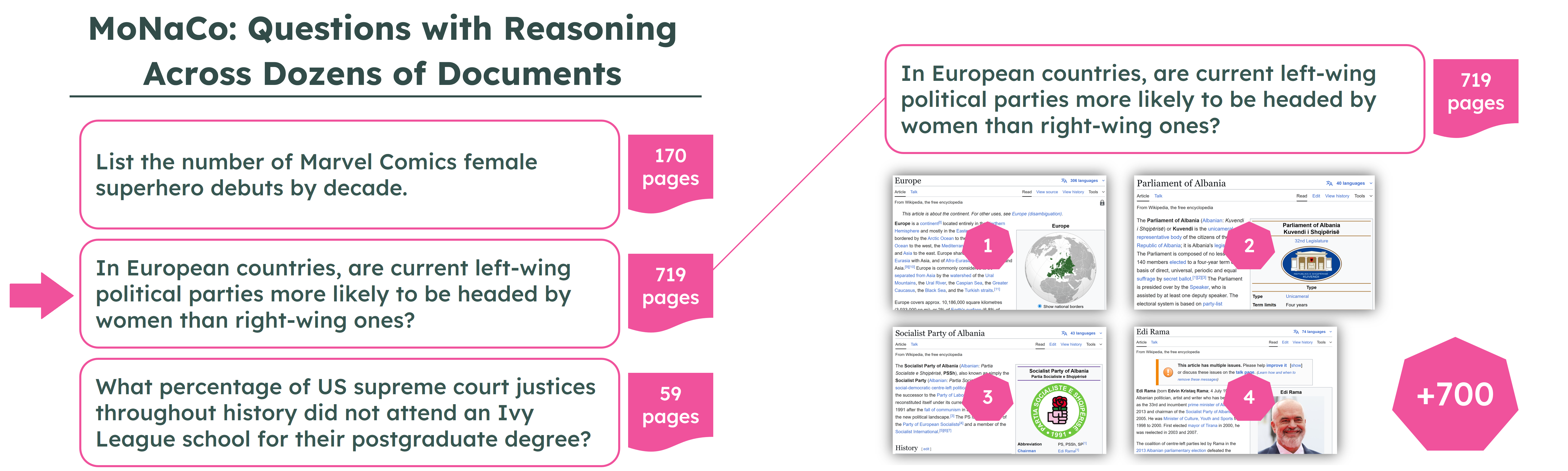
Tomer Wolfson is a Postdoctoral Research Fellow at the University of Pennsylvania and a member of the Cognitive Computation Group led by Prof. Dan Roth. He is also a CHE Postdoctoral Fellow for AI and Data Science, focusing on the intersection of Data Management and Natural Language Processing. PhD from Tel Aviv University (2019-2024), advised by Prof. Daniel Deutch and Prof. Jonathan Berant Research intern at Allen Institute for AI (2019-2024) BSc and MSc in computer science from Tel Aviv University Wolfson's research focuses on developing algorithms for understanding and reasoning over complex questions spanning hundreds of documents. His work includes creating benchmarks like MoNaCo and QAMPARI, analyzing language model reasoning paths, and improving retrieval-augmented generation systems. Key contributions include: MoNaCo: A benchmark for multi-document reasoning QAMPARI: Open-domain QA benchmark with multi-answer evaluation Break It Down: Question understanding benchmark Weakly supervised Text-to-SQL parsing systems His work combines natural language processing, machine learning, and database systems to enhance automated reasoning capabilities. Wolfson has received recognition for his contributions to retrieval-augmented language models and parametric knowledge analysis. Scientific awards include: CHE Postdoctoral Fellow for AI and Data Science Wolfson has served as a lecturer at Tel Aviv University for "Web Data Management & Information Retrieval" (2021-2022) and as a teaching assistant for "Web Data Management" (2018-2020). He is currently affiliated with the Cognitive Computation Group at the University of Pennsylvania.
Vikram Adve is the Donald B. Gillies Professor of Computer Science at the University of Illinois at Urbana-Champaign, with appointments in both the Computer Science Department and the Center for Digital Agriculture. He co-founded and co-leads the Center for Digital Agriculture and serves as the director of AIFARMS, a $20M National Artificial Intelligence Research Institute funded by USDA NIFA and NSF. Adve has been a professor at UIUC since August 2011 and previously served as Interim Head of the Computer Science Department from 2017 to 2019. Adve received his Ph.D. in Computer Science from the University of Wisconsin-Madison in 1993. His academic journey has been marked by significant contributions to compiler infrastructure and computer systems research, culminating in his current distinguished professorship at one of the world's leading computer science departments. Adve's research spans multiple cutting-edge domains in computer systems. His work on the LLVM Compiler Infrastructure has revolutionized how software is compiled and optimized across diverse hardware platforms. Currently, his research focuses on three primary thrusts: Digital Agriculture and AI : Through the Center for Digital Agriculture and AIFARMS Institute, he's developing AI solutions for agricultural challenges, including the CropWizard system for generative AI in farming Edge Computing : His HPVM, ApproxHPVM, and ApproxTuner projects address the programming challenges of heterogeneous computing at the network edge Compiler Innovation : His Hydride and MISAAL projects use program synthesis to automatically build compilers for complex hardware architectures His work bridges theoretical compiler research with practical applications in agriculture, autonomous systems, and distributed computing. Adve's publication record demonstrates a consistent trajectory from foundational compiler research to applied AI systems. Early work focused on memory safety (SAFECode), deterministic parallel programming (DPJ), and the LLVM infrastructure. More recently, his publications reflect a strategic pivot toward agricultural AI and edge computing, with significant contributions to generative AI applications, compiler techniques for heterogeneous systems, and multimodal data processing for precision agriculture. His work maintains strong theoretical foundations while addressing real-world challenges in resource-constrained environments. Adve's scientific recognition includes numerous prestigious awards: ACM Software System Award (2012) for LLVM ACM Fellowship (2014) NSF CAREER Award (2001) Multiple best paper awards at top conferences including PLDI 2005, SOSP 2007, and CGO 2004 (retrospective) University Scholar designation at UIUC (2015) Donald B. Gillies Professorship (2018) Distinguished Alumnus Award from IIT Bombay (2023) As an advisor, Adve has mentored numerous successful students, including Chris Lattner (co-creator of LLVM), Robert Bocchino (ACM SIGPLAN Outstanding Dissertation Award winner), and John Criswell (ACM Doctoral Dissertation Award Honorable Mention). His research group has secured significant funding from diverse sources including USDA NIFA, NSF, Intel Corporation, Amazon-Illinois AICE Center, and the state of Illinois through the Discovery Partners Institute. Current projects include the $20M AIFARMS institute and multiple edge computing initiatives focused on agricultural robotics and distributed AR/VR systems. Adve leads the Programming Languages, Systems, and Networking research group at UIUC, which maintains strong connections with industry partners. His group's work on LLVM has had widespread industry impact, with applications in Apple's iOS ecosystem, Android, NVIDIA GPUs, and numerous other commercial products. The group's current focus on agricultural AI through the Center for Digital Agriculture represents a strategic expansion into domain-specific applications of systems research.
Bruno Vallet is a Senior Researcher at IGN (French National Institute of Geographic and Forest Information) within the LASTIG lab and leads the ACTE research team since 2019. His work focuses on geospatial data processing, including LiDAR and image registration, 3D urban modeling, and computer vision applications. He contributes to projects like AI4GEO and Time Machine , specializing in large-scale point cloud analysis and structured city reconstruction. Education : Habilitation (HDR) in Geographic Information Science (Univ Paris-Est, 2016), PhD in Computer Science (Institut National Polytechnique de Lorraine, 2008), and Master's in Computer Vision (Telecom ParisTech, 2005). His research integrates surface reconstruction , semantic labelings , and uncertainty propagation , with methodologies applied to autonomous navigation and urban change detection. Recent publications emphasize data fusion, visibility computation, and deep learning for 3D scene analysis. He co-supervises PhD students and leads teaching activities at ENSG (National School of Geographic Sciences), covering image processing and 3D data structures. Bruno Vallet also chairs the ISPRS Working Group II/4 on 3D Scene Reconstruction, demonstrating leadership in photogrammetry and remote sensing communities.
Anna Mikusheva is the Edward A. Abdun-Nur (1924) Professor of Economics at the Massachusetts Institute of Technology, where she has been a faculty member in the Department of Economics since 2007, contributing significantly to econometric theory and methodology. Educational Background: PhD in Economics, Harvard University PhD in Probability, Moscow State University Professor Mikusheva's research focuses on developing robust econometric procedures for settings where standard asymptotic approaches fail, particularly with weak identification. Her work addresses critical challenges in inference for persistent (unit root) data, instrumental variables models with weak instruments, and Generalized Method of Moments estimation. She employs geometric approaches to understand nonlinear econometric models and develops decision rules that maintain validity under weak identification conditions. Her publications reveal a consistent focus on methodological innovation in econometrics, with particular emphasis on weak identification problems across various contexts including time series analysis, factor models, and dynamic stochastic general equilibrium models. The trajectory shows increasing sophistication in handling many weak instruments and developing optimal inference procedures that maintain coverage properties even when traditional methods break down. Major Recognitions: Member, American Academy of Arts and Sciences (2024) Fellow of the Econometric Society (2018) Alfred P. Sloan Research Fellow (2013) Elaine Bennett Research Prize, American Economic Association (2012) As a leading researcher in econometric theory, Professor Mikusheva's work provides essential tools for empirical researchers working with potentially weakly identified models across economics and related social sciences. Her methodological contributions have become increasingly influential as researchers recognize the prevalence of weak identification in empirical applications.
Prof. Dr. Manuel Oechslin is a Full Professor of Economics at the University of Lucerne's Faculty of Economics and Management since 2014. Previously, he held an Associate Professorship at Tilburg University. His research focuses on international economics, macroeconomics, and the role of uncertainty in economic decision-making. He leads an SNSF-funded project exploring how fundamental uncertainty drives economic fluctuations and crises. Manuel Oechslin earned his PhD in Economics from the University of Zurich. His work has been published in top journals such as the Economic Journal , Journal of International Economics , and Journal of Economic Growth . His recent articles analyze geopolitical risks' impact on foreign investment (2025), behavioral macroeconomic models (2024), and transformative innovation under uncertainty (2023). These studies emphasize linkages between cognitive biases, institutional quality, and economic outcomes. While no specific awards are listed, his research has consistently addressed pressing issues like fiscal reforms, informal economies, and environmental scarcity. His work often intersects with policy design and institutional capacity-building in weakly institutionalized states. Grants and research projects include SNSF funding for his uncertainty-focused project. He advises doctoral candidates through the University of Lucerne's Graduate Academy and collaborates with interdisciplinary teams exploring topics like statistical governance and corruption dynamics.
Mariella Dimiccoli is a Científica Titular (equivalent to Professor) at the Institute for Robotics and Industrial Informatics (IRI), a joint research center of the Spanish National Research Council (CSIC) and Universitat Politècnica de Catalunya (UPC). She is actively involved in cutting-edge research in computer vision, robotics, and multimodal AI, with a focus on egocentric vision, action recognition, and temporal video understanding. Position: Científica Titular (Professor) Institution: IRI, UPC-CSIC Research Subline: Perception and Manipulation Email: mdimiccoli@iri.upc.edu Her research interests center on enabling machines to understand human actions and interactions through visual and auditory signals. She works extensively on unsupervised and weakly supervised learning methods for video analysis, particularly in untrimmed and egocentric videos. Her work integrates insights from robotics, machine learning, and cognitive science to build systems capable of perceiving and predicting human behavior in dynamic environments. The recent publications highlight a strong trend in temporal modeling of video data, multimodal fusion (especially audio-visual), and explainable AI. Her work spans from fundamental representation learning to applied robotics, with a consistent focus on grounding AI models in real-world sensor data and human behavior. She actively supervises graduate students and leads significant research projects such as AWESOME and SAFEDYP025, which aim to model temporal structures in videos and enable safe autonomous planning through episodic memory. These projects reflect her leadership in integrating prior knowledge into AI systems for long-term autonomy. PhD Student: Elena Belén Bueno Benito Master's Student: Xabier Blázquez González Her research is supported by national and European funding, including participation in the RAMON LLULL: AIRA Postdoctoral Programme and leadership in projects like AWESOME and GreenVAR. These grants underscore her role in advancing AI and robotics in Spain and Europe. Mariella Dimiccoli leads research within the Perception and Manipulation subline at IRI, contributing to the development of intelligent robotic systems that can perceive, interpret, and interact with humans and environments through multimodal sensing and learning.
Sujian Li is an active researcher in computational linguistics and natural language processing, with recent contributions to advanced large language model applications. Their work spans multiple critical areas including hierarchical memory frameworks for Wikipedia generation, self-refining entity grounding systems, and long-context embedding model extensions. Key Research Areas: Continual learning in NLP, multimodal reasoning, cross-lingual knowledge transfer, and factual consistency evaluation. Notable Methods: MOG framework for structured generation, ISR self-refinement scheme, LongAttn token-level analysis, and IPR step-level process refinement. Article Trends show a focus on improving LLM robustness through adversarial training, enhancing coherence via discourse-level graph modeling, and developing benchmarks like WIKIGENBENCH for real-world evaluation. Their research also addresses knowledge integration in biomedical multilingual models (KBioXLM) and mathematical parsing via tree-structured decoding. Collaborations include leading researchers like Yifan Song, Dawei Zhu, and Wenhao Wu across institutions and projects.
Tiange Xiang is a Ph.D. student at Stanford University , affiliated with the Stanford AI Lab and Stanford Vision and Learning Lab. His research bridges generative models and AI for healthcare , focusing on 3D human reconstruction, medical imaging, and diffusion model applications. Education : Ph.D. and M.S. in Computer Science at Stanford University; B.S. in Computer Science and Technology (Advanced) at the University of Sydney. Advisors : Prof. Fei-Fei Li, Prof. Scott Delp, and Prof. Ehsan Adeli. His work includes foundational contributions to occluded human rendering (OccFusion, Wild2Avatar), medical anomaly detection (Exploiting Structural Consistency of Chest Anatomy, SQUID), and fMRI vision decoding (Seeing Beyond the Brain). He has pioneered 3D Gaussian splatting and score-distillation sampling techniques. Collaborators include leading researchers from Google DeepMind and Stanford. Scientific Awards : University Medal (University of Sydney), Stanford HAI Fellowship, Qualcomm Innovation Fellowship Finalist. He has served as a conference reviewer for CVPR, MICCAI, ICCV, and others, and as a teaching assistant for courses like CS 231n. His code repositories for BiO-Net and OccFusion are widely shared and implemented in Python.
Dr. Carla Ferreira is a Researcher at NOVA University Lisbon, Portugal. She actively contributes to academic communities as a committee member and session chair in conferences like POPL, ECOOP, and SPLASH. Her work bridges distributed systems, low-code development, and program verification. Researcher at NOVA University Lisbon Conference committee roles: POPL, ECOOP, SPLASH, MODELS, PLDI Research interests: distributed systems, low-code development, invariant verification Carla’s work focuses on ensuring correctness in distributed systems through coordination-free designs and replicated data types. She has explored low-code templates for safe application composition and automated scaling of sequential systems. Her recent contributions include consistency models for weakly consistent databases and educational approaches for teaching distributed verification with TLA+. She has authored key works on ECROs, OSTRICH, and VeriFx frameworks. Her publications span from 2016 to 2025, reflecting ongoing contributions to system design and verification. Carla Ferreira can be reached via her personal website at http://ctp.di.fct.unl.pt/~cf/ , though no direct email addresses are publicly listed in the scraped data.