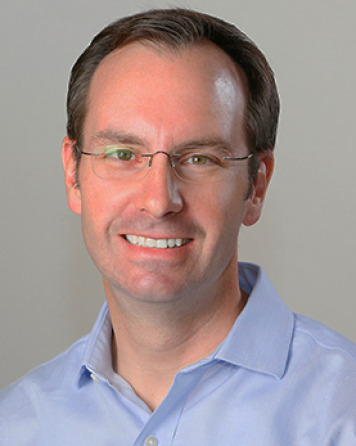
Lyman Alexander Page Jr. is a Professor of Physics at Princeton University and a leading observational cosmologist. He co-led the Wilkinson Microwave Anisotropy Probe (WMAP) project, which revolutionized our understanding of the cosmic microwave background (CMB) radiation and the early universe. Page is also the founding director of the Atacama Cosmology Telescope project and currently serves on the Simons Observatory executive board and as an advisor at the Canadian Institute for Advanced Research. PhD in Physics from MIT (1989) Bachelor's degree from Bowdoin College His research focuses on the CMB, dark energy, and galaxy clusters, using advanced observational techniques to study the universe's origin and composition. Over decades, his work has involved precise measurements of the universe’s expansion, structure growth, and thermodynamic properties of cosmic systems. Notable trends in his recent publications include multi-instrument cosmological analyses (ACT, SPT, Planck), atmospheric modeling for telescopes, and studies of the thermal and kinematic Sunyaev-Zel'dovich effects. His articles often address cosmic birefringence, dark matter interactions, and galaxy evolution. Marc Aaronson Memorial Lectureship (2004) Shaw Prize in Astronomy (2010) Gruber Prize in Cosmology (2015) Breakthrough Prize in Fundamental Physics (2018) Marcel Grossman Award (2018) Fellow of the American Physical Society (2013) Page has held leadership roles, including Chair of Princeton's Physics Department (2011–2017), and contributes to global collaborations in cosmology and astrophysics.
Jörg Breitung is a Professor of Econometrics and Statistics at the Institute of Econometrics and Statistics within the Faculty of Management, Economics and Social Sciences (WiSo Faculty) at the University of Cologne since 2014. He also serves as a Research Professor of the German Bundesbank in Frankfurt since 2002. Research Focus: Panel Data Analysis Time Series Analysis Forecasting Financial Econometrics Scientific Contributions: Developed advanced GMM estimators for spatial regression models Innovative approaches for assessing causality in frequency domains Created robust tests for slope homogeneity in panel data Pioneered methods for serial correlation testing in fixed effects models Contributed to nonlinear panel data modeling and bootstrap techniques Honors and Editorial Roles: Associate Editor of International Journal of Forecasting (2019-) Associate Editor of Journal of Business and Economic Statistics (2017-) Associate Editor of Econometric Reviews (2014-) Contributed to leading journals like Econometrica and Journal of Econometrics
Professor Tom Zega is a faculty member at the University of Arizona’s Lunar and Planetary Laboratory, where he has served since 2011. He directs the Planetary Materials Research Group and holds a primary appointment as Professor, leading federally funded investigations into the origin and evolution of the Solar System’s earliest solids. Education: Ph.D. in Geological Sciences, 2003, Arizona State University Research Focus: Dr. Zega couples ultrahigh-resolution ion- and electron-microscopy with computational thermodynamics to decode the chemical and physical histories of planetary materials. His current work concentrates on: Refractory inclusions—the first solids to condense from the solar nebula Sulfides that record nebular and parent-body processes Samples returned by JAXA’s Hayabusa missions to asteroids Itokawa and Ryugu NASA’s OSIRIS-REx samples from asteroid Bennu Astrobiology, examining organic–mineral associations at the nanometer scale Research Trends: Across his 2019-2025 publications, a clear trajectory emerges from fundamental microanalytical method development (e.g., single-standard quantitative EDS) to high-impact studies of pristine astromaterials. The body of work integrates (1) laboratory shock and irradiation experiments, (2) coordinated isotope-microstructure analyses of presolar grains, and (3) comprehensive petrographic surveys of CI- and CM-like Ryugu samples. Collectively, these studies illuminate nebular fractionation, parent-body hydrothermal alteration, and space-weathering pathways. Scientific Awards & Honors: No named awards are listed in the supplied text. Grants & Leadership PI, NASA Laboratory Analysis of Returned Samples (LARS) – Atomic-scale Analysis of Hayabusa Samples PI, NASA PSEF – The Kuiper-Arizona Laboratory for Astromaterials Analysis PI (with Co-Is K. Muralidharan & V. R. Manga), NASA – Characterizing the Role of Solutes and Defects in Refractory Planetary Materials Co-I, NASA New Frontiers – OSIRIS-REx Mission Co-I, Moore Foundation – Next-generation NanoSIMS for Planetary Materials Laboratory & Team The Planetary Materials Research Group operates the Kuiper-Arizona Laboratory for Astromaterials Analysis, housing FIB-SEM, TEM, and NanoSIMS instrumentation. Current staff scientists include Dr. Jerry Chang and Dr. Ken Domanik; former postdocs Jacob Bernal, Shaofan Che, Pierre Haenecour, Prajkta Mane, and Pierre-Marie Zanetta continue to collaborate on joint publications.
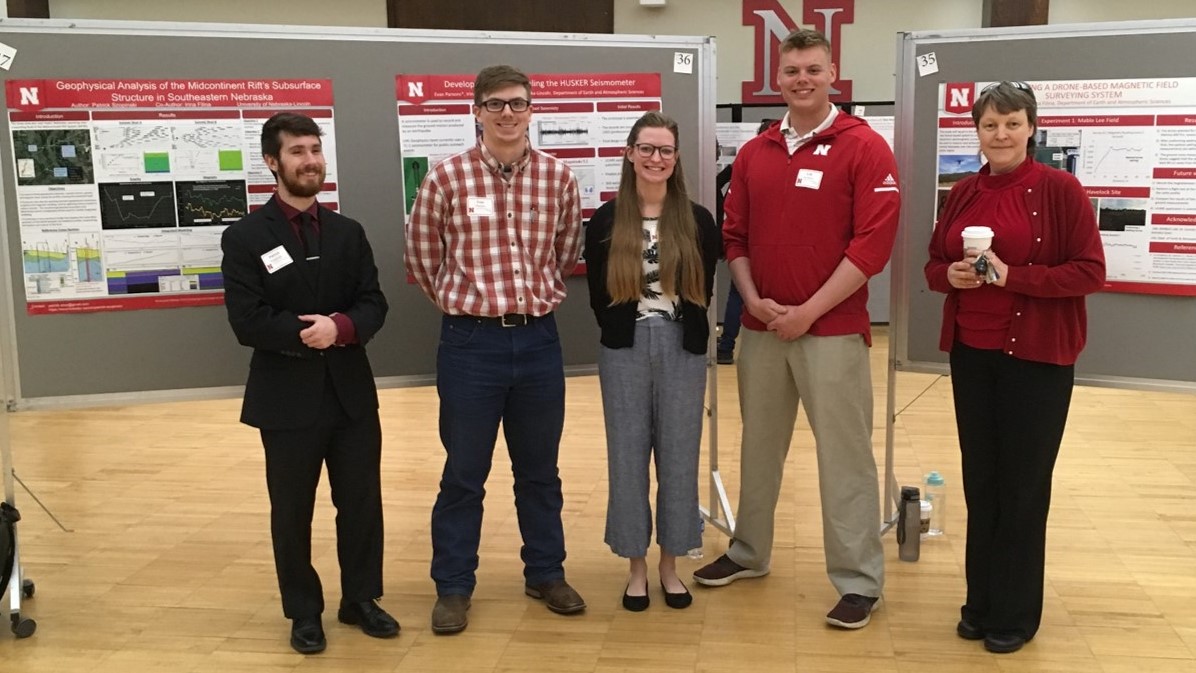
Irina Filina is an Associate Professor in the Department of Earth and Atmospheric Sciences at the University of Nebraska-Lincoln, leading the UNL Geophysics Research Group since 2016. She specializes in integrative geophysical analysis combining seismic, gravity, and magnetic data with geological constraints to study subsurface structures across diverse regions. Education: PhD in Geophysics (2007) from the University of Texas at Austin Industry Experience: 8 years in the petroleum sector before academia Research Interests span: Tectonic evolution of passive continental margins (Gulf of Mexico, Northern Atlantic, Tyrrhenian Sea) Cascadia subduction zone crustal heterogeneities and seismicity Intraplate seamounts in the central Atlantic Nebraska aquifer dynamics via microgravity and seismic surveys Her work leverages public domain datasets and field campaigns (e.g., IODP Expeditions 396/402) to resolve tectonic puzzles and inform environmental monitoring. Students in her group have won Best Student Awards at the Nebraska Academy of Sciences annually since 2017 and presented at AGU, GSA, and AAPG. She teaches Geophysics , Advanced Geophysics , and Exploration Geophysics , emphasizing hands-on learning through projects like Football-Induced Seismicity . Her outreach initiatives include summer camps and school collaborations using drone-based magnetic surveys and seismic demonstrations for K-12 engagement.
Professor Miroslav Grajcar serves as a faculty member in the Department of Experimental Physics at the Faculty of Mathematics, Physics and Informatics, Comenius University in Bratislava. His academic rank is Professor, with office F2-248 and contact details including email grajcar@fmph.uniba.sk and phone +421 2 602 95 247/518. His research spans Superconductivity , Quantum Measurements , and Low Temperature Physics , with specialized focus on Josephson junctions, quantum amplifiers, and superconducting thin-film devices. Recent work explores NbN film properties, microwave photonics, and instrumentation for quantum computing applications. Professor Grajcar's 2024 publications demonstrate strong activity in advancing quantum measurement techniques, with articles in Physical Review B, Journal of Applied Physics, and AIP Advances. His work shows consistent focus on superconducting device physics for quantum technologies, particularly in parametric amplification and ultra-low-temperature instrumentation. He teaches Low Temperature Physics (2-FTL-206) and Quantum Measurements and Technologies (3-FKL-008), reflecting his research expertise in the classroom. Current timetable data (updated 2025-11-18) confirms active teaching status with Tuesday lectures in rooms F2-272 and F2-KEF.
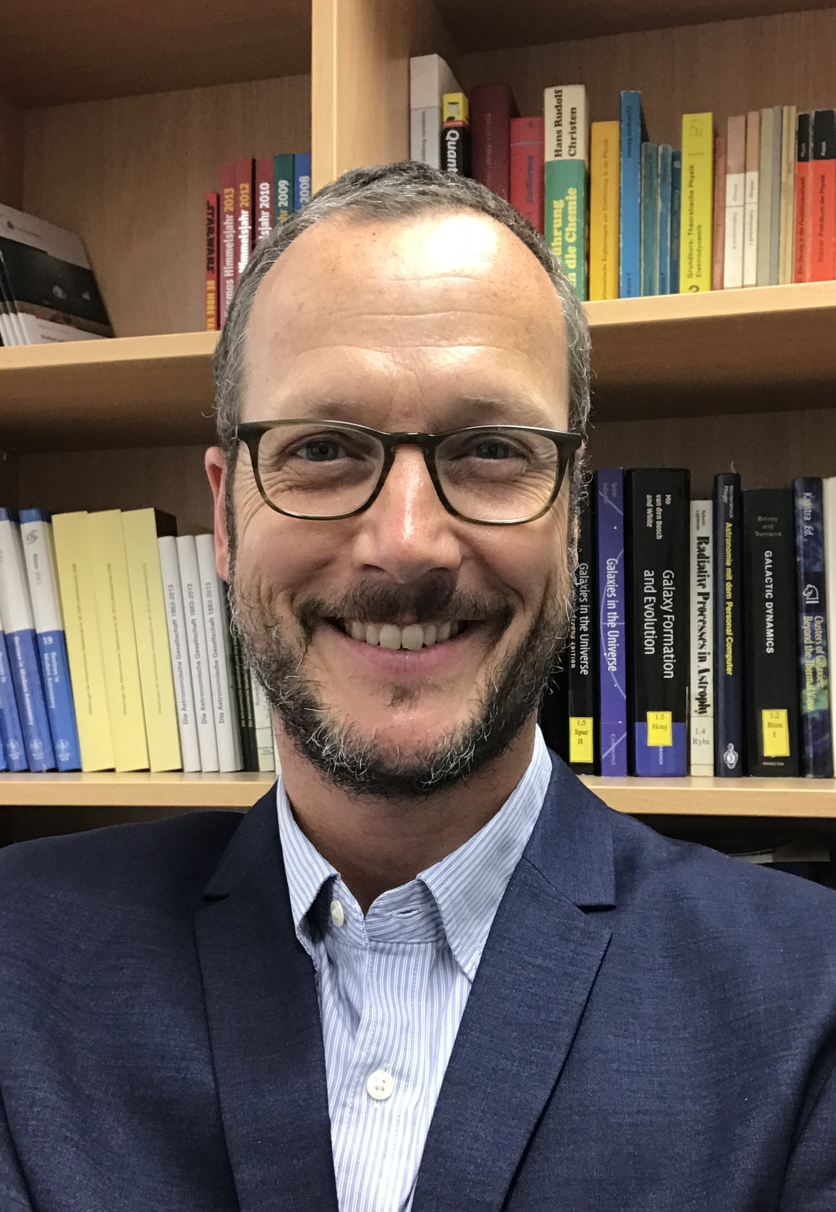
Prof. Dr. Philipp Richter is a Full Professor and Chair for Astrophysics at the Institute of Physics and Astronomy, University of Potsdam, Germany. He leads the Astrophysics research group at the University of Potsdam, focusing on interstellar and intergalactic gas, galaxy evolution, and observational cosmology. His work involves using absorption spectroscopy in UV and optical regimes to study the circumgalactic medium and intergalactic medium at various redshifts. Dr. Richter's educational background includes: PhD in Astronomy, University of Bonn, Germany (1999) Diploma in Physics, University of Bonn, Germany (1997) Studies of Physics and Astronomy at Universities of Marburg and Bonn, Germany (1994-1999) Abitur, Gymnasium Philippinum, Marburg, Germany (1991) Dr. Richter's research focuses on the properties of the circumgalactic medium (CGM) around galaxies and the intergalactic medium (IGM) that fills the Cosmic Web. His work employs absorption spectroscopy in the UV and optical regimes to study hydrogen and metal ions in the CGM and IGM at all redshifts. These absorption-line measurements are complemented with emission observations in radio, X-ray, and optical wavelengths. He also utilizes state-of-the-art numerical hydrodynamical simulations to compare with observational results. His research spans galaxy evolution, interstellar medium physics, and observational cosmology. Analysis of Dr. Richter's recent publications reveals a strong focus on the circumgalactic and intergalactic medium, with particular attention to the Magellanic Stream, galaxy halos, and high-redshift absorption systems. His work combines observational data from instruments like HST/COS with theoretical modeling to understand gas flows in galaxy evolution. Key themes include metallicity patterns, ionization states of gas, and the connection between observed absorption features and large-scale cosmic structure. Dr. Richter has received several prestigious awards: Teaching-Excellence Award, Faculty of Science, University of Potsdam (2022) Erskine Fellowship, University of Canterbury, NZ (2018) Ludwig-Biermann Award for early excellence in astrophysical research, Astronomische Gesellschaft, Germany (2005) Emmy-Noether fellowship/award for early research excellence, DFG (German science foundation) (2003) As an educator and mentor, Dr. Richter supervises PhD students including Sietske Bouma, Mitali Damle, and Kirill Makan. He teaches a variety of courses in Astrophysics such as fundamental astrophysics, cosmology, galaxy evolution, and interstellar medium as part of the physics/astrophysics bachelor/master programs. He also supervises astrophysics lab courses and seminars, and teaches experimental physics for geo-science students. Dr. Richter has played a significant role in university management, having served as director/deputy director of his department for many years, led committees for appointing professors in astrophysics, and developed the international master program in astrophysics at the University of Potsdam. Dr. Richter leads the Astrophysics research group at the University of Potsdam, which includes senior scientists, postdocs, and PhD students. The group is involved in various observational projects using telescopes and space-based instruments. They maintain close collaborations with other research institutions and participate in international research initiatives focused on galaxy evolution and the intergalactic medium.
Dr. Thiago Sogo Bezerra is a Senior Research Fellow in the School of Mathematical and Physical Sciences at the University of Sussex, specializing in experimental particle physics with a focus on neutrino research. His academic journey began with a PhD at Tohoku University in Japan (2013), followed by a JSPS Postdoctoral Fellowship (2013-2015), and a position as CNRS Researcher at Subatech Laboratory in France (2015-2019). He joined the University of Sussex in 2020 and was promoted to Senior Research Fellow in October 2022. Dr. Bezerra maintains active leadership roles across multiple major international collaborations: NOvA (2022-present): Developing data-driven models for cosmic ray backgrounds and introducing KDE-based methods to improve oscillation fits CLOUD (2023-present): Co-coordinating Simulation, Software, and Reconstruction for a surface neutrino detector with unprecedented signal-to-background ratio LiquidO (2015-present): Developing novel opaque scintillator technology for antineutrino detection Previous significant contributions to DUNE (2020-2022), SNO+ (2020-2022), and JUNO (2015-2020) His research bridges fundamental neutrino physics with innovative detector development, spanning from precise measurements of neutrino oscillation parameters to the development of novel detection technologies that could revolutionize neutrino observation. Dr. Bezerra's work spans theoretical analysis, experimental design, and practical implementation across multiple detector technologies. Dr. Bezerra has received significant recognition for his contributions to particle physics: Young Scientist Award from the Physical Society of Japan for his PhD work on the Double Chooz experiment JSPS Postdoctoral Fellowship (2013-2015) Alan Turing Institute Postdoctoral Enrichment Award (2022) for supernova trigger studies His research is supported by grants including 'Preparing liquid argon neutrino detectors to observe a supernova burst' from the Alan Turing Institute (2022). Dr. Bezerra has presented his work at numerous international conferences, including the European Physical Society Conference on High Energy Physics and the International Workshop on Weak Interactions and Neutrinos, establishing himself as a leading voice in neutrino physics. Within the Experimental Particle Physics research group at Sussex, Dr. Bezerra leads efforts to advance neutrino detection capabilities, particularly through the development of novel technologies that address longstanding challenges in the field, such as background reduction and signal identification in neutrino experiments.
Prof. Garo Mardirosyan, DSc, is a Professor at the Institute of Space Research (IKI) of the Bulgarian Academy of Sciences (BAS) since 1980, currently holding the position of Senior Scientific Collaborator, 1st class. He actively lectures in the Department of Earth Sciences at New Bulgarian University (NBU), teaching undergraduate and graduate courses including Geophysical Surveys Using Equipment (ESCB754) and Remote Methods for the Study of the Earth (ESEB015). Education: 1965: Technical School in Fine Mechanics and Optics "Lomonosov", Sofia (Time-measuring and Computing Technology) 1977: Technical University, Sofia (Electrical Engineer - Weak Currents) 1985: Ph.D. in Physics on "New methods, devices and systems in the composition of a geophysical apparatus complex with improved technical and operational characteristics" 2003: Doctor of Technical Sciences on "Methods and electronic means for studying geophysical and climatological processes" Prof. Mardirosyan's research spans remote sensing of Earth, geophysics, and environmental science, with a focus on natural ecological disasters and methods for their study. He pioneered geophysical and ground-space instrumentation for Earth monitoring, developing over 50 patents in seismological and magnetological equipment. His work integrates space technology with disaster management systems for seismic and ecological catastrophe prevention. Scientific Awards: 1980: Honored Inventor 1990: Elected member of the World Professor Academy for Peace (PWPA), New York 1999: Entered in the Golden Book of Discoverers and Inventors 2000: Included in the List of 2000 Most Famous Scientists of the 20th Century (International Biographical Centre, Cambridge) 2002: Invited for 6-month work at CNRS, France, under NATO scientific program 2004: Certificate for Special Merits in Space Research of Bulgaria 2010/2013: Certificate for High Scientific Achievements from Union of Scientists in Bulgaria 2011: Included in Encyclopedias '150 Figures of Bulgarian Science' and 'Notable Bulgarians' 2012: Certificate of Appreciation from Institute GAPE, Skopje 2016: Buditel 2016 Award 2019: Honorary Certificate from Russian Federal Space Agency He supervised doctoral students at IKI-BAS and NBU while leading over 20 major projects including seismic research for Kozloduy/Belene nuclear plants, scientific programs for Bulgaria's first two cosmonauts (1980/1986), international space projects 'Phobos' (1987-1989) and 'Priroda' for Mir space station (1990-1993), and disaster management systems like SCHEMA (2006) and Iskar River emergency warning (2000). His grant portfolio spans NATO, EU Framework Programs, and Bulgarian national initiatives. As Chairman of IKI-BAS Technical-Expert Council since 1992 and Scientific Secretary of its Scientific Council since 2008, he leads research teams in remote Earth sensing and disaster response. He heads the Unified Thematic Seminar on Remote Research since 2011 and serves on BAS's Problem Council for Natural Resources and Climate Risks.