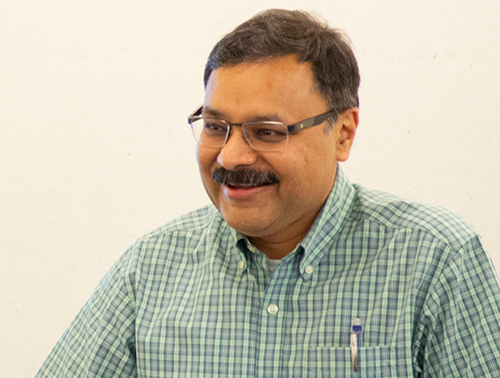
Bart J. Hengeveld is an Assistant Professor at Eindhoven University of Technology (TU/e), affiliated with the Industrial Design department within the Faculty of Industrial Design. He leads the Future Everyday research cluster, focusing on the intersection of sound design and IoT systems. His work explores how embedded technologies can communicate through sound and tangible interaction in ways that enhance human experience. Education: BSc/MSc in Industrial Design Engineering, Delft University of Technology (2003) PhD in Industrial Design, TU/e (2011), with concurrent training in double bass at Codarts Conservatory Research Interests: Acoustic communication in IoT systems Tangible interaction design Social implications of ubiquitous computing Sound as a medium for human-technology interaction Recent Research Trends: Focus on multimodal interfaces combining sound/light/haptics Studies on sound design for healthcare and smart living environments Investigations into ethical and inclusive IoT soundscapes Awards: Two Teacher of the Year awards at TU/e, reflecting his commitment to pedagogical excellence. Advising & Projects: Supervised 113 student projects including interactive installations like 'Naktis' and 'Sonostapp' Leading the €1.5M 'Role of Sound in Hybrid Work Environments' project (2023–2026) Organized TEI 2016 conference and serves on its steering committee Teams/Labs: Core member of TU/e's Future Everyday cluster, collaborating with multidisciplinary teams on embodied interaction research.
Sonit Bafna is an Associate Professor and Director of the Ph.D. Program in Architecture at the Georgia Institute of Technology's College of Design. He holds a Ph.D. from Georgia Tech (2002), an SMArchS from MIT (1993), and a professional degree in Architecture fromCEPT University (1990). His research bridges empirical studies on space-human interaction and critical architectural theory, focusing on morphology, behavior, perception, and aesthetics. Key research areas include home layout's impact on mental health (e.g., reduced depression risk in living-area-centered apartments), workplace design's role in employee wellbeing, and the relationship between spatial configuration and cognitive abilities. His work is funded by organizations like the General Services Administration and Kaiser Permanente. Bafna supervises doctoral research in morphology, design theory, and cognitive studies. Current projects include a book on imaginative reasoning in architecture and studies on hospital corridor design and film spatial analysis. His courses cover architectural theory, design analysis, and research methods. Notable contributions include interdisciplinary studies on space syntax, the therapeutic potential of domestic environments, and the visual functioning of buildings. His research emphasizes the socio-cultural dimensions of architecture and its imaginative potential beyond functionalism.
Stacy Holman Jones is a Professor of Theatre and Performance in the School of Languages, Literatures, Cultures and Linguistics at Monash University. With over 23 years of academic experience, she has developed an international reputation for leadership in performance studies, particularly in feminist and queer theory, new materialist research, and critical arts-based methodologies. Her educational background includes a PhD in Communication/Performance Studies from the University of Texas at Austin (2001), an MA in Communication from California State University Sacramento (1996), and a BA in Humanities (1988). Professor Jones's research focuses on performance as socially, culturally, and politically resistive and transformative activity. She is a recognized leader in critical autoethnography and has published over 100 articles, book chapters, and editorials, as well as authored, co-authored, and edited 14 books including the influential Handbook of Autoethnography (2013, 2021) and Queering Autoethnography (2018). Her work spans cultural critique, social inclusion, education, resilience building, designing for social impact, and enhancing health and wellbeing among minoritarian communities. Analysis of her recent publications reveals a strong trajectory toward creative ecological approaches to mental health, collaborative autoethnographic methods, and innovative design for social impact. Her research increasingly integrates performance studies with mental health applications, particularly in educational settings, while maintaining strong connections to queer theory, new materialisms, and critical autoethnography. International Congress of Qualitative Inquiry's Special Career Award National Communication Association's Distinguished Service Award in Performance Studies Janice Hocker Rushing Early Career Research Award Organization for the Study of Communication, Language, and Gender Feminist Teacher/Mentor Award Over the Rainbow Recommended Book List for Queering Autoethnography (2019) International Congress of Qualitative Inquiry Qualitative Book Award, Honourable Mention (2020) Multiple Good Design Awards for 'The Tomorrow Party' (2024) Professor Jones has been part of 3 successful ARC applications totaling $1,353,604, including as Lead CI for DP200102876 Staging Australian Women's Lives (2020-2023). She is currently accepting PhD students with supervision interests in theatre and performance studies, social change and social justice, and health and wellbeing research. She serves as the founding editor of Departures in Critical Qualitative Research and has been actively involved in professional organizations including serving as President of the International Congress of Qualitative Inquiry (2015-2018). Her current research activities include multiple collaborative projects such as 'Playing Transitions - Settling and Belonging in School together' (2024-2027), 'Learning Creates: Tomorrow Party' (2024), and 'Canopy: Creative partnerships for policy advocacy in Climate and Health' (2024), demonstrating her commitment to interdisciplinary, impact-focused research that bridges theory and creative practice.
Prof. Liqiu Meng serves as Chair of Cartography and Visual Analytics at the Technical University of Munich (TUM). He specializes in advanced geospatial research, digital cartography, and human-technology collaboration frameworks. Current Faculty at TUM Chair of Cartography and Visual Analytics Research Focus: His work bridges cartographic theory with cutting-edge technology, covering topics like 3D urban modeling, AI ethics visualization, geovisual analytics, and spatiotemporal data interpretation. Urban Morphology Analysis AI Ethics Cartography Geovisual Analytics 3D City Data Integration Location-Based Service Design Publications: Recent works (2025-2024) demonstrate expertise in explainable AI for urban analysis, multi-agent systems for geospatial interaction, and advanced spatial modeling techniques. Contact: liqiu.meng@tum.de | contact.lfk@ed.tum.de
Professor Simon Robinson is a faculty member in the School of Mathematics and Computer Science at Swansea University, holding a position as a Professor of Computer Science. He serves as the Head of the Future Interaction Technologies (FIT) Lab and Director of the MSc year for the EPSRC Centre for Doctoral Training in Enhancing Human Interaction and Collaboration with Data-Driven Systems. His research focuses on devices and interactions designed for emergent users in low-connectivity regions, emphasizing participatory design and co-creation with underserved communities. Current projects include the EPSRC-funded UnMute initiative, which aims to empower marginalized language speakers through spoken language technologies. Key affiliations include leadership roles in the FIT Lab and the EPSRC CDT, alongside contributions to projects like Rethinking Public Technology in a Post-COVID Era, PV Interfaces, and Scaling the Rural Enterprise. His work spans ubiquitous computing, deformable devices, and inclusive interaction design for global south communities. Research interests center on Human-Computer Interaction (HCI), with a focus on low-resource settings. Recent work addresses speech technologies for unwritten languages, trust in human-robot interactions, and sustainable self-powered interfaces. His lab explores innovations like Light-In-Light-Out (Li-Lo) displays and community-driven smart materials (PV-Pix). Professor Robinson has supervised numerous PhD students across topics including AI ethics, predictive maintenance, and human-centric NLP. He teaches modules like Introduction to HCI and contributes to the Human-Centred Big Data and AI Dissertation program. His work integrates grants from EPSRC and collaborative projects with international partners, reflecting a commitment to socially impactful technology. Labs & Teams: Director of the FIT Lab, active in the EPSRC CDT, and collaborator in interdisciplinary teams focusing on rural technology, assistive AI, and sustainable interfaces.
Rafie Cecilia is a Lecturer in Museum and Gallery Studies at King’s College London (KCL), affiliated with the Faculty of Arts & Humanities and the King’s Institute for Artificial Intelligence. Her work focuses on disability inclusion in cultural heritage institutions, digital innovation, and inclusive governance. She joined KCL in 2023 after roles at UCL, the Global Disability Innovation Hub, and the Centre for Critical Heritage Studies. Rafie’s research integrates three core areas: 1) museum experiences of disabled visitors, 2) AI and technology for accessibility, and 3) participatory governance models. She advocates for co-creation methodologies and challenges ableist institutional practices. Her teaching emphasizes inclusive pedagogy, particularly through AI literacy initiatives and decolonial approaches. Rafie collaborates with major institutions like the British Museum and Wellcome Collection, focusing on accessibility tools like AltText and inclusive wayfinding systems. Her recent publications address ableism in collections management and pandemic-era museum accessibility. As a disability advocate, Rafie emphasizes sustainable change through policy reform and co-design processes. She does not accept generic PhD applications but encourages disabled applicants to engage deeply with her research.
Justin Hollander is a Professor of Urban and Environmental Policy & Planning at Tufts University, affiliated with the Graduate School of Arts and Sciences. He earned a PhD from Rutgers University, an MRP from UMass Amherst, and a BA from Tufts. His research focuses on urban redevelopment, cognitive urbanism, and the intersection of technology with planning. Dr. Hollander has authored 11 books and over 70 journal articles, with grants from organizations like the U.S. Department of State and the Lincoln Institute of Land Policy. He serves as Editor-in-Chief of the Journal of Planning Education and Research and hosts the Cognitive Urbanism podcast. Research interests include cognitive responses to urban environments, biometric tools in design, and policy responses to urban shrinkage. Notable publications address military dimensions of urban planning, AI-driven public art analysis, and Mars colonization. Awards include the 2025 William R. and June Dale Prize. He teaches courses on urban studies, real estate development, and thesis guidance. Professional activities include conference presentations and media contributions to outlets like NPR and The New York Times. As director of the Urban Attitudes Lab, he explores biometric and digital tools for urban analysis. Ongoing work includes studies on climate hazards in Addis Ababa, bot-driven online planning discourse, and post-pandemic urban futures.
Prof. Vinod Namboodiri is the Forlenza Chair in Health Innovation and Technology at Lehigh University's Department of Computer Science & Engineering and College of Health. He leads the Accessibility and Assistive Technologies (ACCESS) Lab, focusing on computing technologies to address health disparities affecting people with disabilities. His NSF-funded research develops navigation solutions for individuals with disabilities, with emphasis on smart communities and built environment accessibility. He holds a Ph.D. from UMass Amherst and previously served as Full Professor/Associate Director at Wichita State University and Adjunct Senior Scientist at Envision Research Institute. His research spans assistive technologies, applied computer vision, and smart health systems. Notable work includes MABLESim (indoor accessibility simulation), NaVIP (visually impaired navigation), and economic analyses of accessibility investments. His publications explore both technical innovations and policy implications of assistive technologies. Prof. Namboodiri has received multiple awards for research, teaching, and innovation. His work bridges computer science with disability studies, emphasizing real-world impact through interdisciplinary collaboration. Current projects address indoor navigation systems, cost-benefit analysis of accessibility infrastructure, and human-agent interaction platforms for disability empowerment.
Dr. Weronika Mazurkiewicz is an Assistant Professor at the Department of Urban Design and Regional Planning within the Faculty of Architecture at Gdańsk University of Technology. Her work focuses on urban planning, geographic information systems (GIS), and space syntax analysis. She actively contributes to projects like DigiClimAct, addressing climate action through digital tools. Education: PhD in Architecture and Urban Planning from Gdańsk University of Technology (2019). Research interests include marketplace regeneration, elderly-friendly public spaces, hospital design for oncology patients, and sustainable urban development strategies. She has pioneered studies on outdoor gyms for seniors and spatial cognition in healthcare environments. Publications emphasize GIS integration in education, 15-minute city planning instruments, and participatory design approaches. Her work bridges theoretical urban concepts with practical policy implementation, particularly in revitalizing public spaces and enhancing urban accessibility. Grants/Projects: Project Manager for DigiClimAct (EU-funded), focusing on digital climate action in Baltic cities. Collaborates with teams on placemaking, market regeneration, and participatory urban planning methodologies. Labs/Teams: Active in the Department of Urban Design and Regional Planning, leading research groups on urban sustainability and spatial analysis techniques.
Ian Pitt is a Lecturer in Usability Engineering and Interactive Media at University College Cork (UCC). He leads the Interaction Design, E-Learning and Speech (IDEAS) Research Group, focusing on multimodal human-computer interaction, auditory interfaces, and accessibility solutions for visually impaired users. Pitt holds a D.Phil from the University of York, followed by research fellowships at Otto-von-Guericke University in Germany before joining UCC in 1997. His research interests include speech-based interfaces, e-learning systems, and accessibility technologies for blind users. Key projects include the EU-funded ENABLE Network (2011–2014) and prototype development for UniWink. He has secured significant grants, including €72,009 from IRCSET for voice analysis research and €19,478 from the EU for ICT-supported learning initiatives. Pitt has advised numerous PhD students, including Flaithri Neff (2011), Emma-Kate Crowley (2014), and current candidates Aine Kearns and Patrick Egan. His publications span journals like International Journal of Game-Based Learning and conferences such as ICCHP and ACM SIGACCESS. He has contributed to committees for conferences like CHI and the Irish HCI conference. Teaching modules include Usability Engineering, Human-Computer Interaction, and Digital Media Development. His work emphasizes inclusive design principles, with projects addressing navigation systems for blind students and adaptive e-learning frameworks. Recent research trends focus on ICT-delivered aphasia rehabilitation, emotional BCI interfaces, and multimodal learning systems. Collaborations include international partners through EU grants, reflecting his global impact in accessibility and educational technology.
Professor Tim Jones is a Professor of Sustainable Urban Mobility at the School of the Built Environment, Oxford Brookes University. His research focuses on how urban environments can be configured to support sustainable and healthy mobility, particularly walking, cycling, and electrically assisted mobility. His work aligns with UN Sustainable Development Goals 3 (Good health and wellbeing), 10 (Reduced inequalities), and 11 (Sustainable cities and communities). Dr. Jones' research interests center on sustainable urban mobility, with particular emphasis on walking, cycling, and electric micromobility. He investigates how urban environments can be designed to promote healthy, sustainable travel that minimizes environmental impact while improving health and wellbeing and providing equal access to opportunities. His work employs novel mixed-method approaches to understand the physical, social, and cultural factors that influence everyday travel decisions. His research spans contexts from the UK to Brazil, examining issues like mobility justice, 15-minute cities, and low traffic neighborhoods. His recent publications reveal a strong focus on the health impacts of active travel, particularly examining how walking and cycling affect mental health, wellbeing, and quality of life. His work increasingly addresses electric micromobility, including e-bikes and e-scooters, with several 2024-2025 publications on the HELMET project. He frequently collaborates with international researchers, particularly in Brazil, on comparative urban mobility studies. Royal Town Planning Institute (RTPI) Award for Research Excellence 2017 (Academic Award) for the project cycle BOOM Professor Jones has supervised numerous PhD students including Catherine Ross (current), Oscar Natividad Puig (current), Aline Moreira Fernandes Barata (completed 2023), and Daniela Wollrab (completed 2023), among others. He has secured significant research funding including the NIHR-funded HELMET project (2025-2026), the EU-funded ENACT 15mC project (2023-2026), and the Rees Jeffreys Road Fund's UMALTraN project (2023-2024). His current research portfolio demonstrates strong engagement with contemporary urban mobility challenges, particularly post-pandemic transport issues and the integration of new mobility technologies. Professor Jones is actively involved in multiple research networks including the Planning Policy and Government Group, the Sustainable and Resilient Futures Network, the Healthy Ageing and Care Network, and the Children and Young People Network at Oxford Brookes University. He serves as a Research Ethics Officer and contributes to professional organizations including the European Partnerships Driving Urban Transitions Programme.
Dr. Indratmo is an Associate Professor and Chair of the Department of Computer Science at MacEwan University. He holds a PhD from the University of Saskatchewan, an M.Sc. from the University of Manitoba, and a B.Eng. from Petra Christian University. His research focuses on information visualization, human-computer interaction, and social computing, with a particular emphasis on developing tools for analyzing social media data. He has contributed to projects like a visual analytical tool for sentiment analysis in Edmonton's traffic-related social media data and studies on multimedia content effectiveness in communication strategies. Indratmo teaches a range of computer science courses, emphasizing student engagement through transparent pedagogical practices. His work bridges technical innovation with social impact, aiming to enhance communication strategies for organizations through data-driven insights. He has published extensively in journals like Big Data Research and Visual Informatics , and his research spans topics from educational visualization tools to smart mirror applications and geospatial heritage systems. Outside academia, he enjoys outdoor activities in the Canadian Rockies. Notable collaborations include work on stacked bar chart efficacy, web-based course registration models, and exploratory browsing frameworks. His research portfolio demonstrates a commitment to both theoretical advancement and practical applications in computing.
Tim McNeil is a Professor of Design at the University of California Davis and Director of the UC Davis Design Museum. He holds an M.F.A. in Exhibition Design from the University of the Arts, London, and a B.A. in Graphic Design from Middlesex University, London. McNeil specializes in exhibition design, environmental sustainability, and museum practices, emphasizing the intersection of design with curatorial processes and audience engagement. His research includes pioneering work on green exhibition design, notably the Natural Resources Defense Council’s Santa Monica Environmental Action Center (2003), recognized as the first 'green' exhibition in a LEED platinum building. He chairs the California Association of Museums’ Green Museum Initiative and co-founded the Green Museums Accord. McNeil teaches courses such as Exhibition Design, Environmental Graphic Design, and Narrative Environments, and has advised projects like the Huntington Library’s augmented learning environments. His 2023 book, The Exhibition and Experience Design Handbook , explores design principles for creating immersive experiences. Awards include the SEGD Global Design Award (2024) and National Environmental Hall of Fame induction. Education: M.F.A. Exhibition Design, University of the Arts, London B.A. Graphic Design, Middlesex University, London Research Focus: Sustainability in museums, participatory design, and the role of exhibitions in environmental advocacy. Recent projects include the 'Village Homes: A Radical Plan' exhibition (2026) and the 'Deborah Butterfield: P.S. These are not horses' exhibition at the Jan Shrem and Maria Manetti Shrem Museum. Awards & Recognition: SEGD Merit Award (2024) National Environmental Hall of Fame (2023) Top 50 Museum Influencer (2023) Inductee, Green Museums Accord Founder Teaching & Projects: Courses include DES185 (Exhibition Design), DES186 (Environmental Graphic Design), and DES187 (Narrative Environments). Student-led projects include bike scavenger hunts and Davis City Hall signage concepts.
Crystal Bae is an Assistant Professor of Geographic Information Science at the University of Chicago’s Center for Spatial Data Science since 2021. She earned her Ph.D. in Geography from the University of California, Santa Barbara, and completed a postdoctoral fellowship under Somayeh Dodge in the MOVE Lab, focusing on geographic visualization and spatial cognition. Research Interests: spatial cognition, wayfinding, geovisualization, travel behavior, and urban built environments. Teaching Roles: Courses include Spatial Cognition, Introduction to GIS, Cartographic Design, and Social Science Inquiry at UChicago; Urban Geography and Human Geography at UCSB. Scientific Awards: Certificate in College and University Teaching (CCUT), UCSB Excellence in Teaching Award, and recognition for innovative GIS lab design in ArcUser. Her work examines how individuals and groups cognitively process spatial environments through static and animated visualizations, collaborative navigation, and urban neighborhood boundaries. She has contributed to NSF-funded projects on movement ecology and spatial cognition, with publications in Movement Ecology, COSIT, and Built Environment. Crystal also co-hosts a jazz radio show, maintains a travel blog, and engages in bicycling adventures, reflecting her interdisciplinary approach to geography and personal connection to spatial experiences.
Elana Schlenker is a Lecturer in the Image Text Ithaca low-residency MFA program at Cornell University's College of Architecture, Art, and Planning since 2016. As principal of Studio Elana Schlenker (founded 2011), she leads a medium-agnostic design practice while co-running the cooperative studio Out of Office with Mark Pernice. Her work bridges academia and professional design through initiatives like Gratuitous Type magazine and the gender wage parity project Less Than 100. Schlenker's research centers on graphic design as a vehicle for social commentary, particularly gender equity in creative industries. She explores typographic innovation, visual identity systems for cultural institutions, and the intersection of image/text in digital and print media. Her practice demonstrates how design methodologies can address political and wellness themes through Visual identity , Branding , and Art direction projects. Recent publications (2021-2024) reveal a focus on modular design systems for art institutions and publishers, with heavy emphasis on interactive web experiences and context-specific typography . She frequently collaborates with photographers and galleries, translating complex narratives into visual communication frameworks that challenge traditional publishing formats. Awards received: Young Gun by The One Club for Creativity (2015) Print Magazine New Visual Artist (2013) In her academic role, Schlenker mentors MFA students in visual communication and design research. Her studio practice operates as a de facto research lab funded through high-profile client contracts with cultural institutions including Walker Art Center, Carnegie Museum of Art, and The New York Times. These projects serve as live case studies for her pedagogy. Schlenker directs Studio Elana Schlenker as her primary creative laboratory, with Out of Office functioning as a collaborative platform. She maintains long-term partnerships with specialists like Maria Adelaide (interactive design) and Élise Rigollet (editorial design), forming interdisciplinary teams for projects spanning academia, art, and technology sectors.