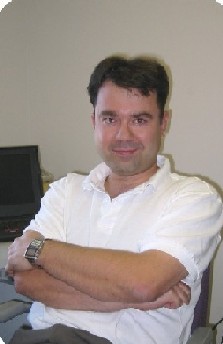
Pierre Duchesne is a Full Professor in the Department of Mathematics and Statistics at the University of Montreal . He serves as Professor-responsibility for the M.Sc. and Ph.D. in Statistics programs (2000-2004). His research focuses on applied statistics with emphasis on: Time Series Analysis (univariate and multivariate models, serial correlation testing, portmanteau statistics) Sampling Theory (robust estimation methods, calibration estimators) Multivariate Analysis (ARCH effects, vector autoregressive models, causality testing) Applications in Econometrics and Financial Econometrics His work combines theoretical development with practical implementation through: Wavelet-based diagnostic methods Simulation studies for model validation Software development (S-PLUS/SAS) for statistical analysis Collaboration with organizations like Statistics Canada and Canadian Journal of Statistics He has served as Associate Editor for journals including Computational Statistics & Data Analysis (CSDA) and Canadian Journal of Statistics (CJS/RCS) .
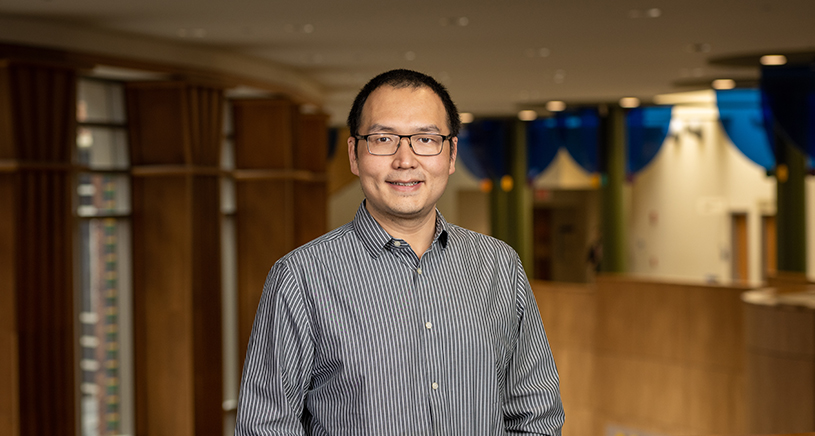
Jian Kang is a Professor and Associate Chair for Research at the University of Michigan School of Public Health , specializing in Biostatistics . His work focuses on developing advanced statistical methods for large-scale biomedical data , with applications to precision medicine , neuroimaging , and genomics . Education: PhD in Biostatistics, University of Michigan (2011) MS in Mathematics (Statistics), Tsinghua University (2007) BS in Statistics, Beijing Normal University (2005) Research Interests include Bayesian nonparametric methods , deep learning for medical imaging , ultra-high-dimensional variable selection , and graphical models for network inference . His 2025-2023 publications demonstrate expertise in Bayesian hierarchical modeling , spatial statistics , and machine learning for healthcare . Scientific Awards : Michigan SPH Excellence in Research Award (2025) ICSA President's Citation Award (2024) Statistics in Biopharmaceutical Research Best Paper (2023) Best Paper in Biometrics by IBS Member (2022) Fellow, American Statistical Association (2021) Grants include NSF-IIS (2021-2025) for BCI statistical learning , NIGMS (2020-2022) for metabolomics biomarker selection , NIDA (2020-2025) for imaging data analysis , and NIMH (2014-2025) for multidimensional neuroimaging methods . Labs and Teams develop Bayesian computational tools for neuroimaging and spatial transcriptomics , collaborating with institutions like Emory University and University of North Carolina.
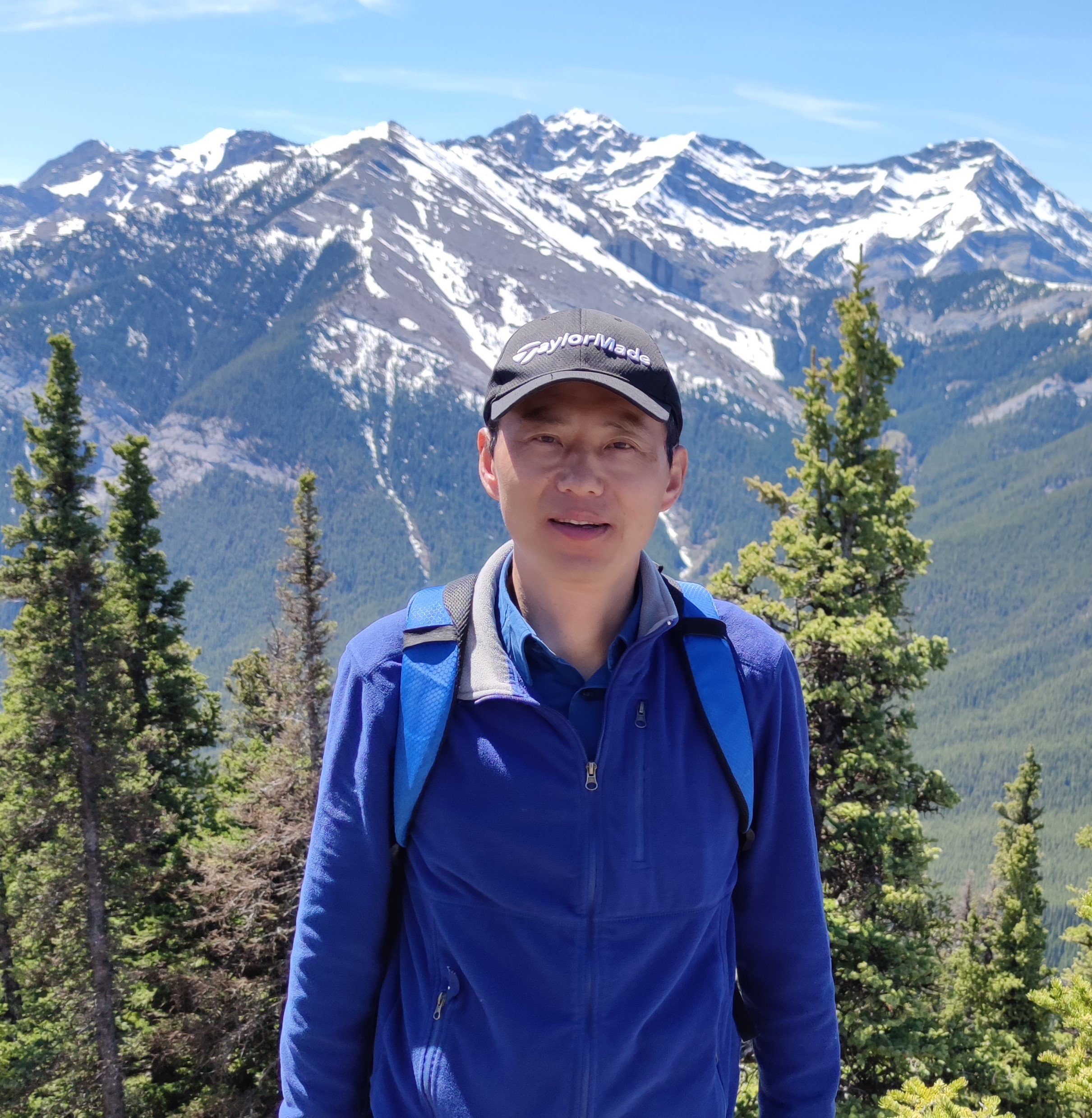
Bin Han is a Professor of Mathematics at the Department of Mathematical and Statistical Sciences , University of Alberta, Canada. He holds a PhD (1998), MSc (1994), and BSc (1991) in Mathematics from the University of Alberta, Chinese Academy of Sciences, and Fudan University, respectively. Research Interests: Computational Mathematics: High-order finite difference methods, numerical solutions of PDEs (Helmholtz, elliptic interface, Burgers' equations), and Fourier/wavelet-based algorithms. Applied Harmonic Analysis: Framelets/wavelets with applications in image processing, data sciences, and deep learning, focusing on directional and quasi-tight properties. Wavelet Theory: Construction of wavelets on bounded intervals for boundary value problems, Gibbs phenomenon analysis, and stability of refinable functions. Computer Aided Geometric Design (CAGD): Subdivision schemes, spline approximation, and isogemetric analysis. Article Trends: His recent work (2021-2022) emphasizes high-order finite difference methods for Helmholtz and interface problems, directional tensor product complex tight framelets for image processing, and quasi-tight framelets with balancing orders for robustness and sparsity. Scientific Awards: NSERC Postdoctoral Fellowship (1999-2000) Advising & Grants: He has supervised PhD students Qiwei Feng, Michelle Michelle, Ran Lu, and Chenzhe Diao. His research is supported by NSERC, Westgrid, Compute Canada, and MITACS.
Anna Breger is a Senior Postdoctoral Researcher at the Department of Applied Mathematics and Theoretical Physics (DAMTP), University of Cambridge, and a Research Fellow leading the iDeal project at the Medical University of Vienna. She holds the prestigious Hertha Firnberg Fellowship from the Austrian Science Fund, focusing on image quality assessment and medical imaging applications. Her work bridges theoretical mathematics with practical challenges in healthcare and cultural heritage preservation. Research interests include mathematical image processing for medical diagnostics, data representation, and cultural heritage restoration. She has pioneered AI-driven methods for analyzing historical sheet music and medical imaging data, collaborating with institutions like the Fitzwilliam Museum and Cambridge University Library. Key Projects: iDeal (Medical Image Quality), C2D3-funded Cultural Heritage AI, AIX-COVNET collaboration for X-ray analysis. Awards: Hertha Firnberg Fellowship, City of Vienna Promotion Award, L’OREAL Fellowship. Grants: C2D3 Accelerate, Austrian Science Fund. Publications emphasize advancing IQA metrics for medical images and developing clustering algorithms (visClust). She also contributes to interdisciplinary initiatives like Her Math’s Story and the AI for Cultural Heritage Hub (ArCH).
Prof. Dr. Haris Gačanin is a faculty member at RWTH Aachen University, affiliated with the Institute for Distributed Signal Processing under the College of Electrical Engineering. His research focuses on integrating machine learning with wireless communication systems, particularly in industrial IoT, edge computing, and network optimization. Current academic rank: Professor Contact: harisg@dsp.rwth-aachen.de Research Interests: Wireless systems, machine learning, signal processing, and network optimization. Key contributions include: Adaptive resource allocation in IIoT and vehicular networks AI-driven channel estimation and feedback mechanisms Security-oriented emitter identification via metric learning Federated/transfer learning for edge environments Hardware-efficient deep learning models for mmWave and THz communications Methodological Focus: Combines reinforcement learning, attention mechanisms, and robust neural architectures with practical implementations on FPGA and vehicular systems.
Dr. HanQin Cai is the Paul N. Somerville Endowed Assistant Professor in the Department of Statistics and Data Science at the University of Central Florida (UCF), also serving as Director of the Data Science Lab. He holds a joint appointment with the Department of Computer Science. His research focuses on theoretical and algorithmic foundations of mathematical optimization, data science, and machine learning, with emphasis on non-convex algorithms, adversarial attacks, signal/image processing, and deep learning integration. He has secured NSF grants totaling over $2.6M, including a $121K single-PI grant and a $2.49M co-PI grant. His work has been recognized with the UCF OSCaR Award (2025) and IEEE Senior Member status (2024). Education: PhD in Applied Mathematical and Computational Sciences from University of Iowa (2018), with M.S. in Mathematics (2014) and M.C.S. in Computer Science (2017). Previously served as a Postdoc at UCLA Mathematics Department under Dr. Wotao Yin. Research highlights include: query-efficient zeroth-order optimization, robust signal processing with corrupted data, adversarial attacks on neural networks, and tensor-based methods for high-dimensional data analysis. His recent publications explore advanced techniques in matrix recovery, tensor decompositions, and explainable AI. Grants & Awards: NSF DMS-2304489 (2022–2025), NSF DUE-2321986 (2024–2029), UCF OSCaR Award, IEEE Senior Membership. Labs & Teams: Directs UCF's Data Science Lab, collaborates across disciplines in statistics, computer science, and engineering.
Dr. Mingyan Li is an Adjunct Research Fellow at The University of Queensland's School of Electrical Engineering and Computer Science. Their research focuses on advanced imaging and sensing technologies with applications in biomedical engineering, particularly in MRI system development, RF coil design, and medical signal processing. They hold a PhD from The University of Queensland (2015). Research interests include high-field MRI systems, rotating RF coil technologies, MRI-Linac integration, and electrical properties tomography (EPT). Key contributions include innovations in MRI-Linac distortion correction, RF shielding for SAR reduction, and deep learning approaches for cardiac arrhythmia classification. Publications span MRI hardware optimization, image reconstruction algorithms, and biomedical signal analysis. Collaborations include work on metamaterial-inspired RF shielding and multi-modal antenna systems for body MRI.
Miroslaw Bober is Professor of Video Processing at the University of Surrey, where he joined in 2011. He leads the Visual Media Analysis team within the Centre for Vision, Speech and Signal Processing (CVSSP) in the School of Computer Science and Electronic Engineering. His extensive industry experience includes 15 years as General Manager of the Mitsubishi Electric R&D Centre Europe and Head of Research for its Visual & Sensing Division. BSc and MSc in Electrical Engineering from AGH University of Science and Technology, Krakow, Poland (1990) MSc in Machine Intelligence with distinction from Surrey University (1991) PhD in Computer Vision from Surrey University (1995) Professor Bober's research focuses on novel techniques in signal processing, computer vision and machine learning with applications in industry, healthcare, big-data and security. His expertise particularly lies in image and video analysis and retrieval, including visual search, object recognition, and analysis of motion, shape and texture. His algorithms for shape analysis, image/video fingerprinting, and visual search are considered world-leading and have been selected for ISO International standards within MPEG, with applications used by organizations like the Metropolitan Police. His recent publication trends show a strong focus on hybrid network architectures, scene graph generation, medical imaging applications, and augmented reality publishing systems. His work spans both theoretical advancements in computer vision and practical implementations addressing real-world challenges in media, healthcare, and security domains. The research demonstrates a consistent pattern of bridging academic innovation with industrial applications, particularly in visual search technology and media analysis. Presidential Award for strengthening the TV business in Japan via innovative 'Visual Navigation' content access technology (2010) Mitsubishi Best Invention Award for Image Signature Technology (2008) Professor Bober serves as Programme Director for the MSc in Multimedia Signal Processing and Communications and holds various teaching and mentoring roles. He has secured over 30 research and industrial grants totaling more than £16M, including the BRIDGET FP-7 project (5.28 M€) as coordinator and PI, and the CODAM project (£1.05 M) as PI. His work with the BBC, Huawei, and other industry partners demonstrates strong industry-academia collaboration. As chair of MPEG technical work on Compact Descriptors for Visual Search (CDVS) and Compact Descriptors for Video Analysis (CDVA), Professor Bober leads international standardization efforts. His Visual Media Analysis team develops cutting-edge visual search and media analysis algorithms with applications across broadcast, security, and healthcare domains.
Jayneel Parekh is a Postdoctoral Researcher in the MLIA (Machine Learning and Artificial Intelligence) team at ISIR (Institut des Sciences et Industries du Réel), Faculty of Science, Sorbonne University, working with Prof. Matthieu Cord. His research focuses on understanding and enhancing large multimodal models, with applications across audio, visual, and multimodal domains. Parekh completed his PhD at LTCI, Telecom Paris under Prof. Florence d'Alche and Prof. Pavlo Mozharovskyi, researching neural network interpretability applied to image and audio data. He earned his undergraduate degree in Electrical Engineering from IIT Bombay, where he worked with Prof. Preeti Rao and Prof. Yi-Hsuan Yang on Speech-to-Singing conversion. His research spans neural network interpretability, audio processing, computer vision, and multimodal models, with emphasis on explainable AI. His work demonstrates a consistent trajectory from foundational audio/image interpretability methods to cutting-edge large multimodal model analysis, showing increasing complexity and impact across NeurIPS, ICML, and ICCV publications. L2I paper awarded 2nd prize for STIC Best Scientific Contribution 2023 Top Reviewer at NeurIPS 2023 Parekh actively contributes to the academic community through workshop organization (ICCV on Explainable Computer Vision, ELLIS Unconference on Robustness/Fairness/Explainability) and presentations at institutions including IIT Jodhpur, Deezer Research, and IBM Research. His collaborative network spans MPI Informatics, TU Darmstadt, TU Munich, and Télécom Paris.
Shujuan Mao is an Assistant Professor in the Department of Earth and Planetary Sciences at the University of Texas at Austin, part of the Jackson School of Geosciences. She holds a B.S. from Peking University, a Ph.D. from MIT, and conducted postdoctoral research at Stanford University and the Institut des Sciences de la Terre in France. Her research focuses on environmental seismology, hydrogeophysics, and geothermal energy, with an emphasis on understanding subsurface fluid dynamics using seismic interferometry. Key areas include groundwater monitoring, carbon sequestration, and volcanic unrest. She leads the 'Seismo4D' research group, which develops cutting-edge seismic techniques for 4D subsurface imaging. Mao's work spans academic contributions (over 15 peer-reviewed articles), student supervision (two current advisees), and international collaborations. Her group actively recruits PhD students and postdocs interested in environmental seismology and energy transition challenges. Her mailing address is Jackson School of Geosciences, Austin, TX 78712-1692, with contact via smao@jsg.utexas.edu or shujuan.c.mao@gmail.com.
Dr. Mohamed Soliman is the William C. Miller Endowed Professor at the University of Houston’s Cullen College of Engineering, Department of Petroleum Engineering. He holds a Ph.D. in Petroleum Engineering from Stanford University, complemented by an M.S. and B.S. from Stanford and Cairo University respectively. His research focuses on hydraulic fracturing of unconventional reservoirs, waterless fracturing using shock waves, and advanced numerical simulation techniques. He has authored over 250 technical papers and holds 35 patents, with notable works on shale gas transport, dead oil viscosity modeling, and plasma stimulation technologies. Dr. Soliman is a Distinguished Member of the Society of Petroleum Engineers (SPE) and a Fellow of the National Academy of Inventors. He has received the Gulf Coast 2020 Distinguished Achievement Award for Petroleum Engineering Research. His work bridges theoretical models with practical applications, such as the development of machine learning tools for reservoir analysis and innovative methods for fracture closure detection using wavelet transforms. His teaching spans core petroleum engineering courses including PETR 1111 (Introduction to Petroleum Engineering), advanced production operations (PETR 6372), and well completion stimulation (PETR 5397). He actively mentors graduate students, with current advisees Ibrahim Eltaleb, M. Awad, and Fatmir Likframa. His research group collaborates on projects funded by industry and government agencies, focusing on topics like microwave-assisted heavy oil recovery and geothermal reservoir characterization. Dr. Soliman’s lab develops cutting-edge tools for analyzing fracturing pressure data and interwell connectivity through signal processing. Key collaborations involve experimental validation with institutions like the University of Houston’s Advanced Energy Research Laboratory. His recent work emphasizes sustainable energy solutions, including critiques of carbon capture limitations and innovative plasma-based stimulation techniques to enhance reservoir permeability without water use.
Dr Tianning Li is a Lecturer in Computing at the University of Southern Queensland's School of Mathematics, Physics and Computing. Affiliated with the School of Agriculture and Environmental Science, their research focuses on biomedical engineering, signal processing, and machine learning applications in clinical settings. Dr Li holds a PhD from USQ, an MAccFin from Adelaide, and a BISM from Nanjing. Core research interests include EEG signal analysis for anesthesia monitoring and epilepsy detection, with emphasis on developing novel signal processing techniques like spectral entropy analysis, synchroextracting transforms, and federated learning approaches. Their work bridges machine learning innovations with clinical diagnostics, addressing challenges in real-time medical signal interpretation and healthcare data efficiency. Recent publications (2021-2025) emphasize advancements in anesthesia depth assessment algorithms, seizure prediction methodologies, and lossless signal compression. Research trends reflect a strong focus on integrating neural networks (CNN-LSTM, 1D CNN) with traditional signal analysis frameworks to enhance clinical decision-making accuracy. No scientific awards are listed, but Dr Li maintains active research collaborations through affiliations with multiple departments. Supervision activities are not detailed in available records, though their work likely involves student contributions to biomedical computing projects. ORCID: 0000-0001-5142-8654 .
Dr. Yu (Chelsea) Jin is an Assistant Professor in the Department of Industrial Engineering at the University at Buffalo, specializing in quality inspection, predictive modeling, and data analytics for advanced manufacturing systems. She holds a PhD in Industrial Engineering from the University of Arkansas, an ME from the University of Michigan, and dual BS degrees in Network Engineering and Finance from Jinan University. Her research focuses on integrating machine learning and physics-based models to optimize manufacturing processes, such as additive manufacturing, PCB assembly, and pharmaceutical distribution systems. She has developed frameworks like ReflowNet for reflow oven optimization and physics-informed neural networks for thermal profile prediction. Her work emphasizes both theoretical advancements and practical applications in smart manufacturing and healthcare logistics. Dr. Jin's recent publications highlight contributions to generative AI for knowledge retrieval, AGV system optimization, and multi-source transfer learning for pandemic modeling. She actively collaborates with industry partners to bridge academic research and real-world manufacturing challenges.
Tamer Ölmez is a Professor in the Department of Electronics and Communication Engineering at Istanbul Technical University (ITU), College of Engineering, where he conducts cutting-edge research in biomedical signal processing, brain-computer interfaces (BCI), and deep learning applications in medical systems. His work bridges engineering and neuroscience, with a strong focus on EEG-based motor imagery classification, medical image analysis, and embedded deep learning systems. His research interests include motor imagery EEG signal processing , brain-computer interfaces , feature extraction , deep neural networks , classification algorithms , and medical image analysis . He applies machine learning and signal processing techniques to improve diagnostic accuracy and system performance in neuroengineering and healthcare technologies. The recent publications highlight a consistent trend in leveraging divergence-based deep neural networks , convolutional neural networks , and small-sized models for efficient and accurate classification in BCI and medical imaging. His work emphasizes performance improvement with reduced channel counts, noise elimination, and real-time applicability in embedded systems. Scientific Awards: Excellent Oral Presentation Certificate, June 1, 2015 Advising and Grants: He is actively supervising 26 theses in progress, indicating a strong mentoring role. He has led multiple funded research projects, including those funded by ITU’s Technology Transfer Office (TTO) and Scientific Research Projects (BAP), such as 'Classification of Medical Images with Deep Learning Method in Embedded Systems' and 'New Approaches to Finding Optimal Protein Folding'. Labs and Research Teams: While specific lab names are not mentioned, his collaborative fingerprint and project leadership suggest he leads or is a key member of a research group focused on biomedical signal processing, neural networks, and intelligent systems at ITU.
Alain Oustaloup is a Professor in the AUTOMATIC CONTROL research group at Université de Bordeaux , leading the CRONE team. His work focuses on fractional calculus , system identification , and control theory , with applications spanning thermal systems , epidemiology , and automotive engineering . Expertise : Fractional Order Modeling, CRONE Control, Thermal Diffusion Analysis Key Collaborations : Université de Lorraine, CNRS, STMicroelectronics His research includes fractional differentiation models for continuous-time system identification, non-integer power models for viral spread (e.g., COVID-19 ), and infinite state approaches for complex system representation. Recent publications emphasize thermal modeling and fractional prefilters for MIMO systems. Applications of his work extend to automotive suspensions (CRONE method), battery diagnostics , and medical device modeling . Collaborations with institutions like CRAN (Nancy) and IMS-Bordeaux highlight his interdisciplinary impact.