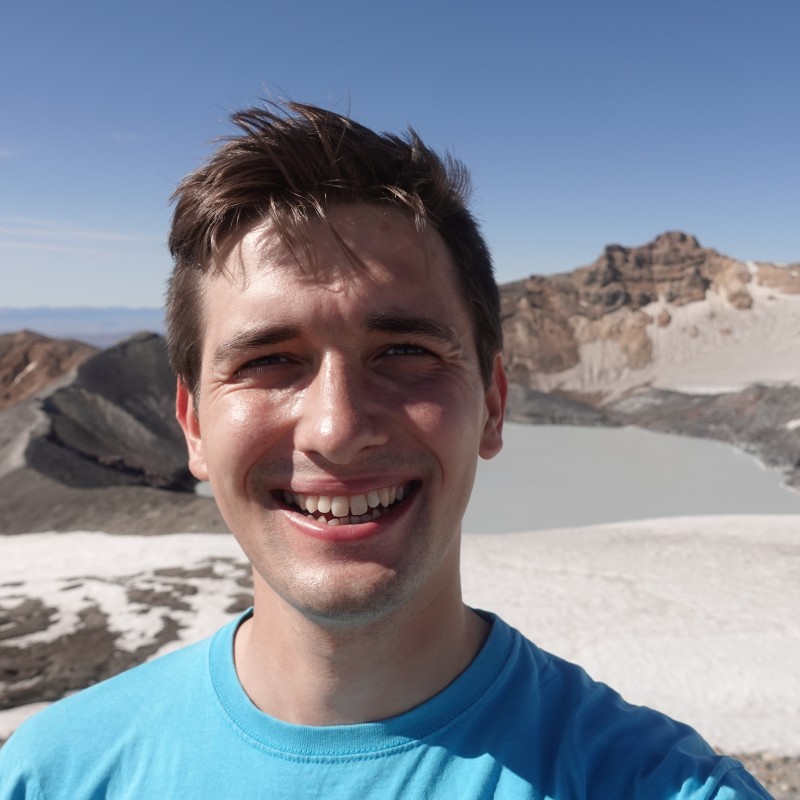
Tomáš Skřivan serves as a Research Fellow at the Hoskinson Center for Formal Mathematics , Carnegie Mellon University. His work bridges formal mathematics with practical scientific computing through the development of the SciLean library in Lean 4, targeting enhanced reliability in machine learning and simulation software. Skřivan's research spans interdisciplinary domains with core emphases on: Physics-based simulation of fluid dynamics and wave phenomena Computer graphics algorithms for light transport and rendering Formal verification techniques applied to numerical methods Mathematical modeling of viscoelastic materials His publication trajectory since 2016 reveals evolving expertise from computational fluid dynamics (water wave simulation, viscoelastic modeling) toward formal methods in scientific computing, consistently merging theoretical rigor with practical implementation. Recent work on SciLean represents a strategic pivot toward verified software foundations. As a key contributor to the Hoskinson Center's mission, Skřivan collaborates on projects leveraging proof assistants to eliminate errors in scientific code. The center, established through Charles Hoskinson's support, pioneers mathematically guaranteed correctness in computational science through formal verification frameworks.
Nizamettin Aydın is a Professor in the Department of Computer Engineering at Istanbul Technical University, Faculty of Computer and Informatics. He has previously held academic and administrative positions at Yıldız Technical University, Bahçeşehir University, and Gebze Institute of Technology. His research spans bioinformatics, artificial intelligence, and speech and signal processing, with a focus on wavelet transforms and biomedical applications. PhD, University of Leicester (1990–1994) MS, Yıldız University, Electronics and Communication Engineering (1985–1987) BS, Yıldız University, Electronics and Communication Engineering (1980–1984) His research interests include bioinformatics, artificial intelligence, speech and signal processing, wavelet transforms, and deep learning applications in biomedical and financial domains. He actively applies machine learning and AI techniques to problems in healthcare, such as Alzheimer’s disease and breast cancer analysis, as well as in financial forecasting and NFT systems. The recent publications (2024–2025) reflect a strong trend in interdisciplinary research combining AI with bioinformatics and signal processing. Key areas include embolic signal detection, gene network analysis in cancer, Alzheimer’s biomarker discovery, and financial modeling using deep learning. The use of advanced techniques like transfer learning, ensemble models, and tunable Q-factor wavelet analysis underscores his innovative methodological approach. Scientific awards include: IEE Institution Premium Award (2001) Nizamettin Aydın is an active IEEE member since 1993 and has supervised numerous research projects and publications. He has not received any obituaries or retirement notices, indicating ongoing academic activity. There is no mention of part-time status, and he holds a full professorship. No formal lab or team name is specified, but his collaborative research output suggests leadership in a research group focusing on intelligent signal processing and bioinformatics.
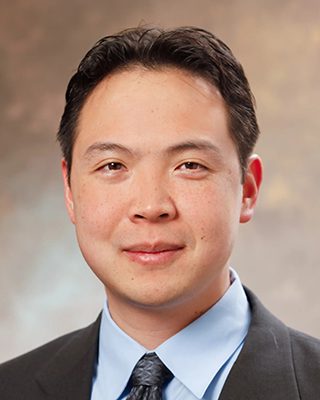
Dr. Gary B. Lamont is a Professor in the Department of Electrical and Computer Engineering at the Air Force Institute of Technology (AFIT), part of Air University. His work bridges computational intelligence, evolutionary algorithms, and defense systems engineering, with extensive applications in aerospace, cybersecurity, and autonomous systems. Ph.D., University of Minnesota Institute of Technology, 1970 Master of Science in Electrical Engineering, University of Minnesota Institute of Technology, 1967 Bachelor of Physics, University of Minnesota Institute of Technology, 1961 Dr. Lamont’s research centers on multi-objective evolutionary algorithms (MOEAs) , with applications in UAV swarm mission planning, network intrusion detection, image processing, and protein structure prediction. He has pioneered the use of evolutionary computation in military and defense contexts, including radar waveform design, satellite constellation planning, and autonomous agent behavior generation. His work often integrates swarm intelligence, artificial immune systems, and distributed optimization techniques. The recent publications highlight a strong trend toward military and defense applications of computational intelligence, particularly in electronic warfare, space surveillance, and cyber defense. His work frequently employs multi-objective optimization to balance competing constraints in real-world systems such as radar, UAV swarms, and network security architectures. Image processing and signal transformation using evolved algorithms also remain active areas, especially for defense imaging and compression. IEEE Fritz Russ Bio-Engineering Award, 2008 IEEE Senior Life Member, 2004 Eta Kappa Nu AFIT Teacher of the Year, 2002 WPAFB Professional Employee of the Year, 1981 Best Presentation Award, Institute of Navigation, 2008 BEST PAPER AWARD, Gameon North America '09 Best Paper Award Nominee, IEEE SSCI 2007 Dr. Lamont has advised numerous graduate students, including Jeremy Stringer, Mark Kleeman, and Dustin Nowak, many of whom have co-authored significant publications with him. His research has been supported by the U.S. Air Force and other defense agencies, enabling high-impact work in autonomous systems, network security, and optimization under uncertainty. He has led projects involving multi-agent systems, self-organized swarms, and parallel evolutionary algorithms, often in collaboration with institutions like Wright-Patterson Air Force Base. His research group at AFIT operates at the intersection of computational intelligence and defense engineering, focusing on self-organized UAV swarms , evolutionary intrusion detection systems , and adaptive signal processing . The team utilizes high-performance computing environments and simulation platforms like Swarmfare to test swarm behavior and mission planning algorithms. The lab emphasizes software engineering discipline in AI systems, as seen in tools like jREMISA, and integrates biological metaphors such as immune systems and genetic algorithms into robust cyber defense frameworks.
Steven Fenton is a Senior Lecturer and Subject Area Leader in Engineering at the Department of Engineering & Technology, School of Computing and Engineering, University of Huddersfield. He holds a 1st Class Honours degree in Electronic & Information Engineering from the University of Huddersfield and has extensive industry experience in audio engineering, DSP, and embedded systems design. Current research focuses on low power systems, remote health monitoring, audio signal processing, and immersive audio technology. Active member of the Audio Engineering Society and Centre for Audio and Psychoacoustic Engineering. His work spans audio quality measurement , dynamic range optimization , and assistive technologies for the visually impaired. Recent publications highlight innovations in immersive audio mixing and ultra-low energy distributed monitoring systems. Scientific contributions include a Fellow of the Higher Education Academy and an h-index of 67. Available for PhD supervision in engineering and audio technology domains.
Müjdat Çetin is a Professor of Electrical and Computer Engineering and serves as the Robin and Tim Wentworth Director of the Goergen Institute for Data Science and Director of the New York State Center of Excellence in Data Science at the University of Rochester. He previously held faculty positions at Sabancı University and was a Research Scientist at MIT, with visiting roles at Boston University, Northeastern University, and MIT. Education: PhD in Electrical Engineering, Boston University, 2001 MS in Electrical Engineering, University of Salford, 1995 BS in Electrical Engineering, Boğaziçi University, 1993 His research lies at the intersection of signal processing, machine learning, and data science, with applications in biomedical imaging, radar, and brain-computer interfaces. He develops probabilistic and deep learning models for robust information extraction from noisy and complex data. His work emphasizes computational imaging, sparse representations, and multimodal data fusion. The recent publications reflect a strong trend toward integrating Bayesian methods and deep learning in imaging sciences, particularly in medical image reconstruction, neuroimaging analysis, and radar systems. His group actively explores transformer architectures, federated learning, and model-based deep learning for solving inverse problems in imaging. Scientific Awards and Honors: IEEE Fellow IEEE Signal Processing Society Best Paper Award IET Radar, Sonar and Navigation Premium Award Elsevier Signal Processing Best Paper Award Turkish Academy of Sciences Distinguished Young Scientist Award (GEBİP) ODTÜ Mustafa Parlar Foundation Research Incentive Award TÜBİTAK Career Award Boston University Best Engineering Research Award Professor Cetin has advised numerous PhD and Master’s students and led significant research grants in data science and imaging. He has served as a Senior Area Editor for IEEE Transactions on Image Processing and IEEE Transactions on Computational Imaging, and held editorial roles in several top journals. He has chaired major conferences including ICASSP, ICIP, and IVMSP workshops. He leads a multidisciplinary research group focused on data science and imaging, collaborating with neuroscientists and medical researchers. The team develops novel algorithms for brain-computer interfaces, medical image analysis, and remote sensing systems, often integrating machine learning with physical models of data acquisition.
Kranitis Nektarios is a Lecturer at the Department of Informatics and Telecommunications, National and Kapodistrian University of Athens. His research focuses on FPGA-based hardware architectures, space-grade computing, and image compression standards like CCSDS, with applications in satellite systems and reliable data processing. Primary affiliation: National and Kapodistrian University of Athens Department: Informatics and Telecommunications Research interests center on space-grade SRAM FPGAs , LDPC encoding , hyperspectral image compression , and software-based self-test methodologies for embedded systems. His work addresses high-speed data processing and fault tolerance in satellite communications. Key trends in his publications include CCSDS standard implementations , hardware accelerators for image compression, resilience to SEUs , and energy-efficient testing techniques for microprocessors. Topics span space systems , parallel computing , and digital circuit design .
Dr. Frederick Shic is a Professor of Pediatrics at the University of Washington School of Medicine and a Principal Investigator at Seattle Children's Research Institute. He also holds adjunct appointments in Computer Science & Engineering and Psychology at UW. His research integrates computer science, engineering, and developmental science to create innovative tools for understanding and improving outcomes for children with autism spectrum disorder (ASD) and other developmental conditions. Academic Affiliation: University of Washington (School of Medicine, Department of Pediatrics, General Pediatrics Division) Laboratory: Seattle Children's Innovative Technologies Laboratory (SCITL) Dr. Shic's expertise spans computational neuroscience, neuroengineering, and human-centered computing, with a focus on non-invasive technologies like eye tracking, functional near-infrared spectroscopy (fNIRS), and social robots. His work has been funded by the National Institute of Mental Health (NIMH), Institute of Education Sciences (IES), Simons Foundation, and Autism Speaks. Key contributions include: Development of interactive eye-tracking methodologies for joint attention assessment Investigation of physiological biomarkers (e.g., heart rate-defined sustained attention) in neurodiverse populations Creation of novel computational models for analyzing eye-tracking data Exploration of genetic contributions to attention through twin studies Application of social robots for in-home ASD interventions Analysis of spatiotemporal eye movement patterns as potential ASD biomarkers His academic journey includes: B.S. in Engineering and Applied Science from Caltech Ph.D. in Computer Science from Yale University Postdoctoral training at Yale Child Study Center under NIMH T32 program Prior roles: Associate Research Scientist at Yale, Software Engineer at Sony Interactive Studios, MRS Researcher at Huntington Medical Research Institutes Current research directions include: Standardization of clinical eye-tracking protocols through the International Society for Clinical Eye Tracking (ISCET) Development of accessible, technology-enhanced behavioral paradigms Investigation of reward and motivation mechanisms in ASD attention patterns Translation of EEG and eye-tracking findings into clinical applications
Marie LUONG is a researcher at Université Sorbonne Paris Nord specializing in image processing and analysis. She is currently preparing her HDR (Habilitation à Diriger des Recherches), a prestigious post-doctoral qualification in the French academic system that demonstrates research independence and eligibility to supervise PhD students. Her research focuses on two major interconnected domains: Image Quality Enhancement : Developing techniques inspired by Human Visual System mechanisms to address coding artifacts, noise, and resolution limitations Image Classification : Creating innovative methods based on sparse representation in transform domains to improve classification accuracy Dr. LUONG's methodological contributions include: Four methods for addressing coding artifacts with a proposed Blockiness Visibility Measure Six innovative denoising approaches combining anisotropic filtering and machine learning Three example-based super-resolution methods, two integrating denoising in a unified optimization framework Four classification methods leveraging sparse representation in wavelet domains Her research demonstrates significant practical applications in digital cinema technology and medical image diagnosis systems , translating theoretical advances into real-world solutions. Academic leadership and mentoring: Co-supervised seven completed PhD theses Currently supervising two ongoing doctoral projects
Nira Dyn is a Professor of Applied Mathematics at Tel Aviv University's School of Mathematics, where she has established herself as a leading researcher in geometric modeling and approximation theory. Her academic career spans decades of contributions to subdivision methods and computational mathematics, with a consistent focus on both theoretical foundations and practical applications in computer graphics and image processing. Research Interests Professor Dyn's primary research areas include Geometric Modeling , Subdivision methods , and Multivariate approximation theory , with significant contributions to Computer-Aided Geometric Design (CAGD) and Image Compression. Her current work centers on Nonlinear subdivision schemes and the Approximation of set-valued functions , representing cutting-edge extensions of classical approximation theory to handle complex geometric structures and uncertain data. These interests form a cohesive research program that bridges pure mathematical analysis with computational applications, particularly in handling geometric data through innovative subdivision techniques. Publication Trends Analysis of her recent publications reveals a strong emphasis on advancing subdivision methodologies beyond linear frameworks, with increasing focus on nonlinear schemes capable of handling complex geometries and set-valued data. Her work demonstrates consistent progression from foundational subdivision theory toward practical applications in image compression and geometric modeling, with notable contributions to metric-based approximation techniques. The publications showcase interdisciplinary reach spanning mathematics, computer science, and engineering applications, while maintaining rigorous mathematical foundations in approximation theory. Professional Activities While specific advising relationships and grant information aren't detailed in the available materials, Professor Dyn's extensive publication record in top-tier journals indicates active research leadership. Her collaborations span multiple institutions and disciplines, reflecting the interdisciplinary nature of modern geometric modeling research. The absence of explicit laboratory or team information suggests her work may be primarily theoretical or conducted through collaborative networks rather than a dedicated physical research space.
Jordy Timo van Velthoven is a researcher in the Department of Mathematics at the University of Vienna's Faculty of Mathematics. His office is located at Oskar-Morgenstern-Platz 1, Room 05.135 in Vienna, Austria. He teaches advanced seminars in Harmonic Analysis (course codes 510003 SE, 510004 SE, 510005 SE) for the 2024W, 2025S, and 2025W academic terms. His research focuses on Harmonic Analysis, Fourier Analysis, and Representation Theory of Lie Groups , with specific expertise in asymptotics of matrix coefficients, density conditions for coherent state subsystems, localisation of frames and Riesz bases, and multiparameter function spaces. His work bridges pure mathematics with applications in signal processing and functional analysis. Analysis of his recent publications reveals a strong emphasis on frame theory, coorbit spaces, and function space classifications across homogeneous groups. His collaborations span international institutions, with frequent work on density conditions, wavelet analysis, and Lie group representations. Key recurring themes include anisotropic spaces, discrete geometry in harmonic analysis, and operator theory applications. His scientific contributions have been published in top-tier mathematics journals including Annals of Mathematics , Journal of Functional Analysis , and Proceedings of the American Mathematical Society , though no specific awards or fellowships are documented in the provided materials. Van Velthoven actively mentors graduate students through his Harmonic Analysis seminars and supervises research projects. His work involves significant collaboration with prominent mathematicians like Führ, Voigtlaender, and Romero. Current research directions include extending density theorems to non-unimodular groups and developing molecular decompositions for quasi-Banach coorbit spaces.
Christy Jie Liang is an Associate Professor at the School of Computer Science, University of Technology Sydney (UTS), where she leads the Data Visualisation Research Lab in the Visualisation Institute. With extensive experience in both academic and industry settings, including appointments at IBM and Peking University, she has established herself as a leading researcher in data visualization and visual analytics. Dr. Liang earned her PhD in Data Visual Analytics from UTS, where she was awarded the University Medal with First Class Honours. Her educational background includes a Bachelor of Information Technology (First Class Honours) also from UTS. Professor Liang's research focuses on data visualization and visual analytics, with particular emphasis on information visualization, narrative visualization, and the application of these techniques to real-world problems. Her work spans multiple domains including finance, food safety, biomedical applications, smart cities, and social media. She has developed novel visualization techniques and owns five intellectual properties in this field. Her recent publications demonstrate a clear trajectory toward more sophisticated visualization techniques that integrate machine learning, with increasing focus on narrative visualization, user engagement across demographics, and practical applications in domains such as public health and education. The interdisciplinary nature of her work is evident in collaborations across computer science, behavioral science, and domain-specific applications. Dr. Liang has received significant recognition for her work, including: University Medal with First Class Honours from UTS Capital Markets CRC Honours scholarship Australian Postgraduate Awards As an educator, Professor Liang coordinates core subjects for Bachelor of Information Technology, Bachelor of Computer Science with Honours, Master of Interaction Design, and Master of Business Analytics programs. She has recently developed enterprise learning courses including short courses and micro-credentials in data visualization education. Her leadership extends to service roles as associate editor for JVLC and Journal Visual Informatics, program committee member for numerous conferences, and advisory board member for the Australian Computer Society and Peking University Medical Visualization Centre. Professor Liang leads the Data Visualisation Research Lab, which focuses on developing innovative visualization techniques and applying them to real-world problems. The lab maintains strong industry connections, with collaborations spanning government agencies, academic institutions, and commercial enterprises across multiple continents.