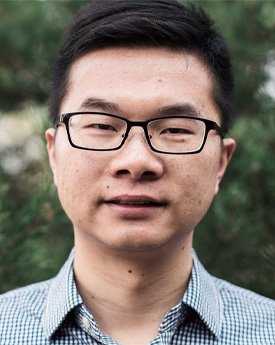
Simon Gross is an Associate Professor at the Faculty of Science and Engineering, Macquarie University, and a key member of the MQ Photonics Research Centre and Astrophysics and Space Technologies Research Centre. His research focuses on ultrafast laser inscription for photonic devices, with applications in telecommunications, astrophotonics, sensing, and information processing. He has led projects such as the Asgard/NOTT beam combiner and Shaping light - new frontiers in big fast data . Education: BSc/MSc in Electrical Engineering/Microelectronics from Vienna University of Technology Email: simon.gross@mq.edu.au Projects: 16 active/finished projects (2014–2025), including 3D Elastomeric Printer and Brillouin Spectrometer His 230+ research outputs span ultrafast lasers, waveguide fabrication, and astrophotonic applications. Recent work includes 3D waveguide optical interconnects (2025) and Asgard/NOTT nulling interferometry systems (2024). He has received the ARC DECRA fellowship for his contributions to photonics and laser technology.
Mingzheng Chen is a Post-Doctoral Researcher at KTH Royal Institute of Technology's Division of Electromagnetic Engineering and Fusion Science, specializing in advanced antenna systems and waveguide technologies for terahertz and millimeter-wave applications. His research program centers on three interconnected pillars: quasi-optical structures for beamforming, periodic electromagnetic structures (particularly glide-symmetric holey configurations), and additive manufacturing of metal RF components. This focus enables lightweight, low-cost solutions for satellite communications and next-generation wireless systems, with experimental validation forming a critical component of his methodology. Analysis of his 15 most recent publications reveals dominant themes in W-band and sub-THz antenna design (7 papers), additive manufacturing techniques (6 papers), and waveguide physics (5 papers), demonstrating consistent innovation in geodesic horn antennas and glide-symmetric structures across both journal and conference venues. Award recognition includes: 2023 Best Paper Award from National Science Review Best Paper Award at MTTW 2023 As an active educator, he serves as Teaching Assistant for Applied Antenna Theory (EI2400) while maintaining prolific output (50+ publications). His collaborative network spans European institutions, with particular emphasis on experimental validation of theoretical models. Current research leverages KTH's advanced manufacturing facilities for metal-only RF component development, targeting applications in geostationary satellite communications and 6G infrastructure.
John Verboncoeur is a Professor in the Department of Computational Mathematics, Science and Engineering at Michigan State University . His research spans plasma physics , radio frequency discharge modeling , and computational simulation methods , with a focus on: Multipactor breakdown mechanisms Electromagnetic and space charge effects Particle-in-cell (PIC) and PIC-MCC simulations Similarity and scaling laws for plasma systems Machine learning for RF device optimization Terahertz modulator design Recent publications highlight trends in: Non-sinusoidal RF field interactions Dielectric surface dynamics Microscale and high-pressure plasma discharges Algorithm development for self-consistent modeling Harmonic generation in plasma breakdown No further details on education, awards, students, or laboratory affiliations were extracted from available texts.
Dr. Lei Wang is an Associate Professor at the School of Engineering, Lancaster University, UK , since 2024. His career spans multiple prestigious institutions including Swiss Federal Institute of Technology (EPFL), KTH Royal Institute of Technology, and Hamburg University of Technology. He is an IEEE Senior Member and has secured substantial research funding in millimeter-wave and THz technology. Research Focus: Antenna theory, integrated arrays, OAM waves, and wireless propagation for 5G/6G and IoT applications. Recent Grants: Sony Research Award, EPSRC ECR International Collaboration Grant, European Space Agency ITT, Innovate UK Quantum CR&D. Scientific Recognition: Sony Research Award (2025) EuCAP-2023 Best Theory & Design Antenna Paper UCET-2020 Best Paper Award iWAT-2018 Best Poster Award Academic Contributions: Supervised award-winning students in IWS-2023, UCMMT-2022, and APS-2021. His research is supported by the Engineering of Microwaves, Terahertz and Light (E-MIT) group at Lancaster University.
Natalia Aseeva is Dean of the Faculty of Informatics, Mathematics and Computer Science at HSE University – Nizhny Novgorod campus, Head of the Department of Information Systems and Technologies, Associate Professor, and Academic Supervisor of the Software Engineering programmes (full-time and part-time). A member of the HSE Academic Council, she has been with the university since 2003. Education 2007 – Candidate of Sciences (PhD equivalent) in Fluid, Gas and Plasma Mechanics, Nizhny Novgorod Technical University 2001 – Candidate of Sciences (first degree), Nizhny Novgorod Technical University Research Interests Dr Aseeva’s research bridges two domains. In applied physics she investigates nonlinear wave dynamics, soliton theory and numerical simulation , publishing on soliton propagation in inhomogeneous dispersive media. In information systems she focuses on business-process modelling, enterprise architectures and IT-business alignment , developing visual modelling techniques and strategic alignment frameworks that are applied to economic clusters and digital-transformation projects. Publication Trends Her 2012-2022 output is split between high-impact physics journals (JETP Letters, Chaos, Physics Letters A) and leading business-informatics venues (Springer series on digital transformation, BIR conference proceedings). Collectively, the work advances both fundamental understanding of soliton dynamics and practical methodologies for diagnosing and correcting IT-business misalignment. Awards & Recognition HSE Young Faculty Support Programme – Category “Future Professoriate” (2009–2010) Teaching & Advising She currently teaches Business Process Modelling and Requirements Management and Information Systems Design to bachelor and master students across HSE Nizhny Novgorod, HSE Graduate School of Business and HSE Faculty of Economics. Student theses under her supervision cover enterprise modelling, IT project evaluation, and automation of administrative regulations. Laboratory & Leadership Roles As Dean she oversees the strategic development of one of HSE’s largest regional faculties; as Department Head she leads the Department of Information Systems and Technologies; and as Programme Academic Supervisor she guides the Software Engineering curricula delivered both on campus and in part-time formats.
Rimvydas Aleksiejūnas is an Assistant Professor at Vilnius University's Institute of Applied Electrodynamics and Telecommunications (IAET) and affiliated with the Department of Radiophysics . His work focuses on Wireless Network Technologies , Microwave Electrodynamics , and Antenna Theory . Research Interests : Radio Wave Propagation, GNSS Systems, MIMO Channel Modeling, Electromagnetic Compatibility, Antenna Design, Radio Interference Analysis Recent Publications : 15+ works on wireless channels, UAV detection systems, and microwave engineering from 2011-2022 Awards : Galileo Masters 2020 prize (with S. Rudys and P. Ragulis) Best lecturer of Physics faculty 2018
Kerlos Atia Abdalmalak serves as an Assistant Professor in the Department of Signal Theory and Communications at Charles III University of Madrid (UC3M), where he is an active member of the Radiofrequency, Electromagnetics, Microwaves and Antennas Group (GREMA). His research spans multiple engineering disciplines including Electronics, Telecommunications, and Physics, with particular emphasis on high-frequency antenna systems for diverse applications from 5G communications to space observation. Dr. Abdalmalak's research interests focus on advanced antenna design across microwave, millimeter-wave, and terahertz frequencies. His work encompasses dielectric resonator antennas, metasurface structures, circularly polarized systems, and integration of photonic technologies with traditional RF systems. He has made significant contributions to ultra-wideband antenna feeds for radio astronomy, implantable medical devices, satellite communications, and next-generation wireless networks. His innovative approaches often involve standing-wave feeding techniques, 3D printing for antenna fabrication, and novel electromagnetic modeling methods. Analysis of his publication record reveals a strong trajectory in electromagnetic theory and antenna engineering, with increasing focus on interdisciplinary applications connecting communications technology with fundamental physics concepts. His recent work explores analog electromagnetic models of gravitational fields, demonstrating the breadth of his research vision. The publications span high-impact journals including IEEE Transactions on Antennas and Propagation, Physical Review D, and Optica. Young Scientists' Award (URSI, 2017) Best PhD thesis in Aerospace (Madrid, 2022) Best PhD thesis in communications in Spain (IEEE, 2023) AP-S Postdoc Fellowship (IEEE, 2023) Dr. Abdalmalak leads multiple significant research projects with substantial funding, including the WiHEAT-CM-UC3M project (funded by COMUNIDAD DE MADRID, 2024-2026) and participation in several national and international initiatives related to 6G technologies and earth observation systems. His research group collaborates extensively with industry partners including SENER, INDRA, and HUAWEI, as well as with academic institutions worldwide. The GREMA research group provides a robust environment for advancing radiofrequency and electromagnetic technologies through both theoretical modeling and practical implementation.
Li-C. Wang is a Professor at the Department of Electrical and Computer Engineering, University of California, Santa Barbara, affiliated with the Robert Mehrabian College of Engineering. His research focuses on Artificial Intelligence for Design and Test, Data Analysis, and Machine Learning. Dr. Wang's work spans interdisciplinary domains including nanotechnology, biomedical engineering, and wireless networks. His recent publications highlight innovative approaches in: AI-driven design validation protocols Nanostructured biosensors for glucose detection Multi-RAT network interference analysis Advanced photonic waveguide systems Topological state manipulation in materials These works demonstrate his commitment to advancing engineering methodologies across multiple domains.
Professor Kanatas Athanasios is a distinguished faculty member at the Department of Digital Systems within the School of Information & Communication Technologies at the University of Piraeus. He currently serves as Director of the institutionalized Telecommunications Systems Laboratory and Director of the Postgraduate Program 'Digital Communications & Networks.' With a career spanning over three decades in telecommunications and wireless communications research, he has established himself as a leading academic in his field. Professor at Department of Digital Systems (2012-present) Associate Professor (2008-2012) Assistant Professor (2002-2008) Dean of School of Information & Communication Technologies (2013-2017) Member of University Senate (2008-2009, 2013-2017) Professor Kanatas received his Diploma in Electrical Engineering from the School of Computer Science and Engineering of the National Technical University of Athens in 1991, followed by an M.Sc. in Satellite Communication Engineering from the University of Surrey (UK) in 1992, and completed his PhD in Electrical Engineering from the National Technical University of Athens in 1997. His academic journey began with research positions at the National Research Foundation (1993-1994), SPACETEC Ltd as a technical project manager (1995), and researcher roles at the Mobile Radio Communications Laboratory and the Research University Institute of Communications and Computer Systems of the National Technical University of Athens. Professor Kanatas's research primarily focuses on satellite and wireless communications, with recent work increasingly exploring UAV-assisted networks, integrated sensing and communication systems, antenna design, and stochastic geometry applications in telecommunications. His research has evolved from traditional satellite communications toward cutting-edge areas including unmanned aerial vehicle networks, integrated sensing and communication systems, and advanced antenna technologies. The breadth of his work demonstrates a consistent trajectory from foundational communication theory toward increasingly complex and integrated wireless systems that address contemporary challenges in telecommunications. His extensive publication record shows a clear trend toward integrating sensing capabilities with communication systems, particularly through UAV networks. Recent work emphasizes stochastic geometry for network modeling, antenna array analysis in near-field scenarios, and energy-efficient communication protocols for IoT applications. The interdisciplinary nature of his research bridges traditional communication theory with emerging technologies, creating innovative solutions for next-generation wireless networks. Four best article awards at international conferences Senior Member of IEEE (since 2002) President of the Greek Chapter of IEEE Communications Society (1999) Elected representative for Region 15 in European Association on Antennas and Propagation (since 2021) Editor for IEEE Transactions on Wireless Communications, IEEE Transactions on Antennas & Propagation, and IEEE Communication Letters With over 200 publications in international scientific journals and conferences, and six books to his credit, Professor Kanatas has made substantial contributions to the field of telecommunications. His editorial roles with prestigious IEEE journals demonstrate his standing in the academic community. His leadership extends beyond research to academic administration, having served as Dean of the School of Information & Communication Technologies and as a member of the University Senate and Research Committee. As Director of the Telecommunications Systems Laboratory, Professor Kanatas leads a research team focused on cutting-edge telecommunications technologies. His laboratory serves as a hub for innovation in wireless communications, satellite systems, and emerging network architectures. The lab provides a collaborative environment for graduate students and researchers to explore the frontiers of communication technology, with particular emphasis on practical implementations and experimental validation of theoretical concepts.
Mihael Grbić is an Associate Professor at the Department of Physics , Faculty of Science , University of Zagreb , Croatia. He leads research at the laboratory for solid-state NMR and high-frequency measurements (Room 010). Graduated in 2005, earned PhD in 2011, and has been with the institute since 2006 Research Interests His work focuses on high-temperature superconductivity in cuprates and pnictides, quantum magnetism in low-dimensional systems, and heavy fermion materials . He specializes in solid-state NMR/NQR and microwave conductivity measurements to probe quantum criticality and phase transitions. Projects Quantum CoreS CeNIKS (Center for Advanced Research in Complex Systems) MicroS - Croatian Science Foundation INSPINOR Instrumentation Expertise Developed advanced equipment for NMR experiments including: Two-axis goniometer for precise crystal orientation Elliptical cylindrical resonant cavity systems Optimized NMR antenna-receiver chains Microwave surface impedance measurement tools
Rongqing Hui is a Professor in the Department of Electrical Engineering and Computer Science at the University of Kansas. His work bridges optical communication systems, photonic device innovation, and biomedical applications such as biosensors and bioimaging. Education : Ph.D. in Electrical Engineering (1993, Politecnico di Torino, Italy); M.S. (1988) and B.S. (1982) in Electrical Engineering from Beijing University of Posts & Telecommunications, China. Research Interests include: Optical/RF Measurement and Biosensors Novel Photonic Devices Optical Communication Systems Publication Trends highlight advancements in coherent lidar, distributed Raman amplification, quantum dot lasers, and digital subcarrier multiplexing for high-speed networks. His work often integrates nonlinear optics, femtosecond lasers, and signal processing. Awards : Miller Award for Distinguished Research (2002) Bellow Scholar Award for Distinguished Research (2012) He has authored two textbooks: Fiber Optic Measurement Techniques (2009) and Introduction to Fiber-Optic Communications (2019). His industrial experience spans roles at Bell-Northern Research, US Naval Research Laboratory, and Italian telecommunication institutes.
Anja Metelmann is an Associate Professor affiliated with the Karlsruhe Institute of Technology (KIT) and the University of Strasbourg's European Center for Quantum Sciences (CESQ). Her research focuses on the theory of engineered quantum systems, particularly nonreciprocal (unidirectional) systems and their applications in quantum computing and device engineering. She holds a PhD in Physics from the Technical University of Berlin (2012) and completed postdoctoral work at McGill University and Princeton University. She was awarded the prestigious Emmy Noether Fellowship during her tenure at the Free University of Berlin before joining KIT as a professor in 2022. Research Interests : Quantum Systems Engineering, Nonreciprocal Systems, Optomechanics, Quantum Noise Reduction, Quantum Feedback Control, Quantum Information Processing Advising : Mentoring PhD and Master's students including Sina Böhling, Iason Tsiamis, Lindsay Orr, Nicolas Díaz Naufal, Jacob Stupka, Suocheng Zhao Scientific Contributions : 15+ peer-reviewed articles on topics including quantum amplification, nonreciprocal signal routing, and reservoir-engineered quantum devices Her work is associated with the Quantum Systems Engineering Theory team at CESQ, which is part of the broader ISIS Institute for Supramolecular Science and Engineering at the University of Strasbourg.
Dr Florian Ströhl is a Senior Researcher (equivalent to Research Professor) at the Department of Physics and Technology , UiT The Arctic University of Norway in Tromsø. He leads a highly interdisciplinary program that bridges optics, biology and medicine, acting as Principal Investigator on the ERC Starting Grant LiBriNa , the RCN FRIPRO SOLIS project, and the EU MSCA MitoQuant consortium. Education: Ph.D. Biotechnology (2018), University of Cambridge, UK M.Sc. Advanced Optical Technologies with honours & distinction (2014), University of Erlangen-Nuremberg, Germany B.Sc. Medical Engineering with BMBF award (2012), University of Erlangen-Nuremberg, Germany Research Interests: Dr Ströhl’s work revolves around advanced optical system development , spanning the full chain from optical theory and photolithography to instrumentation and biomedical application . Core themes include light-sheet microscopy , mechanosensitive Brillouin nanoscopy , label-free super-resolution techniques , and integrated photonics . Application domains cover dementia research , kidney & liver pathology , cardiac imaging and sustainable aquaculture . Scientific Awards & Funding: 2025 ERC Starting Grant—20 million NOK 2023 RCN Innovation Grant—1 million NOK 2021 RCN FRIPRO Young Research Talent Grant—8 million NOK 2019 EU Horizon 2020 MSCA Grant—2.1 million NOK EMBO Fellow, Nano DTC Fellow, OPTICA Senior Member Grants, Teams & Mentoring: Dr Ströhl currently directs a diverse team of post-docs, PhD candidates and engineers in the Ultrasound, Microwaves and Optics research group. He actively welcomes master’s thesis students and visiting scientists. All projects are supported by Norwegian and European funding frameworks and emphasize open science , cross-disciplinary collaboration and public outreach via video tutorials and popular-science talks.
Kiyoto Takahata is an Associate Professor at the Faculty of Science and Engineering, Graduate School of Information, Production and Systems. His research focuses on silicon photonics, optical semiconductor devices, and high-speed optoelectronic integration. Primary research areas include silicon photonics, microwave photonics, and optical interconnection Specializes in electro-absorption modulator integrated distributed feedback lasers Developed membrane lasers and modulators on silicon platforms Recent publications highlight advancements in high-bandwidth photonic devices, with a focus on integrated optics for 100Gb/s+ data transmission. His work includes: Microring resonators for photonic computing MMI couplers for all-optical logic Membrane laser-modulator integration on Si Dispersion-tolerant modulation techniques He has contributed to: Flip-chip interconnection methods Low-voltage operation of optoelectronic devices Multi-lane photonic modules
Kazuhiko Tamesue is an Associate Professor at the Faculty of Science and Engineering , Waseda University , with a focus on Terahertz Communication , Artificial Intelligence , and IoT Network Security . His academic journey spans academia and industry, including long-term roles at Panasonic Corporation (1991–2009) and current leadership in advanced wireless systems since 2022. Research Areas : Telecommunications, Wireless Hardware, Data Science, Machine Learning, Atmospheric Sensing Key Contributions : Pioneering 300GHz OFDM transceivers, AI-driven GNSS spoofing detection, and dual-frequency THz radar for cloud physics Projects : NICT-funded terahertz networks (2023–2024), ultra-low-latency systems (2022–2024), and security-enhancing radar technologies His 15 most recent publications (2024–2008) demonstrate expertise in (1) terahertz propagation for NTN/HAPS platforms, (2) machine learning for security (LSTM, GANs), and (3) next-generation IoT protocols (LPWAN, distributed ledger). He holds 20+ patents in antenna design, direct-conversion receivers, and power line communication. As an IEEE and IEICE member, he contributes to standards in 5G/6G and EMC.