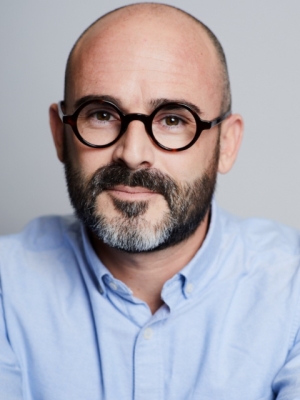
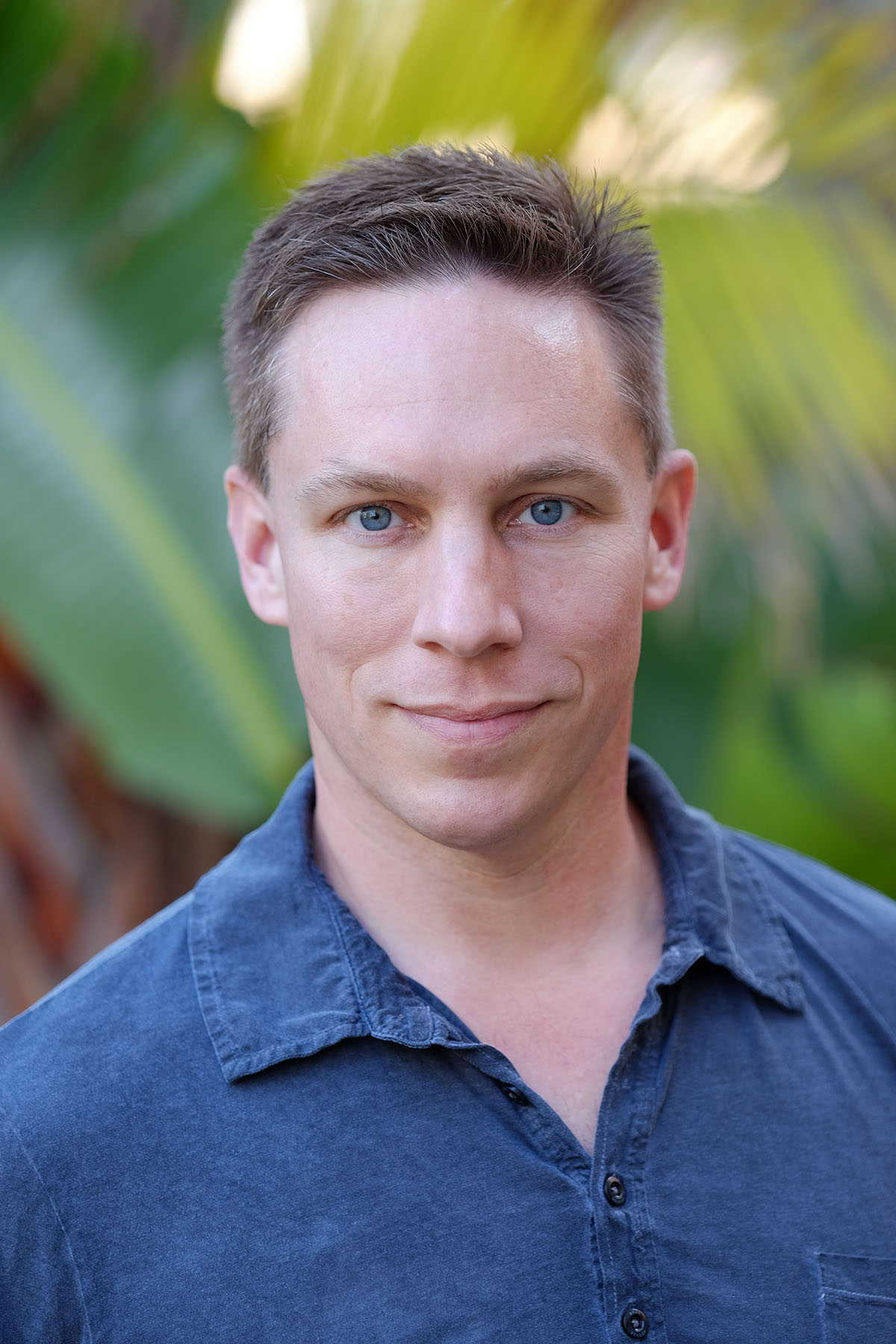
Prof. Dr. Romain Quidant is a Full Professor in the Department of Mechanical and Process Engineering at ETH Zürich, where he also serves as Head of the Institute for Energy and Process Engineering. His research focuses on nanophotonics, optomechanics, and plasmonics with applications in quantum optics, biomedical engineering, and thermal control systems. He leads a multidisciplinary team exploring light-matter interactions at the nanoscale, particularly in levitated nanoparticles and plasmonic therapies. Key research interests include quantum optomechanical systems, plasmonic nanothermometry, and targeted photothermal therapies. His work bridges fundamental physics with practical applications such as precision measurement, medical imaging, and energy-efficient materials. Recent studies highlight advancements in optical trapping techniques, thermal wavefront shaping, and robotic surgery guidance using fluorescent nanothermometry. Prof. Quidant’s publications showcase innovations in reconfigurable meta-surfaces, optofluidic platforms for high-throughput analysis, and adaptive thermal microscopy for brain imaging. His lab develops integrated systems for medical diagnostics, environmental sensing, and quantum-enabled technologies. These efforts have been applied to cancer treatment optimization and novel materials for energy systems.
Martin Norgren is a Professor at KTH Royal Institute of Technology, leading the Department of Electromagnetic Fusion Physics. His research focuses on electromagnetic inverse problems, including material characterization, biomedical imaging (e.g., brain current sources), environmental monitoring (e.g., snow and avalanche prediction), and smart grid technologies. He specializes in reconstructing object properties using electromagnetic measurements and has contributed to applications in healthcare, energy systems, and environmental science. His work involves advanced analytical and numerical methods such as mode-matching techniques, perturbation theory, and convex optimization. Notable projects include noncontact current measurement in power grids and transformer diagnostics using microwave radiation. Norgren teaches courses in electromagnetic field theory and electrical engineering design, emphasizing practical applications and interdisciplinary collaboration. Recent research trends highlight advancements in glide/twist symmetry-based metamaterial design, waveguide analysis, and inverse scattering techniques. His studies bridge fundamental physics with applied engineering, addressing challenges in energy infrastructure and medical diagnostics. As a department head, he oversees educational and research programs at KTH, fostering innovation in electromagnetism and fusion physics. His contributions to curriculum development include project-based courses integrating theory and hands-on design.
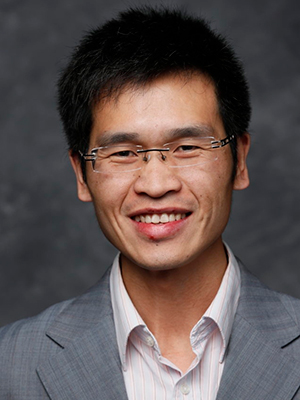
Dr. Shoufeng Lan is an Assistant Professor in the Department of Mechanical Engineering at Texas A&M University's College of Engineering, with affiliated appointments in Electrical & Computer Engineering and Materials Science & Engineering. His research focuses on advanced nanophotonics, exploring light-matter interactions across disciplines including quantum photonics, metamaterials, and 2D materials. Educational background includes a Ph.D. in Electrical and Computer Engineering with a Physics minor from Georgia Institute of Technology (2017), M.S. in ECE/Physics from University of New Mexico (2012), and dual B.S./B.E. degrees from Nankai University/Tianjin University (2007). Research interests span: Light-assisted control, sensing and manufacturing mechanics Plasmonic/metamaterial development Nonlinear/quantum/topological photonics Photon-induced chemical and biomedical synthesis His publications demonstrate consistent innovation in nanophotonics with recent focus on optical metamaterials, exciton control, and machine learning applications in photonics. Award highlights include the 2022 IAC Undergraduate Teaching Award and 2018 Sigma Xi Best Thesis Award. Current doctoral students include Yixin Chen and Sam Lin. Funded research includes NSF-supported work on Optical Hybrid Materials and DARPA-supported semiconductor manufacturing initiatives. Leads the Lán Laboratory (Lab for Advanced Nanophotonics) focusing on photon-matter interactions for energy and information technology applications.
Dr. Hayrullah Yıldız is an Assistant Professor in the Electrical and Electronics Engineering Department at Bağışent University, specializing in radar systems, vortex waves, and antenna technologies. He earned his PhD, Master's, and Bachelor's degrees in Electrical and Electronics Engineering from Middle East Technical University (METU) in 1996, 1988, and 1986, respectively. Education: PhD (1996): METU, Electrical and Electronics Engineering Master's (1988): METU, Electrical and Electronics Engineering Bachelor's (1986): METU, Electrical and Electronics Engineering His research focuses on electromagnetic theory, microwave engineering, and advanced radar systems, particularly vortex wave applications in beamforming and localization. Recent work includes software-defined radar signal generators, X-band and K-band radar systems with collimated vortex waves, and OAM multiplexing for Ka-band communication. The 15 most recent articles (1996–2024) highlight his expertise in collimated vortex waves , phased arrays , OAM multiplexing , and microwave imaging . Subfields span from beam steering to space-time coding and antenna array optimization . Projects (2019–2023) include Radar Target Localization , Phased Array Design , and Satellite Communication Beamforming . He teaches courses such as Electromagnetic Theory , Radar Systems , and Microwave Engineering .
Dr. Axel Lubk is a Group Leader at the Institute for Solid State Research (IFW Dresden) , specializing in advanced electron microscopy techniques for materials science. His research spans four key areas: (1) TEM method development (high-resolution imaging, tomography, holography, and in-situ techniques), (2) charge particle optics and scattering theory , (3) magnetic nanotextures (domain walls, skyrmions), and (4) plasmonics (mode hybridization in heterogeneous structures and semiconductor heterostructures). Dr. Lubk’s work focuses on three-dimensional magnetic texture analysis using electron holography and tomography, particularly in systems like skyrmion tubes , FeGe , and Cr2O3 thin films . He has pioneered techniques for vector-field electron tomography and phase retrieval under varying boundary conditions, advancing nanoscale magnetic imaging. His recent studies include plasmonic properties in AgAu nanosphere chains , thermoelectric multilayer systems , and topological insulators like NiRh2Sb and TaTMTe4 . Dr. Lubk has published extensively in high-impact journals such as Nature Communications and Advanced Materials , with a focus on TEM instrumentation and quantitative analysis . He frequently presents at international conferences like the International Microscopy Congress and European School of Magnetism , emphasizing applications in spintronics , quantum materials , and nanostructured systems . His contributions to holographic vector-field electron tomography and machine learning for spectrum-image data have set new standards in electron microscopy.
Kerri Cahoy is the Sheila Evans Widnall (1960) Professor in MIT's Department of Aeronautics and Astronautics, where she serves as Director of the Small Satellite Collaborative and Head of the Space Sector. Her work bridges electrical engineering and aerospace to advance space-based sensing and communication technologies through nanosatellite platforms. Her academic foundation includes: Ph.D. in Electrical Engineering, Stanford University (2008) M.S. in Electrical Engineering, Stanford University (2002) B.S. in Electrical Engineering, Cornell University (2000) Professor Cahoy's research integrates atmospheric sensing with exoplanet detection , pioneering laser communications and adaptive optics for space applications. She develops autonomy systems for nanosatellites to enable cost-effective Earth observation and astronomical missions, transforming how we study planetary atmospheres and distant worlds through innovative small satellite constellations. Her recent publications (2018-2020) demonstrate consistent focus on optical engineering for space systems, with core themes in CubeSat-based atmospheric tomography, laser communication terminal development, and wavefront correction techniques for exoplanet imaging. These works reveal interdisciplinary convergence of aerospace engineering, optics, and machine learning to solve extreme-environment challenges. Her scientific recognition includes: MIT Committed to Caring Award (2020) AIAA Associate Fellow (2018) MIT Outstanding UROP Mentor (2013) Cornell Co-Op Mentor of the Year (2008) As an educator, Cahoy champions hands-on satellite development through MIT's UROP program, with mentoring philosophy emphasizing technical rigor and mission-driven innovation. Her STAR Lab provides students direct experience in spacecraft design, laser communication testing, and orbital operations while securing research funding from NASA and aerospace industry partners for cutting-edge space technology development. She directs the Space Telecom, Astronomy & Radiation Lab (STAR Lab) and leads the Small Satellite Collaborative, driving projects in laser communication terminals, adaptive optics for space telescopes, and nanosatellite constellations for atmospheric science. These initiatives position MIT at the forefront of miniaturized space instrumentation and autonomous satellite operations.
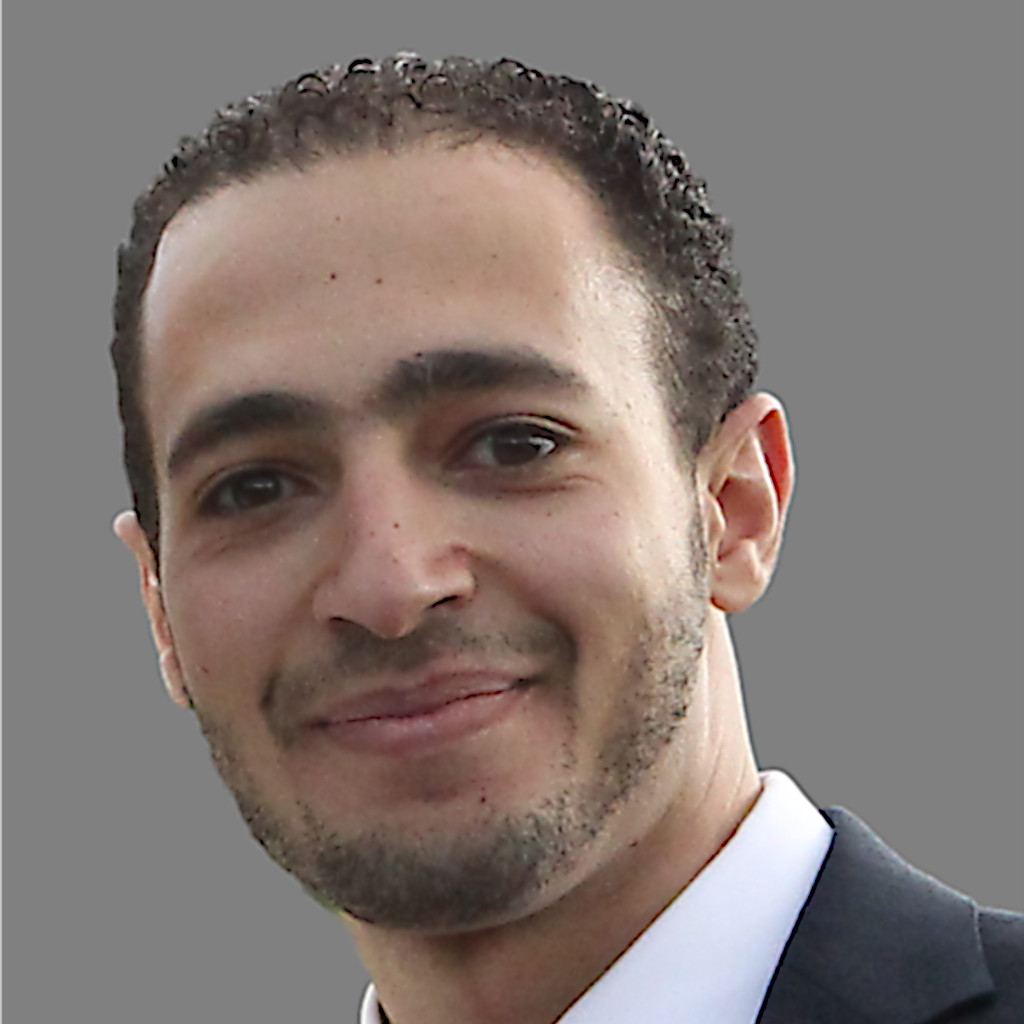
Osama Bilal is an Assistant Professor at the University of Connecticut (UConn), leading the We-Xite Lab focused on Wave Engineering through Extreme & Intelligent Materials. His research explores metamaterials for programmable wave control, combining mechanics, materials science, and advanced manufacturing. He holds a multidisciplinary background in aerospace engineering, computer science, and condensed matter physics from institutions including Caltech, ETH Zurich, and Cairo University. Prof. Bilal’s work bridges theory, simulations, and experiments to design multifunctional structures with unprecedented properties. Key areas include acoustic metamaterials, soft robotics, and topology optimization. His lab has developed 3D-printed ferroelectric programmable metamaterials and bistable systems for selective wave filtering. Notable recognitions include the ARL Postdoctoral Fellowship, ETH Zurich Postdoctoral Fellowship, and inclusion in the World’s Top 2% Scientists list. Research Groups: Active Faculty Member, Applied Mechanics & Advanced Materials Processing Lab Activities: Supervises students like Roshdy M., Samak M.M., and Evan, who have won multiple top awards in competitions. Recent publications highlight breakthroughs in flat band phononic metamaterials, auxetic metamaterial dynamics, and self-assembly of magnetic lattices. His team has presented at ASME IMECE and won best presentation awards at conferences like Phononics in Manchester. Ongoing projects aim to advance programmable materials for energy localization, flow control, and biomedical applications.
Prof. Dr. Thomas Taubner serves as a Professor at the Institute of Physics within the Faculty of Mathematics, Computer Science and Natural Sciences at RWTH Aachen University. He leads the IR Nano-Optics and Metamaterials research group, operating from Campus Melaten (Physics Building 26, Room A 104). His team focuses on cutting-edge nanophotonic technologies with applications in infrared optics and reconfigurable optical systems. Taubner's research spans nanophotonics, infrared spectroscopy, metamaterials, and phase-change materials, with particular expertise in plasmonic phase-change materials like In 3 SbTe 2 . His group pioneers techniques for dynamic control of light at the nanoscale through near-field microscopy, beam steering, and thermal emission manipulation. Key areas include 2D material characterization, phonon polariton engineering, and ultrafast optical phenomena in semiconductor heterostructures. Analysis of his recent publications reveals a dominant focus on programmable infrared nanophotonics using plasmonic phase-change materials. His work consistently demonstrates reconfigurable optical devices through direct laser writing, geometric phase metasurfaces, and real-space imaging of confined electromagnetic waves. The research shows strong interdisciplinary connections between condensed matter physics, materials science, and optical engineering, with practical applications in thermal management, sensing, and next-generation optical computing. Prof. Taubner actively supervises doctoral and master's students, regularly advertising thesis positions and doctoral openings through his research group. His team maintains advanced laboratory facilities for nanofabrication, near-field optical characterization, and ultrafast spectroscopy, supporting both fundamental research and technology development in infrared nanooptics.
Dr. Stephen Warren-Smith is a Senior Research Fellow at the Future Industries Institute, University of South Australia (UniSA), where he conducts cutting-edge research in optical fiber technology and photonics. He is affiliated with the Laser Physics and Photonic Devices Laboratories within UniSA STEM (Science, Technology, Engineering and Mathematics), and serves as a Research Degree Supervisor for graduate students. Dr. Warren-Smith's primary research interests span optical fiber technology, photonics, and biosensors, with a particular focus on developing novel fiber optic sensing platforms for biomedical and environmental applications. His work encompasses microstructured optical fibers, fluorescence sensing, and the integration of machine learning techniques for enhanced sensor performance. He has made significant contributions to the fields of harmonic generation in optical fibers, NV center-based quantum sensing, and multimode fiber applications. Analysis of Dr. Warren-Smith's recent publications reveals a strong trend toward developing sophisticated fiber optic sensing platforms with diverse applications. His work demonstrates increasing integration of advanced materials (like diamond with NV centers) and computational methods (particularly deep learning) to overcome traditional limitations in optical sensing. The research spans fundamental physics of light-matter interactions in fibers to practical applications in medical diagnostics, environmental monitoring, and industrial process control. A notable pattern is the development of multi-parameter sensing capabilities within single fiber platforms, enabling simultaneous measurement of various physical and chemical properties. Dr. Warren-Smith has secured significant research funding including ARC Future Fellowships (FT200100154), ARC Discovery Projects (DP190102896), and support from the Australian National Fabrication Facility (Optofab Node) utilizing Commonwealth and South Australian State Government resources. His research has received substantial citation counts, with several papers cited multiple times in Web of Science and Scopus. Dr. Warren-Smith leads research activities within the Laser Physics and Photonic Devices Laboratories at UniSA STEM. His team specializes in the design, fabrication, and characterization of advanced optical fiber devices, with particular expertise in microstructured optical fibers, suspended core fibers, and integrated photonic sensing platforms. The laboratory maintains strong connections with the Australian National Fabrication Facility (Optofab Node) for advanced device fabrication capabilities and collaborates extensively with institutions including RMIT University, University of Melbourne, University of Adelaide, and international partners in China.
T V Raziman is a Researcher in the Department of Mathematics at Imperial College London within the Faculty of Natural Sciences. He specializes in nanophotonics, focusing on light-matter interactions through theoretical models and simulations. His academic journey includes postdoctoral roles at Eindhoven University of Technology (2017–2021) and École Polytechnique Fédérale de Lausanne (2016–2017), and holds a PhD from EPFL and an Integrated MSc in Physics from IIT Kanpur. Raziman's research spans Optical Physics , Applied Mathematics , and Artificial Intelligence , with a strong emphasis on Nanophotonics . He explores cutting-edge topics like synthetic optical motion, retinomorphic machine vision, and topological optimization of nanostructures. His work bridges theoretical frameworks with practical applications in photonics and materials science. Key contributions include studies on semiconductor network lasers, surface lattice resonance lasers, and neural network-driven laser mode control. He collaborates within the Complex Nanophotonics Group , advancing interdisciplinary projects at the intersection of photonics and machine learning. No scientific awards are explicitly mentioned, but his prolific publication record highlights sustained innovation in photonics research. He has advised no recorded students, focusing primarily on independent and collaborative research efforts.
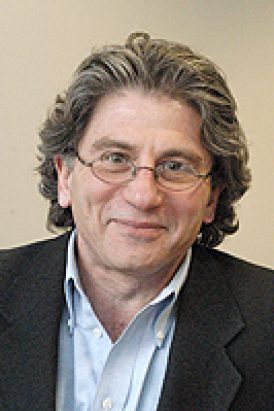
Roberto Merlin is a Peter A. Franken Collegiate Professor of Physics and Professor of Electrical Engineering and Computer Science (EECS) at the University of Michigan. Born in Buenos Aires, Argentina, he earned an M.S. in 1973 from the University of Buenos Aires and a Ph.D. in 1978 from the University of Stuttgart under Manuel Cardona. After postdoctoral work at the University of Illinois, he joined the University of Michigan Physics faculty in 1980 and holds a joint appointment in EECS since 2000. He has held visiting positions at institutions including Max-Planck-Institut FKF, Hong Kong University of Science and Technology, and ETH Zurich. Merlin's research focuses on experimental condensed matter physics, particularly ultrafast optical techniques like spontaneous and impulsive Raman spectroscopy. His work spans coherent phonon dynamics, metamaterials for subwavelength focusing, and light-induced phase transitions in quantum materials. Recent publications address magnetophononics, phonon Bloch oscillations, and radiation-less interference in evanescent-field plates, reflecting his interdisciplinary interests in optics, quantum mechanics, and materials science. His scientific contributions have been recognized by fellowships from the American Physical Society (1996), Optical Society of America (2000), and Simons Foundation (2013), along with the Frank Isakson Prize (2006) and Ellis R. Lippincott Award (2017). He has served in leadership roles for APS committees and conference chairs, and his editorial work includes Physical Review Letters and Solid State Communications.
A. Douglas Stone is the Carl A. Morse Professor of Applied Physics and Physics at Yale University and Deputy Director of the Yale Quantum Institute. His research focuses on theoretical condensed matter physics and optics, with contributions to quantum transport, laser physics, and mesoscopic systems. He holds a PhD from MIT (1983) and has been recognized with awards like the Willis Lamb Medal (2015) and Phi Beta Kappa Science Book Award (2014). Roles: Deputy Director, Yale Quantum Institute; Carl A. Morse Professor of Applied Physics and Physics Affiliations: Yale University; multiple collaborations with experimental groups in optics and photonics Research Interests: Quantum chaos, wave chaos in microcavities, coherent perfect absorption, steady-state ab initio laser theory (SALT), and mesoscopic physics. His work bridges theoretical advancements with experimental applications in lasers, quantum computing, and nanophotonics. Key Projects: Development of SALT for microlaser design, exploration of topological photonics, and studies on quantum measurement and error correction in quantum systems. Grants & Awards: Over 20 grants and fellowships, including NSF support and major prizes in laser science and condensed matter physics. Labs/Teams: Leads the Stone Research Group at Yale, collaborating on projects like random lasers and quantum coherence.
Professor Dan Sievenpiper is a faculty member at the University of California San Diego (UCSD) in the Jacobs School of Engineering, Department of Electrical and Computer Engineering. He joined UCSD in 2010 and leads the Applied Electromagnetics Group. His research focuses on artificial media, electromagnetic structures, and antennas, with applications in metamaterials, plasma physics, and topological insulators. He has over 200 publications and 80 patents, and has held roles including Vice Chair of the ECE Department and membership in the UCSD Admissions Committee. Education: B.S. and Ph.D. in Electrical Engineering from UCLA (1994 and 1999) Research Interests: His work spans artificial media, metamaterials, non-reciprocal devices, and time-modulated surfaces. Recent innovations include photonic topological insulators and plasma-based systems. His group explores applications in antennas, wireless communication, and biomedical neuromodulation. Awards: URSI Isaac Koga Gold Medal (2008) IEEE Fellow (2009) John D. Kraus Antenna Award (2019) Advising & Labs: He supervises a dynamic group of graduate students and postdocs, with over 30 alumni in academia and industry. The Applied Electromagnetics Group collaborates with institutions like HRL Laboratories and the Air Force Research Lab. Service: Past roles include Associate Editor of IEEE Antennas and Wireless Propagation Letters, and Chair of the IEEE Antennas and Propagation Symposium (2017).
Lina von Sydow is a Professor in Computational Science at Uppsala University's Department of Information Technology. She serves as Section Dean for the Mathematical-Computer Science Section since July 2023. Her academic journey includes becoming an Associate Professor in 2000, Senior Lecturer since 1997, and leading the Department of Information Technology from 2018 to 2023. PhD in Domain Decomposition Methods (1995, Uppsala University) Postdoctoral Fellow at Oxford University (1996-1997) Her research spans computational science with dual focuses on Computational Finance and Ice Sheet Modeling . In finance, she develops numerical methods for option pricing using PDEs, radial basis functions, and stochastic volatility models. In climate science, she contributes to ice sheet dynamics through full Stokes models and adaptive time-stepping approaches, particularly in simulating grounding line migration. Recent publications (2025) address gender disparities in IT education, including comparative analysis of admission trends and intervention studies to boost female enrollment. Earlier works (2020-2015) focus on high-order finite difference methods for financial derivatives, BENCHOP benchmarking projects, and preconditioning techniques for PDEs. Scientific awards include Excellent Teacher (2013) She actively collaborates on educational reforms, co-authoring studies like Gender-aware course reform in Scientific Computing (2013). Her leadership roles include Head of Department (2018-2023) and Section Dean (2023-present), influencing academic governance and interdisciplinary research. Labs and teams: Works with Uppsala University's Computational Science group, Elmer/ICE project collaborators (e.g., Per Lötstedt, Gong Cheng), and international partners in numerical finance and climate modeling.
Jeremy P. Bos is an Assistant Professor in the Department of Electrical and Computer Engineering at Michigan Technological University. He serves as a Faculty Advisor for the Robotic Systems Enterprise and is affiliated with professional societies including SPIE (since 2011), OSA (since 2003), and IEEE. His work bridges engineering and optical sciences, with a focus on imaging through turbulent environments. PhD, Electrical Engineering (2012), Michigan Technological University MS, Electrical Engineering (2003), Villanova University BS, Electrical Engineering (2000), Michigan Technological University Dr. Bos’s research spans atmospheric optics , statistical optics , and quantum optics , with applications in image and signal processing , autonomous vehicles , and industrial automation . His work addresses challenges in imaging through atmospheric turbulence, including speckle noise mitigation, phase compensation, and adaptive optics. He also investigates machine intelligence for optimizing reconstruction algorithms. Recent publications highlight trends in non-Kolmogorov turbulence modeling , multiframe blind deconvolution (MFBD) , and hybrid adaptive optics systems . His studies focus on long horizontal-path imaging, anisoplanatic conditions, and performance metrics for turbulence correction. Scientific recognition includes: NRC Research Associateship Program Award CLEO 2012 Maiman Student Paper sEMI-Finalist Dr. Bos previously led the Paulding Lights Activity and contributed to SPIE student leadership committees. His expertise extends to electromagnetic compatibility (EMC) and RF system design , informed by industrial roles at General Motors, Johnson Controls, and Lockheed Martin.