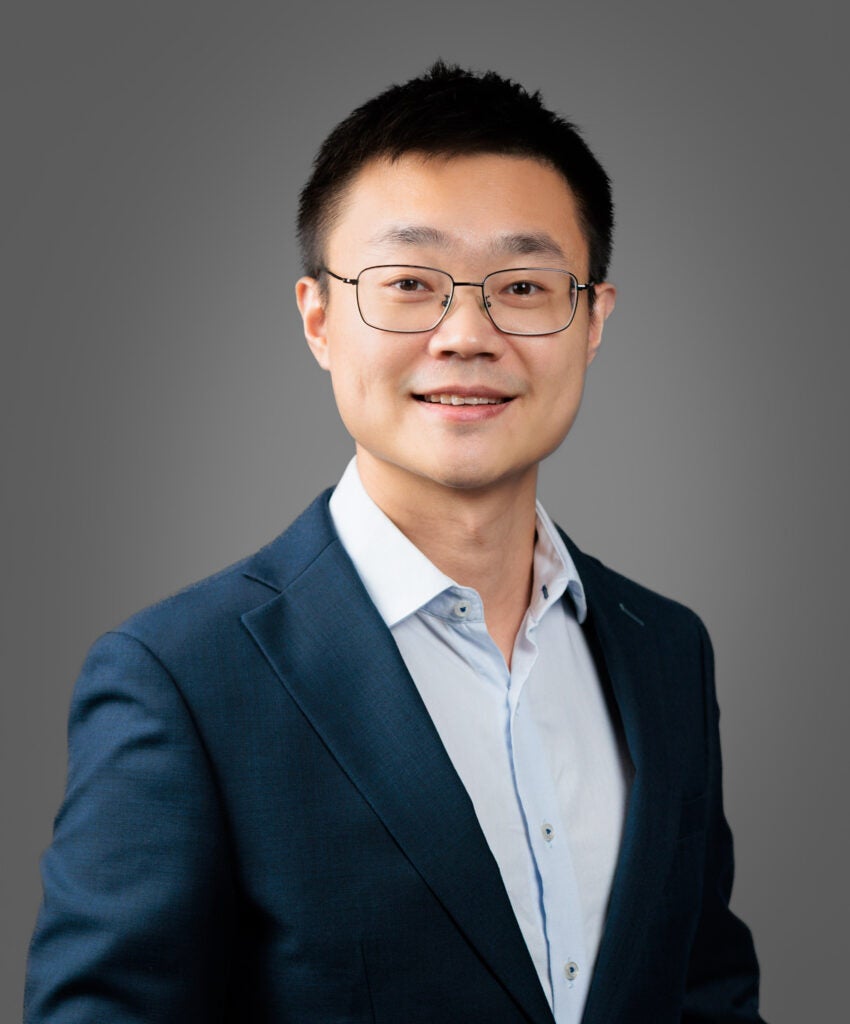
Di Zhu is a Presidential Young Professor in the Department of Materials Science and Engineering at the National University of Singapore (NUS). He holds a B.Eng. from Nanyang Technological University and M.Sc./Ph.D. from MIT, both in Electrical Engineering. His postdoctoral research at Harvard focused on lithium niobate integrated photonics and superconducting detectors. He previously worked as a research scientist and PI at A*STAR's Institute of Materials Research and Engineering (IMRE). Research Interests : Integrated quantum photonics, superconducting detectors, nonlinear optics, and nanofabrication. His group develops scalable quantum photonic devices using lithium niobate and superconducting materials, emphasizing applications in quantum computing, communication, and sensing. Awards : National Research Foundation (NRF) Fellowship Harvard Quantum Initiative (HQI) Postdoctoral Fellowship MIT Jin-Au Kong Thesis Award Advising & Recruitment : Actively recruiting postdocs, PhD students, and interns in areas like integrated photonics, quantum optics, and superconducting detectors. Positions include work on thin-film lithium niobate, quantum simulation, and microwave-optical transduction. Group website: dizhulab.org .
Yimin D. Zhang is an Associate Professor in the Department of Electrical and Computer Engineering at Temple University's College of Engineering, where he leads the Advanced Signal Processing (ASP) Lab. His research spans statistical signal processing, array processing, radar, wireless communications, and convex optimization. Research Interests: Dr. Zhang's work focuses on cutting-edge signal processing techniques including compressive sensing, sparse arrays, time-frequency analysis, and robust beamforming. These are applied to radar systems, satellite navigation, assisted living, and wireless networks. His research addresses core challenges in target localization, direction-of-arrival estimation, and spectrum-efficient joint radar-communication systems. The recent publications highlight a strong trend in exploiting sparsity, virtual arrays, and deep learning to enhance resolution and robustness in radar and communication systems. Themes include multi-frequency processing, low-rank matrix recovery, and optimized OFDM waveforms for dual-function systems. Scientific Awards: 2016 IET Radar, Sonar and Navigation Premium Award 2017 IEEE Aerospace and Electronic Systems Society Harry Rowe Mimno Award 2018 IEEE Signal Processing Society Young Author Best Paper Award (coauthor) Advising and Grants: Dr. Zhang has served as Principal or Co-Principal Investigator on over $6 million in research funding from the NSF, AFRL, ONR, and DARPA. While student advisees are not listed, his leadership of the ASP Lab suggests active mentorship of graduate researchers. He contributes extensively to the academic community as an associate editor for IEEE Transactions on Signal Processing and editor for Signal Processing journal, and serves on key IEEE technical committees. Labs and Teams: He directs the Advanced Signal Processing (ASP) Lab at Temple University, which focuses on developing novel algorithms for real-world applications in radar, communications, and navigation. Previously, he led the Wireless Communications and Positioning Lab and the RFID Lab at Villanova University.
Professor Kim Eun-hee is a faculty member in the Department of Defense Systems Engineering at Sejong University, specializing in advanced radar technologies and signal processing. Her work bridges theoretical research and practical applications in defense systems. Ph.D. in Mechanical Engineering (2004), KAIST M.Sc. in Engineering (1996), KAIST B.Sc. in Precision Engineering (1994), KAIST Her research focuses on radar system design, including airborne active phased array radar, automotive radar, broadband noise radar, and over-the-horizon radar. She explores waveform optimization, MIMO architectures, and signal processing algorithms to enhance radar performance in complex environments. Publications highlight her expertise in MIMO radar configurations, Doppler-insensitive waveforms, and machine learning integration for signal analysis. She leads industry-academic collaborations with organizations like Hanwha Systems and LIG Nex1. She contributes to technical committees, including the Sensor and Signal Processing Division of the Korean Society of Military Science and Technology. Her laboratory (Defense Radar Technology Laboratory) focuses on radar design, signal processing, and sensor integration.
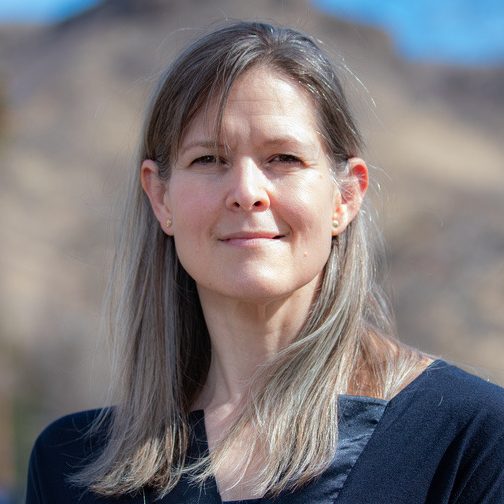
Jennifer K. Ryan is a Professor and Division Head for Numerical Analysis, Optimization & Systems Theory at the Department of Mathematics, KTH Royal Institute of Technology, Stockholm. She is affiliated with the Digital Futures Faculty, a cross-disciplinary research center jointly established by KTH, Stockholm University, and RISE Research Institutes of Sweden. Her research focuses on developing numerical schemes for extracting enhanced accuracy from simulations, with applications in imaging, data analysis, and fluid dynamics. Ryan’s work emphasizes improving computational efficiency through theoretical insights and practical algorithms. Her academic roles include teaching courses like Numerical Methods for Differential Equations II and supervising student projects in numerical analysis. She has contributed to the SIAC MAGIC toolbox, a software package for accuracy-enhancing filtering techniques. Ryan’s research group actively explores discontinuous Galerkin methods, SIAC filtering, and multi-resolution analysis, addressing challenges in computational physics and engineering. Her publications span high-order numerical methods, mesh adaptivity, and applications in plasma physics and wave equations. Projects include error estimation for boundary integral methods and developing filters for noisy data. Ryan collaborates internationally, contributing to both theoretical advancements and practical implementations in computational science.
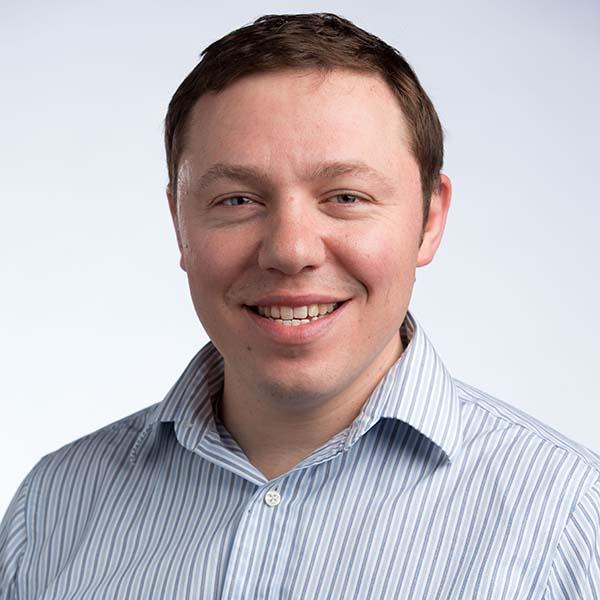
Vitaly Kheyfets, PhD, serves as Associate Professor in the Department of Pediatrics-Critical Care Medicine at the University of Colorado Anschutz Medical Campus School of Medicine, where he directs research at the intersection of pediatric critical care and cardiopulmonary pathophysiology with emphasis on pulmonary arterial hypertension (PAH). His primary research focuses on right ventricular adaptation to pulmonary hypertension, utilizing machine learning-driven multi-omics analysis to identify disease biomarkers and molecular networks. He pioneers computational fluid dynamics approaches for hemodynamic modeling in congenital heart conditions like Glenn physiology, while also investigating sleep oscillatory patterns as neurodegenerative biomarkers. His methodology integrates proteomics, spatial transcriptomics, and pressure waveform analysis to dissect vascular remodeling mechanisms. Publication trends reveal a strong emphasis on translating computational models into clinical applications for PAH prognostication, with recent work developing AI-cooperative diagnostic platforms and characterizing microvascular changes in the right ventricle. Cross-disciplinary collaborations span proteomics, imaging, and sleep neuroscience, demonstrating consistent innovation in both pulmonary hypertension and neurodegenerative disease biomarker discovery.
Prof. Xiaojing Huang is a Professor of Information and Communications Technology at the University of Technology Sydney (UTS), serving as Head of Discipline for SEDE Communications and Electronics within the School of Electrical and Data Engineering. He leads the Mobile Sensing and Communications program at the Global Big Data Technologies Centre. With over 30 years of experience, he has authored over 300 publications and 31 patents, focusing on wireless communications, signal processing, and antenna technologies. Education: PhD (Electrical Engineering, Shanghai Jiao Tong University, 1989). Previous roles include Principal Research Scientist at CSIRO (2009-2014), Associate Professor at University of Wollongong (2004-2009), and key industry roles at Motorola and Shanghai Yang Tian Science and Technology Corporation. Research interests include full-duplex wireless systems, millimeter-wave and terahertz communications, massive antenna arrays, and mixed-signal processing platforms. His work on the CSIRO Ngara backhaul system earned multiple awards, including the 2012 CSIRO Chairman's Medal and Australian Engineering Innovation Award. Recent grants include $4.2M (AUD) for projects like 'Radio Frequency Camera for Radar Imaging' (ARC DP220101158) and 'Terabit mm-Wave Backbones for Integrated Space Networks' (ARC DP200101532). He has supervised numerous students in high-speed communication systems and full-duplex technologies. Awards include: 2013 CSIRO Leadership Achievement Award, 2012 Australian Engineering Innovation Award, and IEEE Sumner Award (nominee). Active in IEEE standards (802.11/802.15) and collaborations with institutions like Tsinghua University.
Suzanne M. Carbotte is a Bruce Heezen Lamont Research Professor at the Lamont-Doherty Earth Observatory (LDEO) and affiliated with the Columbia Climate School . She holds a PhD in Marine Geophysics from the University of California, Santa Barbara (1992), an M.Sc. in Geophysics from Queen's University (1986), and an H.B.Sc. in Geology and Physics from the University of Toronto (1982). Marine and Polar Geophysics Department, LDEO Key focus areas: Mid-ocean ridges, subduction zones, seismic imaging, geoinformatics Research Interests : Carbotte specializes in marine geophysical studies of oceanic crust formation, subduction zone dynamics, and cyberinfrastructure development for geoscience data. Her work integrates seismic reflection, sonar mapping, and geoinformatics tools to analyze crustal evolution, magma chamber processes, and sediment dynamics in regions like the East Pacific Rise, Juan de Fuca Ridge, and Hudson Estuary. Scientific Trends : Recent publications highlight 3D/4D seismic imaging of magmatic-hydrothermal systems, sediment consolidation in subduction zones, and data infrastructure innovations. Key subfields include melt sill dynamics, fault distribution in oceanic plates, and mantle temperature gradients. Scientific Awards 2015 AGU Fellow 2010 Ridge2000 Distinguished Lecturer 2008 Birch Lectureship & UCSB Distinguished Alumni Award 2007 Bruce C. Heezen Research Chair 1982 Governor General's Silver Medal Grants & Projects : Her career spans funding for initiatives like the Rolling Deck to Repository (R2R) program, EarthCube Building Blocks , and Integrated Earth Data Applications (IEDA) . She has led 16 marine expeditions, emphasizing seismic studies from ridge to trench.
Jeffrey Krolik is a Professor of Electrical and Computer Engineering at Duke University's Pratt School of Engineering. He holds a Ph.D. in Electrical Engineering from the University of Toronto (1987) and previously served as an Assistant Professor at Concordia University and Assistant Research Scientist at Scripps Institution of Oceanography. Ph.D. University of Toronto (1987) M.A. University of Toronto (1983) B.A. University of Toronto (1980) His research focuses on physics-based and statistical signal processing with applications in radar, sonar, microwave remote sensing, and medical imaging. Key projects include adaptive beamforming for ocean acoustic waveguides, aircraft height finding via HF radar, and motion-robust fMRI algorithms. Recent publications cover multipath mitigation in sonar arrays, vibrational radar backscatter communication, and CNN implementations for radar signal processing. His work spans underwater acoustics, urban radar tracking, and distributed sensor networks. He teaches advanced courses in sensor array signal processing, digital audio systems, and radar applications. His research has been supported through collaborations with institutions like Scripps and consulting roles with ONR, DARPA, and Air Force Rome Laboratories. Key contributions include waveguide invariant processing, matched-field beamforming, and novel approaches to radar clutter suppression in urban and maritime environments. His work integrates statistical signal processing with physical propagation models across diverse domains.
Donald Lie is a Professor and the Keh-Shew Lu Regents Chair in Electrical and Computer Engineering at Texas Tech University's Whitacre College of Engineering. His research focuses on low-power RF/analog integrated circuits, System-on-a-Chip (SoC) design, and interdisciplinary applications in medical electronics, biosensors, and biosignal processing. PhD, Electrical Engineering, California Institute of Technology (1995) MS, Electrical Engineering, California Institute of Technology (1990) BS, Electrical Engineering, National Taiwan University (1987) Donald Lie's research bridges RF/analog circuit design with biomedical engineering, emphasizing millimeter-wave power amplifiers for 5G systems and non-contact vital signs monitoring using software-defined radio (SDR). His work explores CMOS FD-SOI, GaN HEMTs, and SiGe technologies for high-efficiency, linear RF front-end modules and wearable biosensors. His 15 most recent publications focus on 5G communication systems , millimeter-wave power amplifier design in CMOS FD-SOI and GaN , digital predistortion techniques, and non-contact biosensors . These works highlight advancements in wideband amplifiers for 5G FR2 bands and wireless power transfer for medical devices. Institute of Electrical and Electronics Engineers (2017) Excellent Paper Award Winner (2019) Best Student Poster Paper Award Winner (2019) Donald Lie has secured NSF Student Travel Grants for conferences like RFIC 2022 and 2020. He leads the RF/Analog System-on-a-Chip (SoC) Design Lab , which develops innovative solutions for 5G RF front-ends and biomedical sensing systems.
Prof. Daniel Große serves as Professor at the Institute for Complex Systems (ICS) within Johannes Kepler University Linz, Austria, while maintaining a dual affiliation with the German Research Center for Artificial Intelligence (DFKI) in Bremen. His research centers on Electronic Design Automation (EDA), specializing in verification, debugging, and synthesis of complex hardware/software systems through advanced virtual prototyping techniques. His primary research domains include Formal Verification , Hardware Verification , and Virtual Prototyping , with significant contributions to RISC-V architecture development and embedded systems validation. Current projects like PaSVer (automotive electronics), AUTOASSERT (analog-digital verification), and VerSys (RISC-V software platforms) demonstrate his focus on bridging simulation and formal methods for safety-critical applications. Recent publications reveal accelerating trends in metamorphic testing for embedded graphics libraries and RISC-V vector extensions, alongside innovations in waveform analysis tools like Surfer. His work increasingly integrates AI-assisted verification while maintaining rigorous formal methods foundations. Prof. Große actively supervises student research, having guided Lucas Klemmer's PhD thesis and nine Bachelor theses on topics ranging from RISC-V processor design to transaction visualization. His projects including SATiSFy (autonomous vehicle security) and CONVERS (complex system design automation) secure substantial research funding from academic and industry partners. He leads the Institute for Complex Systems' development of open-source tools such as RISC-V VP++ and contributes to international standards through program committee roles at DATE, ICCAD, and RISC-V Summit Europe.
Stefano Grivet-Talocia is a Full Professor at the Department of Electronics and Telecommunications at the Polytechnic University of Turin, where he also serves as Director of the Doctoral School and President of the Doctoral School Council. He is a member of the Interdepartmental Center SmartData@PoliTO - Big Data and Data Science Laboratory, the University Committee for Research, Technology Transfer and Services to the Territory, and the Commission for the Promotion of Library, Archive and Museum Heritage. His academic career spans over two decades at Politecnico di Torino, where he has established himself as a leading researcher in electromagnetic modeling and signal integrity. Grivet-Talocia earned his Laurea degree (summa cum laude) in Electronic Engineering in 1994 and his Ph.D. in Electronic and Communication Engineering in 1998, both from the Polytechnic University of Turin. Between 1994 and 1996, he conducted research at NASA/Goddard Space Flight Center in Greenbelt, Maryland. His educational background laid the foundation for his expertise in electromagnetic modeling, wavelet analysis, and signal processing. His research focuses on behavioral modeling, electromagnetic compatibility, macromodeling, model order reduction, numerical modeling, passivity, power integrity, signal integrity, transmission lines, and wavelets . Grivet-Talocia is particularly renowned for his work on passive macromodeling of interconnect structures, development of the TOPLine technique for transmission line simulation, and pioneering contributions to passivity enforcement algorithms. He has co-authored the first book entirely dedicated to Macromodeling (2016) and developed innovative approaches to waveform relaxation and wavelet-based signal processing. His recent publications (2024-2025) demonstrate continued leadership in model order reduction, with significant contributions to data-driven modeling of linear and nonlinear systems, power integrity analysis, and electromagnetic compatibility. His work spans both theoretical advances in numerical methods and practical applications in circuit design, with strong industry relevance particularly for semiconductor and electronic design automation companies. IEEE Fellow (2018-present) Three Intel SRS Grants (2022-2024) Three IBM SUR Grant Awards (2007-2009) Best Associate Editor Award - IEEE Transactions on Components, Packaging and Manufacturing Technology (2020) Multiple Best Conference Paper Awards (2006-2020) URSI Young Scientist Awards (1999) Ranked among the "top 2% worldwide researchers" (Stanford) since 2019 Grivet-Talocia actively supervises doctoral students including Michele Cusano, Sara Paknezhad Panahi, Antonio Carlucci, and Kun Zhao. He has secured numerous research grants from competitive national calls (PRIN) and commercial contracts with industry partners including Intel, IBM, Nokia, Hitachi, Infineon, and Cadence. His technology transfer activities include co-founding the spin-off IdemWorks (2007-2016), which was acquired by CST in 2016. He also developed the autoCircuits web service for automated circuit problem generation, widely used in electrical engineering education. He leads the EMC Group (Electromagnetic Compatibility) at DET and has been instrumental in establishing the Compact Dynamical Modeling research area. His work has practical applications in high-speed electronics design, with algorithms embedded in commercial tools like IBM PowerSPICE. Grivet-Talocia maintains strong industry connections through his research projects and serves as Associate Editor for IEEE Transactions on Components, Packaging and Manufacturing Technology.
Miaki Ishii is a Professor of Earth and Planetary Sciences at Harvard University, affiliated with the Department of Earth and Planetary Sciences. She leads the Harvard Seismology Group and has held academic roles at Harvard since 2006, progressing from Assistant to Associate Professor and then Full Professor. Education: Ph.D. in Geophysics (2003), Harvard University Hon.B.Sc. in Physics (1998), University of Toronto Research Interests: Ishii specializes in seismic imaging of Earth's internal structure, including the mantle and core. Her work focuses on earthquake mechanisms, signal processing, and theoretical seismology. She uses seismic data to study rupture dynamics, subduction zone processes, and free oscillations of the Earth. Key Contributions: Notable projects include analyzing the 2011 Tohoku-Oki earthquake rupture, developing the DigitSeis software for analog seismogram digitization, and studying inner core anisotropy using normal mode splitting. Her research integrates high-performance computing and waveform inversion techniques. Awards: James B. Macelwane Medal (2009) Kavli Fellow (2012) Charles F. Richter Award (2008) Alice Wilson Award (2004) Labs/Teams: Directs the Harvard Seismology Group, collaborating internationally on seismic networks like Hi-net and USArray. Her work bridges computational seismology with observational geophysics.
Don B. Russell is a distinguished Professor of Electrical & Computer Engineering at Texas A&M University, holding the Harry E. Bovay, Jr. Chair and Regents Professor title. He is a member of the National Academy of Engineering and a Fellow of multiple professional organizations. His research focuses on power system automation, protection, and real-time diagnostics, with a strong emphasis on waveform analytics for fault detection and wildfire mitigation. Russell leads the internationally recognized Power System Automation Laboratory, supported by sponsors like the National Science Foundation and Texas A&M's Energy Resources Program. Educational Background: Ph.D., Electrical Engineering, University of Oklahoma (1975) M.E., Electrical Engineering, Texas A&M University (1971) B.S., Electrical Engineering, Texas A&M University (1970) Research Interests: Power system protection and control Incipient failure detection via waveform analysis Forensic engineering and wildfire prevention Engineering ethics and professionalism Smart grid technologies and automation Awards and Honors: IEEE Millennium Medal (2000) R&D 100 Award (Digital Feeder Monitor) Outstanding Engineering Achievement Award (NSPE) 6 Distinguished Achievement Award (Texas A&M) Grants and Sponsors: The lab collaborates with TXU Energy, NSF, ONR, and industry partners to advance power system reliability and safety. His work has led to commercialized technologies like high-impedance fault detection relays. Labs and Teams: The Power System Automation Lab specializes in real-time data capture and fault analysis, with global recognition for reducing wildfire risks and improving distribution network resilience.
Dr. Michael Stevens is a Senior Lecturer at University of New South Wales (UNSW) Canberra , where he focuses on advanced manufacturing and biomedical device control systems . His work bridges digital manufacturing for SMEs with smart artificial heart technologies , emphasizing industry collaboration and translational research. Specializes in physiological control systems for rotary blood pumps Develops unobtrusive fall detection systems for dementia patients Leads international projects on total artificial heart development Education : B.Eng (Medical - First Class Honours), Queensland University of Technology (2010) PhD in Physiological Control for Biventricular Assist Devices, University of Queensland (2014) Research Trends show consistent focus on: Machine learning for biomedical diagnostics (2018–2025) mmWave radar and thermal sensors in patient monitoring (2021–2024) Computational fluid dynamics in artificial heart modeling (2016–2024) Physiological control algorithms for rotary blood pumps (2011–2025) Scientific Awards : UNSW Scientia Education Award (2021) for contextual teaching Heart Foundation Runner-up for "Smart Artificial Hearts" pitch (2021) ARC PGC Supervisor Award (2017) for mentoring Grants & Supervision : Holds over $6 million in competitive funding including MRFF and ARC grants. Currently supervises 4 PhD students while maintaining industry partnerships with VitalCare and BiVACOR. Labs & Facilities : Works across UNSW Engineering labs and Graduate School of Biomedical Engineering platforms, including mock circulation loops and high-performance computing clusters for CFD simulations.
Gustav Eje Henter is an Assistant Professor at KTH Royal Institute of Technology, holding roles as the Head of Research at Motorica AB and a Core Team Member of the Wallenberg Research Arena (WARA) for Media and Language. He is the Secretary of the ISCA SynSIG (Special Interest Group on Speech Synthesis) and a Co-Organiser of the GENEA Workshops on Embodied Agents' Non-Verbal Behavior. His research focuses on speech synthesis, gesture generation, and multimodal interaction, with contributions to TTS systems, neural networks, and embodied AI. He leads Digital Futures, a cross-disciplinary research center addressing societal challenges through digital technologies. This center is a collaboration between KTH, Stockholm University, and RISE. His work spans foundational research to industrial applications, emphasizing ethical AI, privacy in voice conversion, and human-robot interaction. Key research themes include causal reasoning in LLMs, adversarial privacy techniques, and benchmarking frameworks like the GENEA Leaderboard. He has organized international workshops (GENEA 2021-2024) and contributed to standards in TTS evaluation methodologies. His technical innovations include HiFi-Glot for formant synthesis and Matcha-TTS for fast waveform generation. His research integrates audio, gesture, and motion synthesis with deep learning, addressing challenges in spontaneous speech synthesis, multimodal coherence, and listener perception. He advocates for rigorous evaluation practices and open challenges to advance the field's reproducibility and real-world applicability.